
Reviewed · SHINJUKU TOURS
Tokyo Shinjuku: History, Culture & Hidden Alleys Walking Tour
Shinjuku changes character block by block, from the flashing signs of Kabukicho to the tiny postwar bars of Omoide Yokocho and Golden Gai. This walk helps you see that contrast without wrestling with a map. I like the small-group size and the way the route mixes famous sights with alleyways you could easily miss. I also like that the guide adds cultural context, not just directions.
The 5 pm start is well chosen for Shinjuku’s evening atmosphere, but two hours is not long enough for a detailed look inside every area. Food and drinks are not included, so you should plan to eat afterward or budget for your own stop.
In This Review
- Key points at a glance
- Why this Shinjuku walk works
- Starting at 5 pm near Shinjuku Station
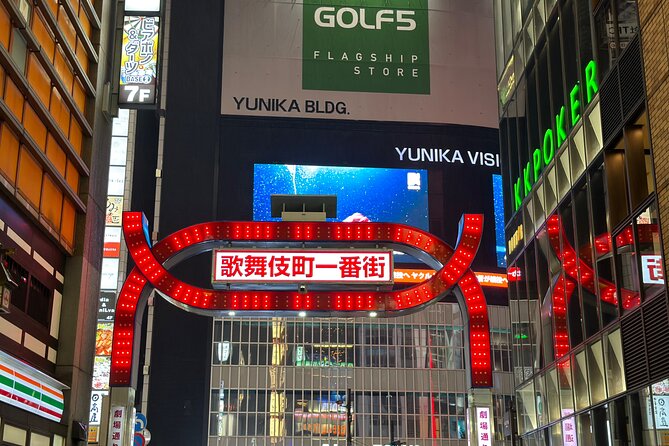
- Kabukicho, Tokyo’s nightlife district
- Omoide Yokocho and its postwar lanes
- Hanazono Shrine, a change of pace
- Golden Gai and Tokyo’s tiny bars
- What the guide adds
- Is $24 good value?
- Who should book this experience?
- Practical details before you book
- Should you book the Shinjuku walking tour?
- FAQ
- Where does the tour start?
- What time does the tour begin?
- How long does the tour last?
- Where does the tour finish?
- What is the price?
- What places are visited?
- Are food and drinks included?
- How large can the group be?
- Can I cancel for a refund?
Key points at a glance
- Kabukicho in context: Learn how to read Tokyo’s best-known nightlife district without treating it as just a wall of neon.
- Postwar Omoide Yokocho: Walk through a narrow bar lane built in the 1950s, with time to see how different it feels from modern Shinjuku.
- Hanazono Shrine pause: Get a simple introduction to Japanese shrines in one of Shinjuku’s oldest religious sites.
- Golden Gai after dark: See a famous cluster of tiny bars and some of Tokyo’s oldest drinking spots.
- A guide does the navigating: Shinjuku is large and confusing, so you can focus on the streets instead of your phone.
- Good value at $24: The price covers a two-hour walking tour with no extra admission costs listed, though food and drinks are separate.
Why this Shinjuku walk works
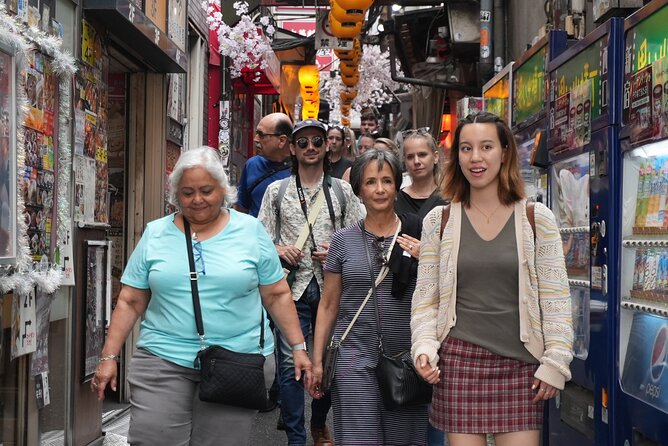
I like this tour because it treats Shinjuku as more than a giant station and a collection of bright signs. In one short evening, you move through nightlife streets, a postwar alley, a shrine, and a bar district with a very different feel.
That mix gives you a useful first look at the neighborhood. You are not simply checking off a viewpoint. You are learning how several parts of Shinjuku fit together, and you can use the guide’s suggestions when deciding where to return later.
The route is on foot, which matters here. Bus sightseeing cannot take you into the narrow lanes that give Omoide Yokocho and Golden Gai their character. A guide also saves you from spending part of your evening trying to work out which entrance, lane, or side street you need.
The group can reach a maximum of 15 people. That is not a private tour, but it is still far more manageable than a large coach group. You should have a reasonable chance to hear the guide and ask questions, though the experience may feel less personal if it reaches its full size.
A few more Tokyo tours and experiences worth a look

Starting at 5 pm near Shinjuku Station
The meeting point is Happy Lemon Keio Shinjuku Shop at 1-chōme-1-4 Nishishinjuku, Shinjuku City. The area is near public transportation, which makes the start practical if you are already exploring Shinjuku or arriving from another part of Tokyo.
Give yourself enough time to find the shop. Shinjuku Station has many exits and connected buildings, and the first challenge can be getting onto the correct street. Since the tour begins at 5 pm, arriving early is a smart way to avoid joining the group already in motion.
The evening start shapes the tour. Shinjuku’s entertainment districts are best understood as the workday gives way to nightlife, and the route takes you into that transition. The exact light and crowd level will vary, but you should expect the area to feel different from Shinjuku in the daytime.
The walk ends back at the meeting point. That is useful if you need to return to the station, but it also means you will not finish directly beside a particular restaurant or bar. Use the guide’s advice during the walk, then choose your next stop from the meeting area.
Kabukicho, Tokyo’s nightlife district
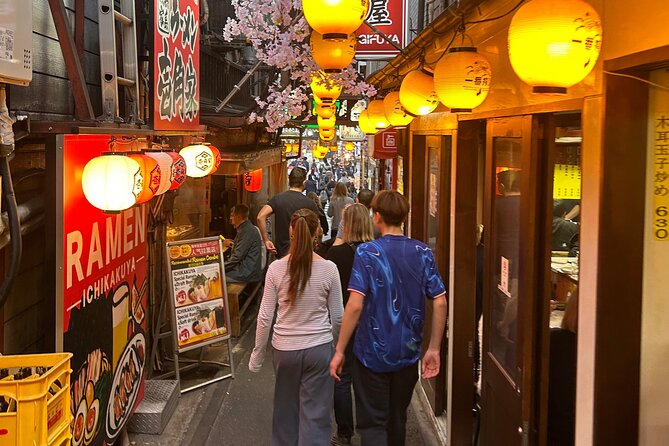
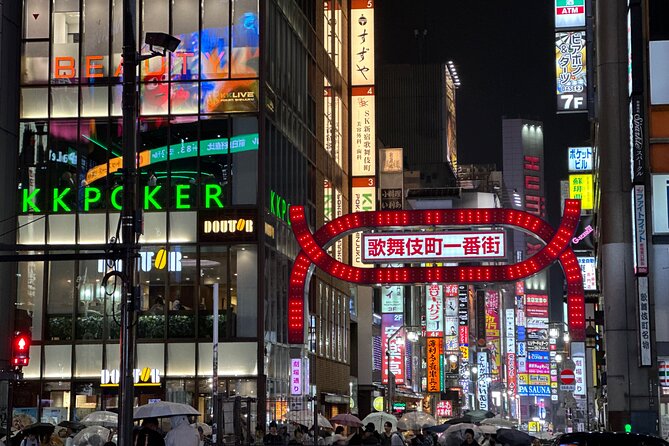
The first stop is Kabukicho, often described as Japan’s red light district. The tour provides an overview rather than promising entry into venues, and that is the right approach for a short orientation walk.
Kabukicho can seem like a maze of signs, narrow streets, restaurants, bars, and entertainment businesses. A guide gives you a framework for understanding the area instead of leaving you to judge it from the main road. You can ask questions about local culture and learn how this part of Tokyo fits into the wider city.
The main value here is context. On your own, you may take photos of the neon and move on. With a guide, you get an explanation of what makes Kabukicho distinctive and practical advice for the rest of your Tokyo stay.
You should also keep your expectations in check. This is an overview lasting about 30 minutes, not a full night out or a detailed tour of individual establishments. If you want to explore the nightlife afterward, the walk gives you a starting point, not a complete evening itinerary.
Omoide Yokocho and its postwar lanes
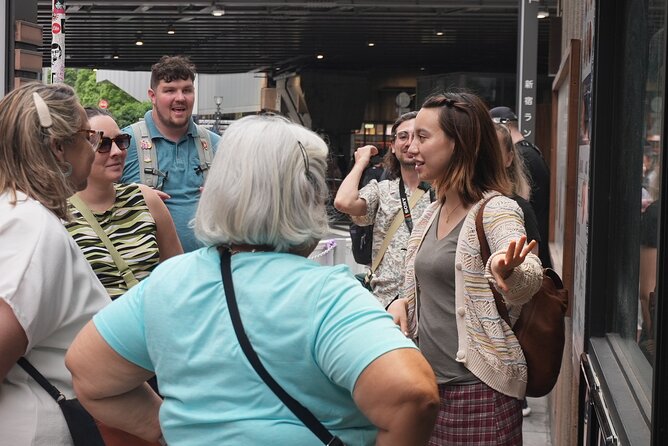
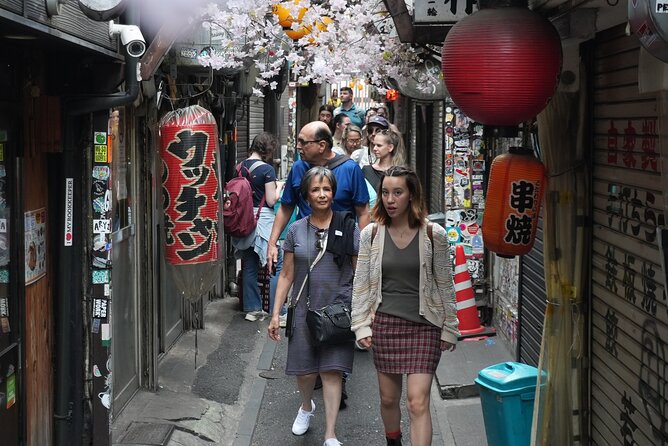
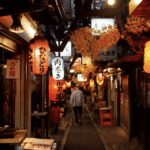
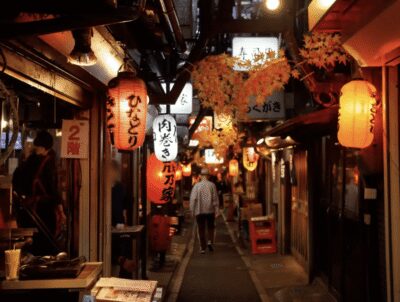
Omoide Yokocho is one of the tour’s most specific stops. The narrow alleyway of bars was built in the 1950s during the postwar period, and its compact scale offers a sharp contrast with the broad station district and tall buildings nearby.
The area is also known by the less polished nickname Piss Alley. That name hints at its rough-and-ready past, but the important point is its atmosphere and history. You get a look at a small bar district shaped by the decades after the war, rather than another modern Tokyo shopping street.
The tour allows about 30 minutes here. That gives you time to walk through the lane and listen to the guide without rushing from one photo stop to the next. Admission is included, and no separate attraction ticket is listed.
Food and drinks are not part of the $24 price. That keeps the base cost low, but you should not assume that a meal or tasting is built into the route. The bars are part of the setting, yet this experience is primarily a walking and explanation tour.
If you plan to return later for food, use the guide’s advice and take your time choosing. The small lanes can feel crowded, and the intimate bars may not suit every visitor. This is a place to observe respectfully and remember that it is also a working neighborhood and nightlife area.
Hanazono Shrine, a change of pace
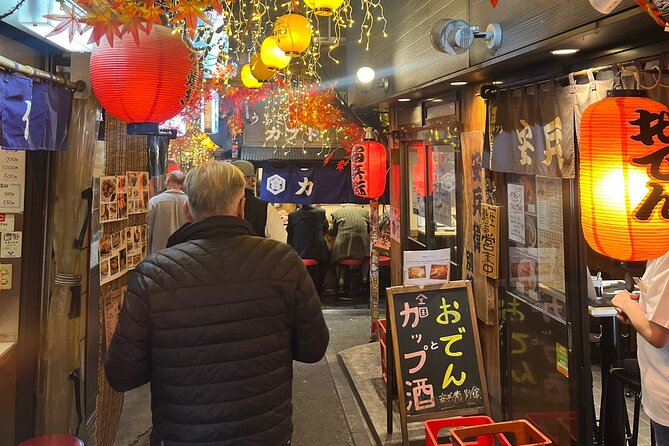
Hanazono Shrine gives the route a needed pause from the entertainment districts. It is described as one of the oldest shrines in Shinjuku and serves as an introduction to Japanese shrines.
That makes this stop especially useful if this is your first visit to Japan. Rather than seeing shrine gates and rituals as decoration, you can ask the guide how to approach the space and what details to notice. The tour description promises cultural commentary, and this is the stop where that side of the experience matters most.
About 30 minutes are set aside here. That is enough time for a basic orientation, though not a specialist lesson in Shinto or Japanese religious history. The shrine is included in the walking route, with no extra admission charge listed.
I appreciate the change in mood. Kabukicho, Omoide Yokocho, and Golden Gai all focus on nightlife and narrow streets. Hanazono Shrine shows another side of Shinjuku, one that is quieter and tied to local religious practice.
Since the tour begins at 5 pm, the shrine visit may come after the group has already seen some of Shinjuku’s evening energy. That contrast is part of the route’s strength. You get a more rounded sense of the area than you would from a nightlife-only walk.
Other walking tours we've reviewed in Tokyo



Golden Gai and Tokyo’s tiny bars
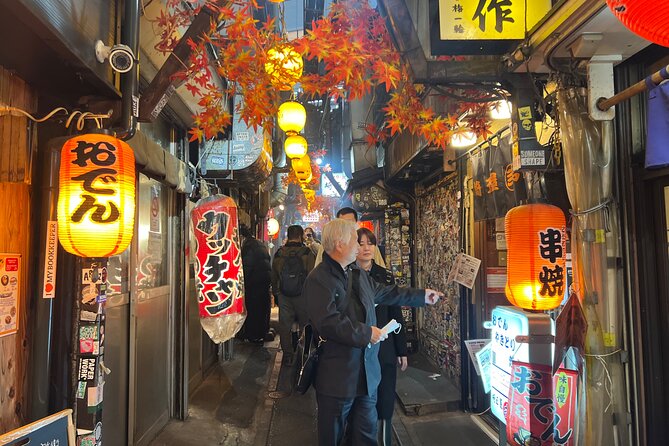
The final named stop is Shinjuku Golden Gai, a street area filled with very small bars, including some of Tokyo’s oldest. The tour allows about 20 minutes here, so this is a focused introduction rather than a bar crawl.
Golden Gai is famous for its tight lanes and tiny establishments. The small scale is the point, but it can also make the area feel difficult to understand on your own. A local guide can explain what you are looking at and help you avoid wandering aimlessly through the same few alleys.
Do not book this walk expecting drinks to be included. The tour covers the walking route and guide, while food and drinks are explicitly separate. If you want to stay in Golden Gai afterward, you will handle that part independently.
The short time here works well as a first look. You can see the area, hear why it matters, and decide if you want to return. It may feel brief if Golden Gai is your main reason for booking, but the route includes three other distinct stops.
What the guide adds
The guide is the main reason to choose this experience instead of following a free map route. Shinjuku is vast, and the value comes from moving between areas efficiently while hearing how history and culture connect them.
The guide commentary also extends beyond the four stops. The tour information promises general local history and cultural explanation, and direct feedback on the experience highlights practical advice for other places in Tokyo and Japan. That can be useful early in a trip, when you are still learning how to read the city.
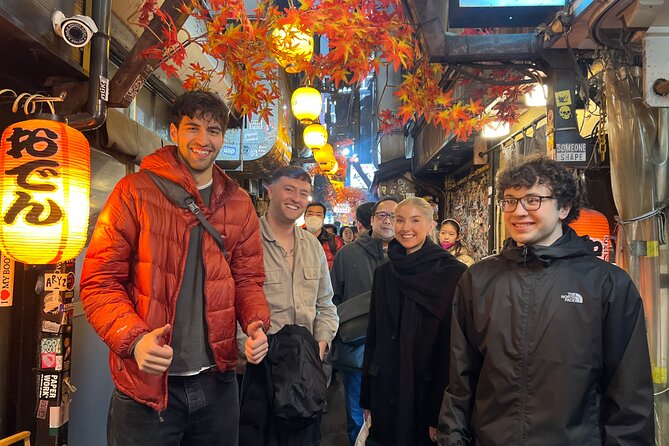
Guides named Haydn and Kane are associated with this experience. Both are described as social, informative, and willing to answer questions, with Kane in particular praised for explaining the areas and helping new arrivals understand cultural differences.
That does not mean every tour will feel identical. Guide style can vary, and a group of up to 15 people affects how much individual conversation is possible. Still, the emphasis on questions and onward recommendations is a strong benefit for first-time visitors.
Is $24 good value?
At $24 per person, this is a reasonably priced orientation to one of Tokyo’s more confusing districts. You are paying for about two hours of walking, route planning, local explanation, and access to a compact group experience.
The value is strongest if you are new to Shinjuku or short on time. You could find the four locations yourself, but the effort would involve sorting out the route, reading background material, and finding the less obvious lanes. The tour puts those pieces together in one evening.
It is less compelling if you already know Shinjuku well or prefer to explore every street at your own pace. The fixed schedule gives you structure, but it also limits lingering time. You will not have an unlimited chance to stop for photos, browse shops, or sit down for a drink.
No food or drinks are included, so factor in your evening budget. That is not a problem for a walking tour at this price, but it is worth knowing before you book. The included elements are the walk and the guide’s instruction, not a tasting or nightlife package.
Who should book this experience?
I would recommend it to first-time Tokyo visitors who want an easy introduction to Shinjuku after arriving in the city. It suits people who enjoy walking, want cultural context, and would rather follow a local route than spend an evening studying a map.
It is also a good fit if you are coming from Kyoto or another Japanese city and want to understand Tokyo’s more urban, nightlife-focused side. The route shows a clear change in character, from shrine grounds to neon districts and tiny bars.
You should be comfortable walking for roughly two hours and moving through nightlife areas. The tour is open to most people, and no special participation restriction is listed, but the route includes alleys and city streets rather than a seated sightseeing format.
Families should consider their own comfort with Kabukicho and Golden Gai. The tour offers an overview of the districts, not a promise of family entertainment. Adults interested in urban culture and local history will likely get more from the route.
Practical details before you book
Confirmation is provided when you book, and mobile tickets are supported. The tour starts at Happy Lemon Keio Shinjuku Shop at 5 pm and returns to that same meeting point.
Free cancellation is available if you cancel at least 24 hours before the local start time. Cancellations made less than 24 hours ahead are not refunded, and changes inside that window are not accepted.
The experience requires a minimum number of participants. If that minimum is not met and the tour is canceled, you are offered another date or experience, or a full refund.
The stated rating is 5 from three reviews, so the feedback is strongly positive but based on a small sample. I would treat the praise for guide interaction and practical advice as encouraging, while remembering that a small number of responses cannot predict every group’s experience.
Should you book the Shinjuku walking tour?
Book it if you want a low-cost, guided first look at Shinjuku’s nightlife streets, postwar alleys, shrine culture, and tiny bar districts. The combination of Kabukicho, Omoide Yokocho, Hanazono Shrine, and Golden Gai gives you more range than a tour focused only on neon signs.
The strongest reason to go is the guide’s navigation and explanation. You can see places on foot that a bus cannot reach, ask questions, and collect ideas for the rest of your Tokyo stay.
Skip it if you already know these neighborhoods, dislike fixed walking routes, or want a food-and-drink experience. At $24, it offers a useful introduction rather than an all-night entertainment package. For a first evening in Shinjuku, though, the timing, route, and price make it a sensible choice.
FAQ
Where does the tour start?
It starts at Happy Lemon Keio Shinjuku Shop, 1-chōme-1-4 Nishishinjuku, Shinjuku City, Tokyo 160-0023, Japan.
What time does the tour begin?
The tour begins at 5 pm.
How long does the tour last?
The walking tour lasts approximately two hours.
Where does the tour finish?
The activity ends back at the meeting point.
What is the price?
The listed price is $24 per person.
What places are visited?
The route includes Kabukicho, Omoide Yokocho, Hanazono Shrine, and Shinjuku Golden Gai.
Are food and drinks included?
No. Food and drinks are not included.
How large can the group be?
The tour has a maximum of 15 participants.
Can I cancel for a refund?
Yes. You can cancel at least 24 hours before the local start time for a full refund. Cancellations made less than 24 hours before the start are not refunded.
More Historical Tours in Tokyo
More Walking Tours in Tokyo
More Shinjuku Tours in Tokyo

More tours in Tokyo we've reviewed




Shinjuku Tours, compared.
 ★ 5.0Tokyo: Shinjuku Food Tour (13 Dishes at 4 Local Eateries)From $86
 ★ 5.0Tokyo Bar Hopping Tour in Shinjuku (All-You-Can-Drink + Dinner)From $106
 ★ 4.9Tokyo: Shinjuku Food Tour (15 Dishes and 4 Eateries)From $853 hours
 ★ 5.0Best of Shinjuku: Izakaya Food Tour (4 Stops, 14+ Tastings)From $92
 ★ 4.9Tokyo: Shinjuku Local Bar and Izakaya Guided Walking TourFrom $343 hours
 ★ 5.0Tokyo Shinjuku Chopsticks Making ClassFrom $20