
Reviewed · SELF-GUIDED TOURS
Tokyo Self-Guided Audio Tour
Tokyo is too large for one tidy sightseeing loop, and this self-guided audio tour accepts that fact. For $9, you get audio coverage of 22 major sights, from Tokyo Station and the Imperial Palace area to Shibuya, Odaiba, Asakusa, and Ueno. You are not tied to a guide, bus, or group, so you can pause, skip, or spread the experience over several days.
I like the low price and the freedom to build your own day. I also like having both a SoundCloud audio link and an interactive Google map, since Tokyo sightseeing is far easier when you can see where each stop sits. The main catch is that this is not a guided walk with someone waiting on site. You must manage the route, transport, timing, and audio yourself.
In This Review
- Key points to know before you book
- What this Tokyo audio tour really offers
- Tokyo Station and the Imperial Palace gardens
- Shinjuku, Tokyo’s government center, and Meiji Shrine
- Shibuya Crossing and Tokyo’s art scene
- Tokyo Tower, Zojoji Temple, and Hama Rikyu Gardens
- Rainbow Bridge and the artificial islands of Odaiba
- Tokyo Skytree, Senso-ji, and Asakusa
- Ueno Park and three major museums
- How to use the audio links without frustration
- Price, extra fees, and who gets the best value
- Should you book this Tokyo audio tour?
- FAQ
- How much does the Tokyo Self-Guided Audio Tour cost?
- How long does the experience last?
- How many attractions are included?
- Is there a live guide?
- Where does the tour start and end?
- Is transportation included?
- Are entrance fees included?
- How do I access the audio?
- Can I choose only certain attractions?
- Can most people participate?
Key points to know before you book
- Twenty-two stops cover a huge slice of Tokyo, including historic temples, gardens, museums, observation points, and modern districts.
- You receive two private links, one for audio and one for a Google My Maps route connecting the attractions.
- You set the pace, and you can start, stop, skip sections, or split the experience across up to six days.
- No transport is included, so you pay for trains, subways, buses, and any taxis separately.
- Admission is free at some stops, but museums, gardens, towers, and paid viewing areas require separate tickets.
- The $9 price is good for orientation, but this works best if you are comfortable navigating Tokyo without a live guide.
What this Tokyo audio tour really offers
Think of this as a portable collection of short attraction briefings, not a traditional four-hour tour. Each of the 22 stops is listed with about 10 minutes of audio, while the actual time needed for transport and sightseeing varies greatly.
The package gives you one SoundCloud link for the audio and one Google My Maps link for the locations. You can listen to the full sequence before setting out, or open each stop from the map as you arrive. This arrangement is useful in Tokyo, where the attractions are spread across several districts rather than packed into one walkable center.
The advertised duration is about four hours. That is enough for a brisk overview, but not enough to properly visit every museum, garden, tower, and district on the route. If you stop at all 22 places, pay admission, and allow for Tokyo train connections, you will need much longer. Treat four hours as a sampler, or choose one part of the city for a focused outing.
The audio links remain valid for up to six days. That is the tour’s best practical feature. You can use one day for central Tokyo, another for Shibuya and Roppongi, and another for Asakusa and Ueno without buying a second experience.
Other guided tours in Tokyo

Tokyo Station and the Imperial Palace gardens
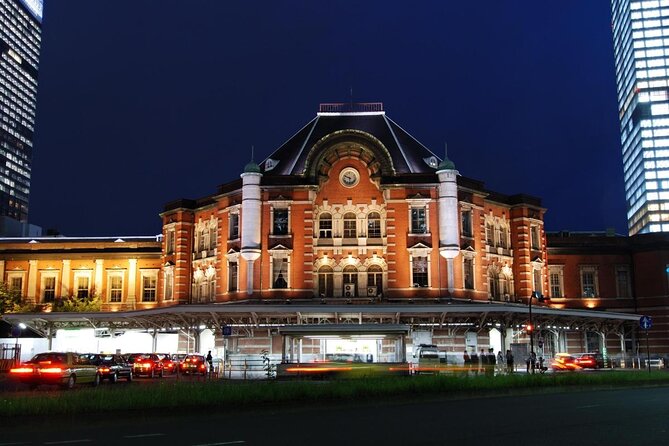
Begin at Tokyo Central Railway Station, an excellent place to understand the city’s scale. The station is a historic rail hub and a symbol of Japan’s modernization. The audio explains its architectural importance and its role in the rail network.
This is also a sensible starting point because Tokyo Station is easy to reach by public transport. You should not expect a long guided visit here. The suggested 10 minutes gives you a brief orientation, enough to look at the station and hear its story before moving on.
Next comes the East Gardens of the Imperial Palace, on the site of Edo Castle. The gardens offer a calmer setting after the station’s crowds and trains. You will hear about the former castle grounds, imperial history, and the way landscaped spaces preserve traces of the old city.
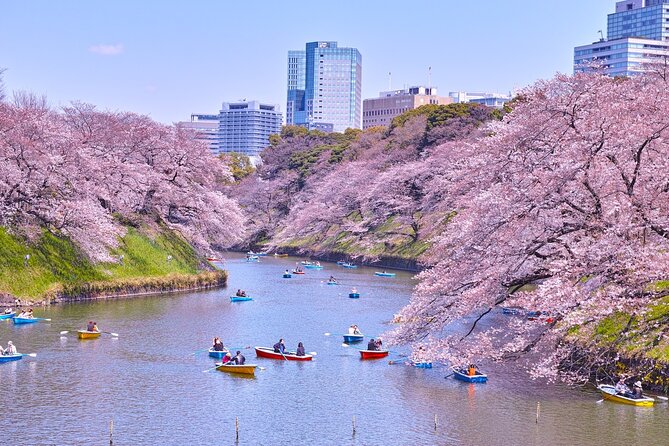
Chidorigafuchi adds another view of the former defensive system around Edo Castle. Its moat is especially attractive during cherry blossom season. Admission is not included, and the stop may be more rewarding at the right time of year than on a rushed visit.
Yasukuni Shrine requires a thoughtful approach. It is dedicated to Japan’s war dead and carries a difficult, contested political and historical meaning. The audio introduces that background rather than treating the shrine as just another pretty stop. Give yourself time to consider the setting, and do not expect a simple story.
Shinjuku, Tokyo’s government center, and Meiji Shrine
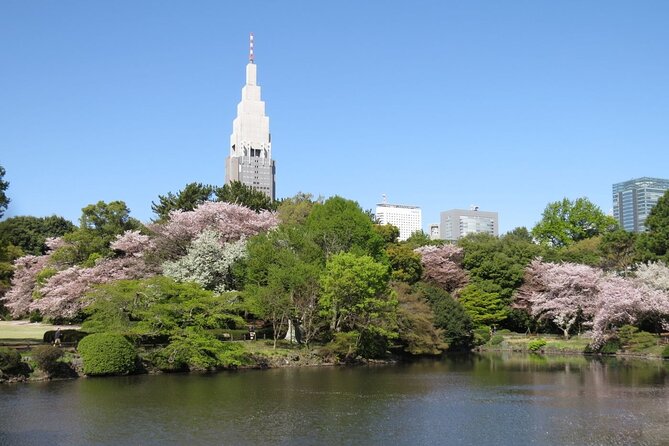
Shinjuku Gyoen National Garden brings a complete change of mood. Its grounds combine Japanese, French, and English garden styles, and the audio explains its imperial beginnings and later transformation. Admission is not included, so check the cost before you make it a centerpiece of your day.
The garden is one of the stops that deserves more than 10 minutes. If you enjoy quiet paths and formal planting, you may want to skip another attraction and stay here. Spring blossoms and autumn color can also affect how much time you want to spend.
The Tokyo Metropolitan Government Buildings offer a free panoramic viewpoint. You will hear about Tokyo’s administration and the buildings’ modern design. Since there is no entry charge listed, this is one of the stronger value stops for a budget-minded visitor.
Meiji Jingu Shrine sits in a wooded area and is dedicated to Emperor Meiji and Empress Shoken. The audio explains Shinto customs and the shrine’s imperial connection. You can use this stop to learn basic shrine etiquette before exploring other religious sites in the city.
The contrast here is useful: Shinjuku gives you towers, offices, and city scale, while Meiji Jingu offers a quieter religious setting. They are both in the western part of Tokyo, but you still need to plan your route carefully. The map helps, yet it does not replace checking train exits and walking directions.
Shibuya Crossing and Tokyo’s art scene
Shibuya Crossing is one of Tokyo’s most recognizable public spaces. The audio traces the area’s shift from a residential district to a major fashion and entertainment center. The crossing itself is free, but the area is worth treating as a short stop rather than a full attraction with a formal entrance.
The National Art Center, Tokyo, presents a different side of the city. Its unusual design has no permanent collection and instead hosts changing exhibitions. The audio introduces the building’s concept and its place in Tokyo’s cultural life, but exhibition entry is not included.
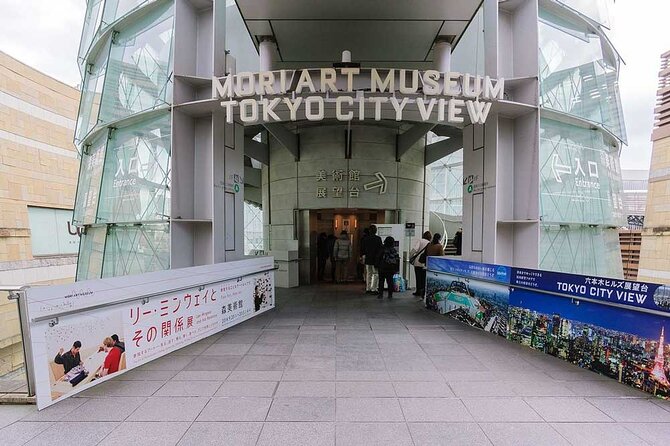
In Roppongi, the Mori Art Museum takes you high above the city and focuses on contemporary art. Admission is not included. Depending on the exhibition, ticket prices and opening arrangements may affect whether it fits your budget.
These three stops work well for someone who wants more than temples and old streets. They also show why the full 22-stop route is hard to complete in four hours. A quick look at Shibuya costs little time, but an art museum visit can take an hour or more before you even count transport.
Tokyo Tower, Zojoji Temple, and Hama Rikyu Gardens
Tokyo Tower remains one of the clearest symbols of postwar Tokyo. Its design was inspired by the Eiffel Tower, and the audio explains its construction and importance during Japan’s recovery and growth. Entry is not included, so you can simply admire it from outside if you want to keep costs down.
Zojoji Temple sits near the tower, creating one of Tokyo’s most striking old-and-new combinations. The temple is tied to the Tokugawa shogunate, and the audio provides context for its Buddhist role and historical connections. Entry is free according to the tour details.
This pairing is one of the route’s most practical combinations. You can see a modern landmark and a historic religious site in the same general area, rather than crossing the city for unrelated stops.
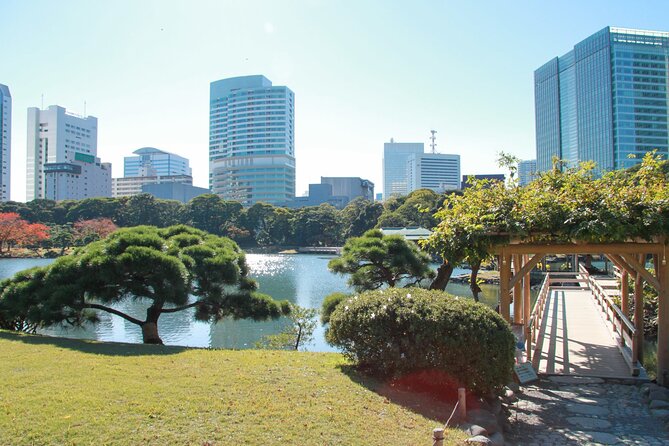
Hama Rikyu Gardens once belonged to a feudal lord and now offers another historic green space amid Tokyo’s development. Admission is not included. The garden makes sense for visitors who enjoy changing scenery and historical settings, but it is not a quick photo stop if you want to walk the grounds properly.
A few more Tokyo tours and experiences worth a look


Rainbow Bridge and the artificial islands of Odaiba
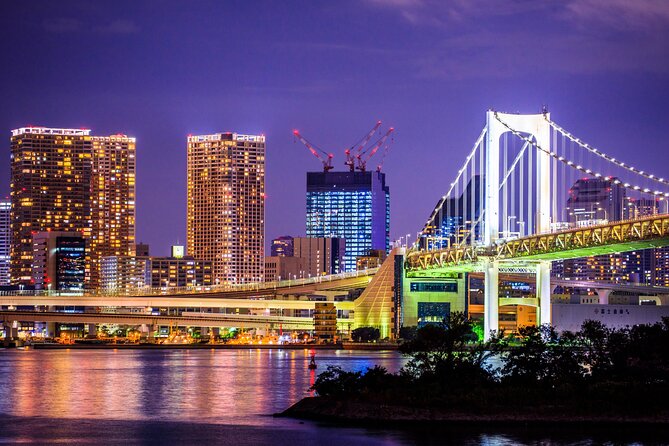
Rainbow Bridge spans Tokyo Bay and is especially noticeable when illuminated at night. The audio covers its construction and lighting. This stop is free, but the bridge is primarily a viewpoint and transport landmark, not a ticketed attraction within this experience.
Odaiba is built on artificial islands and has an unusual past. The area began with fortress-related development and later became a leisure and entertainment district. The audio gives you that change over time, which helps explain why Odaiba feels so different from older parts of Tokyo.
Odaiba is also one of the places where transport planning matters most. It is not next door to Asakusa, Ueno, or Shibuya, and no pickup or drop-off is provided. Use the map before leaving your hotel, then confirm the route with Tokyo’s public transport information on the day.
If you have only four hours, Odaiba may be better as a separate outing. If you have several days of access, it fits neatly into a modern Tokyo day with Rainbow Bridge and the bay area.
Tokyo Skytree, Senso-ji, and Asakusa
Tokyo Skytree is the route’s giant vertical landmark. The audio explains its design and the way traditional Japanese forms influenced the tower. Admission is not included, and viewing platforms require extra planning and cost.
You can appreciate Skytree from ground level without buying a ticket. That may be the sensible choice if you already plan to pay for Tokyo Tower or another high viewpoint. The audio still gives the structure context, so you are not limited to taking a photograph.
Senso-ji Temple is Tokyo’s oldest temple and one of the city’s essential historic sights. The audio covers its founding legend and its place in Edo-period life. Entry is free, making it one of the strongest no-extra-cost stops on the route.
Asakusa surrounds Senso-ji with an older Tokyo atmosphere and a long connection to entertainment and culture. The area deserves more than 10 minutes if you want to walk beyond the temple itself. You can pause the audio, explore, and restart when you are ready.
This is one of the best sections for a first visit because the temple and district offer a clear sense of old Tokyo. It is also easier to enjoy at your own pace than a tightly timed group tour.
Ueno Park and three major museums
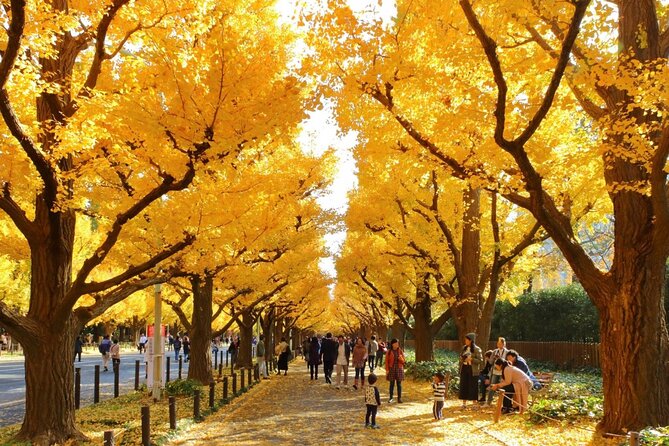
Ueno Park closes the route with a mix of open space and major cultural institutions. The park is free and has a long association with public life and cherry blossom season. You will also find the Tokyo National Museum, the National Museum of Nature and Science, and the National Museum of Western Art nearby.
The Tokyo National Museum is Japan’s oldest and largest museum, with Japanese art and antiquities. Admission is not included. You could easily spend much longer here than the 10-minute audio segment, so plan it as the main purpose of your day if the collection interests you.
The National Museum of Nature and Science covers Japan’s natural world and technological development. It also requires a separate ticket. Families and anyone interested in science may prefer this museum to an additional tower or garden.
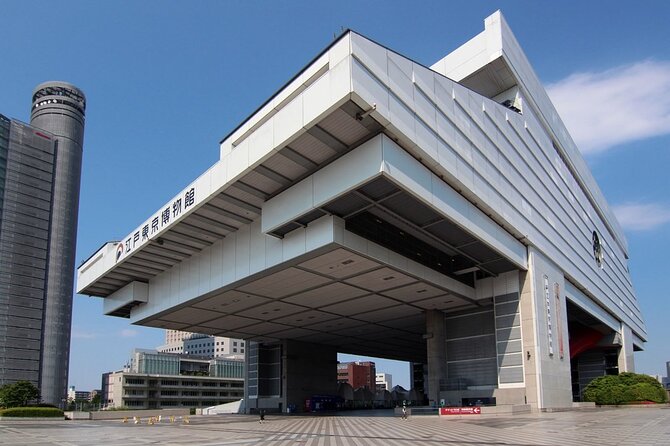
The National Museum of Western Art occupies a Le Corbusier-designed building and has UNESCO World Heritage status. Entry is not included. Even if you do not go inside, the building gives the Ueno section an architectural point of interest.
Ueno Park is a smart endpoint because you can choose among several museums, walk outdoors, or finish after the audio. It also makes the final portion flexible rather than forcing you into one last paid attraction.
How to use the audio links without frustration
The product instructions say you do not need to be online to use the audio tour, yet access is provided through a SoundCloud web link and a Google My Maps link. I would open both before leaving your accommodation and make sure the audio pages load.
The most useful routine is simple:
- Open the map and identify one district to visit.
- Play the relevant audio before arrival if you want background in advance.
- Use the map point for the attraction once you are there.
- Pause whenever you want to read signs, take photographs, or enter a museum.
- Save the next district for another day rather than racing across town.
This is not a live GPS narration that automatically follows your position. That distinction matters. The audio may not start at precisely the moment you reach a landmark, and you must select the correct stop yourself.
The tour is private in the sense that only your group uses it, but there is no private guide accompanying you. Customer support is available for access questions, yet the experience depends on your phone, your route planning, and your ability to match the audio to the correct place.
Price, extra fees, and who gets the best value
At $9 per person, the price is modest for 22 audio introductions. You are paying for a low-cost planning and interpretation tool, not transportation, entrance tickets, or personal guiding.
The final cost can rise at paid stops. Entry may be required for Chidorigafuchi, Shinjuku Gyoen, Mori Art Museum, Tokyo Tower, Hama Rikyu Gardens, Odaiba attractions, Tokyo Skytree, the Tokyo National Museum, the National Museum of Nature and Science, and the National Museum of Western Art. The exact amount depends on which places you enter.
I see the best value for independent visitors who already understand Tokyo’s rail system or are willing to plan it carefully. The tour can help you choose among the city’s major sights without paying for a full-day guide.
It is a weaker choice if you want someone to meet you, lead you through streets, answer questions in real time, or keep commentary tightly matched to your exact position. Some users have found the route confusing and the commentary poorly timed. That risk is easy to reduce by reading the instructions closely and previewing the audio before you set out, but it cannot be removed completely.
The experience is non-refundable and cannot be changed after booking. Because of that, check the access method, transport exclusion, six-day validity, and paid admissions before purchasing.
Should you book this Tokyo audio tour?
Book it if you want a cheap, flexible way to sample Tokyo and you are happy to be your own guide. The strongest plan is to divide the stops by area: Imperial Palace and central Tokyo, Shinjuku and Shibuya, Roppongi and Tokyo Tower, Odaiba, then Asakusa and Ueno.
Do not book it expecting a polished walking tour or a person waiting at each landmark. You will get the most from the $9 price if you preview the SoundCloud material, study the map, choose a realistic group of stops, and accept that some attractions deserve a separate paid visit.
For independent visitors, the freedom is the main attraction. For anyone who values precise navigation and live explanation, a conventional guided tour may be worth the higher cost.
FAQ
How much does the Tokyo Self-Guided Audio Tour cost?
The tour costs $9 per person.
How long does the experience last?
The stated duration is approximately four hours. You can also split the tour across multiple days because the access links remain valid for up to six days.
How many attractions are included?
Audio coverage and map points are provided for 22 Tokyo attractions.
Is there a live guide?
No. This is a self-guided experience with audio links and an interactive map. No guide meets you at the attractions.
Where does the tour start and end?
You choose both the starting point and ending point in Tokyo. There is no fixed meeting point because the tour is self-guided.
Is transportation included?
No. Pickup, drop-off, and transportation between attractions are not included.
Are entrance fees included?
No. Entry fees are separate wherever an attraction requires payment. Several listed places are free to enter, while others require tickets.
How do I access the audio?
On your selected travel date, you receive an email with a private SoundCloud audio link and a private Google My Maps link. The map connects each attraction to its audio guide.
Can I choose only certain attractions?
Yes. You can skip stops, spend longer at favorite places, pause the audio, and plan your own route instead of following the suggested order.
Can most people participate?
The tour is near public transportation, and most people can participate. Since you handle navigation and transport yourself, you should be comfortable using the map and moving around Tokyo independently.
More Audio Tours in Tokyo
More Self-Guided Tours in Tokyo
More Guided Tours in Tokyo

More tours in Tokyo we've reviewed






Self-Guided Tours, compared.
 ★ 3.8Tokyo: Open Top Panoramic Sightseeing Bus with Audio GuideFrom $111h 10m
 ★ 4.0Tokyo: 60min Panoramic Open Top Bus Tour with Audio GuideFrom $141 hour
 ★ 3.7Akihabara: Self-Guided Tour with a special brochureFrom $61 day
 ★ 4.6Hakone: Self Guided Trip to Mt. Fuji // Made by Local GuidesFrom $31 day
 ★ 4.5Tokyo: Open Top Sightseeing Bus with Audio GuideFrom $11