Reviewed · AUDIO TOURS
Tokyo: 60min Panoramic Open Top Bus Tour with Audio Guide
Tokyo looks different from the upper deck of a moving bus, especially when you cross Rainbow Bridge with the breeze in your face. This one-hour loop gives you a quick look at Tokyo Tower, Odaiba, Ginza, Toyosu, and several major government and shopping districts without asking you to navigate trains or walk long distances.
I like the low $14 price, which makes this a sensible first look at the city. I also like the route itself: you get changing views, from the formal National Diet Building to the open waters around Tokyo Bay, then back into polished Ginza. The main drawback is that this is a sightseeing loop, not a hop-on hop-off bus, so you cannot stop and explore along the way. Rain can also close the roof or cancel the trip.
In This Review
- Key points at a glance
- Why this short Tokyo loop works
- What the one-hour route shows you
- Hibiya Park and the National Diet Building
- Toranomon and Tokyo Tower
- Rainbow Bridge and Tokyo Bay
- Odaiba and Toyosu
- Tsukiji Outer Market
- Kabuki-za and Ginza
- The audio guide needs your phone
- What the $14 price really buys you
- Comfort, weather, and what to bring
- Who will get the most from this ride
- Should you book the Tokyo open-top bus?
- FAQ
- Where does the Tokyo open-top bus tour begin and end?
- How do I find the meeting point?
- How long is the tour?
- Is this a hop-on hop-off bus?
- Which languages are available for the audio guide?
- What do I need for the audio guide?
- Can I eat or drink on the bus?
- What happens if it rains?
Key points at a glance
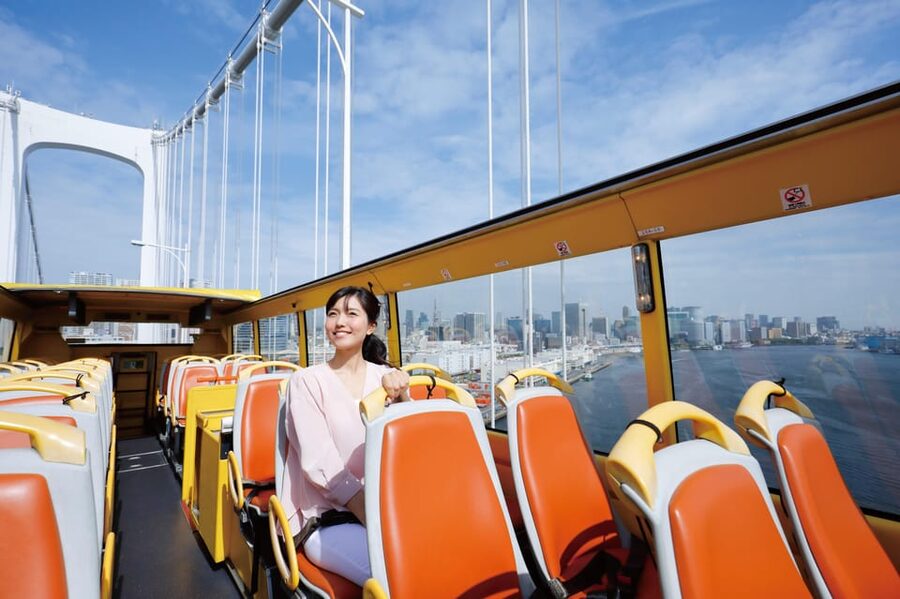
- Rainbow Bridge from the open upper deck: Feel Tokyo’s air as the bus crosses this major bridge toward Odaiba and Tokyo Bay.
- Eight GPS audio languages: English, Chinese, Korean, Spanish, French, Thai, Indonesian, and Vietnamese are available through your own smartphone and earphones.
- A fast city orientation: In one hour, you pass Tokyo Tower, the National Diet Building, Tsukiji Outer Market, Kabuki-za, Ginza, and more.
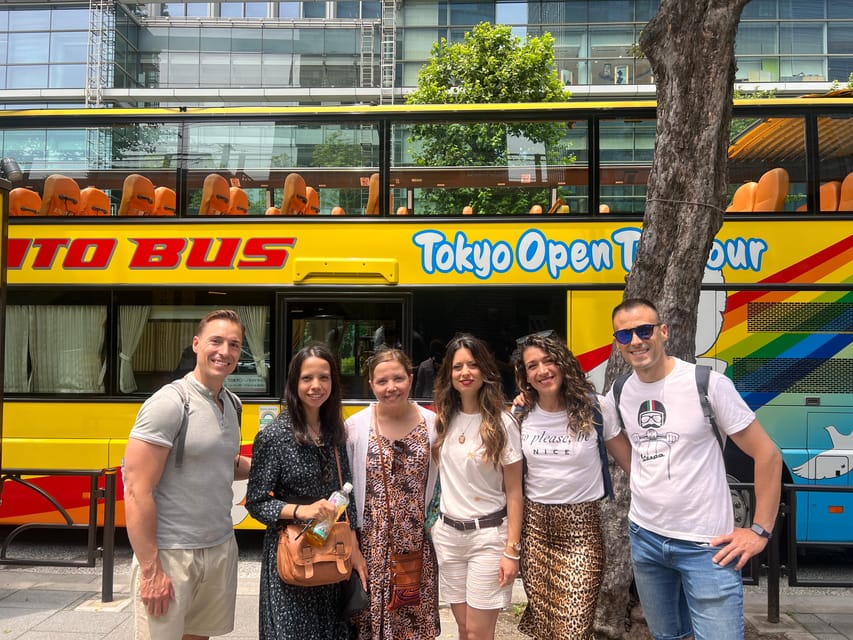
- Simple Tokyo Station departure: Meet near the Marunouchi South Exit at the yellow Hato Bus stop.
- A fixed sightseeing loop: You stay on the bus for the full route, with no hop-on hop-off stops.
- Weather matters: The roof may close in rain, and heavy rain or poor weather can cancel the tour.
Why this short Tokyo loop works
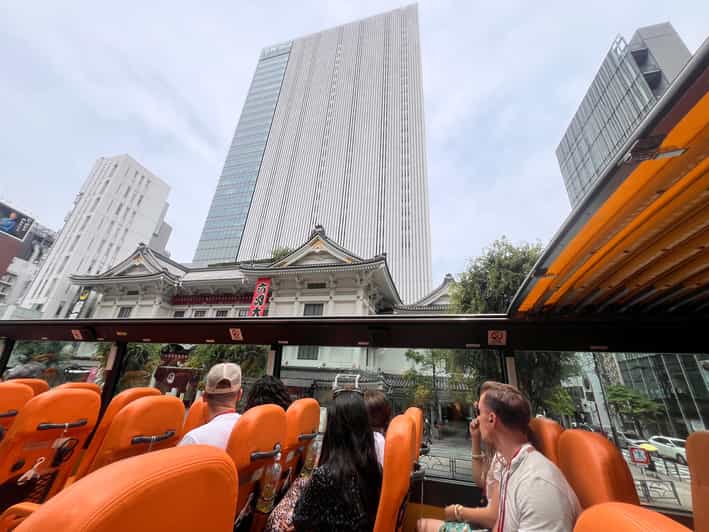
The best part of this ride is its range. You are not spending the whole hour looking at one kind of Tokyo. The route moves from Hibiya Park and government buildings to Tokyo Tower, then across Rainbow Bridge and around the bay before returning through Tsukiji, Kabuki-za, and Ginza.
That variety helps you get your bearings fast. Tokyo can feel like a collection of separate cities, with one district ending and another beginning without warning. From the bus, you can connect these areas in a single sweep. You will not have time to visit each one, but you will see where they sit in relation to one another.
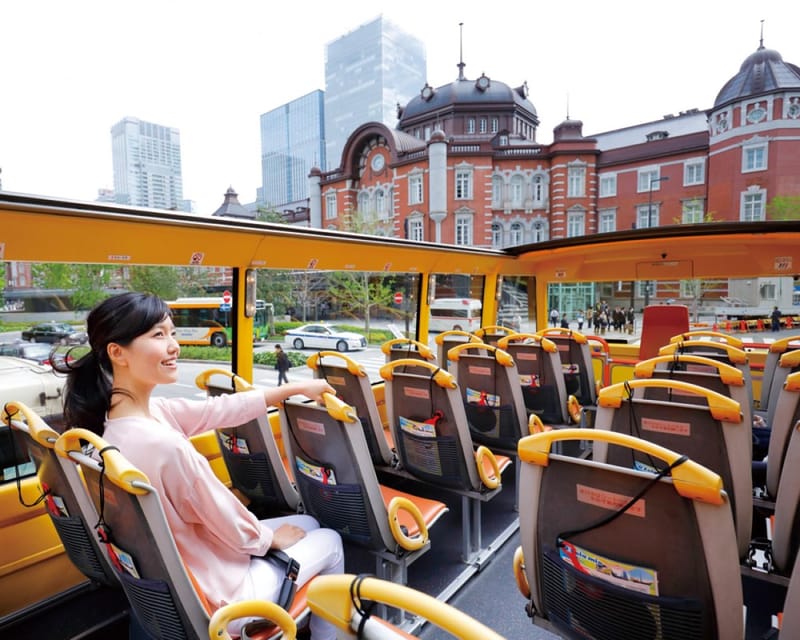
The open top is the reason to book this instead of simply taking a regular bus. You get higher sightlines and fewer obstructions from the roof, which helps when looking at tall buildings and broad city views. The tradeoff is exposure to sun, wind, and rain. Dress for the weather, and do not assume the roof will remain open all day.
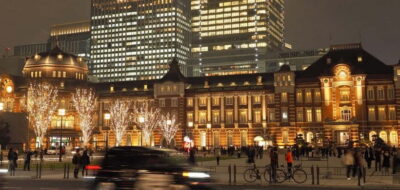
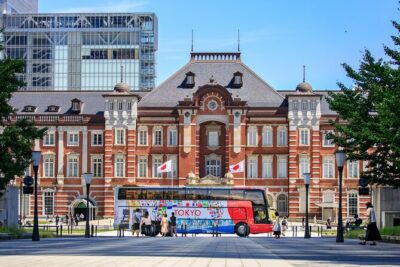
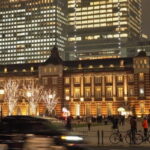
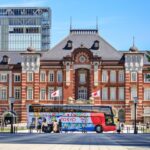
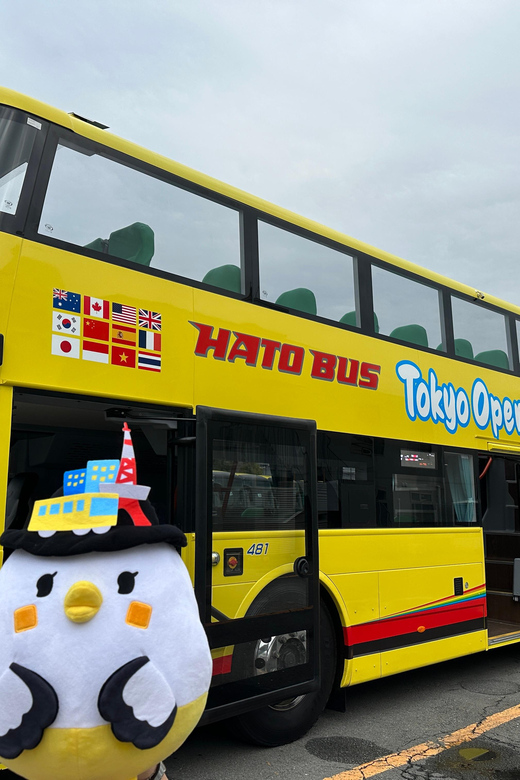
The bus begins and ends at the Hato Bus Tokyo Office near Tokyo Station. That central location makes this easy to add before another activity in the Marunouchi area, though you should allow time to find the correct bus stop. From the JR Tokyo Station Marunouchi South Exit, turn left and walk straight for about two minutes. Look for the yellow Hato Bus stop.
Other guided tours in Tokyo

What the one-hour route shows you
The itinerary is designed for views rather than stops. Every location below is passed by, so you should think of the experience as a moving introduction, not a set of visits.
Hibiya Park and the National Diet Building
Hibiya Park is one of the first signs that Tokyo is not only towers and traffic. The bus passes the park near the start of the route, offering a quick change of pace after leaving Tokyo Station.
Next comes the National Diet Building, Japan’s main legislative building. Its formal design gives this part of the route a more official feel. You will not get off for a closer look, but seeing it from the upper deck helps place Japan’s government center within central Tokyo.
This section is useful if you are new to the city and want more than shopping streets. The view is brief, so keep your camera ready and listen to the audio guidance as the bus moves along.
Toranomon and Tokyo Tower
The route then passes through Toranomon, a central business district known for large office buildings and busy urban streets. From the bus, this is less about one famous sight and more about seeing the scale and density of central Tokyo.
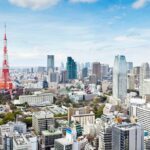
Tokyo Tower is the clear visual highlight here. The route lets you see it from different angles as the bus moves, rather than giving you one fixed view from the ground. That changing perspective is one reason the ride can be worthwhile even for someone who has already seen the tower.
You do not enter Tokyo Tower, and there is no time to visit its observation decks. If Tokyo Tower is your main goal, book a separate visit. If you want a quick series of views without committing several hours, this bus route gives you a useful look for very little money.
Rainbow Bridge and Tokyo Bay
The crossing of Rainbow Bridge is the most distinctive part of the tour. On a clear day, the open deck gives you wide views and a direct sense of the wind and air around Tokyo Bay. This is where the bus feels most different from an ordinary city sightseeing ride.
The bridge connects central Tokyo with the Odaiba area. Because the bus does not stop, you will need to enjoy the crossing as it happens. Keep your phone or camera ready, but do not let photography take over. The point is the moving view, with the bay opening around you and the city shifting behind you.
Weather has a direct effect here. A rainy day can mean the roof is closed, reducing the open-air advantage. Heavy rain may cancel the trip altogether. Check the forecast before you leave, especially if the roof experience is the main reason you booked.
A few more Tokyo tours and experiences worth a look

Odaiba and Toyosu
After Rainbow Bridge, the bus passes Odaiba, a modern waterfront district. This section gives you a different side of Tokyo, with more open space and broad bay views than the dense streets around Tokyo Station and Ginza.
The route continues toward Toyosu, another waterfront area. You will not stop to visit attractions or markets, but the changing surroundings help show how Tokyo extends beyond its traditional center. This is also a good stretch for simply looking outward instead of trying to identify every building.
For children, the movement, height, and bridge crossing may be more engaging than a standard walking tour. Children under six can ride free without their own seat, limited to one child per adult. If a child needs a separate seat, the free no-seat arrangement does not apply.
Tsukiji Outer Market
The bus passes the Tsukiji Outer Market on the return portion of the route. Tsukiji is associated with food stalls, shops, and the former wholesale fish market area, but this tour does not include a food visit or market walk.
That distinction matters. You will see the area from the road, not sample anything or browse the stalls. Eating is not allowed on the bus, and food and drinks cannot be taken aboard. Drinks in plastic bottles are allowed, so bring water if you need it, but plan any meal before or after the ride.
If you want to explore Tsukiji properly, treat this passing view as a reminder to return on foot. The tour gives you orientation, not market time.
Kabuki-za and Ginza
Kabuki-za marks the route’s return to one of central Tokyo’s best-known districts. Its traditional theater design provides a strong contrast with the high-rise offices and newer buildings seen earlier.
The bus then passes through Ginza, a major shopping and commercial district. From the upper deck, you can take in the polished streets and city architecture without dealing with crosswalks, crowds, or a map. You will not stop for shopping, so think of this as a preview.
Ginza is also a practical place to continue your day after the tour, but the bus itself returns to the Hato Bus office at Tokyo Station. That makes the route easy to use as a short morning or afternoon activity, especially if you want to stay near central Tokyo.
The audio guide needs your phone
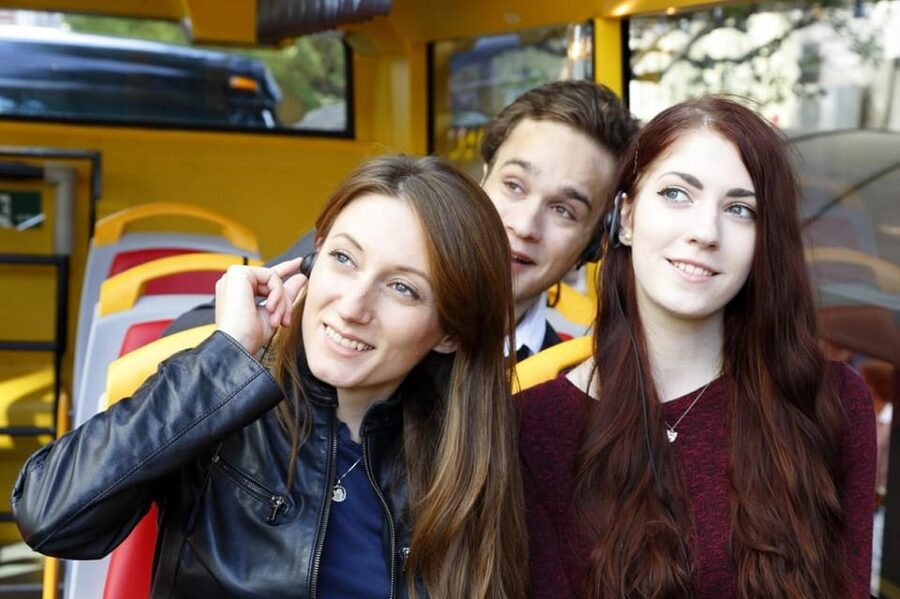
The bus has a Japanese-speaking guide, while GPS-based automated guidance is available in eight languages: English, Chinese, Korean, Spanish, French, Thai, Indonesian, and Vietnamese.
You need to bring a smartphone that works in Japan and your own earphones. GPS devices and earphones are not supplied for rental. This is an important practical point, because the multilingual commentary depends on equipment you bring yourself.
The audio system is provided free of charge. There are no refunds for technical problems or malfunctioning earphones, so test your phone, charge the battery, and bring earphones that fit securely before arriving. If your phone cannot connect or you forget earphones, the Japanese-speaking guide may still be present, but you should not count on receiving the full audio experience in your preferred language.
The GPS format should help match the commentary to the part of the route you are seeing. Still, this is automated guidance, not a private guide who can answer personal questions or change the pace for you. You get a structured explanation while the bus follows its fixed loop.
What the $14 price really buys you
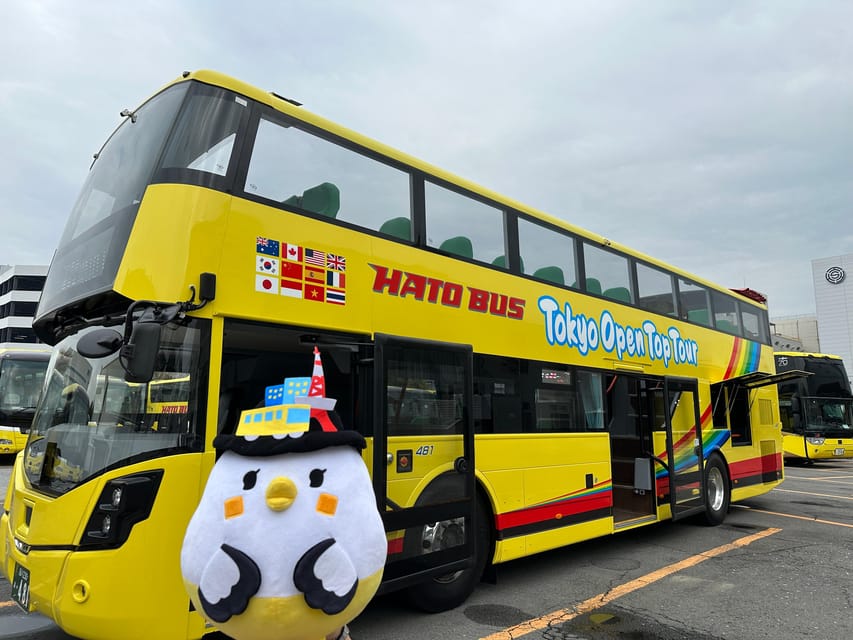
At $14 per person, this is inexpensive by Tokyo sightseeing standards. You are paying for a one-hour ride on a double-decker open-top bus and audio guidance, not for entry to attractions, food, hotel pickup, or a private tour.
The value comes from combining several distant areas in a short time. A first-time visitor can see the city center, Tokyo Tower, Rainbow Bridge, Odaiba, Toyosu, Tsukiji, Kabuki-za, and Ginza without paying separate fares or planning a complex route. You also avoid the effort of transferring between trains simply to get a broad first look.
The price is less attractive if you want to get off and explore. A train ride can take you to many of these districts for less, and walking gives you a closer experience. The bus is paying for height, comfort, a fixed route, and the convenience of seeing many places at once.
The short duration is another value point. One hour is easy to fit into a busy Tokyo schedule. It is long enough to feel like a proper outing, but short enough that you can still visit a museum, shop in Ginza, or make another reservation afterward.
Comfort, weather, and what to bring

The tour is described as comfortable, but the open upper deck is still exposed. Tokyo weather can change, and the roof may be closed in rain. You should bring clothing that suits the forecast, along with sun protection on a bright day.
Do not bring a meal for the ride. Eating is not allowed, while drinks in plastic bottles are permitted. This keeps the bus cleaner and avoids the awkwardness of trying to eat while the vehicle is moving.
Arrive at the Hato Bus Tokyo Office near the JR Tokyo Station Marunouchi South Exit. The coordinates are 35.678964, 139.765781 if you use a map app. The yellow bus stop is the visual clue to look for.
Cancellation is free up to 24 hours before departure for a full refund. You can also reserve now and pay later, which is useful if your Tokyo schedule is still shifting. Weather-related cancellations are possible, so keep that in mind when building a tightly timed day.
Who will get the most from this ride

I would choose this tour for a first Tokyo day, a short stay, or a day when you want to rest your feet while still seeing a lot. It is also a good fit for anyone who likes city views more than detailed museum visits.
Families may appreciate the simple one-hour format, especially if a child enjoys buses and bridges. The free arrangement for children under six without a seat can lower the cost, but one child per adult is the stated limit.
The tour also suits you if English or another supported language is important, provided you bring a working phone and earphones. The eight language choices cover a wide range of visitors, but the commentary is automated rather than a live conversation in those languages.
I would not make this your only Tokyo sightseeing activity. Since every location is passed by, you need separate time for Tokyo Tower, Tsukiji, Ginza, Odaiba, or any other place you want to explore from the ground. Use this ride to see the city’s shape, then return to the areas that catch your interest.
Should you book the Tokyo open-top bus?
Book it if you want a cheap, quick orientation to central Tokyo and the bay. The route packs in many major sights, and the Rainbow Bridge crossing gives the hour a memorable open-air moment when the weather cooperates.
Skip it if you need frequent stops, close-up visits, or a fully live guide in your own language. The bus follows one fixed loop, the audio relies on your equipment, and rain may reduce the open-top experience.
For $14, the risk is fairly small. Check the forecast, bring a charged smartphone and earphones, and arrive at the yellow Hato Bus stop near Tokyo Station. If those conditions suit your plans, this is a practical way to see Tokyo spread out before deciding where to spend more time.
FAQ
Where does the Tokyo open-top bus tour begin and end?
The tour begins and ends at the Hato Bus Tokyo Office near the JR Tokyo Station Marunouchi South Exit.
How do I find the meeting point?
From the Marunouchi South Exit, turn left and walk straight for about two minutes. Look for the yellow Hato Bus stop. The coordinates are 35.678964, 139.765781.
How long is the tour?
The tour lasts one hour.
Is this a hop-on hop-off bus?
No. This is a fixed sightseeing loop, so you remain on the bus and do not get off at the sights along the route.
Which languages are available for the audio guide?
GPS automated guidance is available in Chinese, English, French, Indonesian, Korean, Spanish, Thai, and Vietnamese. The live guide language is Japanese.
What do I need for the audio guide?
Bring a smartphone that can be used in Japan and your own earphones. GPS devices and earphones are not provided for rental.
Can I eat or drink on the bus?
Eating is not allowed. Drinks in plastic bottles are permitted.
What happens if it rains?
The bus roof may be closed in rain. The tour may also be canceled because of bad weather or heavy rain.