
Reviewed · SELF-GUIDED TOURS
Tokyo: Open Top Sightseeing Bus with Audio Guide
Tokyo reveals itself well from the upper deck of a moving bus. In about 70 minutes, you pass Tokyo Tower, Ginza, Rainbow Bridge, and Odaiba without wrestling with several train lines or trying to decode a city map.
I like the low price, about $11.71, and the relaxed start at the Tokyo VIP Lounge, where you can use the facilities and have a drink before departure. I also like the GPS audio system, which follows the bus and provides commentary in Japanese, English, Chinese, French, Korean, Vietnamese, or Thai.
The main catch is simple: this is not hop-on, hop-off. The bus does not stop so you can visit the attractions, and the recorded commentary can occasionally fall out of step with what you are seeing. Think of it as a city overview, not a sightseeing shuttle.
In This Review
- Key points to know before booking
- Why this short bus ride works in Tokyo
- Starting at the Tokyo VIP Lounge
- Bay Course: Tokyo Tower, Rainbow Bridge, and Odaiba
- Tokyo Station and Marunouchi
- Zojoji Temple and Tokyo Tower
- Shibaura and Rainbow Bridge
- Fuji TV Building and the Statue of Liberty
- Odaiba Seaside Park and the return through Ginza
- City Course: the Imperial Palace, Roppongi, and Ginza
- How the GPS audio guide performs
- What the $11.71 price really buys you
- Weather, luggage, and other practical details
- Who should book this Tokyo bus tour
- Should you book it?
- FAQ
- How long does the open-top bus tour last?
- Is this a hop-on, hop-off bus?
- Where does the bus tour start?
- Where does the tour end?
- Which languages are available for the audio guide?
- Do I need to bring earphones?
- What happens if it rains?
- How early should I arrive?
Key points to know before booking
- Two ways to see Tokyo: Choose the Bay Course for Tokyo Bay, Odaiba, and Rainbow Bridge, or the City Course for the Imperial Palace, Roppongi, Tokyo Midtown, Tokyo Tower, and Ginza.
- A continuous 70-minute ride: You stay on the bus for the full circuit and return to the Tokyo VIP Lounge.
- GPS audio in seven languages: Commentary adjusts to the bus’s location and road conditions, though timing may not always match the view perfectly.
- A good first-day activity: The ride helps you get your bearings after a long flight or before tackling Tokyo’s train system.
- Open-top views depend on weather: The bus runs rain or shine, but the roof may be closed in rain and departures can change during severe weather.
- Bring the right earphones: The audio jack accepts only standard 3.5mm mini plugs. Earphones can be rented for 100 yen.
Why this short bus ride works in Tokyo
Tokyo is a difficult city to grasp from street level. Its districts are spread out, and many of the big sights are separated by busy roads, railway lines, and long underground transfers. A 70-minute bus ride gives you a broad view before you commit your afternoon to one neighborhood.
You are not getting a guided walk or a series of attraction visits. You are getting a moving introduction to the city. That distinction matters. If you want to enter Tokyo Tower, stroll through Odaiba Seaside Park, or stop at the Imperial Palace, this experience will not do that for you.
I see the ride as especially useful on your first day. It is gentle after a long flight, requires little planning once you reach the meeting point, and lets you see how Tokyo’s central districts fit together. One of the strongest practical advantages is that you can simply sit, listen, and look around.
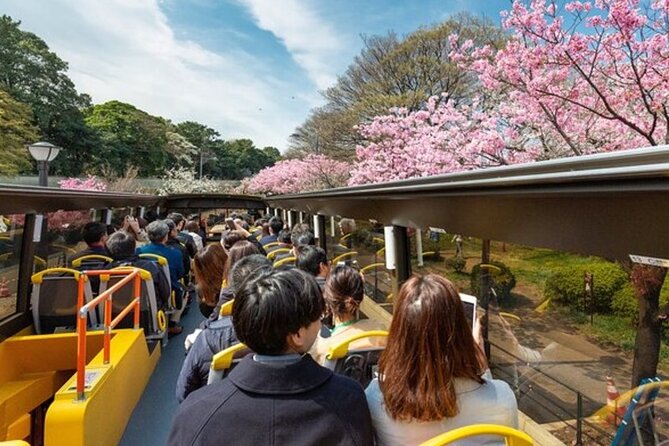
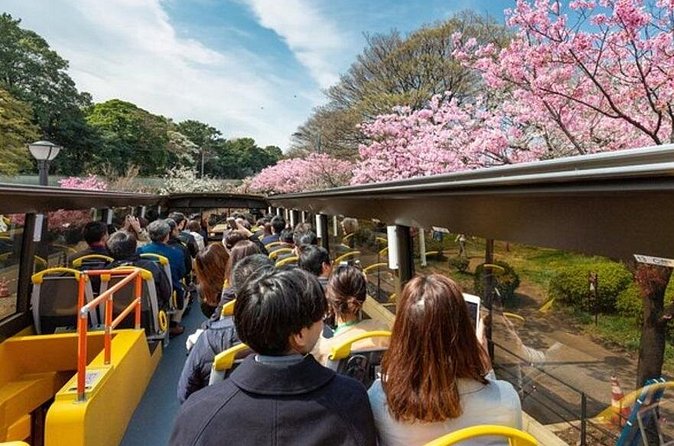
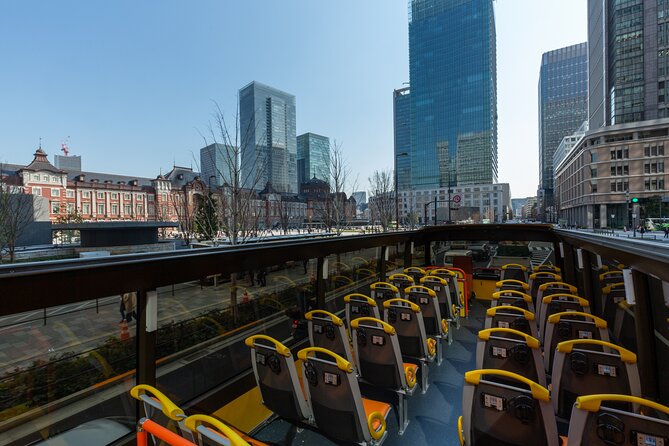
The open top adds a sense of space that you lose on a normal city bus. You can look above street level, spot towers and bridges more easily, and get wider views of Tokyo’s streets. If the roof is closed because of rain, you still get the route and commentary, but the ride loses some of its appeal.
Other guided tours in Tokyo

Starting at the Tokyo VIP Lounge
The meeting point is the Tokyo VIP Lounge at 1-5-9 Yaesu, Chuo City, on the second and third floors. It is near public transportation, but you should check the exact location before departure rather than rely on a last-minute phone search.
Arrive 20 to 40 minutes early. This is not just cautious advice. The bus leaves on schedule, and late arrivals are not accommodated, even if you contact the operator before departure. No refund is given for arriving late or going to the wrong meeting point.
The lounge is a useful part of the setup. Open-top bus customers can use its facilities free of charge from 40 minutes before departure. Outside that window, the facility may charge a fee. A drink while you wait makes the early arrival less of a chore, particularly if you have just arrived in Tokyo with luggage.
The area is shared with other users, so keep the usual Japanese courtesy in mind. The activity uses a mobile ticket, and Japanese-speaking staff are available to help. There is no live guide on the bus, so the staff at the lounge are your main point of assistance before you leave.
Bay Course: Tokyo Tower, Rainbow Bridge, and Odaiba
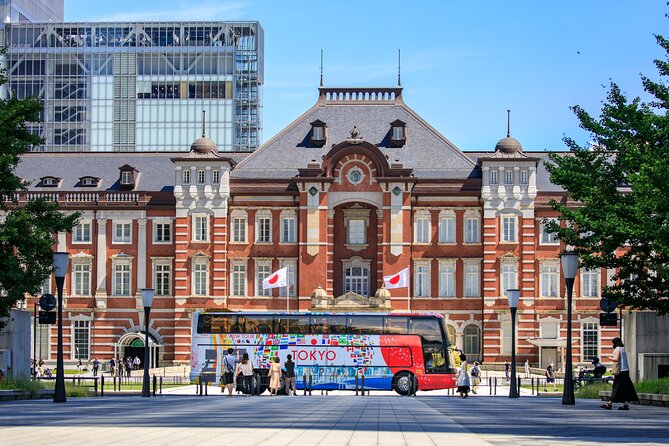
The Bay Course is the more scenic choice if you want water views and a strong mix of old Tokyo, modern Tokyo, and waterfront development. The route begins at the Tokyo Station Red Brick Station Building and passes through Marunouchi before heading toward Tokyo Bay.
Tokyo Station and Marunouchi
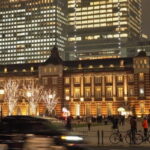
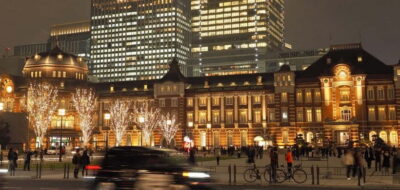
Tokyo Station’s red brick facade gives the ride a grand opening. The building is one of the city’s most recognizable pieces of early modern architecture, while Marunouchi around it is a major business district with broad streets and polished office buildings.
From the bus, you get context rather than a close inspection. You will not have time to wander through the station or explore Marunouchi’s shops. Still, seeing the station and business center at the beginning helps establish Tokyo’s central core.
Zojoji Temple and Tokyo Tower
The route then passes Zojoji Temple and Tokyo Tower. These two sights make an excellent pair. Zojoji offers a traditional temple setting, while Tokyo Tower rises nearby as one of the clearest symbols of postwar Tokyo.
The bus gives you a useful sightline between the temple grounds and the tower. Have your camera ready, but do not expect a long photo stop. This is a drive-by view, and traffic can affect exactly how long each sight remains in view.
A few more Tokyo tours and experiences worth a look
Shibaura and Rainbow Bridge
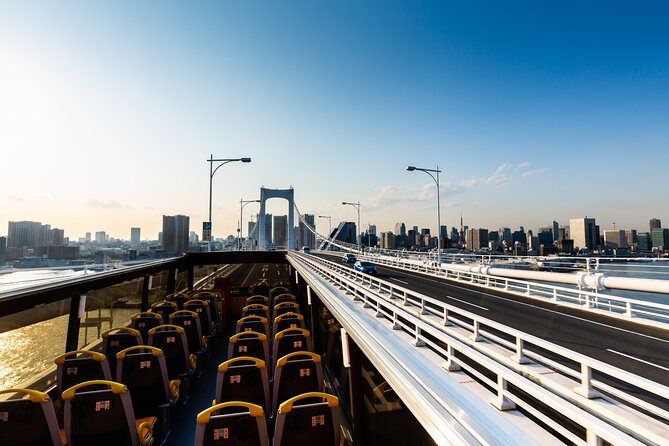
The Bay Course crosses or approaches Rainbow Bridge at two levels, including the first level near Shibaura and the second level later in the route. That gives the ride a changing perspective on Tokyo’s waterfront engineering and skyline.
This is one of the best reasons to choose the Bay Course. You are not just passing a bridge in the distance. You get a sense of its scale while moving through the bay area, with water and elevated roads opening up around you.
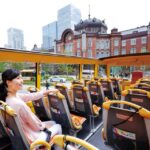
The open-top seating is most useful here. On a clear day, you can look across the bay and watch Tokyo’s dense center give way to a more open waterfront view. Wind can be strong on an upper deck, so secure hats and loose items. Selfie sticks and umbrellas are not allowed.
Fuji TV Building and the Statue of Liberty
In Odaiba, the bus passes the Fuji TV Building and the Statue of Liberty. The Fuji TV structure is easy to recognize, and the small Statue of Liberty replica is a playful reminder of Odaiba’s unusual mix of entertainment, shopping, public art, and waterfront space.
You will not stop at either sight. That is both the strength and limitation of the route. You can cover a lot of ground in one hour, but you need to return later by train or on foot if one of these places catches your attention.
Odaiba Seaside Park and the return through Ginza
Odaiba Seaside Park gives you another waterfront view before the route returns across Rainbow Bridge, passes Shiodome, and reaches Ginza. Shiodome brings a cluster of modern towers and transport infrastructure, while Ginza offers Tokyo’s famous central shopping district.
The contrast is pleasing: temple and tower, bridge and bay, television architecture and shopping streets. You get a quick visual outline of several parts of Tokyo that would take much longer to connect on foot.
City Course: the Imperial Palace, Roppongi, and Ginza

The City Course keeps you closer to Tokyo’s central districts. It passes the Imperial Palace, Tokyo Midtown, Roppongi, Tokyo Tower, and Ginza. The available route details are less extensive than those for the Bay Course, so choose it based on the kind of Tokyo you want to see rather than expecting a precise stop-by-stop walking plan.
The Imperial Palace area offers broad grounds and a sense of Tokyo’s historic center. From the bus, you see the area as part of the city’s structure, not as a palace tour. Palace access rules and grounds open to the public are separate from this activity.
Tokyo Midtown and Roppongi show another side of the capital. Here, large commercial and cultural developments sit alongside major roads and high-rise buildings. Tokyo Tower appears again as a visual anchor, helping you follow where you are even when the city feels too large to place.
Ginza rounds out the ride with its elegant central streets and luxury retail identity. The City Course may suit you better if you care more about central Tokyo, business districts, and well-known city icons than waterfront scenery.
If you are choosing between the two, I would pick the Bay Course for the most varied ride. Pick the City Course if the Imperial Palace and Roppongi matter more to you, or if you want to stay in the central city rather than head toward Odaiba.
How the GPS audio guide performs
The automatic audio system is a useful idea. GPS tracks the bus and sends information connected to your location, with adjustments for traffic and road changes. You can listen in Japanese, English, Chinese, French, Korean, Vietnamese, or Thai.
This setup frees you from watching a guide or trying to match printed notes to passing buildings. It also lets the ride remain quiet and easygoing. For many people, especially those who do not want a full live tour, that is a good fit.
The system is not perfect. Commentary may occasionally be out of sync with the sight outside, and you might not always know which building the recording is describing. Repeated music between sections can also become irritating during the ride.
I recommend treating the audio as background context rather than a precise spoken map. Look first, listen second, and do not worry if a landmark appears a few seconds before or after its explanation. The bus route itself remains useful even when the timing is imperfect.
You need earphones with a 3.5mm mini plug. If you do not have a pair, optional earphones cost 100 yen. Check your phone accessories before leaving, since modern wireless earbuds may not connect to the bus audio system.
What the $11.71 price really buys you
At about $11.71 per person, this is one of the cheaper organized ways to see a wide slice of Tokyo. The price includes the bus ride, multilingual audio guide, and assistance from Japanese-speaking staff. It does not include entry to any attraction because the bus does not stop for visits.
The value is strongest when you want orientation. A taxi covering a similar set of districts would cost far more, while piecing together the same route by train would take planning and would not give you the same continuous views. You also avoid the effort of changing trains during your first hours in the city.
The value drops if you are hoping for a traditional sightseeing tour. There is no live guide, no time to get off, and no admission to Tokyo Tower, Odaiba Seaside Park, the Imperial Palace, or any other sight. You are paying for a moving overview.
The bus can carry up to 40 people. That is large enough to feel like a shared group experience, though the open deck keeps the ride from feeling as enclosed as a normal coach. Seating and visibility may matter, so arrive early as requested rather than treating check-in as a last-second formality.
Weather, luggage, and other practical details
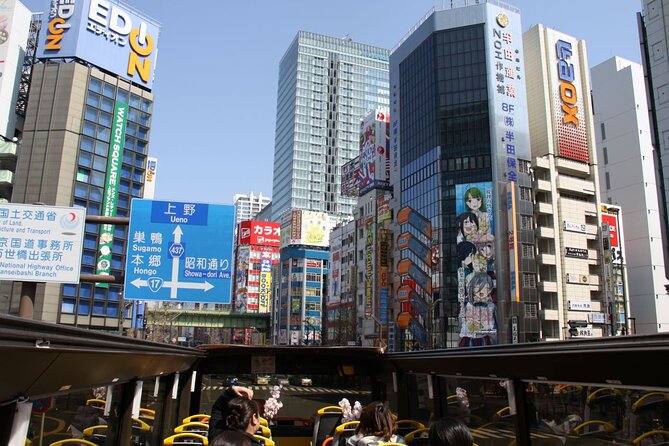
The activity operates in ordinary rain or shine. In wet weather, the open top may be closed, so the experience can become more like a standard bus tour. Cancellations are reserved for extreme conditions such as typhoons, and schedules can shift because of weather, traffic, or other unexpected problems.
Do not bring food, smoking materials, umbrellas, or selfie sticks onto the vehicle. These rules are easy to follow, but an umbrella ban matters if the forecast looks uncertain. Bring a rain jacket instead, and keep loose belongings secure in the wind.
One piece of luggage is allowed per person. Stored luggage cannot be reached during the ride, so keep valuables with you. The maximum size for luggage placed in the trunk is a combined height, width, and depth of 155 centimeters.
The activity ends back at the Tokyo VIP Lounge. It is not a transport service to Odaiba, Ginza, or any of the other areas on the route, so plan your next stop from the lounge rather than assuming you will be dropped near a sight.
Free cancellation is available up to 24 hours before the start time. Changes or cancellations inside that window are not accepted, and the local Tokyo cut-off time applies. If the operator cancels because the minimum number of participants is not met, you can choose another date or experience, or receive a full refund.
Who should book this Tokyo bus tour

I would recommend it most strongly to first-time visitors, people with limited time, and anyone who wants an easy introduction before exploring Tokyo independently. It also suits you if you have just flown in and want a low-effort activity that still gives you a clear sense of the city.
The ride can work well for families and mixed-age groups because most participants can take part, and nobody has to manage a long walking route. It is also a sensible option for anyone who finds Tokyo’s rail network intimidating at first.
I would not choose it as your only sightseeing activity. The short duration means you will see many places but experience none of them in depth. Pair it with a later visit to the area that interests you most, such as Odaiba, Ginza, Tokyo Tower, or the Imperial Palace area.
The Bay Course is my preferred option for variety and open views. The City Course is better for central Tokyo landmarks. Whichever you select, keep your expectations clear: you are buying a scenic overview, not a guided tour with stops.
Should you book it?
Book this ride if you want an inexpensive, comfortable way to get your bearings in Tokyo, especially on your first day. The strongest features are the 70-minute length, the open-top views, the range of audio languages, and the chance to see distant districts without changing trains.
Skip it if you need time inside the attractions or want a live guide who can answer questions. The recorded narration may not always match the view perfectly, and the bus never becomes a hop-on, hop-off service.
For about $11.71, I think it is a fair buy when used as an introduction. Choose the Bay Course for Tokyo Bay and Rainbow Bridge, arrive early at the Yaesu lounge, bring compatible earphones, and save the rest of your day for exploring the sight that looks most interesting from the road.
FAQ
How long does the open-top bus tour last?
The ride lasts approximately 1 hour and 10 minutes.
Is this a hop-on, hop-off bus?
No. This is a continuous sightseeing ride. You cannot get off at the attractions during the route.
Where does the bus tour start?
It starts at the Tokyo VIP Lounge at Japan, 103-0028 Tokyo, Chuo City, Yaesu, 1-chōme 5-9, second and third floors.
Where does the tour end?
The activity ends back at the Tokyo VIP Lounge.
Which languages are available for the audio guide?
The GPS-enabled audio guide is available in Japanese, English, Chinese, French, Korean, Vietnamese, and Thai.
Do I need to bring earphones?
Earphones are needed for the audio guide, and the jack accepts only 3.5mm mini plugs. Optional earphones are available for 100 yen.
What happens if it rains?
The tour operates in ordinary rain, but the open top may be closed. Cancellations occur only in extreme weather conditions such as typhoons, and schedules may change because of weather or traffic.
How early should I arrive?
You should check in 20 to 40 minutes before departure. The bus leaves promptly and cannot wait for late arrivals.
More Audio Tours in Tokyo
More Self-Guided Tours in Tokyo
More Guided Tours in Tokyo

More tours in Tokyo we've reviewed




Self-Guided Tours, compared.
 ★ 3.8Tokyo: Open Top Panoramic Sightseeing Bus with Audio GuideFrom $111h 10m
 ★ 4.0Tokyo: 60min Panoramic Open Top Bus Tour with Audio GuideFrom $141 hour
 ★ 3.7Akihabara: Self-Guided Tour with a special brochureFrom $61 day
 ★ 3.5Tokyo Self-Guided Audio TourFrom $9
 ★ 4.6Hakone: Self Guided Trip to Mt. Fuji // Made by Local GuidesFrom $31 day