
Reviewed · SHIBUYA TOURS
Tokyo: Private Shibuya Bar Crawl Tour -3 Drinks & Local Foods-
Shibuya’s best nightlife is often tucked above the street, behind Japanese-only menus, or inside narrow places you would pass without noticing. This private bar crawl gives you a local guide to handle the ordering, explain izakaya customs, and lead you through three drinking spots before finishing at Shibuya Crossing.
I like two things here. First, the food is not an afterthought: you receive five to six local dishes as a full dinner. Second, the private format lets you ask direct questions and adjust some orders to your taste. The main consideration is pace. Three hours, three stops, dinner, drinks, and a crossing photo make for a full evening, not a slow, lingering meal.
In This Review
- Key points to know before booking
- Why a Shibuya bar crawl can be useful
- Meeting in Dōgenzaka at 6 pm
- Stop one: Tengu Dai Hall in Mark City
- Crossing Shibuya before the next bar
- A cozy stop near Bunkamura Street
- Stop three: Dagashi-Bar and old-school Japanese snacks
- What the three drinks really include
- Food as a full Japanese dinner
- The private format and guide quality
- Is $105.10 good value?
- Who should book this evening?
- Booking, timing, and cancellation
- Should you book this Shibuya bar crawl?
- FAQ
- How long is the Shibuya bar crawl tour?
- What time does the tour start?
- Where does the tour meet?
- Where does the tour finish?
- How many bars or izakayas does the tour visit?
- Are food and drinks included?
- Is this a private tour?
- Do I need a paper ticket?
- Can I cancel for a full refund?
Key points to know before booking
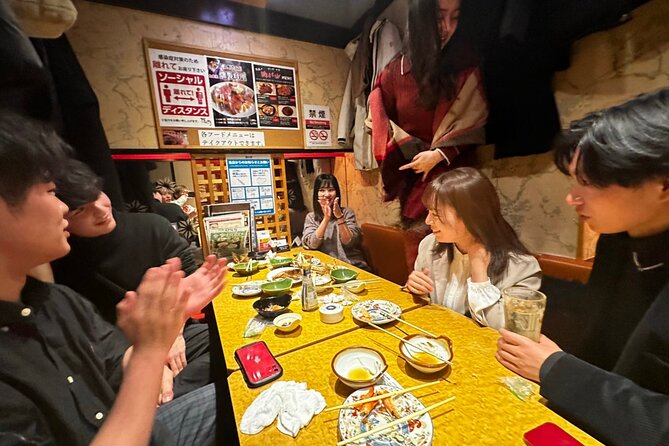
- Three local izakaya stops: Visit Tengu Dai Hall, a cozy spot near Bunkamura Street, and the nostalgic Dagashi-Bar.
- Dinner is included: Expect five to six guide-selected Japanese dishes, with food choices adjusted to your preferences where possible.
- Three drinks included: Choose from the available selections, with options such as sake and shochu mentioned as part of the experience.
- Private group setting: Only your own group takes part, making it easier to ask questions and learn at your own pace.
- English-speaking local guides: Guides such as Taku and Moe explain menus, food customs, izakaya manners, and Japanese nightlife.
- Ends at Shibuya Crossing: The tour wraps up with a memorable photo at one of Tokyo’s most famous intersections.
Why a Shibuya bar crawl can be useful
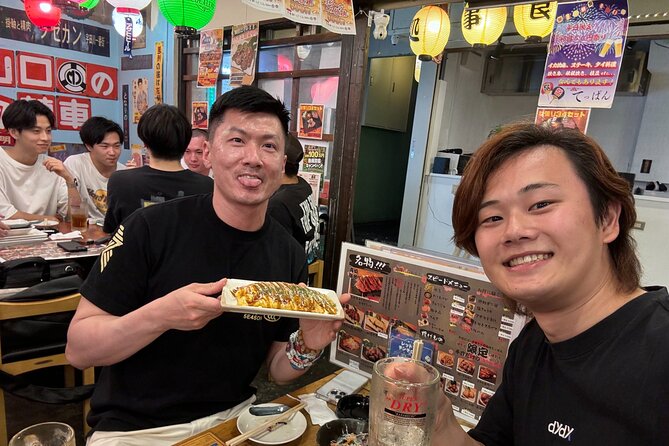
Shibuya is easy to enjoy from the outside. You can watch the crowds at the Scramble Crossing, browse the bright shopping streets, and follow the noise toward the nightlife. The harder part is knowing where to eat once you leave the main roads.
Many izakayas have menus written mainly in Japanese. Some are in buildings with little street presence. Others have a narrow entrance and no obvious welcome for someone who cannot read the signs. That is where this tour earns its keep. Your guide chooses the places, leads you inside, explains what is being served, and helps you order.
I especially like the food focus. Three drinks alone would make for a pleasant night, but they would not amount to dinner. Here, the package includes five to six must-try local dishes, so you can treat the tour as your evening meal rather than an expensive introduction followed by another restaurant search.
The guides also explain the social side of izakayas. You learn how these casual Japanese drinking places work, what dishes are intended for sharing, and how to approach unfamiliar foods. Guides Taku and Moe are specifically identified as English-speaking hosts, with Moe praised for answering questions about food, music, and Japanese culture.
A few more Tokyo tours and experiences worth a look

Meeting in Dōgenzaka at 6 pm
The tour starts at 6 pm outside the 7-Eleven in Shibuya’s Dōgenzaka area, at 1-chome 3-11, on the first floor. This is a practical starting point because Dōgenzaka is close to Shibuya’s main nightlife zone and is served by public transportation.
Give yourself enough time to find the exact convenience store. Shibuya has several busy roads, large buildings, and plenty of visual noise, so arriving a little early is wise. Your mobile ticket and booking confirmation should be ready on your phone.
The evening begins before the first drink. As you move into the neighborhood, your guide can provide the setting for what follows. This introduction matters because the tour is not simply a series of bars. It is meant to show how local drinking culture fits into everyday city life.
Stop one: Tengu Dai Hall in Mark City
The first stop is Tengu Dai Hall, a large Japanese izakaya inside Shibuya Mark City. After meeting outside, you spend about an hour here.
This is a sensible opening stop. A larger izakaya gives you room to settle in, meet your guide, and begin with familiar examples of Japanese food and drinks. The atmosphere is casual and social rather than formal, which suits a first stop where you are still learning how the evening works.
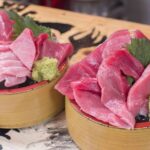
Your guide selects several dishes and explains what you are eating and how it is usually enjoyed. The meal may include popular items such as sashimi and tempura, both specifically praised as highlights of the food offering, though the exact menu can change. The guide may also help you customize orders to your liking.
That flexibility is useful for a group with mixed appetites. You can ask questions before trying an unfamiliar dish instead of pointing at a menu and hoping for the best. It also helps if someone in your group has a strong preference for particular flavors or textures.
The drawback is that Tengu Dai Hall is a big, lively izakaya rather than a tiny secret room. If your ideal night means sitting in an especially intimate neighborhood bar from the first minute, this opening stop may feel more public. Its size does make it easier to get comfortable, though, and the relaxed mood suits many first-time visitors.
Crossing Shibuya before the next bar
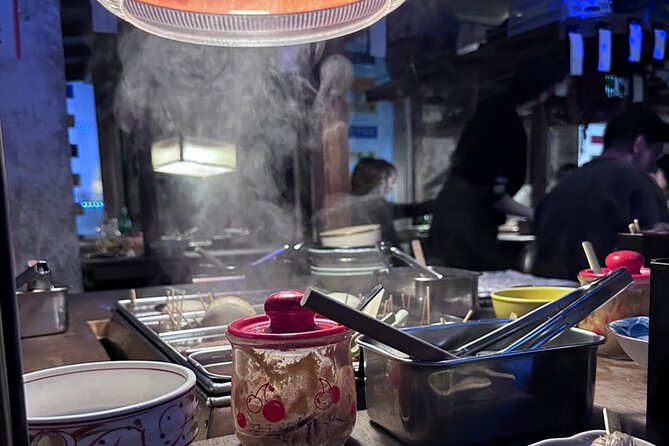
The route includes a stop at Shibuya Crossing, the famous intersection where pedestrians move from several directions at once. The crossing is one of Tokyo’s most recognizable scenes, and seeing it during an evening out connects the food experience to the larger energy of the district.
This is not presented as a long sightseeing visit. Think of it as a route highlight and a chance to take in one of the city’s signature views. The final tour photo is taken here, so the crossing also gives the evening a clear finish.
The timing is worth noting. Shibuya Crossing can be crowded, and the tour takes place at night, when the surrounding signs and traffic add to the spectacle. Keep your group together while moving through the area, and follow the guide’s directions.
A cozy stop near Bunkamura Street
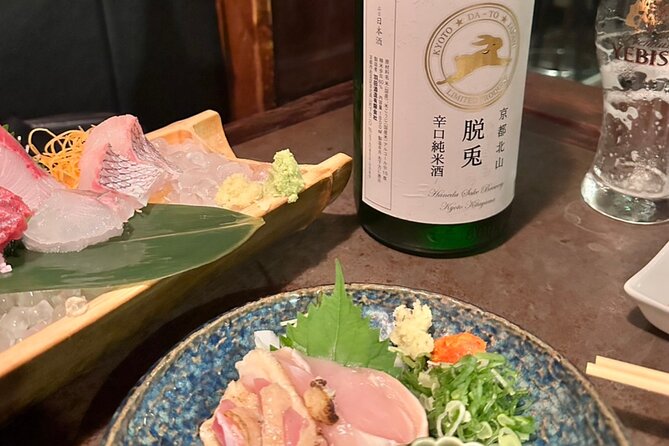
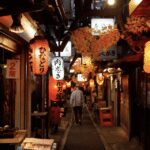
The second izakaya is described as a warm, welcoming place along Bunkamura Street. This area has a mix of music, nightlife, and local activity, so the stop gives you a different feel from the larger Mark City venue.
The exact name of this restaurant is not provided, but the role it plays in the evening is clear. It is a smaller, cozier setting for classic Japanese drinks and simple dishes. This is the kind of stop where the guide’s help can be especially valuable, since a more local atmosphere may come with a less accessible menu.
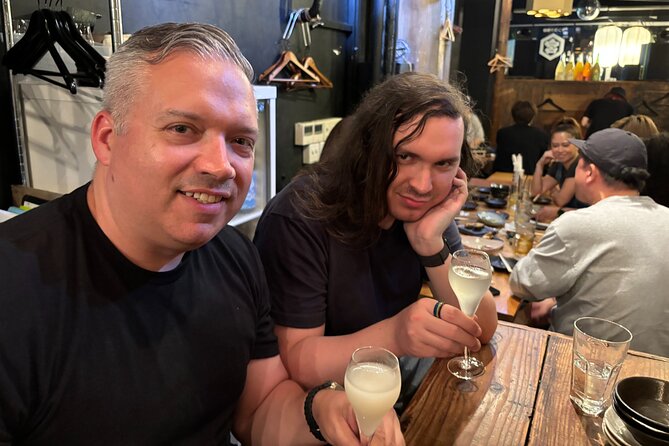
You can expect another round of food and drinks, with explanations about what to try. The guide may discuss Japanese drinking habits, table customs, and the difference between various beverages. For someone new to sake or shochu, this turns a drink order into a small lesson rather than a blind choice.
I would view this stop as the most conversation-friendly part of the route. In a private group, you have room to ask questions without worrying about slowing down strangers. You can ask your guide about local eating habits, music, or the neighborhood itself.
A few more Tokyo tours and experiences worth a look
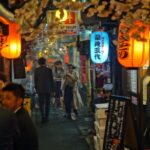
Stop three: Dagashi-Bar and old-school Japanese snacks
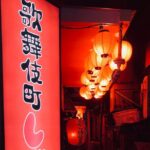
Dagashi-Bar provides the evening’s playful change of tone. The bar is built around dagashi, inexpensive Japanese sweets and snacks associated with childhood and old-fashioned corner shops. Its retro style makes it different from a standard izakaya meal.
This stop is less about a polished dinner setting and more about curiosity. You get to see the kind of simple treats that many Japanese people recognize from growing up, while enjoying another drink in a relaxed atmosphere. It is a lighthearted way to finish the food portion of the crawl.
For you, the value lies in the contrast. The first stop introduces a large, familiar izakaya environment. The Bunkamura Street stop adds a cozier local mood. Dagashi-Bar then brings in nostalgia and a bit of fun. Three similar restaurants would be repetitive, but these settings are intended to offer different windows into Shibuya nightlife.
If you prefer serious food exploration, Dagashi-Bar may seem less substantial than the earlier meal stops. The tour still includes dinner overall, but this final venue is designed around snacks and atmosphere, not a formal tasting menu. Go in expecting variety rather than three equal restaurant courses.
What the three drinks really include
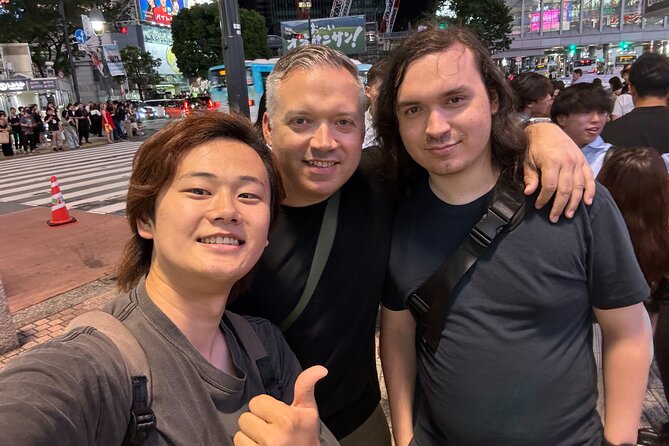
The price includes three drinks, chosen from the available selections. Sake and shochu are among the Japanese drinks highlighted in the experience, though the exact choices depend on the selections offered during your visit.
Three drinks spread across three stops is a moderate amount. You are not signing up for a heavy drinking night. Instead, you get enough to sample different drinks while keeping the focus on food, conversation, and cultural context.
The guide’s assistance is important here. Japanese drinks can be served in different ways, and labels may not be easy to read. A local host can explain what is available and help you choose something suitable. If you want additional food, drinks, or other items, those cost extra.
This package is a better fit for people who enjoy tasting and learning than for serious nightlife regulars looking to order freely all evening. The included drinks give structure to the night, while the paid extras let you add more if needed.
Food as a full Japanese dinner
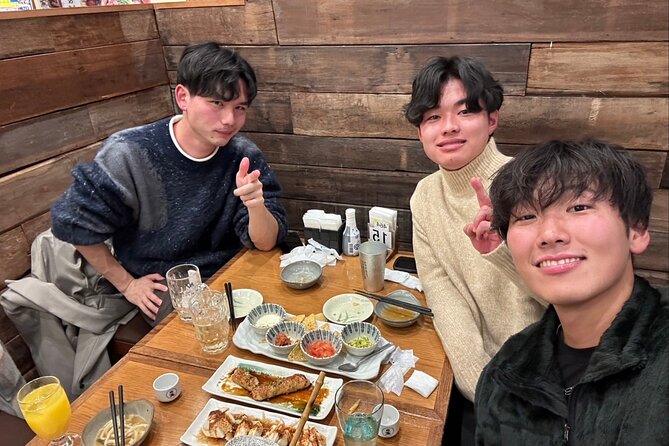
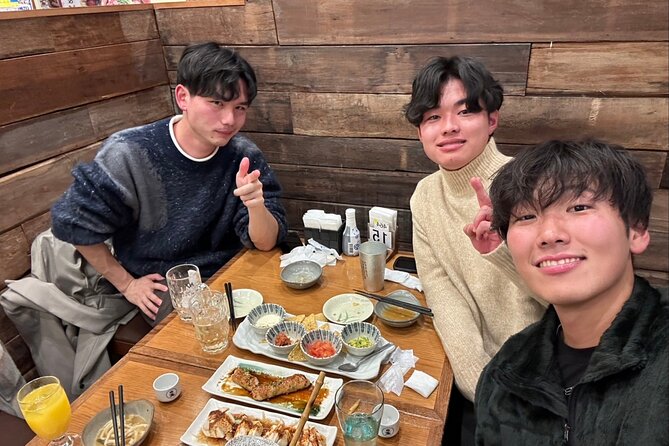
Five to six local dishes are included, selected by the guide. That is the strongest practical feature of the package. You should arrive hungry, since the food is intended to function as a full dinner rather than a few token bites.
The food may include sashimi, tempura, and other izakaya staples, but the exact dishes are not fixed in the details provided. The guide’s best selections can change with availability and the group’s preferences. That means you should expect a representative meal, not a guaranteed list of named dishes.
Several parts of this setup work well. You do not need to decode every menu. You can ask how to eat each dish. And you get variety without ordering a large amount of one unfamiliar item on your own.
The food also gives you a reason to linger at each venue. Izakaya dining is built around sharing dishes over drinks, so the meal demonstrates the social rhythm of the setting. You are not simply eating at three restaurants in succession. You are seeing how small plates and conversation shape an evening out.
The private format and guide quality
Only your own group takes part. That makes the tour feel more like a guided evening with a local friend than a standard large walking group.
The format is valuable if you are nervous about ordering in Japanese or unsure about local customs. It also works well for couples, families with older children, and small groups of friends who want to ask plenty of questions.
The guides are a major part of the experience. Taku is noted for helping English-speaking participants experience Japanese cuisine, while Moe is described as approachable and able to discuss everything from food and izakayas to music. Those details suggest that the guide role goes beyond showing the way.
Still, a private tour is only as good as the guide assigned that evening. The available information identifies Taku and Moe, but it does not guarantee which guide you will receive. You should expect friendly local guidance, not request a specific host unless the provider confirms that option.
Is $105.10 good value?
At $105.10 per person, the tour is not the cheapest way to have a few drinks in Shibuya. You are paying for more than the food and beverages, though. The cost also covers a private guide, three venues, help with Japanese menus, cultural explanations, and photos sent after the tour.
The dinner component strengthens the value. Five to six dishes plus three drinks can add up quickly when purchased separately, especially in central Shibuya. The guide also saves you the time and uncertainty of finding three suitable places on your own.
I would call the price fair for a first evening in Tokyo if you want structure and support. It is less compelling for an experienced Japan visitor who already knows izakayas, reads Japanese menus comfortably, and prefers to choose every restaurant independently.
The private setup matters here. A small group can ask more questions and move at a comfortable social pace. For a couple or close group of friends, the price may be easier to justify than for someone traveling alone and focused only on minimizing costs.
Who should book this evening?
I would recommend it most strongly to first-time visitors who want to try Japanese nightlife without worrying about etiquette or language barriers. It is also a good choice for food-focused people who want a broad sample of dishes rather than one long meal.
You will likely get the most from it if you:
- Want dinner and sightseeing in the same evening
- Prefer a private group to a large organized tour
- Are curious about sake, shochu, and casual Japanese drinking culture
- Like asking questions about food and local customs
- Want help with Japanese-only menus
- Enjoy trying several different settings in one night
You may want to skip it if you dislike drinking, need a fixed menu, or prefer a quiet meal with no route between venues. The three-hour schedule also leaves limited time for lingering at any one place.
Most participants can take part, and the route is near public transportation. The experience is not described as a specialized food tour for dietary restrictions, so contact the provider before booking if you need firm ingredient guarantees.
Booking, timing, and cancellation
The tour lasts about three hours and begins at 6 pm. It finishes at Shibuya Crossing, at 21 Udagawacho, giving you an easy landmark at the end of the night.
Confirmation arrives when you book, and the experience uses a mobile ticket. It is commonly booked well ahead, with an average booking time of about 35 days in advance, so planning early is sensible if your Tokyo dates are fixed.
Free cancellation is available up to 24 hours before the local start time. Cancel within 24 hours, or request changes during that period, and you will not receive a refund.
Should you book this Shibuya bar crawl?
Book it if you want a friendly introduction to izakaya culture, especially if Japanese menus and nightlife customs feel intimidating. The combination of a private guide, a real dinner, three drinks, and three contrasting venues gives you a useful first look at how locals eat and socialize in Shibuya.
I would be more cautious if you already know Tokyo’s bar scene or want a highly controlled tasting menu. For everyone else, particularly first-time visitors who want to eat well without spending the evening guessing at signs, this is a practical and enjoyable way to begin.
FAQ
How long is the Shibuya bar crawl tour?
The experience lasts approximately three hours.
What time does the tour start?
The tour starts at 6 pm.
Where does the tour meet?
You meet at the 7-Eleven Japan at 1-chome 3-11, Dōgenzaka, Shibuya, Tokyo 150-0043, on the first floor.
Where does the tour finish?
The tour ends at Shibuya Crossing, at 21 Udagawacho, Shibuya, Tokyo 150-0042.
How many bars or izakayas does the tour visit?
The route includes three izakaya-style venues: Tengu Dai Hall, a cozy venue near Bunkamura Street, and Dagashi-Bar.
Are food and drinks included?
Yes. The price includes five to six selected local dishes and three drinks from the available selections. Additional food, drinks, and other items cost extra.
Is this a private tour?
Yes. Only your own group participates in the private activity.
Do I need a paper ticket?
No. The experience includes a mobile ticket.
Can I cancel for a full refund?
Yes, if you cancel at least 24 hours before the local start time. Cancellations within 24 hours are not refundable.
More Private Tours in Tokyo



More Bar Hopping & Izakaya Tours in Tokyo
More Shibuya Tours in Tokyo

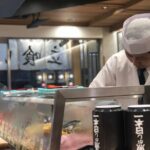
More tours in Tokyo we've reviewed
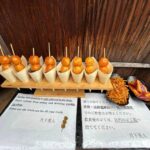
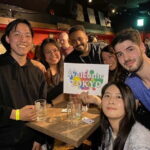

Shibuya Tours, compared.
 ★ 5.0Official Street Go-Kart in ShibuyaFrom $76
 ★ 4.9Tokyo: Street Kart Experience in ShibuyaFrom $741 hour
 ★ 5.0Shibuya Meltdown Nightlife Tour: All-You-Can-Drink Bar HoppingFrom $106
 ★ 5.0Shibuya Official Street Go-Kart in Shibuya AnnexFrom $69
 ★ 5.0Tokyo: Shibuya Food Tour (13 dishes and 4 Eateries)From $77
 ★ 5.0Best of Shibuya Food TourFrom $217