
Reviewed · MT FUJI DAY TRIPS
Tokyo: Mt Fuji Private Day Tour with English-speaking Driver
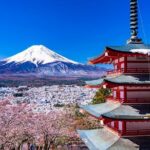
Mt Fuji is the star here, but the best part of this day is how many sides of the mountain you see. You move from spring-fed ponds and a Shinto shrine to Kawaguchiko’s broad lake views, then on to a rebuilt village and the mountain’s 5th Station. I like the private vehicle and the flexible route, especially for families or groups of friends.
I also like the mix of scenery and culture. Oshino Hakkai’s clear spring ponds feel different from the photo stops, while Saiko Iyashi no Sato Nenba lets you rent traditional clothing and step into old-style houses. The main concern is time: seven stops in 10 hours is a full day, and a cruise or ropeway ride may not fit if traffic, weather, or crowds slow the route.
In This Review
- Key points at a glance
- Why this private Mt Fuji day works
- Kitaguchi-hongu Fuji Sengen Shrine: a calm opening
- Oshino Hakkai and the mountain’s spring water
- Lake Kawaguchi and Oishi Park: the classic Fuji view
- Saiko Iyashi no Sato Nenba and traditional dress
- Mt Fuji 5th Station: the highest point on the route
- How the full day feels in practice
- What the $451 group price really buys
- Who should book this Fuji tour?
- Final booking advice
- FAQ
- How long does the Mt Fuji private tour last?
- Where can pickup take place?
- Where can the tour drop me off?
- How many people can join the private group?
- Is the driver English-speaking?
- Does the tour include a Lake Kawaguchiko cruise?
- Is the ropeway ride included?
- Is food included?
- Is the tour wheelchair accessible?
Key points at a glance
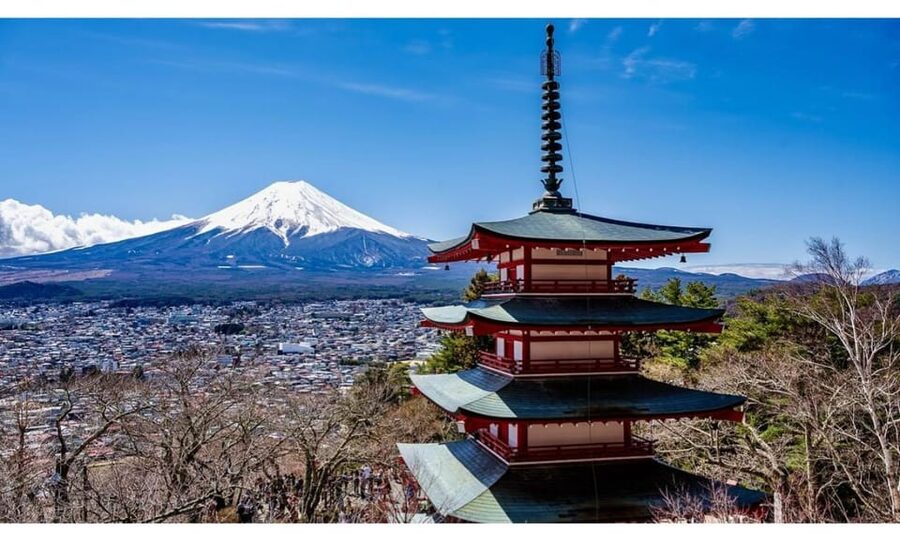
- Seven major stops in one 10-hour day: The route includes Kitaguchi-hongu Fuji Sengen Shrine, Oshino Hakkai, Lake Kawaguchi, Oishi Park, Saiko Iyashi no Sato Nenba, and Mt Fuji’s 5th Station.
- Private transport for up to five people: The $451 group price works out to about $90 per person when five people share it, before any extra entry costs.
- A good range of Fuji viewpoints: You see the mountain near ponds, from the lakeshore, from a park, and from the 5th Station.
- Traditional clothing is part of the village visit: Saiko Iyashi no Sato Nenba offers the chance to rent Japanese clothing for photos and a closer look at local customs.
- Cruise and ropeway are time-dependent: Both are listed as part of the experience, but the day’s schedule determines if they can happen.
- English-speaking drivers include Khan and Malik on recent trips: Driver assignment is not guaranteed, but both have been praised for friendly service and useful suggestions.
Why this private Mt Fuji day works
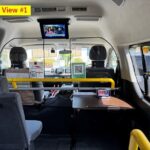
A day from Tokyo to Mt Fuji can be awkward by public transport. The sights are spread across Yamanashi Prefecture, and fitting several of them into one day requires careful connections. Here, your English-speaking driver handles the road while you watch the scenery and decide how long to spend at each stop.
The private format matters most for a small group. Up to five people can travel together, so the $451 group price is strongest when shared by a family or group of friends. At five people, that is roughly $90 each. For one or two people, the cost is much harder to justify unless convenience matters more to you than saving money.
You have four pickup areas: Saitama, Tokyo, Koto City, and Shinjuku City. The return areas are Saitama, Koto City, Tokyo, and Shinjuku City. Confirm your exact pickup point and starting time before booking, since the full day lasts about 10 hours and traffic can affect how much time you have at the sights.
The driver is English-speaking, but this is best understood as a private driving and sightseeing service rather than a museum-style guided tour. You can expect help with the route, local background, and practical suggestions. Khan was specifically praised for pointing out extra activities and a popular ice cream stop with a Mt Fuji view. Malik was described as friendly and well informed. Those names are useful to know, though you should not assume one of them will drive your vehicle.
A few more Tokyo tours and experiences worth a look
Kitaguchi-hongu Fuji Sengen Shrine: a calm opening
The first scheduled sightseeing stop is Kitaguchi-hongu Fuji Sengen Shrine, with about an hour for a guided visit and views along the way. It gives the day a cultural beginning before the tour turns toward ponds, lakes, and mountain photographs.
A shrine dedicated to Mt Fuji helps explain that the mountain is more than a scenic backdrop. The stop also gives you a chance to walk in a quieter setting before reaching the more camera-focused parts of the route. Comfortable shoes are important from the start.
One hour is enough for a visit, but not for a slow, detailed exploration. If you prefer scenery over religious sites, this may feel like a short pause. If you like understanding the meaning behind Japanese places, it adds useful context to the rest of the day.
Oshino Hakkai and the mountain’s spring water
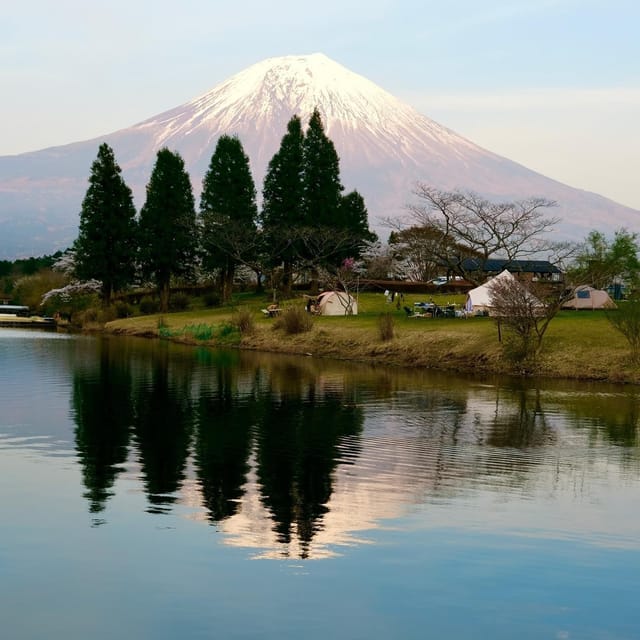
Oshino Hakkai is one of the most distinctive stops. The village has eight ponds fed by spring water from Mt Fuji, located in the foothills in southeastern Yamanashi Prefecture. The clear water is the point of the visit, but the setting also gives you a look at a traditional rural settlement.
You have about an hour here for a visit, a guided walk, and photographs. This is not simply another place to point your camera at Mt Fuji. The ponds connect the mountain to the water beneath your feet, making the area feel tied to Fuji in a physical way.
The stop can be especially rewarding on a clear day, when the water and mountain views work together. Weather still matters. If cloud covers Mt Fuji, Oshino Hakkai remains worth seeing for its ponds, but the full picture will be less dramatic.
Bring water and sunscreen. You may find shade in parts of the village, but the advice for this tour is sensible: wear a hat, use sunscreen, and bring comfortable shoes.
Lake Kawaguchi and Oishi Park: the classic Fuji view
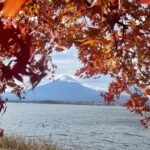
The route continues to Lake Kawaguchi, one of the five lakes associated with Mt Fuji. The other four are Yamanaka, Saiko, Shoji, and Motosu. The lake gives you a broad setting for photographs, and the tour includes time for sightseeing and a photo stop.
Oishi Park follows with another hour for a break, photographs, and a guided visit. This is a useful place to slow down after the first half of the morning. You get open views across the water and a different angle on Mt Fuji than at Oshino Hakkai.
The lake portion is also where a cruise and ropeway ride may fit. Both are listed as included, but the schedule permits them only when there is enough time. That wording matters. You should treat these rides as possible additions, not the main reason to book the tour.
Traffic, queues, weather, and time spent at earlier stops can all affect the plan. If the cruise or ropeway is especially important to you, ask the driver early in the day how the schedule looks. A private tour gives you more control than a large coach trip, but it cannot make a 10-hour day longer.
The cruise is a pleasant way to view the lake from the water. The ropeway offers a higher viewpoint, though the exact experience depends on operating conditions and available time. Neither should replace the main Fuji views in your expectations, since both are secondary to the wider route.
Saiko Iyashi no Sato Nenba and traditional dress
Saiko Iyashi no Sato Nenba is a reconstructed Japanese village near Lake Saiko. Its houses and traditional setting give the day a stronger cultural side, especially after several scenic stops.
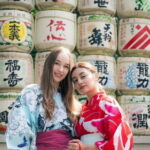
You can explore the houses and, if you wish, rent traditional clothing. This is one of the tour’s more unusual details. The clothing option makes the visit more interactive than a quick walk through a photo stop, and it gives you a way to learn about how people presented themselves in earlier Japanese settings.
The tour also highlights local history and traditional clothing. That makes this stop a good fit for families, photographers, and anyone who wants more than repeated views of Mt Fuji. The one-hour allocation means you may need to choose between browsing the houses, renting clothing, and taking photographs rather than doing everything slowly.
Because the village is reconstructed, it should not be treated as an untouched historic settlement. Its value is in the way it presents traditional buildings and customs in a place that is easy to visit. That distinction helps set the right expectation.
Other private tours in Tokyo

Mt Fuji 5th Station: the highest point on the route
The final listed stop is Mt Fuji’s 5th Station, with about an hour for a visit, a walk, guided sightseeing, and photographs. It offers a closer view of the mountain and a very different feeling from the lakeside stops.
The 5th Station is high on the mountain, so weather can change the experience. On a clear day, it can be the day’s strongest Fuji moment. If clouds roll in, visibility may be limited, and you should not expect a guaranteed view simply because the tour reaches the station.
This is why the tour’s weather warning deserves attention. Forecasts can help you choose the best day, but conditions around Mt Fuji can still change. The best practical approach is to keep your expectations flexible and enjoy the route’s other sights if the peak disappears.
The stop includes walking, so good shoes are essential. Carry water, wear sun protection, and bring a camera. A hat is also useful, especially during open-air stops.
How the full day feels in practice
The route covers a lot. Each major stop receives roughly one hour, with driving time between them, so this is a sightseeing circuit rather than a slow rural day. You will see many places, but you will not have unlimited time at any one of them.
That pace is the main trade-off. I like the variety because it keeps the day from becoming a series of identical Fuji photographs. You get a shrine, ponds, lake views, a park, a reconstructed village, and a high mountain viewpoint. Still, anyone who prefers lingering over lunch, wandering without a clock, or taking long photo sessions may find the schedule tight.
Food is not included. Plan to buy or bring your own meals and snacks, though the supplied details do not specify a particular restaurant or lunch stop. Since the tour lasts 10 hours, do not leave Tokyo without water and something to eat unless you are comfortable finding food during the day.
The route is private, which gives your group a more personal day than a standard bus excursion. You can ask questions, request practical help, and discuss the timing of optional activities with the driver. It does not mean every stop can be extended, since the return to Tokyo still has to fit within the day.
What the $451 group price really buys
At $451 per group of up to five, the price is easiest to defend when the vehicle is full. Five people sharing the cost pay about $90 each. Four people pay about $113 each, three pay about $150 each, and two pay about $226 each, before extra admission charges.
The value comes from private transport, an English-speaking driver, hotel-area pickup options, and a route that reaches several Fuji sights in one day. You are paying for time and convenience as much as for the destinations themselves.
Read the admission details carefully before paying. Oshino Hakkai admission is listed as included, and the visit to Saiko Iyashi no Sato Nenba, the cruise, and ropeway experience are also described as included. Elsewhere, entry tickets are listed as not included. That is a real inconsistency, so ask the provider exactly which tickets and rides are covered, especially if you plan to use the cruise or ropeway.
Food is not included. Traditional clothing rental is presented as an opportunity, but the supplied information does not state its price. Ask about that cost if dressing up is important to your plan.
Who should book this Fuji tour?
I would recommend this tour to a small group that wants to see many Fuji-area sights without managing several train and bus connections. Families may appreciate the private vehicle and the ability to ask the driver for suggestions. Friends sharing the $451 price can also get good value from the arrangement.
It suits photographers who want several types of Fuji viewpoints, though clouds can spoil the main view. It also suits people who want some cultural context through the shrine and reconstructed village, not just a lakeside photo.
You may want a different plan if you prefer a slow day, need a guaranteed cruise or ropeway ride, or are traveling alone on a strict budget. The schedule is active, and the optional lake activities depend on time. The tour is wheelchair accessible, but because the day includes walking, you should confirm how each stop will work for your particular needs.
Recent trips received top marks for the driver’s friendly manner, good driving, useful suggestions, and choice of photo spots. Khan’s tip about an ice cream place with a Fuji view is the sort of small local suggestion that can make a packed day feel more personal. Just remember that weather remains the biggest factor in the quality of the mountain views.
Final booking advice
Book this private day if you are sharing the cost with up to five people and want a broad introduction to Mt Fuji’s lakes, villages, shrine, and mountain viewpoints. The route offers much more variety than a single photo stop, and the English-speaking driver makes a complicated day easier to manage.
Before confirming, check three things: the weather forecast, the exact pickup time, and which entry tickets are included. If the sky looks promising and your group values convenience, this is a practical way to see the Fuji area from Tokyo. If you want a leisurely day or are booking alone, the price and pace deserve closer thought.
FAQ
How long does the Mt Fuji private tour last?
The tour lasts 10 hours, including pickup, sightseeing, travel between stops, and return drop-off.
Where can pickup take place?
Pickup options are Saitama, Tokyo, Koto City, and Shinjuku City.
Where can the tour drop me off?
Drop-off options are Saitama, Koto City, Tokyo, and Shinjuku City.
How many people can join the private group?
The price covers a private group of up to five people.
Is the driver English-speaking?
Yes. The tour includes an English-speaking driver. Khan and Malik have driven recent trips, but a specific driver is not guaranteed.
Does the tour include a Lake Kawaguchiko cruise?
A cruise on Lake Kawaguchiko is listed as included, but it takes place only if the schedule permits. Confirm the exact ticket details with the provider because the entry information is not fully consistent.
Is the ropeway ride included?
The ropeway experience is listed as included, but it depends on the available schedule. Ask the provider which ticket is covered before booking.
Is food included?
No. Food is not included, so bring water and plan for your own meals and snacks.
Is the tour wheelchair accessible?
Yes. The activity is listed as wheelchair accessible, though it also includes walking, so confirm the practical arrangements for each stop if needed.
More Private Drivers in Tokyo

More Private Tours in Tokyo
More Mt Fuji Day Trips in Tokyo
More tours in Tokyo we've reviewed

Mt Fuji Day Trips, compared.
 ★ 5.0Mt Fuji and Hakone 1-Day Bus Tour Return by Bullet TrainFrom $163
 ★ 4.0Mt Fuji & Hakone Cruise, Drum Show Bullet Train 1 Day from TokyoFrom $149
 ★ 4.4Tokyo Mt Fuji 5th St & Hakone Cruise Bus Tour w/Bullet TrainFrom $15410 hours
 ★ 4.5From Tokyo: Mount Fuji Full-Day Sightseeing TripFrom $6810 hours
 ★ 4.7Tokyo: Mt. Fuji Tour, Hakone Ropeway, Owakudani, Lake AshiFrom $5410 hours
 ★ 4.4Tokyo:Mt.Fuji,Kawaguchiko Oishi Park,Arakurayama Sengen ParkFrom $5410 hours