
Reviewed · TEMPLES & MEDITATION
Tokyo Hidden Shrine and Temple Tour
Tokyo Hidden Shrine and Temple Tour Review
Tokyo can feel like a city of office towers, train platforms, and neon signs. This three-hour walk gives you a different view. Starting at Meiji Jingu and ending at Senso-ji, it links three important religious sites while taking you from leafy central Tokyo to old Asakusa.
I like the clear eastward route, which gives you a useful introduction to several parts of the city in one morning. I also like the small maximum group of 20, along with the chance to ask questions instead of simply following a guide with a flag. The main drawback is time: three temples and shrines, travel between them, photo stops, and food leave little room for a slow visit.
- Three major stops in one morning: Meiji Jingu, Toyokawa Inari, and Senso-ji provide three different settings and traditions.
- A rare fox-filled temple visit: Toyokawa Inari is known for its many fox statues and its blend of Buddhist and Shinto elements.
- A strong finish in Asakusa: The tour ends at Senso-ji, giving you easy access to one of Tokyo’s best-known historic districts.
- A guide-led cultural walk: Local hosts explain the sites and can adjust the pace. Guide Ryu is specifically praised for friendly, flexible planning.
- Photo opportunities beyond the usual view: The route includes scenic and Instagram-friendly spots, with mention of aerial views and boating.
- Good morning timing: The 9:00 a.m. start helps you see the first shrine before the day becomes more crowded.
In This Review
- Three Tokyo traditions in three hours
- Entering Meiji Jingu at 9:00 a.m.
- Toyokawa Inari and its fox statues
- Senso-ji gives the morning a grand finish
- Photo stops, views, and a taste of comfort food
- What the guide adds to the experience
- Is $84.92 a fair price?
- Who will enjoy this morning walk?
- Timing, group size, and practical planning
- Should you book the Tokyo Hidden Shrine and Temple Tour?
- FAQ
- How long does the Tokyo Hidden Shrine and Temple Tour last?
- What time does the tour start?
- Where does the tour begin?
- Where does the tour end?
- How many people can join the tour?
- Can I cancel for a full refund?
Three Tokyo traditions in three hours
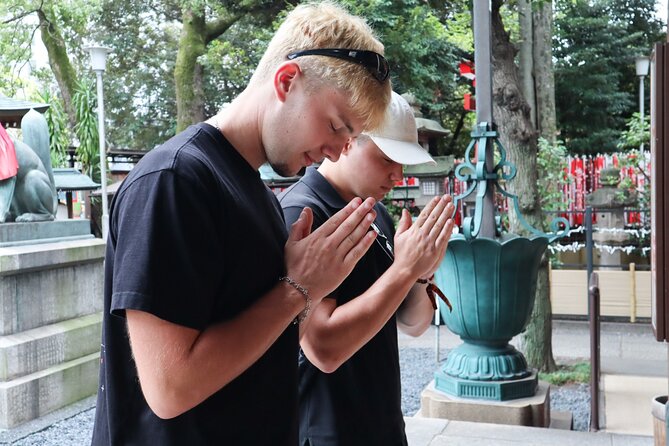
The route works because the three sites feel different. Meiji Jingu is a calm, wooded shrine in the middle of the city. Toyokawa Inari offers a more unusual religious setting, with rows of fox statues. Senso-ji gives you the grand, popular Tokyo finale, complete with its famous gate and shopping street.
That variety is the tour’s main strength. You are not spending three hours looking at similar buildings. You move through different neighborhoods and religious spaces, and you finish in Asakusa, where you can continue exploring on your own.
The schedule is also easy to understand. Meet at Meiji Jingu Ichino Torii at 9:00 a.m., then finish at Senso-ji Temple in Asakusa. The tour lasts about three hours and uses a mobile ticket. Public transportation is nearby, which matters because the meeting and ending points are in different parts of Tokyo.
You should expect a walking experience rather than a slow temple retreat. The time at each listed stop is about 40 minutes at Meiji Jingu, 30 minutes at Toyokawa Inari, and 45 minutes at Senso-ji. The remaining time covers movement, explanations, views, and other elements included in the route.
Entering Meiji Jingu at 9:00 a.m.
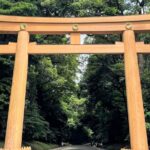
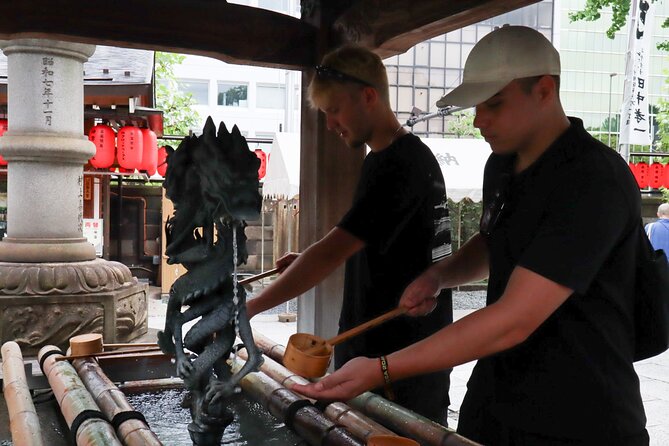
Meiji Jingu is a smart place to begin. It offers a calm first impression of Tokyo, with a shrine setting and open areas that feel far removed from the surrounding commercial streets. You can expect time for a nature walk as well as an introduction to the shrine’s role as a place of worship.
The first meeting point is Meiji Jingu Ichino Torii, at 1-chōme-18-20 Jingūmae in Shibuya. Look carefully at the meeting instructions before leaving your hotel, since large shrine grounds can make vague directions frustrating. The supplied meeting details identify the first torii as the starting point.
You have about 40 minutes here. That is enough to get oriented, see the main approach, and hear useful guidance on shrine customs. It is not enough for a long, unhurried exploration of every part of the grounds, so stay close to the guide and avoid lingering too long over individual photo stops.
The early start is a practical advantage. Meiji Jingu is popular, and a 9:00 a.m. meeting gives you a better chance of experiencing the approach before the busiest part of the day. It also leaves you with an entire afternoon after the tour ends in Asakusa.
A few more Tokyo tours and experiences worth a look

Toyokawa Inari and its fox statues
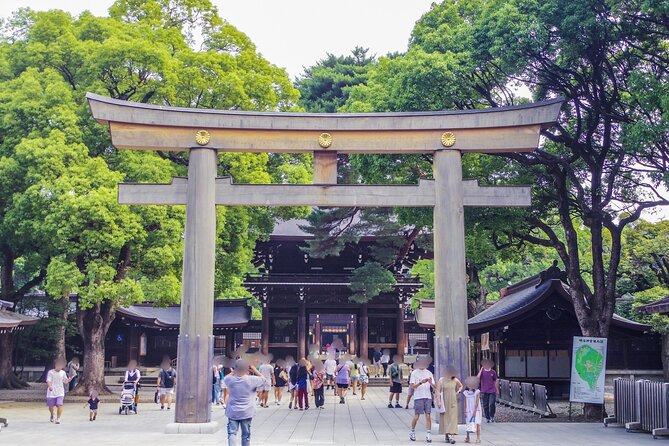
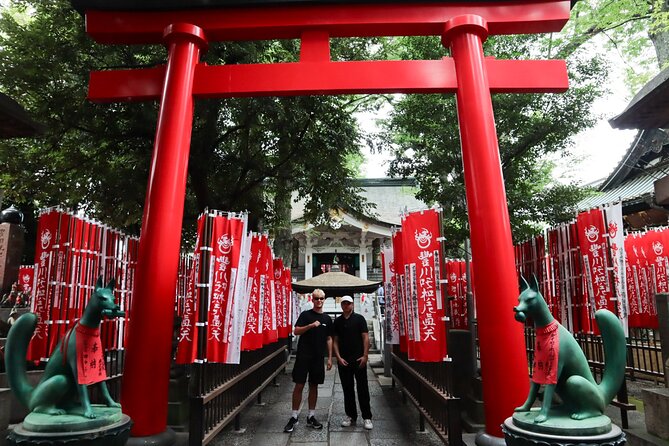
Toyokawa Inari is the most unusual stop on the route. It is described as a rare temple that blends Buddhist and Shinto elements, and its fox statues give it a visual character unlike the other two sites.
Fox imagery is one reason this visit can feel more distinctive than a standard Tokyo temple tour. The statues create excellent photo opportunities, but the guide’s explanation is what gives the stop value. Without context, you may simply see a collection of stone figures. With a guide, you can better understand why they appear here and how this site differs from a conventional shrine visit.
The stop lasts about 30 minutes. That is a compact visit, but the site’s focused character works well within a short morning tour. You get a clear look at one special feature rather than spending a long period wandering without direction.
This is also where the title’s promise of a less familiar Tokyo experience is strongest. Meiji Jingu and Senso-ji are major names. Toyokawa Inari adds something less expected between them. If you have already seen Tokyo’s famous temples, this middle stop may be the part you remember most.
Senso-ji gives the morning a grand finish
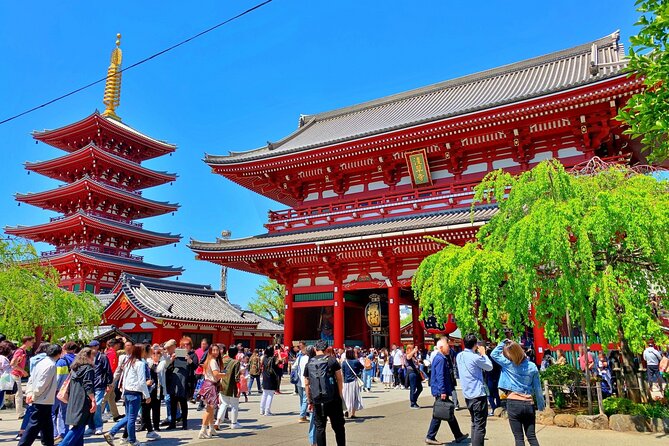
Senso-ji is Tokyo’s oldest and most famous temple, and it provides a fitting end to the tour. The site is known for its iconic gate and shopping street, so the atmosphere here is more energetic than at Meiji Jingu.
You get about 45 minutes at Senso-ji, the longest listed stop. That gives you time to see the gate, visit the temple area, and walk along the nearby shopping street with the guide’s help. It is still a quick visit, especially if you want photographs, explanations, and time to browse.
The ending point is Senso-ji Temple at 2-chōme-3-1 Asakusa, Taito City. This is useful because you do not need to return to the starting point. Once the walk ends, you can stay in Asakusa for more sightseeing, food, or shopping.
Senso-ji is also the least secluded stop. If you want a quiet spiritual setting throughout the morning, this tour may not be your best match. If you want a contrast between peaceful grounds and a famous central temple, the progression makes sense.
Photo stops, views, and a taste of comfort food
The tour is designed with photography in mind. Along with the religious sites, the experience includes attractive Instagram spots and mentions aerial views and boating as part of its unusual activities. The supplied details do not specify exactly where those moments take place, so you should treat them as route features rather than guaranteed long excursions.
That distinction matters. This is not presented as a dedicated photography tour, and the three-hour schedule limits how long you can stop at each location. Bring a phone or camera, but keep it ready rather than expecting a formal photo session.
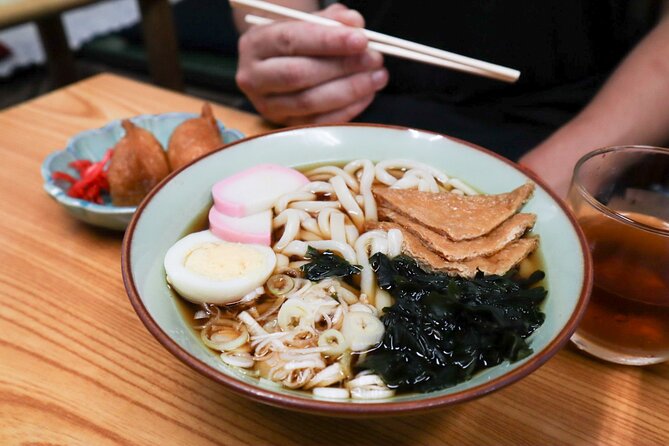
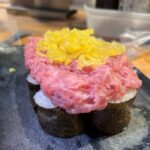
The experience also includes a taste of Japanese comfort food toward the end. No particular dish or restaurant is named, so you should not book this expecting a full meal or a specific regional specialty. Think of it as a small food element that adds flavor to the cultural route.
I like this combination because it keeps the morning from being only about buildings and religious customs. A visual stop and a simple food tasting can help you connect the sites to everyday Tokyo. Still, if food is your main reason for booking, choose a tour that clearly lists the dish and venue.
What the guide adds to the experience
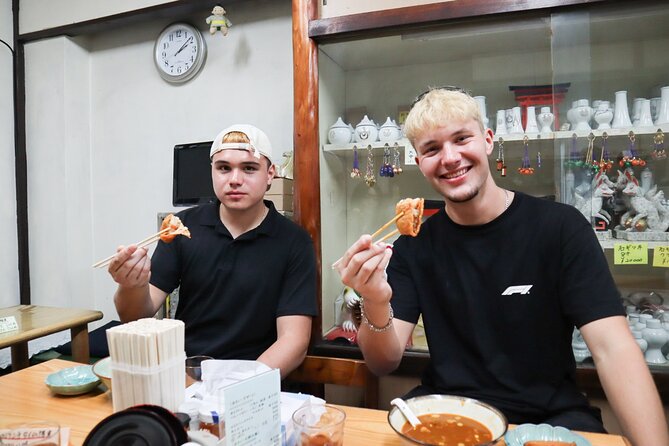
A guide matters on this route because the sites are easy to visit on your own, but harder to interpret well. A local host can explain the difference between a shrine and a temple, point out details you might miss, and help you understand why Toyokawa Inari is unusual.
Guide Ryu receives specific praise for being friendly, informative, and flexible. One particularly useful example involves New Year’s Day, when he managed the main shrines by planning around the crowds. That suggests the guide can make sensible timing decisions when conditions are difficult.
You should not assume Ryu will lead every departure, since the experience is provided by The diplomat and the available information does not promise a specific guide for every date. Still, his example gives you a useful idea of the kind of personal planning that can make a fixed route work better.
The maximum group size is 20. That is not a private tour, but it is more manageable than a large coach group. You should have a reasonable chance to hear the guide and ask questions, though the experience may feel less personal when the group reaches Senso-ji’s busy areas.

Is $84.92 a fair price?
At $84.92 per person, this tour is not the cheapest way to see these sites. Admission to the three listed stops is free, so the fee is paying for the guide, planning, cultural explanation, route design, and included activities rather than entrance tickets.
The value depends on how much structure you want. If you are comfortable using Tokyo’s trains, reading shrine signs, and researching religious customs, you can visit Meiji Jingu, Toyokawa Inari, and Senso-ji independently for far less. You may also spend longer at each site on your own.
The tour earns its price more easily for a first visit, a short stay, or anyone who wants a guided morning without organizing transfers between Shibuya and Asakusa. You are buying a ready-made route that connects three contrasting places and ends somewhere useful.
The small group limit helps the calculation. A group of up to 20 is still a group, but it is not an enormous operation. The guide’s flexibility, especially in difficult crowd conditions, can also save time that you might otherwise lose figuring out where to go next.
I would consider the food element a bonus, not the main financial reason to book. Since no dish or portion is specified, compare the price primarily against the value of the guide and the planned route.
Who will enjoy this morning walk?
This experience suits you if you want a short cultural introduction to Tokyo with a local guide. It is particularly useful when you are staying in the city for only a few days and want to cover several major areas without spending your first morning planning train connections.
It also fits photographers and casual sightseers who want a mix of peaceful grounds, fox statues, famous architecture, and scenic stops. The itinerary gives you plenty of visual variety without asking you to devote a full day to temples.
Families and mixed-age groups may appreciate the three-hour length. Most people can participate, and the tour is near public transportation. The supplied information does not give detailed mobility notes, so anyone with specific access needs should confirm the walking conditions directly before booking.
You may want something else if you prefer slow temple visits, long food tastings, or detailed religious study. The schedule is compact, and Senso-ji can feel lively after the quieter opening at Meiji Jingu.
Timing, group size, and practical planning

Start at Meiji Jingu Ichino Torii by 9:00 a.m. Give yourself enough time to reach the exact meeting point, since the route begins at a named torii rather than simply at a large train station. The mobile ticket is convenient, but keep the booking confirmation available on your phone.
The tour is usually booked about nine days ahead. That is not a rule, but it is a useful planning signal if your dates are fixed. A maximum of 20 people makes advance booking sensible during popular travel periods.
The route ends at Senso-ji, not back at Meiji Jingu. Plan your afternoon around Asakusa if possible. The ending location lets you continue exploring without retracing the morning’s route.
Free cancellation is available until 24 hours before the start time for a full refund. Cancellations or changes made less than 24 hours before the 9:00 a.m. start are not accepted for a refund, and the cut-off follows Tokyo local time.
Should you book the Tokyo Hidden Shrine and Temple Tour?
Book it if you want a guided sampler of Tokyo’s religious landmarks, especially during a short stay. The route has a good rhythm: peaceful Meiji Jingu, distinctive Toyokawa Inari, then famous Senso-ji. The guide’s role adds the most value, and Ryu’s flexible crowd planning is an encouraging sign.
Skip it if your priority is saving money, spending an hour or more at each site, or choosing your own food and transport. Since admission is free and the tour lasts only three hours, independent visits may suit confident planners better.
For many first-time visitors, the strongest reason to choose this experience is not the famous final stop. It is the unusual middle visit to Toyokawa Inari and the way the guide connects three different sides of Tokyo in one manageable morning.
FAQ
How long does the Tokyo Hidden Shrine and Temple Tour last?
The experience lasts approximately three hours.
What time does the tour start?
The tour starts at 9:00 a.m. local time.
Where does the tour begin?
It begins at Meiji Jingu Ichino Torii, located at 1-chōme-18-20 Jingūmae, Shibuya, Tokyo 150-0001, Japan.
Where does the tour end?
The tour ends at Senso-ji Temple in Asakusa, at 2-chōme-3-1 Asakusa, Taito City, Tokyo 111-0032, Japan.
How many people can join the tour?
The maximum group size is 20 people.
Can I cancel for a full refund?
Yes. You can cancel at least 24 hours before the experience starts for a full refund. Changes or cancellations made less than 24 hours before the start time are not accepted for a refund.
More Temples & Meditation in Tokyo
More tours in Tokyo we've reviewed



Temples & Meditation, compared.
 ★ 4.7Tokyo: Meiji Shrine, Asakusa, Skytree Bus Tour and CruiseFrom $12210 hours
 ★ 4.8Tokyo: Asakusa Walking Tour with Sensoji Temple VisitFrom $222 hours
 ★ 4.6Nikko: Kegon Falls, Lake Chuzenji & Toshogu TempleFrom $8911 hours
 ★ 4.5Tokyo: Kamakura & Enoshima Day Trip including Temple TicketsFrom $589 hours - 570 minutes
 ★ 4.5Tokyo: Nikko Toshogu Shrine and Kegon Waterfall TourFrom $8410h 30m
 ★ 4.5Tokyo Panoramic 1 Day: Meiji Shrine, Asakusa, Odaiba and SKYTREE®From $85