
Reviewed · MT FUJI DAY TRIPS
From Tokyo: Mt Fuji, Arakurayama and Kawaguchi Lake Day Trip
The best thing about this Mt Fuji day trip is the number of different views packed into one day. You see the mountain above a pagoda, along a carefully framed shopping street, reflected in spring-fed pools, and set behind Lake Kawaguchi. I like the 397-step climb to Chureito Pagoda and the chance to sample local sweets and tofu at Oshino Hakkai.
I also like the practical value. For $55, you get roundtrip transport from central Tokyo and a live guide, which saves you from sorting out several train and bus connections. Guides such as Hikari add humor, useful photo tips, and clear meeting times. The main drawback is the schedule: traffic and crowds can make the day feel rushed, and bad weather may hide Fuji.
In This Review
- Key things to know before you book
- Why this day trip works from Tokyo
- The ride toward Mt Fuji
- Arakurayama Sengen Park and the 397 steps
- Fujiyoshida and the Hikawa Clock Shop street
- Oshino Hakkai and Fuji spring water
- LAWSON Lake Kawaguchi and the famous convenience-store photo
- Lake Kawaguchi, Oishi Park, and the autumn alternative
- Fuji weather is the great unknown
- Timing, crowds, and the real return schedule
- What the $55 price really buys
- Who should choose the private option
- Should you book this Mt Fuji day trip?
- FAQ
- Where does the tour meet in Tokyo?
- How long does the tour last?
- What languages are available?
- Is the tour suitable for children?
- Is the tour suitable for elderly people?
- Are meals included?
- Can I bring food and drinks on the bus?
- What happens if Mt Fuji is hidden by clouds?
- Which location replaces Oishi Park during autumn?
- What happens if I miss the bus at a stop?
Key things to know before you book
- The Chureito Pagoda view requires 397 steps, so comfortable shoes and a steady pace matter.
- Hikari is frequently assigned as the guide, though another English, Chinese, or Japanese guide may lead your departure.
- Oshino Hakkai is your best food stop, with spring water, kusamochi, tofu with pickled miso, and small gift shops.
- The final lake stop changes by season: Oishi Park is used most of the year, while the Maple Corridor is visited from about October 30 to November 20.
- The $55 price covers the air-conditioned bus and guide, but snacks, drinks, and any admission charges are extra.
- Return times are flexible in practice: normal arrival in Tokyo may be around 6:00 to 6:30 PM, while heavy traffic can push it toward 8:00 PM.
Why this day trip works from Tokyo
Mt Fuji looks close on a clear day, but getting from central Tokyo to the best viewpoints takes planning. This tour handles the long outbound and return journeys by air-conditioned coach, with the drive taking about 105 minutes each way before traffic and weather affect the timing.
That matters because the stops are spread across the Fuji Five Lakes area and nearby towns. You are not simply visiting one lookout, taking a photograph, and heading home. The day gives you several chances to see the mountain from different angles, along with a village visit and a taste of local food.
The meeting point is Tokyo Station’s Marunouchi North Exit, near the taxi stand. It is a sensible place to meet because Tokyo Station is easy to reach by public transport, but allow time to find the correct exit. The provider sends the guide’s phone number, further meeting instructions, and the vehicle license plate the evening before, usually around 7:00 or 8:00 PM.
The group may be a small shared tour or a private booking, depending on the option you choose. The standard shared format keeps the price low, while the private option gives you more control over timing. One booking reported paying an extra £46 for a private tour and finding the flexibility worthwhile, especially at crowded photo stops.
If you're still narrowing it down, here are other tours in Chiyoda City we've reviewed.

The ride toward Mt Fuji
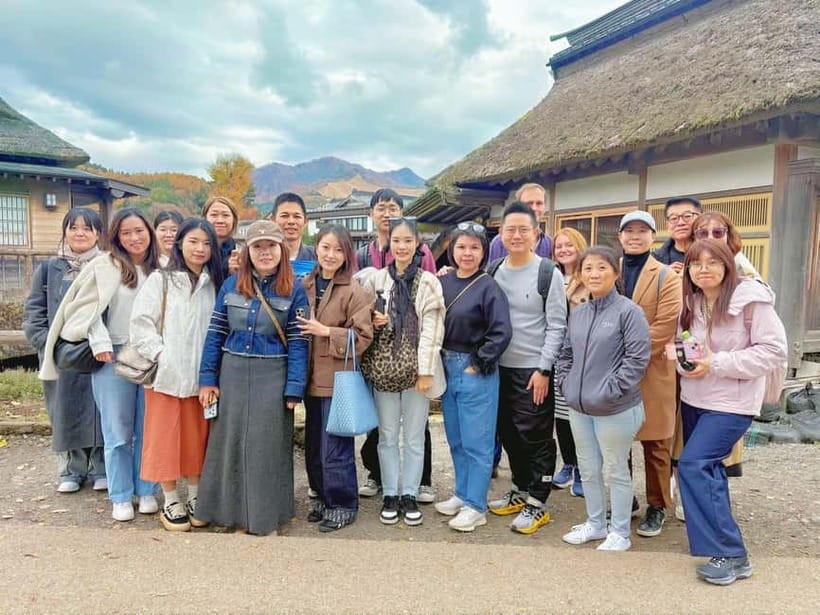
The drive is part of the experience, not just dead time. As the bus leaves Tokyo, the guide provides background on Japan, the Fuji area, local customs, and the stops ahead. Hikari receives especially strong praise for making the ride lively without turning it into a nonstop lecture.
You should expect a full day, though. Ten hours sounds generous until you include the two long coach rides, several walks, and the time needed to gather the group at each stop. Guides usually give exact departure times and clear instructions. Treat those times seriously. If you miss the bus, you may need to take a taxi to the next meeting point, and there is no refund for being late or failing to appear.
Large bags are not suitable because storage space is limited. Food and drinks are also not allowed inside the vehicle, although you can bring your own lunch for the stops. In practice, you will have chances to buy snacks and drinks along the way.
Arakurayama Sengen Park and the 397 steps
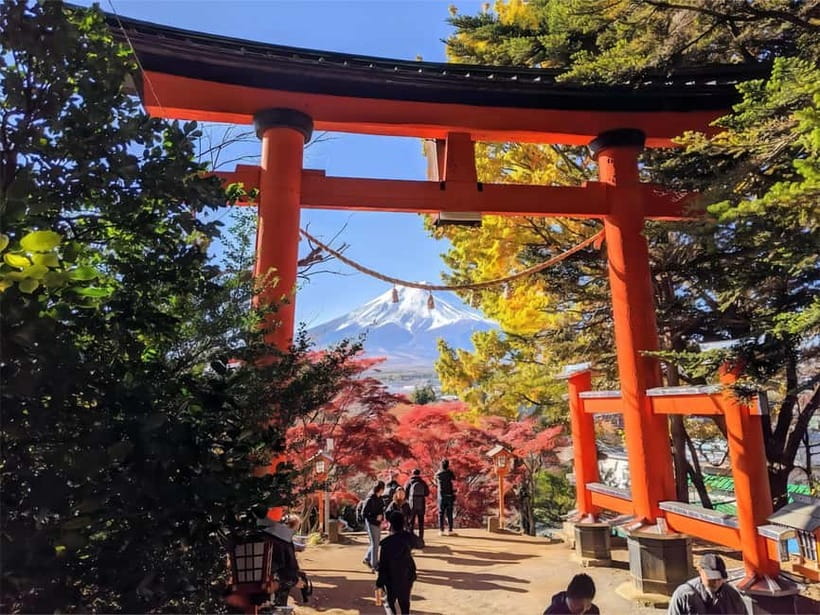
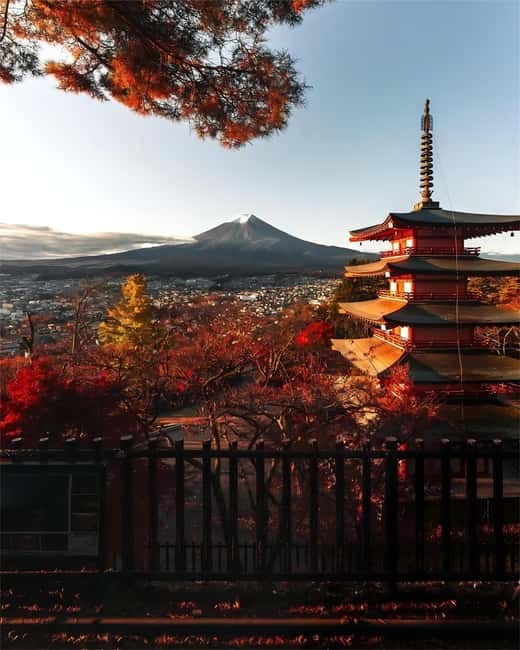
The first major stop is Arakurayama Sengen Park, home to the Chureito Pagoda view that appears in so many Japan photographs. The classic composition places the five-story pagoda in the foreground, with Mt Fuji rising behind it. In spring, cherry blossoms frame the scene. Summer brings green hills, autumn adds red and gold leaves, and winter can give you a snowy view.
The climb is the catch. Reaching the main viewpoint involves 397 steps, followed by additional walking around the park. The climb is manageable for many people, but it is not a casual stroll. Wear shoes with good support, take breaks, and be realistic about your pace if you are traveling with young children or anyone who tires easily.
The itinerary allows about an hour at Arakurayama Sengen Park and 45 minutes at Chureito Pagoda. These times overlap as part of the same visit, so do not assume you have nearly two hours at the top. Crowds can also slow the climb and make the best photo platform hard to reach.
I like this stop because it offers a strong sense of place, not just a mountain view. The pagoda, shrine grounds, steps, and changing seasons give the photograph some Japanese context. The downside is that it is one of the busiest parts of the day, especially during cherry blossom and autumn foliage periods.
Fujiyoshida and the Hikawa Clock Shop street
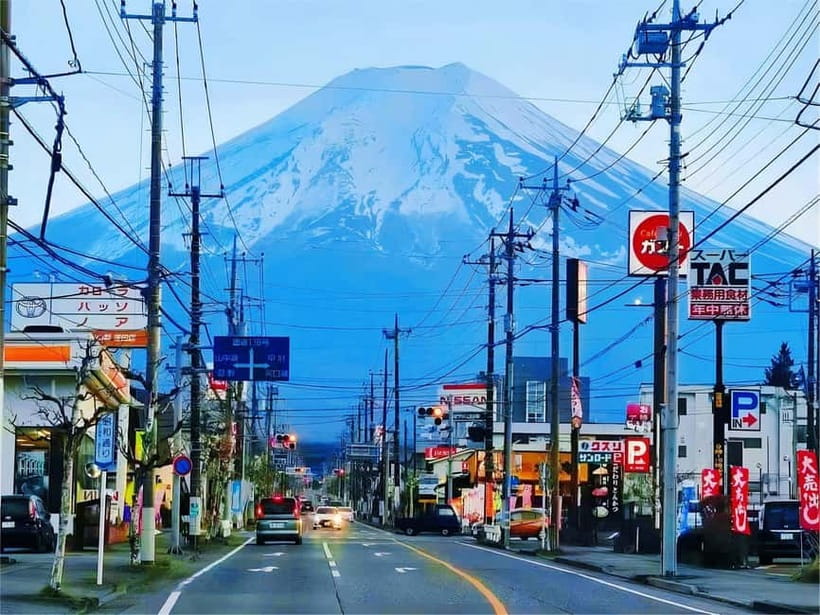
Next comes Fujiyoshida, where the road near Hikawa Clock Shop creates a carefully framed view toward Mt Fuji. The street is appealing because it feels more like a real town scene than a purpose-built observation deck. Buildings and the road lead your eye toward the mountain, producing a photograph with a distinctly Japanese urban foreground.
You have about 20 minutes here. That is enough for photographs and a short walk, but not enough for a long shop visit or a relaxed exploration of the neighborhood. Keep your expectations modest. This is a focused photo stop, not a full town tour.
The exact quality of the view depends heavily on cloud cover. On a clear morning, the alignment can be striking. If Fuji disappears, you still have the street itself, but the stop loses much of its main purpose.
Oshino Hakkai and Fuji spring water
Oshino Hakkai gives the day a welcome change of pace. The village is known for eight springs formed by snowmelt from Mt Fuji. Clear water, traditional-looking buildings, small ponds, food stalls, and souvenir shops make this the most relaxed stop for browsing and tasting local specialties.
The tour allows about 80 minutes here, making it the longest stop. Use the time well. Walk around the ponds, look for reflections of Fuji, taste the spring water, and browse the shops before choosing something to eat.
Local snacks are part of the appeal. You might try tofu with pickled miso or kusamochi, a green rice cake filled with sweet red bean paste. You can also find other small delicacies and souvenirs. Bring some cash, since at least some of the stalls may not accept cards. Meals are not included, so budget separately for lunch and snacks.
Oshino Hakkai remains worthwhile when Fuji is covered by cloud. The springs and village provide something to see beyond the mountain. It is also a good place to slow down after the climb at Arakurayama.
LAWSON Lake Kawaguchi and the famous convenience-store photo
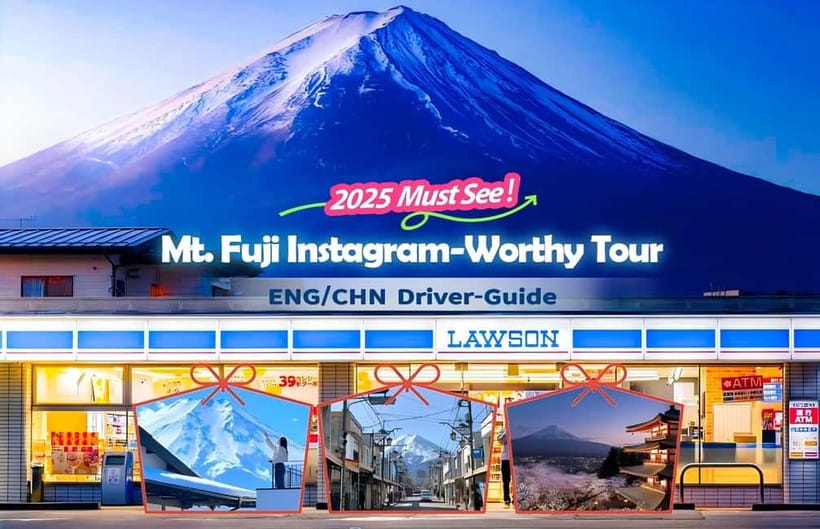
The LAWSON Lake Kawaguchi stop lasts about 20 minutes and is built around a very modern Japan photograph. The blue and white convenience-store sign sits in front of the mountain, creating the odd but instantly recognizable contrast of everyday Japanese shopping and an iconic natural landmark.
You can buy ice cream, a hot snack, coffee, or a drink before taking photographs. The stop is short, and the area can be crowded, so listen carefully for the bus departure time. This is a photo opportunity rather than a place for a long break.
The appeal is slightly playful. It is not an untouched view, and you should not confuse it with a quiet lakeside setting. Still, it captures the way Mt Fuji appears in daily life, alongside roads, shops, and ordinary town scenes.
Lake Kawaguchi, Oishi Park, and the autumn alternative
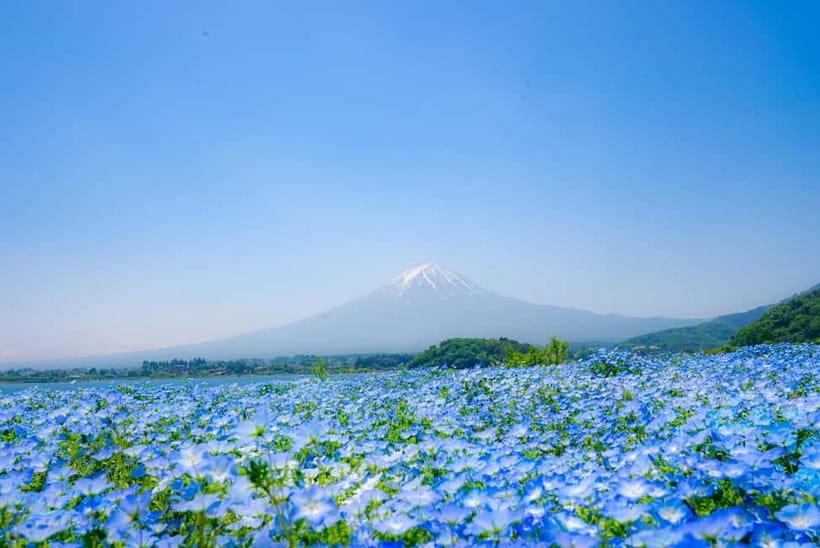
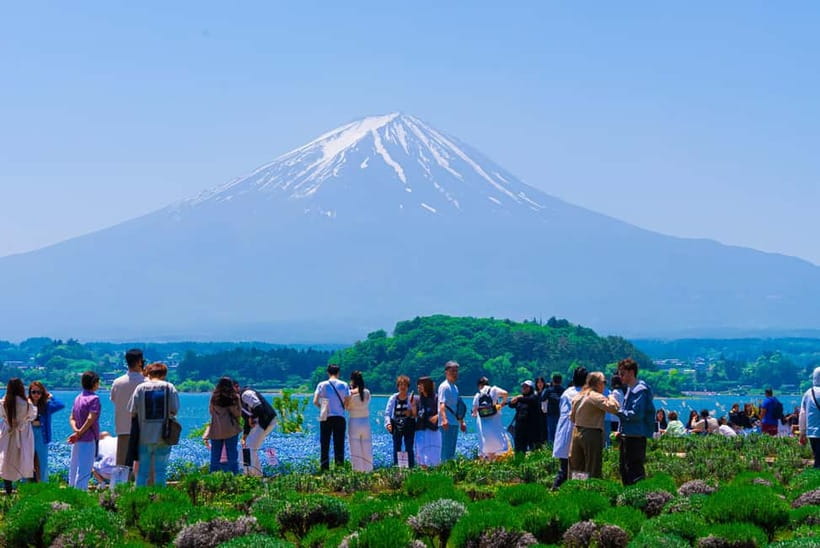
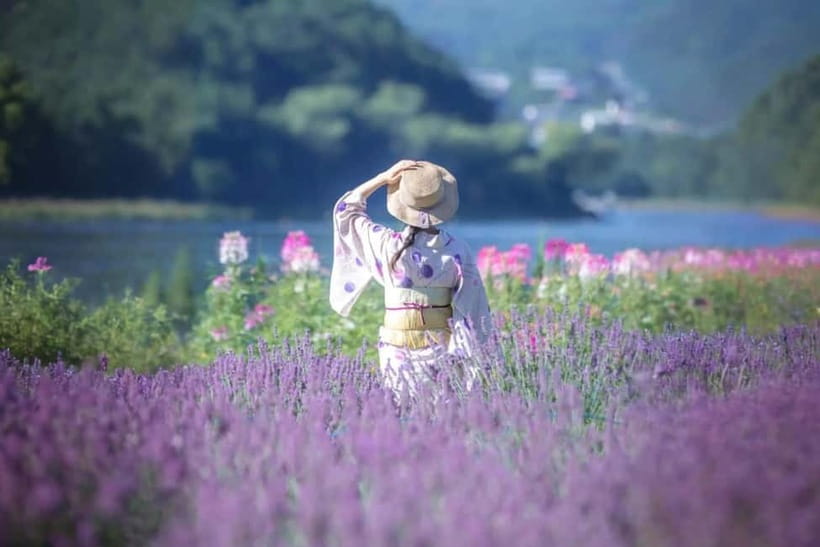
The final sightseeing stop is Lake Kawaguchi, with about 50 minutes for a visit and walk. Most of the year, the tour finishes at Oishi Park, known for flower fields featuring lavender, begonia, cosmos, and Japanese blood grass. The flowers give you a lower, wider foreground for Fuji photographs than the pagoda or town street.
The park is also a useful place to compare the mountain with the lake. At Chureito, Fuji is framed by architecture. At Oishi Park, it is paired with open water and seasonal planting. If the weather clears late in the day, this can be your best final chance for a full view.
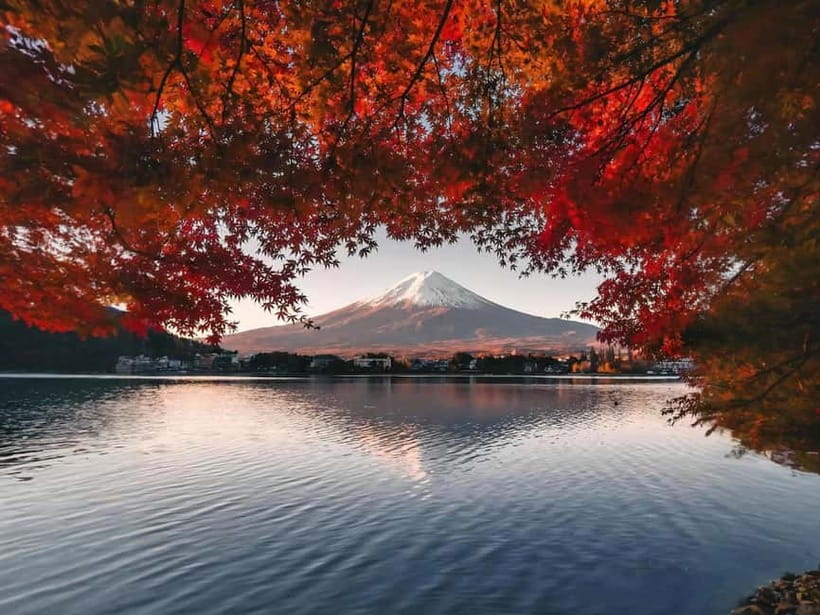
From approximately October 30 through November 20, the route changes to the Kawaguchiko Maple Corridor. The corridor becomes a tunnel of autumn color, with Fuji views appearing through the trees. This seasonal switch makes sense, but it means you should check the expected date if autumn foliage is a priority.
The lake stop can feel brief. You have only 50 minutes, and the schedule still has to account for the return trip. If you choose a private tour, this is one of the places where extra flexibility may help. On the shared tour, stay close to the meeting point and do not wander beyond the assigned area.
Fuji weather is the great unknown
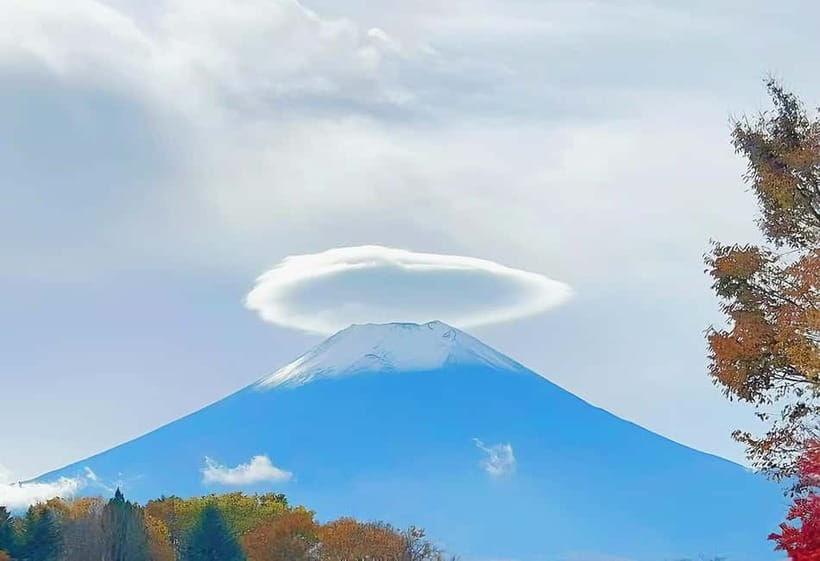
No day trip can guarantee a clear Mt Fuji. The mountain may be hidden by cloud or fog, particularly later in the day. Some departures have seen Fuji clearly in the morning and lost the view by afternoon. Others have had poor visibility throughout.
This tour reduces the risk by visiting several viewpoints, but it cannot change the weather. If seeing the summit is the only reason you are booking, consider staying near the Fuji area for several nights instead of relying on one day from Tokyo. If you want a broad introduction to the region, the tour still has value in poor weather because of Oshino Hakkai, the pagoda, local streets, seasonal parks, and the lake.
Clear winter days often offer strong visibility, while seasonal scenery is more important in spring and autumn. That is not a promise of conditions, only a reason to choose your dates with care. Check the forecast, dress for changing temperatures, and bring weather-appropriate clothing.
Timing, crowds, and the real return schedule
The advertised day runs for about 10 hours. The tour is expected to finish its Fuji-area visits around 4:30 PM, with arrival back in Tokyo often around 6:00 to 6:30 PM. Another stated target is Tokyo Station around 5:00 to 5:30 PM, but you should treat that as an optimistic estimate rather than a firm promise.
Traffic is the main variable. Congestion around Tokyo and Mt Fuji can add substantial time, particularly during holiday periods and peak foliage or blossom dates. Delays may push the return toward 8:00 PM. The operator covers overtime fees, but you should avoid booking an evening show, restaurant reservation, or train connection that cannot be changed.
The schedule may be adjusted by 15 to 45 minutes during busy periods. That is usually an attempt to avoid the worst congestion while keeping all the planned highlights. Guides such as Hikari have changed the order of stops to reduce time in traffic, which can make the day run more smoothly.
What the $55 price really buys
At $55 per person, this is a strong transport-and-orientation deal. You get a roundtrip air-conditioned bus from Tokyo and a live guide in English, Chinese, or Japanese. You also get a route that would take more effort to reproduce independently, especially if you want to combine Arakurayama, Oshino Hakkai, Fujiyoshida, LAWSON Lake Kawaguchi, and Lake Kawaguchi in one day.
The price does not include food, drinks, or admission tickets. The main photo and village stops may not require much spending, but you should still carry money for lunch, snacks, souvenirs, and any charge that applies at a particular site.
The value is highest for first-time visitors, families who do not want to manage regional transport, and solo visitors who prefer a planned day with a guide and fellow passengers. It is less appealing if you dislike fixed departure times, crowded photo locations, or long coach rides.
Who should choose the private option
The private or small-group option is worth considering for families, groups of friends, or anyone with a clear priority. The basic private-car price covers 10 hours from Tokyo, while extra requests and route additions are discussed after booking. An English guide should be requested at least 72 hours ahead, and earlier during busy seasons.
The shared tour gives you the basic route at a lower price. The private format may let you spend longer at a favorite stop, adjust the order, or avoid waiting for a large group. It does not remove traffic or guarantee Fuji views, but it can make a busy day feel less rigid.
Children aged two or younger can join free without occupying a seat, but you need to inform the provider in advance. The experience is family-friendly overall, though the stairs and long day may not suit every child.
Should you book this Mt Fuji day trip?
Book it if you want many classic Fuji viewpoints in one affordable day and you are comfortable with a structured schedule. The route is varied, the bus removes transport headaches, and a good guide can make the long rides useful rather than dull. Hikari is often the guide people hope to get, with clear instructions, humor, photo help, and explanations in English or Chinese, but guide assignments can vary.
Skip it if you need a guaranteed clear view, dislike early starts and fixed meeting times, or have an evening plan that cannot move. Older visitors should think carefully about the 397 steps, and anyone over 75 should note that the activity is not considered suitable.
For most first visits from Tokyo, I would book with comfortable shoes, cash for Oshino Hakkai, no large luggage, and an open evening after the return. You may get the perfect Fuji photograph, but even under clouds, the combination of pagoda, springs, town streets, lake scenery, and seasonal plants gives the day more substance than a single lookout.
FAQ
Where does the tour meet in Tokyo?
Meet at Tokyo Station’s Marunouchi North Exit, near the taxi stand, at 1-chōme-9-1 Marunouchi, Chiyoda City, Tokyo. Follow the time and further instructions sent by the provider the evening before.
How long does the tour last?
The activity lasts about 10 hours. The Fuji-area visits are expected to finish around 4:30 PM, with the return to Tokyo varying according to traffic and weather.
What languages are available?
Live guides are available in English, Chinese, and Japanese. If you require an English guide, request one at least 72 hours in advance.
Is the tour suitable for children?
Yes, it is family-friendly, but the 397 steps to Chureito Pagoda may be difficult for some children. Children aged two or younger can join free without taking a seat if the provider is informed ahead of time.
Is the tour suitable for elderly people?
The activity is not suitable for people over 75. Anyone younger should still consider the stairs, walking, and full-day schedule.
Are meals included?
No. You can buy food at Oshino Hakkai, including tofu with pickled miso and kusamochi, or bring your own lunch. Snacks and drinks are extra.
Can I bring food and drinks on the bus?
Food and drinks are not allowed inside the vehicle. The tour includes breaks where you can buy refreshments.
What happens if Mt Fuji is hidden by clouds?
The mountain may not be visible because of weather. The tour still visits Oshino Hakkai, Lake Kawaguchi, Arakurayama Sengen Park, and other scenic locations that can be enjoyed in different conditions.
Which location replaces Oishi Park during autumn?
From approximately October 30 to November 20, the tour visits the Kawaguchiko Maple Corridor instead of Oishi Park for autumn foliage.
What happens if I miss the bus at a stop?
If you are late or miss the bus, you may need to pay for a taxi to meet the group at the next stop. There is no refund or alternate date for a late arrival or no-show, so keep close track of each departure time.
More tours in Chiyoda City we've reviewed
Mt Fuji Day Trips, compared.
 ★ 5.0Mt Fuji and Hakone 1-Day Bus Tour Return by Bullet TrainFrom $163
 ★ 4.0Mt Fuji & Hakone Cruise, Drum Show Bullet Train 1 Day from TokyoFrom $149
 ★ 4.4Tokyo Mt Fuji 5th St & Hakone Cruise Bus Tour w/Bullet TrainFrom $15410 hours
 ★ 4.5From Tokyo: Mount Fuji Full-Day Sightseeing TripFrom $6810 hours
 ★ 4.7Tokyo: Mt. Fuji Tour, Hakone Ropeway, Owakudani, Lake AshiFrom $5410 hours
 ★ 4.4Tokyo:Mt.Fuji,Kawaguchiko Oishi Park,Arakurayama Sengen ParkFrom $5410 hours