
Reviewed · CITY TOURS
Tokyo: Private City Highlights Tour
Tokyo is a huge city with sights spread across many districts, and this private tour tackles that problem by putting you in a vehicle with a flexible route. In eight hours, you can move from Senso-ji and Meiji Shrine to Tokyo Skytree, the Imperial Palace, Tokyo Tower, Shinjuku Gyoen, Shibuya, Tsukiji, and Harajuku.
I like the freedom to change the plan as you go. I also like the practical help: guide Ahmad, sometimes spelled Ahmed, has been praised for punctuality, patience, strong English, and adjusting stops for poor weather or limited walking ability. The tradeoff is a packed day, and entrance fees and lunch are extra.
In This Review
- Key points to know before booking
- Why a private vehicle helps in Tokyo
- Asakusa and Senso-ji: Tokyo’s traditional opening
- Meiji Shrine and the wooded side of Tokyo
- Tokyo Skytree and Tokyo Tower: two city views
- Imperial Palace and East Gardens
- Shinjuku Gyoen: a slower hour among the city sights
- Shibuya Crossing and the energy of the city
- Tsukiji Outer Market for a food stop
- Harajuku and Takeshita Street
- Taito City and the final city details
- What the guide service adds
- Timing, comfort, and small restrictions
- Who gets the best value from this tour
- Should you book the Tokyo private highlights tour?
- FAQ
- How long is the Tokyo private city highlights tour?
- How many people can join the private group?
- Is hotel pickup included?
- Are entrance fees included?
- Is transportation private?
- Which languages are available?
- Can the tour be changed for weather or walking needs?
Key points to know before booking
- Private group of up to five: The $319 price covers the group, not each person, making it strongest value for a family or small party.
- Hotel pickup and private transport: You avoid piecing together Tokyo’s far-flung sights by train, though airport, port, and station pickup is not offered.
- Flexible route: You can shift attention toward temples, shopping, gardens, food, history, or city views.
- Two major observation sights: Tokyo Skytree and Tokyo Tower offer different ways to see the city, but paid entry is not included.
- Good support for changing needs: Ahmad has adjusted plans for bad weather, personal requests, and reduced walking.
- A full day on foot and in the car: Comfortable shoes matter, even though the vehicle cuts down some walking.
Why a private vehicle helps in Tokyo
Tokyo’s public transport is excellent, but the city’s main sights are scattered. Asakusa sits east of the central districts, Meiji Shrine and Harajuku are west of the Imperial Palace, and Shibuya and Shinjuku lie farther southwest. Tsukiji adds another stop near the bay.
You can reach all of these places by train, but doing so in one day means repeated station walks, transfers, platform changes, and careful timing. A private vehicle gives you a place to regroup between stops. It also lets the driver bring you closer to sights when walking is difficult.
The group limit is five people. At $319 per group, the arithmetic is attractive for five: about $64 per person before entrance fees and lunch. For two people, the per-person cost is higher, but you are paying for privacy, hotel pickup, and a route built around your interests rather than joining a fixed bus.
The vehicle includes petrol, highway tolls, and onboard WiFi when available. Do not expect the price to cover observation decks or other entrance charges. You should also budget for food at Tsukiji or elsewhere, since lunch is not included.
Other city tours we've reviewed in Tokyo


Asakusa and Senso-ji: Tokyo’s traditional opening
The day begins with pickup in Tokyo, normally at your hotel, hostel, apartment, or another Tokyo address. Your guide is due in the lobby 10 minutes before the scheduled time. Highway traffic can cause delays of up to 30 minutes, so keep your first morning plans flexible.
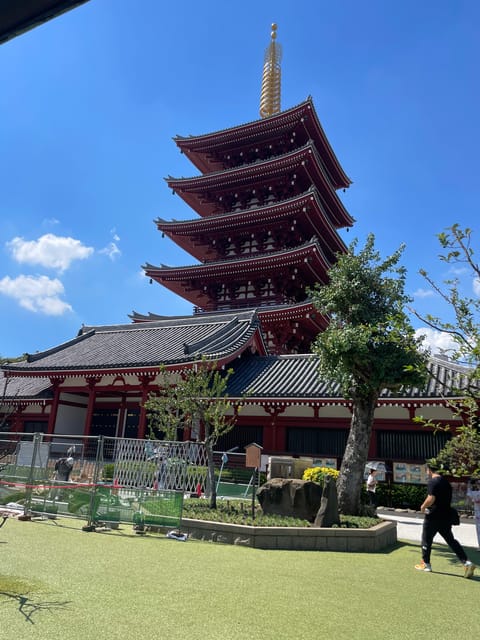
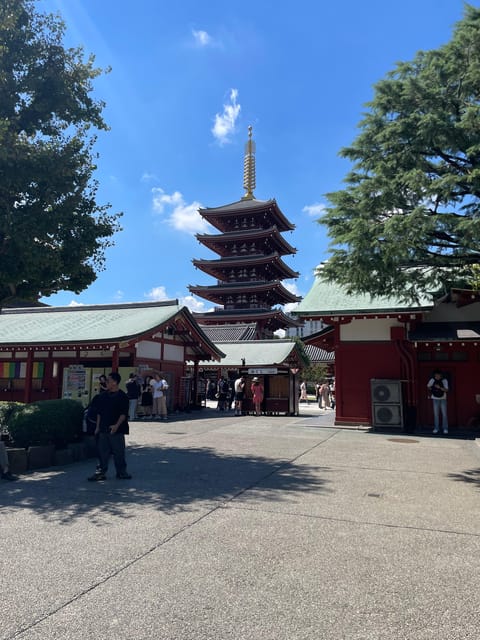
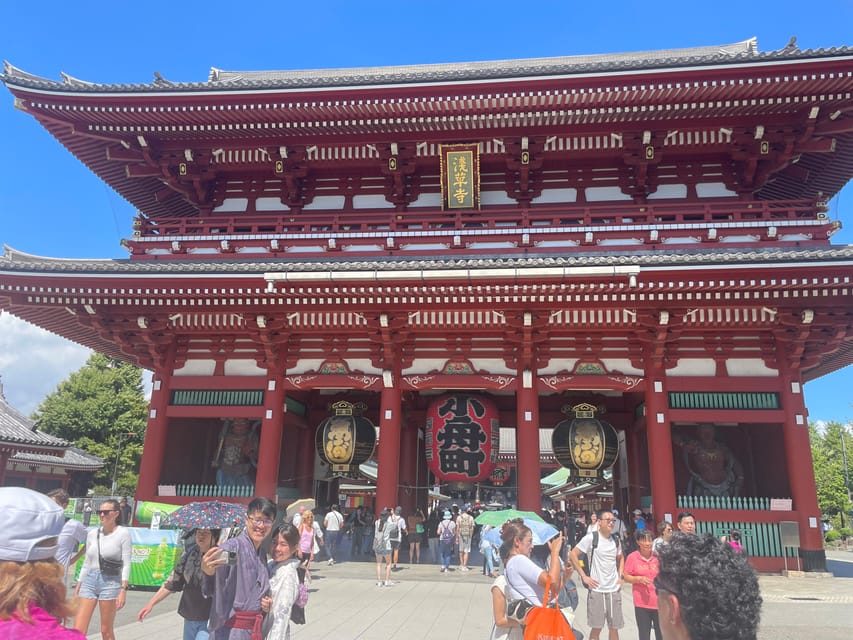
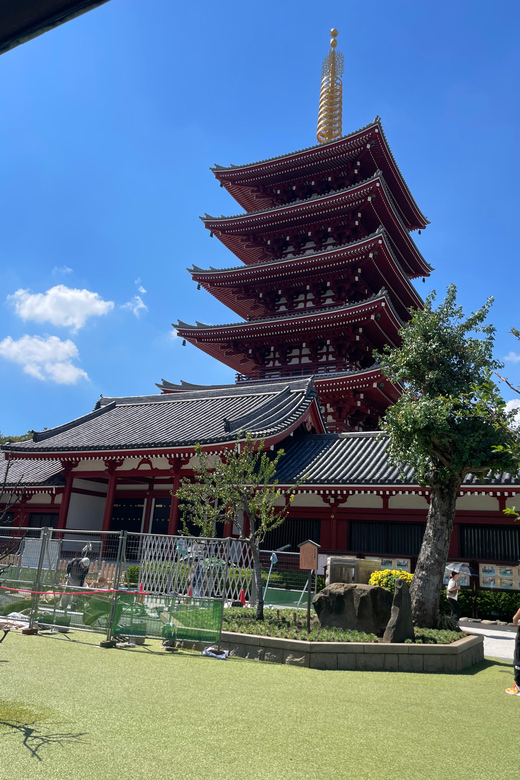
Asakusa gives you one of the clearest introductions to old Tokyo. The main stop is Senso-ji, the city’s oldest and best-known Buddhist temple, with origins reaching back to 628 AD. You enter through the Kaminarimon Gate, marked by its enormous lantern, then walk along Nakamise Street.
Nakamise is lined with traditional shops and food stalls. It is a useful place to pick up small souvenirs and sample familiar Japanese treats, though it can feel crowded at busy times. The main temple hall comes after the shopping street, and the full stop is scheduled for about an hour.
The itinerary names Asakusa Shrine, while the supplied highlights focus on Senso-ji. These are separate but closely related sites in the Asakusa temple area, so confirm with the guide which buildings you will visit and how much time you want for each.
This is one of the tour’s best stops for first-time visitors. You get religious architecture, a historic street, local snacks, and a sense of how Tokyo’s older districts still function within the modern city.
Meiji Shrine and the wooded side of Tokyo
Meiji Shrine offers a sharp change of mood. It sits in a forested area and honors Emperor Meiji and Empress Shoken. After the signs, traffic, and shops of Asakusa, the broad approach and quiet trees can feel like a reset.
The visit lasts about an hour and includes walking. You should wear comfortable shoes because shrine grounds require some time on foot, even if the vehicle drops you close to the general area. A guide can add context about Shinto customs and the shrine’s purpose, but the value of this stop also comes from simply slowing down.
This is not a museum visit with a long indoor program. It is a place for gates, paths, wooden structures, and a calm setting. If your interests lean toward religion and Japanese history, ask for more explanation here. If you care more about shopping, you might prefer to shorten the stop and give that time to Harajuku or Takeshita Street.
Tokyo Skytree and Tokyo Tower: two city views
Tokyo Skytree rises 634 meters and is Japan’s tallest structure. Its observation decks offer wide views across the city, with a chance of seeing Mount Fuji on a clear day. The planned stop is about an hour, but that does not always mean an hour on the observation deck.
Entrance fees are not included, and time may be needed for entry, elevators, security, and queues. Ask your guide about the day’s timing before buying admission. If the weather is poor, the view may not justify the extra cost, which is one reason the tour’s flexible format helps.
Tokyo Tower is a different kind of sight. It is lower and older in character, and from the ground it gives you one of Tokyo’s most recognizable city images. The schedule allows about an hour here too. You can decide if you want to go up, take photographs from outside, or use the time elsewhere.
Trying to visit both towers in one day can be worthwhile if city views are high on your list. It can also use a large share of your eight hours. I would choose both only if you care strongly about observation decks or Tokyo architecture. Otherwise, one paid tower and one short photo stop may leave more time for the temple, market, or gardens.
Imperial Palace and East Gardens
The Imperial Palace is the Emperor of Japan’s residence, surrounded by gates, defensive features, and gardens. The East Gardens are open to the public and offer a chance to walk through part of the palace grounds.
The planned visit is about 45 minutes, making this a shorter historical stop than Senso-ji or Meiji Shrine. That can work well in a busy day, but you should not expect an extended palace tour. The appeal is the setting and the chance to connect present-day Tokyo with the country’s imperial past.
Ask what is open on the day and how far you will walk. The tour information promises a visit to the palace area and East Gardens, not entry into private palace buildings. If gardens and history matter to you, protect this stop when discussing route changes.
Other private tours in Tokyo


Shinjuku Gyoen: a slower hour among the city sights
Shinjuku Gyoen National Garden gives the itinerary breathing room. The visit is scheduled for about an hour, enough for a walk through selected sections but not enough to see every part at a leisurely pace.
This stop is useful because the rest of the day moves quickly. You have temples, towers, crossings, markets, and shopping streets competing for attention. A garden visit lets you trade traffic and concrete for open paths and planted spaces.
Admission rules and entry fees can change, and the tour price does not include entrance fees. If you are traveling with someone who needs regular rests, this may be a good place to ask the guide for a gentler pace. One past booking specifically praised the ability to reduce walking by dropping close to sights, but the exact vehicle access will depend on local rules.
Shibuya Crossing and the energy of the city
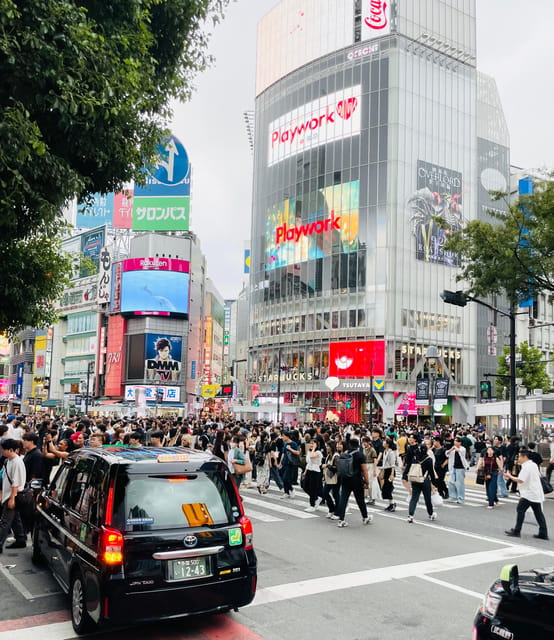
Shibuya Crossing is the famous pedestrian scramble where several streams of people cross at once. The scheduled visit is about 45 minutes, which gives you time to watch the crossing, take photographs, and see the surrounding streets.
The crossing itself is brief. The real value is the setting around it: giant signs, department stores, side streets, and the constant movement that has made Shibuya a symbol of modern Tokyo. You do not need hours here unless you want shopping or nightlife.
Your guide can help you choose between a quick look and a longer neighborhood stop. If your main interests are Japanese youth culture, fashion, and city photography, use extra time here or at Harajuku. If you have already seen major city centers elsewhere, keep this stop short and protect time for Tsukiji or the gardens.
Tsukiji Outer Market for a food stop
The wholesale fish market moved to Toyosu, but Tsukiji Outer Market remains open as a food district. Stalls and small restaurants sell seafood, sushi, sashimi, and snacks such as tamagoyaki, the sweet Japanese omelette.
The schedule does not give Tsukiji a fixed duration, so this is one of the easiest places to customize. You can make it a quick walk and snack, or spend longer eating and browsing. Lunch is not included, so this is a natural place to buy your own meal.
Do not confuse the Outer Market with the wholesale auction site at Toyosu. If you specifically want Toyosu, ask about the route before booking. Tsukiji is better suited to a casual food stop in the middle of a city highlights day.
Harajuku and Takeshita Street
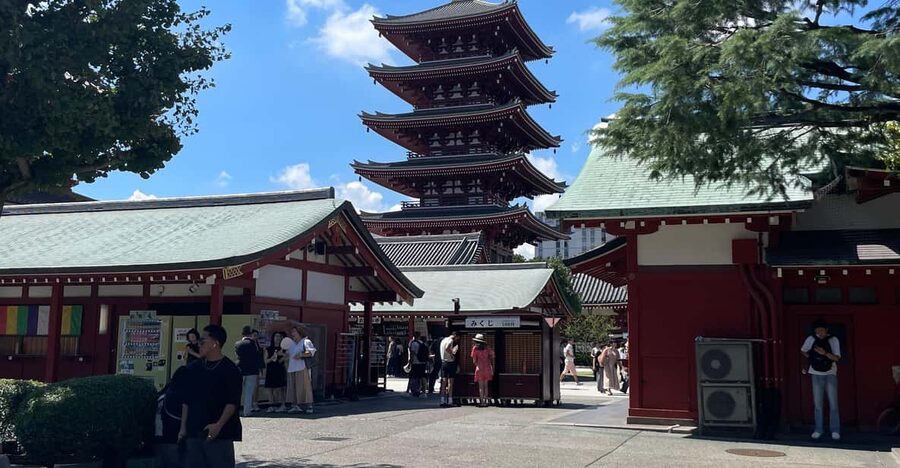
Takeshita Street is the tour’s main look at Harajuku fashion and youth culture. The scheduled visit is only 30 minutes, so think of it as a quick walk, first look, or short shopping stop rather than a full afternoon.
The street is known for striking fashion, trendy shops, and people-watching. You might find colorful clothing, sweets, and small items aimed at younger shoppers. The narrow street can feel intense at busy times, and 30 minutes may be enough for some people.
If fashion is your priority, tell the guide early. You may be able to adjust time from a tower or another stop. The private format is most useful here because you do not have to follow a fixed group schedule.
Taito City and the final city details
Taito City appears as a 30-minute visit near the end of the route. It includes districts such as Asakusa and Ueno, so confirm the exact focus with the guide. Since the day already includes Asakusa, the added stop may serve as a short look at another part of eastern Tokyo or a continuation of the traditional-city theme.
This is a reminder that the itinerary is a framework, not a promise that every stop will receive equal time. Eleven listed stops in eight hours is ambitious. Traffic, queues, weather, and your own choices will shape the day.
What the guide service adds
The most important part of a private sightseeing day is not the vehicle. It is the guide’s ability to listen and adjust. Ahmad is named as the guide, though the name also appears as Ahmed in some booking details. He is described as patient, respectful, punctual, and comfortable speaking English.
That matters when the weather turns bad. One booking had poor weather, and the guide changed the plan rather than forcing the original route. Other bookings describe requested stops being added or substituted, with no pressure to rush.
The support for reduced mobility is also practical. A guide may be able to drop you nearer to sights to limit walking, though you should explain your needs before the day and ask about car seats or allergies in advance. The tour is marked wheelchair accessible, but Tokyo’s historic sites, gardens, and pedestrian areas can have uneven routes, so discuss the details with the provider.
The host or greeter languages are English and Japanese. If you need another language, this option is not presented as a multilingual service.
Timing, comfort, and small restrictions
Eight hours is enough to see a broad selection of Tokyo highlights, but it is not enough for a slow visit at every stop. I would choose three or four priorities before pickup and tell the guide which ones matter most.
Bring comfortable shoes. Even with private transport, you will walk through shrine grounds, markets, gardens, shopping streets, and temple approaches. The vehicle is not a place for food, drinks, smoking, or alcoholic drinks. Pets, drugs, explosives, and fire are also prohibited.
Pickup is available from Tokyo hotels, hostels, apartments, and other addresses, but not from airports, ports, or stations. Check this carefully if you are arriving in Tokyo on the same day. The activity is intended for private groups and is not suitable for people over 95.
Free cancellation is available up to 24 hours before the start for a full refund, and you can reserve now and pay later. Those terms help if your Tokyo plans are still shifting, but they do not remove the need to confirm pickup and special requirements.
Who gets the best value from this tour
This tour suits a first visit when you want to see many famous places without managing Tokyo’s rail network all day. It is especially useful for families, small groups, older relatives, and anyone who values a vehicle between stops.
It also suits repeat visitors with a clear wish list. You can ask for more time at food markets, shrines, shopping streets, gardens, or technology-related areas, although the supplied route does not specify a particular technology museum or district.
The tour is less suitable if you want a slow, single-neighborhood experience. It is also not the best match if you want all admission tickets and meals included in one price. The day is broad rather than leisurely, and the final pace depends on traffic and your choices.
Should you book the Tokyo private highlights tour?
Book it if you want a personal route across Tokyo’s major districts, hotel pickup, and a guide who can adapt to weather, walking needs, and personal interests. At $319 for up to five people, it offers good group value when shared by a family or small party.
Before paying, decide which sights are essential. If you want both towers, a long Tsukiji meal, full temple visits, Harajuku shopping, and a relaxed garden walk, eight hours will force compromises. Ask the provider to confirm the exact stop order, the role of the optional driver-guide, and which entrance fees you should expect.
For a compact first look at Tokyo, this is a practical choice. For a slower cultural day, reduce the number of stops and let the private format do its best work.
FAQ
How long is the Tokyo private city highlights tour?
The tour lasts eight hours, with starting times available according to the date you select.
How many people can join the private group?
The price of $319 covers a private group of up to five people.
Is hotel pickup included?
Yes. Pickup and drop-off are included from hotels, hostels, apartments, and other addresses in Tokyo. Pickup is not available from airports, ports, or stations.
Are entrance fees included?
No. Entrance fees are not included, and lunch and personal expenses are also separate.
Is transportation private?
Yes. Transportation is provided by private vehicle, with petrol and highway tolls included. Onboard WiFi is available when possible.
Which languages are available?
The host or greeter service is available in English and Japanese.
Can the tour be changed for weather or walking needs?
The private format allows itinerary changes, and the guide can adjust the route for personal requests or poor weather. You should tell the provider about wheelchair needs, car seats, allergies, or other requirements before the tour.
More Private Tours in Tokyo
More City Tours in Tokyo


More tours in Tokyo we've reviewed



City Tours, compared.
 ★ 4.8Tokyo: Private City Highlights Tour with Local GuideFrom $1064 - 8 hours
 ★ 4.7Tokyo: Asakusa, Skytree & Akhihabara Go-Kart City ExperienceFrom $961h 10m
 ★ 4.8Tokyo: 3-Hour Bike or E-Bike City Highlights TourFrom $453 hours
 ★ 4.8Tokyo: Sumo Morning Practice Tour at Sumida CityFrom $1162 hours
 ★ 4.5Private Haneda Airport (HND) to Central Tokyo City TransferFrom $119
 ★ 4.8Tokyo: 3-hour Guided E-Bike Tour of the City’s Hidden GemsFrom $65