
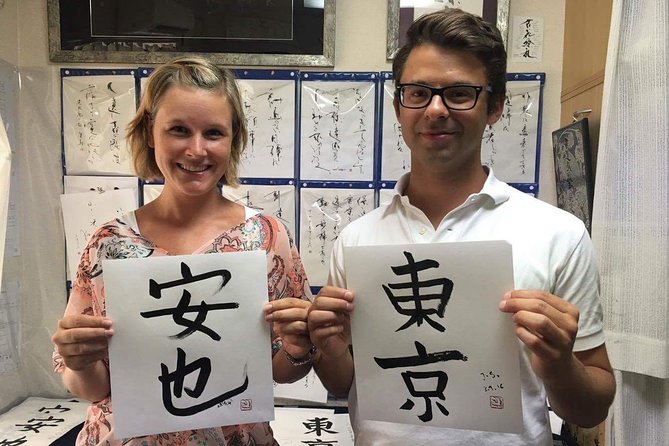
Reviewed · CRAFT WORKSHOPS
Tokyo Japanese Calligraphy Experience with a Master Artist
Japanese calligraphy is more than writing neatly. In this small Tokyo studio, you’ll learn how brush pressure, speed, ink, and empty space shape each character. Master artist Eizuru Matsumura teaches the basics, while an English-speaking guide helps you follow each step.
I like the personal setting and the chance to make something with your own hands. I also like that the experience includes all equipment and lets you keep your finished calligraphy. The main consideration is timing: the advertised visit is about 90 minutes, while the studio instruction may be closer to one hour.
This is a quiet, focused break from Tokyo’s packed sightseeing schedule. Guides such as Yoko and Michiko have met participants at Umeyashiki Station, walked them to the studio, translated the lesson, and helped them return to the station. The small group size, capped at 10, keeps the class personal.
In This Review
- Key points before you book
- A quiet introduction to shodo near Umeyashiki
- Meeting the master at his Tokyo studio
- From Umeyashiki Station to the lesson
- What you do during the 90-minute experience
- Why the quiet setting matters
- The English guidance makes a real difference
- Is the $92.24 price fair?
- Who should choose this class?
- Practical details that affect your day
- My take: book it for the hands-on lesson
- FAQ
- Where does the calligraphy experience take place?
- Where do I meet the guide?
- How long does the activity last?
- Is an English guide included?
- Who teaches the calligraphy class?
- Do I need to bring brushes, ink, or paper?
- Can children take part?
- How many people can join the class?
- Is hotel pickup included?
- Can I cancel for a full refund?
Key points before you book
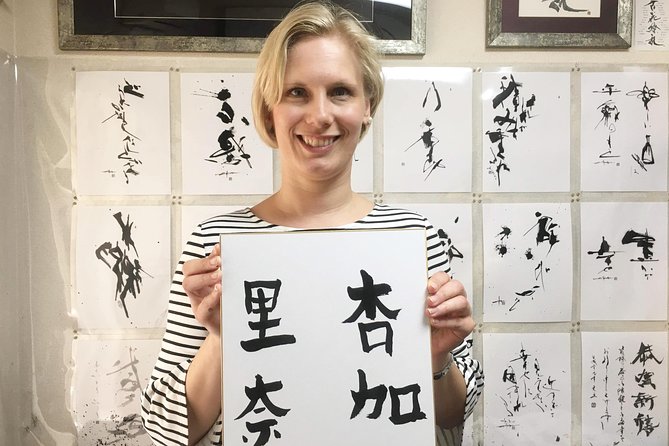
- Learn from artist Eizuru Matsumura: Your instructor is an active calligrapher, workshop leader, lecturer, and creator of an official Kyokushin Karate World Tournament pamphlet logo.
- Meet at Umeyashiki Station: The studio is about a five-minute walk from the station on the Keikyu Line, with no hotel transport included in the base price.
- Expect a calm studio lesson: Gentle music, quiet concentration, and repeated brush practice make this a slower cultural activity than most Tokyo tours.
- English help is built in: An English-speaking guide or interpreter leads you from the station and explains the instructor’s directions.
- Take home your own work: You practice characters on paper and keep the pieces you create as a useful souvenir.
- Best for small groups and families: The minimum booking is two people, the maximum is 10, and children must be at least 7 and accompanied by an adult.
A quiet introduction to shodo near Umeyashiki
Tokyo offers plenty of fast-moving sightseeing: crowded crossings, packed trains, towers, markets, and temples. This calligraphy class gives you a different pace. You sit down, hold a brush, and pay attention to one stroke at a time.
Shodo means the way of writing. Traditional Japanese calligraphy treats writing as an art form, not just a way to record words. The movement of the brush matters as much as the final character. A thick start, a controlled turn, or a quick finish can change the feeling of the whole piece.
That makes the activity appealing even if you cannot read Japanese. You do not need to know the language to notice the balance of the characters or the discipline behind each stroke. The instructor shows you how the brush works, and you learn by trying it yourself.
The class takes place at 球鶴書道教室, a calligraphy school about five minutes from Umeyashiki Station. The setting is described as a small studio with gentle music, which suits the work. You are not entering a large attraction built for crowds. You are going to a place designed for instruction and concentration.
A few more Tokyo tours and experiences worth a look

Meeting the master at his Tokyo studio
The central figure is Eizuru Matsumura, a calligrapher who has practiced since age 31. His work reaches beyond basic classroom exercises. He is also an artist, gives talks and workshops, appears in television programs, and created the official logo for a Kyokushin Karate World Tournament pamphlet.
That background matters because you are learning from someone who treats calligraphy as a working art, not just a school exercise. The class covers basic and creative calligraphy, so you should get both a foundation in technique and some room to make your own piece.
You can expect Matsumura to demonstrate brush handling and guide you through the forms. The supplied equipment includes the tools you need, including brushes, ink, and paper. You will not need to arrive with specialist supplies or prior practice.
The instructor’s patience is one of the strongest reasons to choose this class. That is especially useful for first-timers, children, and anyone who feels clumsy with a brush. Calligraphy can look simple when an expert does it. It feels quite different when you are trying to control the ink yourself.
From Umeyashiki Station to the lesson
You meet at Umeyashiki Station, at 2 Chome-28 Kamata in Ota City. The school is near public transportation and about a five-minute walk from the station on the Keikyu Line.
That short walk is part of the value of having an English-speaking guide. Yoko and Michiko are among the guides who have met participants at the station, led them to the studio, and helped them get back afterward. If you are unsure about Japanese train stations or local directions, this removes a small but real source of stress.
The guide also serves as an interpreter during the lesson. That matters because the finer points of brush movement can be hard to understand from a quick demonstration alone. You can ask questions through the guide and get a clearer sense of what Matsumura wants you to change.
Hotel pickup is not part of the standard package. You can request it for an additional 6,000 yen, but private transportation by taxi, car, or bus is otherwise excluded. For most people, meeting at the station should be the better-value choice, since the walk is short and the Keikyu Line provides the connection.
What you do during the 90-minute experience
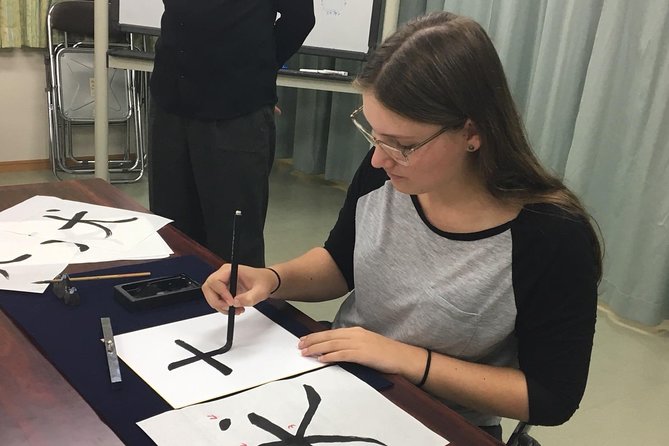
The full activity lasts about one hour and 30 minutes. The listed studio instruction is one hour, so plan for the extra time to cover meeting the guide, walking to the school, settling in, translation, and returning to the meeting point.
You begin by getting familiar with the tools. Japanese calligraphy uses a brush, ink, and paper, and each one affects the result. Ink that is too heavy or too light changes the line. Too much pressure makes a stroke broad. Too little pressure can make it weak or broken.
The lesson then moves into brush strokes and character practice. You repeat the movements, watch the master’s corrections, and work toward a finished piece. This is hands-on instruction, not a demonstration where you simply sit and watch.
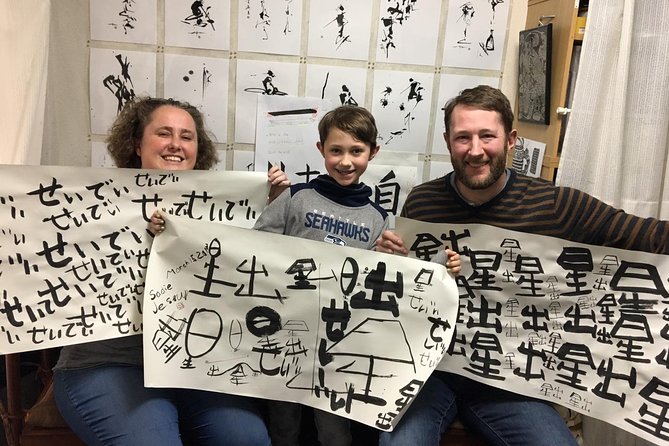
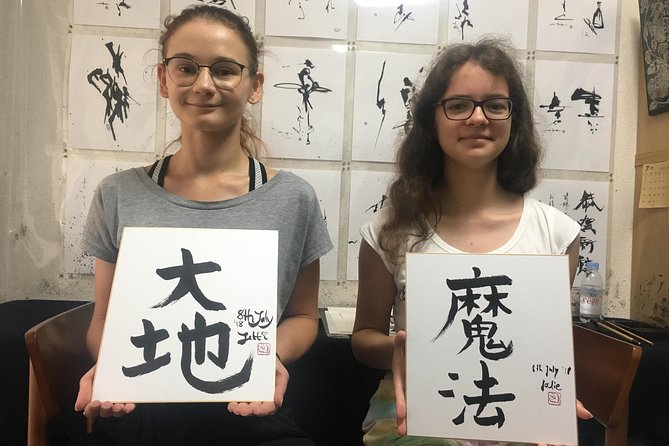
You might work on your name or on selected Japanese characters. A child in one family worked on her name and other characters, showing that the activity can be adjusted for younger participants. The minimum age is 7, and children must have an adult with them.
The final work is yours to keep. That makes the class more than a pleasant hour in a studio. You leave with a personal souvenir that records your attempt, including all the small quirks that make it yours.
Why the quiet setting matters
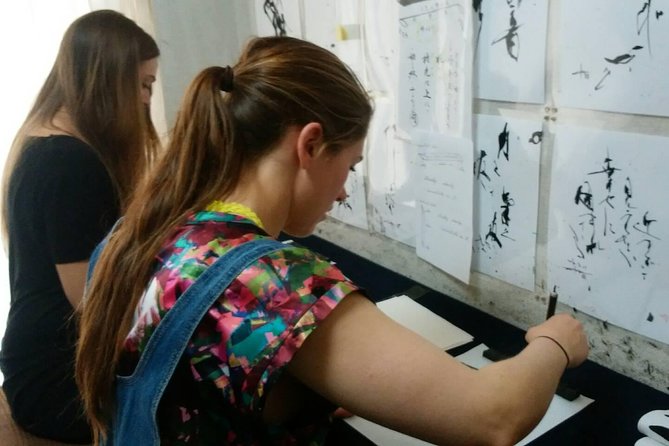
Calligraphy asks you to slow your breathing and focus on the movement of your hand. One participant compared the experience to yoga and music, a useful way to understand the mood. You are not racing through a list of facts or moving between several sights.
The small studio and gentle music support that slower pace. I like this contrast with Tokyo because it gives you time to notice a craft from the inside. You learn by doing, and the act of writing becomes the main event.
This can also make the class a good choice near the end of a Japan trip. One participant used it as a final activity after two weeks in Japan and found the calm focus a fitting way to leave. You do not need to save it for the final day, but it works well when you want a reflective pause.
Do not expect a formal meditation session or a long lecture on Japanese history. The focus is practical: learn the tools, practice brushwork, receive guidance, and create a piece. Cultural information is part of the experience, but your hands remain busy for much of the time.




The English guidance makes a real difference
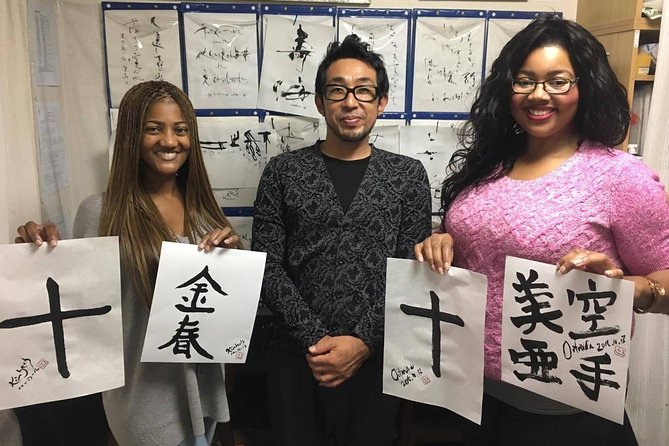
The class includes an English guide, and that support is one of its most useful features. The guide may contact you before the appointment, meet you at Umeyashiki Station, walk with you to the studio, translate, and escort you back to the meeting point.
Yoko has been praised for being prepared and helpful, while Michiko has helped make the route and lesson easier to follow. Kyoko and Mariko also appear in the tour support team. The exact guide may vary, so do not book on the assumption that one named interpreter will definitely lead your session.
The guide is not simply a person who points out the station exit. Good translation helps you understand why a stroke should begin or end in a certain way. It also lets you ask about the meaning and use of the characters you are practicing.
The master’s style is described as patient, talented, funny, and kind. That combination suits a beginner class. You get serious instruction without the atmosphere becoming stiff.
Is the $92.24 price fair?
At $92.24 per person, this is not the cheapest activity in Tokyo. It is also not just a drop-in craft session. The price covers a professional guide, English interpretation, instruction from an established calligrapher, the equipment, and a small-group format capped at 10 people.
The value is strongest if you want direct instruction and an authentic local setting. You are paying for access to the teacher, the translation, and the structure of the lesson. You are also paying for convenience, since you do not have to find a studio alone or bring your own supplies.
The value is weaker if you only want a quick souvenir or a short demonstration. You might find cheaper brush-writing activities elsewhere, but this experience gives you more personal guidance and a finished work to take home.
Group discounts are available, which may help families or friends booking together. The minimum booking is two people, so this is not designed as a solo drop-in experience. With a maximum of 10, the class should remain more personal than a large bus-group activity, though the exact feel will depend on the number booked for your date.
Who should choose this class?
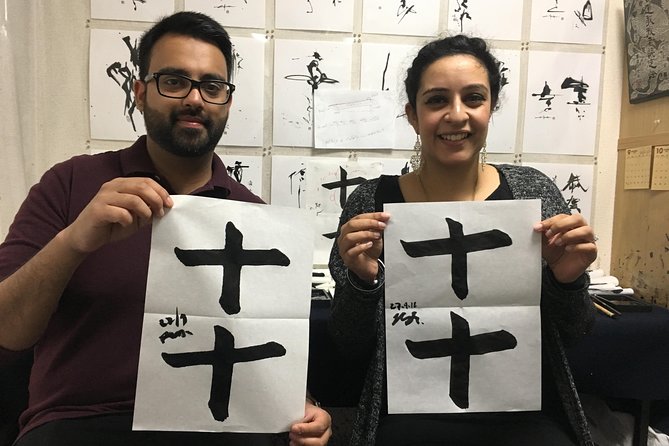
I would recommend it to first-time visitors who want a cultural activity that involves doing rather than watching. You do not need to read Japanese or have any prior calligraphy skill.
It also suits:
- Families with children aged 7 or older
- Couples looking for a calm shared activity
- Small groups wanting an unusual Tokyo souvenir
- Art-minded visitors interested in brush technique
- Anyone who wants a quieter break from major sightseeing areas
- People who value an English-speaking escort and interpreter
The class may be less suitable if you need a highly structured two-hour workshop with extensive time for perfecting one final piece. One participant expected a longer session and felt the actual experience did not match that expectation. The provider explained that the duration is an estimate, so keep your schedule flexible and think of the activity as roughly 90 minutes, with about an hour of studio instruction.
It may also disappoint you if you want hotel pickup included. That service costs an extra 6,000 yen, and the standard meeting point is Umeyashiki Station.
Practical details that affect your day
Confirmation arrives within 48 hours of booking, subject to availability. The experience is generally suitable for most people, and it is near public transportation.
Book at least two participants together. The maximum group size is 10, and children need an accompanying adult. Food and drinks are not included, so plan those separately before or after the class.
The meeting point is also the end point. That makes the activity easier to fit into a Tokyo day, since you return to the same station area rather than ending at an unrelated part of the city.
The experience is commonly booked well ahead, with an average booking time of 37 days in advance. That is useful planning information, especially if your dates are fixed. You can cancel for a full refund up to 24 hours before the local start time. Cancellations or changes made later are not accepted for a refund.
My take: book it for the hands-on lesson
Book this calligraphy experience if you want personal instruction, English support, and a keepsake made by your own hand. The calm studio, patient teaching, and short walk from Umeyashiki Station make it a practical cultural stop, especially for families and small groups.
Go in with sensible expectations. You are getting about 90 minutes from meeting point to return, not a long artist residency. You may leave with a piece that is not perfect, but that is part of the charm. If you want to understand shodo by trying its movements yourself, the price is reasonable. If you only want to watch a master write, choose a demonstration instead.
FAQ
Where does the calligraphy experience take place?
The class takes place at 球鶴書道教室 in Tokyo, about a five-minute walk from Umeyashiki Station on the Keikyu Line.
Where do I meet the guide?
You meet at Umeyashiki Station, at 2 Chome-28 Kamata, Ota City, Tokyo 144-0052, Japan.
How long does the activity last?
The overall experience lasts approximately one hour and 30 minutes. The studio instruction is listed as one hour, with the remaining time covering the meeting, walk, and return to the station.
Is an English guide included?
Yes. An English-speaking professional guide or interpreter is included. The guide can meet you at the station, walk you to the studio, translate during the class, and return with you to the meeting point.
Who teaches the calligraphy class?
The class is taught by calligrapher and artist Eizuru Matsumura. He has practiced calligraphy since age 31 and also leads workshops, lectures, television programs, and artistic projects.
Do I need to bring brushes, ink, or paper?
No. All necessary equipment is included in the price.
Can children take part?
Children can participate from age 7. Anyone under 18 must be accompanied by an adult.
How many people can join the class?
The minimum booking is two participants, and the maximum group size is 10 people.
Is hotel pickup included?
No. Hotel pickup and drop-off are not included in the standard price. Hotel pickup can be added for 6,000 yen, while private transportation is also excluded.
Can I cancel for a full refund?
Yes. You can cancel at least 24 hours before the local start time for a full refund. Cancellations or changes made less than 24 hours before the start time are not accepted for a refund.
More Craft Workshops in Tokyo

More tours in Tokyo we've reviewed







Craft Workshops, compared.
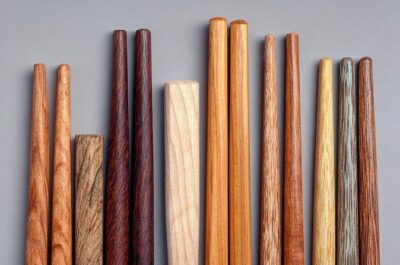 ★ 5.0Tokyo Shinjuku Chopsticks Making ClassFrom $20
 ★ 4.8Chopstick Making Workshop in GinzaFrom $251 hour
 ★ 5.0Kintsugi Experience: Art of Golden Joinery in TokyoFrom $59
 ★ 5.0Tokyo Chopstick Making Workshop with ArtisanFrom $26
Tokyo: Shinjuku Chopstick Making ClassFrom $121 hour
Tokyo: Chopstick-Making WorkshopFrom $61 hour
★ 5.0Tokyo Chopstick Making Workshop with ArtisanFrom $26
Tokyo: Shinjuku Chopstick Making ClassFrom $121 hour
Tokyo: Chopstick-Making WorkshopFrom $61 hour