
Reviewed · SHIBUYA TOURS
Tokyo Bike Tour: Shibuya, Harajuku & Hidden Gems
Tokyo Bike Tour: Shibuya, Harajuku and Hidden Corners
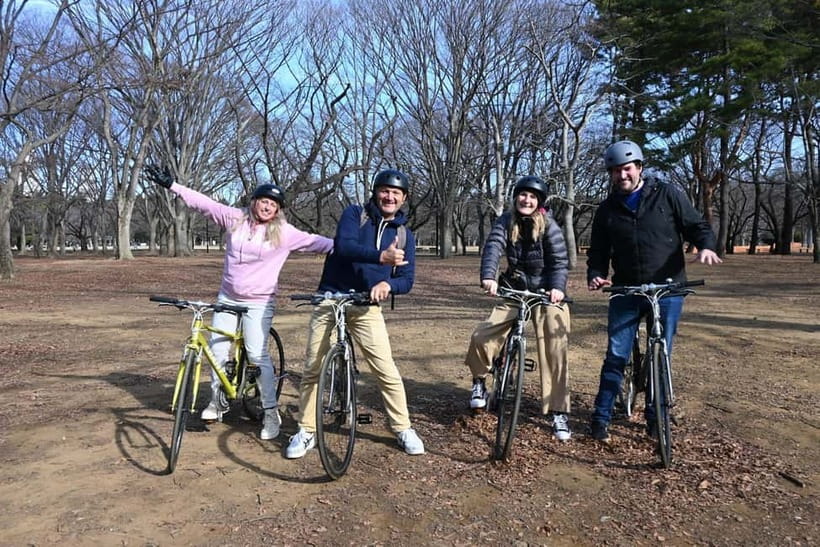
Tokyo reveals itself quickly from a bicycle. In three hours, you can roll from the calm paths of Yoyogi Park to Shibuya Crossing, then cut through Aoyama lanes, cemetery paths, and the grand Ginkgo Avenue. The useful trick here is simple: you cover more ground than on foot, while still moving slowly enough to notice the city.
I like the small group of no more than six, and I like the local guide’s focus on backstreets rather than a checklist of famous sights. Guides such as Taichi also bring useful local context and English conversation. The main catch is that you need to feel comfortable riding in traffic at about 15 kilometers per hour, with some narrow areas and occasional uphill stretches.
In This Review
- Key points at a glance
- Why a bicycle works so well in western Tokyo
- Meeting at Umayamichi Park near Yoyogi
- Yoyogi Park and the first quiet views
- Shibuya Crossing without losing the local feel
- Hachikō and Harajuku in one efficient loop
- Omotesando and Aoyama, where the pace changes
- Aoyama Cemetery and Gaien’s open avenues
- What the riding is really like
- The guide makes the difference
- Is $63 a fair price?
- Who should book this ride?
- Practical details before you reserve
- Should you book the Tokyo Bike Tour?
- FAQ
- Where does the Tokyo bike tour begin?
- How long does the tour last?
- How many people can join the tour?
- Is the tour conducted in English?
- What equipment is included?
- How fast do participants need to ride?
- What happens if it rains?
Key points at a glance
- Six-person maximum: Small numbers make it easier to ask questions and adjust the pace to the group.
- Three hours on a bicycle: You reach Shibuya, Harajuku, Omotesando, Aoyama, and Gaien without changing trains.
- A local’s route: Quiet lanes and lesser-known stops add more character than a standard sightseeing loop.
- Experienced cycling guidance: Your guide leads through city traffic and explains Japanese cycling rules.
- Strong first-day option: The route gives you a practical sense of how several central Tokyo districts fit together.
- Real riding required: You should confidently handle city streets, traffic lights, narrow areas, and a normal cycling pace.
Why a bicycle works so well in western Tokyo
Shibuya, Harajuku, Aoyama, and Gaien sit close together on a map, but they feel scattered when you walk between them. You can spend much of a day moving from one major sight to another, with little time left for the smaller streets that give these neighborhoods their personality.
A bicycle fixes that problem. You travel far enough to see clear changes in the city, but you can still stop for photos, walk beside the bike, and hear the guide explain what you are seeing. The route avoids public transport, so you do not lose time finding platforms, waiting for trains, or emerging from a station several blocks from your target.
This is especially helpful if you have just arrived in Tokyo. You get an early sense of Shibuya’s energy, Harajuku’s style-conscious streets, Aoyama’s quieter avenues, and Gaien’s open public spaces. I would not treat the tour as a replacement for exploring these districts later on foot. Think of it as a fast, useful orientation that helps you decide where to return.
A few more Tokyo tours and experiences worth a look

Meeting at Umayamichi Park near Yoyogi
The tour begins at Umayamichi Park, by the Freshness Burger. That is a practical meeting spot, about one minute from Yoyogi Station and roughly ten minutes on foot from Shinjuku Station. This easy access matters in Tokyo, where a poorly chosen meeting point can add a surprising amount of stress.
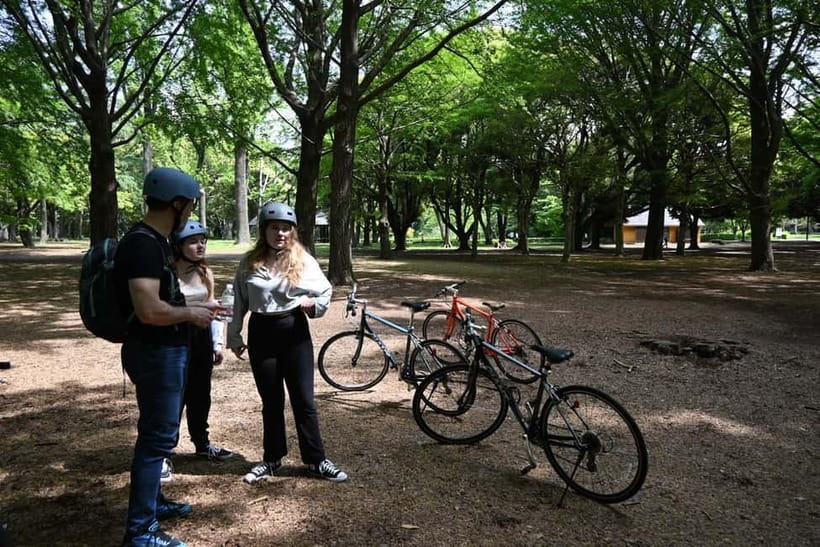
The first five minutes are used for a safety briefing. You receive a bicycle and helmet, then go over the basic expectations for riding in Japan. Pay attention here. Bicycle rules and traffic habits may differ from what you follow at home, and you are expected to obey Japanese traffic laws and the guide’s instructions.
The tour is conducted in English and limited to six participants. That is a much better setup for questions than a large coach group. If you are interested in food, cafes, neighborhood changes, or local customs, you should have a fair chance to ask about them while riding or during stops.
Yoyogi Park and the first quiet views
The early part of the route includes a short scenic stop before reaching Yoyogi Park. The park gives you a softer introduction to Tokyo than the traffic-heavy streets ahead. You stop for photographs and spend about 15 minutes taking in the surroundings.
Yoyogi Park is valuable here because it shows how much open space exists within central Tokyo. The visit is brief, so do not expect a long park walk or a detailed botanical tour. Instead, use it to settle into the bike, watch how the group moves, and get a first taste of the contrast between Tokyo’s packed commercial districts and its broad green areas.
The guide also points out lesser-known places along the way. The exact secret stops can vary, but that uncertainty is part of the appeal. You are not simply following the most obvious route between two famous landmarks.
Shibuya Crossing without losing the local feel
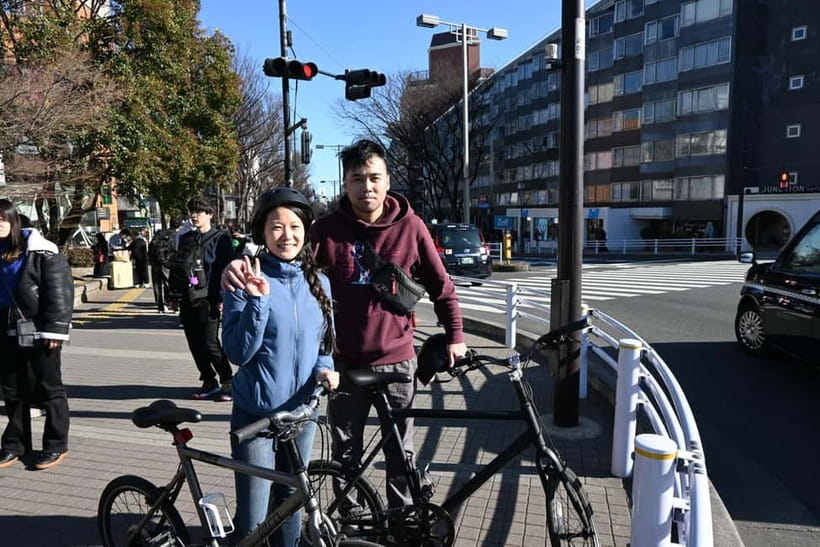
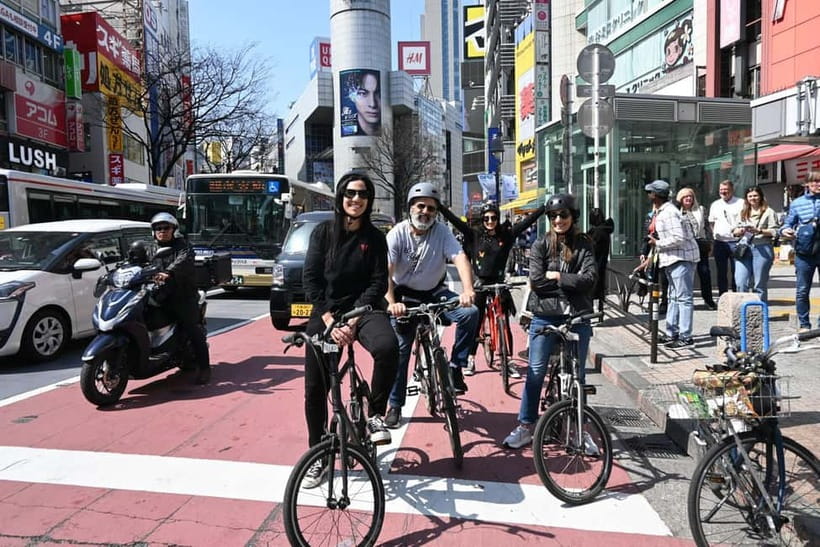
The ride continues through Shibuya City before reaching Shibuya Crossing. You get about 10 minutes here for a guided visit, photos, and a short walk. This is enough time to understand the famous intersection, but not enough to linger through every possible crossing cycle.
The sensible approach is to treat Shibuya Crossing as one stop in a larger neighborhood tour. You will see the famous scene, then move on rather than spending the whole morning watching crowds stream across the road. Your bicycle also gives you a practical advantage: you approach the district through ordinary streets instead of seeing only the station area.
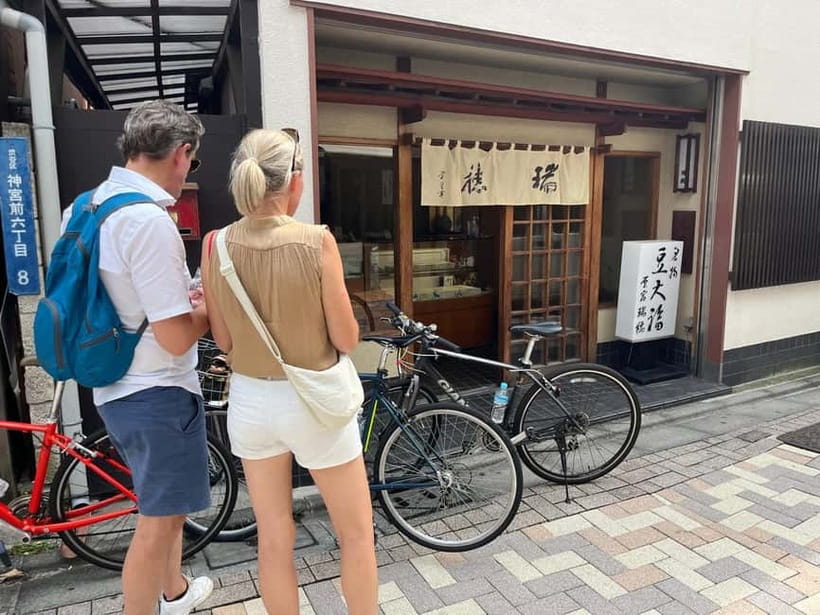
A second lesser-known stop follows, with more time for photographs and explanation. These pauses are where the tour can feel more personal. A local cyclist can point out details that do not usually appear in a basic guidebook description, including the history and everyday use of the area.
Hachikō and Harajuku in one efficient loop
The Hachikō Statue is next, with about 10 minutes for a guided stop, photos, and a walk. The statue is one of Shibuya’s best-known meeting points, and your guide can give it context without asking you to spend a long time there.
From Shibuya, the route heads toward Harajuku. You get another photo stop and a scenic ride through the district. Harajuku is often reduced to youth fashion and Takeshita Street, but a bicycle route can give you a broader impression of the neighborhood. You see it as part of a connected urban area rather than as a single shopping corridor.
A further quiet stop adds another pause before Omotesando. The tour information does not promise a fixed list of secret locations, so you should book this for the style of discovery rather than for a specific unnamed sight. The strength is the guide’s local eye and the chance to reach places you might otherwise pass without noticing.
Other cycling tours in Tokyo
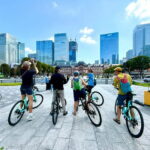
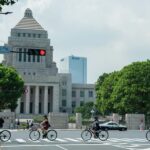
Omotesando and Aoyama, where the pace changes
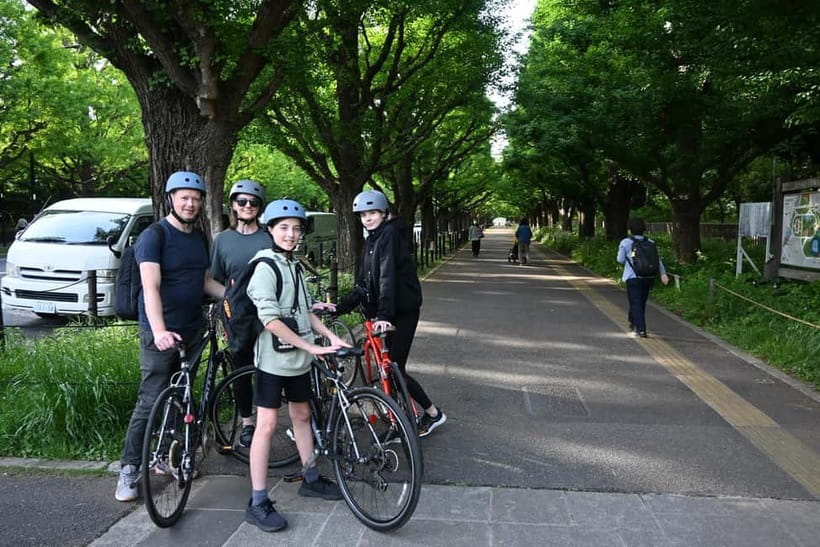
Omotesando provides a polished contrast to Shibuya’s crowded center. You stop briefly for photographs and views, then continue into Aoyama for about 20 minutes. The route lets you see how quickly Tokyo can shift from intense commercial streets to calmer, more spacious avenues.
This part may appeal to you if you enjoy city design, shopping districts, architecture, or people-watching more than major monuments. The guide can also share practical suggestions for cafes and restaurants in the area. That advice may be one of the tour’s most useful extras, especially early in your stay when you are still choosing where to eat.
Do not expect a food tasting or a full shopping visit. The tour keeps moving, and the focus remains on cycling and local orientation. Take notes on places that catch your eye, then return later on foot if you want more time.
Aoyama Cemetery and Gaien’s open avenues
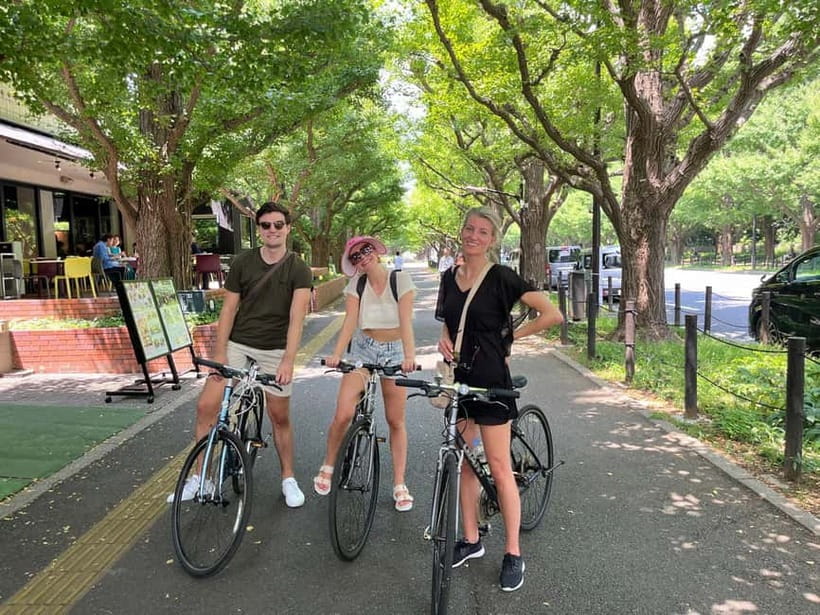
Aoyama Cemetery is one of the longer stops, with about 20 minutes for photographs, a guided walk, and local explanation. It offers a noticeably quieter setting after the commercial districts. The stop also shows why a bicycle is useful: you can reach a place that feels removed from the main tourist flow without spending a large part of the tour on transport.
You should be comfortable with the fact that this is not a conventional sightseeing stop. A cemetery may interest you for its calm atmosphere, cultural setting, and local history, but it will not suit everyone. The guide’s explanation is important here, since the value comes from understanding the place rather than simply taking a quick photograph.
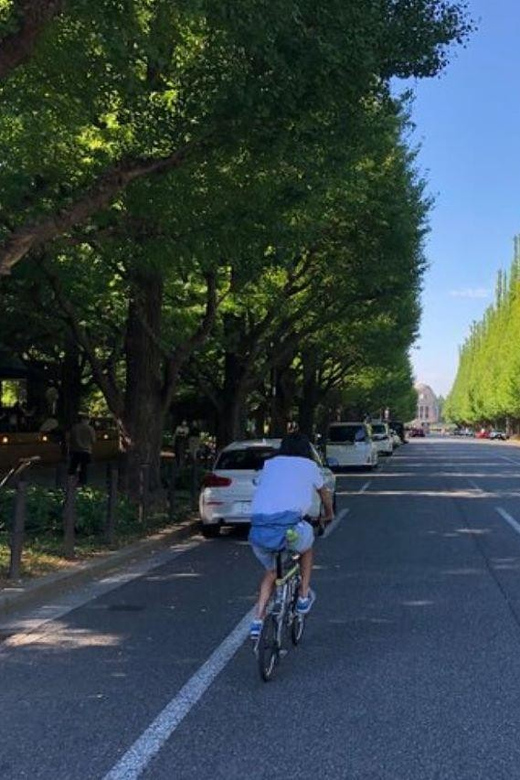
The route then reaches Meiji Jingu Gaien Ginkgo Avenue for a short photo stop. The avenue is known for its ordered rows of trees and broad visual perspective. The appearance can change with the season, and the tour provides only about five minutes there, so plan on a quick look rather than a long stroll.
The Japan National Stadium follows, also as a short photo stop. You see the exterior and add another piece to the city’s public architecture before cycling back to Umayamichi Park. The return completes a loop through several central districts without requiring a train or taxi.
What the riding is really like
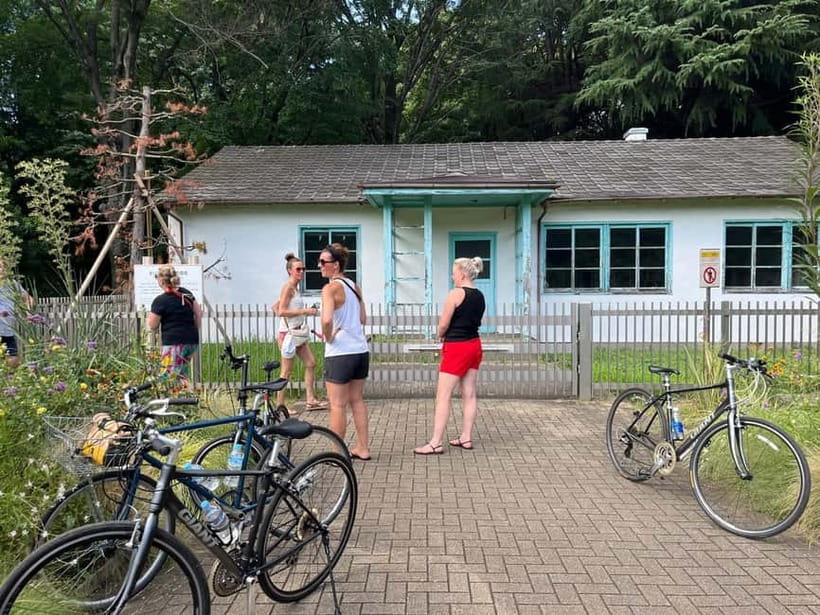
This is not a casual bicycle ride where you coast along at a sightseeing pace. You should be able to ride for three hours with short breaks, maintain roughly 15 kilometers per hour, cross at traffic lights, and handle occasional narrow or crowded stretches.
There may also be uphill sections. A German participant specifically noted that the bicycles had working gears, which is reassuring, but gears do not remove the need for reasonable fitness. If you are rusty on a bicycle or nervous around cars, this may not be the right first activity in Tokyo.
The guide’s cycling background is a major practical benefit. You follow someone who understands the route and can manage the group through city streets. Still, the guide cannot make the ride risk-free. Keep your attention on traffic, follow instructions, and do not use headphones.
Closed-toe shoes are required. Wear comfortable clothing and bring a drink. Sandals, flip-flops, open-toed shoes, short skirts, large bags, oversize luggage, umbrellas, smoking, vaping, and alcohol are not allowed. The restrictions are sensible for a bike ride, though you should leave your main luggage at your accommodation.
The tour runs in light rain, but sudden weather changes can lead to cancellation. Tokyo weather can shift quickly, so check the forecast and avoid making this your only plan for a tightly scheduled day.
The guide makes the difference
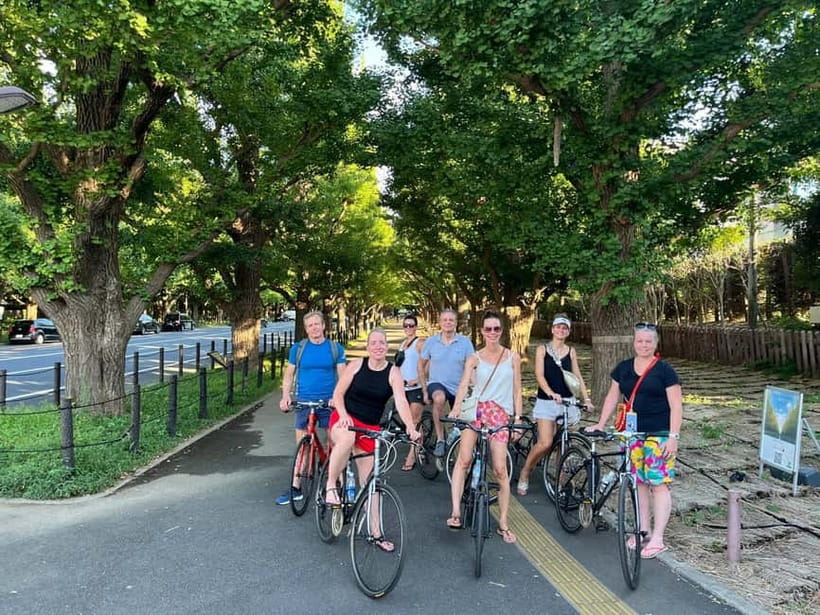
The guide is not there only to point out landmarks. This tour depends on someone who can combine safe riding with clear local commentary. The guide is based in Shibuya, has been cycling for years, and has been showing visitors backstreets and lesser-known areas since 2018.
Taichi has received especially strong praise for being patient, kind, and easy to communicate with in English. One useful detail is that when two people in a group became uncomfortable riding in city traffic, he adapted the outing into a walking tour. That shows good judgment, but you should not count on a walking option being guaranteed. The published format is a cycling tour, and you should be prepared to ride.
A local guide can also answer the questions that are hard to answer from a map. You can ask about where residents eat, which streets are worth returning to, and how the districts have changed. That personal layer gives the ride more value than simply renting a bicycle and following a route yourself.
Is $63 a fair price?
At $63 per person, the tour is not the cheapest way to see Shibuya. You could walk through some of the same districts for free, and Tokyo’s public transport is efficient and reasonably priced. The value comes from combining bicycle hire, helmet, route planning, English guidance, local commentary, and a maximum group size of six.
I think the price is fair if you want an efficient introduction to several neighborhoods and would otherwise struggle to connect them in one morning. It is less compelling if you already know Shibuya and Harajuku well, dislike riding near traffic, or prefer to spend a full hour at each major sight.
The tour also saves you the work of planning a route that links famous places with quieter streets. That planning time has value, particularly on a first visit. Free cancellation up to 24 hours before departure and the option to reserve now and pay later make it easier to fit into a changing itinerary.
Who should book this ride?
I would recommend it most strongly to first-time Tokyo visitors aged 13 to 75 who already ride bicycles with confidence. It works well for couples, friends, and small families with older teenagers who can manage city cycling.
It is also a good choice for someone who has visited Tokyo before but has only seen the major stations and shopping streets. The quieter stops, local food suggestions, and short walks add a different side of the city.
You should skip it if you cannot ride a bicycle, are pregnant, or are outside the stated height range of 155 to 200 centimeters. It is also not suitable for children under 13 or people over 75. If your comfort level is uncertain, consider a walking tour instead of hoping the ride will feel easy once it begins.
Practical details before you reserve
The meeting point is Umayamichi Park, next to Freshness Burger. The tour lasts three hours, is offered in English, and includes the bicycle and helmet.
Wear closed-toe shoes and comfortable clothes. Bring water or another nonalcoholic drink, and arrive without large bags or luggage. You need both hands and attention for riding, so leave anything bulky behind.
The route includes guided walks at Shibuya Crossing, Hachikō, and Aoyama Cemetery. Those short walks are useful because some sights are best viewed after you park the bicycle rather than from the saddle.
Should you book the Tokyo Bike Tour?
Book it if you want to see a lot of central Tokyo in a short time and are happy to ride in real city conditions. The best parts are the six-person format, the local route through Shibuya, Harajuku, Aoyama, and Gaien, and the guide’s ability to add personal context beyond standard facts.
Do not book it simply because the price seems low or because you want a gentle park ride. Traffic, narrow streets, hills, and a steady pace are part of the deal. For a confident cyclist, though, this is a smart first-day introduction that helps Tokyo feel less like a maze and more like a collection of connected neighborhoods.
FAQ
Where does the Tokyo bike tour begin?
The tour begins at Umayamichi Park, at the park next to Freshness Burger. It is about one minute on foot from Yoyogi Station and about ten minutes from Shinjuku Station.
How long does the tour last?
The tour lasts three hours, including the safety briefing, cycling, photo stops, guided walks, and the return to Umayamichi Park.
How many people can join the tour?
The group is limited to six participants, creating a small-group setting with time for questions and more direct guidance.
Is the tour conducted in English?
Yes. The tour includes a live English-speaking guide.
What equipment is included?
A bicycle and helmet are included in the price.
How fast do participants need to ride?
You should feel comfortable riding at a typical cycling speed of approximately 15 kilometers per hour, or 9.3 miles per hour. You also need to handle traffic lights, city streets, and occasional narrow or crowded areas.
What happens if it rains?
The tour can proceed in light rain, but sudden weather changes may lead to cancellation for safety reasons. You can cancel up to 24 hours in advance for a full refund.
More Cycling Tours in Tokyo
More Shibuya Tours in Tokyo


More tours in Tokyo we've reviewed





Shibuya Tours, compared.
 ★ 5.0Official Street Go-Kart in ShibuyaFrom $76
 ★ 4.9Tokyo: Street Kart Experience in ShibuyaFrom $741 hour
 ★ 5.0Shibuya Meltdown Nightlife Tour: All-You-Can-Drink Bar HoppingFrom $106
 ★ 5.0Shibuya Official Street Go-Kart in Shibuya AnnexFrom $69
 ★ 5.0Tokyo: Shibuya Food Tour (13 dishes and 4 Eateries)From $77
 ★ 5.0Best of Shibuya Food TourFrom $217