
Reviewed · SAMURAI & NINJA EXPERIENCES
Tokyo : Authentic Samurai Experience in a Private Space.
The sharpest part of this 90-minute experience is the chance to hold a real Japanese sword while learning how samurai etiquette and sword movements fit together. You begin in kimono, train with an instructor, and finish by facing a real samurai in a carefully controlled exchange.
I like the tiny group, limited to three people, and the setting in an old private house. I also like the human touches: Yukari helps with dressing, photos, and tea, while the instructor patiently corrects your stance and sword motion. The main consideration is the price, $322 per person, which is substantial for 90 minutes.
In This Review
- Key points
- Entering an Old Japanese House
- Putting on the Samurai Kimono
- Learning Bushido Before the Sword Work
- Handling a Real Japanese Sword
- Practicing the Cutting Motion
- Facing the Samurai Instructor
- Tea, Questions, and a Quieter Finish
- Is $322 Worth It for 90 Minutes?
- Who Will Enjoy This Most?
- Practical Details Before You Book
- Should You Book the Bushido Experience?
- FAQ
- Where does the samurai experience take place?
- How long does the activity last?
- How many people can join the group?
- Is the experience offered in English?
- Do I get to wear a kimono?
- Will I handle a real sword?
- Do I fight a samurai?
- What if I am uncomfortable with the blade?
- Is Japanese tea included?
- Who should not take part?
Key points
- Real katana handling: Learn how to draw, swing, and sheath a sword under supervision.
- Small private setting: With no more than three participants, instruction can be personal.
- Kimono and photographs: Dress in formal Japanese clothing and take photos inside an old house.
- Bushido lessons: The session links sword technique with manners, discipline, and samurai philosophy.
- Tea with Yukari: Finish with Japanese tea and time to ask questions.
- Best for adults and older children: The activity is not suitable for children under 10, pregnant women, or people with mobility impairments.
Entering an Old Japanese House
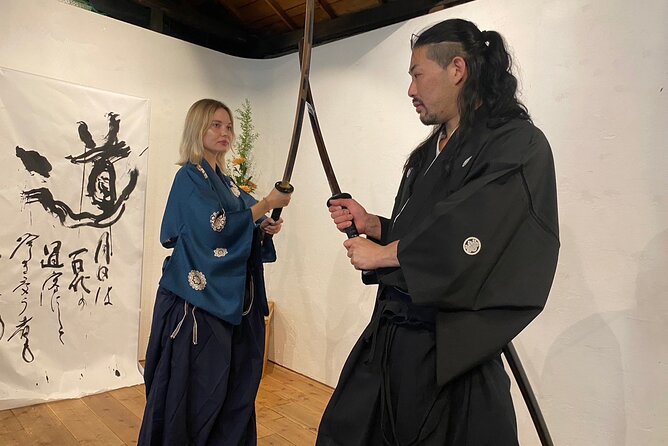
This experience begins at a meeting point marked by a signboard. Follow the arrow and enter through the entrance. The setting matters here. You are not in a modern studio built only for quick photographs. You learn inside an old private Japanese house, where the surroundings help give the session a sense of place.
The group is limited to three people. That is a major advantage for an activity involving a sword. You should have room to listen, watch, and practice without waiting behind a large crowd. It also gives you a better chance to ask questions, especially if you are curious about sword construction, Bushido, or Japanese customs.
The experience lasts 90 minutes and ends at the same spot. There is no extended transport segment or added sightseeing afterward, so plan this as a focused cultural activity rather than a half-day tour.
A few more Tokyo tours and experiences worth a look


Putting on the Samurai Kimono
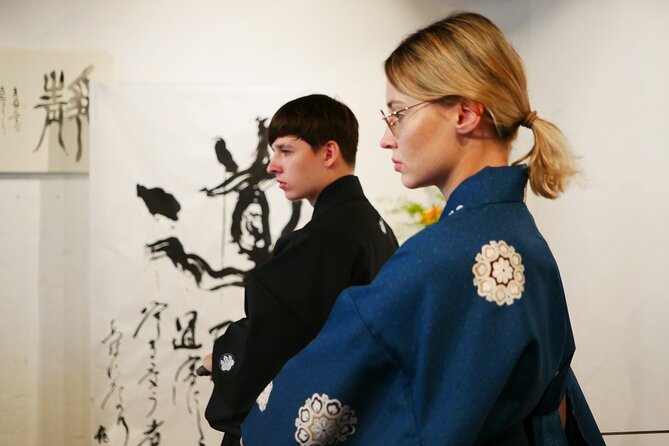
The first practical step is dressing. You change into a formal kimono before handling the sword. This is more than a costume change, since traditional clothing affects your posture, movement, and awareness of how you stand.
Yukari helps with the clothing and later takes photos. That is useful because dressing in a kimono can be unfamiliar, and you will want to concentrate on the experience rather than struggle with every layer yourself. The photographs also give you a lasting record of the visit inside the old house.
The clothing makes the sword lesson feel more complete, but it can also slow the pace. With only 90 minutes, part of the session is naturally spent getting dressed, preparing, and taking pictures. If your main goal is technical sword practice, you should keep that tradeoff in mind.
Learning Bushido Before the Sword Work
The instructor does not simply hand you a sword and tell you to swing. You first learn about samurai conduct and Bushido, including the etiquette connected with the art.
That context gives the movements a purpose. A bow, a stance, the way you hold yourself, and the manner in which you handle the sword all become part of a larger lesson in discipline and respect. You do not need prior knowledge of Japanese history or martial arts. The program is designed to begin from scratch.
The teaching is available in Japanese and English. Clear demonstrations and hands-on correction are especially important here, since sword movements can be difficult to understand from verbal instructions alone. The instructor is described as friendly, patient, funny, and willing to answer questions. Even with a language gap, the steps are presented in a way that beginners can follow.
If you already practice HEMA or another sword-based discipline, you may find the session interesting for different reasons. One experienced participant worked on drawing and sheathing the sword, stances, and katana swings, then tried a more difficult seated tatami cut. The activity can therefore work for both a complete beginner and someone who already pays close attention to sword technique, although the 90-minute format is not a full martial arts course.
Handling a Real Japanese Sword
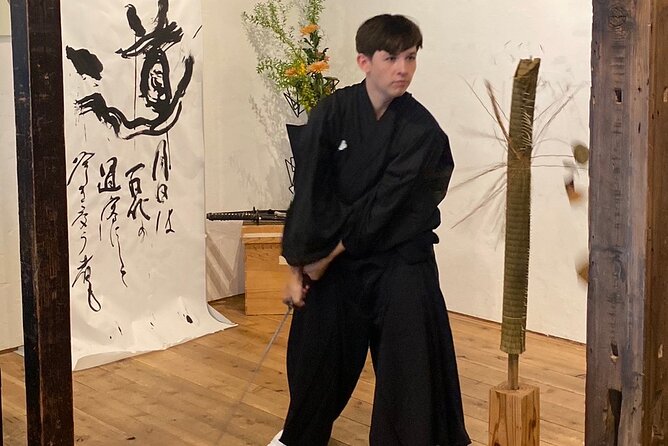
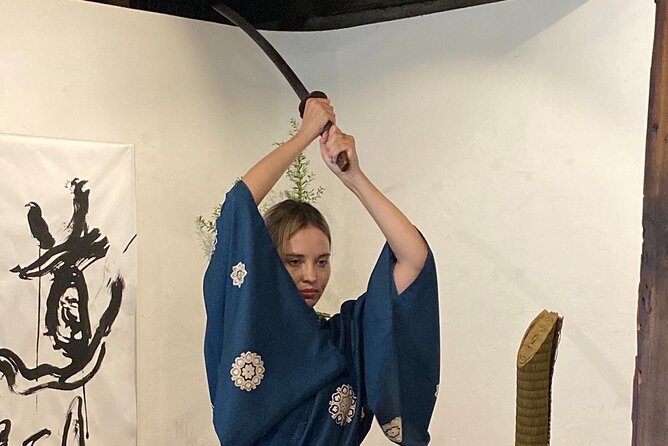
The central activity is learning to handle a real sword. You practice how to hold it, move it, and swing it under close instruction. The appeal is obvious, but so is the need for care.
You are not left to experiment alone. The instructor demonstrates the movements and points out where your technique needs work. Expect corrections to your body position, timing, and cutting motion. This makes the activity more useful than simply posing with a prop.
Safety rules are made clear. No one will point the blade at you, and you should tell the staff in advance if you are uncomfortable with the sharp edge. That is an important detail. A real blade changes the tone of the session, so speak up before the sword work begins if you have concerns.
One useful tip is to ask about the sword itself. A participant asked the instructor to take the sword apart at the end to show how the pieces fit together, and the request was handled willingly. If you are interested in Japanese weapons or craftsmanship, this could add a rewarding few minutes, though it is not listed as a standard part of the program.
Practicing the Cutting Motion
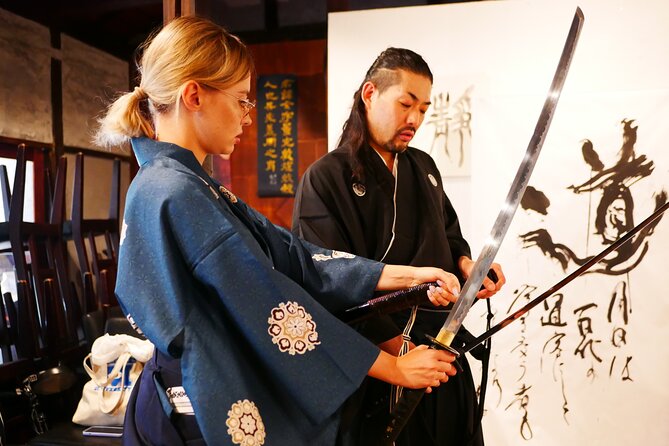
The sword lesson includes repeated movement practice, followed by a display sequence and a final confrontation with a real samurai. The wording may sound dramatic, but this is a supervised cultural activity, not an uncontrolled fight.
You learn the basics first, then apply them with the instructor’s guidance. One practical suggestion is to request extra practice swings if you want more time on the cutting motion itself. The complete sequence may leave less time for repetition than a dedicated martial arts lesson.
Tatami cutting can also be part of the experience. This is a traditional-style target exercise and can be the most exciting technical moment of the session. It requires more than simply swinging hard. The angle, posture, and timing all matter. An experienced participant even tried cutting from a seated position, which was described as difficult but possible.
Because the exact pace depends on the number and ability of participants, you should not expect a long series of advanced cuts. The real value is the chance to try the movement safely, receive correction, and understand how much control it takes.
Other private tours in Tokyo





Facing the Samurai Instructor
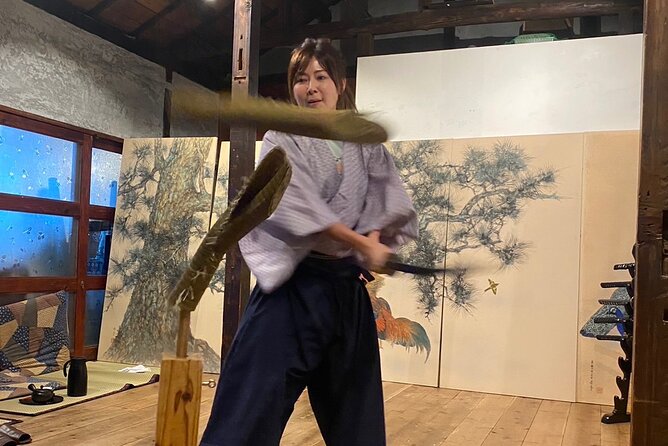
Near the end, you face a real samurai with a sword. This gives the lesson a clear finish and lets you use the etiquette and movements introduced earlier.
The exchange is handled with safety in mind. You are not being asked to duel at full speed, and the staff will control the activity. Still, you should be comfortable around a blade before booking. Pregnant women, people with mobility impairments, and children under 10 are not considered suitable for the experience.
The final encounter is likely most enjoyable when you treat it as a demonstration and cultural exercise rather than a test of strength. You do not need martial arts experience. The instructor’s patience and friendly manner help take the pressure off, which is useful when you are trying to remember several movements while dressed in unfamiliar clothing.
Tea, Questions, and a Quieter Finish
After the sword work, you sit down for Japanese tea. This change of pace is welcome. The session moves from concentration and physical practice to conversation and reflection.
Yukari serves the tea and can help make this final part feel personal. You can use the break to ask about the sword, Bushido, the clothing, or the customs you have just practiced. One of the most consistently praised details is the tea itself, so this is not an afterthought tacked onto the end.
Tea also helps balance the program. The sword handling provides the excitement, while the quiet drink connects the activity to everyday Japanese hospitality. If you are looking for a cultural experience that includes conversation as well as action, this closing moment adds real value.
Is $322 Worth It for 90 Minutes?
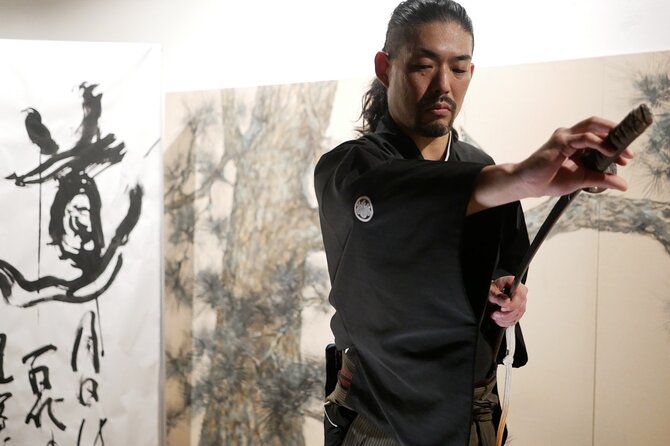
At $322 per person, this is an expensive short activity. You are paying roughly $3.58 per minute, though that simple calculation does not capture the private setting, the small group, the kimono assistance, the instructor’s attention, the sword work, the tea, and the photographs.
The price makes the most sense if you value several elements at once:
- A genuine sword-handling lesson rather than a photo-only costume session
- A group of no more than three people
- English-language instruction
- A traditional house setting
- Personal help with dressing and photographs
- Tea and conversation after the lesson
The price is harder to justify if you only want a quick samurai photo or a longer martial arts class. You can dress up, wave a sword, and take pictures here, but the experience is also structured around etiquette, technique, and Bushido. It is best viewed as a private cultural lesson with a hands-on component.
The strong satisfaction shown by the available feedback supports the idea that the instruction and personal attention are the main reasons to pay more. Still, a high score does not change the short duration. Ask for extra practice swings or a closer look at the sword construction if those details matter to you.
Who Will Enjoy This Most?
I would recommend this for adults and families with children aged 10 or older who want an active cultural experience. It suits people who are curious about samurai customs, Japanese etiquette, sword design, or traditional clothing.
It is also a good fit for couples or small groups of friends. With only three participants, you are unlikely to feel lost in a crowd. You can watch each person’s technique and ask questions as the lesson develops.
Martial arts fans have an extra reason to consider it. The session covers drawing, sheathing, stances, and swinging a katana, and tatami cutting may provide a more technical challenge. Just keep your expectations reasonable. This is an introduction, not a multi-day training course or a formal qualification.
I would skip it if you dislike sharp weapons, have limited mobility, are pregnant, or are booking for a child under 10. If the thought of a blade makes you uneasy, tell the staff before the activity begins, as the instructions specifically ask you to do.
Practical Details Before You Book
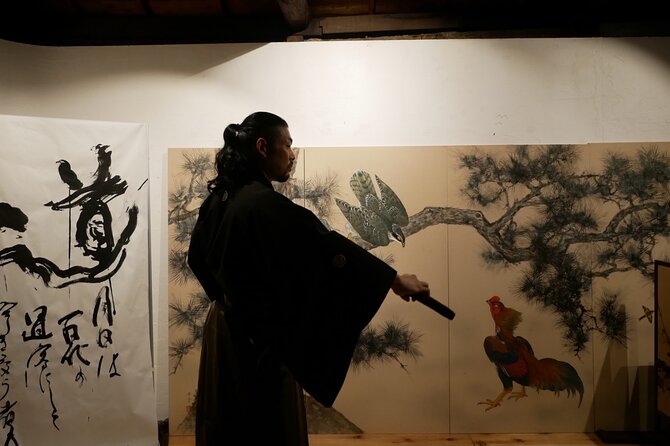
The experience is offered in Japanese and English. The small group size should help, but you may still want to listen closely to demonstrations and ask the instructor to repeat a movement if needed.
Wear something that allows you to change into the kimono comfortably. The provided information does not specify a dress code, so do not assume that special clothing or footwear is included beyond the kimono dressing experience.
Scooters are not allowed. The meeting point has a signboard, and you enter through the marked entrance by following the arrow. Since the exact starting times depend on availability, check the schedule before setting other plans.
Cancellation is flexible up to 24 hours before the activity for a full refund. You can also reserve now and pay later, which helps if your Japan schedule is still changing.
Should You Book the Bushido Experience?
Book it if you want more than a staged samurai photograph. The combination of a kimono, Bushido etiquette, real sword handling, close instruction, a supervised samurai encounter, and tea gives the 90 minutes a clear shape.
The strongest reasons to go are the private old-house setting, the very small group, and the instructor’s patient teaching. Ask for extra cutting practice if that is your priority, and ask whether the sword can be shown in separate parts if you are interested in how a katana is made.
Skip it if $322 feels too high for a short activity or if you want a long technical training session. For the right visitor, though, this is a focused and memorable way to connect Japanese tradition with hands-on practice.
FAQ
Where does the samurai experience take place?
It takes place in an old private Japanese house on Honshu, Japan. A signboard marks the meeting point, and you follow the arrow through the entrance.
How long does the activity last?
The experience lasts 90 minutes.
How many people can join the group?
The group is limited to three participants.
Is the experience offered in English?
Yes. The instructor and activity are available in Japanese and English.
Do I get to wear a kimono?
Yes. The experience includes a kimono dressing activity before the sword lesson.
Will I handle a real sword?
Yes. A real sword is included, and you learn how to handle and swing it under instruction.
Do I fight a samurai?
The final part involves facing a real samurai with a sword. Safety is taken into consideration, and no one will point the blade at you.
What if I am uncomfortable with the blade?
Tell the staff before the activity if you do not like being near the blade’s edge.
Is Japanese tea included?
Yes. Japanese tea is served after the sword portion, with time to rest and talk.
Who should not take part?
The activity is not suitable for pregnant women, people with mobility impairments, or children under 10. Scooters are also not allowed.
More Private Tours in Tokyo
More Samurai & Ninja Experiences in Tokyo
More tours in Tokyo we've reviewed










Samurai & Ninja Experiences, compared.
 ★ 4.5Tokyo: Samurai Restaurant Show Ticket with 2 DrinksFrom $551h 30m
 ★ 4.6Tokyo: Samurai Ninja Museum Guided tour and ExperienceFrom $27
 ★ 5.0Tokyo: Samurai Sword & Archery Class from Samurai DescendantFrom $1933 hours
 ★ 5.0Best Samurai Experience in TokyoFrom $65
 ★ 5.0Ninja Experience (Family Friendly) at Samurai Ninja Museum TOKYOFrom $47
 ★ 4.6Tokyo: Samurai Entertainment Night Show in Kanda ShrineFrom $412 - 3 hours