
Reviewed · MT FUJI DAY TRIPS
Barrier-Free Private Mt. Fuji Tour for Wheelchair Users
Mt. Fuji is the star here, but the best feature is the freedom to shape the day around your mobility and interests. You can head up to the accessible-by-road Fuji 5th Station, choose a boat ride on Lake Kawaguchiko, and travel in a private wheelchair-friendly vehicle instead of adapting to a crowded group schedule. I also like the mix of nature, food, art, and village scenery. Oishi Park gives you a calm lakeside pause, while the Itchiku Kubota Art Museum adds a distinctly Japanese cultural stop. The main drawback is the long day, roughly 11 to 12 hours, and mountain weather can hide Fuji completely.
The private format is especially useful because guides such as Keita and Rie have shown care with access needs and adjusted plans to suit the people they were guiding. You should still confirm the vehicle setup, chair dimensions, transfer needs, and the exact route before booking, since accessible transport does not mean every stop will work the same way for every wheelchair.
In This Review
- Key points to know before booking
- A long, private escape from Tokyo
- Reaching Mt. Fuji’s 5th Station by road
- Lake Kawaguchiko and Oishi Park
- Lunch at a traditional Japanese restaurant
- Kimono art at the Itchiku Kubota Museum
- Oshino Hakkai and its eight clear springs
- Why the private guide matters
- Accessibility, timing, and extra costs
- Who should book this Fuji day trip
- Should you book the Barrier-Free Private Mt. Fuji Tour?
- FAQ
- Where does the tour start?
- What time does the tour begin?
- How long does the tour last?
- Is hotel pickup available?
- How many people can join the private tour?
- Is the vehicle wheelchair-friendly?
- Is lunch included?
- How much do the museum visits cost?
- Is the Lake Kawaguchiko boat ride included?
- What happens if bad weather hides Mt. Fuji?
Key points to know before booking
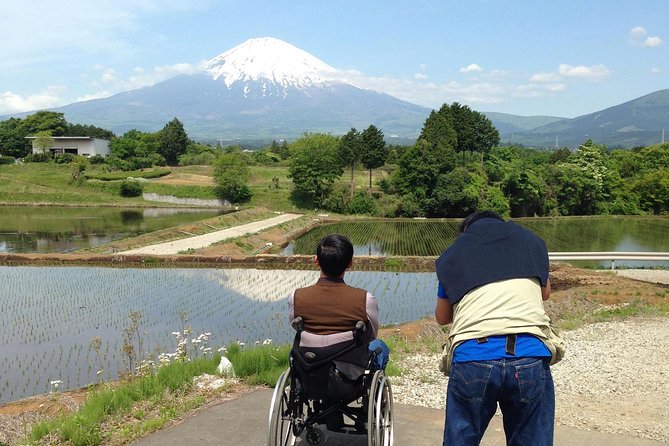
- A full private day from Tokyo: Hotel pickup and drop-off are included, with only your group of up to six people in the vehicle.
- Two major Fuji-area choices: Pick the 5th Station for mountain views, or choose a Lake Kawaguchiko sightseeing boat when that option better suits you.
- A real Japanese art stop: The Itchiku Kubota Art Museum presents large-scale kimono art based on the revived Tsujigahana dyeing technique.
- Wheelchair-friendly planning: The vehicle is designed for wheelchair users, and the English-speaking guide can help shape the day around your needs.
- Weather matters: Mt. Fuji may be hidden by clouds, so the flexible private format and alternate sightseeing choices have real value.
- Extra costs are separate: Lunch, museum admission, and the boat ticket are not included in the tour price.
A long, private escape from Tokyo
The tour begins at 8:00 a.m. and lasts about 11 to 12 hours. Pickup and return are offered from Tokyo, while the stated meeting point is Tokyo Station at 1 Chome-9 Marunouchi. That early start is practical: the Fuji Five Lakes area is far enough from central Tokyo that a late departure would squeeze the day.
You pay $1,439.87 per group of up to six people. That is a serious price for a day trip, but the calculation changes if you fill the vehicle. Six people would bring the transport and guide cost to about $240 per person before food and admissions. For one or two people, it is much more expensive, though the private accessible vehicle may be worth that premium if standard bus tours cannot meet your needs.
I like that the day does not force you into one fixed Fuji viewpoint. The group can choose from the 5th Station, a Lake Kawaguchiko cruise, or another stated route option involving Arakura Fuji Sengen. The exact choice should be settled with the operator in advance, especially if accessibility at a particular stop is central to your plans.
This is not a quick photo stop squeezed between Tokyo attractions. You will spend most of the day away from the city. That makes it a good choice if Mt. Fuji is a major goal of your Japan visit, but less appealing if you prefer a short, easy excursion.
A few more Tokyo tours and experiences worth a look

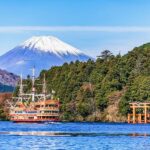
Reaching Mt. Fuji’s 5th Station by road
The Subaru Line 5th Station is the highest point on Mt. Fuji that you can reach by car. It sits roughly halfway up the mountain, far below the summit, but it gives you the satisfying feeling of going up Mt. Fuji without attempting the strenuous climb.
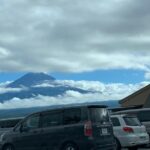
The 5th Station is the natural choice for anyone who wants the mountain itself to be the day’s main subject. You have about an hour there, enough time to take in the high-altitude setting and photograph the mountain if the sky is clear. The great catch is also the obvious one: Fuji is often hidden by clouds. One previous outing had a completely cloud-covered mountain, yet the day still worked because the guide adjusted attention to the other sights.
You should treat the 5th Station as a weather-dependent option, not a guaranteed view. Clear mornings can help, but no tour provider can control clouds. Ask how the guide handles the choice on the day and what alternative will be used if the mountain disappears.
For wheelchair users, the key question is not simply if the vehicle is accessible. Ask about the road transfer, parking, walking distances, slopes, restroom access, and whether the chair remains with you throughout the stop. The provided information confirms a wheelchair-friendly car, but it does not give a detailed access map for the station.
Lake Kawaguchiko and Oishi Park
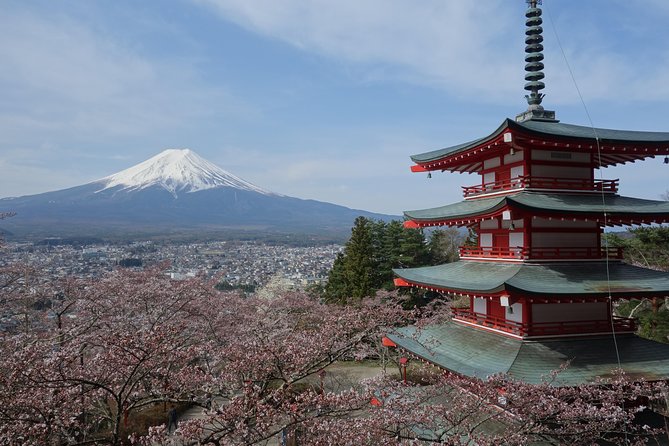
If you prefer water, flowers, and open views to a high mountain viewpoint, the Lake Kawaguchiko option may be the better fit. A sightseeing boat ticket costs 1,000 yen per person and is an extra charge. Since the boat is optional, confirm the boarding arrangements before choosing it.
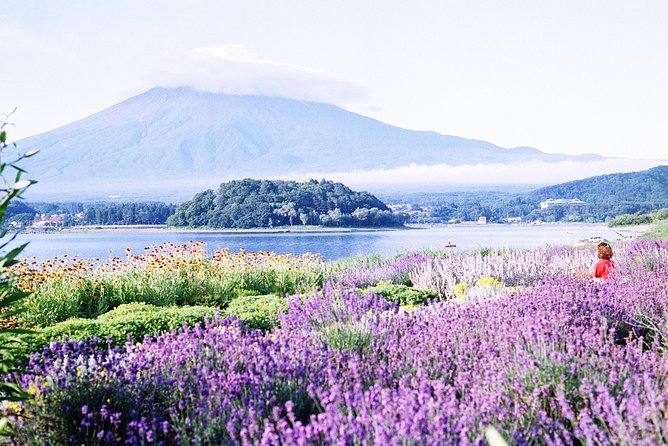
The lake stop also includes Oishi Park, where flower fields spread along the shore. You get about 30 minutes here, which is enough for photographs and a breath of fresh air, but not a long park visit. The appeal is visual and simple: lake, flowers, and a chance to slow down after time in the vehicle.
Oishi Park may be the most forgiving part of the day for someone who wants scenery without a demanding activity. Still, surfaces, grades, and accessible restroom locations can vary, so ask the guide what route is planned for your chair. The tour is private, giving you more scope to pause or adjust the order than you would have on a large coach.
The boat adds a different view of Fuji and the lake, but it also creates the most important access question in this section. The tour data confirms the ticket price, not the exact boarding procedure or whether every wheelchair can remain onboard. Get those details before paying for the optional ride.
Lunch at a traditional Japanese restaurant
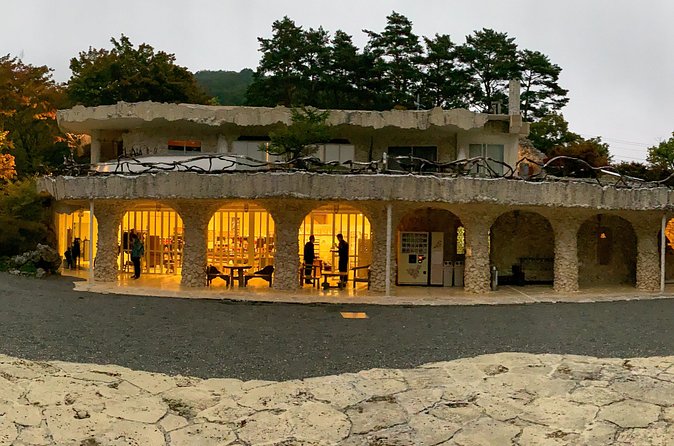
Lunch is planned at a wheelchair-friendly traditional Japanese restaurant, but food and drinks are not included. That gives you flexibility, yet it also means you should budget separately and tell the operator about dietary needs before the day.
A traditional restaurant can be one of the more memorable parts of a Japan trip, especially after a morning outside Tokyo. It lets you experience more than a roadside meal and gives the day a proper pause. The practical point is to confirm table access, restroom access, and whether the meal requires a transfer from your wheelchair.
The supplied details do not name the restaurant or list a set menu. Do not assume that every traditional Japanese dining room will suit every chair or transfer need. Ask for the restaurant name and access details when you confirm the booking.
Kimono art at the Itchiku Kubota Museum
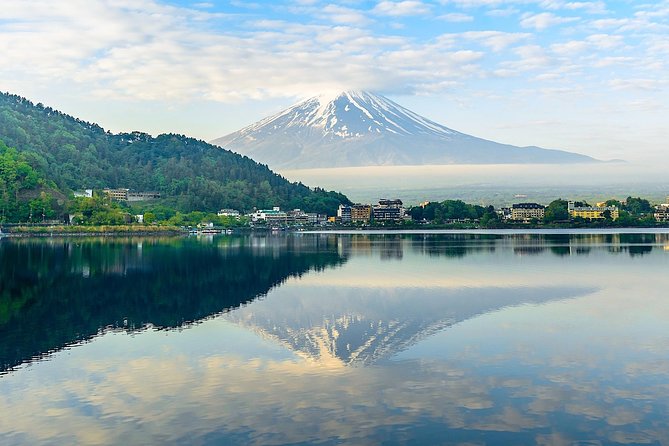
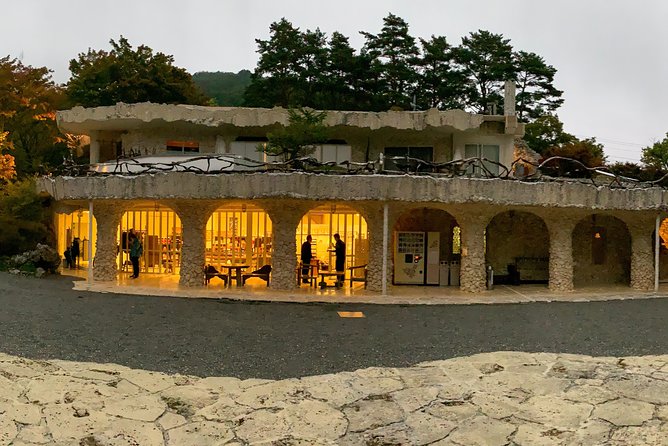
The Itchiku Kubota Art Museum is the most distinctive cultural stop on the route. Admission costs 1,300 yen per person and is not included. You have about an hour here.
Kubota revived Tsujigahana, a fabric-dyeing technique that flourished during Japan’s Muromachi period from 1336 to 1573 before falling out of favor. The museum’s focus is not ordinary clothing shopping. It presents kimono as large works of art, with elaborate dyeing and color work designed to be viewed as complete compositions.
I like this stop because it gives the Fuji day more depth. The mountain is spectacular, but a good day trip should also show you something made by human hands. The museum offers that balance, and the subject is closely tied to Japanese craft rather than being a generic sightseeing stop.
You should confirm access details if ramps, elevators, or chair storage are important to you. The information provided confirms the admission price and visit length, but it does not specify every access feature. If the museum is not suitable for your group, the route also lists the Music Forest Museum as an alternative, with admission of 1,800 yen per person.
Other private tours in Tokyo
Oshino Hakkai and its eight clear springs
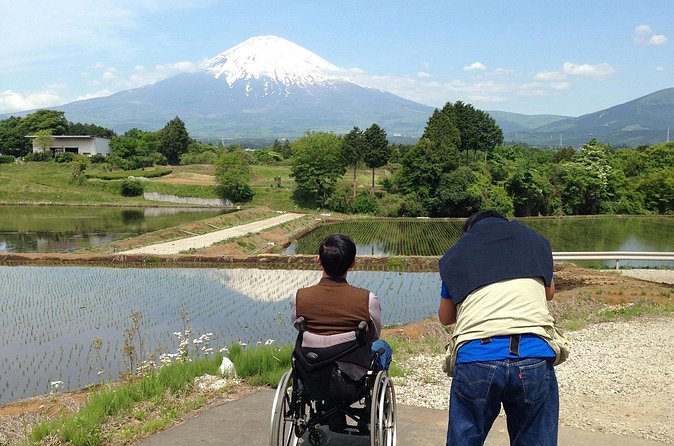
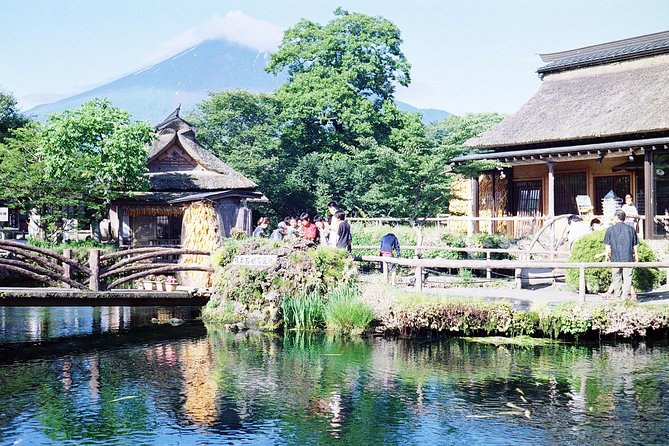
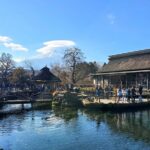
Oshino Hakkai is a small village built around eight springs. The water comes from snowmelt, and the springs have long been respected as sacred places where pilgrims purified themselves.
You get about 40 minutes here. That is enough for a brief look at the blue spring water and village setting, but it is not a long, unhurried visit. The stop works well as a compact contrast to the lake and mountain viewpoints.
Oshino Hakkai may be less straightforward for wheelchair users than a purpose-built museum or park. The information supplied does not describe paths, slopes, or restroom facilities, so ask the guide what portion of the village is practical for your chair. A private vehicle and private guide help, but they do not remove every physical barrier in an old village setting.
I would keep expectations realistic. You are seeing a small historic village and its springs, not entering a large attraction with a clearly published access plan. For some groups, even a short visit will be worthwhile. For others, extra time at the lake or a museum may be more comfortable.
Why the private guide matters
The strongest part of this experience is the human care built into the private format. Keita has been described as warm and welcoming, while Rie is known for adjusting the day to personal preferences. The driver also helps with the practical work of moving between stops.
Those names are useful, but you should not assume you will receive a particular guide unless the company confirms it. The real advantage is the type of service: one English-speaking guide for your group, rather than a fixed coach itinerary with strangers and little room to pause.
A private guide can also make a cloudy day less disappointing. If Fuji is covered, you still have Oishi Park, the lake, Oshino Hakkai, and the museum options. That flexibility helped make one cloudy outing worthwhile instead of turning it into a failed mountain-view mission.
The guide’s role is not only translation. For you, it may include checking routes, helping communicate at the restaurant, arranging the order of stops, and judging when a particular viewpoint is not practical. Be clear about your needs before departure. Explain chair type, transfer ability, fatigue, restroom needs, and the activities you want most.
Accessibility, timing, and extra costs
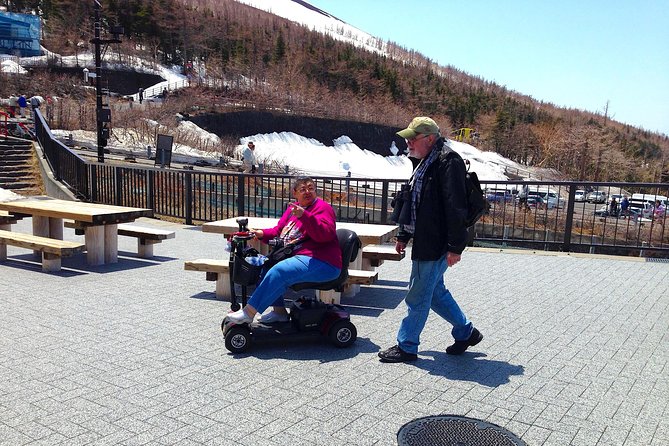
The tour includes an air-conditioned vehicle, private transportation, a wheelchair-friendly car, hotel pickup and drop-off from Tokyo, and an English-speaking guide. Service animals are allowed, and the activity states that most people can participate.
Those are helpful foundations, but accessibility is personal. A full-time wheelchair user may need different arrangements from someone who can transfer into a vehicle seat. Ask the provider to confirm the vehicle dimensions and whether you can remain in your chair during the drive. Also ask about the boat, museum access, Oishi Park paths, and the village at Oshino Hakkai.
The base price does not include lunch, drinks, the Itchiku Kubota Museum, the Music Forest Museum, or the boat. Add 1,300 yen per person for the Kubota museum, 1,800 yen per person for the Music Forest Museum, and 1,000 yen per person for the sightseeing boat if selected.
You can cancel for a full refund up to 24 hours before the start time. Changes made less than 24 hours before departure are not accepted, and late cancellations are not refunded. Since the tour requires good weather, poor conditions may lead to a different date or a full refund.
Who should book this Fuji day trip
I would choose this tour if you want Mt. Fuji but need a private accessible vehicle and a guide who can adjust the pace. It is also a strong choice for a family or small group of up to six, since the group price becomes more reasonable when shared.
You will get the most from it if you enjoy a varied day. The route combines mountain views, a lake, flowers, traditional food, kimono art, and sacred springs. You do not need to be interested in every stop, because the private format allows the group to place more weight on the activities that matter most.
I would hesitate if you want a guaranteed view of Mt. Fuji, dislike early starts, or find 11 to 12 hours in a vehicle tiring. I would also ask detailed access questions before booking if you use a large power chair or cannot transfer. The tour promises a wheelchair-friendly car, but the supplied details do not specify the exact model or every attraction’s facilities.
Should you book the Barrier-Free Private Mt. Fuji Tour?
Book it if access, privacy, and flexibility matter more to you than getting the lowest possible day-trip price. The cost is high for a small party, but it buys a private vehicle, hotel pickup, an English-speaking guide, and a route that can shift when weather or mobility needs change.
My best advice is to contact Trip Designer Inc. before finalizing the reservation. Confirm the chair and vehicle setup, ask which guide is available, choose between the 5th Station and Lake Kawaguchiko options, and request access details for the boat, museum, restaurant, and Oshino Hakkai.
If you fill the vehicle and want a serious Fuji day away from Tokyo, this is a strong, practical choice. If Fuji views are your only goal, remember that clouds may win. The day works best when you see the mountain as one part of a broader outing, not the sole reason to leave Tokyo.
FAQ
Where does the tour start?
The stated meeting point is Tokyo Station, at 1 Chome-9 Marunouchi, Chiyoda City, Tokyo 100-0005, Japan.
What time does the tour begin?
The start time is 8:00 a.m.
How long does the tour last?
The experience lasts approximately 11 to 12 hours.
Is hotel pickup available?
Yes. Hotel pickup and drop-off from Tokyo are included.
How many people can join the private tour?
The price covers one private group of up to six people.
Is the vehicle wheelchair-friendly?
Yes. A wheelchair-friendly car and private transportation are included. You should confirm the exact vehicle setup and your chair requirements with the provider before booking.
Is lunch included?
No. Food and drinks are not included in the tour price. Lunch is planned at a wheelchair-friendly traditional Japanese restaurant.
How much do the museum visits cost?
The Itchiku Kubota Art Museum costs 1,300 yen per person. The Music Forest Museum costs 1,800 yen per person. Admission is not included.
Is the Lake Kawaguchiko boat ride included?
No. If you choose the sightseeing boat, the ticket costs 1,000 yen per person.
What happens if bad weather hides Mt. Fuji?
The tour requires good weather. If poor weather causes cancellation, you will be offered another date or a full refund. You can also cancel up to 24 hours before the start time for a full refund.
More Private Tours in Tokyo
More Mt Fuji Day Trips in Tokyo
More tours in Tokyo we've reviewed










Mt Fuji Day Trips, compared.
 ★ 5.0Mt Fuji and Hakone 1-Day Bus Tour Return by Bullet TrainFrom $163
 ★ 4.0Mt Fuji & Hakone Cruise, Drum Show Bullet Train 1 Day from TokyoFrom $149
 ★ 4.4Tokyo Mt Fuji 5th St & Hakone Cruise Bus Tour w/Bullet TrainFrom $15410 hours
 ★ 4.5From Tokyo: Mount Fuji Full-Day Sightseeing TripFrom $6810 hours
 ★ 4.7Tokyo: Mt. Fuji Tour, Hakone Ropeway, Owakudani, Lake AshiFrom $5410 hours
 ★ 4.4Tokyo:Mt.Fuji,Kawaguchiko Oishi Park,Arakurayama Sengen ParkFrom $5410 hours