
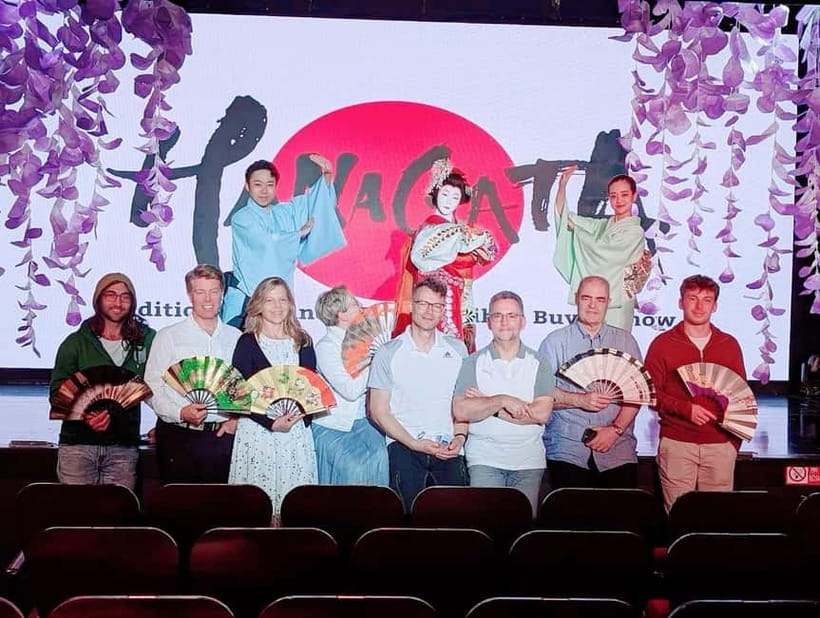
Reviewed · SHOW
Tokyo: Authentic Japanese Dance Show ticket by professionals
Japanese dance is best seen close enough to catch a performer’s expression, the turn of a sleeve, and the careful movement of a decorated kimono. This Shinjuku show puts you near the stage for performances by Japanese dancers who have won awards in national competitions, while introducing an art form shaped over 400 years.
I like the convenient central location and the personal feel of the presentation. I also like that the program gives you cultural background instead of asking you to admire unfamiliar movements without explanation. The main consideration is that the show is conducted in Japanese, so English information between performances helps, but it may not explain every moment in detail.
In This Review
- Key points before you book
- Why seeing Japanese dance up close matters
- Arriving in central Shinjuku
- A welcome that helps set the tone
- The performance: controlled movement and detailed costume
- Explanations between performances
- Photography rules and the final picture session
- How the $54 price measures up
- Who will enjoy this Shinjuku show most
- Practical planning for your evening
- My verdict on this Japanese dance ticket
- FAQ
- Where does the Japanese dance show take place?
- How much does the ticket cost?
- Who performs in the show?
- Is the show conducted in English?
- Can I take photographs during the performance?
- When can I take photographs?
- Are food and drinks included?
- Is hotel pickup provided?
- Can I cancel my booking?
Key points before you book
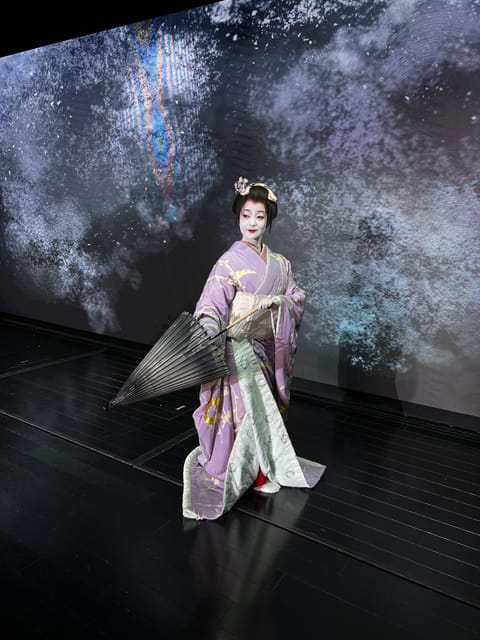
- Close-up Japanese dance: You can watch the dancers’ expressions, hand movements, costumes, and ornaments from nearby seats.
- Award-winning performers: The artists have received recognition at Japanese dance competitions.
- Shinjuku setting: The central Tokyo location is easy to pair with a day or evening in the area.
- Cultural context: Explanations between performances help you understand an art form developed over four centuries.
- Photo time after the show: Photography is prohibited during the performances, then allowed at the end.
- Price and flexibility: The ticket costs $54 per person, with pay-later booking and free cancellation up to 24 hours ahead.
Why seeing Japanese dance up close matters

Japanese dance can look quiet at first glance. Much of its power comes from control rather than speed. A small turn of the head, a lowered fan, or the slow sweep of a kimono sleeve can carry meaning.
That is why seating matters here. The performance is designed so you can study the dancers at close range. You are not simply watching colorful costumes from the back of a large theater. You can notice facial expression, posture, timing, and the way the clothing moves with the body.
I find this especially useful if you have never seen Japanese dance before. The art may not follow the visual rhythm of a Western stage musical or a modern dance show. The slower pace gives you time to look, but it also asks you to pay attention.
The show connects the dancing to more than technique. Japanese dance has been passed down for over 400 years, and its movements reflect older ideas about beauty, storytelling, music, costume, and restraint. You may not understand every symbol, but the presentation gives you a clearer sense of what you are seeing.
A few more Tokyo tours and experiences worth a look



Arriving in central Shinjuku
The location is one of the easiest parts of this outing. The show takes place in Shinjuku, one of Tokyo’s main entertainment and transport districts, so you can fit it into a busy sightseeing day without making a special trip far from the city center.
That convenience also shapes the mood. You may spend the afternoon among department stores, tall buildings, restaurants, and bright streets, then step into a performance rooted in older Japanese customs. The contrast is part of the appeal.
I would plan to arrive with enough time to settle in. The program is not a casual street performance that you can watch while passing by. The close seating and quiet atmosphere work best when you are ready to give the dancers your full attention.
The information provided does not state the exact venue address or performance length, so check those details carefully when booking. The ticket includes admission only. Food, drinks, and hotel pickup are not included, which means you should plan your route and meal separately.
A welcome that helps set the tone
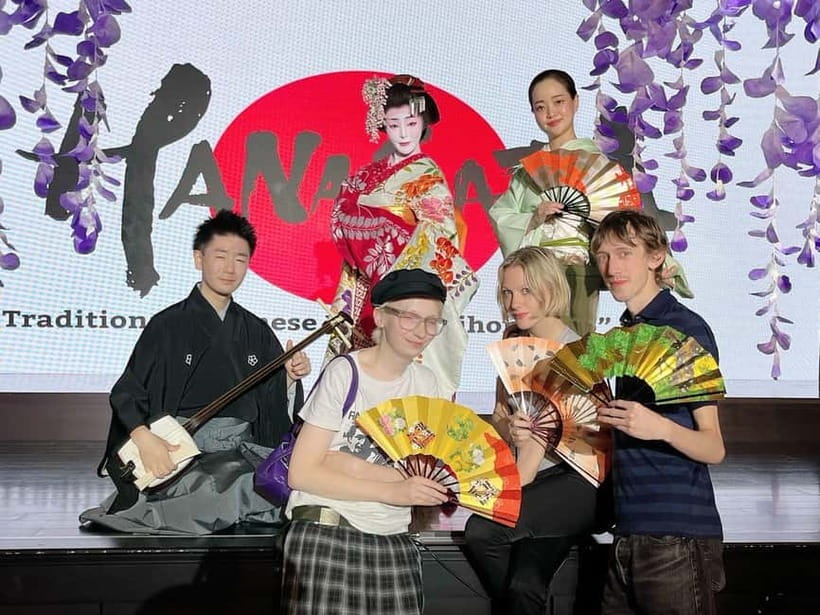
The presentation begins with a personal welcome from the staff and performers. Welcome gifts may be provided, and the people involved in the show are available to speak with you before and after the performance.
That small amount of contact changes the feel of the evening. You get a chance to ask about the art, costumes, or the dancers themselves instead of treating the stage as a distant display. Staff members have spoken English with visitors, and information is given in English between performances.
The official language is Japanese, so you should not expect an entirely English-language show. Still, the English explanations make the program easier to follow, especially if terms such as kimono, fan work, gesture, or traditional dance style are new to you.
I would treat this introduction as part of the ticket’s value. A traditional performance can feel hard to read when you lack cultural context. Even a short explanation of what to watch for can make the next movement more meaningful.
The performance: controlled movement and detailed costume
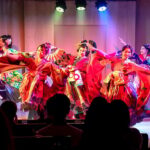
The central part of the evening is the dance itself. The artists use formal movements, expressive gestures, music, and costume to create scenes and moods. This is not a high-speed spectacle. Its appeal comes from precision, poise, and the feeling that every motion has been considered.
The dancers’ faces are important. From nearby seats, you can see changes in expression that would be easy to miss in a large hall. A slight shift in the eyes or a change in the angle of the head may communicate as much as a larger movement.
The kimonos deserve close attention, too. Their colors, fabric, sleeves, and decorative details are part of the visual language of the performance. When a dancer turns, the clothing changes shape and extends the movement. That is one reason the show can be rewarding even when you do not understand every piece of dialogue or song.
The performers have won awards at Japanese dance competitions. That does not mean the program is aimed only at experts. In fact, the polished technique gives a newcomer a strong introduction. You can watch the basic discipline of the art without needing prior knowledge.
I would not book this expecting a broad sampler of every Japanese stage tradition. The focus is Japanese dance. If you want taiko drumming, a large ensemble, or a full theatrical production with elaborate sets, this is a different kind of evening.
Explanations between performances
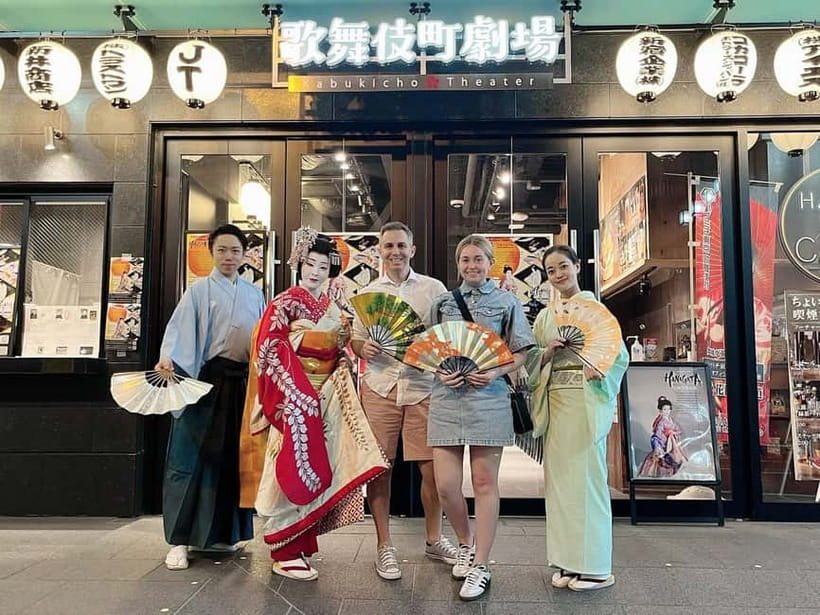
The teaching element is one of the strongest reasons to choose this show over a purely visual performance. Information is provided between pieces, including English explanations, so you can place the dance in a cultural setting.
That context helps you notice details. You may begin to ask why a performer holds a fan in a certain way, how a gesture relates to a story, or why the timing feels so deliberate. You may also gain a better sense of how traditional performing arts preserve older customs without simply repeating them mechanically.
I like this balance between watching and learning. The presentation does not require you to read a long lecture before the curtain rises. Instead, the explanations arrive in manageable parts, giving you something to consider as the next section begins.
Keep your expectations sensible. The supplied details do not promise full translation of every song, story, or spoken line. If you need complete English interpretation, confirm what language support is available for your specific booking.
A few more Tokyo tours and experiences worth a look


Photography rules and the final picture session
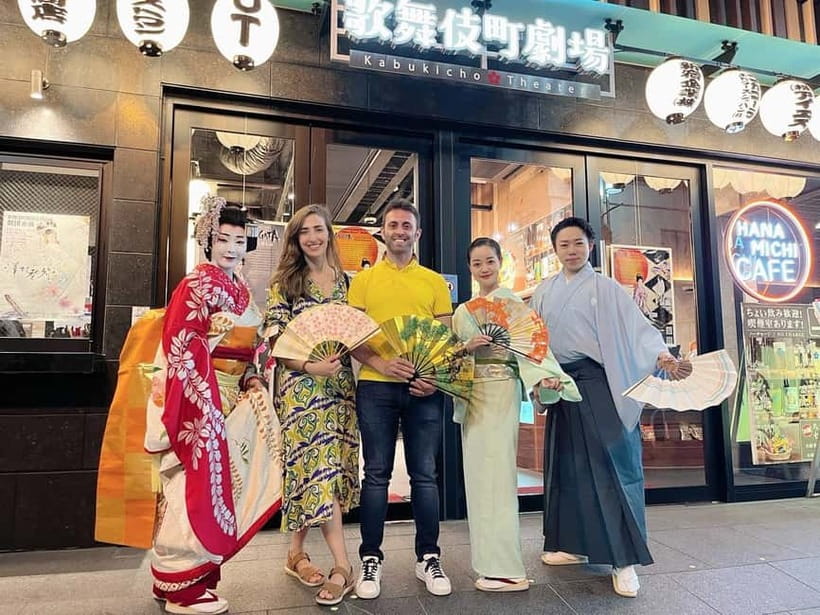
Photography is not allowed during the performance. This is a firm rule, and it serves a practical purpose: the dancers can work without camera screens and shutter sounds distracting the room.
For a visitor, the restriction has a benefit. You can watch with both eyes rather than spending the show holding up a phone. Traditional dance depends on small gestures, and those details are easy to miss when you are trying to record everything.
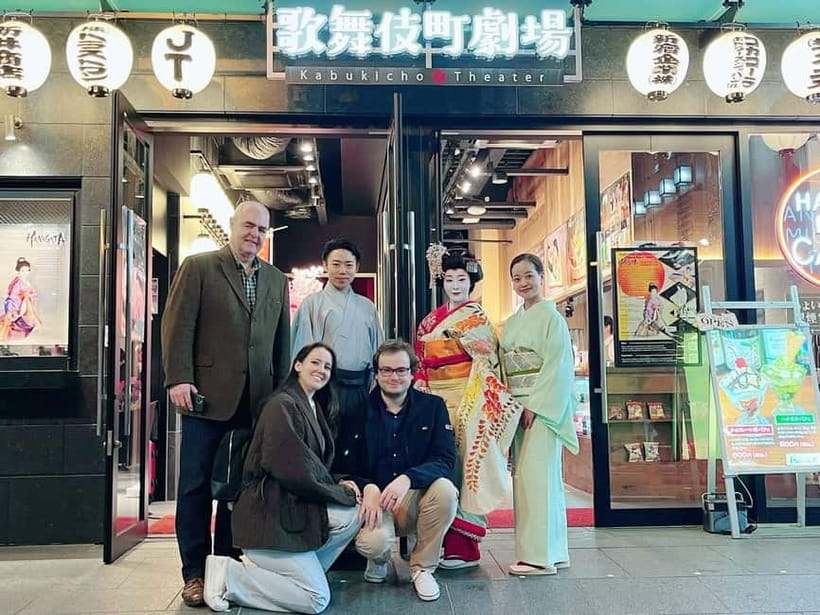
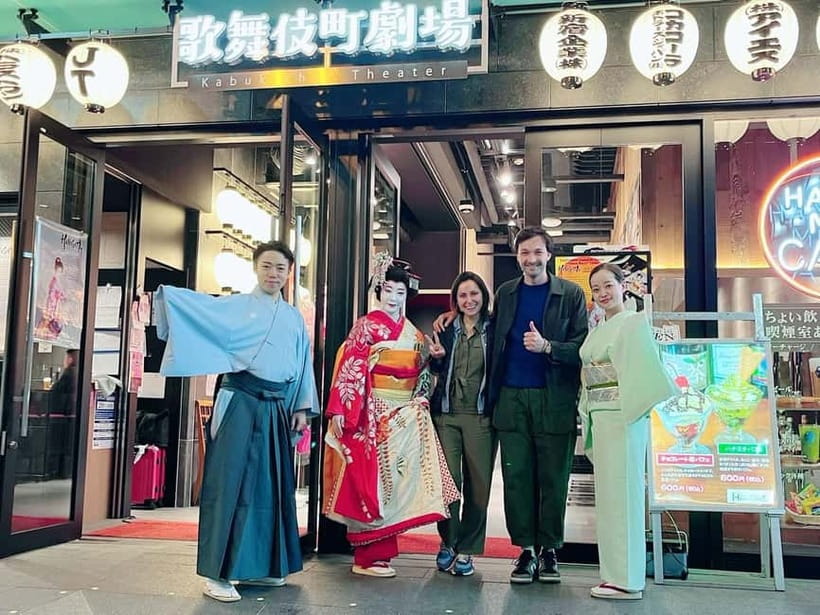
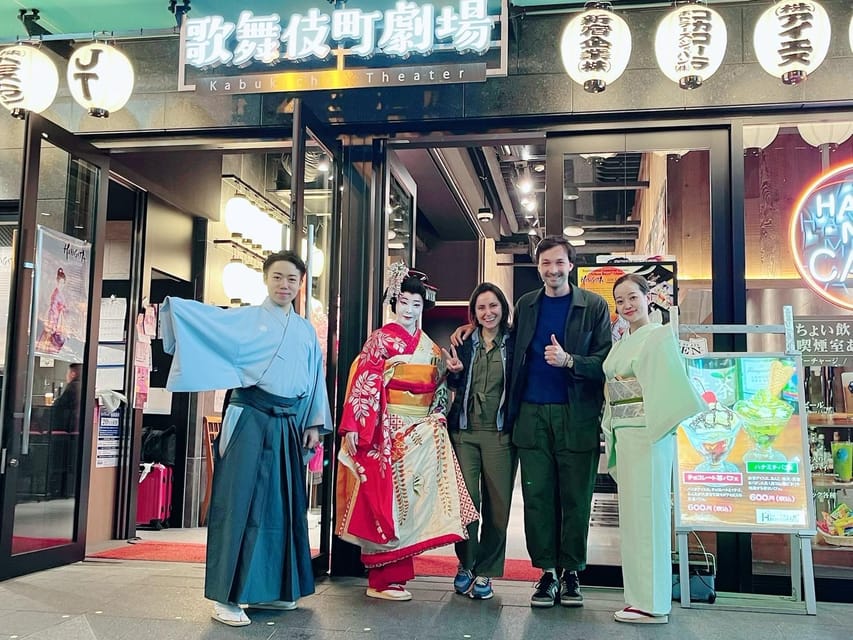
There is a designated photo period at the end. Use that opportunity for pictures with the performers and their costumes. It gives you a way to preserve the memory without interrupting the actual performance.
If photography is important to you, remember the order: no pictures inside during the dance, then a photo session after the performance. Do not assume you can take a quick snapshot from your seat.
How the $54 price measures up
At $54 per person, this is not a bargain entertainment ticket, but the price is reasonable if you want direct contact with a traditional art form and professional performers. You are paying for admission to a focused cultural program, not a long list of attractions or a meal.
The close seating adds value. In a large theater, you might see the overall shape of the dance but lose the expressions and costume details. Here, those details are part of what you are buying.
The educational element also matters. A short stage show can feel expensive if you leave without knowing what you saw. English explanations, contact with the staff, and the chance to speak with performers after the show make the ticket more useful for someone encountering Japanese dance for the first time.
The price does not include food, beverages, transport, or hotel pickup. I would compare it with the cost of other evening entertainment in central Tokyo, then ask what kind of memory you want. If you prefer a large, flashy production, your money may be better spent elsewhere. If you want a small-scale look at Japanese culture, the value is stronger.
Who will enjoy this Shinjuku show most
I would recommend this performance to you if you have an interest in Japanese art, costume, history, or traditional music. It also suits anyone who wants a quieter cultural break from Tokyo’s bright streets and crowded shopping districts.
First-time visitors to Japan can get a useful introduction here. You do not need to know the technical vocabulary before arriving, and the English explanations give you some help with the unfamiliar parts.
The show also works for repeat visitors who have already seen temples, gardens, and food markets. Those experiences show you important parts of Japan, but traditional dance offers another view of the country’s customs and sense of beauty.
Families should read the childcare information before booking. Childcare can be provided, and experiences can be arranged for children through the listed kids program. The show itself is better suited to people who can sit quietly and give the performers their attention.
I would think twice if you want constant action, extensive audience participation, or a performance with no language barrier at all. The beauty here is subtle, and you need a little patience to appreciate it.
Practical planning for your evening
The ticket includes entrance only. Since no meal or drink is included, you can eat before or after in Shinjuku, where you have many choices, but the specific restaurant plan is up to you.
No hotel pickup is included, so you must make your own way to the venue. The location is described as being in Shinjuku, but the exact address and meeting instructions should be checked before you set out.
The booking terms offer useful flexibility. You can reserve and pay later, which helps if your Tokyo schedule is still changing. You can also cancel for a full refund up to 24 hours in advance.
I would keep the rest of your evening fairly open. The show includes a welcome, the performance, explanations between sections, and a photo period at the end. Since the exact duration is not provided, do not schedule another fixed activity immediately afterward.
My verdict on this Japanese dance ticket
Book this show if you want an intimate cultural performance rather than a big stage spectacle. The strongest features are the close view of the dancers, the fine kimono details, the recognized performers, and the explanations that help you understand a tradition with more than four centuries of development.
The main limitation is simple: the show is in Japanese, and the precise English coverage is not fully specified. Photography is also restricted until the final session, and the $54 price covers only the entrance ticket.
For me, those drawbacks are manageable. The performance offers something that a standard sightseeing stop cannot: a close look at how movement, clothing, music, and history combine in Japanese art. If that sounds like the kind of evening you want in Tokyo, this is a strong choice in Shinjuku.
FAQ
Where does the Japanese dance show take place?
The show takes place in Shinjuku, Tokyo, in the Honshu region of Japan.
How much does the ticket cost?
The listed price is $54 per person.
Who performs in the show?
The performers are Japanese dancers who have received awards at Japanese dance competitions.
Is the show conducted in English?
The show language is Japanese. English information is provided between performances, and staff members may be able to communicate in English.
Can I take photographs during the performance?
No. Photography is prohibited during the performances.
When can I take photographs?
There is a photography period at the end of the performance.
Are food and drinks included?
No. Food and beverages are not included in the ticket.
Is hotel pickup provided?
No. Hotel pickup is not included.
Can I cancel my booking?
Yes. You can cancel up to 24 hours in advance for a full refund. You can also reserve and pay later to keep your plans flexible.
More Tickets in Tokyo


More Shows & Performances in Tokyo
More Tickets & Passes in Tokyo


More tours in Tokyo we've reviewed









Show, compared.
 ★ 4.0Mt Fuji & Hakone Cruise, Drum Show Bullet Train 1 Day from TokyoFrom $149
 ★ 4.8Tokyo: Sumo Show Experience with Chicken Hot Pot and a PhotoFrom $1032 hours
 ★ 4.8Tokyo: Sumo Show and Dining ExperienceFrom $7990 minutes - 2 hours
 ★ 5.0the SUMO showFrom $89
 ★ 5.0Tokyo Shinjuku Sumo Show & Experience with PhotoFrom $79
 ★ 4.5Tokyo: Samurai Restaurant Show Ticket with 2 DrinksFrom $551h 30m