
Reviewed · ASAKUSA TOURS
Tokyo Asakusa : Handmade Japanese Paper Workshop
Tosa Washi begins with water, pulp, and your own hands. In this small Asakusa workshop, you watch a short introduction, put on a traditional samue work outfit, then make postcard-sized Japanese paper with step-by-step help. The paper comes from Tosa, one of Japan’s major washi-making regions, and the craft has more than 1,000 years of history.
I like the small groups of up to eight and the warm, hands-on teaching. I also like that you leave with a real souvenir you made yourself, not another shop-bought trinket. The main catch is the colored-paper option: Rakusuishi is included only in the Colored Paper Plan, so check your booking carefully if you want the patterned finish.
In This Review
- Key points
- Making Tosa Washi in the heart of Asakusa
- A short introduction to a thousand-year-old paper tradition
- Putting on a samue before the hands-on work
- Creating your postcard-sized sheet
- Adding Rakusuishi color and pattern
- Why the $38 price can make sense
- The best fit for this Asakusa workshop
- Timing your visit around Sensoji Temple
- What you take home
- Practical advice before you book
- Should you book the Tosa Washi workshop?
- FAQ
- Where is the handmade paper workshop located?
- How long does the workshop last?
- How much does the experience cost?
- What languages are available?
- How many people can join the group?
- Is Rakusuishi included in every plan?
- What should I wear?
- Is there an elevator or restroom at the shop?
- Can I cancel the activity?
Key points
- Make your own postcard-sized Tosa Washi with an instructor guiding each stage.
- Learn through a short video and practical work, rather than a long museum-style talk.
- Wear a traditional samue during the paper-making session.
- Choose from many Rakusuishi designs with the Colored Paper Plan.
- Meet near Kaminarimon and Sensoji Temple, making this easy to pair with an Asakusa visit.
- Expect a one-hour activity for $38, with English, Japanese, and Spanish support.
Making Tosa Washi in the heart of Asakusa
Asakusa is best known for Sensoji Temple, Kaminarimon Gate, souvenir streets, and old Tokyo atmosphere. This workshop gives you a quieter way to connect with Japanese culture while staying right in the middle of the district.
The shop is on the second floor at 1-32-11 Asakusa, in Taito-ku. It is very close to Kaminarimon and Sensoji Temple, so you can fit the workshop into a morning or afternoon of sightseeing without crossing the city.
You will go upstairs, where a staff member will guide you to the workshop space. There is no elevator, so be ready for stairs. The shop has lockers for valuables, which is useful because you will be working with water and should remove your watch and accessories.
The experience lasts one hour. That is long enough to learn the basic process and create something of your own, but short enough to fit neatly between temple visits, lunch, or a walk through Asakusa.
A few more Tokyo tours and experiences worth a look

A short introduction to a thousand-year-old paper tradition
The session begins with a short video about Tosa Washi and the way it is made. This gives the practical work some context without turning the activity into a lecture.
Tosa Washi is one of Japan’s three major traditional papers. It has been made for more than 1,000 years and is valued for its durability and warm, natural feel. That matters when you begin making your own sheet. You are not simply decorating paper. You are taking part in a craft with a long place in Japanese daily life and art.
I appreciate the short format here. You get enough background to understand what you are doing, then move quickly to the part most people came for: making paper. If you prefer a long technical demonstration, this may feel brief. If you want a hands-on cultural activity during a busy Tokyo visit, the balance works well.
The instructor explains the steps and helps you as you go. English, Japanese, and Spanish are available, and the small group size means the teaching can stay personal rather than becoming a crowded class.
Putting on a samue before the hands-on work
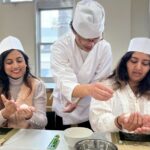
Before making paper, you put on a samue, a traditional Japanese work outfit. This is a small detail, but it changes the mood of the session. You are not just standing beside a display. You are dressed for the craft and ready to work.
The clothing also suits an activity involving water. Wear something with sleeves that roll up easily, and remove watches, bracelets, rings, and other accessories before you begin. Lockers are available for valuables.
The workshop is designed for practical participation, not for watching an instructor do everything. You will handle the materials and create your own sheet with help along the way. The instructor’s job is to keep the process clear and manageable, especially if this is your first attempt at Japanese paper making.
The atmosphere is described as lively, with plenty of laughter during the process. That makes this a good choice if you enjoy creative activities where the finished result does not need to look perfect. Handmade paper has character. Slight variations are part of the point.
Creating your postcard-sized sheet
The core activity is making your own postcard-sized washi paper. The instructor leads you through the process and provides the materials, so you do not need previous craft experience.
This is where the one-hour length makes sense. You have time to see the basic method, work with the materials, and finish a small piece that can be taken home. The project is compact enough to complete during the session, yet personal enough to remind you of your time in Asakusa.
The paper is made with water, so you should expect some wet work. That is why rolled sleeves and removed accessories are important. You may want to avoid your best clothing, even though the workshop provides traditional work clothes.
A friendly instructor can make a big difference in a craft class. Fuji San is specifically praised for patient, hands-on guidance, and that is the sort of teaching you want here. The paper-making process may look simple at first, but small movements and timing can affect the final sheet. Clear help keeps the activity fun instead of frustrating.
You should also expect to take part rather than produce a flawless art piece on the first try. The value is in learning the method and leaving with something made by you.
Adding Rakusuishi color and pattern
The Colored Paper Plan adds a decorative stage. You make your own base sheet, then layer a piece of Rakusuishi on top.
Rakusuishi is a delicate colored washi paper made by pouring water onto paper, creating different patterns, and dyeing the result. The workshop has dozens of finished Rakusuishi designs for you to choose from. This gives you some control over the look of your final souvenir.
That choice is one of the most appealing parts of the activity. Instead of receiving a standard design, you can select a pattern that suits your taste. The finished postcard-sized sheet combines your own handmade paper with the colored paper you chose.
Pay close attention when selecting your plan. Rakusuishi is not included in the Plain Paper Plan. The Colored Paper Plan is the option for adding this patterned layer. One French participant found the extra paper charge easy to miss and paid more than expected for additional colored sheets. The exact cost can depend on the option you choose, so confirm the inclusions before booking and ask about any extra pieces.
If you are happy with plain white washi, the basic plan keeps things simple. If you want a more decorative souvenir or enjoy choosing colors and patterns, the colored option is likely worth considering. Just make sure you understand the price before the session begins.
A few more Tokyo tours and experiences worth a look



Why the $38 price can make sense
At $38 per person, this is not the cheapest one-hour activity in Tokyo. You are paying for a guided craft session, materials, traditional clothing, a small group setting, and a finished paper souvenir.
The value is strongest if you want direct participation. A visit to a shop may let you buy washi, but it will not give you the experience of making it. A museum may explain the craft, but you may not leave with something produced by your own hands.
The price also looks more reasonable for couples, families with older children, and small groups who want a shared activity. You can compare your paper afterward, and each person leaves with a different result.
The colored option needs closer attention. The base price does not automatically include Rakusuishi. If color and pattern are central to what you want, budget for the correct plan or any additional paper you plan to add.
For a short activity near Sensoji Temple, the location adds practical value. You do not need to spend half a day getting to a distant craft center. You can combine this with a temple visit and still have time for other parts of Tokyo.
The best fit for this Asakusa workshop
I would recommend this activity to you if you like making things, want a cultural experience that lasts about an hour, or prefer souvenirs with a personal story.
It also suits people who find large tours tiring. The group is limited to eight, so the instructor can give direct help. That is especially useful for anyone who feels unsure about trying a traditional craft for the first time.
This is a good option for:
- Couples looking for a shared activity in Asakusa
- Families with children aged four and older, provided they can manage the hands-on work
- Visitors who want a break from temples and shopping
- Craft fans who enjoy paper, pattern, and simple creative work
- First-time Tokyo visitors staying near Asakusa
- Small groups seeking an activity with English, Japanese, or Spanish support
It is not suitable for children under four, pregnant women, or people with heart problems. The second-floor location also requires stairs, and there is no restroom inside the shop. Use a nearby public restroom before arriving.
Timing your visit around Sensoji Temple
The location makes planning easy. The workshop is near Kaminarimon and Sensoji Temple, two of Asakusa’s main sights. You could schedule the paper-making session before exploring the temple area, or use it as a short creative break after sightseeing.
Allow enough time to find the shop and climb to the second floor. If you arrive more than 10 minutes late, you may not be able to join, so contact the provider in advance if you are delayed.
Because the class is only one hour, you can build it into a larger Asakusa plan. Check the available start times when booking and choose one that gives you a little breathing room. Tokyo transport can be precise, but busy sightseeing areas can still slow you down.
The lack of an on-site restroom is not a major issue if you plan ahead. It is simply something to know before you arrive.
What you take home
You take home the washi paper you make during the session. That is a modest souvenir, but it has more meaning than a mass-produced item because you saw the process and handled the materials yourself.
The paper is postcard-sized, so it is easy to pack. You could keep it as a reminder of Japan, use it as a card, or display it with other small travel mementos. The final result may show small differences in texture or shape. That is normal for handmade paper and part of its appeal.
With the Colored Paper Plan, the Rakusuishi layer adds a stronger visual finish. The patterns are created through water and dye, so each choice gives the paper a different look. If you select the Plain Paper Plan, your finished sheet will not include Rakusuishi.
Practical advice before you book
Wear clothing with sleeves that roll up easily. You will work with water, and the samue does not remove the need for sensible clothing underneath.
Remove watches and accessories before the class. The shop provides lockers, so you do not need to keep valuables beside the work area.
Arrive early enough to find the second-floor entrance. There is no elevator, and late arrival can mean missing the session.
Think about the paper plan before paying. The Plain Paper Plan gives you the handmade sheet. The Colored Paper Plan adds the Rakusuishi layer. Extra pieces may cost more, so ask clearly if you want more than the standard inclusion.
Finally, keep your expectations realistic. This is a one-hour introduction, not a full apprenticeship in washi production. You will learn the basic idea, make a small sheet, and enjoy a guided cultural activity. For most visitors, that is the right amount of time during a packed Tokyo itinerary.
Should you book the Tosa Washi workshop?
I would book this if you want a short, personal experience that adds something different to an Asakusa day. The strongest reasons are the small group, patient instruction, samue clothing, and the chance to take home paper you made yourself.
Choose the Colored Paper Plan if you want the patterned Rakusuishi finish, and confirm the extra cost before starting. Choose the Plain Paper Plan if you prefer a simpler sheet and want to keep the price easier to control.
Skip it if you dislike hands-on crafts, cannot manage stairs, need an on-site restroom, or want a long technical lesson. For everyone else, this is a pleasant way to experience a living Japanese craft without leaving central Tokyo.
FAQ
Where is the handmade paper workshop located?
The shop is on the second floor at 1-32-11 Asakusa, Taito-ku, Tokyo 111-0032. It is close to Kaminarimon and Sensoji Temple.
How long does the workshop last?
The workshop lasts one hour.
How much does the experience cost?
The listed price is $38 per person.
What languages are available?
Instruction is available in English, Japanese, and Spanish.
How many people can join the group?
The workshop is limited to eight participants.
Is Rakusuishi included in every plan?
No. Rakusuishi is included only in the Colored Paper Plan. It is not included in the Plain Paper Plan.
What should I wear?
Wear clothing with sleeves that can be rolled up easily. You will also remove watches and accessories because you work with water.
Is there an elevator or restroom at the shop?
The shop is on the second floor and requires stairs. There is no elevator, and there are no restrooms inside the shop.
Can I cancel the activity?
You can cancel up to 24 hours in advance for a full refund. You can also reserve now and pay later, which keeps your plans flexible.
More Workshops & Classes in Tokyo
More Asakusa Tours in Tokyo

More tours in Tokyo we've reviewed






Asakusa Tours, compared.
 ★ 4.8Tokyo: Japanese Dance Cabaret Theater Asakusa-Kaguwa TicketFrom $492 hours
 ★ 4.7Tokyo: Meiji Shrine, Asakusa, Skytree Bus Tour and CruiseFrom $12210 hours
 ★ 4.9Tokyo: Roll and Authentic Sushi Making Class in AsakusaFrom $581h 40m
 ★ 4.8Tokyo: Asakusa Walking Tour with Sensoji Temple VisitFrom $222 hours
 ★ 5.0Tokyo Asakusa Rickshaw TourFrom $42
 ★ 4.5Tokyo Panoramic 1 Day: Meiji Shrine, Asakusa, Odaiba and SKYTREE®From $85