
Reviewed · WALKING TOURS
Shimbashi Hidden Gem Walking Tour
Shimbashi is where Tokyo’s office workers go when the workday ends, and this three-hour walk puts you right in that after-work ritual. You’ll move through small food pubs, sample dishes such as yakitori, sashimi, gyoza nabe, okonomiyaki, and taiyaki, and see a side of Tokyo that most first-time sightseeing routes skip.
I like the small maximum group of 10, which should make ordering, conversation, and questions easier. I also like the mix of food and local customs, since guides such as Asami, who once led the tour with assistant Lora, have explained Japanese dining manners as well as what is on the plate.
The catch is the $217 price, which is high for three hours and only two included drinks. Food quality may also vary by stop, and the route can change with restaurant schedules, holidays, weather, or other conditions.
In This Review
- Key details before you book
- Why Shimbashi makes a good food-tour setting
- Five stops, five chances to taste Tokyo
- Yakitori and the quick-bite culture
- Gyoza and gyoza nabe
- Sashimi and raw seafood
- Okonomiyaki
- Taiyaki to finish
- The streets around Karasumori Shrine
- New Shinbashi Building and local izakayas
- The advertising and railway museums along the route
- Hamarikyu Gardens and the shape of the walk
- What the $217 price really buys
- Food restrictions and the adult evening format
- How reliable is the food quality?
- Rain, cancellations, and the solo option
- Who will enjoy this Shimbashi walk?
- Should you book it?
- FAQ
- Where does the Shimbashi Hidden Gem Walking Tour begin?
- What time does the tour start?
- How long does the experience last?
- Where does the tour end?
- How many food stops and drinks are included?
- Is the tour suitable for vegetarians?
- Can I cancel for a full refund?
Key details before you book
- Five food stops in three hours: You get a broad taste of Shimbashi rather than one long restaurant meal.
- Two drinks included: Beer, sake, or another available drink may accompany the food, but extra orders cost more.
- A real after-work setting: The tour begins at 4:30 pm, when Shimbashi’s office crowd starts eating and socializing.
- A small group format: The tour accepts no more than 10 people, a useful size for narrow pubs and casual conversation.
- Adult-only experience: Everyone must be at least 20 years old, Japan’s legal drinking age.
- Dietary limits matter: Vegetarian and pescatarian requests are supported, but the experience is not recommended for vegans or people avoiding gluten.
Why Shimbashi makes a good food-tour setting
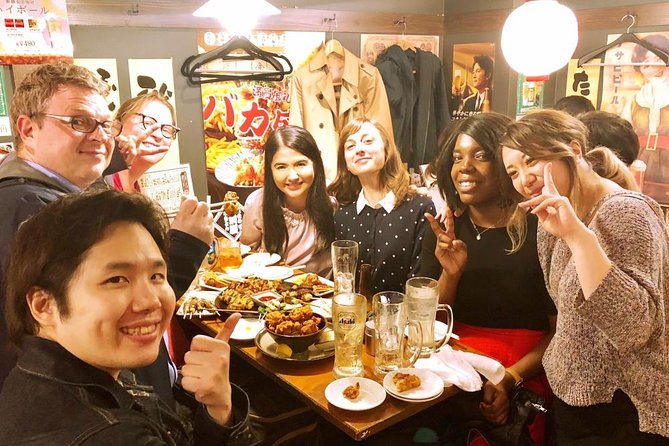
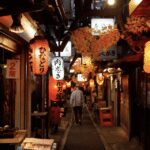
Shimbashi does not feel like a sightseeing stage set. It is known for its office-worker crowd, especially the salarymen who gather after work for quick plates, drinks, and conversation. That makes the neighborhood a useful place to understand everyday dining in Tokyo.
The meeting point is SL Square, at the west entrance of Shimbashi Station. The old steam locomotive displayed there gives you an easy landmark in a busy rail district. From here, your guide introduces the evening and begins leading you through the streets around the station.
The 4:30 pm start is well chosen. You are not simply walking through an empty business area after office hours. You are arriving as the neighborhood shifts into its evening role. The timing also means this is best treated as a dinner experience, not a snack before dinner.
I would plan to arrive early. Shimbashi Station has several entrances and connects with multiple rail lines, so the station itself can be confusing. The stated starting address is 2-chōme-7-1 Shinbashi, while the meeting description points to the west entrance and SL Square. Give yourself enough time to find the square without rushing.
Other walking tours we've reviewed in Tokyo
Five stops, five chances to taste Tokyo
The tour includes five food stops, with seasonal and local dishes spread across the evening. The exact restaurants and dishes can change, so you should think of the menu as a sample of Shimbashi eating rather than a fixed tasting list.
That flexibility has a practical upside. Restaurants in Tokyo can close for holidays, change schedules, or become impractical during poor weather. The guide may substitute another place or dish, but the tradeoff is that you cannot count on every item named in the general description.
Yakitori and the quick-bite culture
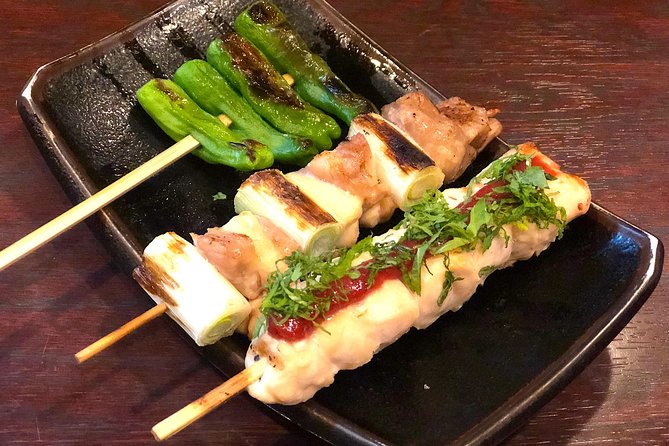
Yakitori, grilled chicken skewers, fits Shimbashi perfectly. It is the sort of food that works with a drink and can be eaten without a long formal meal. The appeal here is not only the skewer itself. It is seeing how small portions, shared plates, and drinks turn a short stop into a social evening.
If you are new to Japanese food, yakitori is one of the more approachable introductions. You can try several flavors without committing to a large dish. If you dislike strong sauces or unusual cuts, ask the guide what each skewer contains before ordering.
Gyoza and gyoza nabe
The tour may include gyoza, the familiar Japanese dumplings, as well as gyoza nabe, a dumpling hot pot. The hot pot offers a different experience from pan-fried dumplings because the dish is served as a shared, warming meal rather than a quick plate.
This is one reason the tour works better than a simple checklist of famous foods. You get to see how the same basic ingredient can appear in different settings. A dumpling stop also gives you a break from raw seafood and grilled food.
Sashimi and raw seafood
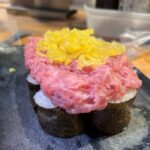
Sashimi brings a more traditional drinking-food element to the evening. It is served without the cooking or heavy coating that can make other dishes familiar to first-time visitors, so freshness and texture matter more.
The guide can help explain what you are eating and how it is usually served. If you are pescatarian, this stop may be a highlight. If you have seafood allergies or dislike raw food, make your needs clear before the tour begins. The supplied information confirms pescatarian-friendly options, but it does not promise that every stop will suit every dietary restriction.
Okonomiyaki
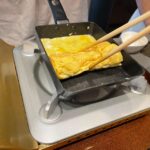
Okonomiyaki is a savory Japanese-style pancake, often shared and eaten casually. It adds a heavier, cooked dish to the food route and gives you another example of food designed for social dining.
The general description specifically names okonomiyaki, but the operator can change dishes. Treat it as a likely example rather than a guarantee. If a particular food is the main reason you want to book, ask about the current menu before paying.
Taiyaki to finish
Taiyaki is a fish-shaped Japanese dessert. It is usually associated with a sweet filling, though the exact version can vary. Ending with something small and sweet makes sense after several savory stops and helps keep the three-hour route from feeling like one continuous heavy meal.
The named dishes make this more than a generic bar crawl. Still, portions and preparation can differ by restaurant, and one past account described the food quality as uneven from stop to stop. I would book for the neighborhood access and guided context first, with the food as an important but not perfectly predictable part of the package.
The streets around Karasumori Shrine
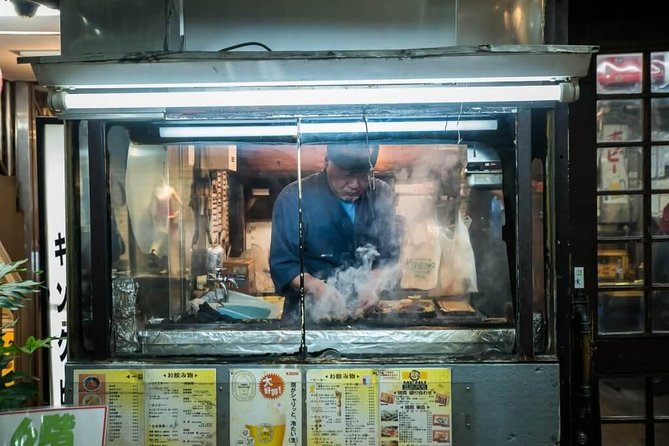
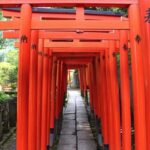
Karasumori Jinja is one of the listed points along the route. The shrine gives the walk a useful change of pace from the station’s office towers and narrow drinking streets.
You may not spend a long time at each non-food stop. The experience is built around eating and moving, not formal sightseeing. Even so, seeing a shrine within the Shimbashi district helps you notice the contrast between traditional religious spaces and the compact after-work dining scene around them.
This is also where a guide adds real value. A local guide can explain customs and manners that are easy to miss when you enter an izakaya alone. A previous tour pairing featured Asami and Lora, both described as lively and talkative, with explanations of Japanese eating habits. Guides change, so do not assume they will lead every departure, but the English-speaking guide is part of the experience.
New Shinbashi Building and local izakayas
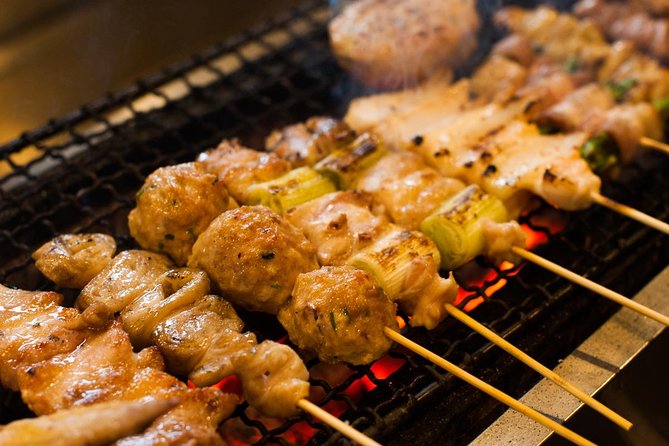
The New Shinbashi Building appears among the route’s points of interest. This is the kind of setting that supports the tour’s main promise: small, casual places used by people who work nearby.
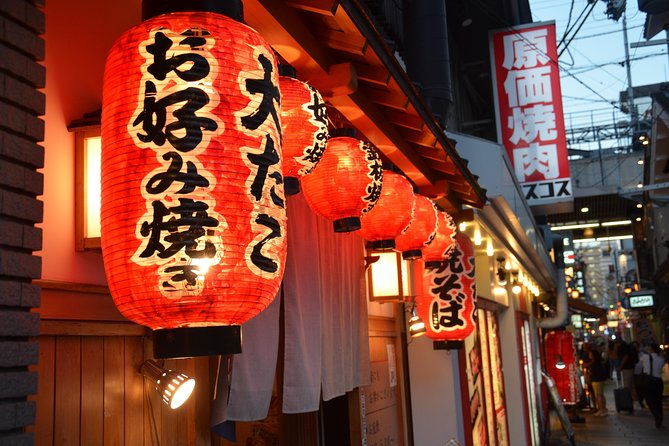
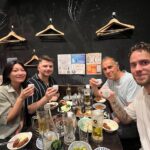
I like the idea of visiting lesser-known drinking dens rather than spending the whole evening in a polished restaurant aimed at international visitors. Izakayas are social spaces, and the food is designed to be ordered with drinks and shared over conversation. You may find the rooms narrow, the menus less obvious, and the pace less controlled than on a standard sightseeing tour.
That is part of the point, but it may not suit everyone. If you want a quiet table, a set menu, or a guaranteed seat in a particular restaurant, this format could feel loose. The group size of 10 helps, but restaurant schedules can still alter the plan.
The advertising and railway museums along the route
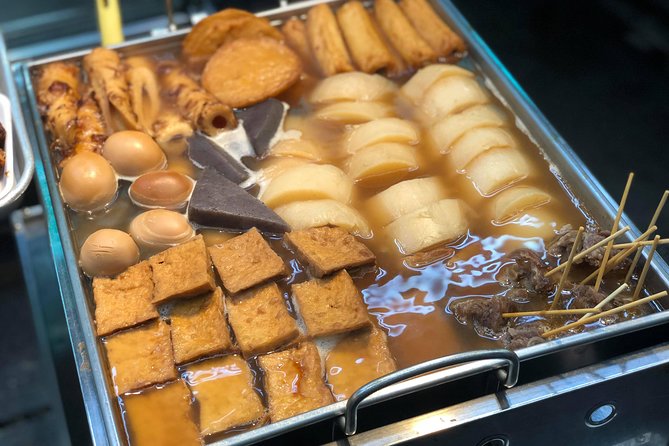
The itinerary also lists Advertising Museum Tokyo and the Old Shimbashi Station Railway History Exhibition Hall. These stops add city context to an evening otherwise focused on food.
The Old Shimbashi Station reference is especially fitting because the district grew around rail travel and remains a major transport hub. The advertising museum gives you another urban angle, showing that Shimbashi is not only a row of pubs. These places may be viewed from outside or used as waypoints rather than full museum visits, since the tour’s stated purpose is food and dining culture.
Panasonic Shiodome Museum is also listed near the route. Again, do not book this as a museum tour. The points help map the area and give your guide opportunities to explain the neighborhood, but the five food stops take priority.
Hamarikyu Gardens and the shape of the walk
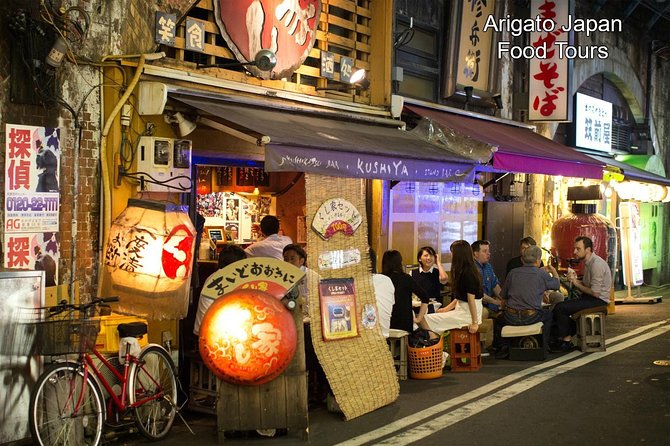
Hamarikyu Gardens appears among the route locations, though the experience is not described as a garden tour. Its presence shows how close Shimbashi is to major cultural and green spaces, even while the tour focuses on office-worker dining.
You should expect steady walking through an urban district, with stops for food and drinks. The activity asks for a moderate level of fitness. Wear comfortable shoes, and avoid scheduling a formal event immediately afterward unless you are comfortable with the possibility of the tour running close to its three-hour estimate.
The end point is near JR Shimbashi Station at 2 Chome-17 Shinbashi. That is convenient for returning to your hotel or continuing your evening, though the route may finish in a different part of the station area from where you began. Since the station is large, check your onward route before the walk.
What the $217 price really buys
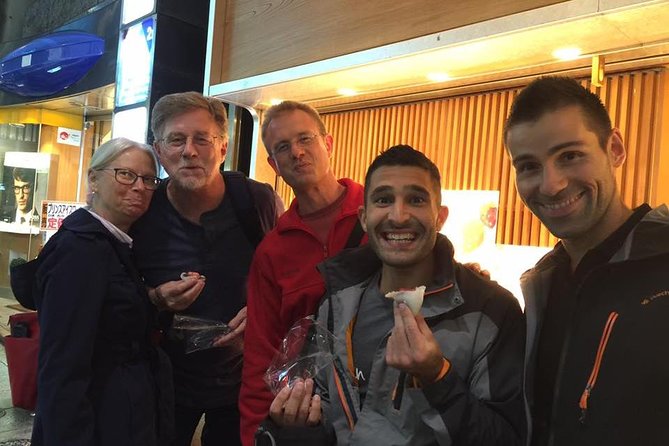
At $217 per person, this is not a cheap way to eat dinner. You receive five food stops, two drinks, an English-speaking local guide, and access to places you may not feel comfortable entering on your own. The price also covers the convenience of having someone handle the route and explain what is happening.
The value depends on your priorities. If you would happily spend an evening choosing izakayas yourself, ordering food, and navigating Japanese menus, you may find the cost hard to justify. Your own food and drinks would likely cost less, though you would not get the same guided structure.
I see stronger value for a first visit, a solo visitor who wants company, or anyone nervous about ordering in small local pubs. The maximum group of 10 is another positive. A small group can ask questions and move more easily than a large bus-tour crowd.
Only two drinks are included, and extra food and drinks cost more. Budget for that if you want to match the pace of the local office crowd. The tour is for adults aged 20 and above, so this is not a family activity.
Food restrictions and the adult evening format
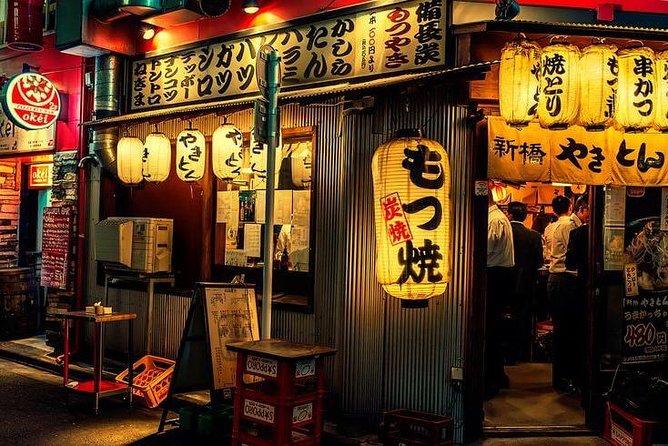
Vegetarians and pescatarians can be accommodated, according to the tour information. You should state your needs when booking and remind the guide at the start, since the route includes seafood, meat, and dishes prepared in different restaurants.
The experience is not recommended for vegans or people following a gluten-free diet. That limitation is important because soy sauce, noodles, dumpling wrappers, batter, and shared cooking surfaces can make substitutions difficult. Do not assume a dish can be changed simply because it contains vegetables.
The adult-only rule is also more than a technical detail. The tour is built around drinking pubs and after-work socializing, not child-friendly attractions. Karaoke is available as an after-party, but it is a separate option rather than part of the three-hour food tour.
How reliable is the food quality?
The strongest praise centers on friendly guides, useful explanations, and food that introduces dishes people might not try alone. One particularly adventurous account mentioned raw chicken, which shows that the menu can include unusual choices. You should ask questions before tasting anything unfamiliar.
Food quality is not guaranteed to be perfectly even. One account found the first stop very good but disliked the second and fourth stops, while the guide and the drink stop were viewed more favorably. That does not make the tour a poor choice, but it is a reason to avoid booking if your main goal is a carefully controlled gourmet meal.
Restaurant substitutions are allowed because of schedules, public holidays, weather, and other unexpected issues. That flexibility protects the evening from a closed shop, but it also means the final route may differ from your expectations.
Rain, cancellations, and the solo option
The tour requires good weather. If poor weather cancels it, you can choose another date or receive a full refund. A minimum number of participants is also required, and a cancellation for that reason comes with the same choice of another date or a refund.
For a normal cancellation, you must cancel at least 24 hours before the 4:30 pm start to receive a full refund. Changes made inside that window are not accepted. Keep the local Tokyo time in mind when making changes.
Solo travelers are asked to email the operator. That is worth doing rather than simply booking without contact, since the company may need to confirm how it can place an individual into the group.
Who will enjoy this Shimbashi walk?
I would recommend it to you if you want to:
- Eat familiar and unfamiliar Japanese dishes in several casual settings
- Learn basic dining customs while someone helps with ordering
- Meet other adults in a small group
- See Shimbashi during its after-work hours
- Try an izakaya without handling every language and navigation problem alone
- Combine a neighborhood walk with dinner
I would be more cautious if you want a fixed menu, a quiet evening, a low-cost meal, or strict dietary control. I would also skip it if you are looking mainly for major Tokyo sights. The route includes interesting landmarks, but the food and social setting are the main event.
Should you book it?
Book this tour if you value access and guidance more than sheer food quantity. The best part is the chance to see how Shimbashi works after office hours, then sample several kinds of drinking food with help from a local English-speaking guide.
At $217, the cost is difficult to defend as a simple dinner. It becomes easier to justify if you are new to Tokyo, traveling alone, or eager to enter small izakayas without guessing at customs and menus. Go in expecting a social neighborhood introduction with five tastings, not a luxury food experience. That expectation will give you the fairest measure of its value.
FAQ
Where does the Shimbashi Hidden Gem Walking Tour begin?
It begins at 2-chōme-7-1 Shinbashi, Minato City, Tokyo 105-0004, Japan, near SL Square at the west entrance of Shimbashi Station.
What time does the tour start?
The start time is 4:30 pm.
How long does the experience last?
The walking food tour lasts approximately three hours.
Where does the tour end?
The tour ends near JR Shimbashi Station at 2 Chome-17 Shinbashi, Minato City, Tokyo 105-0004, Japan.
How many food stops and drinks are included?
Five food stops with local and seasonal food are included, along with two drinks.
Is the tour suitable for vegetarians?
Yes. The experience is described as vegetarian and pescatarian friendly. It is not recommended for vegans or people following a gluten-free diet.
Can I cancel for a full refund?
Yes, if you cancel at least 24 hours before the local start time. Cancellations made less than 24 hours in advance are not refunded.
More Walking Tours in Tokyo

More tours in Tokyo we've reviewed




Walking Tours, compared.
 ★ 5.0Tokyo Tsukiji Fish Market Food and Culture Walking TourFrom $99
 ★ 5.0Tokyo: Imperial Palace and Shogun Historical Walking TourFrom $22
 ★ 4.9Tokyo: Shinjuku Local Bar and Izakaya Guided Walking TourFrom $343 hours
 ★ 5.0Tokyo: Tsukiji Fish Market Food and Walking tourFrom $30
 ★ 4.8Tokyo: Asakusa Walking Tour with Sensoji Temple VisitFrom $222 hours
 ★ 4.9Tokyo: Tsukiji Fish Market Guided Walking TourFrom $222 hours