
Reviewed · SAMURAI & NINJA EXPERIENCES
Samurai experience: art and soul of the sword
The most interesting part of this Tokyo samurai experience comes before anyone swings a sword. You first learn how to show proper respect toward the sword, then hear why bushido prized courtesy, discipline, and self-control. The lesson presents swordsmanship as a last resort, not a stage act.
I like two things here. First, you get a real look at Iaido, rather than simply posing in armor for a photo. Second, the small group, limited to 10 people, gives you a close view of the master’s solo demonstration. The main drawback is the price: at $216.86 per person, this is a serious splurge for 90 minutes.
In This Review
- Key points to know before booking
- Entering the dojo near Kuramae Station
- Why the first ten minutes matter
- Changing into samurai attire
- Learning Iaido, the samurai art of drawing and cutting
- The optional real-sword tatami cutting
- Watching the master’s demonstration up close
- What the $216.86 price buys you
- Who will enjoy this samurai experience most
- Practical details before you reserve
- Should you book Art and Soul of the Sword?
- FAQ
- Where does the samurai experience begin?
- What time does the activity start?
- How long does the experience last?
- Can children participate?
- Who can try cutting a rolled tatami mat with a real sword?
- Is cancellation free?
Key points to know before booking
- The lesson begins with etiquette and bushido, not combat tricks.
- You change into samurai attire and handle a sword during the dojo lesson.
- Adults can add real tatami cutting, but must sign a waiver and follow strict instructions.
- A master performs a solo demonstration after you have tried the basic movements yourself.
- The group is capped at 10 people, which matters in a small dojo setting.
- The meeting point is near Kuramae Station, with the activity beginning at 9:00 am and ending there.
Entering the dojo near Kuramae Station
You meet at Kuramae Station at 9:00 am, at 2-chōme-3-1 Kuramae in Taito City. The activity returns to this same meeting point, so you do not need to arrange a separate pickup or find your way to a different end point.
Kuramae is a useful part of Tokyo for this kind of morning plan. The station is near public transportation, and a fixed meeting point keeps the logistics simple. Still, I would allow enough time to find the right station exit and walk to the meeting location. Tokyo station areas can be confusing, especially when you are watching the clock.
The experience lasts about 1 hour 30 minutes. That is long enough for a proper introduction, dressing, practice, and demonstration, but it is not a full morning workshop. You are paying for a focused cultural lesson rather than a broad Tokyo sightseeing tour.
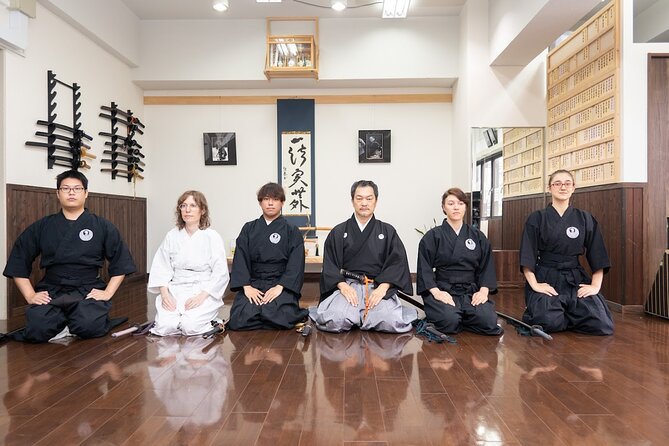
The maximum group size is 10. That number is small enough to make the sword instruction feel personal, though the exact amount of individual practice can depend on how the group moves through the lesson.
A few more Tokyo tours and experiences worth a look


Why the first ten minutes matter
Many people picture a samurai as a fearless fighter who draws a sword at the first sign of trouble. This lesson offers a more disciplined picture. The master explains that a samurai did not draw the sword casually. A strong samurai had the skill to make others think twice, but also the judgment to settle problems through conversation.
That idea gives the activity its real purpose. You are not simply learning how to hold a Japanese sword. You are learning the attitude that surrounds it: courtesy, restraint, awareness, and control.
The opening etiquette may surprise you if you expect instant action. You learn how to treat the sword properly and hear about the values connected to bushido, often translated as the way of the samurai. The pace may feel slower than a theatrical sword show, but it gives the later movements more meaning.
I particularly like this order. When the master later demonstrates fast and precise technique, you understand that the speed is built on discipline. Without the opening explanation, the sword work could look like simple entertainment. With it, the movements carry more weight.
Changing into samurai attire
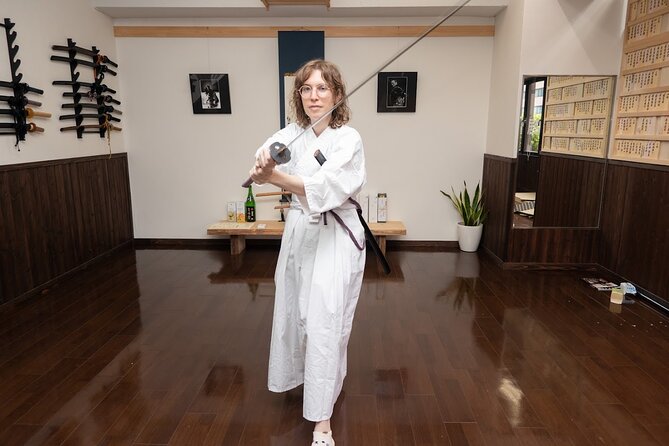
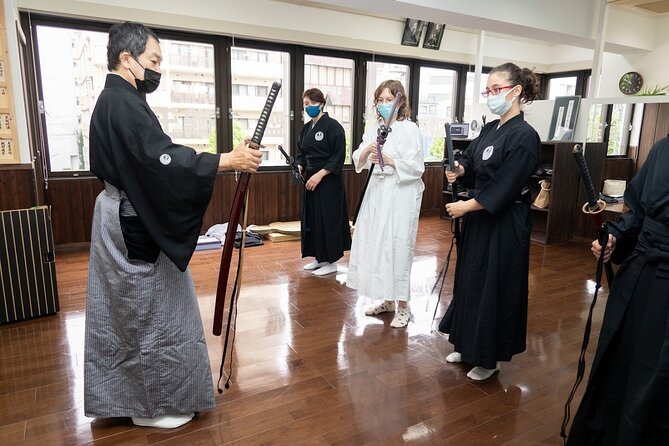
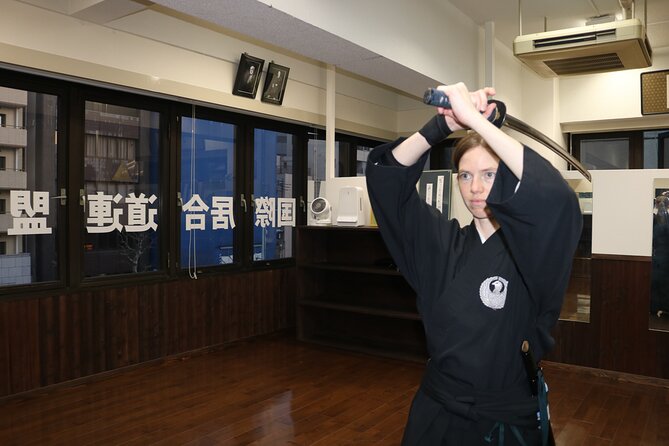
After arriving at the Iaido dojo, you change into samurai attire and are given a sword for the lesson. This helps create a clear break from ordinary sightseeing. You are no longer just watching a cultural display. You are taking part in a structured practice under the master’s direction.
The clothing also helps you understand that posture and movement matter. The activity is not described as a costume photo session, and you should not book it expecting a casual chance to play with samurai gear. The clothing forms part of the lesson, while the focus remains on etiquette, sword handling, and Iaido.
The supplied information does not specify the exact changing arrangements or what clothing you should wear underneath. I would choose comfortable clothes that allow moderate movement and avoid anything that could make changing awkward. You should also expect to follow the dojo’s instructions closely.
A moderate level of physical fitness is recommended. This is not presented as an extreme athletic class, but you will be standing and moving with a sword. Pay attention to your footing and posture instead of rushing to imitate the master’s speed.
Learning Iaido, the samurai art of drawing and cutting
Iaido is a major part of the lesson. In simple terms, it is a sword art built around drawing, handling, and controlling the blade with precision. The activity explains the flow of Iaido before asking you to try the movements.
You may have seen images of a samurai slicing a rolled straw mat in one swift motion. That image connects to the cutting tradition associated with Iaido, but your own lesson begins with fundamentals. You first need to understand the proper sequence and the discipline behind it.
The master’s instruction is important here. Sword movements can look easy when performed by someone with years of practice. They are not easy to copy safely or accurately after a few minutes. Listen carefully, move at the requested pace, and treat every correction as part of the experience.
The lesson also includes cutting a man-shaped cardboard target with a sword. This gives you a concrete way to apply what you have learned without immediately moving to the more demanding real-sword option.
That cardboard target should be understood as practice, not a battle simulation. The point is to learn control and the mechanics of the movement. If you come hoping for a theatrical fight scene, you may find the careful structure restrained. If you want a closer look at a traditional sword discipline, the format makes good sense.
The optional real-sword tatami cutting
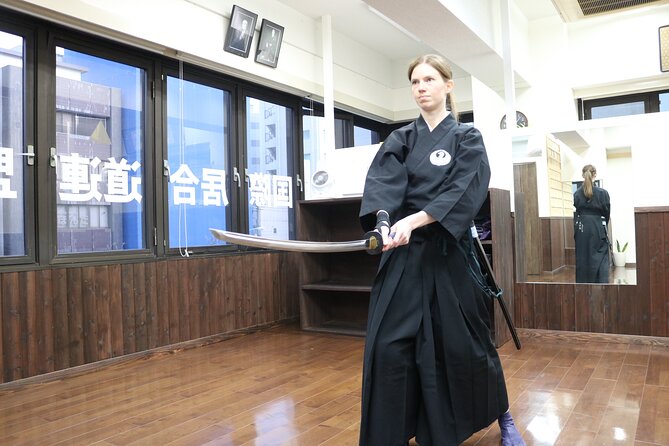
Adults who want more can sign up for the real-sword option and try cutting a rolled tatami mat. This is the most physically serious part of the activity, and it comes with clear conditions.
You must be at least 18 years old on the date of the experience, sign a waiver, and follow the master’s instructions. These are not minor formalities. A real sword requires complete attention, and the safety rules should guide your decision about whether to add this option.
The supplied details do not state the extra cost of the real-sword option, so check the current booking details before you commit. The advertised price of $216.86 per person should not automatically be assumed to include every possible add-on.
I would choose the real-sword option only if you are comfortable with strict instruction and the responsibility involved. It is not a casual photo opportunity. The cardboard practice is likely the better fit for children and for adults who want the cultural lesson without handling a live blade.
If you do not choose the real-sword option, the minimum participation age is 5. That makes the main activity possible for families, though very young children may find the etiquette and controlled movements harder to follow. The adult-only rule applies specifically to the real-sword choice.





Watching the master’s demonstration up close
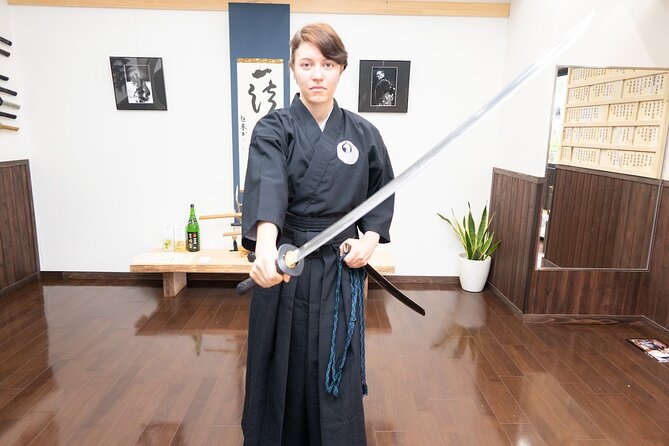
The final demonstration is one of the strongest reasons to book this rather than a basic costume activity. After you have tried the movements yourself, the master performs alone at close range.
The timing is smart. You first gain a small sense of how difficult the techniques are. Then you watch someone with far greater control perform them cleanly. The difference between beginner practice and master-level skill becomes easy to see.
The demonstration is especially useful because you have already learned the principles of etiquette and restraint. The sword is not presented as a prop. Every movement has a purpose, and the master’s control becomes part of the lesson.
A teaching assistant may also help with the instruction and demonstrations. No individual guide names are provided, so you should not expect to select a particular instructor when booking. The important point is that the session is led in a dojo by a master, rather than by a guide giving a general talk on samurai culture.
You receive a certificate of completion at the end. It is a small souvenir, but a useful one. It records that you took part in a formal Iaido session instead of simply watching a performance.
What the $216.86 price buys you
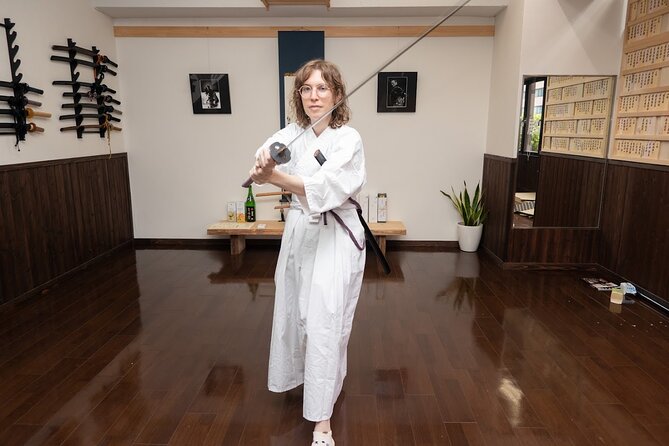
At $216.86 per person, this is expensive for a 90-minute activity. You are not getting transportation around Tokyo, a meal, or a full-day cultural program. If you measure value by time alone, the cost may be hard to justify.
The value is more specific. You are paying for access to a dojo, instruction from a master, samurai attire, guided sword practice, a close demonstration, and a certificate. The group limit of 10 also helps. A large class would make it harder to see the details or receive useful direction.
I would compare this with the cost of a short stage show or a photo-focused samurai activity. If your goal is a quick picture in costume, this is probably too expensive and too serious. If you want context, technique, and a clear explanation of why samurai swordsmanship involved restraint as well as force, the price becomes easier to defend.
The strongest value comes for people who care about Japanese martial arts or who want an activity that challenges a familiar stereotype. You leave with more than a photograph. You have at least a basic sense of the etiquette and concentration required before a sword is ever drawn.
The experience has a perfect 5 rating from 13 published ratings, with 100 percent recommending it. That is a small sample, so I would not treat it as proof that every person will love the format. It does show that the experience has made a strong impression on the people who chose it.
Who will enjoy this samurai experience most
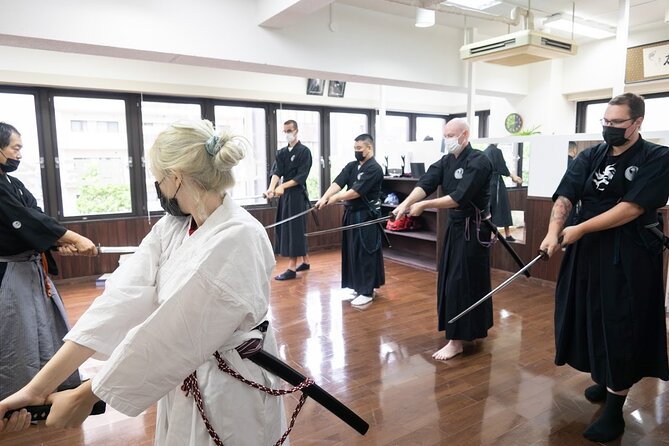
I would recommend it to adults who want a cultural activity with real instruction. It suits people who enjoy martial arts, Japanese history, hands-on learning, or quiet, disciplined activities more than loud entertainment.
It can also work for families because the standard experience allows children from age 5. Keep in mind that the session asks children to listen, behave carefully around a sword, and follow the master’s directions. The real-sword option is only for people aged 18 and older.
This is a good choice if you have already seen Tokyo’s major temples and districts and want something more structured. It also fits well for visitors who prefer a small group over a large staged performance.
I would be cautious about booking it for anyone who expects a long sword-fighting class. The session is only 90 minutes, and much of its value comes from etiquette, bushido, and controlled demonstrations. You will not become a trained Iaido practitioner in one morning.
The activity may also feel too formal for someone seeking relaxed entertainment. The master’s authority and the safety instructions are central to the experience. That seriousness is part of its appeal, but it is not for everyone.
Practical details before you reserve
Confirmation is sent within 48 hours of booking, subject to availability. Since the experience is booked an average of 23 days in advance, it is sensible to reserve early if you have a fixed Tokyo schedule.
The activity has a mobile ticket, so keep the booking available on your phone. Your start time is 9:00 am, and the experience ends back at Kuramae Station. Plan your morning around that fixed start rather than assuming you can arrive late.
Free cancellation is available if you cancel at least 24 hours before the local start time. Cancellations made less than 24 hours ahead are not refunded, and changes inside that same period are not accepted.
The provider is Arumachi. The meeting point is near public transportation, but no hotel pickup is included in the information provided. You should make your own way to Kuramae Station and allow time to arrive ready for a prompt beginning.
Should you book Art and Soul of the Sword?
Book this experience if you want to understand the discipline behind samurai swordsmanship, not just wear the clothing. The opening lesson on etiquette, the explanation of bushido, the guided Iaido practice, and the master’s demonstration form a thoughtful 90-minute session.
The decision is less clear if you are watching your budget or mainly want action. At $216.86, the cost is high, and the lesson is controlled rather than theatrical. Families can join the standard activity from age 5, while the real-sword tatami cutting is reserved for adults who sign a waiver and accept the safety rules.
For the right person, this is a memorable Tokyo activity because it replaces the usual warrior fantasy with a more careful idea of strength. You learn that the sword represents responsibility and restraint as much as skill. If that sounds more interesting than a quick costume photo, I would book it.
FAQ
Where does the samurai experience begin?
It begins at Kuramae Station, at 2-chōme-3-1 Kuramae, Taito City, Tokyo 111-0051, Japan.
What time does the activity start?
The start time is 9:00 am.
How long does the experience last?
The experience lasts approximately 1 hour 30 minutes.
Can children participate?
Yes. The minimum age is 5 if you do not choose the real-sword option.
Who can try cutting a rolled tatami mat with a real sword?
Only participants aged 18 or older on the date of the experience can choose the real-sword option. They must sign a waiver and follow the master’s instructions.
Is cancellation free?
Yes, if you cancel at least 24 hours before the local start time. Cancellations made less than 24 hours in advance are not refunded, and changes during that period are not accepted.
More Samurai & Ninja Experiences in Tokyo
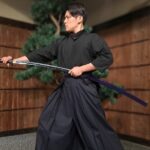
More tours in Tokyo we've reviewed











Samurai & Ninja Experiences, compared.
 ★ 4.5Tokyo: Samurai Restaurant Show Ticket with 2 DrinksFrom $551h 30m
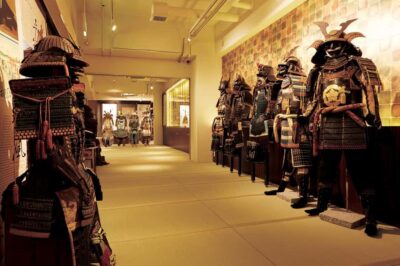 ★ 4.6Tokyo: Samurai Ninja Museum Guided tour and ExperienceFrom $27
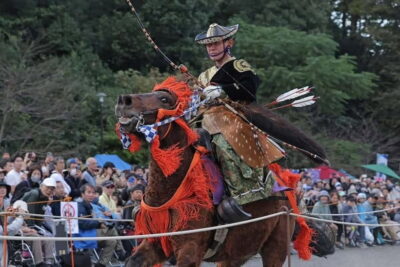 ★ 5.0Tokyo: Samurai Sword & Archery Class from Samurai DescendantFrom $1933 hours
 ★ 5.0Best Samurai Experience in TokyoFrom $65
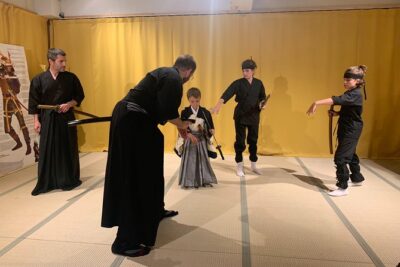 ★ 5.0Ninja Experience (Family Friendly) at Samurai Ninja Museum TOKYOFrom $47
 ★ 4.6Tokyo: Samurai Entertainment Night Show in Kanda ShrineFrom $412 - 3 hours