
Reviewed · NIGHT TOURS
Private Tokyo Night Tour
Tokyo after dark is a different city: Tokyo Tower glows orange, Rainbow Bridge shines over the bay, and giant screens turn Shibuya into a moving wall of light. This private drive lets you cover far more ground than you could on foot in one evening, with stops for photos along the way.
I like the private van and flexible route, especially for families or groups who want to stay together. I also like the drivers’ practical help with photos and local stops. Guides including Takumi, Douglas, Babu, Richie, and Kana have helped shape routes around guest requests, from ramen dinners to winter illuminations.
The trade-off is simple: this is mainly a driving and sightseeing tour, not a long walking tour with detailed stops at every district. Tokyo traffic can slow the route, and nine listed stops may feel rushed during the three-to-four-hour window.
In This Review
- Key points to know before booking
- Tokyo after dark from a private van
- Rainbow Bridge and Tokyo Bay set the mood
- Ginza shows Tokyo’s polished side
- Tokyo Tower is the classic photo stop
- Tokyo Station adds old-fashioned character
- Odaiba brings open space and bright lights
- Roppongi and Omotesando show two sides of central Tokyo
- Shibuya Crossing is the loudest moment
- Shinjuku closes the night with neon and tiny bars
- How flexible is the route?
- Is $496.17 a fair price?
- Who will enjoy this Tokyo night tour?
- Practical details that affect your evening
- Should you book it?
- FAQ
- How long does the Private Tokyo Night Tour last?
- How many people can join the private tour?
- Is hotel pickup available?
- Is Tokyo Tower admission included?
- What places are included in the route?
- Are child seats available?
- What happens if the weather is poor?
Key points to know before booking
- Tokyo Tower is a photo stop, not an included observatory visit: Admission is not included, so plan on seeing the tower from outside unless you arrange otherwise.
- The route covers a huge slice of the city: Rainbow Bridge, Ginza, Tokyo Station, Odaiba, Roppongi, Omotesando, Shibuya, and Shinjuku are all included in the usual plan.
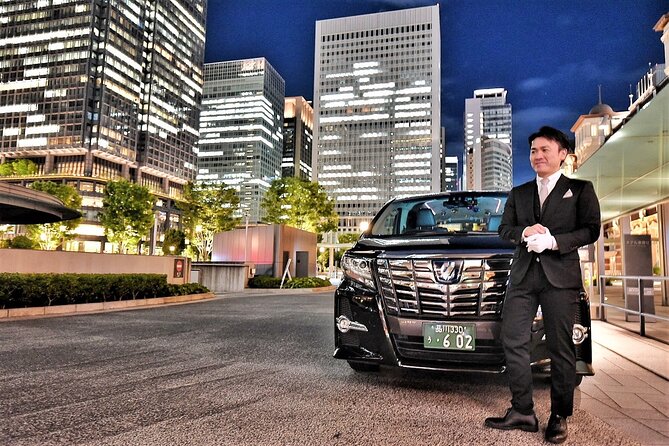
- Your group gets the vehicle to itself: The tour is private for up to nine people, with pickup offered.
- The best value comes with a full group: At $496.17 per group, nine people pay about $55 each, while a couple pays almost $248 each.
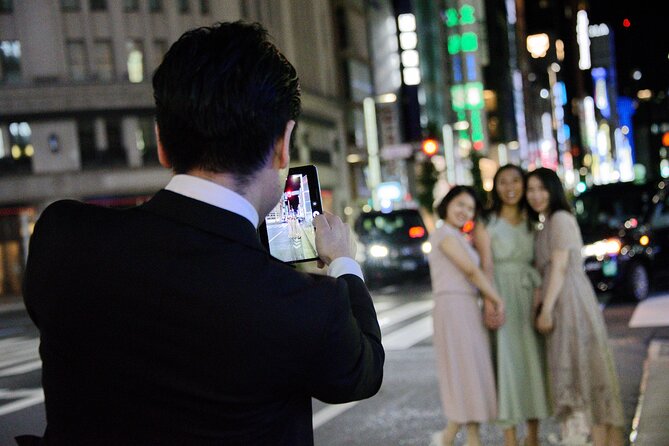
- Photo help is part of the appeal: Drivers regularly stop at good angles and take group pictures, which is useful when you want everyone in the frame.
- Bring an extra layer near the bay: The breeze around Rainbow Bridge and Odaiba can feel cold at night.
Tokyo after dark from a private van
This tour is built around one useful idea: Tokyo is enormous, and its best-known night sights are spread across several districts. A train-based evening can take you to Shibuya, Shinjuku, or Ginza, but seeing all of them in one outing takes planning, transfers, and plenty of walking.
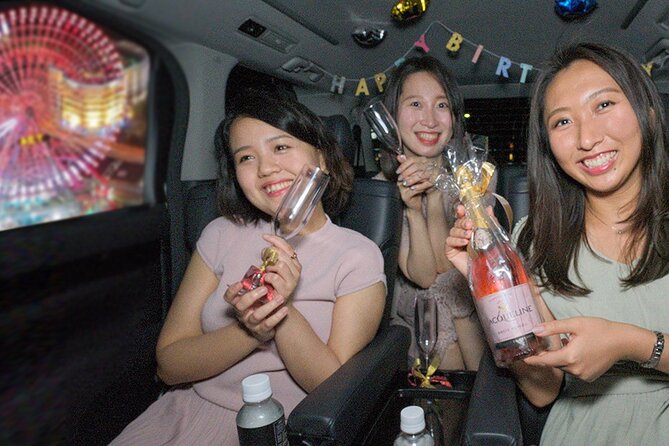
Here, you settle into a clean, comfortable vehicle and let the driver handle the route. The usual experience lasts about three to four hours, with pickup offered and a mobile ticket for easy access. The vehicle matters more than it might at first seem. After a full day of temples, shopping, and train stations, sitting down while the city moves past the windows can be a welcome change.
The private format is the biggest practical advantage. You do not need to keep pace with strangers or worry about losing the group at a crowded crossing. Families can request child seats, and groups of friends can adjust the evening around their own interests.
The guides are not all the same, so the tone may vary. Takumi has been praised for arranging photo stops and dinner reservations. Douglas has sent an itinerary ahead of time and adapted routes for seasonal lights. Babu, Richie, Soya, Roberto, Kana, Ellie, Shogo, and others have also guided this experience.
That range is worth keeping in mind. You may get a driver who gives lots of cultural and historical explanation, or one who focuses more on safe driving, photos, and getting you to the right viewpoints. If commentary is important to you, ask about your guide and request a more explanatory style when you book.
A few more Tokyo tours and experiences worth a look


Rainbow Bridge and Tokyo Bay set the mood
The evening usually begins with a drive across Rainbow Bridge. At night, the bridge lighting and Tokyo Bay create an immediate sense of scale. From the vehicle, you get a moving view rather than a long stationary lookout, but that is part of the charm.
The listed stop is about 10 minutes, and there is no admission charge. Keep your camera ready, though reflections through the vehicle windows can affect photos during the drive. Near the water, the air can also feel cooler than it does inland. One useful tip is to bring a coat even if your hotel felt warm when you left.
This opening section works well for a first night in Tokyo. It gives you a quick orientation to the bay, the bridges, and the city’s spread before the route heads toward central districts. One family also used the tour on its first night to get adjusted after a long flight, a sensible use of a relaxed private ride.
Ginza shows Tokyo’s polished side
The drive through Ginza brings a change in mood. This is Tokyo’s famous shopping, dining, and entertainment district, with broad streets, major department stores, restaurants, and buildings by notable architects.
The planned time is about 30 minutes, with no admission fee. In practice, this is a look at the district rather than a shopping visit. You may pause for pictures, but the tour does not give you time to browse stores or settle into a meal here.
Ginza is useful because it gives your evening some architectural variety. After the neon and open water of the bay, you see a more polished, formal part of the city. If you want a particular building or restaurant included, tell the driver early. The private format gives you room to make requests, but time still has limits.
Tokyo Tower is the classic photo stop
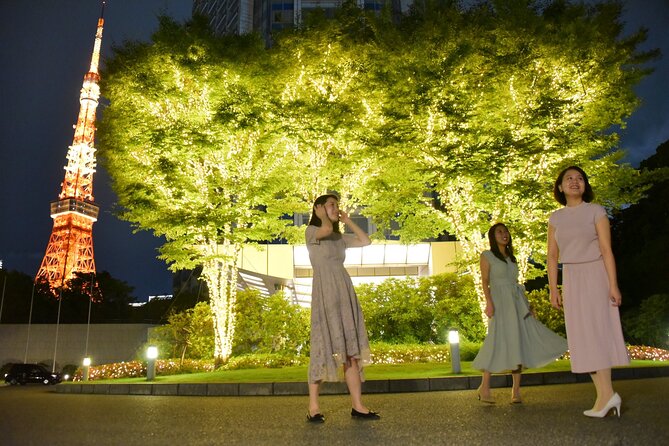
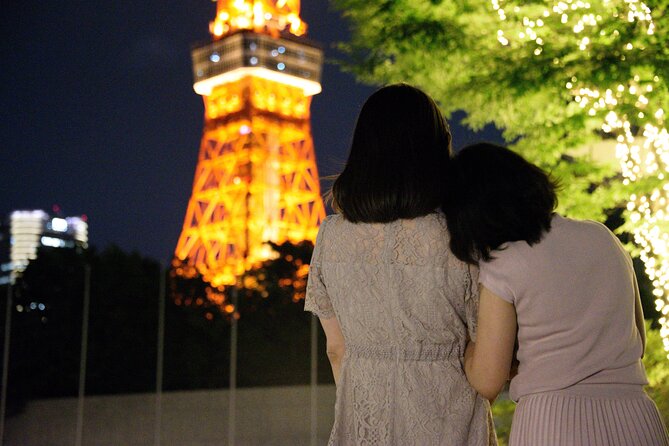
Tokyo Tower is the tour’s most obvious star. Its orange nighttime glow is easy to recognize, and seeing it close up gives you the skyline image most people hope to take home.
You get about 20 minutes here. The stop itself is included, but Tokyo Tower admission is not. That distinction matters. This experience is designed for an exterior photo opportunity, not a tower observatory visit.
A good photo stop depends on parking and the driver’s choice of angle. Several guides are praised for knowing where to pull over and for taking group photos. That can save you from the usual problem of finding a passerby, handing over an expensive phone, and hoping the picture works.
If you want to go up the tower, confirm how that would affect the route before booking. A tower visit would use more time than a quick outside stop, especially when traffic and parking are part of the evening.
Tokyo Station adds old-fashioned character
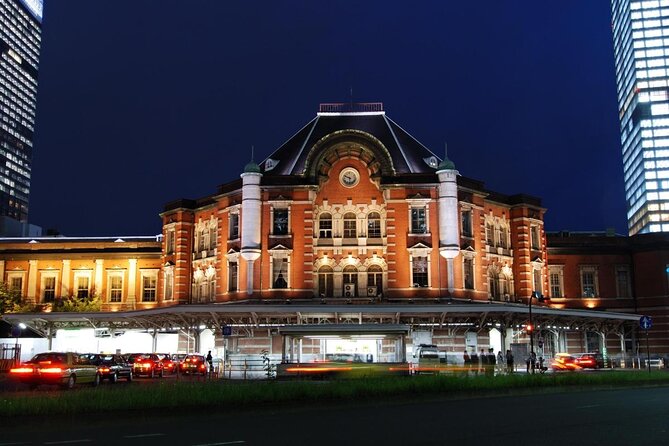
Tokyo Central Railway Station was built in 1914 and still has a nostalgic feel, especially when its historic facade is lit at night. The station is also a popular wedding photo location, which tells you something about its formal red-brick appearance and broad frontage.
The planned stop is about 15 minutes, with no admission charge. You should think of it as another carefully chosen picture stop, not a station tour. The value here is contrast. Tokyo is often presented through screens, signs, and crowds, but Tokyo Station gives you a more classic architectural image.
The short timing is enough for a photo if the location is clear and the vehicle can stop conveniently. It is not enough for a detailed look at the station complex or a long walk around Marunouchi. If you prefer history to skyline photos, ask the guide to explain more about the building during the drive.
Other private tours in Tokyo


Odaiba brings open space and bright lights
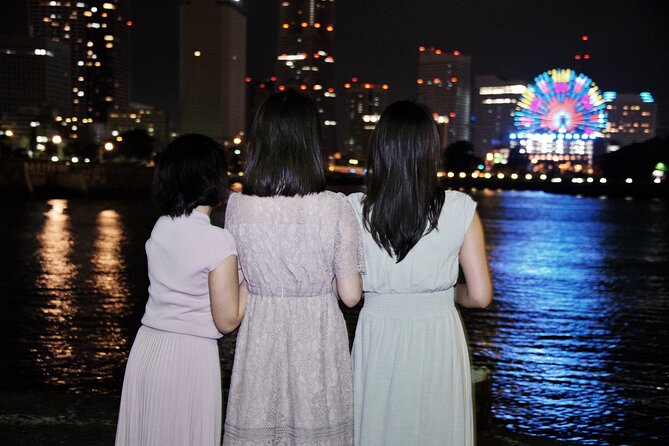
Odaiba, also called Daiba, sits on a man-made island in Tokyo Bay and mixes shopping, entertainment, and wide waterfront views. The usual stop lasts about 40 minutes, making it one of the longer breaks on the route.
The district is known for its brightly lit Ferris wheel, described as using 120,000 neon tubes programmed in changing patterns. Even if the wheel is not operating in the way you expect, its lighting adds a strong visual moment to the night.
Odaiba is a good place to stretch your legs after time in the van. It also gives you a different feel from central Tokyo. The bay is more open, and the lights are spread across larger spaces rather than packed into narrow streets.
The drawback is distance. Odaiba can take time to reach, and traffic may reduce the amount of time available elsewhere. If your main goal is Shibuya and Shinjuku, you may want to ask how much of the bay section can fit comfortably into your evening.
Roppongi and Omotesando show two sides of central Tokyo
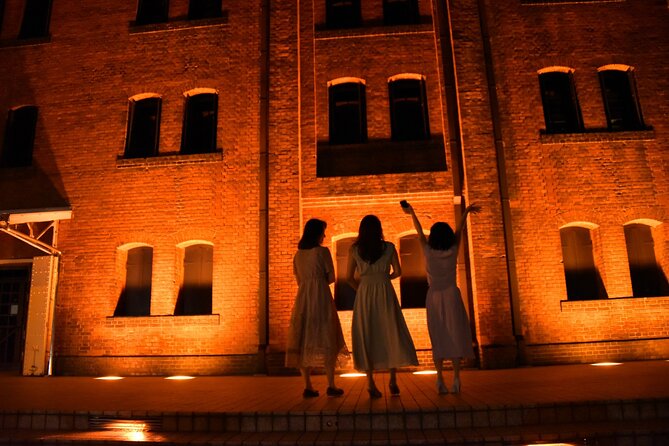
Roppongi is known for nightlife popular with both Japanese residents and international visitors. The tour drives through its busiest areas for about 20 minutes. You get the atmosphere from the vehicle, but this is not a bar-hopping evening and does not include drinks or club entry.
Roppongi can be a useful preview. If you like the look of the district, you can return later on foot. The driving format lets you see the signs and activity without committing your whole evening to one neighborhood.
Omotesando offers a calmer visual change. Its tree-lined avenue is unusual in Tokyo, and seasonal illuminations make it especially attractive in winter. The stop is listed at about 20 minutes and is free.
These two districts work best as passing views with brief photo pauses. They are not the strongest parts of the tour for anyone seeking long walks or local meals. Their value is variety: Roppongi gives you nightlife, while Omotesando gives you a broad, designed avenue with trees and lights.
Shibuya Crossing is the loudest moment
Shibuya is where the tour’s modern Tokyo image reaches full volume. The famous crossing is surrounded by neon advertising, giant video screens, and streams of pedestrians moving in several directions at once.
The planned stop is about 30 minutes. That should give you time for photos and a look at the crossing, but it may not be enough to explore the wider district. The best view can depend on parking, traffic, and how far you need to walk from the vehicle.
This is one place where a private vehicle offers comfort but not necessarily the best street-level experience. You will see the spectacle efficiently, yet Shibuya makes more sense when you stand among the people and cross the intersection yourself. Still, the tour is valuable if you want a first look without spending an entire evening navigating the district.
You can also use the stop to decide if Shibuya deserves a return visit. The tour’s fast overview works well for first-time orientation, especially if you are unsure which parts of Tokyo you want to explore independently.
Shinjuku closes the night with neon and tiny bars
The final area is Shinjuku, one of Tokyo’s busiest districts. The route focuses on Kabukicho and Golden Gai, where the night signs and narrow lanes create a very different scene from Tokyo Station or Omotesando.
Golden Gai is filled with hundreds of tiny bars. The tour can help you see the area and take photos, but it does not promise entry to any particular bar. Many of these venues are small, and some may have their own rules or limited seating, so treat this part as a visual introduction.
Shinjuku is also known for giant 3D advertising screens. These moving displays are made for quick photos and video clips, though the crowded setting can make group pictures harder than at Tokyo Tower or the station.
The listed time is about 20 minutes. That is enough to sample the look of Kabukicho and Golden Gai, but not enough for a proper night out in Shinjuku. If you want dinner, ask ahead. Guides have taken groups to ramen restaurants, helped arrange dinner reservations, and suggested places to pick up food, but meals are not a standard included feature.
How flexible is the route?
Flexibility is a major selling point, but it needs a realistic reading. The planned stops add up to more than three hours before you count the driving between districts. That means the full route is best understood as a highlights loop, with short stops and a degree of adjustment.
You can request particular neighborhoods, extra photo points, or a food stop. Some guides have changed routes for Christmas illuminations, added requested locations, and helped groups focus on a specific interest such as gardens or anime-related Tokyo views.
I would send your priorities in advance. Put your top two or three sights first, then treat the remaining stops as optional. If you want every listed district, accept that traffic may shorten some pauses.
The tour operates in the evening, with the normal hours listed as 6:00 PM to 10:00 PM through December 23, 2025. A separate holiday period from December 24, 2025 through January 4, 2026 lists 6:00 PM to 7:00 PM, while dates from January 5 through December 10, 2026 list 4:00 PM to 7:00 PM. Confirm the exact start time for your date before paying, since seasonal hours change.
Is $496.17 a fair price?
The price is $496.17 per group of up to nine people. For a full van, that is about $55 per person. For four people, it is about $124 each. For two, it is almost $248 each, which makes this much harder to call a bargain.
The value comes from the private vehicle, hotel pickup option, route planning, and time saved between far-flung districts. A full family group can get strong value, especially if everyone wants the same evening overview and does not want to manage Tokyo’s train system after dark.
For a couple, the price reflects a private date-night experience rather than low-cost sightseeing. It may suit you if comfort, photos, and a custom route matter more than saving money. If you only want Shibuya and Shinjuku, public transport and a self-guided evening will cost far less.
The current booking record shows a 4.9 rating from 115 reviews and 99 percent recommendation, with many five-star ratings. One one-star experience points to the main risk: if you dislike riding in traffic and want long, active visits at each location, the format may feel like money spent on a long drive.
Who will enjoy this Tokyo night tour?
I would recommend it most strongly to:
- Families with children or older relatives who need regular seating
- Groups of friends sharing the cost of a private vehicle
- First-time visitors who want a quick city orientation
- Couples looking for a polished night out with photo stops
- People arriving in Tokyo who want an easy first evening
- Anyone who wants a driver to handle navigation and parking
I would be more cautious if you want a walking tour, detailed museum-style commentary, or long meals in local neighborhoods. This is a moving overview with selected stops, not a deep neighborhood visit.
The guides’ strengths often appear in practical ways: prompt communication, clean vehicles, safe driving, photo help, and willingness to adapt. Some guides offer strong cultural explanation, while one piece of feedback specifically asked for more proactive suggestions. My advice is to state exactly what you want: more history, more photos, seasonal illuminations, ramen, anime locations, or a fast tour of the major night sights.
Practical details that affect your evening
Pickup is offered, and a mobile ticket is provided. Confirmation is sent within 48 hours, subject to availability. Most people can participate, and baby seats and child seats are available on request.
The tour requires good weather. If poor weather forces cancellation, you are offered another date or a full refund. You can cancel for a full refund up to 24 hours before the start time, but late cancellations and changes are not refunded or accepted.
Tokyo’s roads can be crowded, especially around Shibuya, Shinjuku, and Roppongi. Keep your expectations flexible. A clean van and a capable driver make the traffic easier, but no private tour can remove the traffic itself.
Should you book it?
Book this tour if you want to see a wide range of Tokyo at night without mastering the train system, especially if you have four or more people to share the cost. Put Tokyo Tower, Rainbow Bridge, Shibuya, and one food request at the top of your list, then let the guide shape the rest around traffic and timing.
For a couple on a tight budget, the price is high. For a family or larger group, it can be a sensible way to get photos, comfort, and a broad first look at the city in one evening. The best match is someone who values convenience and flexibility more than long walks or extensive commentary.
FAQ
How long does the Private Tokyo Night Tour last?
The experience lasts approximately three to four hours.
How many people can join the private tour?
Only your group participates, with space for up to nine people.
Is hotel pickup available?
Pickup is offered. The exact meeting arrangement should be confirmed when booking.
Is Tokyo Tower admission included?
No. The tour includes a stop for photos near Tokyo Tower, but admission is not included.
What places are included in the route?
The planned route includes Rainbow Bridge, Ginza, Tokyo Tower, Tokyo Central Railway Station, Odaiba, Roppongi, Omotesando, Shibuya, and Shinjuku.
Are child seats available?
Yes. Baby seats and child seats are available upon request.
What happens if the weather is poor?
The experience requires good weather. If it is canceled because of poor weather, you will be offered a different date or a full refund.
More Evening Experiences in Tokyo
More Private Tours in Tokyo
More Night Tours in Tokyo
More tours in Tokyo we've reviewed











Night Tours, compared.
 ★ 5.0Tokyo Night Foodie Tour in Shinjuku – Seasonal Sushi, Wagyu BeefFrom $111
 ★ 4.8Tokyo: Daikoku JDM Car Meet & Night Car Culture TourFrom $984 hours
 ★ 4.5Tokyo After 5: Authentic Japanese Food & Drink Night TourFrom $122
 ★ 4.6Tokyo: Samurai Entertainment Night Show in Kanda ShrineFrom $412 - 3 hours
 ★ 4.5The Dark Side of Tokyo – Night Walking Tour Shinjuku KabukichoFrom $25
 ★ 4.8Tokyo: Night Foodie Tour in ShinjukuFrom $1273 hours