
Reviewed · TOKYO FOOD TOURS
Private Tokyo Food Tour with 10+ Tastings of Japanese Classics
Tokyo food tours often stay near the bright lights of Shibuya or the fish stalls of Tsukiji. This one takes you to Ueno, where market food, train tracks, temples, and a grand public park share the same afternoon. You eat Japanese classics as you walk, with more than 10 tastings planned across roughly three and a half hours.
I like the private format, since your guide can adjust the pace and explain foods without a large group getting in the way. I also like the mix of Ameyoko market and Ueno’s temples, which gives you both everyday Tokyo and older religious sites in one outing.
The main drawback is the price: $460 per person is a serious spend for a food walk, even with all the included tastings. You also need to contact the operator before booking if you have dietary restrictions, since the menu is built around a set food experience and may not suit every need.
In This Review
- Key points to know before booking
- Why Ueno is the right place for a Tokyo food walk
- Ameyoko market: Tokyo food at street level
- Beneath the train tracks
- Sushi, gyoza, and the first round of tastings
- Yakitori and the appeal of small portions
- Ueno Park and the cherry blossom setting
- A Shinto shrine dedicated to Tokugawa Ieyasu
- A Buddhist temple and a quieter pause
- Tea, fruit, beer, and dessert
- What your guide adds to the experience
- Is $460 per person a fair price?
- Weather, walking, and practical planning
- Who should book this Ueno food tour?
- Should you book it?
- FAQ
- How long does the private Tokyo food tour last?
- Where does the tour start?
- Does the tour include hotel pickup or drop-off?
- What food is included?
- Are drinks included?
- Is this a private activity?
- Can dietary restrictions be accommodated?
- What happens if the tour is canceled because of bad weather?
Key points to know before booking
- More than 10 tastings can include sushi, gyoza, yakitori, croquettes, seasonal fruit, matcha ice cream, two teas, beer, water, and a secret dish.
- Ueno gives you several sides of Tokyo, from the food stalls of Ameyoko to Ueno Park, a Shinto shrine, and a Buddhist temple.
- The tour is private, so only your own group takes part and the timing is easier to adjust.
- Guides may include Shona, Shonan, Mary, Mari, or Nozomi, all praised for friendly explanations and careful attention to the group.
- Plan for a full meal, not a few samples. One guide specifically advised pacing yourself, and you may not need dinner afterward.
- Wear good walking shoes and bring weather-ready clothing. The tour lasts a little over three hours and can continue in rain unless conditions force a change.
Why Ueno is the right place for a Tokyo food walk
Ueno is a useful introduction to Tokyo because it does not present only one polished version of the city. You get commercial streets, humble food counters, old religious buildings, open parkland, and the constant movement of trains.
The neighborhood sits northeast of central Tokyo. Ueno Park occupies ground that once belonged to one of Edo, the old name for Tokyo’s, most important temples. Today the park is a favorite cherry blossom spot, while the nearby market district draws people looking for food, clothing, gifts, and inexpensive places to eat.
That contrast gives the tour more substance than a string of restaurant visits. You are not simply moving from one tasting to another. You are seeing where those foods fit into daily life, local shopping, and the history of the district.
The route begins at Ueno Station at noon and ends back at the same meeting point. That makes the outing easy to pair with an afternoon in Ueno, though the fixed meeting location can be hard to spot if you are new to the station. Give yourself extra time to find 7 Chome-1 Ueno, Taito City, rather than arriving at the last minute.
A few more Tokyo tours and experiences worth a look
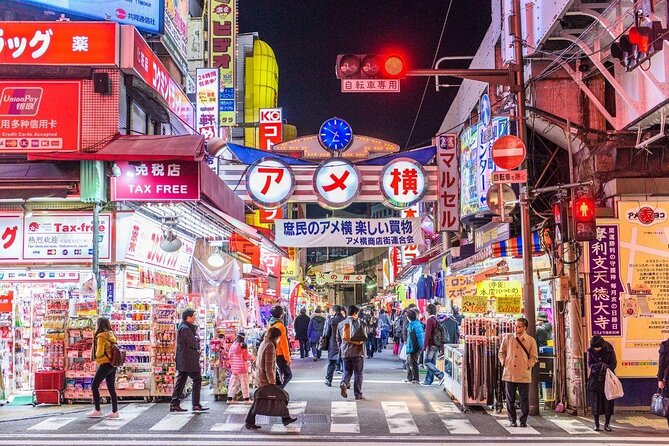
Ameyoko market: Tokyo food at street level
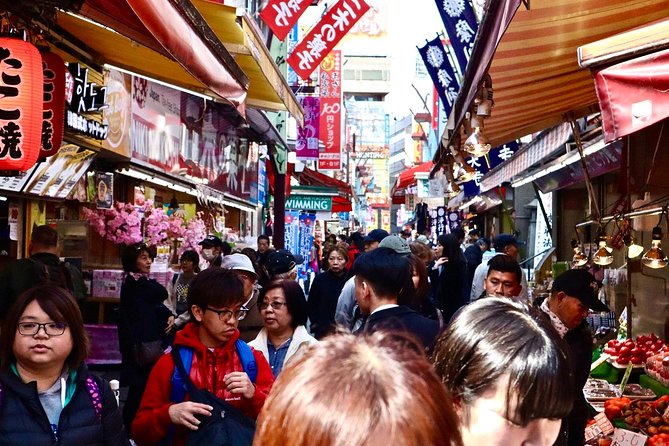
The market area is one of the tour’s best settings. Shops sell food, gifts, clothing, and other everyday goods, so the atmosphere feels practical rather than staged for sightseeing.
You might pass displays of fresh ingredients, small eateries, and counters serving quick dishes. The exact stops can change, since the menu and route depend on availability, weather, and other conditions. That flexibility is useful in a market, where a good food tour should respond to what is open and worth eating that day.
This is where the guide’s role matters most. A dish can look familiar but taste quite different from what you know at home. Your guide can help you understand what you are eating, how it is served, and why it belongs on a Japanese food tour.
The area can also feel crowded and noisy. If you prefer quiet restaurants and long meals, Ameyoko may test your patience. If you want to see ordinary city life while sampling food, it is a strong fit.
Beneath the train tracks
One stop takes you under elevated railway tracks. The Japanese term for this kind of space refers to the area beneath the girders, and these zones often become useful corridors for shops and dining.
This setting adds a distinctly Tokyo detail to the walk. The trains pass overhead while you eat or move between stops, reminding you how tightly the city uses its limited space.
Do not expect a formal dining room at every stop. The under-track section is better understood as part of the neighborhood experience. You are seeing how food businesses operate in spaces that might otherwise be ignored.
The benefit of having a private guide is clear here. Your group can pause for an explanation, ask questions about the neighborhood, and keep moving without waiting for a large party.
Sushi, gyoza, and the first round of tastings
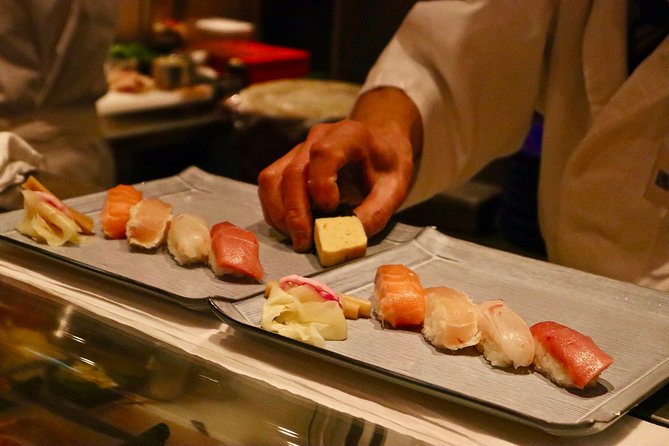
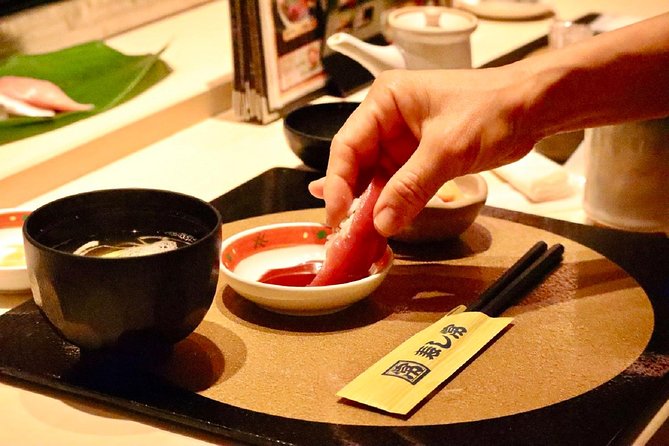
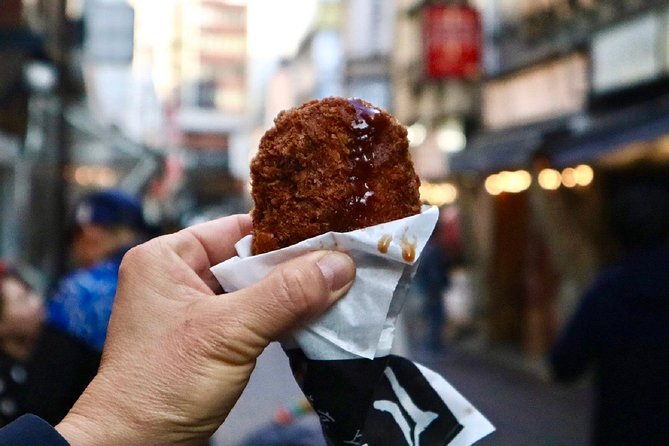
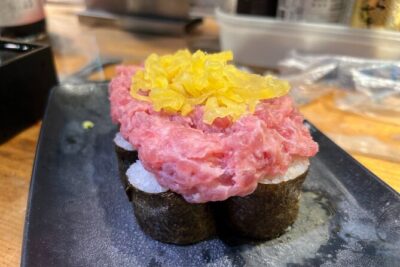
Sushi is included as one of the central food stops. The experience promises fresh, authentic Japanese sushi, but the exact selection can change. Treat this as an introduction to local eating rather than a specialist sushi tasting.
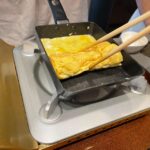
Gyoza is another featured dish. These crisp, flavorful dumplings are a local favorite and provide a useful contrast to sushi. You move from delicate seafood and rice to a hot, savory bite with a crisp outside.
You may also receive croquettes and other food samples. One account of the tour described trying sushi, gyoza, croquettes, yakitori, and more, while another counted six different foods alongside temple and market visits. The advertised total is 10 or more tastings, but portions and items can vary, so do not build your expectations around one exact menu.
The smart approach is to arrive hungry but not starved. With this many stops, eating too quickly at the beginning can leave you struggling later. Pacing yourself is not just polite at a small food stop. It is the only way to enjoy the full afternoon.
Yakitori and the appeal of small portions
Yakitori, grilled chicken on skewers, gives the meal a smoky, savory turn. It is a classic Japanese food that works well on a walking tour because it is easy to serve and simple to understand.
The tour’s food list is strongest when it combines familiar dishes with small discoveries. Sushi and gyoza may already be on your list, while a secret dish or a seasonal item gives the guide room to introduce something you might not order alone.
The word secret is part of the appeal, but it also means you cannot plan the full menu in advance. If you need complete control over ingredients, ask before booking. The operator specifically asks people with dietary requirements to make contact ahead of time and warns that some restrictions may not be possible to accommodate.
A few more Tokyo tours and experiences worth a look


Ueno Park and the cherry blossom setting
After the market and food stops, the route includes Ueno Park, a broad public park in the Taito district. In spring, it is one of Tokyo’s best-known cherry blossom and hanami spots.
The park changes the rhythm of the tour. Instead of staying among shops and food counters, you get open space and a chance to walk off some of the meal. The park also gives your guide room to explain how the area developed from temple grounds into a public destination.
Cherry blossom season is especially popular, but the park is not only a spring attraction. Its presence gives the neighborhood a calmer counterpoint to the market. That mix of chaos and calm is central to Ueno’s character.
The tour still involves walking, and the food may make the route feel longer than the listed three and a half hours. Comfortable shoes are a must. Anyone who finds extended walking difficult should ask the operator for more detail before booking, since the activity is designed as a walking food experience.
A Shinto shrine dedicated to Tokugawa Ieyasu
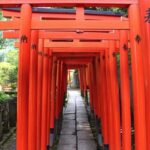
The route includes a Shinto shrine built in 1627 in memory of Tokugawa Ieyasu, founder of the Tokugawa Shogunate. This is not just a quick photo stop. It places the food tour in the political and religious world of old Edo.
A shrine visit also gives you a useful change from commercial Tokyo. You can observe a place of worship, see how carefully the grounds are maintained, and learn why this site matters to the city’s past.
The setting is particularly effective after a market walk. You have just seen food, shopping, and modern transport packed together. Then the route shifts toward ritual and remembrance.
As with any active religious site, follow your guide’s instructions and keep your behavior respectful. The tour is built around culture as well as eating, so the shrine should be treated as more than a backdrop.
A Buddhist temple and a quieter pause
The itinerary also includes a storied Buddhist center with tranquil grounds. The specific temple name is not given, but the stop adds another religious tradition to the walk.
Seeing both a Shinto shrine and a Buddhist temple helps you understand that Japanese culture is not represented by one belief system or one type of building. Your guide can explain the differences in a practical way while you move through the district.
This stop may be the calmest part of the tour. It gives you a break from food counters, traffic, and train noise. If your main goal is eating, you may see it as time away from the next dish. I think it improves the tour by giving the meal a sense of place.
Tea, fruit, beer, and dessert
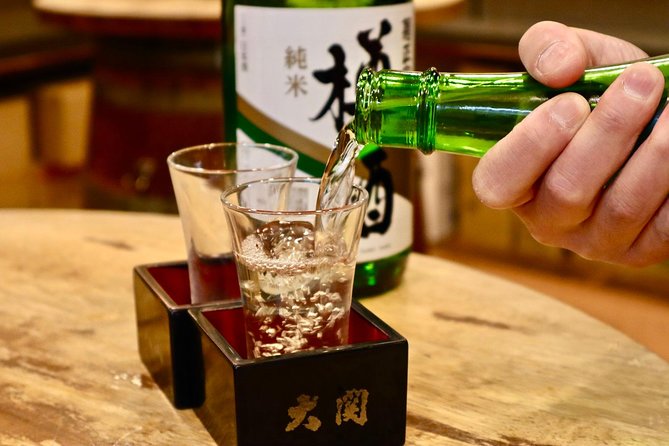
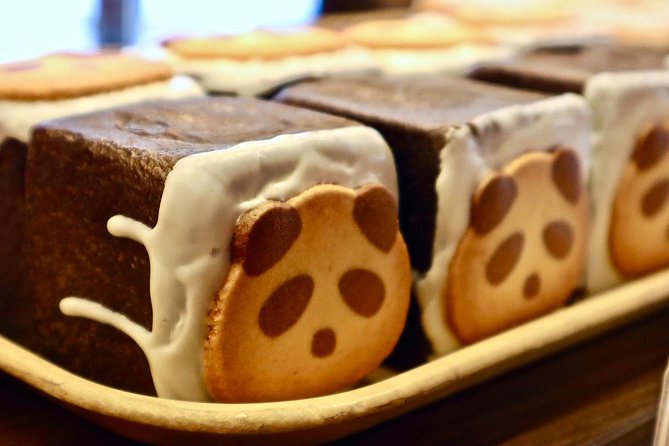
The included drinks and sweets help round out the food itinerary. You receive two different types of tea, water, and one draft beer. Matcha ice cream provides the main dessert, while seasonal fresh fruit adds a lighter note.
The tea tasting is a good chance to compare flavors rather than simply drinking tea as a refreshment. The tour does not specify the exact varieties, so you should expect the selection to depend on the day.
Matcha ice cream is familiar to many visitors, but it still works well as a finish after salty foods. Seasonal fruit keeps the final tastings from becoming too heavy.
The drink allowance is modest: one draft beer, two teas, and water. This is not a bar crawl, and alcohol is not the focus. If you do not drink beer, ask in advance whether an alternative is possible, since no substitute is stated.
What your guide adds to the experience
The guide is the key difference between this and simply shopping in Ueno on your own. The tour includes a passionate English-speaking local guide, and the named guides connected with the experience include Shona, Shonan, Mary, Mari, and Nozomi.
The strongest guide qualities are clear from the tour details. Shona helped keep a group dry during bad weather and brought water bottles on a hot, humid day. Nozomi added food history while also taking an interest in her companion’s culture. Mari was praised for making the afternoon both efficient and informative.
That tells you what to expect at its best: food explanations, local context, answers to questions, and practical care with water and weather. Since the experience is private, you can ask about ingredients, eating customs, and places to return to later.
Guide quality can still vary from person to person. The experience depends on who is assigned and on the day’s food availability. The private format gives you a better chance at conversation, but it does not guarantee a particular guide unless the operator confirms one.
Is $460 per person a fair price?
At $460 per person, this is expensive for a three-and-a-half-hour food tour. The price makes more sense for a private group that values personal attention, a local English-speaking guide, and a meal-sized sequence of tastings rather than a quick sampling walk.
You are paying for more than the listed food. The experience includes sushi, gyoza, yakitori, fruit, matcha ice cream, tea, beer, water, and a secret dish, plus the time spent navigating Ueno’s market, park, shrine, and temple.
Still, the value depends on your priorities. If you are comfortable finding restaurants and markets on your own, $460 may feel hard to justify. If you have limited time in Tokyo and want one organized afternoon that joins food and culture, the private format may be worthwhile.
Group discounts are available, which could change the calculation for a small party. Compare the total group cost rather than looking only at the per-person figure. The activity is also booked an average of 163 days ahead, so popular dates may require early planning.
Weather, walking, and practical planning
The start time is noon, and the tour returns to Ueno Station. Hotel pickup and drop-off are not included, so you must make your own way to the meeting point and back.
Wear comfortable walking shoes. The route includes markets, public spaces, religious sites, and food stops, so you should expect to be on your feet for most of the afternoon.
The tour requires good weather. If poor conditions lead to cancellation, you can receive a different date or a full refund. A minimum number of participants is also required, and the operator offers a different date, another experience, or a full refund if that minimum is not met.
You can cancel for a full refund up to 24 hours before the local start time. Changes or cancellations inside that window are not accepted and are not refunded.
Who should book this Ueno food tour?
I would point this tour toward first-time Tokyo visitors who want help choosing what to eat. It is also a good match for couples, families, and small groups who prefer a private outing over a large scheduled walk.
The experience suits people who enjoy variety. You get food, history, religion, shopping, and neighborhood scenes in one route. It can also work well if your Tokyo schedule is tight, since one afternoon covers several Ueno highlights efficiently.
I would hesitate to recommend it to people with strict dietary needs until they have written to the operator. The menu may change, and some restrictions cannot be handled. I would also steer budget-minded visitors toward exploring Ueno independently.
Should you book it?
Book this tour if you want a generous meal, a private guide, and a close look at Ueno beyond its famous park. The best reason to choose it is the combination of authentic everyday food and cultural stops, not any single dish.
Skip it if $460 per person feels excessive, if you need a fully fixed menu, or if you prefer to spend an afternoon at your own pace. For everyone else, the tour offers a practical way to get oriented in Ueno, eat far more than a snack, and leave with a better sense of how food and old Tokyo share the same streets.
FAQ
How long does the private Tokyo food tour last?
The tour lasts approximately 3 hours and 30 minutes. It starts at noon and ends back at the meeting point.
Where does the tour start?
The meeting point is Ueno Station, at 7 Chome-1 Ueno, Taito City, Tokyo 110-0005, Japan.
Does the tour include hotel pickup or drop-off?
No. Hotel pickup and hotel drop-off are not included. You need to reach Ueno Station independently.
What food is included?
Included tastings can feature fresh sushi, gyoza, yakitori, seasonal fruit, matcha ice cream, and a secret dish. The food and itinerary can change based on availability, weather, and other conditions.
Are drinks included?
Yes. The experience includes one draft beer, two different types of tea, and water.
Is this a private activity?
Yes. Only your own group takes part in the activity.
Can dietary restrictions be accommodated?
You should contact the operator before booking with your dietary requirements. Some restrictions may not be possible to accommodate because of the way the food experience is planned.
What happens if the tour is canceled because of bad weather?
You will be offered a different date or a full refund if poor weather causes the tour to be canceled. Free cancellation is also available when you cancel at least 24 hours before the local start time.
More Private Tours in Tokyo



More Food Experiences in Tokyo
More Tokyo Food Tours in Tokyo
More tours in Tokyo we've reviewed




Tokyo Food Tours, compared.
 ★ 5.0Tokyo: Shinjuku Food Tour (13 Dishes at 4 Local Eateries)From $86
 ★ 4.9Tokyo: Shinjuku Food Tour (15 Dishes and 4 Eateries)From $853 hours
 ★ 5.0Best of Shinjuku: Izakaya Food Tour (4 Stops, 14+ Tastings)From $92
 ★ 5.0Tokyo Night Foodie Tour in Shinjuku – Seasonal Sushi, Wagyu BeefFrom $111
 ★ 5.0Eat and Drink Like a Local: Tokyo Ueno Food Tour-Taverns&RamenFrom $95
 ★ 5.0Tokyo: Shibuya Food Tour (13 dishes and 4 Eateries)From $77