
Reviewed · MT FUJI DAY TRIPS
Private Hakone Tour – View of Mt. Fuji, Nature and Culture
Hakone gives you a fine break from Tokyo, and this private day tour packs the region’s best-known sights into one long, well-planned outing. You’ll ride the bullet train to Odawara, cross Lake Ashi, ride the Hakone Ropeway, visit Hakone Shrine, and finish with either art or a hot spring.
I like the private format, since your guide can explain Shinto customs, help with train connections, and answer questions without a larger group slowing you down. I also like the mix of transport: bullet train, local railway, sightseeing boat, ropeway, and mountain cable car. It turns the journey itself into part of the experience.
The catch is the pace. You may walk 9 to 12 kilometers, climb stairs, handle uneven paths, and spend about 11 hours on the move. At $867 per person, this is a major expense, so it makes the most sense if you value personal guiding and want to see Hakone in one carefully managed day.
In This Review
- Key points to know before booking
- Why this private Hakone day works
- Leaving Tokyo by bullet train
- Hakone-Yumoto and the road into the mountains
- Hakone Shrine and the red torii gate
- Crossing Lake Ashi by sightseeing boat
- Riding the Hakone Ropeway to Owakudani
- From Gora to the mountain cable car
- Choosing between art and an onsen
- A short final stop in Hakone-Yumoto
- What the $867 price really buys
- Walking, weather, and other practical matters
- Who should book this Hakone tour?
- Should you book it?
- FAQ
- How long is the private Hakone tour?
- Where does the tour start?
- Is transportation from Tokyo included?
- Does the tour guarantee views of Mt. Fuji?
- What can I choose for the final major stop?
- Is the tour private?
- How much walking is involved?
- Are food and drinks included?
- What happens if bad weather cancels the tour?
Key points to know before booking
- Mt. Fuji views depend on the weather: Lake Ashi and the Hakone Ropeway offer excellent viewing spots, but clouds can hide the mountain.
- Several types of transport are included: You’ll use the Shinkansen, local trains, buses, a cruise boat, the ropeway, and the Hakonetozan Cable Car.
- You choose your final major stop: Pick the Hakone Open-Air Museum or a traditional Japanese onsen.
- The day involves serious walking: Plan for roughly 9 to 12 kilometers, stairs at Hakone Shrine, slopes, and uneven nature paths.
- Owakudani adds a volcanic setting: You can see sulfurous fumes and try the famous black eggs cooked in hot springs.
- The private guide is useful in Tokyo and Hakone: Guides such as Yasu can help with complicated station connections as well as local sights.
Why this private Hakone day works
Hakone is close enough to visit from Tokyo, but it is not simple to organize. The area has a scattered set of attractions, several different transport systems, and weather that can change your priorities quickly.
This tour removes much of that planning work. Your guide meets you at your hotel, helps you reach Shinagawa or Tokyo Station, and gets you onto the bullet train for Odawara. From there, the day follows a broad loop through Hakone before returning to Tokyo by train.
The private setup matters most during transfers. Hakone’s trains, buses, cable car, and ropeway each serve different parts of the region. If you are not comfortable navigating Japanese stations, a guide can save time and help you stay calm when the day gets busy.
You are not simply riding from sight to sight, though. The route includes religious history at Hakone Shrine, volcanic scenery at Owakudani, mountain views from the ropeway, and a choice between modern art and bathing culture. That range gives the day more depth than a simple Mt. Fuji photo stop.
A few more Tokyo tours and experiences worth a look

Leaving Tokyo by bullet train
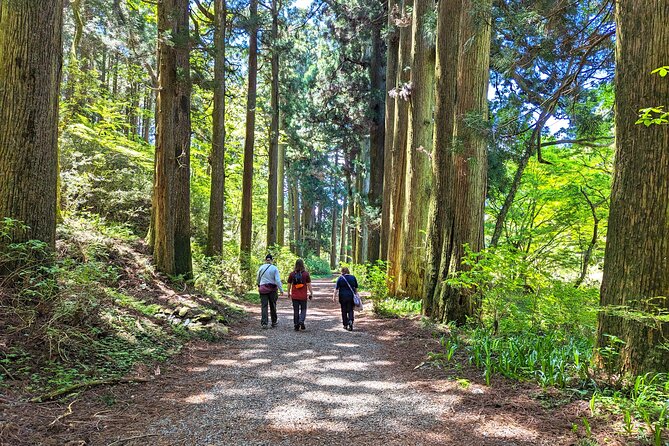
The morning begins at your hotel lobby, generally between 7:30 and 8:30 a.m., depending on where your hotel is located. You and your guide then travel to either Shinagawa or Tokyo Station by subway, with a taxi available if you prefer. The cost of that initial subway or taxi transfer is not clearly included in the tour price, so ask your guide about the arrangement at the start.
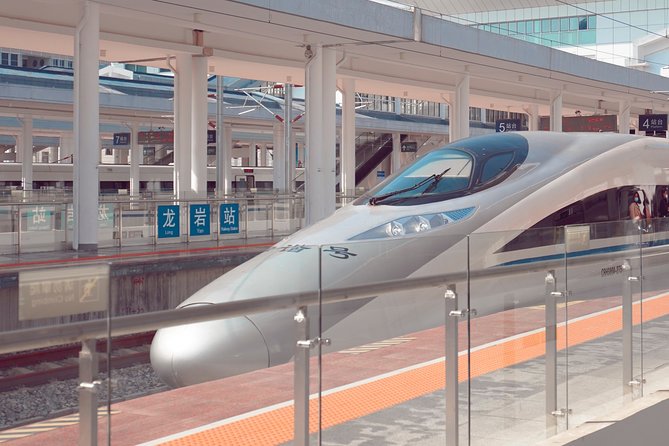
The Shinkansen takes you to Odawara, the gateway to Hakone and the Fuji-Hakone-Izu National Park. This is one of the tour’s practical strengths. Instead of spending a large part of the morning on slower connections from central Tokyo, you cover the first major stretch quickly.
The tour ends at Tokyo or Shinagawa Station rather than at your hotel. Your guide can help you arrange a taxi or subway ride back. If you need help with that final transfer, tell the guide before the tour ends.
Hakone-Yumoto and the road into the mountains
At Odawara, you transfer to a local train for Hakone-Yumoto, a hot spring town and one of the main transport centers in the area. The ride to Hakone-Yumoto takes about 30 minutes.
This stop is less about sightseeing than getting you properly into Hakone. It is useful to understand that the region is not one compact attraction. Hakone-Yumoto, Lake Ashi, Owakudani, Gora, and the Open-Air Museum are spread through the mountains, so the sequence of trains and cable transport is part of the day’s structure.
You will return to Hakone-Yumoto later for about 30 minutes of souvenir shopping and a final look around. That short pause may appeal to you if you want local snacks or small gifts, but it is not a long independent shopping session.
Hakone Shrine and the red torii gate
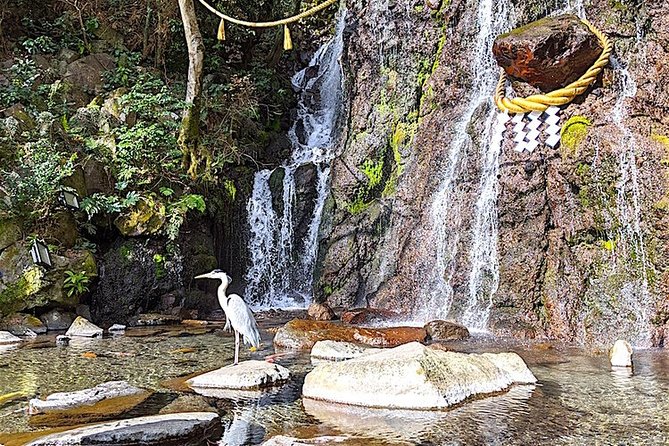
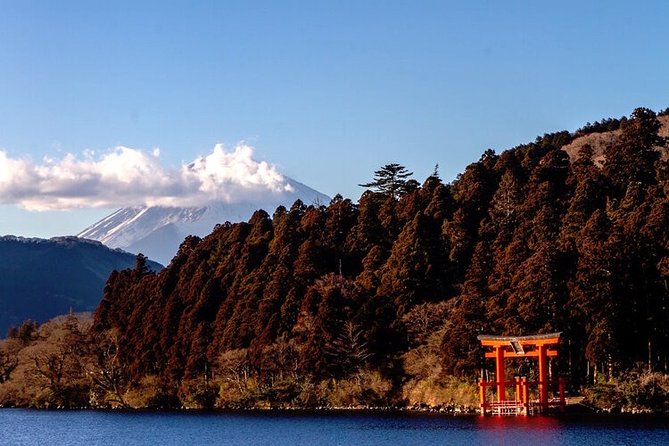
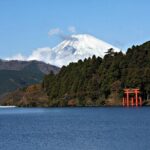
Hakone Shrine dates to 1667 and is best known for its red torii gate in the water of Lake Ashi. The shrine gives the day a cultural anchor before the focus shifts to boats, trains, and volcanic scenery.
Your guide explains Shinto, Japan’s indigenous religious tradition, and the role of the shrine. That context makes the visit more meaningful than simply stopping for a photograph. Take time to notice the approach to the shrine, which includes stairs and uneven ground.
The walking here is manageable for many active visitors, but it is not a flat, effortless stop. If stairs are difficult for you, or you need a mobility aid, this part of the route deserves careful thought. The tour requires you to walk unaided and manage steps, slopes, and changing surfaces.
Crossing Lake Ashi by sightseeing boat
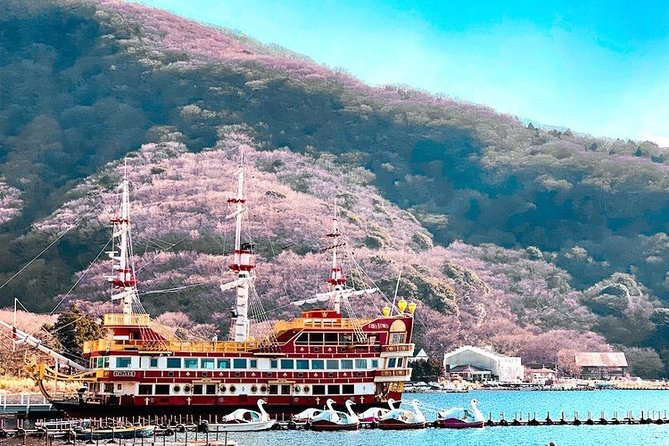
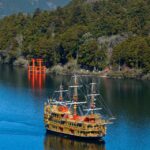
After the shrine, you board a sightseeing cruise on Lake Ashi. The boat ride lasts about 25 minutes and provides a different view of Hakone’s wooded slopes and the surrounding mountains.
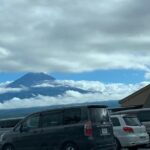
On a clear day, this is one of the best places on the route to look for Mt. Fuji. The view is weather-dependent, and that point deserves emphasis. Hakone can be beautiful even when the mountain is hidden, but you should not book this tour expecting a guaranteed Fuji photograph.
The cruise also gives your feet a short rest before the next mountain transport. Since the day includes substantial walking, these seated stretches matter. Keep your camera ready, but allow yourself to watch the lake rather than treating the boat only as a photo platform.
A few more Tokyo tours and experiences worth a look

Riding the Hakone Ropeway to Owakudani
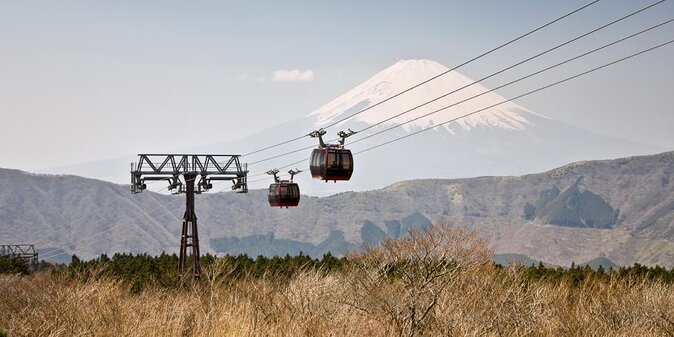
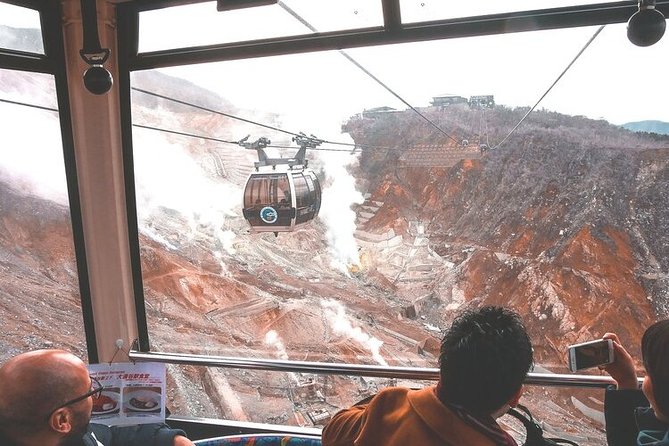
The Hakone Ropeway carries you up Mt. Hakone and gives you another chance to see Mt. Fuji. The listed ride segment is about 10 minutes, though the larger route through the ropeway system includes the trip toward Gora.
The ropeway is one of the most memorable parts of the day because it changes your view from ground level to high above the mountain area. Again, visibility depends on the weather. If clouds cover Fuji, you still have the mountain setting and volcanic zone ahead.
Your main stop is Owakudani, known as the valley of hell. It is an active volcanic area where sulfurous fumes rise from the ground. You can also try the famous black eggs, cooked in the local hot springs. These eggs are included, while other food and drinks are not.
Owakudani is a strong contrast to the shrine and lake. You move from religious tradition and calm water into a place shaped by heat, gas, and volcanic activity. The stop lasts about an hour and a half, giving you time to see the area and sample the eggs without rushing through it.
Because the fumes are part of the setting, this may not be the right stop for everyone. The supplied tour details do not state special health restrictions, so you should consider your own comfort around sulfurous air and active volcanic ground.
From Gora to the mountain cable car
After Owakudani, you continue by ropeway to Gora Station. There you transfer to the Hakonetozan Cable Car, a railway built into the mountains.
The changing transport is a real pleasure for people who enjoy railways and engineering. You are not stuck on a coach for the whole day. Each section gives you a different way to see Hakone, and your guide handles the connections.
It can also make the day feel busy. You need to get on and off buses and trains, walk through stations, and manage slopes. The tour requires moderate physical fitness, so comfortable shoes are essential. I would also carry water and keep your day bag light, since you will be moving for hours.
Choosing between art and an onsen
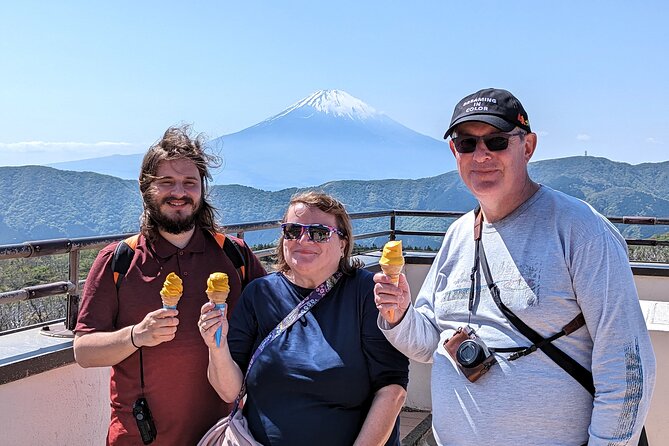
For the final major stop, you choose between the Hakone Open-Air Museum and a traditional Japanese onsen. This is a useful choice because the two experiences suit very different moods.
The Open-Air Museum places sculpture in an outdoor setting, combining art and nature. You will see works displayed across the grounds rather than inside a standard city gallery. The visit lasts about an hour and a half, which gives you enough time to walk around and take in the larger works.
Choose the museum if you want culture without committing to bathing, or if you prefer a more familiar sightseeing activity. It also works well if you enjoy art and want a quiet contrast to the busy transport portions of the day.
Choose the onsen if you want a more traditional Japanese experience and a chance to relax after the long route. The tour information identifies it as a traditional Japanese hot spring, but it does not name the specific facility or explain its bathing rules. Ask your guide about etiquette and what you need before entering.
The choice is important because this is the point where the tour shifts from sightseeing to personal preference. You do not need to force yourself into an onsen if public bathing is not for you, and you should not choose the museum if soaking is the experience you really want.
A short final stop in Hakone-Yumoto
The day returns to Hakone-Yumoto for about 30 minutes. This is a modest ending, but it gives you a chance to browse souvenir shops before the return journey.
Do not expect a long meal break here. Food beyond the black eggs is not included, and drinks are extra. Since the tour is long, consider asking your guide when you can buy food during the route. A small snack may be useful, especially if you are not planning a full meal.
From Hakone-Yumoto, you take a local train back to Odawara and then board the bullet train to Tokyo. The guide accompanies you through the return connections and finishes at Tokyo or Shinagawa Station.
What the $867 price really buys
At $867 per person, this is not a budget day trip. The value depends on how much you would pay for private attention, included transport, and a day without route planning.
The price includes round-trip bullet train travel between Tokyo and Odawara, Hakone trains and buses, the Lake Ashi cruise, the ropeway, the Hakonetozan Cable Car, admission to the Open-Air Museum or onsen, the black eggs, guide service, fees, and taxes. Those included elements add up, particularly when you consider that the tour is private and no one outside your group joins.
The tour also saves you from working out a complicated Hakone route on your own. That is especially valuable if you are nervous about Japanese rail stations or want a guide to explain what you are seeing rather than simply point out the next train.
Still, the price is harder to justify if you are comfortable using public transport and would rather spend more time at fewer places. You are paying for convenience and a private guide, not for luxury dining, a private vehicle all day, or guaranteed Mt. Fuji weather.
At the time of the supplied information, the tour is often booked about 88 days ahead. That suggests you should plan early if your Tokyo dates are fixed, especially because weather can affect the experience.
Walking, weather, and other practical matters
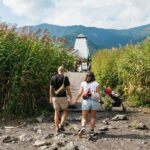
You should be prepared to walk approximately 9 to 12 kilometers over the course of the day. The route includes stairs at Hakone Shrine, uneven nature paths, slopes, station access, and getting on and off buses.
Service animals are allowed, and the route is near public transportation. The tour requires you to walk unaided, so it is not designed for someone who needs regular assistance with stairs or transfers.
Weather is the biggest outside factor. Mt. Fuji views from Lake Ashi and the ropeway are specifically weather-dependent. If poor weather causes the tour to be canceled, you are offered another date or a full refund. The booking itself is otherwise non-refundable and cannot be changed for any reason, so read those terms carefully before paying.
Gratuities are optional and not included. Food other than the black eggs and all drinks are also extra. Wear supportive shoes, bring a light layer, and keep enough room in your schedule for a full day that starts early and ends at a Tokyo station.
Who should book this Hakone tour?
I would recommend it to a couple, family, or small private group that wants to see many parts of Hakone in one day and does not want to manage the transport alone. It suits people who value explanation, flexibility within a fixed route, and help with Tokyo’s complicated rail connections.
It is also a good fit if you want more than a single Mt. Fuji viewpoint. The shrine, lake cruise, volcanic valley, mountain railway, and final museum or onsen choice create a varied day.
I would hesitate if you want a slow holiday pace, dislike long walks, or are mainly booking for a guaranteed Fuji view. The mountain may be hidden, and the itinerary gives you a lot to cover.
The strongest practical reason to book is the guide. One review specifically praised Yasu for making the Tokyo subway easier to handle. That detail points to the kind of help that can matter most here: not just facts about Hakone, but steady support through the stations and transfers.
Should you book it?
Book this private Hakone tour if you want a full day away from Tokyo with nearly every major transport and admission cost arranged in advance. The private guide, included rail travel, and choice of museum or onsen make the high price easier to understand for visitors who value comfort and structure.
Skip it if you prefer to travel slowly, want to control every stop, or need a guaranteed view of Mt. Fuji. For active visitors who want nature, culture, volcanic scenery, and a little rail adventure in one day, this is a strong, demanding, high-cost choice.
FAQ
How long is the private Hakone tour?
The tour lasts approximately 11 hours.
Where does the tour start?
Your guide meets you in your hotel lobby, generally between 7:30 and 8:30 a.m., depending on your hotel’s location. The stated start time is 7:30 a.m.
Is transportation from Tokyo included?
Round-trip bullet train travel between Tokyo and Odawara is included. The route also includes Hakone local trains, buses, the Lake Ashi sightseeing cruise, the Hakone Ropeway, and the Hakonetozan Cable Car.
Does the tour guarantee views of Mt. Fuji?
No. Views of Mt. Fuji from Lake Ashi and the Hakone Ropeway depend on the weather.
What can I choose for the final major stop?
You can choose between the Hakone Open-Air Museum and a traditional Japanese onsen. Entrance to one of these options is included.
Is the tour private?
Yes. Only your group participates, and no other guests join the activity.
How much walking is involved?
You should be prepared to walk approximately 9 to 12 kilometers during the day. The route also includes stairs, slopes, uneven ground, and getting on and off buses.
Are food and drinks included?
The legendary black eggs at Owakudani are included. Other food and drinks are not included.
What happens if bad weather cancels the tour?
If the tour is canceled because of poor weather, you are offered a different date or a full refund. The experience is otherwise non-refundable and cannot be changed for other reasons.
More Private Tours in Tokyo


More Hakone Day Trips in Tokyo
More Mt Fuji Day Trips in Tokyo
More tours in Tokyo we've reviewed











Mt Fuji Day Trips, compared.
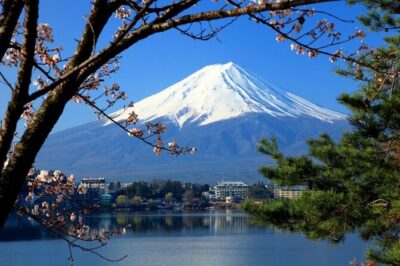 ★ 5.0Mt Fuji and Hakone 1-Day Bus Tour Return by Bullet TrainFrom $163
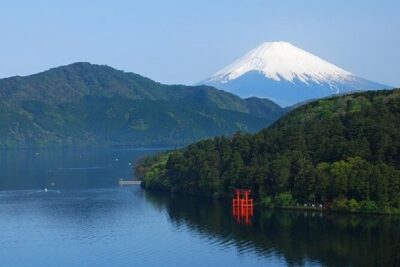 ★ 4.0Mt Fuji & Hakone Cruise, Drum Show Bullet Train 1 Day from TokyoFrom $149
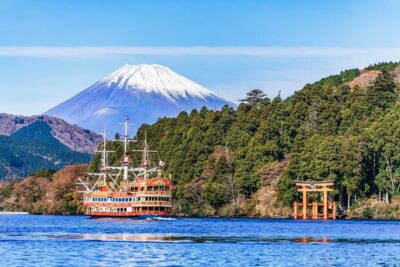 ★ 4.4Tokyo Mt Fuji 5th St & Hakone Cruise Bus Tour w/Bullet TrainFrom $15410 hours
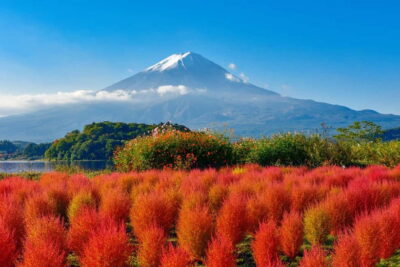 ★ 4.5From Tokyo: Mount Fuji Full-Day Sightseeing TripFrom $6810 hours
 ★ 4.7Tokyo: Mt. Fuji Tour, Hakone Ropeway, Owakudani, Lake AshiFrom $5410 hours
 ★ 4.4Tokyo:Mt.Fuji,Kawaguchiko Oishi Park,Arakurayama Sengen ParkFrom $5410 hours