
Reviewed · TEMPLES & MEDITATION
Personal prayer at Meiji Shrine!
At Meiji Shrine, the main event is not simply seeing the grand torii or taking a photo beside the sake barrels. You write down a personal wish, then sit in a tatami room while priests purify the space, musicians perform gagaku, and a shrine maiden dances. I like the hands-on prayer ritual and the chance to see parts of Shinto ceremony that ordinary shrine visits do not reveal. I also like that a guide explains the customs before you take part. The main drawback is cost: the $98 tour price does not include the shrine’s additional prayer fee of at least 5,000 yen.
This is a private activity lasting about 90 minutes, so you get direct help rather than a large-group lecture. The guide translates the Japanese prayer form and helps with the process, but reliable communication matters. One booking ended badly after an eight-minute delay and unanswered calls, while another described the prayer as a memorable traditional experience despite an interpreter becoming ill. Arrive early and keep your phone available.
In This Review
- Key points to know before booking
- Why this Meiji Shrine visit feels different
- Meeting under the great torii
- Walking through the torii with proper manners
- Purifying your hands and mouth
- Filling out your personal prayer form
- Sitting in the Kagura Hall ceremony
- Receiving sacred offerings and sake
- What the $98 price really covers
- Timing, transport, and group size
- Who will appreciate this prayer experience
- Should you book Personal Prayer at Meiji Shrine?
- FAQ
- How long does the Meiji Shrine prayer tour last?
- Where does the tour meet?
- Where does the tour end?
- Is the shrine prayer fee included in the $98 price?
- What can I pray for?
- Are the prayer forms available in English?
- What happens during the personal prayer?
- Can I cancel for a full refund?
Key points to know before booking
- Your prayer can focus on health, family safety, travel, marriage, business, childbirth, or academic success.
- Gagaku court music and a miko dance are part of the formal prayer ceremony.
- The guide helps translate the Japanese application form and explains shrine manners.
- You receive an ofuda, seaweed offered to the deities, and a small serving of sacred sake.
- The 5,000-yen personal prayer fee is extra, as are privately purchased amulets.
- You must be comfortable sitting upright during the ceremony.
Why this Meiji Shrine visit feels different
Meiji Shrine is free to enter and easy to visit on your own. You can walk beneath its torii, wash at the purification fountain, offer a coin, and perform the familiar two bows, two claps, and one bow. That kind of visit gives you a taste of Shinto, but it can leave you wondering what the buildings, gestures, and offerings mean.
This tour adds a personal prayer inside the shrine’s Kagura Hall. You are not only looking at a ritual from the outside. You write down your wish and take part in a ceremony involving priests, sacred objects, music, dance, food, and drink.
That difference matters. Shinto is often encountered through small acts of respect: bowing at the torii, walking on the proper side of the approach, washing your hands and mouth, and approaching the altar with care. The guide gives those actions a purpose instead of leaving you to copy the nearest person.
The tour is also private. Only your group takes part, which makes it easier to ask questions and get help with the Japanese paperwork. It does not turn the ceremony into a private performance, since the prayer takes place within the shrine’s established religious setting, but it does make the experience easier to follow.
A few more Tokyo tours and experiences worth a look

Meeting under the great torii
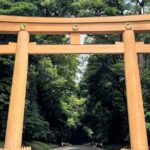
The meeting point is beneath the second torii gate at the entrance to Meiji Shrine, near 1-1 Yoyogikamizonochō in Shibuya. The first part takes about 15 minutes.
This is a useful start because the torii is more than a grand entrance for photographs. Your guide points out its particular features and explains how to approach and pass through it. You will also see displays of sake barrels and wine barrels along the approach, plus a waka poem displayed near the front.
Take your photos here. The meeting point gives you time to get comfortable with the guide before the more formal part begins. If you need help framing a picture, the guide can assist.
The practical advice is simple: arrive early. The tour’s poor rating appears to have come from a meeting problem after a guest was eight minutes late and could not reach the greeter. The provider apologized and explained that the schedule had been misunderstood and a serious personal issue delayed the response. That explanation does not erase the inconvenience, so give yourself a generous cushion.
Walking through the torii with proper manners
From the second torii, you walk toward the third torii and the inner shrine area. This section takes about 15 minutes.
The guide explains how to walk along the approach and how to pass through the gates. You will also hear about the waka poems and buildings along the way. The walk is not rushed, and there are several spots where you can stop for pictures.
The value here is not that there is a complicated test you must pass. It is that small errors can make you feel awkward at a religious site. Having the guide explain the expected gestures lets you participate with more confidence and respect.
You may notice that the approach becomes more ceremonial as you continue inward. The tour uses this walk to prepare you for the prayer rather than treating the shrine as a backdrop. I like that progression. You first learn how to enter, then how to purify yourself, then how to worship, and finally how to join the personal ceremony.
Purifying your hands and mouth
At the purification fountain, the guide shows you how to cleanse your hands and mouth before entering the main shrine area. Allow about 10 minutes for this stop.
You then experience the standard form of worship used by the general public. You offer a coin, bow twice, clap twice, and finish with one bow. The guide explains where photography is not allowed, an important point since the shrine is both a sacred site and a major Tokyo attraction.
This short section helps put the later prayer in context. You first make a simple offering as any visitor might. The personal prayer then becomes a more formal and focused act.
Follow the instructions rather than trying to imitate every person nearby. The guide is there to correct the timing and explain the reason for each step. Keep your camera away when asked. A respectful visit is worth more than one extra photograph.
Filling out your personal prayer form
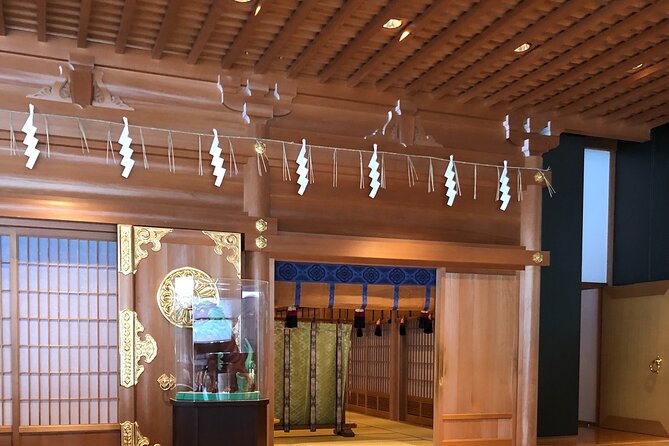
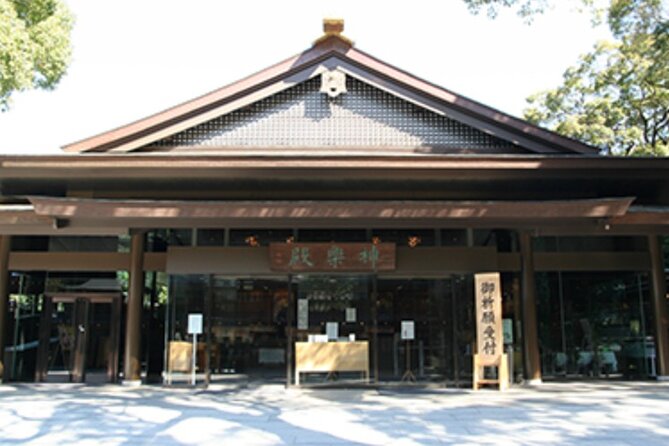
The main formal part begins at Meiji Jingu’s Kagura Hall. At the entrance, you complete an application form and choose the intention for your prayer.
Possible wishes include:
- World peace
- Household safety
- Safe travel
- Recovery from illness
- Business success
- Finding a good match
- Safe childbirth
- Academic achievement
You also provide your name and address. The forms are in Japanese, but translation and help with the application are included in the tour price. This is one of the clearest reasons to book with a guide. You do not have to guess what each section means or worry that a small mistake will derail the process.
After you complete the form, you submit it to a shrine priest with the prayer offering. The personal prayer fee begins at 5,000 yen and is paid directly to the shrine. It is not included in the advertised $98 price.
That extra amount should be part of your decision from the beginning. For a couple or family, the total can rise quickly if each person wants a separate prayer. On the other hand, the added fee covers the actual shrine ceremony, not a souvenir or a vague promise of a blessing. You are paying for a formal religious service with a specific prayer intention.




Sitting in the Kagura Hall ceremony
The ceremony lasts about 20 minutes and takes place at the altar in the Kagura Hall. You sit in a tatami room while the shrine priests perform the prayer.
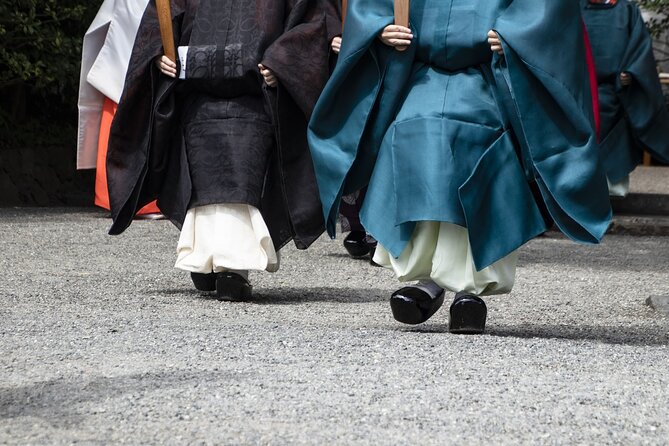
A drum signals the start. Priests in traditional clothing use sacred tools to purify the space and the participants. The ceremony then includes gagaku, traditional Japanese court music played on old-style drums and flutes. Gagaku is recognized by UNESCO as an Intangible Cultural Heritage.
A miko, or shrine maiden, performs a ceremonial dance. Her costume and movements bring a visual form to the music and prayer. This is not a stage show added for tourists. It is part of the shrine’s formal religious practice, and you should treat it as a quiet ceremony rather than an entertainment program.
The combination of sound, movement, and stillness gives the prayer its force. You may not understand every word, but the sequence is easy to follow: purification, music, dance, and prayer. The guide’s earlier explanation helps you understand what is happening without constant translation during the ceremony.
There is one physical issue to consider. The tour is not recommended if you have pain sitting upright. The ceremony takes place on tatami, and the listing does not promise chairs or another seating arrangement. If straight sitting is difficult, ask before booking.
Receiving sacred offerings and sake
After the prayer, allow about 10 minutes for the closing ritual. You receive sacred offerings known as shinsen, often in the form of nori, or seaweed, to take home.
You also receive a small cup at the exit. A shrine maiden pours omiki, sacred sake offered to the deities, for you to drink on the spot. The custom is based on the belief that food and drink presented to the deities receive spiritual power, which is then shared with participants.
This ending gives the ceremony a physical conclusion. You leave with something connected to the prayer, rather than only a photograph or a paper ticket. The ofuda is the most important keepsake. It is described as an amulet carrying your wishes along with the power of the day’s prayer.
The tour also includes the chance to buy other amulets privately, but those purchases are not included. You do not need to add them to receive the main ceremony and ofuda.
What the $98 price really covers
At $98 per person, this is not a low-cost Meiji Shrine visit. The shrine grounds themselves do not require an admission ticket, and an independent visitor can see the torii, approach, purification fountain, and public worship area without paying for a tour.
The price makes more sense if you want help with three things:
- Understanding Shinto etiquette
- Completing the Japanese prayer application
- Taking part in the formal Kagura Hall ceremony
Translation and application-form assistance are included. The activity is private, which adds value if you want to ask questions or need help at each step. The guide also helps with the practical details, including where photography is prohibited.
The shrine prayer fee is separate and starts at 5,000 yen. Amulets bought on your own cost extra as well. Set aside money for those charges before you arrive, and treat the $98 as the guide and arrangement cost rather than the full cost of the experience.
This is best value for someone who wants a meaningful religious encounter, not someone who only wants quick photos at Meiji Shrine. If your main aim is sightseeing, you can visit the shrine freely and spend the money elsewhere.
Timing, transport, and group size
The activity lasts approximately 90 minutes. That is long enough to include the approach, etiquette lesson, public worship, application, ceremony, and closing offerings without turning the visit into a full-day commitment.
The shrine is near public transportation, and the stated meeting point is the big torii. Your exact end point is at the Kaguraden exit, where the group disperses after the prayer. Plan your next activity from that exit rather than assuming you will finish at the original meeting point.
Only your group participates, so the experience is private. Most people can take part, but you should be comfortable with the walking, upright sitting, and ceremony. The activity also requires good weather. If poor weather causes cancellation, you are offered another date or a full refund.
The mobile ticket makes the booking easy to carry, but the more important item is your meeting information. Keep the guide’s contact details accessible and arrive early enough that a delayed train or crowded station does not put the appointment at risk.
Who will appreciate this prayer experience
I would recommend it to you if you want more than a quick stop at one of Tokyo’s best-known shrines. It suits visitors who are curious about Shinto, interested in traditional music and dance, or looking for a personal moment connected to health, family, safe travel, study, or another clear wish.
It is also a good fit if you cannot read Japanese. The application forms are only in Japanese, and the included translation support removes a real barrier.
Families and small private groups may like the personal format, provided everyone can sit upright and behave quietly during the ceremony. The private arrangement also helps if one member of your group has many questions.
I would hesitate if you dislike formal ritual, do not want to pay an additional shrine fee, or are mainly looking for sightseeing photographs. The ceremony is quiet and structured. You should not expect a flexible walk where you can skip parts at will.
The current rating is 3.7 from three reviews, so the record is mixed rather than settled. One five-star experience praised the traditional blessing and described the activity as more impressive than expected, even with an interpreter illness affecting communication. The one-star experience focused on a serious meeting and contact failure. That makes punctuality and day-of communication especially important.
Should you book Personal Prayer at Meiji Shrine?
Book it if you want to take part in a real Shinto prayer and you value a guide who can explain etiquette, translate the form, and lead you through the ceremony. The gagaku, miko dance, purification, sacred sake, and ofuda make this far more substantial than a standard shrine visit.
Skip it if you only want to see Meiji Shrine, if sitting on tatami is painful, or if the total cost feels high once you add the 5,000-yen prayer fee. For the right visitor, this offers a rare look at a working religious tradition. For a casual sightseer, the free shrine grounds may be enough.
FAQ
How long does the Meiji Shrine prayer tour last?
The experience lasts approximately 1 hour and 30 minutes.
Where does the tour meet?
You meet under the big second torii gate at Meiji Shrine, near 1-1 Yoyogikamizonochō, Shibuya, Tokyo 151-8557.
Where does the tour end?
The group disperses at the exit of the Kaguraden after the prayers are completed.
Is the shrine prayer fee included in the $98 price?
No. The personal prayer fee is paid directly to the shrine and starts at 5,000 yen. Amulets and other private purchases also cost extra.
What can I pray for?
You can select intentions such as world peace, household safety, travel safety, recovery from illness, business success, finding a good match, safe childbirth, or academic achievement.
Are the prayer forms available in English?
The forms are available only in Japanese. The guide provides translation and application-form assistance, which is included in the tour price.
What happens during the personal prayer?
Priests purify the participants and the place, gagaku musicians perform traditional court music, and a shrine maiden performs a dance. The ceremony takes place in a tatami room.
Can I cancel for a full refund?
Yes, if you cancel at least 24 hours before the experience start time. Cancellations or changes made less than 24 hours in advance are not refunded or accepted. If poor weather causes the activity to be canceled, you are offered another date or a full refund.
More Temples & Meditation in Tokyo
More tours in Tokyo we've reviewed






Temples & Meditation, compared.
 ★ 4.7Tokyo: Meiji Shrine, Asakusa, Skytree Bus Tour and CruiseFrom $12210 hours
 ★ 4.8Tokyo: Asakusa Walking Tour with Sensoji Temple VisitFrom $222 hours
 ★ 4.6Nikko: Kegon Falls, Lake Chuzenji & Toshogu TempleFrom $8911 hours
 ★ 4.5Tokyo: Kamakura & Enoshima Day Trip including Temple TicketsFrom $589 hours - 570 minutes
 ★ 4.5Tokyo: Nikko Toshogu Shrine and Kegon Waterfall TourFrom $8410h 30m
 ★ 4.5Tokyo Panoramic 1 Day: Meiji Shrine, Asakusa, Odaiba and SKYTREE®From $85