
Reviewed · PRIVATE
Mochi Making at a Private Studio in Tokyo
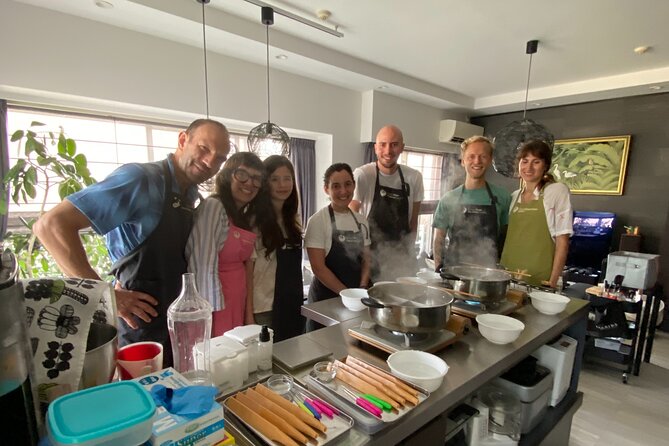
Mochi making here is hands-on, varied, and pleasantly personal. In about two hours, you work with a local wagashi instructor in a private studio near Meguro Station, learning both sweet treats and savory grilled mochi with soy sauce and nori. Strawberry daifuku and three-color dango give you the photogenic moments, while the grilled mochi shows how broad this Japanese staple can be.
I like the small-group format, which makes it easier to follow each step and ask questions. I also like the cultural introduction, English recipe sheet, and chance to talk with instructors such as Michiko, Ayumi, Owa, Waka, and Miho about daily life and places to visit in Tokyo. The main consideration is that mochi is sticky, hands-on food, and some varieties may not suit every taste. The class also requires at least two people per booking unless you reserve a private class.
In This Review
- Key points to know before booking
- Starting near Meguro Station
- A short lesson on mochi and Japanese customs
- Making strawberry daifuku with fresh filling
- Shaping three-color dango on skewers
- Learning warabi mochi and seeing mochi ice cream
- The savory surprise: grilled mochi with soy and nori
- Sitting down with tea and your finished treats
- How the two-hour schedule feels
- Value at $79.26 per person
- Who will enjoy this class most
- Practical details before you go
- Should you book the Meguro mochi class?
- FAQ
- Where does the mochi-making class take place?
- How close is the studio to public transportation?
- How long does the class last?
- Can I choose a morning or afternoon session?
- What types of mochi will I make?
- Is mochi ice cream included?
- Is the class taught in English?
- What drinks are included?
- What is the minimum age for children?
- Do I need to book for at least two people?
Key points to know before booking
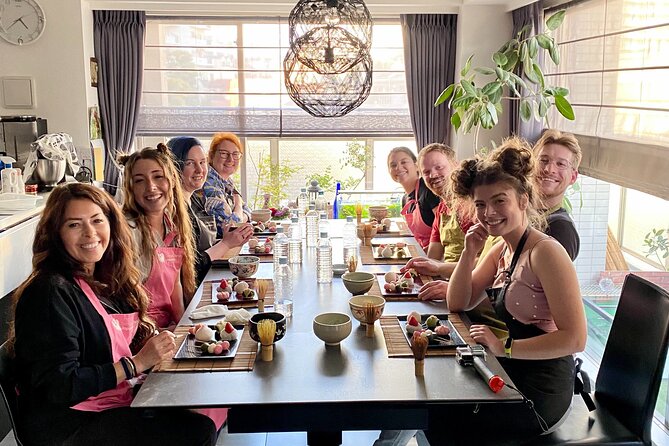
- Make several styles in one session: Prepare strawberry daifuku, three-color dango, warabi mochi, and savory grilled mochi.
- Learn from English-speaking instructors: Certified wagashi teachers explain both technique and the place of mochi in Japanese culture.
- Stay near Meguro Station: The private studio is a short walk from the JR Yamanote Line and metro station.
- Expect a family-friendly activity: Children age four and up can attend, and families have found the format easy to follow.
- Taste and take home your work: The class ends with green tea, hojicha, or coffee, and containers may be available for unfinished treats.
- Allow two hours indoors: Morning and afternoon start times make this a useful choice on a hot, rainy, or tiring Tokyo day.
Starting near Meguro Station
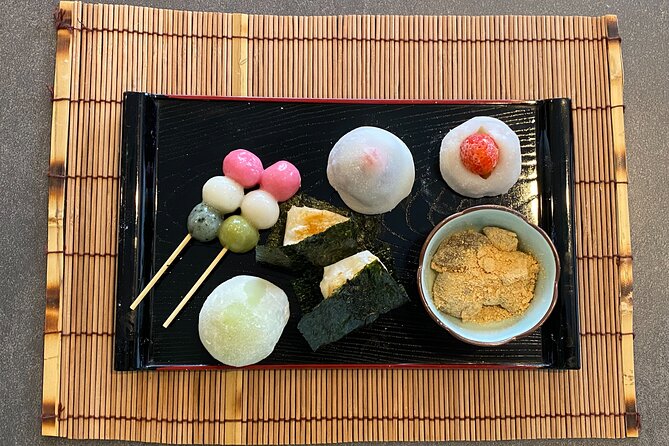
The class meets at a private studio at President Meguro Heights in Meguro City, about a short walk from Meguro Station. That location matters. You can reach it from the JR Yamanote Line or the metro without adding a long cross-town journey to your day.
You do not get hotel pickup, so plan your own route. The meeting point is also the end point, which keeps the outing simple. I would allow a little extra time to find the building, especially if you are carrying luggage, traveling with children, or trying to arrive on time in an unfamiliar part of Tokyo.
The setting is a private kitchen rather than a large commercial cooking school. That gives the class a home-based feel, though you should not expect a formal restaurant kitchen or a grand ceremonial workshop. You are there to work, ask questions, and eat what you make.
The class is listed as a small-group experience with a maximum of six people. The additional information also gives a maximum of 12 participants, so the exact size can depend on the session or booking arrangement. If a very intimate class matters to you, ask about the group size when booking or choose the private-class option.
Other private tours in Tokyo



A short lesson on mochi and Japanese customs
The class begins with an introduction to mochi, including its connection to Japanese traditions and festivals. This is more useful than a quick recipe briefing because mochi is not simply a chewy dessert served at random.
You learn why different types and colors appear at particular times and what mochi means in Japanese life. The cultural context helps you understand why the same basic rice cake can appear as a New Year food, a festival treat, a skewer, a filled dessert, or a savory side dish.
The instructors speak English, and the teaching style is designed for visitors who may know little about Japanese sweets. Ayumi, Owa, Waka, Miho, and Michiko are among the instructors associated with the classes, and the teaching team includes certified wagashi instructors. You can ask questions about food, local customs, shopping, and sightseeing while you work.
This conversation is one of the better reasons to choose a class instead of simply buying mochi from a shop. You leave with more than a taste. You have a local person explaining how the food fits into everyday life.
Making strawberry daifuku with fresh filling
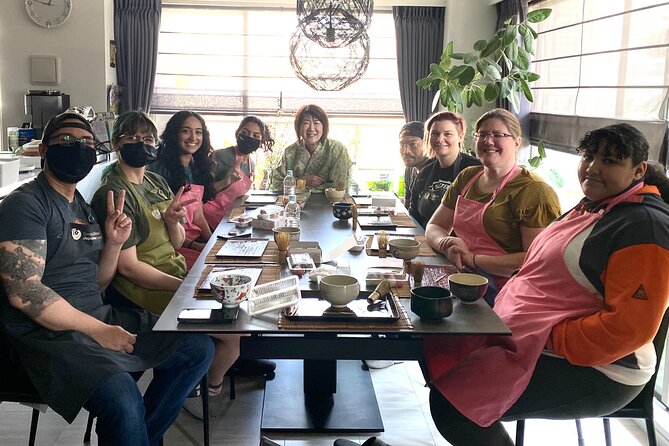
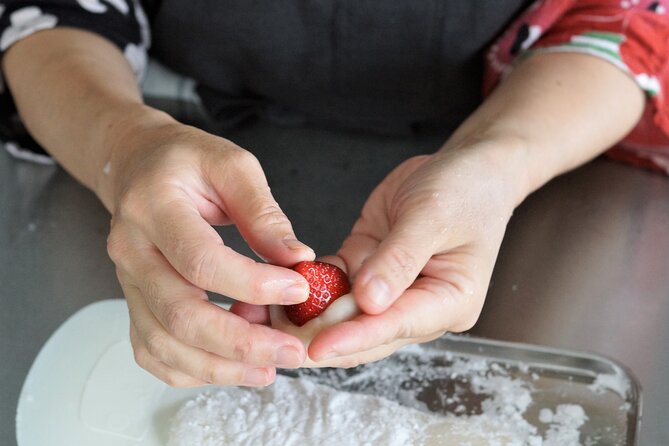
One of the main activities is strawberry daifuku, a soft mochi wrapper around a sweet filling and fresh strawberry. It is a good first project because the finished piece looks impressive, but the process still lets you work with the dough directly.
You will need to handle the mochi carefully as you shape it around the filling. That is where the class earns its keep. A recipe alone cannot show you how much pressure to use or how to avoid tearing the wrapper. The instructor demonstrates the steps and helps you correct the shape.
This is also a good activity for families. Children can take part in shaping and decorating with guidance, though the sticky texture can get messy. Aprons are provided, and assistants help keep workstations tidy during the session.
Fresh strawberries add a seasonal, local touch, but the experience does not promise a particular strawberry variety or year-round availability. If you are visiting outside the usual strawberry season, ask what filling will be used. The supplied information specifically highlights strawberry daifuku, so it remains an important part of the class, but produce can vary.
Shaping three-color dango on skewers
Next comes three-color dango, the round mochi dumplings served on a skewer. This is a chance to practice consistent sizing and simple presentation rather than filling and sealing a larger piece.
The colors are not just decoration. The opening talk explains how colors and ingredients can carry cultural meaning, which adds a useful layer to what might otherwise be a basic ball-shaping exercise.
Dango is also a fun choice for photos. The finished skewers are neat, colorful, and easy to recognize as a classic Japanese sweet. You will probably have more control over the appearance of these than over your first daifuku. That is good for beginners who want an early success.
The texture may surprise you. Mochi is chewy, and dango can feel denser than a soft Western pastry. The class gives you a chance to try it fresh and understand the difference between handmade dango and a packaged supermarket version.
Learning warabi mochi and seeing mochi ice cream
Warabi mochi adds another style to the lesson. It has a softer, more delicate texture than the filled daifuku and skewered dango, so you get a useful comparison within the same class.
The instructor also demonstrates how to make mochi ice cream. This part is demonstration rather than a fully hands-on project, according to the schedule. That distinction is worth noting if mochi ice cream is your main reason for booking. You will see how it is made, but the central practical work focuses on the other varieties.
A dairy-free ice cream option can be prepared upon request. You need to ask for it in advance rather than assume it will be available automatically. Other dietary needs are not specified, so contact the provider before booking if you have allergies or strict food restrictions.
The variety is the strength of the itinerary. You do not spend the entire two hours repeating one recipe. Instead, you compare soft, filled, skewered, jelly-like, frozen, and savory forms of mochi.




The savory surprise: grilled mochi with soy and nori
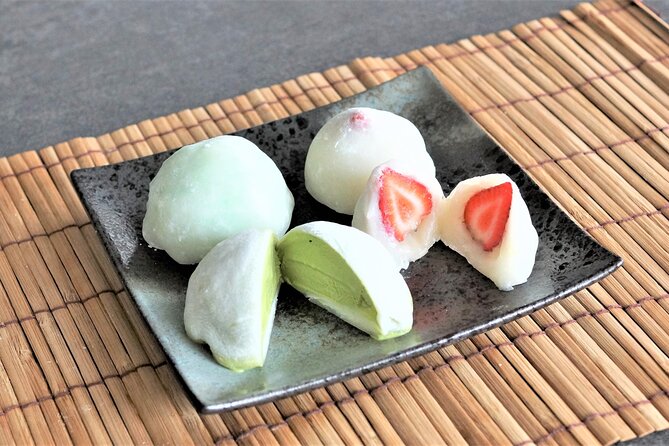
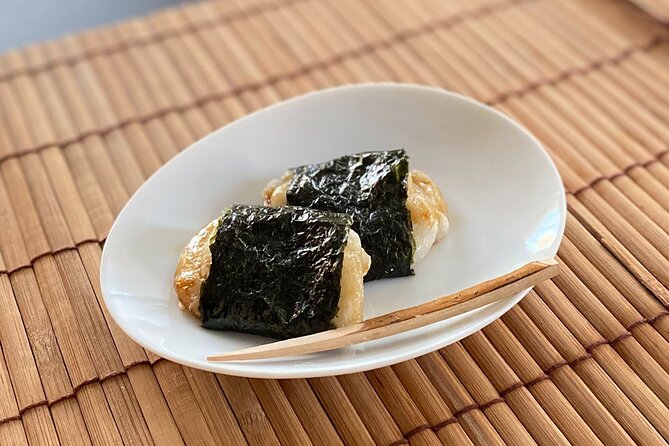
The class includes grilled mochi with soy sauce and nori seaweed. This is an important part of the experience because many people arrive thinking of mochi only as a sweet filled cake.
The grilled version brings a salty, savory flavor and a different texture. Soy sauce gives it a familiar umami taste, while nori adds a seaweed note. It can be the most surprising item on the menu if your idea of mochi begins and ends with red bean or ice cream.
The class does not only teach you how to make sweets for photographs. It shows you how mochi appears at the table in more than one form. That makes the lesson feel closer to a food introduction than a single dessert workshop.
If you strongly prefer sweet foods, you may not love every variety. The good news is that the tasting includes several types, so you can compare them rather than commit to one large portion. The class also provides containers when there is food you cannot finish, according to the experience details and class feedback.
Sitting down with tea and your finished treats
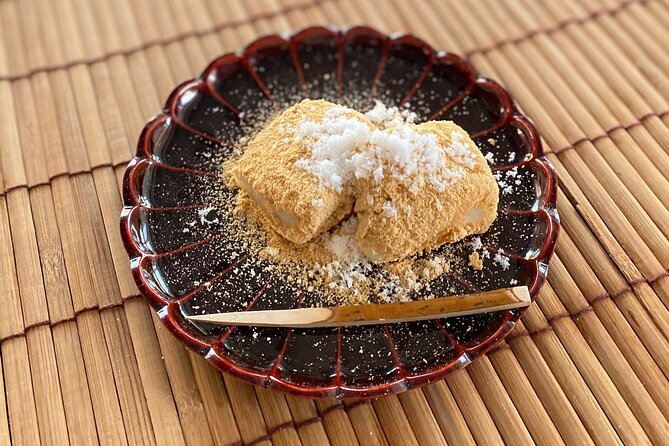
The final tasting session brings everyone together with green tea, hojicha, or coffee. This pause gives you time to sample the food instead of rushing from one recipe to the next.
Green tea and hojicha work especially well with sweet mochi because they balance the sugar. Coffee gives you another option if roasted tea is not your preference. The included drink is part of the class, so you do not need to arrange a separate café stop during the activity.
You will eat many of the items you make, and you may have enough to take some back to your hotel. An English recipe sheet is included, and recipe access may also be provided by QR code. That is useful if you want to repeat the class at home, though handmade mochi is best treated as a fresh food rather than a long-term souvenir.
The tasting is also when the social side of the class becomes most apparent. You can compare shapes, ask final questions, and talk with the instructor about Tokyo. For many visitors, this relaxed conversation is as valuable as the recipes.
How the two-hour schedule feels
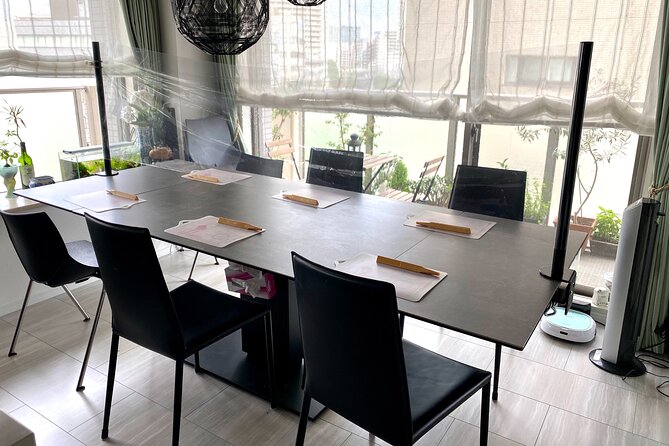
The class lasts about two hours and offers a choice of morning or afternoon departure. That flexibility helps you fit it around sightseeing in Meguro, Shibuya, or other parts of Tokyo.
I would choose the afternoon if you have spent the morning outside in summer heat. One family specifically found it a good indoor activity during a hot July day, and the shorter pace can be welcome after a morning of walking. A morning session may suit you better if you want to start the day with a structured activity and keep the rest of the afternoon open.
The pace appears active but manageable. You receive demonstrations, make several kinds of mochi, hear cultural explanations, and finish with a tasting. Beginners do not need strong cooking skills. The instructions are designed to be followed step by step, and the instructor or assistants can help when your mochi refuses to cooperate.
Do not expect a quiet lecture. You will use your hands, handle sticky ingredients, and clean up as you go. The assistants help keep the stations tidy, but this is still a working kitchen. Wear something comfortable and be ready for a little flour and starch.
Value at $79.26 per person
At $79.26 per person, this is not a cheap snack stop. You are paying for a two-hour lesson, ingredients, an English-speaking instructor, aprons, several tastings, tea or coffee, and access to a private studio.
The value improves if you want an activity rather than a meal. You make multiple types of mochi, receive recipes, and get cultural background that you cannot get from buying a box at a department store. The class also gives you direct contact with a local instructor, which can lead to practical Tokyo advice.
The price may feel high if you only want to taste mochi. Tokyo has many places to buy Japanese sweets for far less. I would book this class for the instruction and the memory, not as the most economical way to fill your stomach.
It is particularly good value for families and first-time visitors who want one organized indoor activity. Children age four and up can attend, and older children have enjoyed the hands-on work. A private class for up to six people is also available, but booking instructions say to reserve one adult for a private class rather than entering each person separately.
Who will enjoy this class most
I would recommend it to anyone who likes Japanese food, cooking activities, or small cultural workshops. You do not need previous cooking experience, and you do not need to speak Japanese because the instructor is fluent in English.
Families should find the class approachable, especially with children old enough to follow kitchen instructions. The minimum age is four, and children under four cannot attend for safety reasons. A parent should still expect to help younger children with sticky dough and shaping.
This is also a smart rainy-day or hot-weather choice. The class is indoors, lasts only two hours, and sits close to public transportation. It gives you a break from Tokyo’s long walks without feeling like dead time in your itinerary.
You may want to skip it if you dislike chewy textures, have serious food allergies, or prefer watching rather than making food. Dairy-free ice cream can be arranged upon request, but the provider does not list every possible dietary substitution. Ask before paying if ingredients are a major concern.
Practical details before you go
Confirmation is provided at booking, and the activity is near public transportation. The meeting point is at Japan, 153-0063 Tokyo, Meguro City, Meguro, 1-chōme 316, President Meguro Heights. The class returns to that same location.
The activity is non-smoking. Food tasting, aprons, an English recipe sheet, and green tea, hojicha, or coffee are included. Hotel transfers, transportation to other attractions, and extra food or drinks outside the stated inclusions are not included.
You need at least two people per booking for a standard reservation. Private classes are handled differently and can accommodate up to six people. Since the information also lists a total maximum of 12 participants, confirm the group arrangement if you are booking for a larger party.
Free cancellation is available if you cancel at least 24 hours before the start time. Cancellation inside that window is not refundable, and changes made less than 24 hours before the experience are not accepted.
Should you book the Meguro mochi class?
Book it if you want to do something, not just see something. The class combines four practical strengths: a convenient Meguro location, English instruction, several sweet and savory forms of mochi, and a small setting where you can ask questions.
I especially like that the lesson goes beyond the familiar strawberry or red bean dessert. Three-color dango, warabi mochi, mochi ice cream, and grilled mochi with soy and nori give you a much wider view of the food.
At $79.26, it is best for visitors who value instruction, cultural context, and a shared activity. It is less suited to anyone seeking a low-cost tasting or a fully private culinary lesson by default. For families, couples, and food-minded first-time visitors to Tokyo, this is a well-balanced two-hour stop with a tasty result and a recipe sheet to carry home.
FAQ
Where does the mochi-making class take place?
The class meets at a private studio at President Meguro Heights in Meguro City, Tokyo, near Meguro Station.
How close is the studio to public transportation?
The studio is within a short walking distance of Meguro Station, which is served by the JR Yamanote Line and the metro.
How long does the class last?
The activity lasts approximately two hours.
Can I choose a morning or afternoon session?
Yes. The experience offers a choice of morning or afternoon departure.
What types of mochi will I make?
The class includes strawberry daifuku mochi, three-color dango, and warabi mochi. You also receive savory grilled mochi with soy sauce and nori seaweed.
Is mochi ice cream included?
The instructor gives a demonstration on how to make mochi ice cream. Dairy-free ice cream can be prepared upon request.
Is the class taught in English?
Yes. The instructor is fluent in English, and an English recipe sheet is included.
What drinks are included?
The tasting session includes green tea, hojicha, or coffee.
What is the minimum age for children?
Children must be at least four years old to attend. Children under four are not allowed in the class for safety reasons.
Do I need to book for at least two people?
A minimum of two people per booking is required, except for private classes. For a private class of up to six people, the booking instructions say to reserve one adult.
More Private Tours in Tokyo


More tours in Tokyo we've reviewed







Private, compared.
 ★ 5.0Tokyo 6hr Private Tour with Government-Licensed GuideFrom $155
 ★ 5.0Private Tour to Mt. Fuji and Hakone (Fully Licenced Operator)From $497
 ★ 5.0Tokyo Customized Private Tour (Must See Places in 1 Day)From $145
 ★ 4.9Mount Fuji Full-Day Private Tour from Tokyo (Customizable)From $393
 ★ 4.8Tokyo: Private City Highlights Tour with Local GuideFrom $1064 - 8 hours
 ★ 5.0Private Custom Tour: Tokyo in a DayFrom $159