
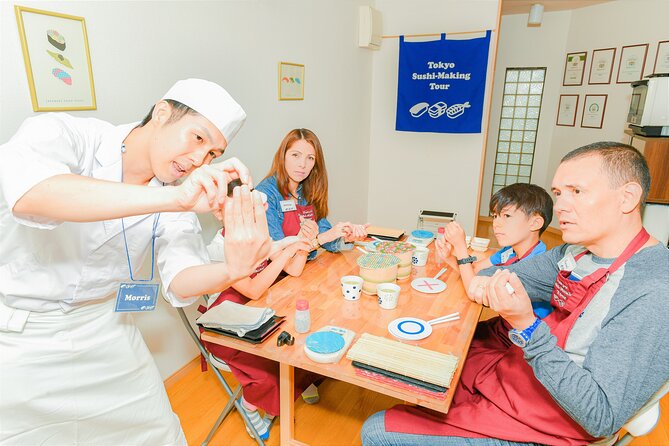
Reviewed · SUSHI MAKING CLASSES
Kid-Friendly Sushi Making Class in Tokyo (English-Led)
The best part of this Tokyo class is that you do not simply watch a chef work. You make four different kinds of sushi yourself, from nigiri to decorative rolls, then sit down to eat the results. The class also folds in sushi etiquette, history, Japanese phrases, and practical travel tips, so it feels like a cultural lesson with lunch attached.
I like the small maximum of eight people, which gives the instructor room to correct your technique. I also like the clear family focus: children age eight and up can take part, and the lesson keeps younger cooks involved with a quiz and plenty of hands-on work. The main consideration is the meeting point in Kita-Senju, which is convenient from several parts of Tokyo but not right beside the city’s best-known sights.
In This Review
- Key points to know before you book
- Four sushi styles, not just one quick demonstration
- A relaxed lesson with useful cultural context
- Why the eight-person limit matters
- A strong family activity for children age eight and up
- What happens at Kita-Senju
- Dietary planning: raw fish is usual, but alternatives are possible
- Is $68.97 good value?
- What I like most, and what I would watch for
- Booking details that matter
- Who should book this sushi class?
- FAQ
- Where does the sushi-making class meet?
- What time does the class begin?
- How long does the activity last?
- Is the class taught in English?
- Can children join the sushi-making class?
- Can I request a vegetarian or non-raw fish menu?
Key points to know before you book
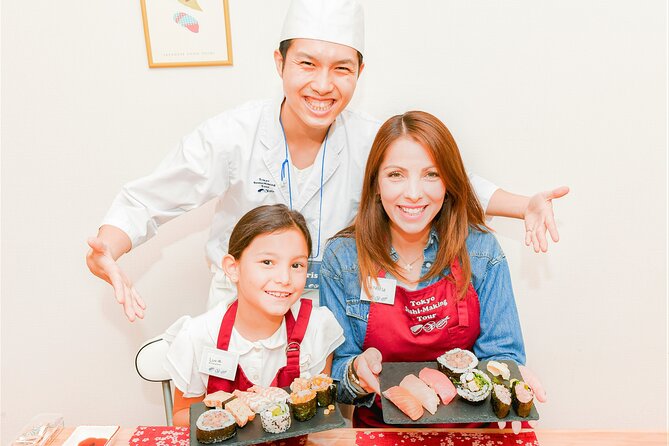
- Four sushi styles in one class: Make decorative sushi rolls, California rolls, nigiri sushi, and battleship rolls.
- English-speaking instruction: Nat and Morris have led classes for international visitors, with clear explanations and time for questions.
- A good choice for families: Children from age eight can participate, and the class mixes cooking with games and trivia.
- Dietary choices are available: Non-raw fish, vegetarian, and gluten-free menus can be arranged if you give advance notice.
- Small-group setting: The class accepts no more than eight people, allowing for direct help at the worktable.
- A useful Tokyo location: Meet at the East exit of Kita-Senju Station at 10:30 a.m., with easy rail access from Asakusa, Akihabara, Ueno, and Ginza.
Four sushi styles, not just one quick demonstration
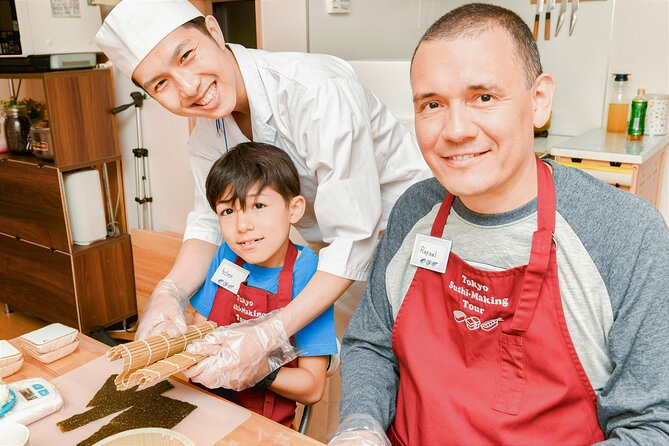
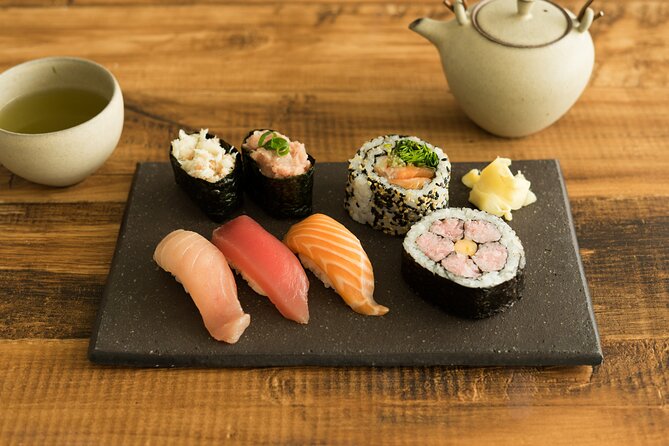
This is a hands-on class built around variety. In about two and a half hours, you work with vinegared rice and prepare four forms of sushi, each requiring a different approach.
You make decorative sushi rolls, where the arrangement of ingredients creates a pattern when the roll is cut. This is likely to be the most playful part of the class, especially for children, because the result is not obvious until the finished roll is sliced.
The California roll teaches a different lesson. It is an inside-out roll, so the rice sits on the outside rather than the seaweed. That small change makes it a useful introduction to sushi construction, since you learn how filling, rice, and nori hold together from another angle.
Nigiri sushi is more direct. You shape rice and pair it with fish, learning the basic relationship between a compact rice base and its topping. The usual ingredients include raw salmon and tuna, although you can request another menu in advance if you do not eat raw fish.
The fourth style is the battleship roll, sometimes called gunkan sushi. Its seaweed wrapper forms a small wall around the rice and topping, giving the piece a distinctive boat-like shape. Making all four types keeps the class from becoming repetitive and lets you compare several basic sushi techniques in one sitting.
You then eat the sushi you made. That matters. The meal is not a separate restaurant course prepared by someone else. It is the payoff for the work at your station, and the finished plate gives you a clear sense of what you have learned.
A few more Tokyo tours and experiences worth a look

A relaxed lesson with useful cultural context
The class begins with a quiz on sushi etiquette and trivia. This is more useful than it may sound. Many first-time visitors know sushi as a food but are less sure about customs, terminology, and how the dish developed. A short quiz gives you a friendly way to pick up those details without sitting through a long lecture.
The lesson also covers sushi’s history and includes simple Japanese phrases. You may not leave speaking Japanese, but a few food-related words and polite expressions can make later meals feel less intimidating. The travel tips add another practical layer, especially if this is one of your first days in Tokyo.
I like this mix because it avoids treating sushi as only a craft project. You learn what you are making, how it fits into Japanese food culture, and how to approach it at the table. The tone is designed to be easygoing rather than formal, which helps children and complete beginners stay comfortable.
The available feedback repeatedly highlights the instructors’ patience, friendly manner, and strong English. Nat is singled out for answering questions and explaining the subject clearly, while Morris is praised for keeping a family group interested throughout the cooking. Since instructors may vary, you should not assume a particular teacher unless the booking details confirm it, but both names are associated with the class.
Why the eight-person limit matters
A sushi class can lose its value if you are standing at the back watching someone else do the work. This class limits attendance to eight people, so the format is better suited to personal instruction.
That small size gives the leader time to show you how to handle the rice, form each style, and fix a roll that does not quite cooperate. You also have a better chance to ask about ingredients, etiquette, or technique without waiting behind a large group.
The class has welcomed more than 7,000 participants from around the world since 2013. That experience matters most for the teaching style. The instructors are accustomed to working with people who may never have handled sushi rice or seaweed before, and the class is designed for cooking novices rather than trained home chefs.
Still, keep your expectations sensible. This is an introduction, not professional chef training. You will learn practical methods you can try at home, but the goal is a memorable cultural activity and a satisfying meal, not mastery of every sushi technique.
A strong family activity for children age eight and up
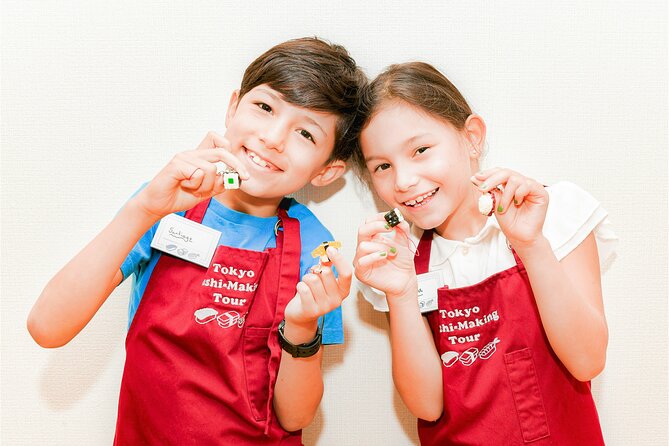
Families are the clearest match for this experience. The minimum age is eight, and the schedule provides several kinds of activity: a quiz, cultural information, preparation of four sushi forms, and the meal at the end.
That variety is important for children. A two-and-a-half-hour class can feel long if it involves only repeated rolling, but the change of pace helps. Kids can learn how sushi is eaten, hear some history, build their own pieces, and see an immediate result on the plate.
The class also lets parents take part instead of supervising from the side. Families with children aged 10 and 12 have described the experience as especially personal, with the kids actively making and eating the sushi. You should still consider your child’s patience and comfort with food preparation, since the session is hands-on from start to finish.
Adults without children should not feel out of place. The class welcomes beginners of all kinds, and the quiz, etiquette lesson, and four formats give adults plenty to enjoy. It is a practical pick for couples, friends, and solo visitors who want a social activity without committing to a large group.
What happens at Kita-Senju
You meet at 10:30 a.m. at the East exit of Kita-Senju Station, at 3-5 Senjuasahicho in Adachi City. The class ends back at the meeting point, so you do not need to arrange a separate return transfer.
Kita-Senju is not the usual first stop for a Tokyo food activity, but that is part of the appeal. The station is accessible from Asakusa, Akihabara, Ueno, and Ginza, making it workable from several popular bases. Check your route carefully and allow enough time to find the East exit, since Tokyo stations can have several exits and large internal corridors.
The location is most convenient if you are already visiting northern or northeastern Tokyo, or if your accommodation has a simple rail connection to Kita-Senju. If you are staying in another part of the city, the class still may be easy to reach, but the morning transfer becomes part of your schedule.
Because the activity begins at a fixed time, avoid pairing it with a distant morning attraction. Give yourself a calm start, arrive at the correct exit, and keep the rest of the day open enough to enjoy the class rather than rushing in.
A few more Tokyo tours and experiences worth a look


Dietary planning: raw fish is usual, but alternatives are possible
The standard ingredients typically include raw salmon and tuna. If that sounds unsuitable for you or someone in your group, the provider offers a non-raw fish menu, vegetarian menu, and gluten-free menu.
The key point is timing: tell the provider about dietary restrictions in advance. Do not wait until you arrive. The information supplied does not specify every ingredient or cross-contact procedure, so anyone with a serious allergy should ask specific questions before booking.
This flexibility makes the class more useful for mixed groups. One person can enjoy raw fish while another uses a different menu, provided the request is made ahead of time. You should also mention preferences clearly when booking, rather than relying on a general note.
Is $68.97 good value?
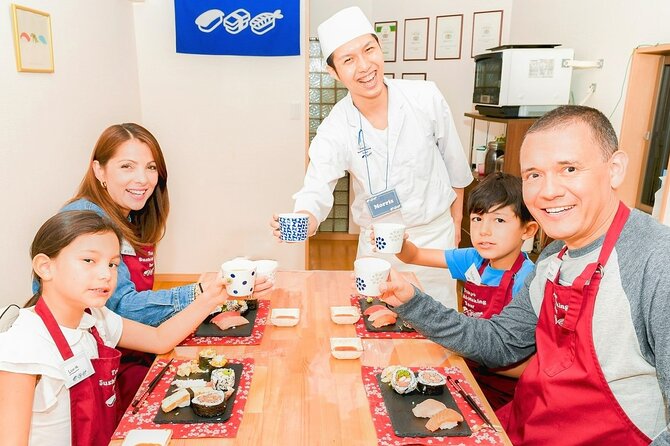
At $68.97 per person, the class is not the cheapest way to eat sushi in Tokyo. But comparing it with a restaurant meal misses the point. You are paying for instruction, ingredients, cultural explanation, a small group, and the chance to eat four types of sushi you helped prepare.
The price makes the most sense for families and first-time visitors who want an activity rather than another meal at a counter. Children receive direct involvement, adults gain basic skills to try at home, and the group gets a shared memory that does not depend on perfect weather.
It is less compelling if your main goal is to taste expertly prepared sushi. A sushi restaurant will give you a more polished meal, and this class will not turn you into a sushi chef in one morning. Book it for the combination of food, learning, and participation.
The class is often reserved about 40 days ahead on average. That does not mean every date sells out that early, but it is a useful warning for school holidays, family trips, and tightly planned Tokyo visits. If this is important to your itinerary, reserve before you arrive rather than hoping to find a last-minute place.
What I like most, and what I would watch for
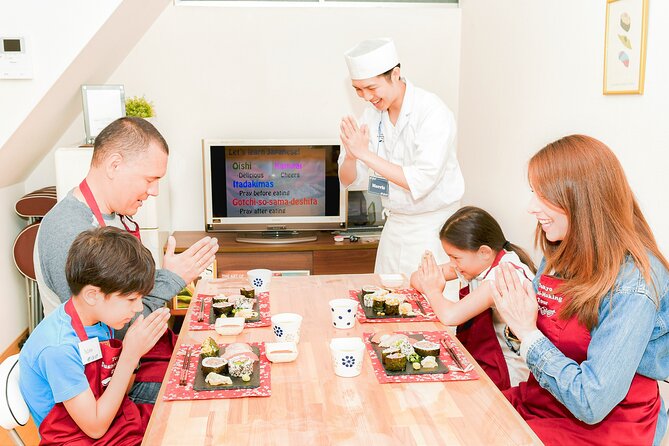
The strongest feature is the balance between instruction and fun. The quiz adds energy at the start, while the cooking gives the lesson a clear purpose. The end result is not a certificate or a demonstration. It is food on your plate that you shaped yourself.
The second strength is the teaching. Nat and Morris are described as friendly, patient, and comfortable in English. That matters when instructions involve rice texture, pressure, cutting, and shape. You want a teacher who can explain why something went wrong, not just redo it for you.
The class also earns credit for being useful after the trip. Professional tips for making sushi at home mean the experience can continue in your own kitchen. You may not recreate every ingredient easily, but the basic ideas about vinegared rice and rolling can travel with you.
The main drawback is the location. Kita-Senju is well connected, but it is not as central in a sightseeing sense as Ueno, Ginza, or Asakusa. The class ends where it starts, which is convenient, though you need to plan your next stop around returning to the station area.
Another consideration is the fixed 10:30 a.m. start. The timing works well for a morning activity and lunch, but it leaves little room for a slow hotel breakfast or a far-off attraction beforehand.
Booking details that matter
Your booking confirmation should arrive within 48 hours, subject to availability. The experience uses a mobile ticket, and public transportation is nearby.
Free cancellation is available if you cancel at least 24 hours before the 10:30 a.m. start time. Cancellations or changes made less than 24 hours before the activity are not accepted for a refund, and the cut-off follows Tokyo local time.
The class has a maximum of eight people. It returns to the starting point, and the stated duration is approximately two hours and 30 minutes.
Who should book this sushi class?
Book this class if you want to make food rather than only photograph it. It is especially well suited to families with children age eight and up, first-time sushi makers, and anyone who likes an activity with a clear result.
It is also a good fit if you want an English-speaking guide who can explain etiquette and history without making the session feel academic. The four sushi styles provide enough variety to keep the class interesting, and the small group should give you useful personal help.
Think twice if you are looking for a refined sushi tasting, a central Tokyo location, or an advanced chef course. The class is practical, friendly, and beginner-focused. Its value comes from learning and taking part, not from receiving a restaurant-quality tasting menu.
For most families and curious first-time visitors, I would book it, especially if the date fits your route and you arrange dietary needs early. The chance to make four sushi styles, learn how to approach sushi respectfully, and share the meal you created is a worthwhile addition to a Tokyo itinerary.
FAQ
Where does the sushi-making class meet?
The class meets at 3-5 Senjuasahicho, Adachi City, Tokyo, at the East exit of Kita-Senju Station.
What time does the class begin?
The start time is 10:30 a.m.
How long does the activity last?
The class lasts approximately two hours and 30 minutes.
Is the class taught in English?
Yes. English-speaking instructors lead the class. Nat and Morris are named as instructors associated with the experience.
Can children join the sushi-making class?
Yes. Children age eight and up are welcome to participate.
Can I request a vegetarian or non-raw fish menu?
Yes. Non-raw fish, vegetarian, and gluten-free menus are available, but you must inform the provider of dietary restrictions in advance.
More Workshops & Classes in Tokyo
More Sushi Making Classes in Tokyo
More tours in Tokyo we've reviewed







Sushi Making Classes, compared.
 ★ 5.0Sushi Making Tokyo Roll and Authentic Japanese Sushi ClassFrom $59
 ★ 4.9Tokyo: Roll and Authentic Sushi Making Class in AsakusaFrom $581h 40m
 ★ 5.0Make Sushi and Create Unforgettable Memories in TokyoFrom $79
 ★ 4.9Tokyo: Sushi Making Class in a Happi Coat near a Famous SpotFrom $421h 30m
 ★ 5.0Tokyo Sushi Making Class in Tsukiji with Professional ChefFrom $49
 ★ 5.0Tokyo Night Foodie Tour in Shinjuku – Seasonal Sushi, Wagyu BeefFrom $111