
Reviewed · MT FUJI DAY TRIPS
Small Group Tour Mount Fuji and Lake Kawaguchi from Tokyo
The best thing about this Mount Fuji day trip is how much ground you cover without having to piece together several train and bus connections. You get Lake Kawaguchi views, the famous Chureito Pagoda photo, spring-fed ponds, traditional shops, and Mt. Fuji’s 5th Station in one 10-hour outing. Guides such as Akari and Aki are praised for clear explanations, local tips, and a warm approach.
I like the small group of no more than 15 and the air-conditioned vehicle, especially for a long day beyond Tokyo. I also like the mix of famous sights and everyday Fujiyoshida stops. The trade-off is pace: you will climb up to 400 steps if you choose the full route at Arakurayama, and bad weather or heavy traffic can affect the day.
In This Review
- Key points at a glance
- Why this Mount Fuji day trip works from Tokyo
- Arakurayama Sengen Park and the Chureito Pagoda climb
- Oishi Park beside Lake Kawaguchi
- Oshino Hakkai and its clear spring ponds
- Fujiyoshida for lunch and traditional shopping
- Mt. Fuji 5th Station and the limits of the view
- What the guide adds to a busy sightseeing day
- The real cost of covering five stops
- Who should book this Fuji excursion
- Should you book this Mount Fuji tour?
- FAQ
- Where does the tour start and finish?
- What time does the tour begin?
- How long does the tour last?
- What places are included?
- Is Mount Fuji guaranteed to be visible?
- Are meals and drinks included?
- How many people can join the tour?
Key points at a glance
- Chureito Pagoda and 400 steps: Arakurayama gives you the classic pagoda, mountain, and city view, but the climb is real.
- Five distinct Fuji-area stops: The day combines Arakurayama, Oishi Park, Oshino Hakkai, Fujiyoshida, and the 5th Station.
- A guide-led day from Tokyo: An English-speaking guide handles the route while you ride in an air-conditioned vehicle.
- Small group size: The maximum of 15 people allows more personal help than a large coach tour.
- Weather matters: You may see Fuji clearly at some stops, but visibility at the 5th Station is not guaranteed.
- Food is your responsibility: Lunch, drinks, entrance fees, and travel insurance are not included in the $99.50 price.
Why this Mount Fuji day trip works from Tokyo
Mount Fuji is close enough to tempt you into a do-it-yourself outing, yet the route can be awkward. The mountain area spreads across several towns, and a single day by public transport requires planning around changing train and bus schedules. This tour gives you a fixed route, a driver, and a guide who can explain what you are seeing.
The meeting point is at Lad’s de Wine Shimbashi, on the first floor of the building connected with the Sotetsu Fresa Inn Shimbashi-Hibiya Exit. You meet at 7:50 a.m. and return to the same location. That early start matters. The day is long, but leaving Tokyo in the morning gives you a better chance of reaching the Fuji area before the heaviest holiday and weekend traffic.
The vehicle is air-conditioned, and the group is capped at 15. That is not a private tour, but it is small enough for a guide to answer questions and make minor adjustments. Akari is especially noted for helping families, offering practical suggestions, and even providing heat warmers on a cold day. Aki is praised for combining useful information with an easygoing manner.
The tour costs $99.50 per person. For that price, you are paying for transport, the English-speaking guide, and the convenience of seeing several places in one day. You still need to budget for lunch, snacks, drinks, and any admission fees. I consider the price reasonable if your priority is seeing the Fuji area efficiently rather than moving at your own speed.
A few more Tokyo tours and experiences worth a look
Arakurayama Sengen Park and the Chureito Pagoda climb
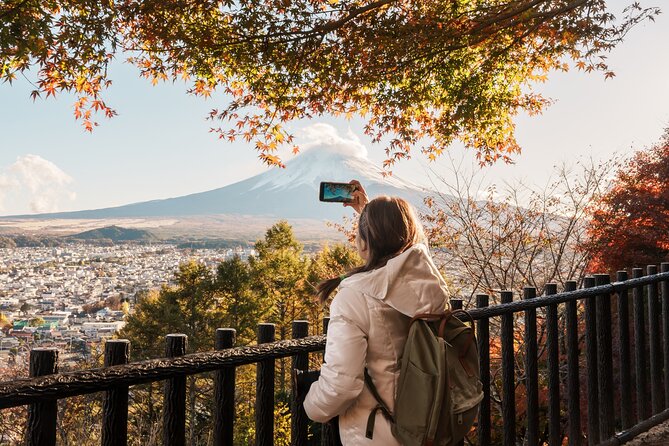
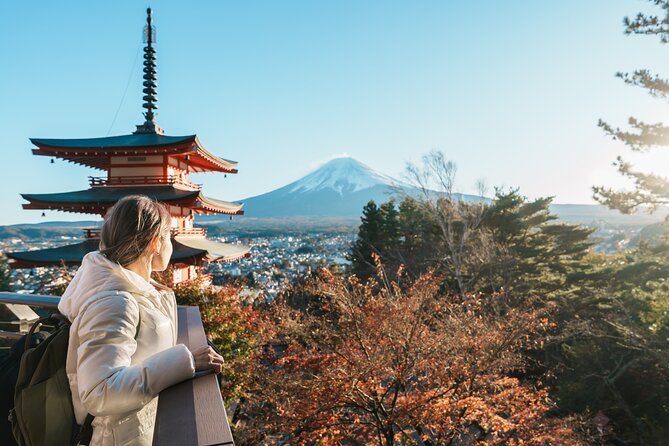
Arakurayama Sengen Park is the first major stop, with about two hours here. The attraction is the view from the hillside: Chureito Pagoda in the foreground, Fujiyoshida below, and Mount Fuji behind it when the weather cooperates.
The well-known viewpoint requires climbing roughly 400 steps. You can choose not to complete the climb, but this is still a stop that calls for comfortable shoes and a moderate level of fitness. The steps are the most demanding physical part of the day, and you should not treat them as a minor detail.
At the top, you will also find Arakura Fuji Sengen Shrine. The pagoda is the star for photographs, but the shrine gives the place a cultural setting beyond a simple lookout. Two hours lets you climb, take photographs, pause at the shrine, and come back down without having to race.
The drawback is that this stop can feel crowded and demanding, especially during peak periods. The tour does not include an admission ticket here, although the key issue is the stairs rather than a stated entry charge. If you have knee, balance, or mobility concerns, ask the guide about the easier way to enjoy the park.
Oishi Park beside Lake Kawaguchi
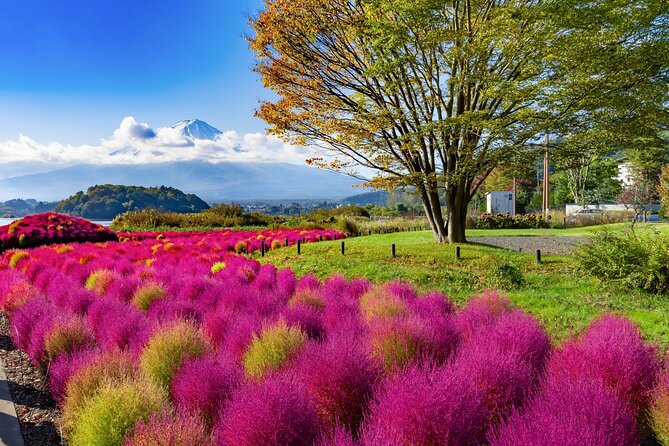
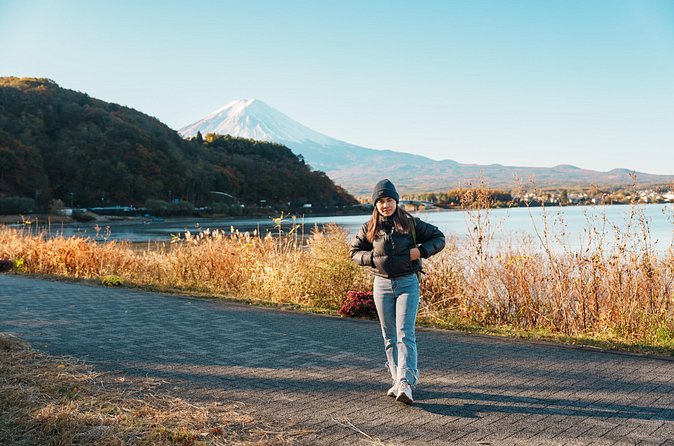
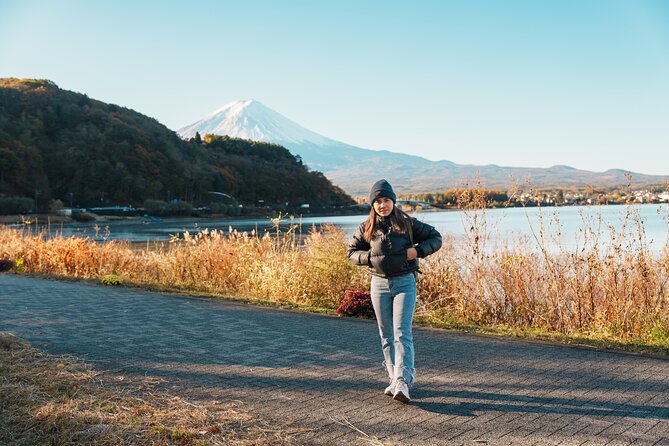
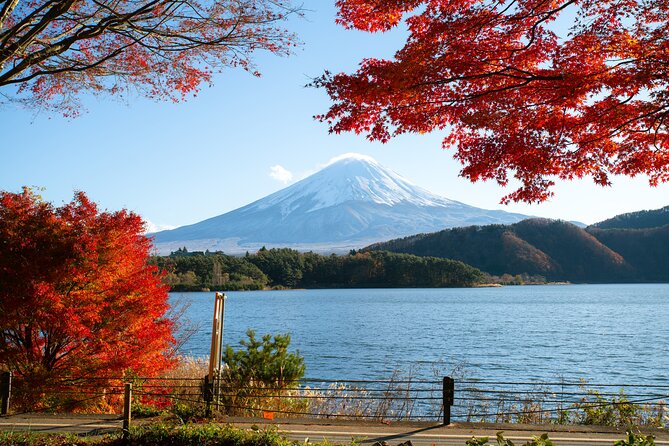
Oishi Park is given another two-hour stop, making it one of the more relaxed parts of the day. From the park, you look across Lake Kawaguchi toward Mount Fuji. This is the chance to enjoy the scenery without the steep climb at Arakurayama.
The view changes with the season and weather. If Fuji is clear, the lake and mountain create the classic composition you came to see. If clouds cover the peak, the lakeside setting still gives you a pleasant break and a different view of the area.
This is also a good place to leave room in your schedule for a snack. One family particularly enjoyed sweet potato, cheese, potato sticks, and ice cream during the outing. Those details matter because meals and drinks are not included, and small food purchases can become part of the fun at a sightseeing stop.
Two hours is generous compared with some of the shorter stops, but the drive between locations and the number of sights in the day make the time useful. Oishi Park is best approached as a scenic pause, not as a museum visit or a tightly programmed attraction.
Oshino Hakkai and its clear spring ponds
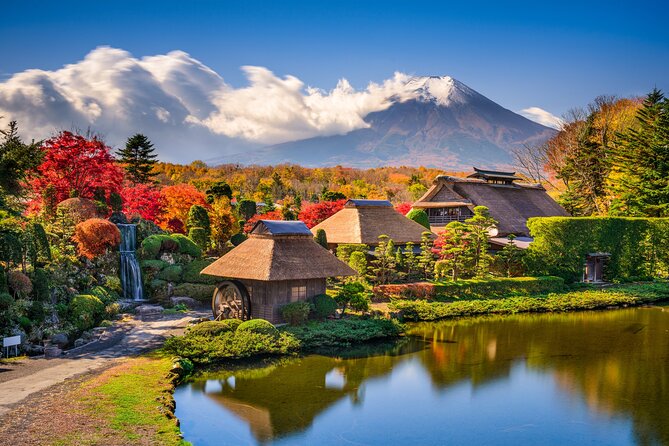
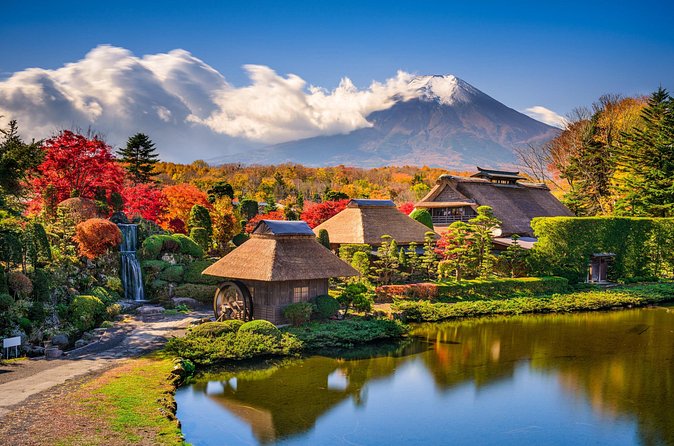
Oshino Hakkai receives about one hour. This small area is known for clear ponds fed by water from Mount Fuji and traditional thatched-roof houses. It offers a more intimate look at the villages around the mountain.
The ponds are the main reason to visit. Their clear water and carefully maintained surroundings make a sharp contrast with the broad lake view at Oishi Park. You can walk among the ponds, take photographs, and look at the old-style buildings in a fairly short period.
An hour is enough for a focused visit, though it leaves little time for lingering. The area can also become busy during holidays and peak travel periods. Keep your group’s meeting time in mind so a quick stop does not turn into a stressful one.
No meals are included, so Oshino Hakkai may be a useful place to buy a snack if you see something appealing. Still, the official lunch break is in Fujiyoshida, so you should not assume this stop will provide your main meal.
Fujiyoshida for lunch and traditional shopping
The Fujiyoshida stop lasts about an hour and gives you free time for lunch and souvenirs. This is a welcome change from the fixed viewpoints. Instead of simply looking at Fuji, you get time to choose what you want to eat and browse traditional shops.
An hour is not long enough for an elaborate meal followed by a serious shopping trip. It works better if you make a quick decision and keep an eye on the departure time. Since food and drinks are not included, this is one of the clearest points in the day to plan your own spending.
I like this stop because it gives the tour some local texture. A day made only of famous viewpoints can feel like a string of photo checks. Fujiyoshida adds a practical town stop, a chance to buy a souvenir, and a little control over your own time.
The schedule places Fujiyoshida after Oshino Hakkai and before the 5th Station. The order may feel unusual depending on road conditions, but the guide and driver can adjust the route when traffic or site access requires it. Some stops can be changed, shortened, or cancelled if conditions make the planned visit impractical.

Mt. Fuji 5th Station and the limits of the view
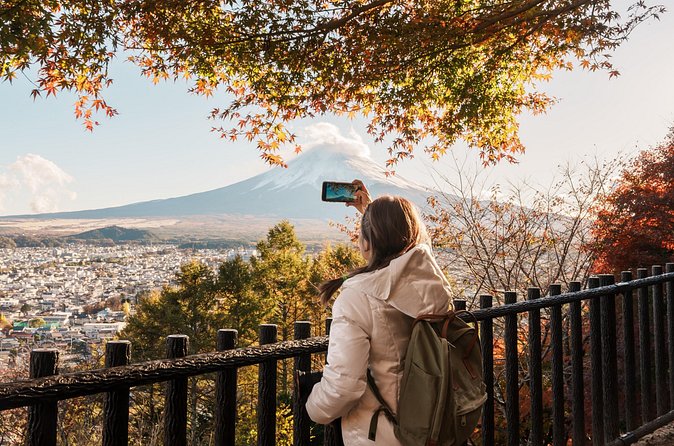
The final listed sightseeing stop is Mt. Fuji’s 5th Station, with about one hour for panoramic views. This is the highest point on the standard route described for the tour, and it gives you a different sense of the mountain than the lake and village viewpoints.
The important warning is simple: the mountain may not be visible. Clouds can gather around Fuji even when the lower parts of the day are clear. The tour specifically notes that weather can affect visibility at the 5th Station, so you should book this experience for the range of places rather than for a guaranteed mountain photograph.
The 5th Station can also feel cooler than Tokyo, depending on conditions. Bring layers, particularly if your visit is in a colder season. Akari’s use of heat warmers for the group is a helpful example of the kind of practical support a good guide may offer, but you should still dress for changing weather.
If the mountain disappears, the stop is not automatically a failure. You are still seeing a high mountain access point and the surrounding area. But if your main goal is a clear summit view, keep your expectations realistic and remember that this tour does not control the weather.
What the guide adds to a busy sightseeing day
The guide is a major part of the value here. A long route with five stops can become tiring when you have to manage directions, timing, and local context alone. An English-speaking guide lets you focus on the views and ask questions as the day unfolds.
Akari receives especially strong praise for being informative, fun, caring, and willing to adjust the schedule for a family. She is also credited with recommending good-value places and helping people make decisions at stops. Aki is described as pleasant, enthusiastic, and full of useful information. Another guide, identified as AKo, is noted for being helpful and accommodating.
Those comments point to the kind of guide service you can reasonably hope for, but the specific guide is not guaranteed in the tour details. The quality of the day will partly depend on who leads your departure. The tour does, however, promise an English-speaking guide, and the group size gives that person a better chance to interact with you than a large bus group would.
The driver matters, too. The route involves Tokyo traffic, mountain roads, and several timed stops. A skilled driver helps the group get in and out of busy areas without asking you to manage the route yourself.
The real cost of covering five stops
The $99.50 fare looks strongest when you compare it with the time and transport involved. You get round-trip transfers from central Tokyo, an air-conditioned vehicle, and guidance across a wide area. Reaching Arakurayama, Lake Kawaguchi, Oshino Hakkai, Fujiyoshida, and the 5th Station independently would require more planning and several separate transport legs.
The price is less attractive if you want a slow, private day. Each stop has a set time, and the full route leaves limited room for extended meals, long walks, or spontaneous detours. You also pay separately for food and drinks, and admission tickets are not included where applicable.
The tour has free cancellation up to 24 hours before the 7:50 a.m. start time. Changes made inside that window are not accepted, and late cancellations are not refunded. If poor weather cancels the tour, you are offered another date or a full refund. The same applies if the minimum number of participants is not reached.
Who should book this Fuji excursion
I would choose this tour if you have limited time in Tokyo and want a broad introduction to Mount Fuji’s surrounding towns. It suits first-time visitors, families who prefer a guide, and anyone who does not want to handle several regional connections.
It is also a good match if you enjoy taking photographs but want more than one viewpoint. Arakurayama gives you the pagoda composition, Oishi Park gives you the lake, Oshino Hakkai gives you ponds and old houses, and the 5th Station gives you a higher mountain setting.
I would think twice if you dislike early starts, fixed schedules, stairs, or long vehicle days. The tour involves significant physical activity, especially at Arakurayama, and traffic can delay the return to Tokyo on weekends, holidays, and in peak season.
The route is not built around a long hike or a quiet mountain retreat. It is a carefully packed day of highlights, short walks, viewpoints, food breaks, and local shopping. That makes it efficient, but not leisurely.
Should you book this Mount Fuji tour?
Book it if you want to see several Fuji-area icons in one day for a reasonable price, with an English-speaking guide and a small group rather than a large coach. The mix of Chureito Pagoda, Lake Kawaguchi, Oshino Hakkai, Fujiyoshida, and the 5th Station gives you a fuller picture than a single viewpoint visit.
Skip it if you need guaranteed clear views, dislike stairs, or want to set your own pace. Mount Fuji may be hidden by clouds, and traffic may push the return later than planned.
For most people with one open day in Tokyo, I think the convenience and range of stops make this a strong choice. Wear good shoes, bring layers, reserve money for lunch and snacks, and treat the mountain view as a gift rather than a promise.
FAQ
Where does the tour start and finish?
The tour starts at Lad’s de Wine Shimbashi, on the first floor of the building at the Sotetsu Fresa Inn Shimbashi-Hibiya Exit in Shinbashi, Tokyo. It ends back at the same meeting point.
What time does the tour begin?
The meeting time is 7:50 a.m.
How long does the tour last?
The tour lasts approximately 10 hours.
What places are included?
The route includes Arakurayama Sengen Park, Oishi Park beside Lake Kawaguchi, Oshino Hakkai, Fujiyoshida, and Mt. Fuji’s 5th Station.
Is Mount Fuji guaranteed to be visible?
No. Weather can affect visibility at the 5th Station and at other viewpoints. Some locations may also be changed or cancelled because of weather, traffic, or availability.
Are meals and drinks included?
No. Meals and drinks are not included. You have free time for lunch in Fujiyoshida and should pay for food and beverages separately.
How many people can join the tour?
The tour has a maximum of 15 travelers. It includes an air-conditioned vehicle and an English-speaking guide.
More Mt Fuji Day Trips in Tokyo
More tours in Tokyo we've reviewed




Mt Fuji Day Trips, compared.
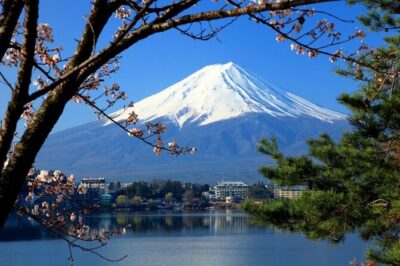 ★ 5.0Mt Fuji and Hakone 1-Day Bus Tour Return by Bullet TrainFrom $163
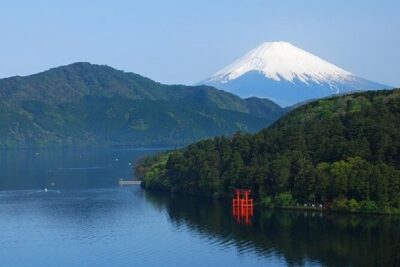 ★ 4.0Mt Fuji & Hakone Cruise, Drum Show Bullet Train 1 Day from TokyoFrom $149
 ★ 4.4Tokyo Mt Fuji 5th St & Hakone Cruise Bus Tour w/Bullet TrainFrom $15410 hours
 ★ 4.5From Tokyo: Mount Fuji Full-Day Sightseeing TripFrom $6810 hours
 ★ 4.7Tokyo: Mt. Fuji Tour, Hakone Ropeway, Owakudani, Lake AshiFrom $5410 hours
 ★ 4.4Tokyo:Mt.Fuji,Kawaguchiko Oishi Park,Arakurayama Sengen ParkFrom $5410 hours