
Reviewed · TEMPLES & MEDITATION
Join a Unique Cultural Ceremony at Tokyo’s Meiji Shrine
The most unusual part of this Meiji Shrine visit happens inside a wooden ceremonial hall, not out on the main approach. You’ll watch priests perform a gokito Shinto prayer ritual, with chants, flutes, and drums creating a calm, serious atmosphere that ordinary shrine visits rarely provide.
I like the quiet forest walk and the way guides such as Alex and Kohei connect shrine customs to everyday Japanese culture. I also like that the ritual fee is included, so you are paying for access and explanation, not just a stroll past the main shrine buildings. The drawback is the walking: Meiji Jingu covers a large area, and this is not a good pick if you have trouble walking or are feeling unwell.
In This Review
- Key points
- Why the gokito ceremony changes a Meiji Shrine visit
- Meeting at JR Yoyogi Station
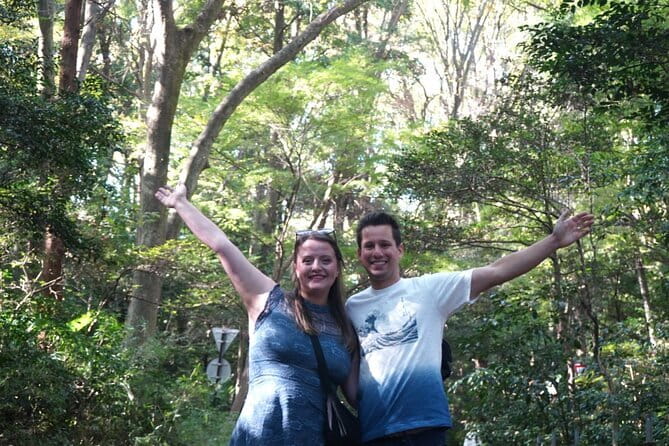
- Walking into Meiji Jingu’s forest
- Entering the wooden ceremonial hall
- What guides Alex and Kohei add
- Why the $121 price can make sense
- Who should book this cultural ceremony
- Practical details before you reserve
- Should you book the Meiji Shrine gokito experience?
- FAQ
- Where does the Meiji Shrine experience begin?
- Where does the activity end?
- What is included in the price?
- Do I need to bring cash?
- Is the tour available in English?
- Can I record the ceremony?
- Is cancellation available?
Key points
- A rare gokito ceremony: Enter a sacred hall and watch priests perform a traditional prayer with music and chanting.
- A forest escape in central Tokyo: Walk peaceful paths beneath the trees before the ceremony begins.
- English-speaking cultural guidance: Guides including Alex and Kohei explain customs in clear, approachable English.
- More than a shrine photo stop: Learn details that can help you understand other Shinto sites during your Japan trip.
- A sensory experience: Notice the cypress scent, polished wood, quiet air, chants, flutes, and drums.
- Good value for curious first-time visitors: The $121 price includes all fees and the traditional prayer ritual.
Why the gokito ceremony changes a Meiji Shrine visit
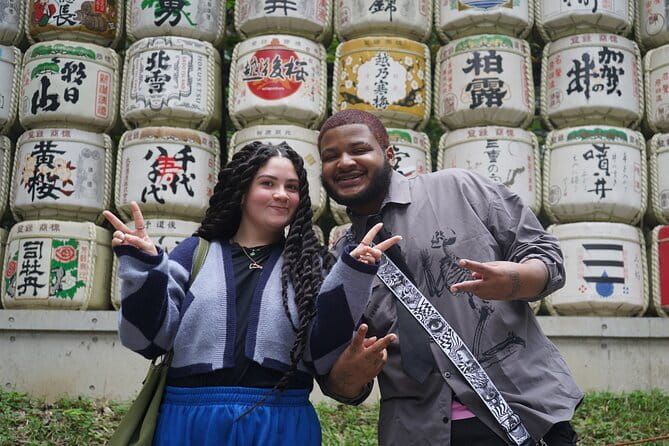
Most people come to Meiji Shrine, Tokyo’s famous Shinto sanctuary, walk beneath the huge torii gates, visit the main shrine, and leave with a few photos. That is a pleasant outing, but it can remain mostly visual. This experience gives you a chance to see what happens beyond the public courtyard.
The central feature is the gokito ceremony, a traditional Shinto prayer service. You enter a wooden hall with high ceilings and polished floors while priests in formal robes carry out the ritual. The sound matters as much as the sight. Chants fill the room, joined by flutes and drums, while the scent of cypress gives the setting a distinctly Japanese character.
You do not need to understand every word to appreciate it. The point is not a lecture or a performance staged for tourists. You sit quietly, listen, and watch a religious custom carried out in its proper setting. The ceremony may feel peaceful, solemn, or unexpectedly moving, depending on what you bring to it.
The activity presents the ritual as a cultural experience rather than a test of religious belief. That makes it approachable, but you should still treat it with respect. This is an active sacred place, not a theater. Quiet attention is part of the experience.
A few more Tokyo tours and experiences worth a look

Meeting at JR Yoyogi Station
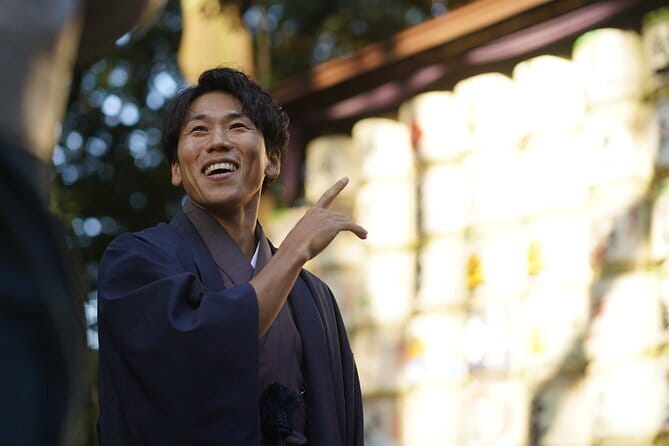
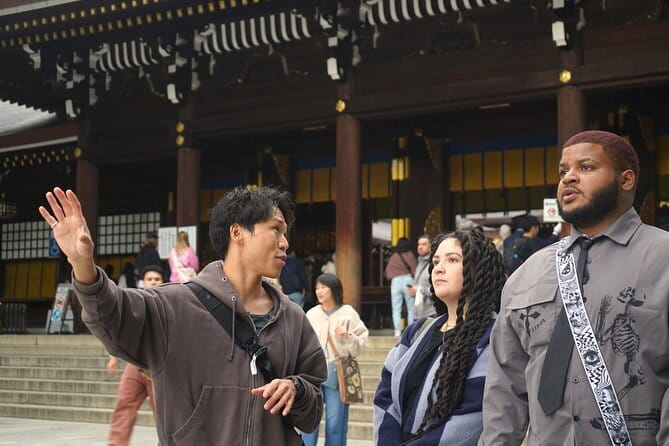
Your starting point is JR Yoyogi Station. After leaving through the west gate, look for the map outside. A member of Legit Japan staff will be waiting in Japanese-style clothing.
That meeting point is useful because Yoyogi is easy to place on a Tokyo itinerary, but allow a little time to get oriented. Large stations can be confusing, and the instructions depend on finding the west gate and the map outside. Keep your phone handy, but do not assume you should head straight to the shrine entrance on your own. The group begins together at Yoyogi.
The tour ends back at the same meeting point. That makes the activity easy to pair with another Tokyo plan, though you should avoid booking something tightly timed immediately afterward. The walking route, group pace, and ceremony schedule may make the exact finish time less predictable than a simple sightseeing stop.
Walking into Meiji Jingu’s forest
The first part takes you away from Tokyo’s traffic and into the broad forest surrounding Meiji Shrine. This change comes quickly. The city is close, but the tree-lined paths create a quieter setting where you can slow down and pay attention.
Wear comfortable shoes. Meiji Jingu requires a lot of walking, and the forest paths are a major part of the activity rather than a short transfer between stops. Bring a drink, especially if you are visiting during warm weather.
I like this opening because it prepares you for the ceremony. You are not rushed from a station to a building, given a few facts, and sent away. The walk gives you time to settle into the place. The quiet, the trees, and the gradual approach help explain why Meiji Shrine feels separate from the surrounding city.
The forest also gives the guide room to explain the shrine’s customs before you enter the sacred hall. That context matters. Shinto has many small gestures and forms of respect that can be easy to miss when you visit alone. A guide can tell you what you are seeing and why it matters without turning the visit into a dry history lesson.
The route is not described as a strenuous hike, but it is still a lot of walking. Wheelchair and pram access are available, yet anyone with limited mobility should consider the distance and ask for practical details before booking. The experience is also not suitable if you have a cold.
Entering the wooden ceremonial hall
The shift from forest path to ceremonial hall is the tour’s strongest contrast. Outside, you have open space, trees, and the sounds of Tokyo softened by distance. Inside, the polished wooden floor, tall ceiling, and cypress scent create a more focused setting.
You will be expected to sit quietly and watch. The priests perform the ceremony in traditional robes, and the formal setting gives the ritual a sense of order. Chants, flutes, and drums provide the main soundtrack.
This is not the kind of activity where every minute needs an explanation. In fact, constant talking would weaken it. The guide’s job is most useful before and after the prayer, helping you understand what you are about to see and giving you space to experience the ceremony without interruption.
The ritual is described as something most ordinary shrine visitors do not see. That access is the reason this costs more than a self-guided visit. You are not just buying transportation or admission. You are paying for a chance to enter a part of shrine life that is normally outside the standard visitor route, along with someone who can explain the meaning and etiquette.
You should not expect an interactive ceremony or a chance to wander around the hall. The value comes from being present and attentive. If you prefer active sightseeing, constant photography, or a quick list of landmarks, this may feel slow. If you enjoy quiet cultural moments, it may be the part of your Tokyo visit you remember longest.
What guides Alex and Kohei add

The guide can make or break a cultural visit, and this experience places a lot of weight on the person leading it. Alex has been praised for fluent English, engaging slides, and clear explanations. Kohei has been noted for thoughtful guidance that gives meaning to each part of the visit.
The supplied information identifies English and Japanese as the available languages. The guide also has experience living abroad, which can help when explaining Japanese customs to people unfamiliar with Shinto. That outside perspective is useful. Rather than assuming you already understand a bow, offering, purification action, or shrine layout, the guide can connect it with ideas you recognize from your own culture.
One especially useful benefit comes after the visit. Understanding the customs at Meiji Shrine can make later shrine visits easier to follow, including visits in Kyoto. You may still need to ask questions, but you will have a basic framework for noticing what happens around you.
The style is friendly and attentive. Questions are welcome, and the guide can give the ceremony a human context instead of presenting it as a set of rules. A Japanese snack may also be served at the end, and one guide has shared its recipe. That snack is not listed among the official inclusions, so treat it as a possible part of the experience rather than a guaranteed feature.
A professional photographer has also been involved in at least some versions of the activity, producing keepsake images. Photography arrangements are not listed among the included items, so confirm this when booking if photographs matter to you. Inside the hall, follow the rules carefully: audio recording is not allowed.





Why the $121 price can make sense
At $121 per person, this is not a budget way to see Meiji Shrine. You can visit the grounds independently for a much lower cost. The question is what you want from the stop.
For a simple walk and a look at the main shrine, book nothing and go on your own. That is perfectly reasonable. Meiji Jingu is easy to combine with Harajuku and other central Tokyo sights.
For a rare ceremony, an English-speaking guide, cultural explanations, and the included ritual fee, the price is more defensible. The activity offers something you are unlikely to arrange casually by yourself. It also removes the uncertainty of trying to understand shrine etiquette while standing in a busy public area.
The strongest value comes if this is your first or second visit to Japan. Early cultural context can improve the rest of your trip. You may recognize similar customs at other shrines instead of treating each place as another attractive gate and building.
The price does not include coins for the offering box or money for goods. Bring cash if you want to make your own offering or buy a charm or other item. Those purchases are optional, but carrying some yen keeps you from missing a small part of the visit.
Who should book this cultural ceremony
I would recommend this experience to you if you want a calm start to Japan and prefer understanding a place over collecting quick photos. It suits first-time visitors who want a gentle introduction to Shinto, as well as repeat visitors who have already seen the main shrine and want something less familiar.
It is also a good fit for people who enjoy sensory details. The ceremony gives you more to notice than architecture: the smell of wood, the sound of instruments, the silence between actions, and the formal movement of the priests.
Families with children should think about the walking and the quiet ceremony. Children who can sit calmly may find the music and setting interesting. Children who need constant movement may not enjoy the indoor portion.
You should reconsider it if you dislike religious settings, want a fast-paced tour, or have limited walking ability. The activity is respectful and cultural in tone, but it still takes place within a functioning Shinto shrine. You should be ready to follow instructions and remain quiet during the prayer.
Practical details before you reserve
The booking terms are traveler-friendly. You can reserve now and pay later, and cancellation is allowed up to 24 hours in advance for a full refund. Check the final booking conditions for your selected date, but this flexibility is useful while you are arranging a busy Tokyo schedule.
Bring comfortable shoes, drinks, and cash. Alcohol and drugs are not allowed, and you should not attend while intoxicated. Audio recording is prohibited, so plan to remember the sound rather than capture it.
The activity is offered in English and Japanese. The guide meets you at JR Yoyogi Station and brings you back there at the end. All fees and taxes are included, as is the fee for the traditional prayer ritual.
The experience has received a perfect 5 rating from nine submitted ratings. The praise focuses on the same points I would use to judge it: kind guides, strong English, careful explanations, and the unusual chance to attend gokito. That consistency suggests the ceremony and personal guidance are the real strengths, not just the shrine setting.
Should you book the Meiji Shrine gokito experience?
Book it if you want access and understanding, not just a famous Tokyo landmark. The forest walk is peaceful, but the ceremony is the reason to choose this tour over a normal Meiji Shrine visit.
At $121, it asks you to pay for a specialized cultural experience. That is worthwhile for a first or second Japan trip, especially if you plan to visit more shrines in Tokyo or Kyoto and want to recognize the customs as you go.
Skip it if you only want a quick visit, dislike quiet religious ceremonies, or cannot manage substantial walking. For everyone else, this is a thoughtful way to begin a Japan trip: calm, respectful, and far more revealing than simply passing through the main gate.
FAQ
Where does the Meiji Shrine experience begin?
It begins at JR Yoyogi Station. After leaving through the west gate, look for the map outside, where Legit Japan staff will be waiting in Japanese-style clothing.
Where does the activity end?
The activity ends back at the meeting point at JR Yoyogi Station.
What is included in the price?
All fees and taxes are included, along with the fee to experience the traditional Japanese prayer ritual.
Do I need to bring cash?
Yes. Bring cash for coins for the offering box and for any goods you may want to buy. Cash is also listed among the recommended items to bring.
Is the tour available in English?
Yes. The activity is offered in English and Japanese.
Can I record the ceremony?
No. Audio recording is not allowed during the activity.
Is cancellation available?
Yes. You can cancel up to 24 hours in advance for a full refund.
More Temples & Meditation in Tokyo
More tours in Tokyo we've reviewed







Temples & Meditation, compared.
 ★ 4.7Tokyo: Meiji Shrine, Asakusa, Skytree Bus Tour and CruiseFrom $12210 hours
 ★ 4.8Tokyo: Asakusa Walking Tour with Sensoji Temple VisitFrom $222 hours
 ★ 4.6Nikko: Kegon Falls, Lake Chuzenji & Toshogu TempleFrom $8911 hours
 ★ 4.5Tokyo: Kamakura & Enoshima Day Trip including Temple TicketsFrom $589 hours - 570 minutes
 ★ 4.5Tokyo: Nikko Toshogu Shrine and Kegon Waterfall TourFrom $8410h 30m
 ★ 4.5Tokyo Panoramic 1 Day: Meiji Shrine, Asakusa, Odaiba and SKYTREE®From $85