
Reviewed · TEA CEREMONY & MATCHA
Japanese Sweets Making & Tea Ceremony in Yokohama, suburban Tokyo
The most memorable part of this Yokohama experience is the chance to learn two Japanese traditions in one private home setting. You shape seasonal wagashi sweets, then enter a tatami room to learn how to behave as a tea ceremony guest and prepare your own matcha.
I like the hands-on format, and I like the rare charcoal procedure, in which the tea master adds charcoal to heat the water. The main consideration is the price, $97.55 per person, which is a serious outlay for three hours. It makes the most sense if you want personal instruction and cultural context, not simply a quick cup of tea.
In This Review
- Key points to know before booking
- Why this Yokohama class feels different
- Meeting Ikuyo-san at Azamino Station
- Shaping seasonal wagashi by hand
- Entering the tatami room for tea ceremony
- Seeing the charcoal procedure and learning the tea ritual
- What you take home at the end
- Is $97.55 a fair price?
- Who will enjoy this most?
- Pairing the class with Yokohama sightseeing
- Booking, cancellation, and small practical details
- Should you book this Yokohama tea and sweets class?
- FAQ
- Where does the Japanese sweets and tea ceremony class begin?
- What time does the class start?
- How many people can join the activity?
- Do I need to bring ingredients or equipment?
- How many wagashi sweets do I make?
- Can I cancel for a full refund?
Key points to know before booking
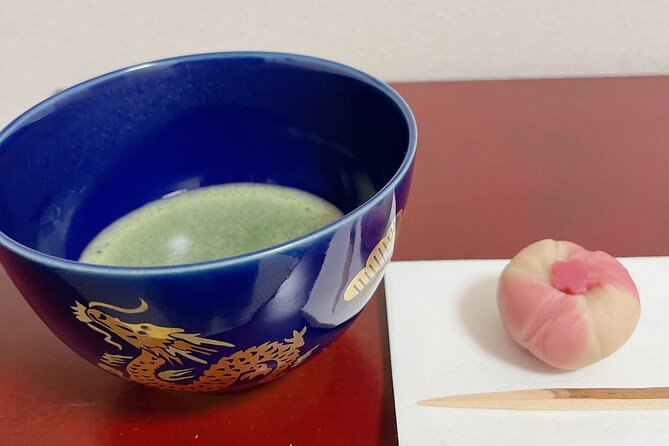
- Five handmade wagashi: You shape five Japanese sweets, with the style chosen according to the season.
- Two traditional arts in one visit: The workshop combines wagashi making with a formal Japanese tea ceremony.
- Private-home atmosphere: Tea master Ikuyo-san hosts the class in a Japanese home with a tatami room.
- Rare charcoal procedure: You watch charcoal being added to heat the water, a detail even many Japanese people rarely see.
- Two matcha servings: You receive matcha made by the tea master and then try whisking a cup yourself.
- Small group size: The class accepts a maximum of four people, allowing room for questions and individual help.
Why this Yokohama class feels different
Many Japanese cultural activities give you one carefully packaged task. This one links the food and the ceremony that traditionally go with it. You first make wagashi, then eat it in the proper setting with matcha. That order gives the tea ceremony more meaning than simply watching someone prepare tea.
The private-home location also changes the mood. Instead of a large demonstration room, you meet at a home in Yokohama and move into a traditional tatami room for the tea portion. You will need socks before stepping onto the tatami, so this is one of those small practical details worth handling before you leave your hotel.
The class is led by Ikuyo-san, a certified tea master who has practiced tea ceremony since childhood. Her teaching style, based on the information available about the experience, is friendly and reassuring rather than stiff. That matters if you feel nervous about using the right movements or entering a tea room for the first time.
You do not need previous knowledge of tea ceremony, Japanese sweets, or matcha. The class is built for beginners, and the format gives you time to ask questions about the ceremony, its background, and the meaning behind what you are doing.
A few more Yokohama tours and experiences worth a look
Meeting Ikuyo-san at Azamino Station
The meeting point is Azamino Station, at 2 Chome Azamino in Yokohama’s Aoba Ward. The class begins at 1:30 pm and ends back at the meeting point after about three hours. The area is near public transportation, which makes this a practical outing from the Tokyo area, though you should allow enough time to reach suburban Yokohama.
Pickup is offered, but the stated start point is Azamino Station. Confirm the pickup arrangement when you book rather than assuming a hotel transfer is included. The class has a maximum of four people, a useful limit for a workshop where everyone needs workspace, instruction, and a clear view of the tea procedure.
Because the activity takes place in a private home, I would treat punctuality as especially important. This is not a large attraction with a ticket desk and a flexible entry window. Arrive at the agreed meeting place on time, with socks ready for the tatami room.
Shaping seasonal wagashi by hand
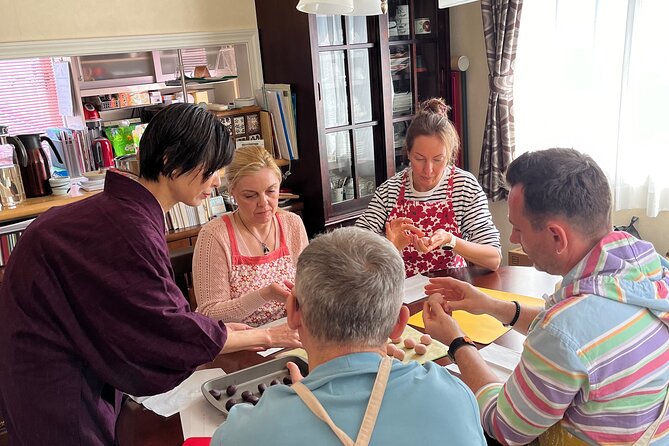
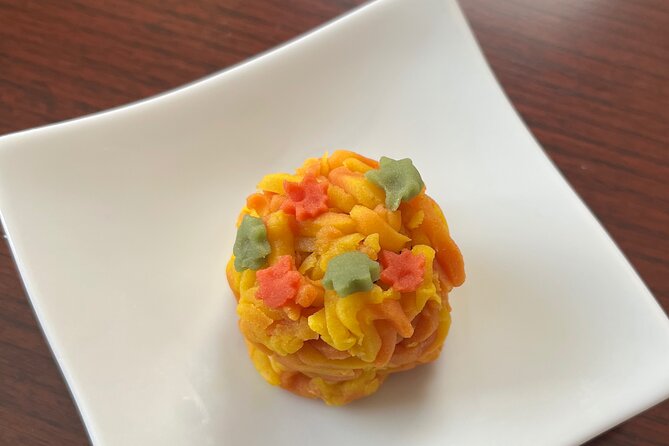
The first part of the class lasts about an hour and a half and focuses on making wagashi. Wagashi is the broad Japanese term for traditional sweets, and the exact style changes with the season. You might work with nerikiri, gyuhi mochi, manjyu, or another preparation selected by the tea master.
The appeal here is not just the taste. Japanese sweets often carry visual and seasonal meaning, so shaping the dough gives you a small lesson in how Japanese food can reflect the time of year. The class lets you handle the ingredients yourself instead of only watching a skilled maker.
You make five pieces of wagashi. The sweets may look simple when finished, but shaping them neatly takes care and patience. This is a good activity for anyone who enjoys craft work, food preparation, or close-up cultural instruction. It also gives children and teenagers something practical to do, rather than asking them to sit quietly through a ceremony from the start.
One especially useful feature is that the making session comes before the tea ceremony. You can ask questions while your hands are busy, then see how the finished sweets fit into the formal tea setting. The change from casual preparation to quiet ritual gives the afternoon a clear rhythm.
The class does not require you to bring equipment or ingredients. The materials for making wagashi are included. You should still remember that a private-home workshop may feel less polished than a commercial cooking school, which is part of its personal character but may not suit someone looking for a large, highly produced demonstration.
Entering the tatami room for tea ceremony
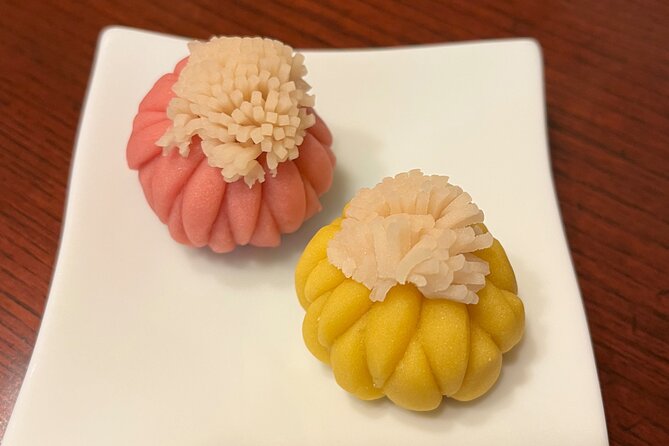
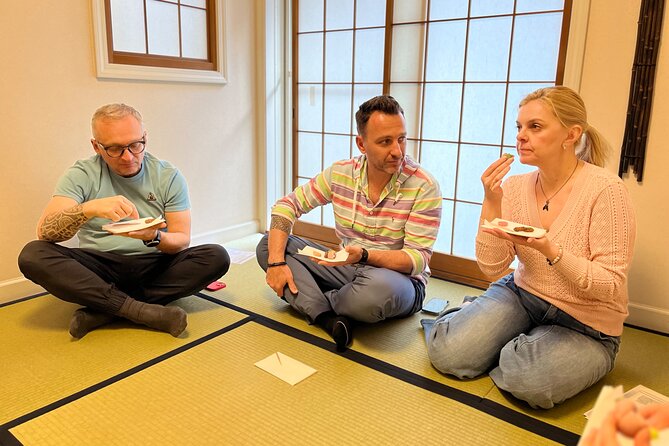
After the sweets are prepared, you learn how to be a guest in a Japanese tea ceremony. The setting is a traditional tatami room, where details such as how you enter, sit, receive the tea, and eat the sweet matter.
For a first-time visitor, etiquette can seem intimidating. The point of this class is not to test you. Ikuyo-san explains the basic guest customs and shows the movements before asking you to try them. If you are unsure, pay attention to the demonstration and copy the sequence at your own pace.
You eat wagashi during this part of the experience, which helps you understand why the sweet is served with matcha. The sweetness prepares your mouth for the tea’s bitter edge, and the two together create the familiar balance of a tea gathering.
The ceremony also gives you a quieter look at Japanese culture. You are not simply learning how to whisk green tea. You are learning how food, hospitality, movement, space, and attention work together. That is the strongest reason to choose this activity over a short tea tasting.
The formal setting may not appeal to everyone. If you prefer a casual cooking class, sitting on tatami and following tea-room etiquette could feel more structured than expected. For people who are curious about traditional customs, though, this structure is exactly what gives the class its value.
Seeing the charcoal procedure and learning the tea ritual
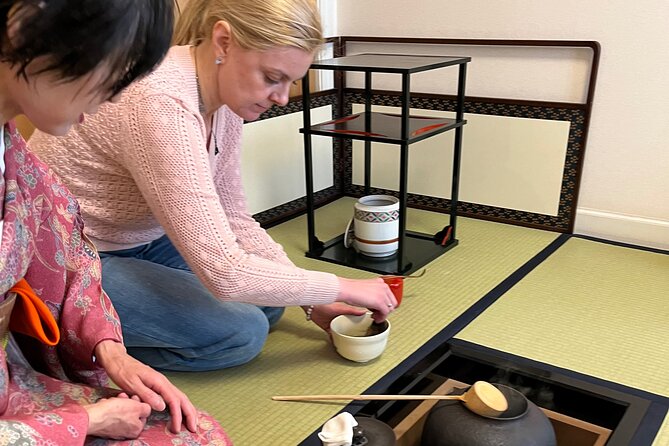
A particularly unusual part of the visit is the charcoal procedure. The tea master adds charcoal to heat the water used for tea. This is not a detail you are likely to encounter in a standard matcha demonstration, and it is described as rare even for Japanese people.
Watching this step connects the ceremony to its older, slower form. You see that the tea is not treated as an instant drink prepared at the back of a café. Heat, timing, equipment, and movement all have a place in the process.
Ikuyo-san first demonstrates the ceremony and prepares matcha for you. You then learn how to make a cup yourself. The experience provides two cups of matcha in total: one prepared for you and one that you whisk on your own.
Making matcha can be fun, but it also rewards care. You will have to follow the tea master’s instructions rather than rushing through the whisking. The chance to try for yourself is important because it turns a performance into a skill you can remember and repeat.
Along with the wagashi you make, the tea master prepares wagashi and dried Japanese sweets for the session. The stated arrangement is five handmade pieces, with one used during the ceremony and the remaining four taken home. The additional sweets allow you to taste the tea with more than one type of Japanese confection.






What you take home at the end
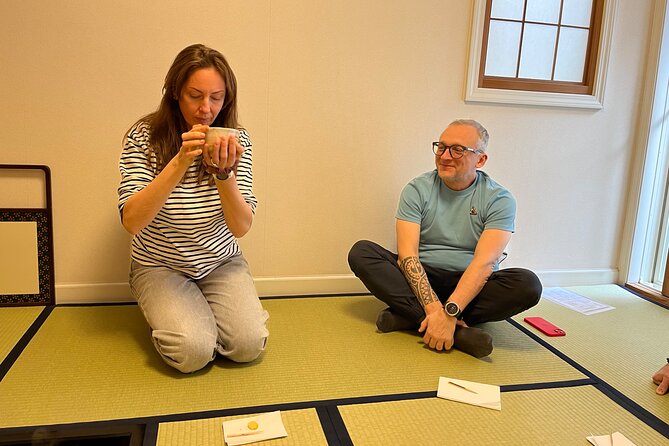
The take-home sweets are a practical bonus. You make five wagashi, enjoy one in the tea ceremony, and take the other four with you. That gives the workshop a physical souvenir beyond photographs and memories.
Do not expect the sweets to replace a full meal. Wagashi are small confections meant to accompany tea, and the class is focused on technique and ceremony rather than lunch or dinner. Plan food separately if you will be hungry after the three-hour session.
The sweets may also travel better than many food souvenirs, but the supplied details do not specify packaging or storage instructions. Ask Ikuyo-san how best to carry and store them before leaving, especially if you have more sightseeing planned afterward.
Is $97.55 a fair price?
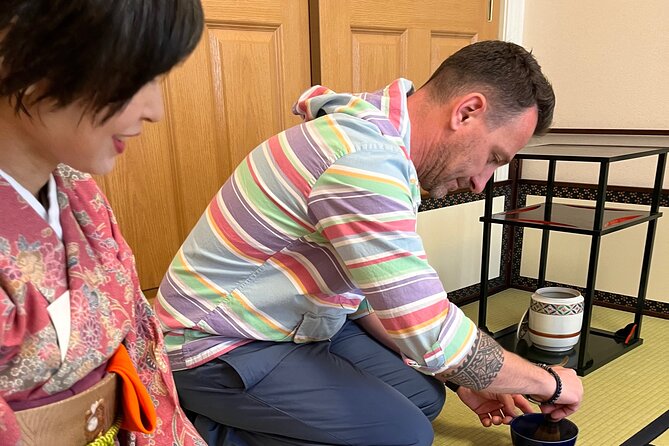
At $97.55 per person, this is not a budget activity. You are paying for about three hours, ingredients, two matcha servings, a small group capped at four people, personal instruction, and access to a private home and tatami tea room.
The value depends on what you want from a cultural experience. If your goal is simply to drink matcha, you can find cheaper options. If you want to make seasonal sweets, learn guest etiquette, ask questions directly, and see the charcoal procedure, the package offers considerably more than a basic tasting.
I would compare it with the cost of booking two separate activities. Combining wagashi making and tea ceremony saves you from arranging separate transport and schedules, and the link between the two parts makes the afternoon feel coherent.
The small group is also relevant to the price. With no more than four people, you should have a better chance to see the demonstration and receive help with your sweets and matcha. A large class might cost less, but it would not offer the same level of direct contact.
Who will enjoy this most?
This class is a strong choice for first-time visitors to Japan who want a clear introduction to two traditional arts. You do not need prior experience, and the instructor’s warm approach is useful if you are worried about making an etiquette mistake.
Families with older children and teenagers may also find the format appealing. The hands-on wagashi work gives younger participants an active role, and the tea-making section lets them try a skill for themselves. The experience has already proved suitable for two 13-year-old boys, according to the available details.
I would also recommend it to food lovers, craft-minded people, and anyone interested in Japanese customs beyond major sights. The class gives you time to ask about the ceremony rather than simply observing it from a distance.
You might want to skip it if you dislike sitting on tatami, have no interest in sweets, or want a fast activity close to central Tokyo. The trip to Azamino and the three-hour schedule require a real time commitment, and the formal tea portion may feel slow if you prefer high-energy sightseeing.
Pairing the class with Yokohama sightseeing
The activity ends back at the meeting point, so you can plan the rest of your day around Azamino Station. The information for the class specifically notes that the Yokohama Ramen Museum is about 15 minutes from Azamino Station.
That pairing could work well if you want to follow a quiet cultural workshop with something more casual and food-focused. Check the museum’s current hours and travel directions separately, since the tea class itself does not include admission or transportation to it.
You should not try to squeeze the workshop into a tight sightseeing schedule. The class begins at 1:30 pm and lasts about three hours, so your afternoon and early evening are largely committed. Treat it as the main event of the day, then add the ramen museum or another nearby plan only if the timing works comfortably.
Booking, cancellation, and small practical details
Confirmation is sent within 48 hours of booking, subject to availability. Since the class takes place in a private home and accepts only four people, book ahead rather than waiting until the day before.
Free cancellation is available if you cancel at least 24 hours before the local start time. Cancellations or changes made less than 24 hours before the start are not accepted for a refund.
Bring socks for the tatami room. Ingredients and matcha are included, and you do not need to bring anything for the wagashi-making portion. Mobile tickets are available, which keeps the booking process simple once your place is confirmed.
Should you book this Yokohama tea and sweets class?
Book it if you want a personal, beginner-friendly introduction to wagashi and tea ceremony, especially if you value direct instruction over a quick demonstration. The rare charcoal procedure, seasonal sweets, private-home setting, and small group give the three-hour class a clear identity.
I would hesitate only if $97.55 feels too high for a food activity, or if you are looking for a short stop between major attractions. For the right visitor, this is a thoughtful use of an afternoon in Yokohama, with new skills, a better grasp of tea-room etiquette, two cups of matcha, and four handmade sweets to carry away.
FAQ
Where does the Japanese sweets and tea ceremony class begin?
The meeting point is Azamino Station, at 2 Chome Azamino, Aoba Ward, Yokohama, Kanagawa 225-0011, Japan. The activity ends back at the meeting point.
What time does the class start?
The scheduled start time is 1:30 pm. The full workshop lasts about three hours.
How many people can join the activity?
The class has a maximum of four participants.
Do I need to bring ingredients or equipment?
No. Ingredients for making wagashi are included, and you do not need to bring anything for that part of the class. You should bring socks for entering the tatami room.
How many wagashi sweets do I make?
You make five pieces of wagashi. One is used during the tea ceremony, and the remaining four are available to take home.
Can I cancel for a full refund?
Yes, if you cancel at least 24 hours before the experience’s local start time. Cancellations and changes made less than 24 hours before the start are not accepted for a refund.
More Tea Ceremony & Matcha in Yokohama
More tours in Yokohama we've reviewed









Tea Ceremony & Matcha, compared.
 ★ 5.0Matcha Making Class in Tokyo with Authentic Japanese Sweets SetFrom $21
 ★ 5.0Tokyo: Traditional Tea Ceremony with a Tea MasterFrom $381 hour
 ★ 4.5Dynamic Tokyo: Tokyo Tower, Tea Experience, Bay Cruise Day TourFrom $99
 ★ 4.9Tokyo: Matcha Making Experience with Mochi Sweets in AsakusaFrom $221 hour
 ★ 4.7Tokyo: Matcha and Kimono ExperienceFrom $57
 ★ 5.0Tea Ceremony Workshop in Tokyo by the Experienced InstrucorFrom $38