
Reviewed · TEA CEREMONY & MATCHA
Japanese Tea Ceremony at Private Home in Yokohama, suburban Tokyo
The most unusual part of this Japanese tea ceremony is the charcoal procedure, when the tea master adds charcoal to heat the water. It is a small, traditional detail that many Japanese people rarely see, and it gives the session a sense of real practice rather than a staged demonstration.
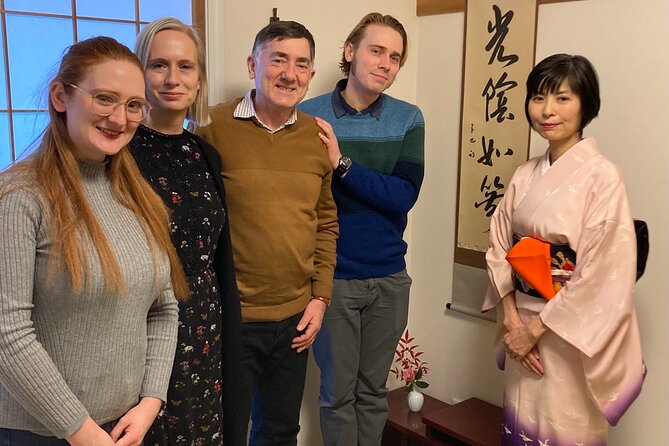
I like the private-home setting, where you meet the Kono family and learn in a genuine tatami room. I also like that you do more than watch: you eat handmade seasonal wagashi, learn how to act as a guest, and prepare your own matcha. The main consideration is the location, which is in suburban Yokohama rather than central Tokyo, so allow time for the trip to Azamino.
In This Review
- Key points
- A Real Tea Room in Suburban Yokohama
- What Happens During the First Demonstration
- The Charcoal Procedure Is the Special Detail
- Making Two Bowls of Matcha
- Seasonal Wagashi Adds More Than Sweetness
- A Lesson Led by Long Practice
- Why the $52.71 Price Can Make Sense
- Planning the Azamino Visit
- Who Will Enjoy This Tea Ceremony
- A Few Practical Details Before You Go
- Should You Book This Yokohama Tea Experience?
- FAQ
- Where does the Japanese tea ceremony take place?
- How long does the experience last?
- Is pickup available?
- Where does the activity end?
- Do I need to bring anything?
- How much does the experience cost?
- How many cups of matcha will I drink?
- What sweets are included?
- Is the food suitable for vegan and gluten-free diets?
- Is this a private activity?
- How far in advance is it usually booked?
- Can I cancel for a full refund?
Key points
- Rare charcoal procedure: Watch water being heated with charcoal, an uncommon sight even in Japan.
- Two cups of matcha: Drink one prepared by the tea master, then mix a second cup yourself.
- Seasonal handmade sweets: Try wagashi such as nerikiri, gyuhi, or manjyu, along with dried Japanese sweets.
- Private tatami-room setting: Take part in a small, private activity at a Japanese home in Aoba Ward.
- Experienced instruction: The tea master has studied the tradition for more than 40 years and taught it for over 15 years.
- Vegan and gluten-free friendly: The included matcha and wagashi are suitable for vegan and gluten-free diets.
A Real Tea Room in Suburban Yokohama
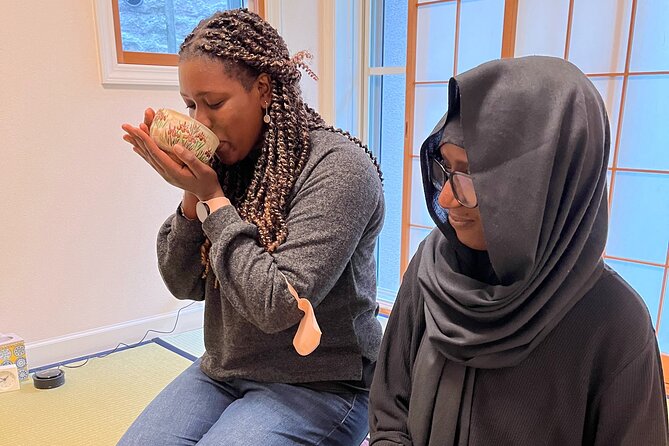
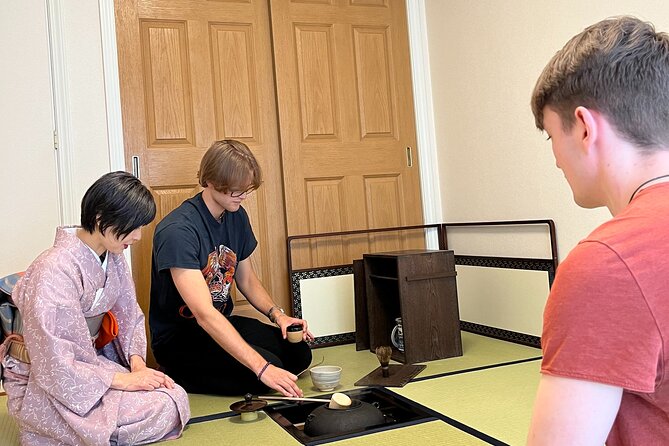
This experience takes place at a private Japanese home in Dresse Azamino Gardens, in Yokohama’s Aoba Ward. The setting matters. You are not sitting in a large attraction with a crowd moving through on a schedule. You enter a dedicated tatami tea room and take part in a small private activity with your own group.
The meeting point is in the Azamino area, near public transportation. Pickup is offered, though you should confirm the exact arrangement when booking because the listed starting point is the private home itself. The experience ends back at the same meeting point.
Azamino is not central Tokyo, and that is both the appeal and the practical drawback. You get a residential Yokohama setting, but you need to plan for the journey. If your schedule is already packed with sights in Asakusa, Shibuya, or central Tokyo, this 90-minute workshop will also require extra travel time.
The activity is often booked well ahead, with an average booking lead time of about 38 days. That is useful to know if you are visiting during a busy season or have your heart set on a certain day. Confirmation is sent within 48 hours, subject to availability.
A few more Yokohama tours and experiences worth a look
What Happens During the First Demonstration
The tea master begins by showing you how a Japanese tea ceremony works. You learn how to be a guest, not just how to make a bowl of green tea. That distinction is important because tea ceremony is built around manners, attention, and the relationship between host and guest.
You will be in a traditional tatami room, so socks are required. Bring a clean pair before you arrive. This is a tiny packing detail, but forgetting it can make the entrance awkward, especially since shoes are not worn on tatami.
During the demonstration, the tea master prepares matcha for you. You receive handmade wagashi and dried Japanese sweets to eat with the tea. The sweet is not just a snack on the side. Its sweetness balances the bitter edge of matcha and forms part of the order and rhythm of the ceremony.
The wagashi changes with the season. Possible examples include nerikiri, a carefully shaped confection often made with sweet bean paste, gyuhi, a soft mochi-like sweet, and manjyu. The exact item is selected by the tea master, so you should expect a seasonal choice rather than a fixed menu.
The private setting also leaves room for questions. You can ask about the gestures, the utensils, the sweets, and the wider history of Japanese tea ceremony as the session unfolds. For many people, that open conversation is more useful than a short scripted performance.
The Charcoal Procedure Is the Special Detail
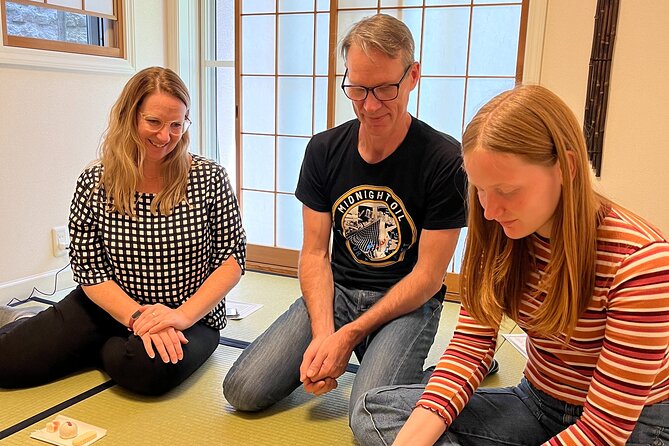
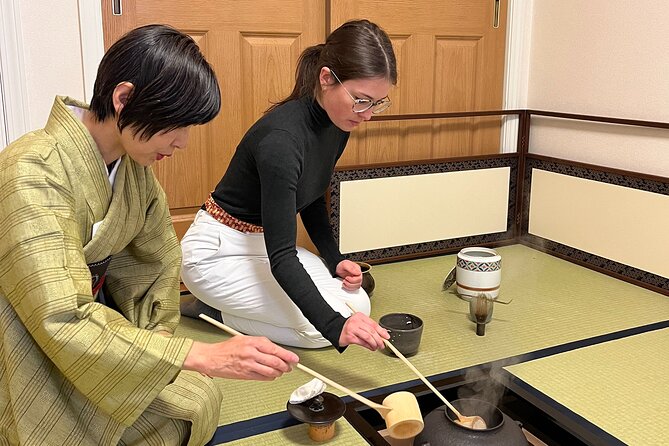
The charcoal procedure gives this workshop its strongest sense of tradition. The tea master adds charcoal to heat the water, showing you a step that is often skipped in modern demonstrations or hidden from view.
This is not a quick trick for making tea. It helps you see that the ceremony includes careful preparation before the bowl reaches the guest. The heat source, the water, the utensils, the sweets, and the guest’s conduct all form part of one connected process.
You should not expect a long technical lesson about charcoal. The activity lasts about an hour and a half, so the procedure is one part of a wider introduction. Still, it is the detail that makes this experience more than a basic matcha-making class.
I especially like this feature for visitors who have already seen matcha prepared at a café or cultural center. Making powdered tea is easy to arrange. Seeing a traditional heating procedure in a private tea room is harder to find, even within Japan.
Making Two Bowls of Matcha
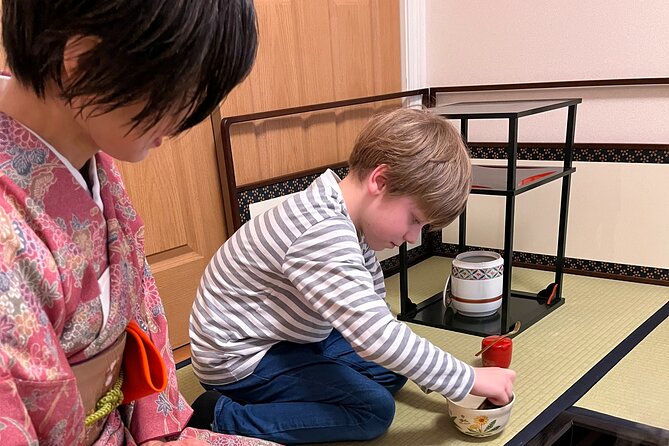
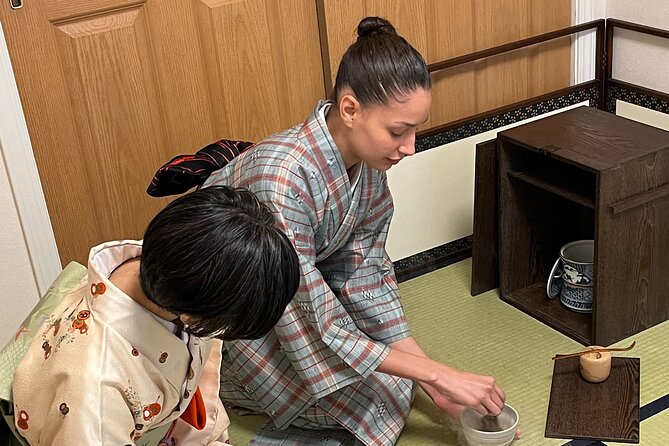
After watching the tea master, you get your own turn. You can mix matcha yourself and drink the bowl you prepare. In total, you drink two cups: one made for you and one made by you.
That hands-on step is well judged. The demonstration gives you the manners and sequence first, then your turn lets you test what you have just seen. You may not produce a perfect bowl on your first attempt, but that is part of the point. The tea master can guide you through the process and answer questions as you work.
This format also helps you understand the difference between everyday green tea and matcha. Matcha is whisked into water rather than steeped and removed, so you drink the powdered tea itself. The result has a stronger taste and a different texture from ordinary brewed tea.
The activity is suitable for people who want participation without committing to a full-day cultural program. Ninety minutes is long enough to cover the basic ceremony, the charcoal procedure, sweets, two cups of matcha, and questions. It is short enough to fit into a larger Yokohama day.
Seasonal Wagashi Adds More Than Sweetness
The wagashi is one of the quiet pleasures of the visit. Because the tea master makes the sweets, you are not simply receiving a packaged souvenir snack. The food is selected according to the season and served as part of the tea experience.
Nerikiri, gyuhi, and manjyu each offer a different feel, but you should not count on receiving a particular one. The menu depends on the time of year. That uncertainty is a benefit here because the sweet is tied to the season rather than fixed for every booking.
Dried Japanese sweets are also prepared for you. Together, the sweets give you a better sense of how the tea ceremony balances flavor and appearance. The sweet prepares your palate for matcha, while the tea keeps the confection from becoming overly sugary.
The included food is suitable for vegan and gluten-free diets, according to the activity details. If you have another allergy or dietary concern, ask before booking rather than assuming every ingredient will suit you.
Other private tours in Yokohama






A Lesson Led by Long Practice
The tea master has studied Japanese tea ceremony for more than 40 years and has taught students for over 15 years. Those numbers matter because the session is not simply a demonstration by someone who has learned a few gestures for visitors.
You can expect the teacher to explain both the actions and the reasons behind them. The stated focus is on learning how to be a guest, understanding the history of the ceremony, and asking questions. That makes the activity a good fit if you want cultural context instead of only a photo opportunity.
The Kono family also forms part of the experience. A direct account of a family visit describes enjoyable conversation with the Kono family, including a group traveling with a baby. That suggests the setting can feel personal and welcoming, though you should still consider your own group’s needs and the quiet nature of a tea room.
Because this is a private activity, only your group participates. That gives you more freedom to ask questions and move at a comfortable pace than you would have in a large class. It also means the experience depends on your interest. If you prefer to sit silently and watch, you can do that, but you will get more from it by taking part.
Why the $52.71 Price Can Make Sense
At $52.71 per person, this is not the cheapest way to drink matcha in Japan. You can find green tea for far less at a café or shop. The price here pays for a private session, instruction from a long-practicing tea master, handmade seasonal sweets, two cups of matcha, and the use of a real home tea room.
The value is strongest for you if you want access to details that are difficult to encounter casually. The charcoal procedure is one example. Learning guest etiquette is another. A café may serve matcha, but it will not usually explain the order of the ceremony or let you ask questions in a private home.
The price is less attractive if you only want to taste matcha or take a quick cultural break between major sights. You also need to count the time and transport cost involved in reaching Azamino. Since the activity takes place outside the central tourist areas, it works best when you build it into a Yokohama or southwest Tokyo day.
The 100 percent recommendation rate and five-star score from 32 ratings indicate very strong satisfaction, but you should judge the experience by its format. This is a quiet, structured cultural lesson, not a fast-paced sightseeing stop. The people most likely to value it are those who enjoy food, etiquette, craft, and conversation.
Planning the Azamino Visit
The meeting point is in Ōbachō, Aoba Ward, at Dresse Azamino Gardens. The activity is near public transportation, and the location is associated with Azamino station. Pickup is offered, but the details are not specified, so confirm where and how pickup works before relying on it.
The area can also be paired with a visit to the Shin-Yokohama Ramen Museum. The suggested route takes about 15 minutes from Azamino station to the closest Shin-Yokohama station by Yokohama subway. That makes the tea ceremony a possible part of a food-focused day, though you should allow additional time for transfers, walking, and the meal itself.
Do not treat the ramen museum suggestion as part of the tea workshop. It is a separate idea for nearby planning. The tea activity itself begins and ends at the stated meeting point.
Because the workshop is only about 90 minutes, it can fit before or after another Yokohama activity. I would avoid scheduling it too tightly against a fixed train departure or timed admission. The booking confirmation is subject to availability and is expected within 48 hours, so leave room in your planning if your itinerary is still changing.
Who Will Enjoy This Tea Ceremony
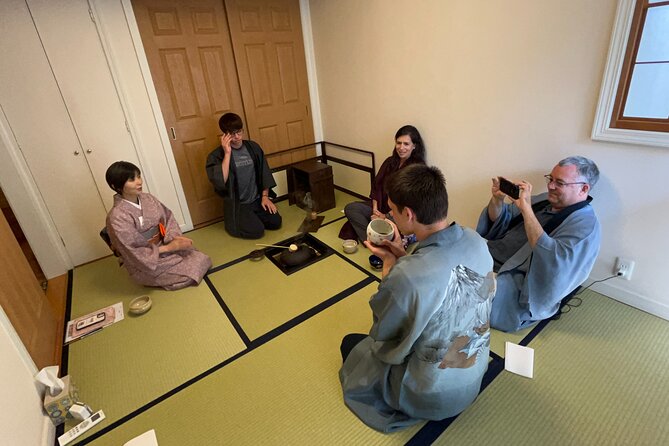
I would recommend this experience to you if you want a personal introduction to Japanese culture and prefer a small setting. Families, couples, and private groups can all take part, and the private format means you are not sharing the room with strangers.
It is also a good choice for anyone curious about etiquette. The focus is not only on whisking tea. You learn how to behave as a guest, watch the host’s preparation, eat the appropriate sweet, and understand why the ceremony follows a set order.
Food-minded visitors will appreciate the handmade wagashi and seasonal changes. The vegan and gluten-free suitability of the included sweets and matcha is another practical advantage, though other dietary questions should be raised before arrival.
I would hesitate to recommend it if you are staying only in central Tokyo and have no interest in making the trip to Yokohama. I would also choose another activity if you want a large group atmosphere, a broad sightseeing route, or a highly flexible drop-in class.
A Few Practical Details Before You Go
Bring socks for the tatami room. This is the one specific item the activity asks you to provide, and it is easy to forget when packing for a city day.
Plan for a calm 90 minutes. You will watch the demonstration, see the charcoal procedure, eat wagashi and dried sweets, drink tea made by the master, prepare your own matcha, and hear about the ceremony’s history.
Free cancellation is available if you cancel at least 24 hours before the local start time. Cancellations or changes made inside that window are not refunded or accepted, so check the local time carefully.
The activity is private, near public transportation, and ends at the meeting point. Confirmation arrives within 48 hours of booking when space is available.
Should You Book This Yokohama Tea Experience?
Book it if you want to understand tea ceremony from the guest’s side, taste handmade seasonal sweets, and see a charcoal procedure in a real private-home setting. The two-cup format gives you both a polished demonstration and a chance to try the craft yourself.
Skip it if you are looking only for a cheap cup of matcha or if reaching suburban Yokohama would take too much time from your plans. For the right visitor, the $52.71 cost buys more than tea. It buys attention, explanation, participation, and a personal meeting with the Kono family in a setting built for the tradition.
FAQ
Where does the Japanese tea ceremony take place?
It takes place at a private Japanese home at Dresse Azamino Gardens in Ōbachō, Aoba Ward, Yokohama, Kanagawa.
How long does the experience last?
The workshop lasts approximately one hour and 30 minutes.
Is pickup available?
Pickup is offered. The supplied details do not specify the exact pickup arrangement, so confirm the meeting instructions when booking.
Where does the activity end?
The activity ends back at the meeting point.
Do I need to bring anything?
You should bring socks because you need them to enter the tatami tea room.
How much does the experience cost?
The listed price is $52.71 per person.
How many cups of matcha will I drink?
You will drink two cups. The tea master prepares one, and you make the second yourself.
What sweets are included?
The experience includes handmade wagashi and dried Japanese sweets. Depending on the season, the wagashi may include nerikiri, gyuhi, or manjyu.
Is the food suitable for vegan and gluten-free diets?
The included matcha and wagashi are described as suitable for vegan and gluten-free diets.
Is this a private activity?
Yes. Only your group participates in the activity.
How far in advance is it usually booked?
It is booked an average of 38 days in advance, so booking early is sensible if your schedule is fixed.
Can I cancel for a full refund?
Yes, if you cancel at least 24 hours before the experience’s local start time. Cancellations made less than 24 hours in advance are not refunded.
More Private Tours in Yokohama
More Tea Ceremony & Matcha in Yokohama
More tours in Yokohama we've reviewed







Tea Ceremony & Matcha, compared.
 ★ 5.0Matcha Making Class in Tokyo with Authentic Japanese Sweets SetFrom $21
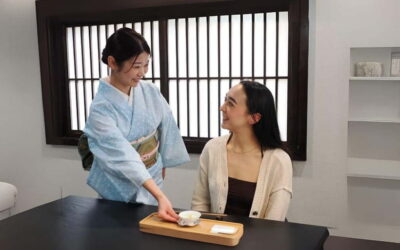 ★ 5.0Tokyo: Traditional Tea Ceremony with a Tea MasterFrom $381 hour
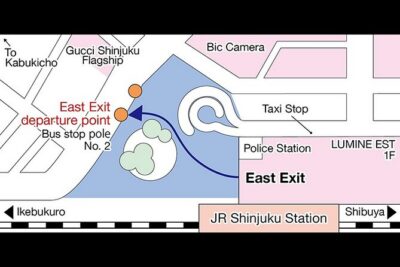 ★ 4.5Dynamic Tokyo: Tokyo Tower, Tea Experience, Bay Cruise Day TourFrom $99
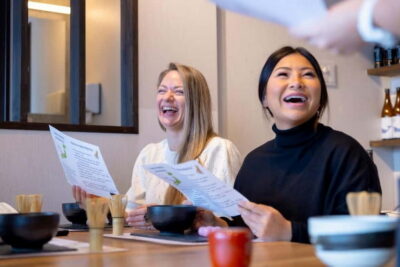 ★ 4.9Tokyo: Matcha Making Experience with Mochi Sweets in AsakusaFrom $221 hour
 ★ 4.7Tokyo: Matcha and Kimono ExperienceFrom $57
 ★ 5.0Tea Ceremony Workshop in Tokyo by the Experienced InstrucorFrom $38