
Reviewed · SUSHI MAKING CLASSES
Hand-rolled Sushi Temaki Zushi Workshop in Tokyo
Temaki sushi turns a Japanese home-party favorite into a hands-on meal. You learn the small trick behind properly seasoned vinegared rice, then build your own hand-rolled sushi from a spread of seafood and vegetables. I like that Mariko and Yoichi teach both the method and the reason behind it. I also like the freedom to choose your fillings, including vegetarian combinations.
The main consideration is the price: $72 for about two hours is fair if you value instruction and a sit-down meal, but it costs more than simply eating sushi at a casual restaurant. The meeting point is in Sumiyoshi, so you will need to plan your route across Tokyo before the class.
In This Review
- Key points at a glance
- Why temaki sushi makes a good Tokyo cooking class
- Meeting Mariko and Yoichi in Sumiyoshi
- The first lesson: getting sumeshi right
- Building your own rolls from seafood and vegetables
- Why the rolling method suits beginners
- Adding Japanese clear soup to the meal
- A two-hour pace with food at the center
- Who will get the most from this workshop
- The value of $72
- Practical points before you book
- Should you book this temaki sushi class?
- FAQ
- How long does the temaki sushi workshop last?
- Where does the activity begin?
- Where does the activity end?
- How many people can join?
- Is the meeting point near public transportation?
- What does the workshop teach first?
- Will I make my own hand-rolled sushi?
- Can I choose my sushi fillings?
- Can vegetarians take part?
- Is cancellation free?
Key points at a glance
- Learn the rice first: The class explains how to make sumeshi, or vinegared sushi rice, including a small technique that affects the final taste.
- Roll sushi without special skills: Temaki sushi is easier to assemble than nigiri, so you can take part even if you have never made sushi.
- Choose seafood or vegetables: You select fillings from a range of ingredients, and vegetarian temaki is possible.
- Make a second dish: The workshop also shows you how to prepare Japanese clear soup to serve with the sushi.
- Small group setting: The class accepts a maximum of six people, allowing room for direct help.
- Return to the same place: The activity begins and ends at Canal Palace, 2-chome-16-11 Sumiyoshi, Koto City.
Why temaki sushi makes a good Tokyo cooking class
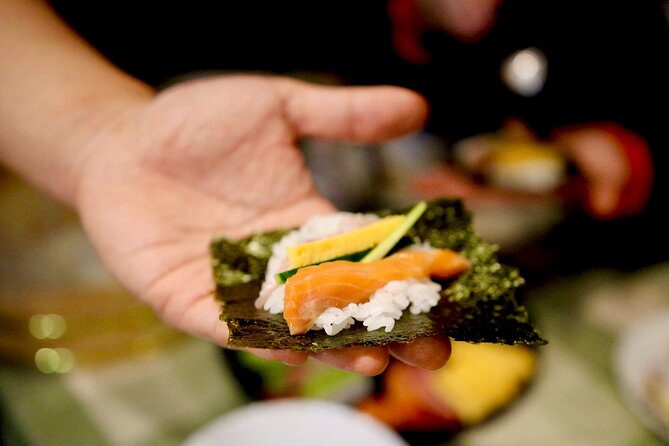
Temaki sushi means hand-rolled sushi. Instead of shaping a neat piece of nigiri with a trained sushi chef’s hands, you place rice and fillings on nori seaweed, then roll it into a cone or cylinder. It is relaxed, social, and forgiving.
That makes this class a good match if you want a Japanese food activity that feels useful after your trip. You are not just watching someone prepare a dish. You learn a meal you can recreate at home for friends, family, or a casual party.
I especially like the home-cooking angle. Temaki sushi is one of the popular menus for Japanese gatherings because each person can build a roll to suit their taste. One person can favor seafood, another can pile in vegetables, and nobody needs to produce identical pieces.
The format also removes some of the pressure associated with sushi. Nigiri requires careful shaping and a certain touch. Temaki is much less fussy. If your first roll looks a little uneven, that is part of the charm, and the ingredients are still easy to eat.
A few more Tokyo tours and experiences worth a look

Meeting Mariko and Yoichi in Sumiyoshi
The workshop meets at Canal Palace, at 2-chome-16-11 Sumiyoshi in Koto City, Tokyo. The activity finishes at the same location, which keeps the two-hour plan tidy and avoids a second drop-off point.
The meeting place is near public transportation, but the information provided does not name a particular station or give a walking time. I would check the exact route before leaving your hotel and allow enough time to find Canal Palace. Sumiyoshi is not the sort of location you should approach without checking your map first, especially if you have a tight evening plan.
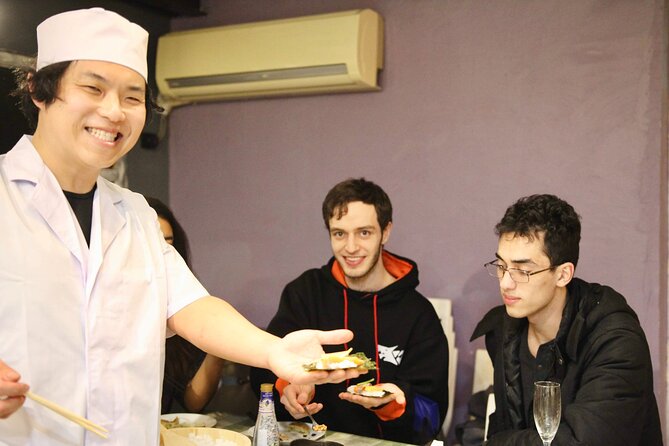
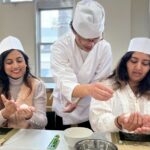
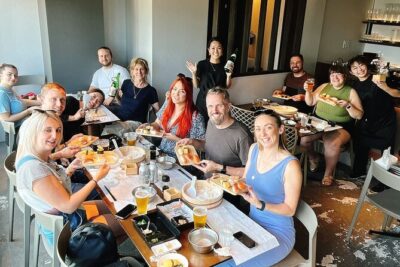
The small maximum of six people matters here. A sushi class can become frustrating when an instructor must divide attention among a large room. With up to six participants, Mariko and Yoichi can watch how you handle the rice, nori, and fillings and offer help as you assemble your rolls.
Their teaching style is described as warm and willing to share Japanese culture, but the practical benefit is even more important. You can ask about the steps while you are actually doing them. That is far more useful than watching a polished demonstration from several rows away.
The first lesson: getting sumeshi right
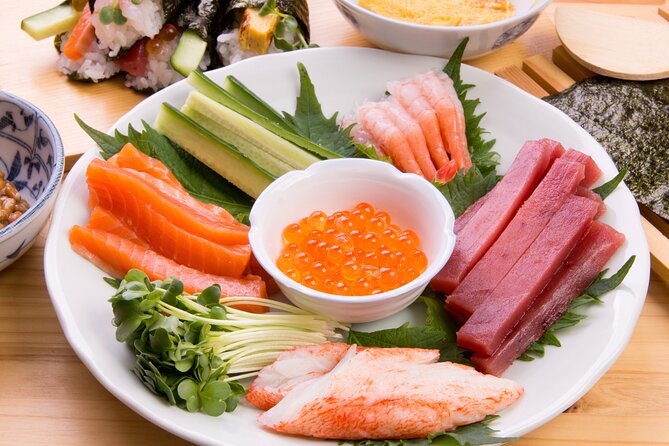
The workshop begins with an explanation of how to prepare temaki sushi. The first major focus is sumeshi, the vinegared rice used for sushi.
This is the foundation of the meal. Even good fillings will not make convincing sushi if the rice is too plain, too wet, or poorly seasoned. The class shows the basic process and points out a small trick that helps produce a more authentic result.
The exact technique is not spelled out in the available details, so you should expect a demonstration and practical explanation rather than a printed recipe with every measurement provided here. If you want to repeat the dish at home, pay close attention during this part and ask questions.
I like that the rice receives attention before the fun assembly begins. It is easy for a beginner class to focus only on colorful toppings. Teaching the rice gives you a better understanding of why sushi tastes balanced when the seasoning, rice, nori, and fillings work together.
This part should also help you judge the class’s value. You are paying for instruction that can be used later, not just for an attractive plate of food. If you already prepare sushi rice regularly, this section may feel familiar. For a first-time cook, it is likely to be one of the most useful parts.
Building your own rolls from seafood and vegetables
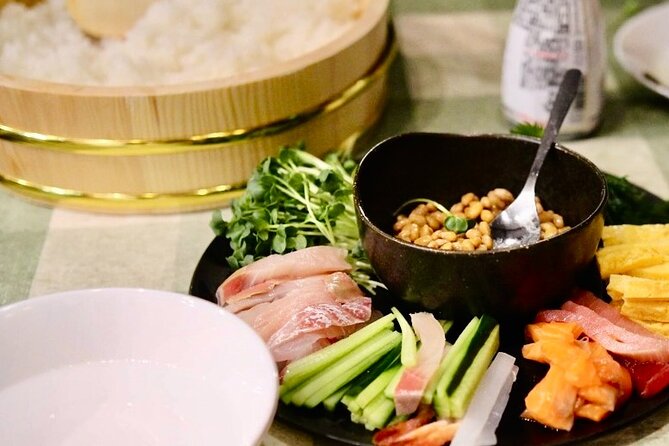
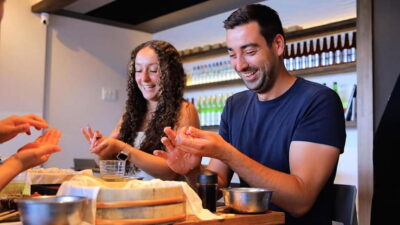
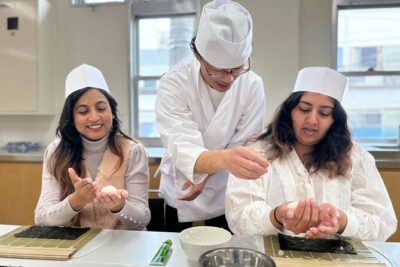
After the rice lesson, you make your own temaki sushi. The key feature is choice. You select favorite fillings from a range of seafood and vegetables, then decide how much to add and how to combine them.
That freedom is more than a nice extra. It shows you how temaki works as a shared meal. You do not need to follow one fixed recipe. You can keep one roll simple, try a different combination in the next, and adjust the balance of rice and filling as you go.
Fresh ingredients are an important part of the experience. The available information describes the sushi ingredients as incredibly fresh, and the selection as wide. Specific fish and vegetables are not listed, so I would not book expecting a particular seafood item. The useful promise is variety, not a named menu.
Vegetarians can take part. A vegetarian participant was able to make vegetarian temaki, which makes this class more flexible than a sushi activity built around raw fish alone. If you have dietary needs beyond vegetarian choices, the supplied details do not confirm what can be accommodated, so you should ask the provider before booking.
The hands-on format also gives you a chance to learn proportion. Too much rice can split the nori or bury the filling. Too much filling can make the roll difficult to close. Those are small lessons, but they are exactly the kind that help you reproduce the meal at home.
Why the rolling method suits beginners
Temaki sushi is practical because it does not demand the precision of restaurant sushi. You place the components together and roll them by hand. The result can look fancy on a serving plate even though the preparation is straightforward.
That makes it a strong choice for families, couples, first-time cooks, and anyone who wants a food class without a steep learning curve. You do not need special skills to begin, and the instructors can guide you through the process.
The class is also more social than a demonstration-only workshop. Everyone can choose fillings and make sushi at their own pace. Since the final dish is assembled individually, different tastes can share one meal without forcing everyone to eat the same thing.
There is a small trade-off. If you are hoping to learn professional sushi-counter techniques, this is not that kind of lesson. The focus is home-style temaki, not knife work, fish aging, or the shaping of nigiri. That is not a weakness, but it is important to book the experience for what it teaches.
A few more Tokyo tours and experiences worth a look

Adding Japanese clear soup to the meal
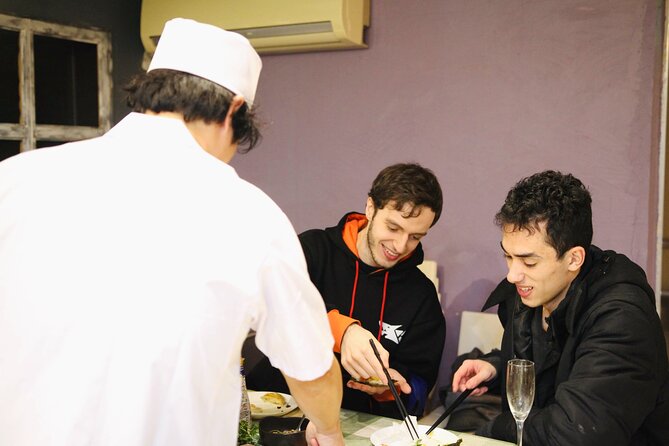
The workshop includes a lesson on making Japanese clear soup to serve with the temaki sushi. This gives the class a little more range than a single-dish activity.
Clear soup is a sensible partner for hand-rolled sushi. The sushi offers rice, nori, and selected fillings, while the soup adds a warm, lighter element to the meal. It also gives you another Japanese preparation to remember and repeat.
The description does not specify the soup’s ingredients or whether the recipe can be adapted for particular diets. You should ask Mariko and Yoichi directly if that matters to you.
I appreciate the inclusion because it reflects how a meal works at home. You are learning to put together a complete table, not just one photogenic roll. For someone collecting practical Japanese recipes, the soup lesson adds value to the short schedule.
A two-hour pace with food at the center
The total activity lasts about two hours. The schedule covers the explanation of temaki sushi, the sumeshi demonstration, the hands-on rolling session, and the clear soup preparation.
Two hours is long enough to learn and eat without taking over your entire day. You could fit it between other Tokyo plans, provided you allow time to reach Sumiyoshi and return to your next destination.
The pace will likely feel active rather than rushed. You are learning a process, handling ingredients, making several rolls, and preparing soup. Still, the exact division of time is not provided, so I would avoid scheduling a major attraction immediately afterward.
The meal itself is part of the value. You are not paying only for a cooking demonstration. You also receive the chance to eat the sushi you make, with ingredients selected during the class. That makes the $72 cost easier to justify for people who want both a meal and a cultural activity.
For someone focused only on eating as much sushi as possible, a restaurant may be a better deal. For someone who wants to understand a Japanese party menu and take home a repeatable skill, the class offers more than a standard lunch.
Who will get the most from this workshop
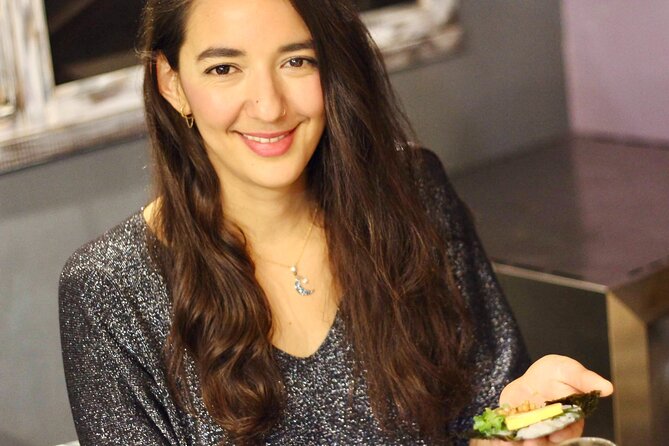
I would recommend this experience to:
- First-time visitors who want a clear introduction to Japanese food culture
- Home cooks who would like a simple sushi menu to recreate
- Vegetarian diners who want a class with vegetable-based temaki
- Couples and small groups looking for a shared activity
- Families with older children who can take part in food preparation
- Sushi fans who want to understand the home-style side of the dish
It may be less suitable if you want a formal lesson in professional sushi craft. It may also disappoint anyone expecting a long restaurant-style tasting menu, since the focus is on making your own food.
The small group limit is helpful for beginners. You have fewer people competing for attention, and the instructors can respond to your questions during the practical part. Since the class is offered by Tokyo Shitamachi Foodie, the setting also fits a food-focused look at everyday Tokyo rather than a grand, ceremonial culinary show.
The value of $72
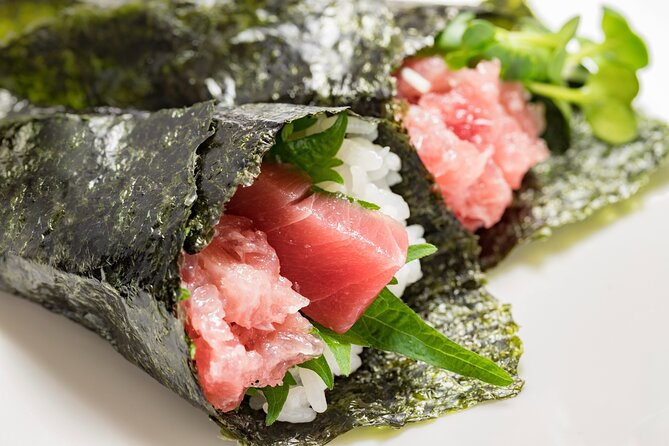
At $72, this is not the cheapest way to eat sushi in Tokyo. It can still be good value if you count the instruction, the meal, the small group size, and the second recipe for clear soup.
I would think of the fee as three purchases in one: a cooking lesson, a meal, and a cultural exchange with Mariko and Yoichi. The strongest value comes if you plan to make temaki again after returning home. The class explains a dish that does not require unusual equipment or advanced technique.
The value is weaker if you are already confident with sushi rice and hand-rolling. In that case, the main benefit becomes the fresh ingredients and the social setting, rather than new kitchen skills.
The mobile ticket is convenient for keeping the booking on your phone. Confirmation is received at booking, and free cancellation is available if you cancel at least 24 hours before the local start time. Cancellations made later, or changes made within that window, are not accepted for a refund.
Practical points before you book
Plan the route to Canal Palace in advance. The meeting point is near public transportation, but no exact station details are provided, so use the address rather than relying on a general Tokyo neighborhood name.
Keep the full two hours free. The class ends back at the meeting point, but the time needed to get there at the start and continue afterward is your responsibility.
If you are vegetarian, this workshop is a sensible option because vegetarian temaki has been prepared successfully. If you have allergies or other restrictions, ask before booking because the available information confirms vegetarian flexibility but does not list all substitutions.
Bring curiosity rather than expectations of restaurant-level perfection. Your rolls are meant to be made by hand, and the fun is in learning how to create a good-looking meal without specialist training.
Should you book this temaki sushi class?
I would book this workshop if you want a small, practical Tokyo food experience that you can repeat at home. The combination of sumeshi instruction, fresh seafood and vegetable fillings, vegetarian flexibility, hand-rolled sushi, and clear soup gives the two hours a useful shape.
I would skip it if your main goal is a low-cost sushi meal or a lesson in advanced professional technique. At $72, the class earns its price through personal instruction and participation, not through quantity alone.
For most first-time cooks, the choice is easy: temaki sushi is approachable, the group is limited to six, and Mariko and Yoichi teach a dish that fits real home entertaining. Check the route to Sumiyoshi, allow the full two hours, and book if you want to leave Tokyo with a meal you can make again.
FAQ
How long does the temaki sushi workshop last?
The workshop lasts approximately two hours.
Where does the activity begin?
It begins at Canal Palace, 2-chome-16-11 Sumiyoshi, Koto City, Tokyo 135-0002, Japan.
Where does the activity end?
The activity ends back at the meeting point.
How many people can join?
The maximum group size is six travelers.
Is the meeting point near public transportation?
Yes. The meeting point is described as being near public transportation.
What does the workshop teach first?
It starts with an explanation of how to prepare temaki sushi and a demonstration of making sumeshi, or vinegared sushi rice.
Will I make my own hand-rolled sushi?
Yes. After the preparation lesson, you make your own temaki sushi.
Can I choose my sushi fillings?
Yes. You can choose favorite fillings from a variety of seafood and vegetables.
Can vegetarians take part?
Yes. Vegetarian temaki can be prepared, as shown by the experience of a vegetarian participant.
Is cancellation free?
Yes, if you cancel at least 24 hours before the experience start time. Cancellations made less than 24 hours in advance are not refundable, and changes within that period are not accepted.
More Workshops & Classes in Tokyo
More Sushi Making Classes in Tokyo
More tours in Tokyo we've reviewed






Sushi Making Classes, compared.
 ★ 5.0Sushi Making Tokyo Roll and Authentic Japanese Sushi ClassFrom $59
 ★ 4.9Tokyo: Roll and Authentic Sushi Making Class in AsakusaFrom $581h 40m
 ★ 5.0Make Sushi and Create Unforgettable Memories in TokyoFrom $79
 ★ 4.9Tokyo: Sushi Making Class in a Happi Coat near a Famous SpotFrom $421h 30m
 ★ 5.0Tokyo Sushi Making Class in Tsukiji with Professional ChefFrom $49
 ★ 5.0Tokyo Night Foodie Tour in Shinjuku – Seasonal Sushi, Wagyu BeefFrom $111