
Reviewed · SUSHI MAKING CLASSES
Tokyo: Kappodo sushi Live Workshop
Tokyo’s Kappodo sushi workshop puts you close to the food, the knife, and the chef. In about one hour and 45 minutes, you make seven nigiri pieces, one gunkan-style sushi, and a thin roll, then sit down to eat what you prepared.
I like the small group size of four, since the chef can watch your hands and correct your technique. I also like the fish lessons, which cover not just preparation but the type of fish, its traits, and its life in the ocean. The main drawback is the price: at $160, this is much more than a casual sushi lunch, so you should value the instruction and hands-on time.
In This Review
- Key points at a glance
- Why this is more than a sushi lunch
- Arriving at the Nishiazabu kitchen studio
- Starting with tea and a fish demonstration
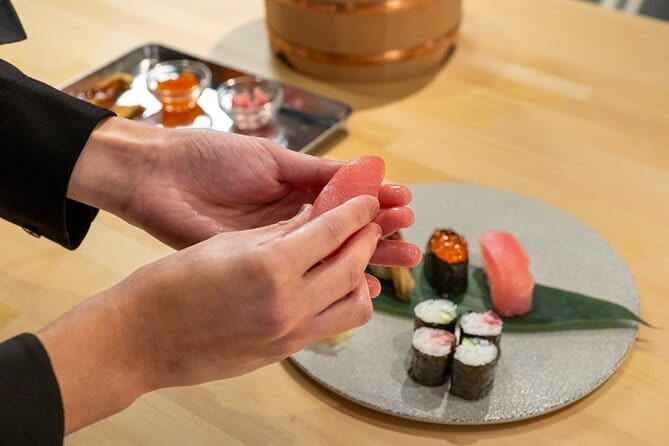
- Making seven nigiri pieces by hand
- Adding gunkan sushi and a thin roll
- Eating your own work and taking the photo
- Asking questions before you leave
- What the sushi history lesson adds
- Who should book the Kappodo workshop
- Booking details that matter
- Should you book this Tokyo sushi class?
- FAQ
- Where does the Kappodo sushi workshop take place?
- How long does the activity last?
- How many people can join the class?
- Is the sushi instruction in English?
- What types of sushi will I make?
- Is lunch included?
- Are drinks included?
- Is transportation included?
- Do I receive anything besides the meal?
- What is the cancellation policy?
Key points at a glance
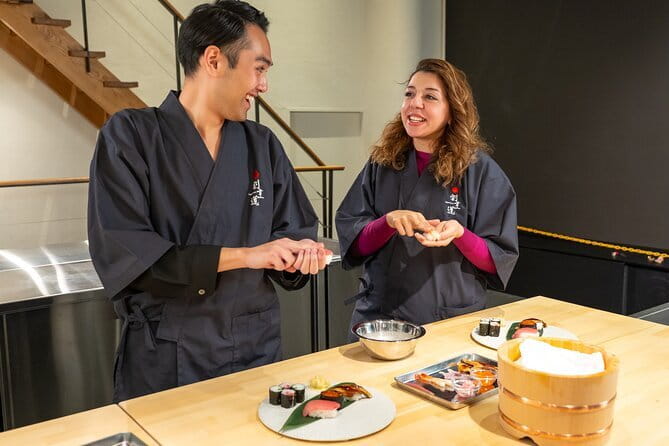
- You make real sushi yourself: The session includes seven nigiri, one gunkan-style piece, and a thin roll cut into six pieces.
- The chef works in English: Instructions cover how to handle the fish, shape the rice, and understand why each step matters.
- The group is capped at four people: This gives you a better chance to receive direct help than in a large cooking class.
- Fish is part of the lesson: You learn about fish types, their characteristics, and their lives in the ocean.
- Sake and lunch are included: You can enjoy your sushi with a cool drink, and original sake tasting is available.
- You get a useful shopping perk: The same-day 1F shop discount is 10 percent, and a participation certificate is included.
Why this is more than a sushi lunch
Many visitors eat sushi in Tokyo without learning what makes good sushi difficult. This class gives you the missing piece: the handwork behind the finished plate.
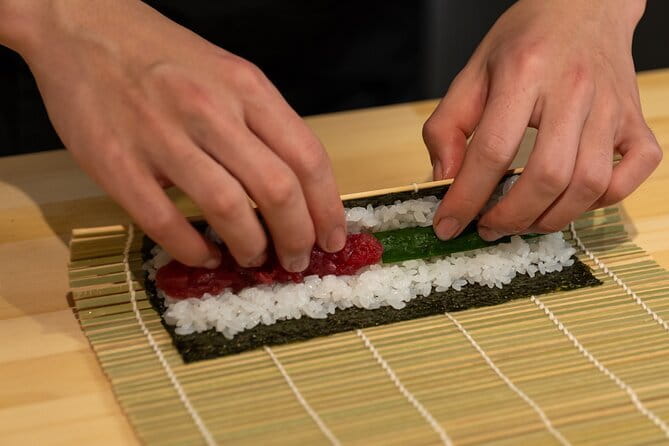
Nigiri looks simple. It is only fish and rice, but the chef must prepare both with care. The rice needs the right shape and pressure. The fish must be cut properly. The topping must sit neatly on the rice without being crushed or loosened. You get to see those choices close up, then try them yourself.
The class also explains the reason behind the method. That matters. You are not only copying a series of movements. You are learning why the chef handles rice and fish in certain ways, which gives the activity more value than a quick demonstration.
The chef is English-speaking, so you can ask questions as you work. That is especially useful if you want to understand sushi beyond familiar menu names. The fish discussion includes details about each type and its life in the ocean, adding a little food science to the practical lesson.
A few more Tokyo tours and experiences worth a look
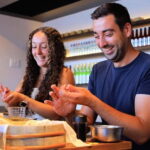
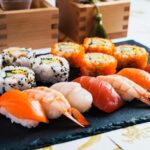
Arriving at the Nishiazabu kitchen studio
The workshop begins at Kappodo H.Q., also called the Tokyo D Kitchen Studio, in Nishiazabu, Minato City. The address is 2-chome 21-12, DK Building, Tokyo 106-0031.
The studio is near public transportation, but private transportation is not included. You should allow time to reach the meeting point on your own and check the exact address before leaving. The activity ends at the same place, which keeps the plan simple after lunch.
This is not a wandering food tour around Tokyo. It is a focused kitchen session. You arrive at one location, work at the studio, eat what you prepare, and leave from there.
The group limit is four people. That is one of the strongest practical features. Sushi technique depends on small movements, and a chef can give more useful guidance when only a few hands are working. If you are booking as a family or small group, the format should also make it easier to ask questions without holding up a large class.
Starting with tea and a fish demonstration
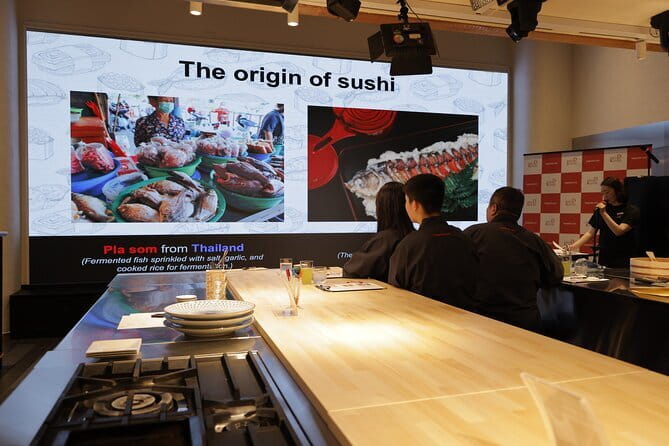
The session begins with a welcome drink, either water or green tea. It is a small touch, but it gives you a calm start before the practical work begins.
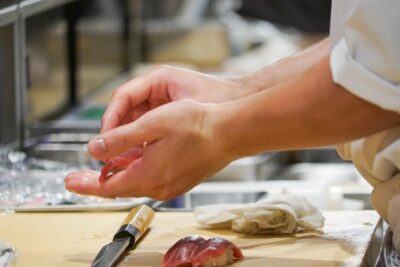
Next, the chef demonstrates how to cut and decorate the fish directly in front of you. This is one of the most useful parts of the class because cutting is hard to understand from a finished plate. You can watch the angle, pace, and care used before trying to handle ingredients yourself.
The chef also explains the fish being used. You learn about the type of fish and some of its characteristics, as well as its life in the ocean. That information gives context to the meal and may help you pay closer attention to fish names and textures when ordering sushi later in Japan.
The demonstration is also a good time to watch closely rather than worry about taking notes. The chef then makes nigiri step by step, explaining both what to do and why. Pay attention to the rice shaping. That is likely to be one of the least familiar skills for a first-time participant.
Making seven nigiri pieces by hand
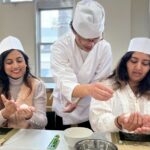
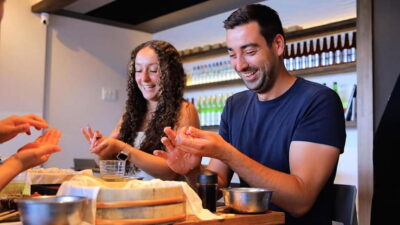
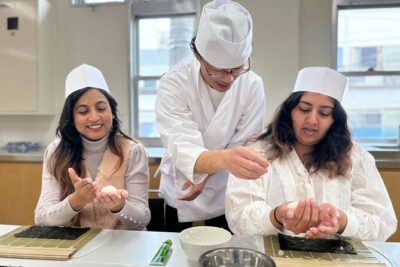
After watching the chef, you make your own nigiri with the chef standing in front of you or beside you. The instruction is hands-on, not a distant cooking show. You get to repeat the movements while help is close by.
The class includes seven nigiri pieces. That number gives you enough practice to improve during the session. Your first piece may feel awkward, but the later pieces give you a chance to adjust your pressure, shape, and placement.
This is where the small group matters most. Sushi rice is easy to press too firmly, and fish is easy to mishandle if you rush. Direct guidance can save you from simply repeating the wrong motion seven times.
You also get to see the difference between making sushi and arranging a meal. The chef demonstrates decoration and presentation, then you place your finished pieces on the plate. The result is not just lunch. It is a record of the work you did.
Families should note that the activity has worked well for children old enough to follow instructions and handle the process. One account describes a tween enjoying nearly two hours of the class, but no specific minimum age is provided, so confirm suitability when booking if that matters for your family.
Adding gunkan sushi and a thin roll
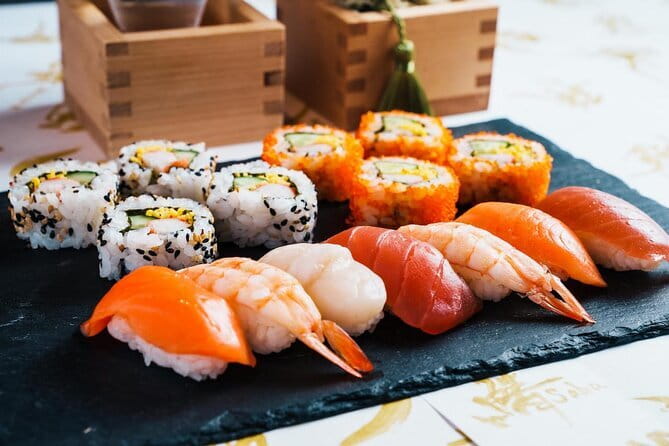
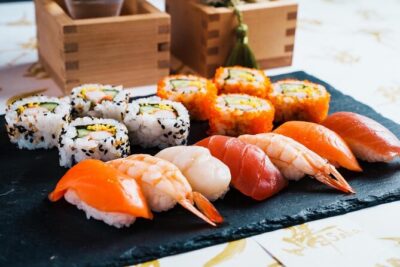
Nigiri is the main focus, but the class also includes one gunkan-style sushi and a thin roll. This gives you a broader look at sushi forms rather than limiting the lesson to one shape.
Gunkan sushi has a different look and structure from nigiri. The lesson lets you see how sushi can be built to hold a topping that does not sit on a flat piece of fish in the same way.
The thin roll adds another skill. You make the roll, then cut it into six pieces. Cutting is often where a neat roll can become a messy one, so this is a useful part of the process. You can see how the chef expects the knife to move and how much care goes into creating even pieces.
Together, the three styles make the menu feel like a small lesson in sushi basics: hand-formed nigiri, a gunkan shape, and a rolled preparation. You do not leave as a professional sushi chef, but you do gain a clearer sense of the work behind several common forms.
A few more Tokyo tours and experiences worth a look

Eating your own work and taking the photo
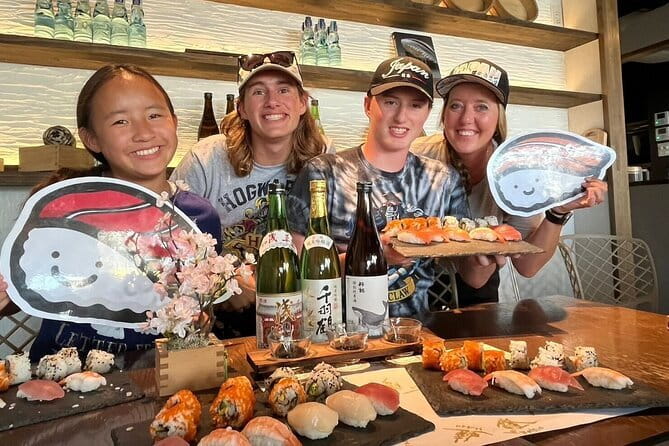
Once the sushi is made and the thin roll is cut, you arrange the pieces and take a commemorative photo. That photo is a nice practical souvenir because it shows the finished plate you made rather than a generic workshop image.
Then you eat the sushi with a cool drink. Lunch is included in the price, and original sake tasting is available. If you want alcohol, this gives you a chance to connect the food with a traditional Japanese drink, but the listing does not specify the quantity or exact sake selection.
The meal is likely to feel more satisfying because you have handled the ingredients yourself. Still, you should book this for the activity as much as for the food. At $160, you are paying for instruction, access to a professional kitchen setting, the included meal, the sake option, the certificate, and the small-group format.
If your only goal is to eat excellent sushi, Tokyo offers simpler and less costly ways to do that. If you want to understand how sushi is made and enjoy the meal as the final stage of a lesson, the price is easier to justify.
Asking questions before you leave
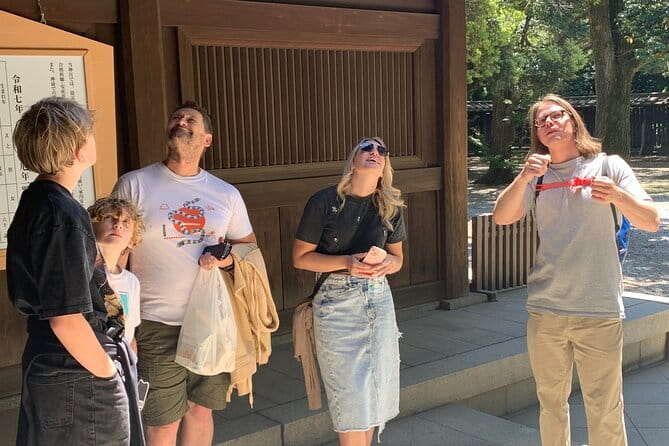
The final question period is useful for anyone who wants to go beyond the set menu. You can ask the chef about sushi-related subjects, including the fish, preparation, or methods shown during class.
This open time is important because different people arrive with different interests. You may want to know how to handle a knife, while another person may care more about fish types or the history of sushi. The class makes room for those questions rather than ending as soon as the food is plated.
Kappodo also offers other classes. The related sashimi and knife instruction includes an instructor named Naoya, who attended culinary school and worked at several top sushi restaurants in Japan. An interpreter named Kaego has also helped English-speaking participants in that setting. Those names apply to the other classes, not necessarily to this sushi session, but they show that Kappodo’s wider program includes more advanced food preparation options.
What the sushi history lesson adds
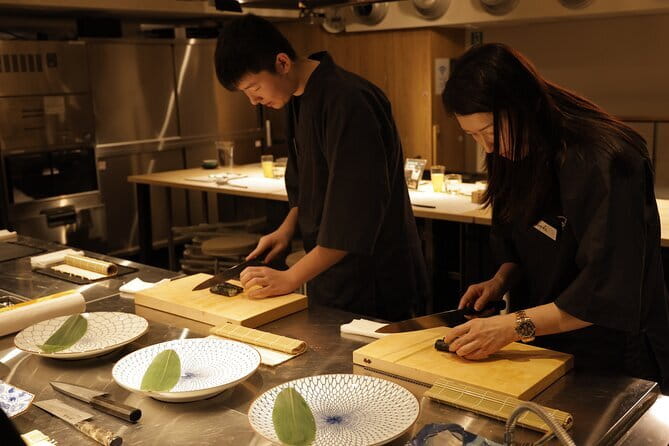
The workshop includes an explanation of sushi history. The supplied details do not specify how long that portion lasts or which historical periods it covers, so you should expect an introduction rather than a full lecture.
That is the right scale for this activity. The history works best as context for the food you are making. It helps explain why sushi is prepared and presented in particular ways, while the main focus stays on your hands and your plate.
The fish information may be the more distinctive part for many people. Learning about a fish’s characteristics and ocean life connects the ingredient to something larger than a menu label. It can also make your next sushi meal more thoughtful, since you will have a better idea of what the chef is handling and why preparation matters.
Who should book the Kappodo workshop
I would recommend this to you if you want an active food experience in Tokyo rather than a meal where you simply sit and order. It suits first-time sushi makers, families with older children, couples, and small groups who appreciate direct instruction.
It is also a good match if you are curious about technique. The chef explains the steps and the reasons behind them, and you get repeated practice with nigiri, plus two other sushi forms.
You may want to skip it if you dislike structured activities or already have professional sushi training. The small group is a strength, but the session still follows a set plan. It is also not the best value for someone focused only on portion size or restaurant dining.
The English instruction removes a major barrier for international visitors. You can ask questions without depending on a translation app, and the practical demonstration gives you a visual guide as well as spoken directions.
Booking details that matter
Your mobile ticket provides the booking confirmation, and confirmation is received at the time of booking. The class lasts about one hour and 45 minutes, though you should leave extra time around it for getting to and from Nishiazabu.
The experience requires a minimum number of participants. If that minimum is not met and the session is canceled, you are offered another date or experience, or a full refund.
Free cancellation is available up to 24 hours before the local start time. Cancel at least 24 hours ahead for a full refund. Inside that 24-hour window, cancellations and changes are not accepted and the payment is not refunded.
The 10 percent discount at the 1F shop is valid on the same day as your workshop visit. It may be useful if you want to buy an item connected to the class, but the available products and prices are not specified.
Should you book this Tokyo sushi class?
Book it if you want to learn by doing. The strongest reasons are the four-person maximum, an English-speaking chef, repeated nigiri practice, fish instruction, and the chance to eat the finished sushi with sake available.
The $160 cost is high for lunch alone. It becomes more reasonable when you treat the session as a private-feeling lesson with food included, rather than as a restaurant meal.
For a hands-on Tokyo food experience, this is a strong choice. For a quick, inexpensive sushi stop, choose a restaurant instead.
FAQ
Where does the Kappodo sushi workshop take place?
It begins and ends at Kappodo H.Q., Tokyo D Kitchen Studio, in DK Building, 2-chome 21-12, Nishiazabu, Minato City, Tokyo 106-0031.
How long does the activity last?
The workshop lasts approximately one hour and 45 minutes.
How many people can join the class?
The activity has a maximum of four participants.
Is the sushi instruction in English?
Yes. An English-speaking sushi chef leads the workshop and explains the preparation steps.
What types of sushi will I make?
You will make seven nigiri pieces, one gunkan-style sushi, and a thin roll. You will cut the thin roll into six pieces.
Is lunch included?
Yes. The sushi you make is included as lunch.
Are drinks included?
A welcome drink of water or green tea is provided. You can also enjoy your sushi with a cool drink, and original sake tasting is available.
Is transportation included?
No. Private transportation is not included. The meeting point is near public transportation.
Do I receive anything besides the meal?
Yes. You receive a certificate of participation and a 10 percent discount on items at the 1F shop on the same day as your workshop.
What is the cancellation policy?
You can cancel at least 24 hours before the local start time for a full refund. Cancellations or changes made less than 24 hours before the start are not accepted and are not refunded.
More Workshops & Classes in Tokyo
More Sushi Making Classes in Tokyo
More tours in Tokyo we've reviewed









Sushi Making Classes, compared.
 ★ 5.0Sushi Making Tokyo Roll and Authentic Japanese Sushi ClassFrom $59
 ★ 4.9Tokyo: Roll and Authentic Sushi Making Class in AsakusaFrom $581h 40m
 ★ 5.0Make Sushi and Create Unforgettable Memories in TokyoFrom $79
 ★ 4.9Tokyo: Sushi Making Class in a Happi Coat near a Famous SpotFrom $421h 30m
 ★ 5.0Tokyo Sushi Making Class in Tsukiji with Professional ChefFrom $49
 ★ 5.0Tokyo Night Foodie Tour in Shinjuku – Seasonal Sushi, Wagyu BeefFrom $111