
Reviewed · GINZA TOURS
Ginza: Traditional Musubi-Making Class with Japanese Grandma
The heart of this Ginza experience is simple: you sit with an 80-year-old Japanese grandma, learn how to shape musubi with your own hands, and then eat a homemade Japanese meal. It feels less like a formal cooking school and more like being welcomed into a family kitchen.
I like two things right away. First, the group is limited to six, so you get close instruction rather than a distant demonstration. Second, the $38 price includes three musubi, a full teishoku meal, miso soup, salad, dessert, and a drink. The main thing to consider is the food volume. This is not a light snack, so arrive hungry.
In This Review
- Key points at a glance
- Why this little Ginza class feels different
- What musubi means, and why the distinction matters
- Making three musubi with six filling choices
- The homemade teishoku meal is the real value
- English support keeps the class easy to follow
- A good choice for families, couples, and rainy days
- Timing, transport, and group size
- How the $38 price works for you
- What I would keep in mind before booking
- Should you book the Ginza musubi class?
- FAQ
- How long does the musubi-making class last?
- Where does the class take place?
- How much does the experience cost?
- How many musubi will I make?
- How many fillings can I choose from?
- Is the class taught in English?
- How large is the group?
- What food is included after the musubi activity?
- Is the class suitable for children?
- Is the activity suitable for vegans or vegetarians?
- Can I cancel my booking?
Key points at a glance
- Learn the musubi and onigiri difference: The class explains why these two familiar Japanese foods are not quite the same.
- Choose from six fillings: You make three musubi, selecting the fillings that suit you best.
- Meet a real local teacher: The class is taught by an 80-year-old Japanese grandma, with English translation from an assistant.
- Eat a full homemade lunch: Your musubi are followed by teishoku, miso soup, salad, dessert, and a beverage.
- Keep the group small: A maximum of six participants makes this a personal activity.
- Plan around a big meal: Several people found the lunch generous, so skipping a meal beforehand is sensible.
Why this little Ginza class feels different
Ginza is known for polished department stores, expensive restaurants, and grand shopping streets. This class offers a quieter kind of Tokyo memory. Instead of simply ordering Japanese food, you learn one small part of everyday food culture from someone who has made it for generations.
That personal link matters. The teacher is an 80-year-old Japanese grandma, and the class gives you time to watch her technique, copy it, and ask questions through the English-speaking assistant. You are not expected to arrive with cooking skills. The process is broken down step by step.
I also like the scale. With only six people, you can see the demonstration and get help as you work. A large cooking class can turn into a production line. Here, the small group should make the activity easier for families, couples, and solo visitors who want conversation rather than a crowded room.
The tone is warm and informal. Hosts such as Yuko and Gina are associated with the welcoming atmosphere, while the grandma remains the center of the experience. Keep in mind that translation support is provided by an assistant. The grandma does not teach the full class in English herself.
A few more Tokyo tours and experiences worth a look

What musubi means, and why the distinction matters
The class begins with a short introduction to musubi and the difference between musubi and onigiri. For many visitors, both words bring to mind a rice parcel with a filling, often wrapped or held together with nori. The class gives you a clearer sense of how Japanese people use these food terms and why the distinction is worth knowing.
This is useful context because musubi is not just a trendy snack to copy for a photograph. Rice formed by hand is tied to ordinary home meals, packed lunches, convenience food, and family cooking. Making it yourself helps you notice the texture, pressure, and shape in a way that eating one from a shop does not.
The opening is brief, which is a good choice for a 90-minute activity. You get enough explanation to understand the food, but you do not spend half the class listening to a lecture. After washing your hands, you move fairly quickly into the practical work.
Making three musubi with six filling choices
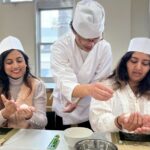
The hands-on part begins with a demonstration. Musubi Grandma makes one in front of you, showing the movements and amount of pressure needed. You then make three of your own, choosing from six filling options.
Three is the right number for this format. One would feel like a sample, while six could become repetitive. With three, you can try different fillings and still have time to focus on shaping the rice properly.
Do not expect your first musubi to look exactly like the teacher’s. That is part of the fun. The rice may be too loose, too tight, or uneven at first. The assistant can translate instructions and help you follow each step, so you are not left guessing.
The choice of six fillings gives the activity some flexibility, but the supplied information does not name them. If you have a strong dietary concern, ask about the available choices before booking. The experience is specifically listed as unsuitable for vegans and vegetarians, so it is not designed around plant-based eating.
I would treat the making session as a cultural lesson as much as a cooking lesson. You learn how a very ordinary Japanese food is handled, shaped, and served. It is practical, tactile, and easy to remember later when you see musubi or onigiri in a shop.
The homemade teishoku meal is the real value
After you make and eat your three musubi, the grandma prepares a homemade teishoku meal. Teishoku is a set meal, usually arranged with a main dish and several supporting items. Here, the meal includes miso soup, salad, dessert, and a beverage.
The exact main dishes and dessert are not specified, so do not book expecting a particular menu. What is clear is that the meal is much more than a small add-on to the workshop. People repeatedly found it generous, and several advised arriving with an empty stomach.
That changes the value calculation. At $38 per person, you are not paying only for instruction or three pieces of rice. You are also paying for a home-style meal, translation assistance, a small-group setting, and time with a local teacher. In Ginza, where food can become expensive quickly, that makes the price fair for anyone who wants a full activity rather than a quick tasting.
I would schedule this as a lunch or early afternoon experience, depending on the available start time. Avoid eating a large breakfast or an early lunch first. You can enjoy the musubi you make, then still have room for the teishoku meal.
The meal also gives the class a natural second half. You start by doing something with your hands, then sit down and eat. That makes the experience feel social without forcing a formal group discussion.
English support keeps the class easy to follow
The instructors speak Japanese and English is available through translation assistance. This is important because shaping musubi involves small physical details. A translated explanation, paired with a live demonstration, is far more useful than trying to follow written instructions alone.
You should still expect a bilingual experience rather than an English-only cooking lesson. The grandma teaches through her demonstration and personality, while the assistant explains what is happening. That arrangement is part of the charm, but visitors who want a highly polished professional cooking course may find it more relaxed than expected.
The English-speaking host helps with cultural questions as well as cooking directions. This gives you a chance to understand why musubi and onigiri are discussed separately and how the food fits into Japanese daily life.
I would also allow yourself to slow down. This is not a contest to make perfect shapes. The value comes from watching the teacher, trying the method, and sharing the meal afterward.
A few more Tokyo tours and experiences worth a look

A good choice for families, couples, and rainy days
Children under six cannot take part. Older children can be a good fit, especially if they enjoy making food with their hands. A family of four with children aged 10 and 12 had enough space to make the activity work, and the simple shaping process should appeal to children who might not last through a long museum visit.
Parents should note the meal size. Young children may not finish everything, and the class is better suited to families who are comfortable with a substantial Japanese lunch. The small group also helps because children are not lost in a large crowd.
Couples and solo visitors should find the format easy as well. You can learn a useful food skill, meet the hosts, and have a meal without committing to a full-day tour. It is also a sensible choice for a rainy day, since the main activity takes place indoors.
Vegans and vegetarians should skip this experience. The activity is specifically not suitable for either group. It is also not the best pick if you want a menu built around substitutions.
Timing, transport, and group size
The activity lasts 90 minutes. That is long enough for the introduction, demonstration, three musubi, and the homemade meal, but short enough to fit around sightseeing in Ginza.
Transportation is not included, so you need to make your own way to the venue. The provided information identifies the activity as being in Ginza but does not give a full meeting address here. Check the exact location and starting time when booking, and allow extra time to reach it.
The maximum group size is six. This is one of the strongest practical reasons to choose the class over a larger food tour. You should have a clear view of the demonstration and more direct access to the assistant for translation.
The activity offers free cancellation up to 24 hours before the start time, and a reserve-now, pay-later option is available. Those terms help if your Tokyo schedule is still shifting. Still, check the final booking conditions and available start times before you rely on them.
How the $38 price works for you
Price is where this experience makes a strong case. For $38, you receive a 90-minute class, three musubi, six filling choices, a homemade teishoku meal, miso soup, salad, dessert, and a drink. You also receive translation help and a small-group setting.
You could spend that much on a single meal in Ginza without learning anything or meeting a local cook. You might also spend more on a cooking class that includes only the lesson and a small tasting. This experience combines both parts.
The value depends on what you want. If you are looking for a fast, cheap snack, it is not the right choice. If you want a carefully structured professional culinary course, this may feel informal. But if you want an approachable food activity with a substantial meal and a personal connection, the cost is reasonable.
The generous portions are both a benefit and a consideration. Come hungry, but do not assume you must finish every item if you are full. The point is to enjoy the meal, not turn lunch into a test of endurance.
What I would keep in mind before booking
I would book this class for the human contact, not only for the finished musubi. The grandma’s age and experience give the lesson a sense of continuity that a standard demonstration may not provide. You get to learn a food that is familiar across Japan while seeing how it is handled in a home-style setting.
I would also expect a relaxed pace. The class is translated, personal, and limited to six people. It is not built around speed, advanced knife work, or restaurant techniques.
The food restrictions are the clearest limitation. Vegans and vegetarians should choose another activity. Families with children under six need another plan, too.
For everyone else, the main preparation is simple: arrive on time, wash your hands, bring an appetite, and leave room for the full meal. You do not need prior cooking experience.
Should you book the Ginza musubi class?
Book it if you want a small, warm food experience with a genuine local connection. The strongest reasons are the 80-year-old grandma, the six-person limit, the English translation, and the amount of food included for $38.
I especially recommend it for first-time visitors who want to understand an everyday Japanese dish instead of only photographing famous sights. Families with school-age children, couples, solo food lovers, and anyone looking for an indoor Ginza activity should find plenty to enjoy.
Skip it if you are vegan or vegetarian, dislike large meals, or want a formal chef-led course. For the right audience, though, this is a memorable way to spend 90 minutes and leave with both a new food skill and a very full stomach.
FAQ
How long does the musubi-making class last?
The experience lasts 90 minutes.
Where does the class take place?
The class takes place in Ginza, in Tokyo, on Honshu, Japan. Transportation to the venue is not included.
How much does the experience cost?
The listed price is $38 per person.
How many musubi will I make?
You will make three musubi.
How many fillings can I choose from?
You can choose from six filling options.
Is the class taught in English?
The instructors speak Japanese and English. The grandma teaches with translation assistance from an English-speaking host.
How large is the group?
The class is limited to six participants.
What food is included after the musubi activity?
The experience includes a homemade teishoku meal, miso soup, salad, dessert, and a beverage.
Is the class suitable for children?
Children under six are not permitted to take part. Older children can join, and the activity has worked for families with children aged 10 and 12.
Is the activity suitable for vegans or vegetarians?
No. The activity is listed as unsuitable for vegans and vegetarians.
Can I cancel my booking?
You can cancel up to 24 hours in advance for a full refund. A reserve-now, pay-later option is also available.
More Workshops & Classes in Tokyo
More Ginza Tours in Tokyo


More tours in Tokyo we've reviewed






Ginza Tours, compared.
 ★ 4.8Chopstick Making Workshop in GinzaFrom $251 hour
 ★ 4.5Tokyo: Art Aquarium Museum GINZA Entry TicketFrom $171 day
 ★ 4.5Official Japan Go-Kart Through Tokyo Bay / Ginza (IDP Required)From $85
 ★ 5.0Private Ginza Architecture Walking TourFrom $132
 ★ 4.5【SUMO FESTIVAL】Tokyo Ginza: Sumo Show & Photo ExperienceFrom $63
 ★ 4.8Tokyo GINZA: KONPARU Japanese Cabaret Show with DrinkFrom $502 hours