
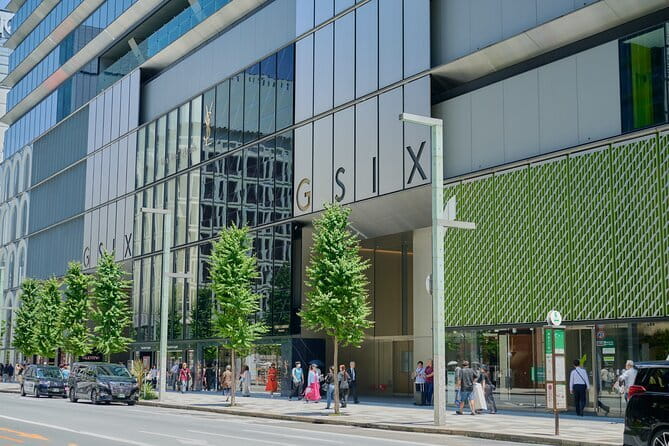
Reviewed · GINZA TOURS
Small-Group Architecture Tour in Ginza, Tokyo
Ginza’s best architecture is not all wrapped in a famous luxury label. This small-group walking tour shows you the district’s polished storefronts, older structures, a temple, a shrine, and clever modern buildings at street level, where details are easy to miss from a taxi.
I like the way the route connects design with Tokyo’s past, including the Shogun era and the effect of natural disasters. I also like the access to several interiors, plus a maximum of six people, which gives you room to ask questions. The main drawback is that the tour needs good weather and requires a moderate amount of walking.
In This Review
- Key points to know
- Why Ginza works so well for an architecture walk
- Starting near Tsukiji Station
- Kabukiza Theater and the drama of the entrance
- Inside the Nicolas G. Hayek Center
- A five-minute shrine in the middle of Ginza
- Maison Hermes and Ginza’s glassy signature
- Mikimoto, UNIQLO, and Wako from the street
- Okuno Building and the older side of Ginza
- The guides make the difference
- What $84.70 buys you
- Timing, weather, and practical limits
- Who will enjoy this Ginza tour most
- Should you book it?
- FAQ
- Where does the tour begin?
- Where does the tour finish?
- What time does the tour start?
- How long does the architecture tour last?
- How large is the group?
- Are admission tickets included?
- Is a drink break included?
- What happens if the weather is poor?
Key points to know
- You walk from Tsukiji into Ginza: The route begins near Tsukiji Station and finishes at the Ginza 4-chome intersection.
- The group is capped at six: This is a more personal format than a large city sightseeing walk.
- You see buildings from inside and out: Stops include Kabukiza Theater, the Nicolas G. Hayek Center, Maison Hermes, and Okuno Building.
- The guides bring professional experience: Hal offers strong technical insight, while Taka’s background as an urban planner and architect adds useful context.
- The tour mixes grand and modest sites: You see luxury boutiques alongside Toyoiwa Inari Shrine and the older Okuno Building.
- The price reflects the guidance: At $84.70 per person, the value rests on the guide’s design expertise and access to interiors, not on included admissions.
Why Ginza works so well for an architecture walk
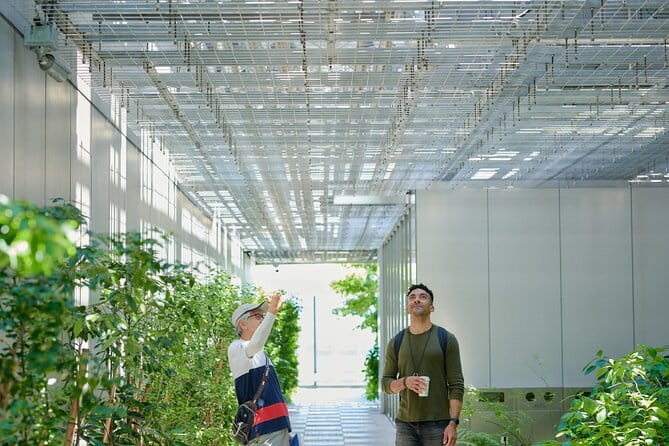
Ginza can look like a shopping district built for display windows. That is part of its appeal, but it is only the first layer. Walk slowly and you begin to notice unusual glass walls, carefully framed entrances, changing textures, narrow religious sites, and buildings that use shape and light to attract attention without giant signs.
This tour gives you time to stop and look. You are not watching the city slide past a car window. You move between sites on foot, with about 40 minutes of walking between the main points, while the full experience lasts around three and a half hours.
That pace matters in Ginza. A façade may look plain from across the street, yet reveal a sharp structural trick when you stand near the entrance. The guide can point out those small choices and explain why a building looks the way it does.
The historical context also helps. The tour connects Ginza’s modern architecture with the Shogun era and with the earthquakes and other natural disasters that have shaped Tokyo. You are not simply collecting photos of expensive shops. You are learning why the district keeps rebuilding, adapting, and putting new design beside older religious and commercial sites.
A few more Tokyo tours and experiences worth a look

Starting near Tsukiji Station
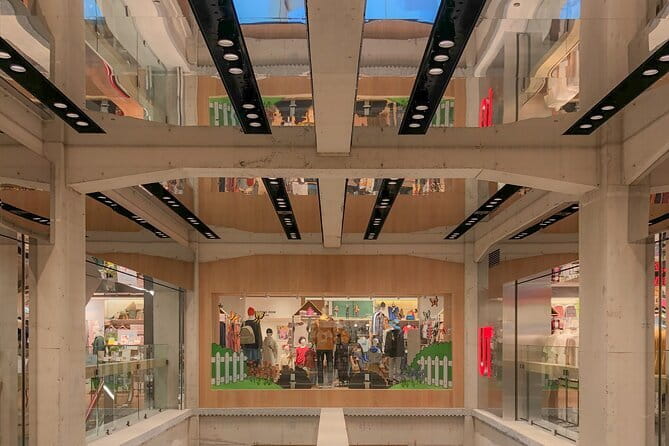
The meeting point is near Exit 1 of Tsukiji Station, at Tsukiji 3-chome 15-1 in Chuo City. The 10 a.m. start gives you a clear morning plan, though you should allow enough time to find the exact meeting spot around the station exit.
Beginning in Tsukiji gives the walk a useful change of mood. You do not start in the middle of Ginza’s most polished commercial stretch. Instead, you ease toward it, seeing how the streets shift from a more traditional urban setting into the high-design center of Ginza.
The tour includes a short visit to Tsukiji Hongwanji Temple. You go inside for about 10 minutes, with no admission charge. This stop adds a religious building to a route otherwise filled with commercial architecture, and it gives the guide a chance to explain how older cultural influences fit into modern Tokyo.
Do not expect a long temple visit. Ten minutes is enough for an introduction and a look around, not a full study of the site. The benefit is contrast. Afterward, the sleek storefronts and glass façades of Ginza feel less isolated from the city’s older traditions.
Kabukiza Theater and the drama of the entrance
Kabukiza Theater receives about 20 minutes, including time inside. The theater is one of the route’s more theatrical stops, and the visit lets you see how a major cultural building presents itself to the street.
This is a good place to listen closely to the guide’s explanation of scale, ornament, and public access. A theater has to announce itself, but it also needs to handle crowds, movement, and a strong visual identity. Those practical demands make it different from a boutique or office building.
The short time here is useful if you prefer a broad look at Ginza rather than one long building visit. If you want a detailed study of the theater’s full design, 20 minutes may feel brief. Still, the stop gives the route a welcome change from luxury retail.
Inside the Nicolas G. Hayek Center
The Nicolas G. Hayek Center gets about 15 minutes inside. This is one of the clearest examples of why walking with an architecture guide can be worth the cost. From the street, you may see a refined commercial building. Inside, the guide can direct your attention to features that are easy to miss on a normal shopping trip.
The tour does not charge separate admission at this stop. That does not mean every space functions like a museum, so the focus is on seeing the building’s design features rather than spending a long time browsing.
Taka is a former urban planner and architect, and this stop suits his professional background particularly well. His explanations focus on how modern buildings in Ginza become distinct and recognizable, rather than treating each façade as a simple photo stop.
A five-minute shrine in the middle of Ginza
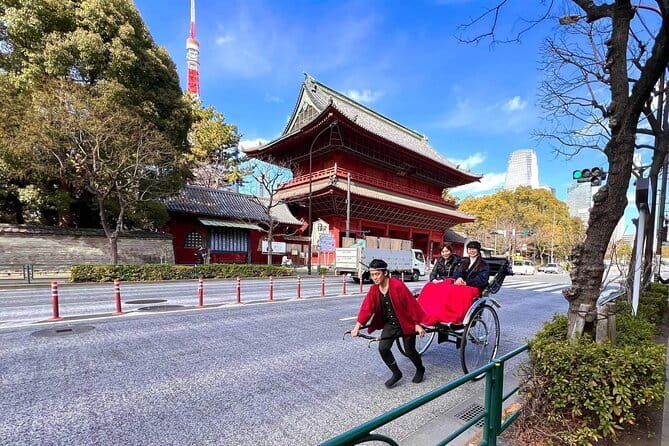
Toyoiwa Inari Shrine receives only about five minutes, but that short pause is part of the route’s charm. Ginza’s commercial polish can make the neighborhood seem entirely planned around shopping. A small shrine tucked into the district tells a different story.
The visit is quick, so keep your expectations in check. This is not a long spiritual retreat or a major temple complex. It is a compact stop that helps you notice how religious spaces remain part of Tokyo’s dense city fabric.
For photographers, the contrast is strong: a quiet shrine experience set against one of Tokyo’s most expensive commercial areas. The guide’s explanation is likely more valuable here than the amount of time on site.





Maison Hermes and Ginza’s glassy signature
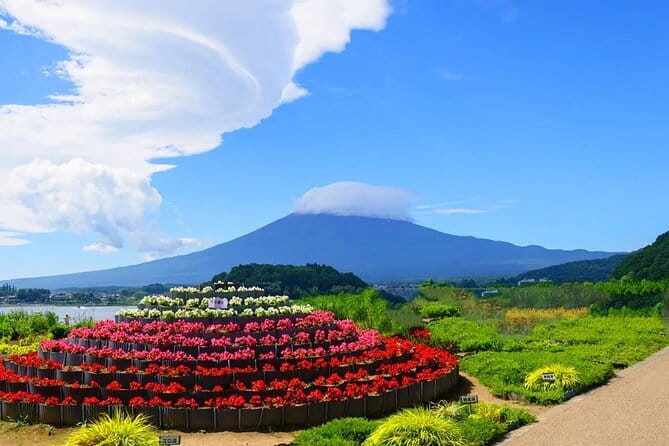
Ginza Maison Hermes Le Forum receives about 15 minutes inside. This is one of the route’s major design stops, especially if you like buildings that use materials and light as part of their public image.
The guide can help you look past the brand name. Focus on the building as architecture first: how the façade presents itself, how the entrance controls your view, and how the interior relates to the street outside.
This stop also shows the tour’s central balance. Ginza’s luxury buildings are not treated only as shopping destinations. They become examples of how retail companies use architecture to create a memorable identity.
The itinerary allows a visit to the Mikimoto Boutique in Ginza 2-chome if time permits. That wording matters. You should treat this as an extra possibility, not a guaranteed stop. The same applies to some of the interior visits, since access can depend on conditions at the time.
Mikimoto, UNIQLO, and Wako from the street
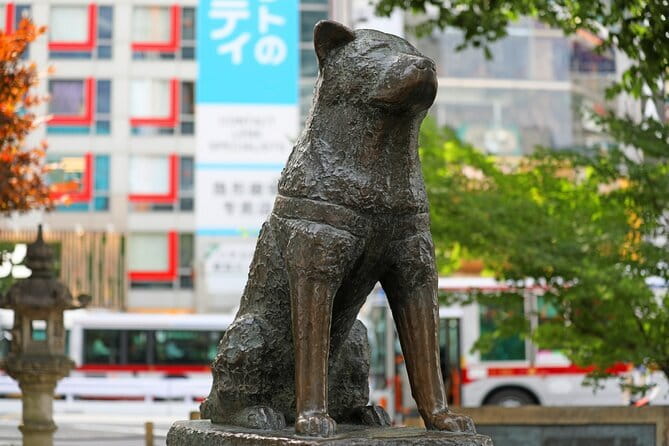
The route then moves through several famous Ginza façades. The Mikimoto Ginza 4-chome Honten, UNIQLO Tokyo, and Wako Ginza are viewed from outside, with roughly five to 10 minutes assigned to each.
These stops are ideal for learning how commercial buildings compete for attention without relying on the same design language. One may emphasize a jewel-like surface, another a clean retail grid, and another the authority of a landmark corner building.
Because you remain outside, these are quick viewing stops. That is both a strength and a limitation. You can compare several façades in one stretch, but you will not get a long indoor explanation at each site.
The route is also practical for photos. You can stop regularly instead of trying to frame a building while moving in a vehicle. Still, Ginza streets can be busy, so your guide’s directions will matter when the group pauses near intersections and shop entrances.
Okuno Building and the older side of Ginza
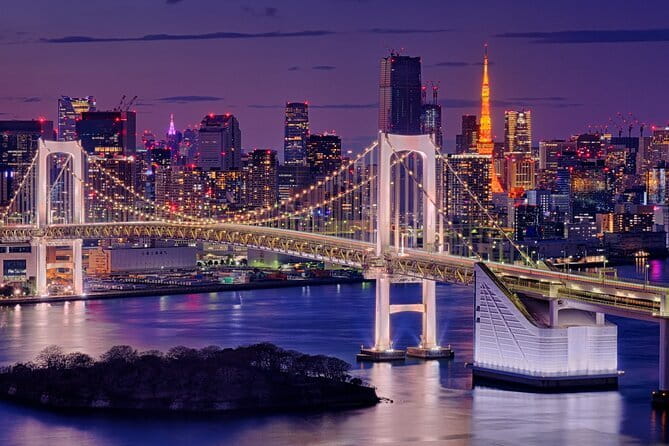
The Okuno Building receives about 10 minutes inside. It is an important counterpoint to the newer luxury buildings, since it lets you see a different chapter of Ginza’s architectural character.
This is the sort of stop that can get lost if you visit Ginza with only a shopping map. Its value comes from comparison. After polished contemporary buildings, an older structure gives you another way to think about age, use, and change in the district.
Ten minutes is not enough to inspect every detail. But paired with the modern buildings, it helps you see Ginza as a place where different periods sit close together rather than as one uniform shopping zone.
The guides make the difference
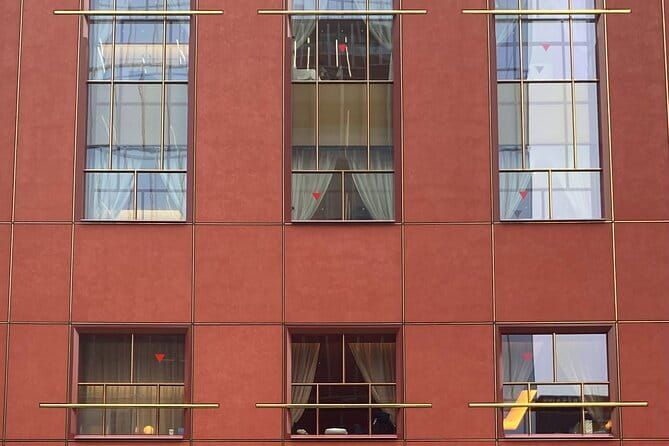
The strongest reason to choose this tour is the guide’s ability to interpret design. Hal is praised for technical insight, distinctive explanations, and lively energy. That combination is useful on a subject that can become dry if the guide only lists architects, dates, and materials.
Taka brings a different but equally useful background. As a former urban planner and architect, he can explain how modern buildings function within the wider city. His route has included time inside the Tiffany building as well as the Nicolas G. Hayek Center, although the exact buildings you enter can vary.
Do not book this if you want a loose stroll with only a few facts. You will get more from the tour if you are willing to watch for structure, materials, entrances, street relationships, and the reasons a building has its particular form.
The small size helps. With six people or fewer, you can ask about a building that catches your eye, request suggestions for other local architecture, and hear the guide without standing at the back of a crowd. It also makes photo stops easier to manage.
What $84.70 buys you
The price is $84.70 per person. There are no admission fees listed for the stops, and hotel pickup and drop-off are not included. You meet the guide near public transportation and make your own way to the start and finish.
That price is fair only if architecture is a real interest for you. You are paying mainly for a specialist-led interpretation, a carefully planned route, small-group access, and the chance to enter several buildings. You are not paying for transport, a meal, or a full-day sightseeing package.
I would compare it with the cost of spending half a day walking through Ginza without understanding what you are seeing. If you would otherwise pass the Nicolas G. Hayek Center, Maison Hermes, or Okuno Building without stopping, the guide adds real value.
If you mainly want Ginza’s shops and department stores, you can explore on your own for less. The tour earns its price through context and attention, not through quantity.
A cozy drink break is included along the way. The details of the drink are not specified, but the pause gives you a chance to rest and keep talking with the guide. Wear comfortable shoes and dress for the weather, since the route combines outdoor walking with indoor visits.
Timing, weather, and practical limits
The tour begins at 10 a.m. and lasts about three hours and 30 minutes. It finishes at the Ginza 4-chome intersection, in front of Mitsukoshi department store. That is a useful end point for continuing your day in Ginza, though you will need to arrange your own onward travel.
A moderate level of physical fitness is recommended. The walk is not presented as strenuous, but you will be on your feet for several hours and moving between sites. People who need frequent seating should ask about the pace before booking.
Good weather is required. If poor weather cancels the experience, you are offered another date or a full refund. You can also cancel for a full refund up to 24 hours before the start time. Changes or cancellations made inside that 24-hour window are not accepted.
The tour is booked, on average, 31 days ahead. That suggests you should reserve early if your Tokyo dates are fixed, especially since the group is limited to six people.
Who will enjoy this Ginza tour most
I would choose this tour if you like modern design, city planning, photography, or the way old and new buildings share one neighborhood. It is also a good fit if you want a focused Tokyo activity that does not require a full day.
The route suits first-time Ginza visitors who want more than shopping. It also works for repeat visitors who have already seen the main streets and now want a closer look at the buildings.
Architecture students, designers, photographers, and curious walkers should get the most from it. Taka’s professional background and Hal’s technical approach make the explanations especially useful for people who enjoy details.
I would be less likely to recommend it to someone seeking a broad Tokyo introduction. The tour stays focused on Ginza and nearby Tsukiji, so it will not cover the city’s major historic districts, food culture, or famous panoramic views.
I would also think twice if your priority is guaranteed access to every interior. The route includes several indoor visits, but the Mikimoto stop is specifically time dependent, and real-world access can change.
Should you book it?
Book this tour if you want to understand why Ginza looks the way it does, not simply photograph its luxury storefronts. The small group, professional guides, temple and shrine stops, and mix of indoor and outdoor architecture give the morning a clear purpose.
At $84.70, it is not a bargain city walk. It is a specialist experience, and its value depends on your interest in buildings. For the right person, the chance to slow down, ask questions, and see Ginza with guides such as Hal or Taka makes the price reasonable.
Skip it if you prefer independent wandering or if rain is likely to disrupt your plans. But if Ginza’s glass, stone, signage, old structures, and unusual details catch your eye, this is a smart way to spend three and a half hours.
FAQ
Where does the tour begin?
It begins near Exit 1 of Tsukiji Station at Tsukiji 3-chome 15-1, Chuo City, Tokyo 104-0045.
Where does the tour finish?
The tour finishes at the Ginza 4-chome intersection, in front of Mitsukoshi department store.
What time does the tour start?
The start time is 10:00 a.m.
How long does the architecture tour last?
The experience lasts approximately three hours and 30 minutes.
How large is the group?
The tour has a maximum of six people.
Are admission tickets included?
The listed stops have no admission charge. Hotel pickup and drop-off are not included.
Is a drink break included?
Yes. A cozy pause with drinks along the way is included.
What happens if the weather is poor?
The experience requires good weather. If it is canceled because of poor weather, you are offered a different date or a full refund.
More Ginza Tours in Tokyo


More tours in Tokyo we've reviewed










Ginza Tours, compared.
 ★ 4.8Chopstick Making Workshop in GinzaFrom $251 hour
 ★ 4.5Tokyo: Art Aquarium Museum GINZA Entry TicketFrom $171 day
 ★ 4.5Official Japan Go-Kart Through Tokyo Bay / Ginza (IDP Required)From $85
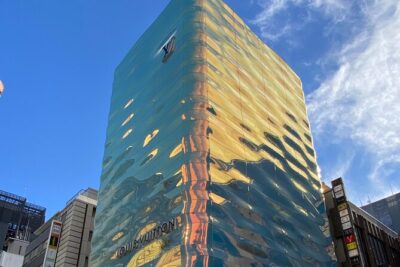 ★ 5.0Private Ginza Architecture Walking TourFrom $132
 ★ 4.5【SUMO FESTIVAL】Tokyo Ginza: Sumo Show & Photo ExperienceFrom $63
 ★ 4.8Tokyo GINZA: KONPARU Japanese Cabaret Show with DrinkFrom $502 hours