
Reviewed · GINZA TOURS
Tokyo: Learn about Japanese Traditional art KABUKI in Ginza
Kabuki is one of Japan’s great art forms, but a full theater visit can take time and requires some planning. This 90-minute Ginza tour gives you a compact introduction through the Kabukiza building, its exhibits, and nearby shops. You get a feel for the costumes, customs, and world around Kabuki without committing to a full performance.
I like the small group size, limited to nine people, and the easy central meeting point in front of NISSAN CROSSING. I also like the pairing of Kabukiza with Ginza Mitsukoshi, a department store with more than 350 years of history. The main catch is important: Kabuki viewing is not included, and some visitors found the historical explanation too basic.
In This Review
- Key points to know before booking
- Kabukiza gives you a short introduction to Kabuki
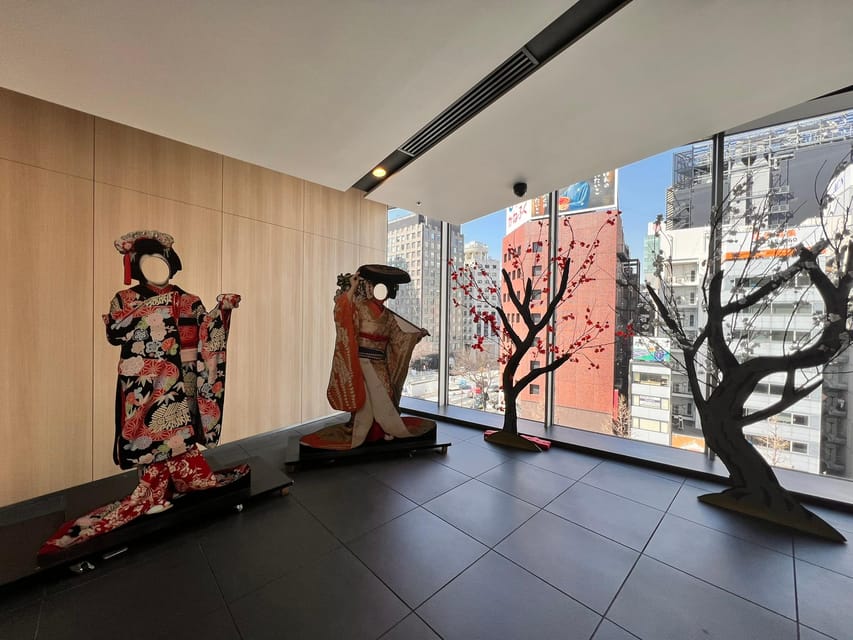
- What you will see at Kabukiza
- The souvenir stop is more useful than a quick gift shop visit
- Mitsukoshi brings 350 years of Japanese retail culture into the route
- What $51 buys you in 90 minutes
- The guide can shape the whole experience
- Who should book this Ginza activity?
- Meeting point, timing, and cancellation details
- FAQ
- Is a Kabuki performance included?
- How long does the activity last?
- What language is the tour conducted in?
- How many people can join the group?
- Where is the meeting point?
- Are shopping purchases included in the price?
- Can I cancel for a full refund?
- Should you book this Kabukiza and Ginza tour?
Key points to know before booking
- Kabukiza is the focus: You tour Kabuki exhibits and learn about the theater rather than attend a show.
- The group stays small: A maximum of nine people allows more room for questions than a large walking tour.
- Shopping is part of the route: Look for Kabukiza-only souvenirs, Japanese accessories, sweets, and traditional goods.
- Mitsukoshi adds a second cultural stop: The Ginza branch offers high-quality crafts and products in one of Japan’s oldest department store brands.
- The tour is led in English: Guide quality matters, and past feedback ranges from very informative to too basic.
- The price is $51 per person: That can be fair for a short guided introduction, but less so if you expected a live Kabuki performance.
Kabukiza gives you a short introduction to Kabuki
Kabuki can seem hard to approach if you do not know the characters, gestures, costumes, or stage traditions. This tour takes the pressure off. Instead of asking you to sit through a full performance, it uses the Kabukiza building and gallery exhibits to explain the art form in a short, practical visit.
That format suits you if your Tokyo schedule is tight. In 90 minutes, you can learn the basic idea of Kabuki culture, see displays connected with the theater, and ask questions through an English-speaking guide. You will not get the full drama of a live show, but you can leave with enough context to recognize Kabuki as more than colorful costumes and stylized movement.
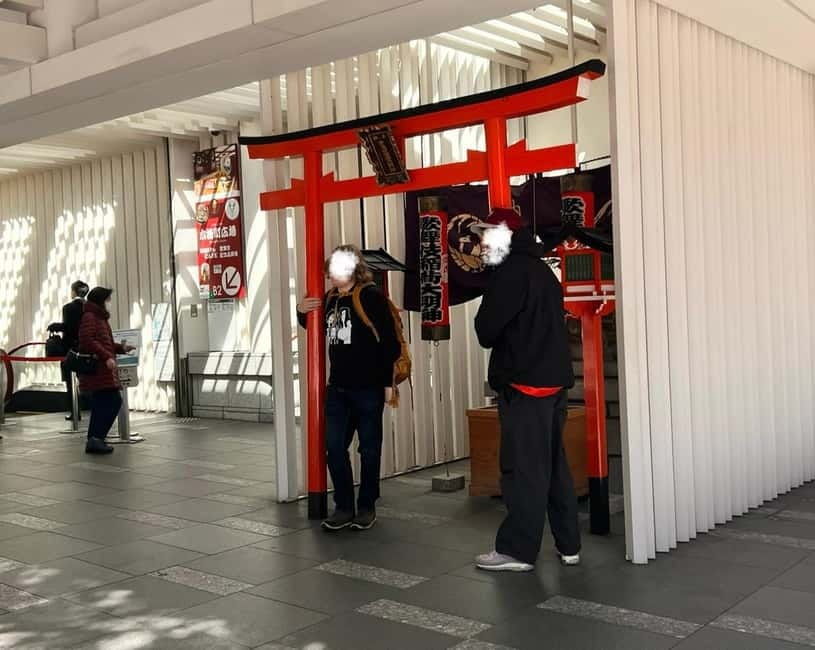
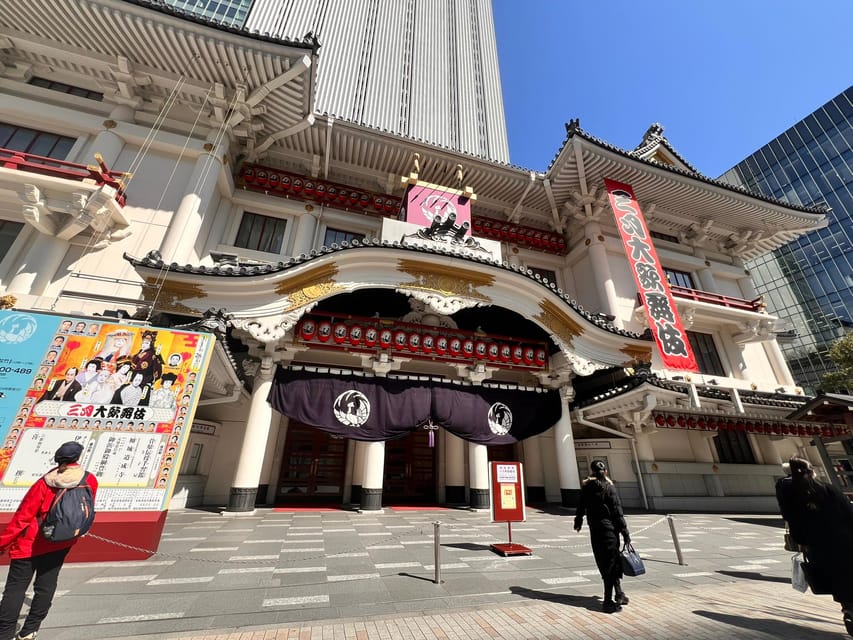
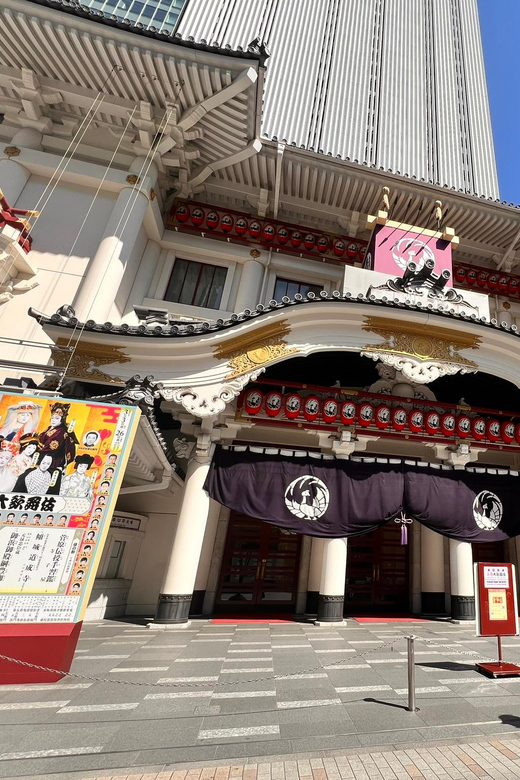
The building itself is a major part of the appeal. Kabukiza is in Ginza, Tokyo’s polished shopping and entertainment district, so the tour places traditional Japanese theater in a modern city setting. You are not being sent to a remote cultural site. You meet in front of NISSAN CROSSING, then move through one of central Tokyo’s best-known districts.
The gallery visit is the educational core. Expect an introduction to Kabuki exhibits rather than a staged lesson with elaborate production elements. The guide explains what you are seeing, which makes the displays more useful than simply walking through them alone.
A few more Tokyo tours and experiences worth a look

What you will see at Kabukiza
The Kabukiza stop is designed for people who want a taste of Kabuki culture without buying a theater ticket. You will tour exhibits inside or connected with the Kabukiza complex and learn about the traditional performing art as you go.
The exact depth of the explanation depends on the guide. One guide named Nori received especially warm praise for being friendly, while another visitor found the historical introduction very basic and possibly limited by language. That difference is worth keeping in mind. This is an introductory tour, not a specialist lecture.
I would approach the gallery with a few simple questions ready:
- What makes Kabuki different from other Japanese theater?
- Which parts of the costumes or stage design are most important?
- How does a Kabuki performance work for someone attending for the first time?
- What should I look for if I later watch a Kabuki show?
The tour data does not promise a live demonstration or performance, so do not book it expecting one. The phrase Kabuki viewing is not included is the most important detail in the entire description. A short show may be available separately at another time, but this activity itself is an exhibit and culture visit.
That limitation does not make the tour pointless. It simply defines its value. You are paying for orientation, interpretation, and access to the Kabukiza setting, not for theater admission. If you already plan to see Kabuki elsewhere, this can help you arrive with a little more understanding. If your main goal is the performance itself, use this as a separate cultural stop rather than a substitute.
The souvenir stop is more useful than a quick gift shop visit
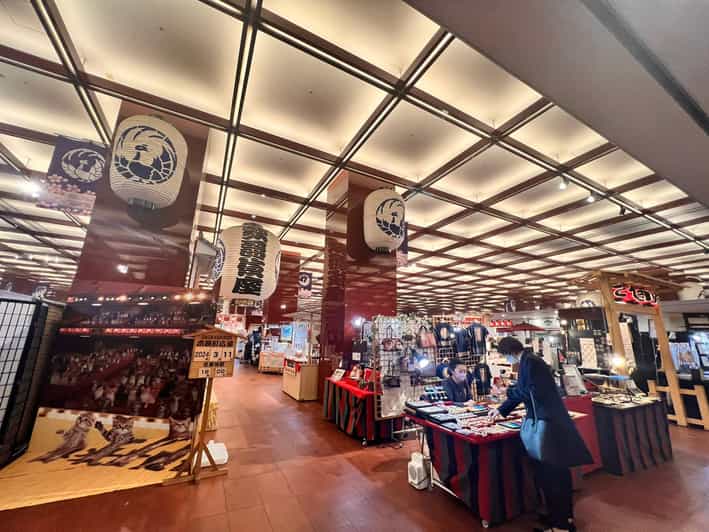
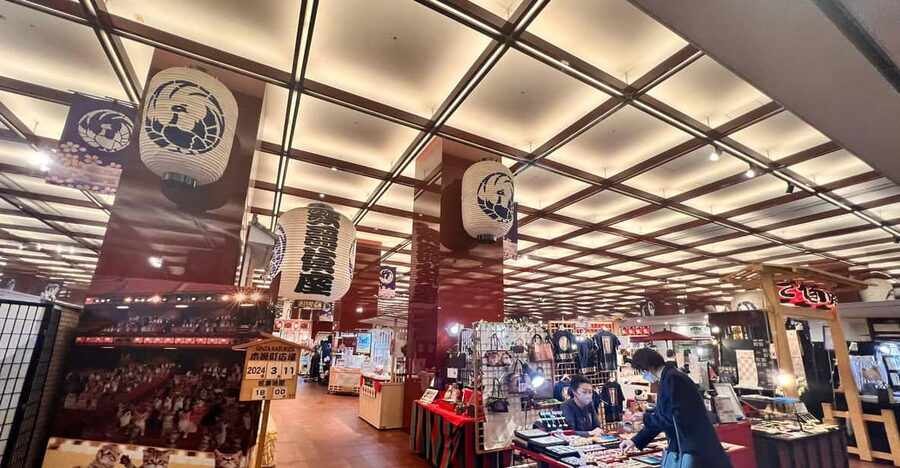
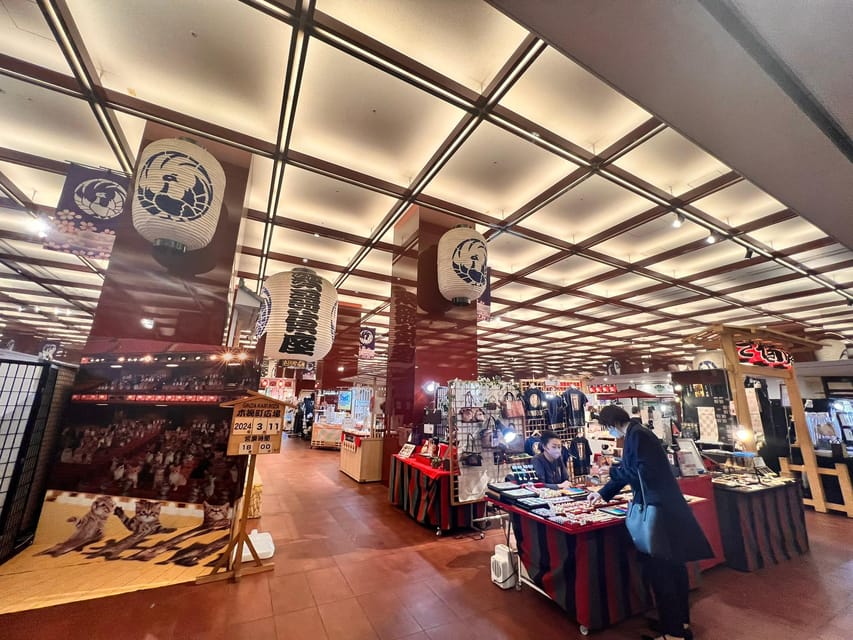
After Kabukiza, the route includes shops found in this Ginza area. The selection may include Kabuki goods, Japanese accessories, Japanese sweets, and souvenirs sold only through Kabukiza-related shops.
This is a nice part of the tour because it connects the art form to everyday objects. You can browse items that are easier to carry home than a large museum purchase, and the guide can help explain what you are looking at. The experience is not only about buying something. It gives you a chance to see how traditional designs are presented to modern shoppers.
Keep your budget in mind. Shopping costs are not included in the $51 price, and the amount you spend depends entirely on you. You can treat the stop as a look around, or set aside money for Kabuki-themed gifts and Japanese sweets.
The phrase souvenirs only available at Kabukiza should be read carefully. It points to a distinctive selection connected with this location, not a promise that every item is rare or expensive. If you collect theater memorabilia or want a gift tied directly to your Ginza visit, this is likely the strongest shopping stop.
I would avoid making the shopping portion the sole reason to book. Stores can be visited without a guide, and you may prefer to spend your money after seeing the selection. The real benefit is having the shops placed into a short cultural route, with Kabukiza first and Mitsukoshi afterward.
Mitsukoshi brings 350 years of Japanese retail culture into the route
The final major stop is the Ginza branch of Mitsukoshi, described as Japan’s oldest department store, with more than 350 years of history. This gives the tour a useful second angle. Kabukiza shows traditional performance culture, while Mitsukoshi presents Japanese craftsmanship and high-end retail in a department store setting.
You may find traditional crafts and carefully made goods here, along with the polished presentation that Ginza is known for. The stop is less about one single attraction and more about seeing how Japanese design, food, accessories, and craft items are sold today.
I like this pairing because it keeps the tour from becoming a narrow theater visit. You see the cultural object, then visit a major retail institution where traditional goods have a place beside modern shopping. It is a quick look at chic Ginza, though the short schedule means you will not have time to explore every floor in detail.
Mitsukoshi can also help you judge Japanese goods in context. A small accessory or sweet from a Kabukiza shop and a higher-end craft item from Mitsukoshi serve different purposes. The guide can help you understand that difference, but shopping remains optional and is not covered by the tour price.
What $51 buys you in 90 minutes
At $51 per person, this is not the cheapest way to walk around Ginza. You are paying for an English-speaking guide, a small group capped at nine, and a structured route linking Kabukiza with nearby shopping stops.
The value is strongest if you want clear guidance and have limited time. A private visit to Kabukiza-related exhibits, followed by independent shopping, might cost less in direct admission and transportation, but it would not give you the same organized explanation. The small group also matters. With up to nine people, you have a better chance to hear the guide and ask a question without competing with a large crowd.
The value drops if you expect a live Kabuki show. Since theater viewing is excluded, anyone booking mainly for a performance may feel disappointed. The price becomes easier to justify when you think of this as a guided cultural introduction with shopping, not as a theater ticket.
The 90-minute length is another advantage and a limitation. It fits neatly into a busy Ginza day and does not consume half a morning or afternoon. At the same time, Kabuki is a complex tradition, so the tour can only cover the basics. One past assessment described the historical explanation as not very impressive and too simple. I would book this for orientation, not for an advanced study of Kabuki.



The guide can shape the whole experience
The guide is the most important variable here. The tour is conducted in English, and the strongest feedback highlights a friendly and informative guide. Nori was singled out for warmth, while another assessment praised the guide’s information.
At the same time, the information level has not felt equally strong to everyone. If the guide gives only a basic history of Kabuki, you may find the visit less satisfying than expected. Language can also affect how much detail comes across, especially when discussing theater customs and historical terms.
You can improve your experience by asking direct questions rather than waiting for a long lecture. Ask what to notice in the exhibits, how a first Kabuki performance works, and which souvenirs have the clearest connection to the theater. A small group makes that kind of conversation possible.
The tour operator is gotcha Corporation. The listed language is English, and the group is limited to nine participants. Those details make this more suitable for you if you prefer a guided conversation over a large, quick-moving group.
Who should book this Ginza activity?
I would recommend it to you if:
- You have only a short time in Tokyo.
- You are curious about Kabuki but do not plan to attend a full performance.
- You prefer learning through exhibits with a guide.
- You want to combine culture with Japanese shopping.
- You appreciate small groups and an English-speaking escort.
- You are already visiting Ginza and want a planned cultural stop.
I would be more cautious if you are a serious theater fan seeking detailed Kabuki scholarship. The historical introduction may feel too basic, and the 90-minute format leaves little room for a full account of the art form.
I would also skip it if your main aim is to watch Kabuki. The activity does not include Kabuki viewing. Book a separate theater experience for that, and consider this tour only if you also want the background and shopping stops.
Families and first-time visitors may find the short format manageable, but no specific child pricing or age policy is provided. Since shopping costs are separate, set your own spending limit before you begin.
Meeting point, timing, and cancellation details
You meet in front of NISSAN CROSSING in Ginza. Check the available starting times when booking, since the tour lasts 90 minutes and times can vary.
The activity offers free cancellation up to 24 hours before the start time for a full refund. You can also reserve now and pay later, which helps if your Tokyo schedule is still changing.
No transportation is listed as included. The route is presented as a Ginza walking experience beginning at the meeting point, with Kabukiza and Mitsukoshi as the main stops. Give yourself enough time to reach NISSAN CROSSING before the scheduled start.
FAQ
Is a Kabuki performance included?
No. Kabuki viewing is not included. The activity focuses on learning about Kabuki through exhibits at Kabukiza.
How long does the activity last?
The activity lasts 90 minutes.
What language is the tour conducted in?
The live tour guide speaks English.
How many people can join the group?
The group is limited to nine participants.
Where is the meeting point?
You meet in front of NISSAN CROSSING in Ginza.
Are shopping purchases included in the price?
No. Shopping costs at the stores are separate and depend on what you choose to buy.
Can I cancel for a full refund?
Yes. You can cancel up to 24 hours in advance for a full refund.
Should you book this Kabukiza and Ginza tour?
Book it if you want a short, guided introduction to Kabuki culture and like the idea of pairing theater exhibits with Japanese shopping. The small group, central location, and Mitsukoshi stop make it easy to fit into a Ginza day.
Do not book it expecting a performance or a detailed academic history of Kabuki. At $51, the tour earns its price through the guide and compact cultural route. If those are what you want, it is a sensible introduction. If you want the theater itself, spend that money on a separate Kabuki viewing experience instead.
More Ginza Tours in Tokyo


More tours in Tokyo we've reviewed











Ginza Tours, compared.
 ★ 4.8Chopstick Making Workshop in GinzaFrom $251 hour
 ★ 4.5Tokyo: Art Aquarium Museum GINZA Entry TicketFrom $171 day
 ★ 4.5Official Japan Go-Kart Through Tokyo Bay / Ginza (IDP Required)From $85
 ★ 5.0Private Ginza Architecture Walking TourFrom $132
 ★ 4.5【SUMO FESTIVAL】Tokyo Ginza: Sumo Show & Photo ExperienceFrom $63
 ★ 4.8Tokyo GINZA: KONPARU Japanese Cabaret Show with DrinkFrom $502 hours