
Reviewed · NIKKO DAY TRIPS
Nikko Toshogu, Kegon waterfall, Lake Chuzenji One Day Pvt. Tour
Nikko gives you Japan in two striking forms: ornate Tokugawa-era worship sites in the forest and mountain scenery around Kegon Falls and Lake Chuzenji. This private 12-hour trip lets you cover both without piecing together local buses or train connections.
I like the private vehicle, especially for a group of up to five, and I like the carefully packed route. Toshogu Shrine, Rinnō-ji Temple, Shinkyo Bridge, the museum, and the waterfalls each offer something different. The drawback is the price: $500 per group is fair for five people, but costly for one or two.
In This Review
- Key points to know before booking
- Why Nikko makes a strong day trip from Tokyo
- Toshogu Shrine and the Tokugawa story
- Rinnō-ji Temple and the three mountain deities
- The Toshogu Museum in 30 focused minutes
- Nikko Botanical Garden and a quieter pause
- Shinkyo Bridge, Nikko’s red entrance marker
- Kegon Falls and Lake Chuzenji
- Private transport, snacks, and the lunch question
- What the $500 price really buys
- Timing, meeting point, and practical details
- Who should book this Nikko day trip?
- FAQ
- How long is the Nikko Toshogu, Kegon waterfall, and Lake Chuzenji tour?
- Where does the tour start and finish?
- How many people can join the private tour?
- Is transportation included?
- Are entrance fees included?
- Is lunch included?
- What is the cancellation policy?
Key points to know before booking
- Toshogu Shrine honors Tokugawa Ieyasu: See the ornate UNESCO-listed complex tied to the shogun who began Japan’s Edo period.
- A private car saves time: The tour includes private transport, parking, fuel, air conditioning, and a mobile ticket.
- Nikko mixes culture and mountain scenery: You move from shrines and temples to Kegon Falls and Lake Chuzenji in one day.
- Driver Rana adds personal touches: Water, snacks, conversation, historical explanations, and a handpicked lunch stop were part of one highly praised outing.
- Admission costs extra: Allow about $10 per person for Toshogu Shrine and $7 per person for Rinnō-ji, the garden, and the Rinnō-ji museum.
- The day begins and ends at Tokyo Station: The listed meeting point is 1 Chome-9 Marunouchi, Chiyoda City.
Why Nikko makes a strong day trip from Tokyo
Nikko is far enough from Tokyo to feel like a change of world. Instead of city streets and tall buildings, you get wooded religious compounds, old bridges, mountain roads, and a lake below the peaks.
The key advantage here is not simply comfort. It is control. A private vehicle lets your group move through a long list of sights without spending much of the day waiting for or changing buses. That matters because Nikko’s cultural sites are spread around the town, while Kegon Falls and Lake Chuzenji are farther uphill.
The tour lasts about 12 hours, so expect a full day rather than a quick side trip. You will spend roughly five hours at the principal stops listed before allowing for driving, meals, and the return to Tokyo. The pace is active, but the itinerary gives you a useful first look at both Nikko’s religious heritage and its mountain setting.
The group limit is five people. For a family or small group, the $500 price works out to $100 per person if filled completely. For two people, it becomes $250 each before admission fees and lunch, so public transport may offer better value if your priority is saving money rather than convenience.
A few more Tokyo tours and experiences worth a look
Toshogu Shrine and the Tokugawa story
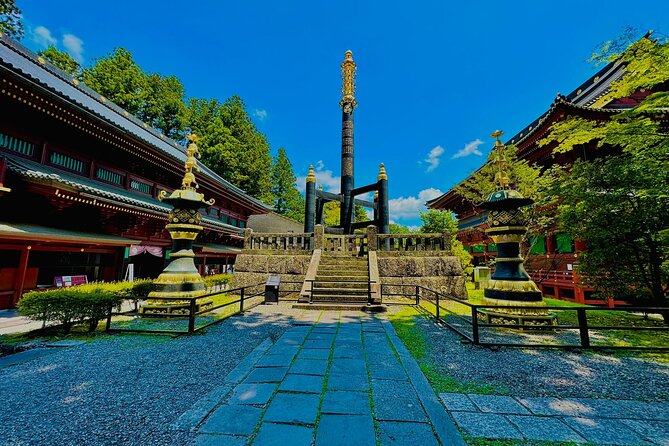
Toshogu Shrine is the main event. It enshrines Tokugawa Ieyasu, the military leader whose rise helped unify Japan and begin the Edo period, which lasted from 1603 to 1867.
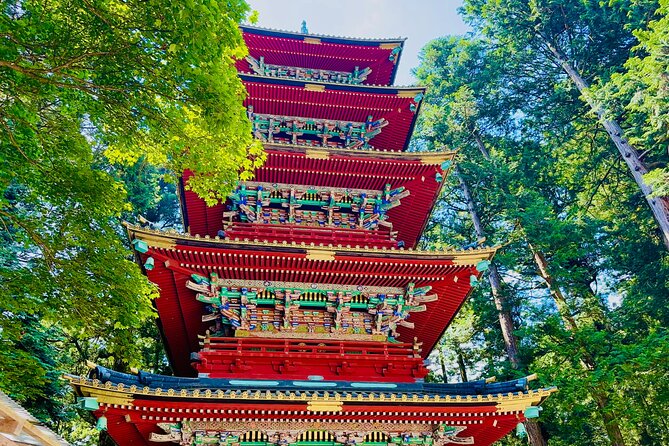
You come here for the architecture as much as the history. The shrine buildings are heavily carved and brightly decorated, a sharp contrast to the simpler wooden religious buildings found elsewhere in Japan. The complex forms part of the UNESCO World Heritage site known as the Shrines and Temples of Nikko.
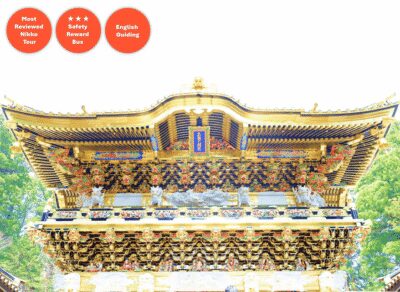
The planned visit lasts about two hours. That is enough time to see the major parts without treating the shrine as a rushed photo stop. Look for the famous Yomeimon Gate and the Sleeping Cat carving, both connected with Toshogu’s distinctive decoration.
A 36-meter pagoda is also part of the complex. The attractions are close together, which makes this portion manageable even though the grounds can feel busy and visually packed.
Admission is not included. The stated cost is about $10 per person for Toshogu Shrine. Bring that amount into your budget before booking, and remember that the tour price covers the vehicle, not the main cultural sights.
Rinnō-ji Temple and the three mountain deities
Rinnō-ji gives the day a different religious tone. Founded in 766 by the Buddhist monk Shōdō Shōnin, it is one of Nikko’s most important temples and part of the same UNESCO site.
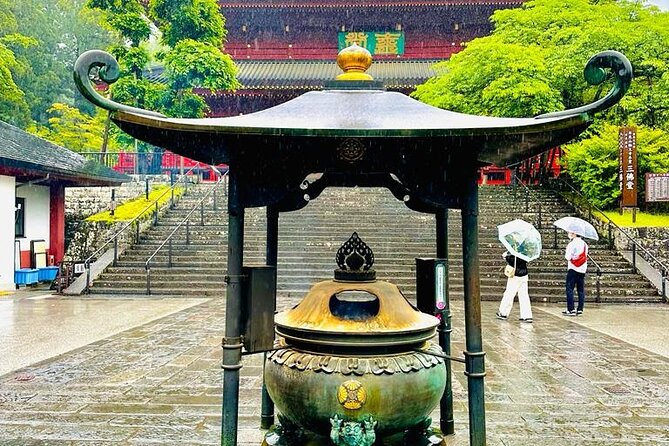
The central building, Sanbutsudō, houses three large gilded wooden figures. They represent Buddhist forms of Nikko’s three mountain deities: Amida Nyorai, Senju Kannon, and Batō Kannon.
This is a good place to slow down after the intense decoration of Toshogu. The setting and statues ask for a quieter kind of attention. If you prefer historical context to simply moving from one landmark to the next, this hour is particularly useful.
The itinerary allows one hour here. Admission is extra, with the listed combined charge for Rinnō-ji Temple, the old-era garden, and the Rinnō-ji museum at about $7 per person. Since the wording of the charge combines several places, confirm the exact ticket arrangement on the day.
The complex also includes the Taiyūin Mausoleum, a lavish memorial site connected with the Tokugawa family. The supplied route does not promise a separate time allocation for every part of Rinnō-ji, so ask your driver how the available hour will be divided if the mausoleum is a priority.
The Toshogu Museum in 30 focused minutes
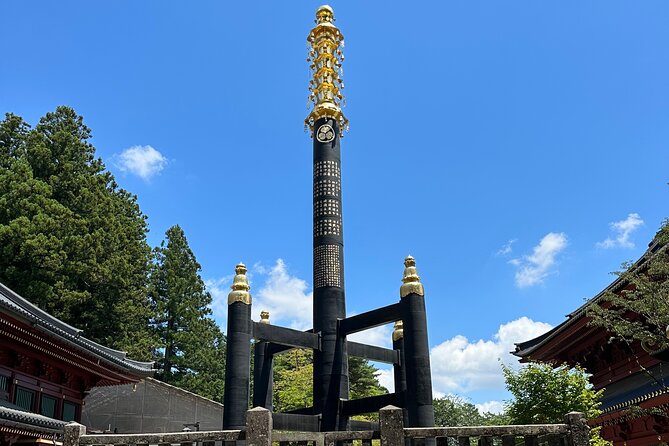
The Nikko Toshogu Museum, also called the Toshogu Treasure Museum, adds objects to the architectural story. It contains items connected with Tokugawa Ieyasu and the shrine, including samurai armor, swords, and personal belongings.
I find a museum visit useful here because Toshogu’s decoration can overwhelm you. The buildings show power in public. The collection gives you a closer look at the people, objects, and political world behind that display.
The planned stop is about 30 minutes, and admission is not included. That short visit suits you if you want a compact historical introduction rather than a long museum session.
Because the museum is within the wider Toshogu complex, check how your entry ticket is handled and how much time remains after the shrine visit. The route lists both places separately, but your driver will need to manage the schedule carefully.
Nikko Botanical Garden and a quieter pause
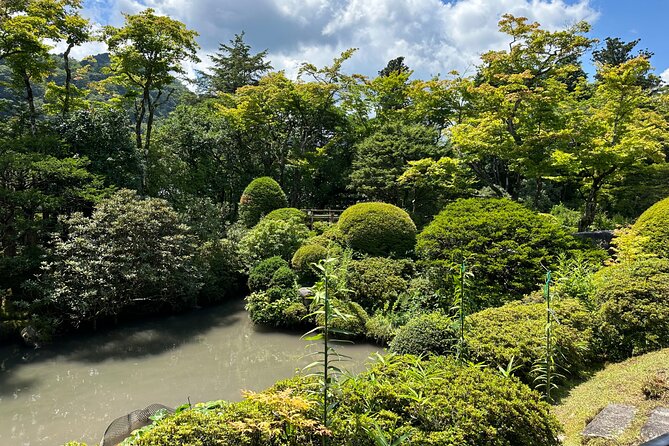
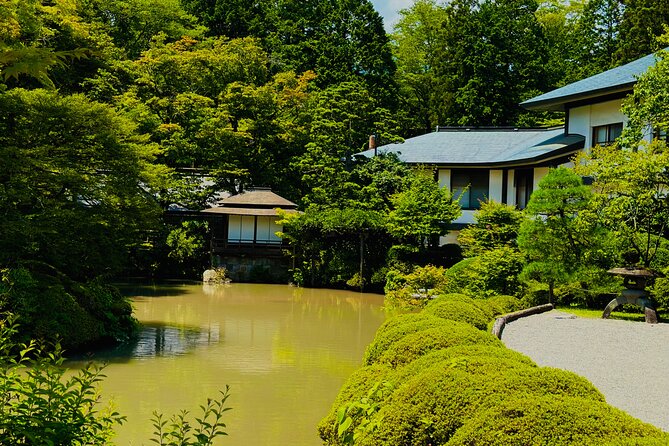
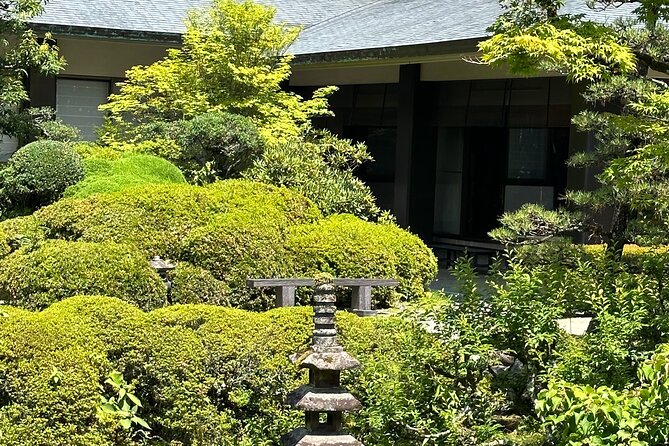
The Nikko Botanical Garden is scheduled for about 30 minutes. The supplied description links the garden with the wider Rinnō-ji and Tokugawa setting, describing traditional Japanese design with arranged rocks, ponds, and carefully maintained plants.
This is the calmest cultural stop on the route. After carved gates, gilded figures, and samurai objects, a garden gives you room to look at shape, spacing, water, and plant life.
Thirty minutes is enough for a pleasant pause, but not a long garden visit. If gardens are your main interest, you may find the time brief. If you want variety, this stop breaks up the historic sites without adding a major detour.
The garden is included in the stated $7 admission grouping with Rinnō-ji and its museum. The supplied information uses both Nikko Botanical Garden and Tokugawa Nikko garden in describing this stop, so ask for confirmation of the exact garden entrance included in the day’s plan.
A few more Tokyo tours and experiences worth a look


Shinkyo Bridge, Nikko’s red entrance marker
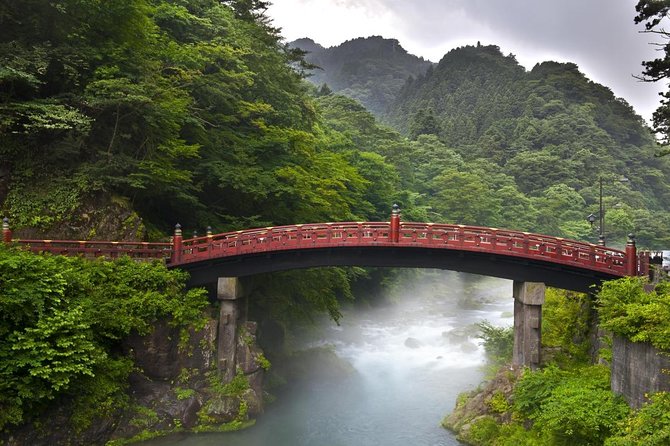
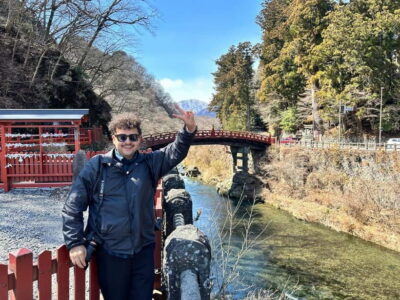
Shinkyo Bridge is one of Nikko’s most recognizable views. Its red structure crosses the river at the entrance to the shrine and temple area and technically belongs to Futarasan Shrine.
The current bridge dates from 1636, during the Tokugawa era. A bridge occupied this spot earlier, though its first construction date is unclear. Until 1973, the public could not walk across it. After later restoration work, visitors gained access for a fee.
This tour lists a 30-minute stop and free admission, so you can see the bridge without adding another ticket cost. The stop works well as a quick photo and orientation point, especially because it marks the transition between Nikko town and the religious compounds.
Do not expect a large attraction with hours of indoor displays. Shinkyo is about its position, color, and history. If your schedule becomes tight, it is a short stop compared with Toshogu or the waterfalls.
Kegon Falls and Lake Chuzenji
The final major section takes you into Nikko’s mountain country. Kegon Falls drops nearly 100 meters and is one of Japan’s best-known waterfalls.
An elevator dating from 1930 takes you closer to the falls. The elevator admission is not clearly listed in the included costs, so budget for a possible extra charge and confirm before descending. The closer viewpoint is the reason to make the trip rather than simply photographing the waterfall from a distant road.
The schedule allows two hours for Kegon Falls and Lake Chuzenji. That is a useful amount of time for the waterfall viewpoint and a look at the lake, though the exact split depends on driving and local conditions.
Lake Chuzenji is described as peaceful, with the nearby Chuzenji Shrine adding another cultural stop in the same mountain area. This part of the tour changes the mood completely. You have spent the morning with shoguns, Buddhist figures, and old bridges. Now the reward is open water, high-country scenery, and the sound of falling water.
The route calls Kegon Falls geographically famous and nearly 100 meters deep. That description refers to the waterfall’s drop, not the water basin. Either way, the scale is impressive from the viewing area.
Private transport, snacks, and the lunch question
The vehicle is air-conditioned and private, with fuel surcharge and parking fees included. A hotspot is also listed onboard, which can be helpful during a long day, though you should confirm how it is provided and whether there are any usage limits.
One particularly good detail comes from the experience of driver Rana. He provided water and snacks, made the ride comfortable, and suggested a pleasant restaurant for lunch. He also used the driving time for conversation and historical explanation.
Lunch itself is not included. You will need to pay for your own lunch and brunch, and the route does not give a fixed restaurant or meal price. That flexibility is useful if your group has different tastes, but it also means the final cost will be higher than the headline $500.
Private transport matters most on the return journey. After a 12-hour day, you do not need to find the correct bus, manage a transfer, or navigate back to Tokyo with tired legs. The vehicle returns to the Tokyo Station meeting point.
What the $500 price really buys
At first glance, $500 can seem steep for a day trip. The calculation changes if five people share it. At full capacity, you pay $100 each for private transportation, parking, fuel, air conditioning, and a route that reaches both central Nikko and the Lake Chuzenji area.
For three people, the transport cost is about $167 each. For two, it is $250 each. Admission fees and food are extra in every case. I would consider this good value for a family or small group that places a high price on time and a private ride, but weak value for a solo visitor.
The tour also removes much of the planning work. You do not need to build a route between Toshogu, Rinnō-ji, Shinkyo Bridge, and Kegon Falls yourself. That convenience is the product being sold, and it is a real advantage on a day when several stops are geographically separated.
The tradeoff is less independence. A private itinerary is efficient, but you may not have long, unplanned stretches to wander. Tell the driver early if Toshogu, the museum, the garden, or the lake matters most to you.
Timing, meeting point, and practical details
The listed start and end point is Tokyo Station, at 1 Chome-9 Marunouchi, Chiyoda City. Pickup is offered, but the supplied meeting details identify Tokyo Station as the main point, so confirm the exact pickup arrangement before the day begins.
Confirmation arrives at booking, and a mobile ticket is provided. Service animals are allowed, and the activity is described as suitable for most people. It is also near public transportation, though the core experience itself uses a private vehicle.
The tour has free cancellation up to 24 hours before the start time for a full refund. Cancellations or changes made inside that 24-hour window are not accepted for a refund, with cut-off times based on local time.
Because the day is long, wear shoes suited to walking around shrine and temple grounds. That is practical advice rather than a special requirement, since the program covers several sites and includes both cultural compounds and outdoor viewpoints.
Who should book this Nikko day trip?
I would choose this tour if you are staying in Tokyo but want one organized day covering Nikko’s major cultural and natural sights. It is especially suitable for families, couples traveling with friends, and groups of up to five who can share the $500 cost.
It also fits you if you dislike public transport connections or want someone else to manage parking and the route. Driver Rana’s reported style, with water, snacks, lunch help, conversation, and historical background, suggests the ride can be part of the experience rather than dead time between stops.
I would hesitate if you are traveling alone, watching every yen, or want long hours at one shrine. The day includes many stops, and admission, lunch, and possible waterfall elevator costs sit outside the tour price.
The strongest reasons to book are the private vehicle, the wide range of sights, and the mix of Tokugawa history with Kegon Falls and Lake Chuzenji. The main reason not to book is simple: public transport can cost less if you are willing to plan and accept a less direct day.
FAQ
How long is the Nikko Toshogu, Kegon waterfall, and Lake Chuzenji tour?
The experience lasts approximately 12 hours.
Where does the tour start and finish?
It starts at Tokyo Station, 1 Chome-9 Marunouchi, Chiyoda City, Tokyo 100-0005, and ends back at the meeting point.
How many people can join the private tour?
The $500 price covers one private group of up to five people.
Is transportation included?
Yes. The tour includes private transportation in an air-conditioned vehicle, fuel surcharge, parking fees, and a hotspot onboard.
Are entrance fees included?
No. The listed admission costs are about $10 per person for Toshogu Shrine and about $7 per person for Rinnō-ji Temple, the old-era garden, and the Rinnō-ji museum.
Is lunch included?
No. Lunch and brunch are not included. A driver may suggest a restaurant, but you pay for your own meal.
What is the cancellation policy?
You can cancel at least 24 hours before the start time for a full refund. Cancellations or changes made less than 24 hours before the start time are not accepted for a refund.
More 1-Day Tours in Tokyo
More Nikko Day Trips in Tokyo
More tours in Tokyo we've reviewed



Nikko Day Trips, compared.
 ★ 4.6Nikko: Kegon Falls, Lake Chuzenji & Toshogu TempleFrom $8911 hours
 ★ 4.5Tokyo: Nikko Toshogu Shrine and Kegon Waterfall TourFrom $8410h 30m
 ★ 5.0Nikko Full-Day Private Tour with Government-Licensed GuideFrom $155
 ★ 4.9From Tokyo: Nikko World Heritage Site Private Full-Day TripFrom $4831 day
 ★ 4.3Nikko: Edo Wonderland Edomura Cultural Theme Park TicketFrom $351 day
 ★ 4.8Tokyo: Nikko World Heritage Private Day Trip Hotel Pick-upFrom $39011 hours - 1 day