
Reviewed · GUIDED
Get Unique Insights into Tokyo – Private Tour with local Guide
Tokyo can feel like several cities stitched together by train lines. A peaceful shrine may sit minutes from a fashion street, while a short ride takes you from Shibuya’s famous crossing to the neon streets of Shinjuku. This private tour gives you a fast, personal introduction, with a guide who can shape the route around your interests, pace, and available time.
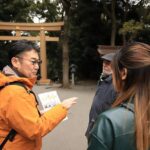
I like the private format, since you are not waiting for a large group or following a fixed script. I also like the practical touch: guides such as Jero and Franz take photos, explain shrine manners, help with train navigation, and point out places you may not notice alone.
The main consideration is scope. The tour lasts roughly 2 to 6 hours, but the many listed areas cannot all receive equal attention in one short outing. You will need to agree on priorities before or during the tour, and you should expect plenty of walking, even though transportation between destinations is included.
In This Review
- Key Things to Know Before Booking
- Why This Works Best Near the Start of Your Tokyo Stay
- Starting at Meiji Jingu, Tokyo’s Quiet First Impression
- Takeshita Street and Harajuku’s Many Faces
- Shibuya Crossing Without the Confusion
- Taking the Train to Shinjuku’s Neon Streets
- Optional Routes Beyond the Main Four Neighborhoods
- Photos, Snacks, and the Small Extras That Matter
- What $82.90 Per Person Buys You
- Who Should Book This Tokyo Walk
- Should You Book It?
- FAQ
- How long does the private Tokyo tour last?
- Where does the tour start and finish?
- Is transportation included?
- Which neighborhoods can the tour visit?
- Are food and drinks included?
- Is this a group tour?
- Can I cancel for a full refund?
Key Things to Know Before Booking
- A personal Tokyo orientation: Build your first-day bearings around Meiji Shrine, Harajuku, Shibuya, and Shinjuku.
- Flexible timing: Choose a morning or afternoon start and select a duration from about 2 to 6 hours.
- Photos included: Your guide can take solo and group photos at major landmarks, then send them to you.
- Local customs explained: Learn how to behave respectfully at Meiji Jingu and how to handle Tokyo’s busy public spaces.
- Train travel is part of the route: Transportation between destinations is included, making this useful practice for later exploring.
- Tea and a Japanese snack: A typical drink and snack are provided, while additional meals and drinks cost extra.
Why This Works Best Near the Start of Your Tokyo Stay
I see this tour as an orientation with personality, not a box-checking sightseeing bus. You get a guide beside you who can answer the small questions that often slow down a first day in Tokyo: how to approach a shrine, how to move through a major station, where to eat later, and which neighborhoods fit your interests.
That practical help has real value. Several detailed experiences describe guides adapting the pace for jet lag, family needs, weather, changing plans, and different walking abilities. One outing covered more than eight miles, while others moved at a gentler speed. The point is not to copy someone else’s route. It is to tell the guide what you want and keep communicating as the afternoon unfolds.
Jero receives especially warm praise for his friendly manner, prompt communication, local recommendations, and ability to make the city feel less intimidating. Franz is also singled out as a kind and enjoyable guide. You cannot assume a particular guide will be available unless the operator confirms it, but the guide’s role is clearly central to the experience.
The tour can also be useful for repeat visitors. Tokyo changes quickly, and a private local can steer you toward less familiar streets or explain how a well-known district fits into daily life. Still, if you want a single famous attraction explored in great depth, such as the Imperial Palace grounds or Akihabara’s shops, a focused tour may suit you better.
Other guided tours in Tokyo

Starting at Meiji Jingu, Tokyo’s Quiet First Impression
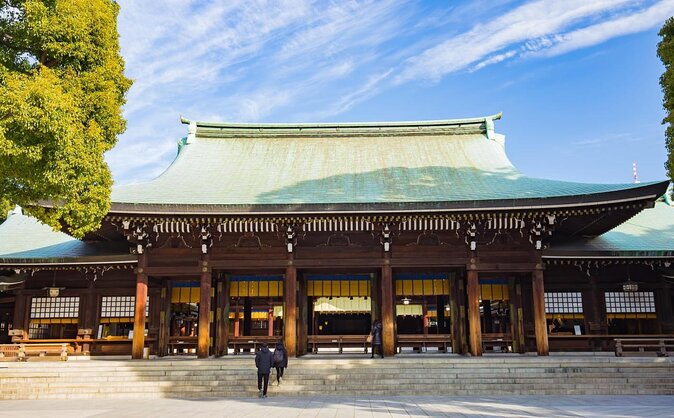
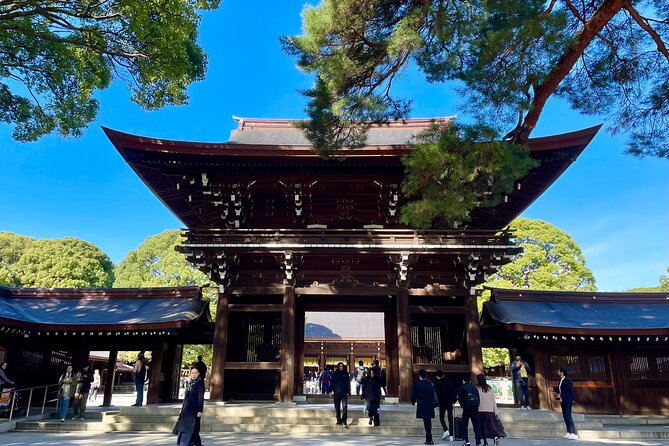
The meeting point is Meiji Jingu Ichino Torii, at 1-chōme-18-20 Jingūmae in Shibuya. From here, you walk toward Meiji Jingu Shrine through a forested setting that feels far removed from Harajuku’s shopping streets.
This is a strong opening because it introduces Japan through custom and atmosphere rather than traffic and advertising. Your guide explains the shrine’s cultural role and shows you how to behave respectfully. You may learn the basic steps for cleansing at the entrance and offering respect at the main building, but the exact amount of instruction depends on your guide and the time available.
The walk through the shrine grounds is also a good chance to settle into Tokyo. If you have just arrived after a long flight, the quieter setting gives you room to adjust. The pace can be adapted, though you should still wear comfortable shoes and expect to be on your feet.
The drawback is timing. A short tour cannot linger at every gate, path, and building. If Meiji Jingu is your top priority, say so at the start and ask for enough time to experience it properly.
Takeshita Street and Harajuku’s Many Faces
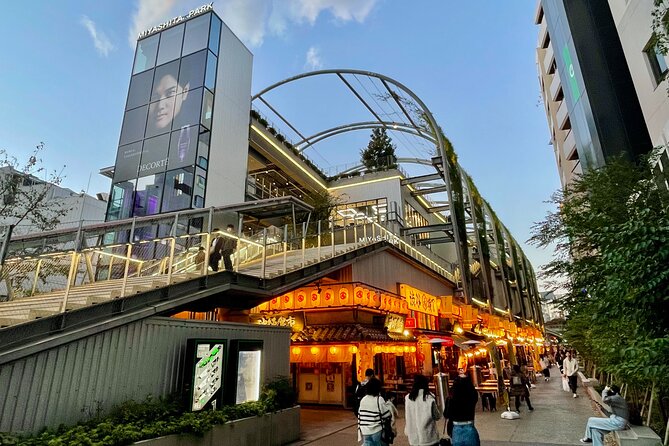
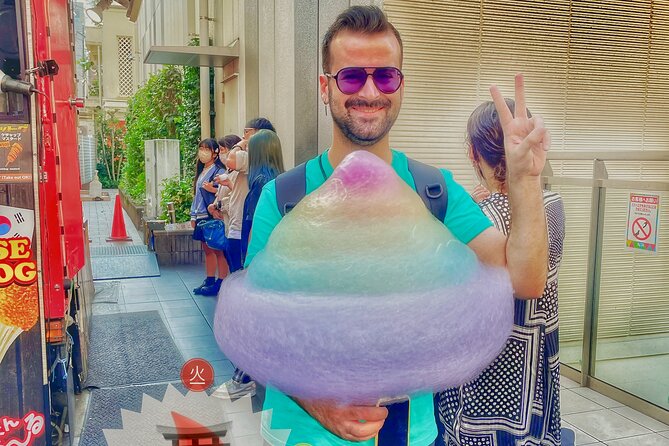
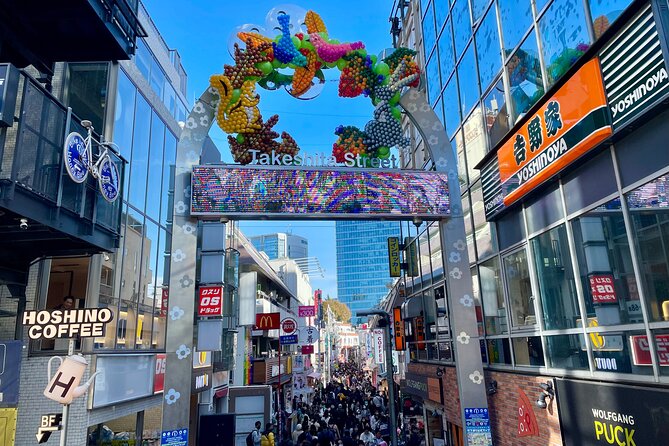
After the shrine, the route may shift sharply toward Takeshita Street. This famous Harajuku shopping road is packed with colorful storefronts, youth fashion, sweets, and small purchases that make easy souvenirs.
Takeshita Street is fun to see, but it can be crowded and noisy. A guide helps you understand what makes the area significant instead of reducing it to a quick walk past shops. You can ask about the fashion culture, the style of the neighborhood, or which parts are worth returning to later.
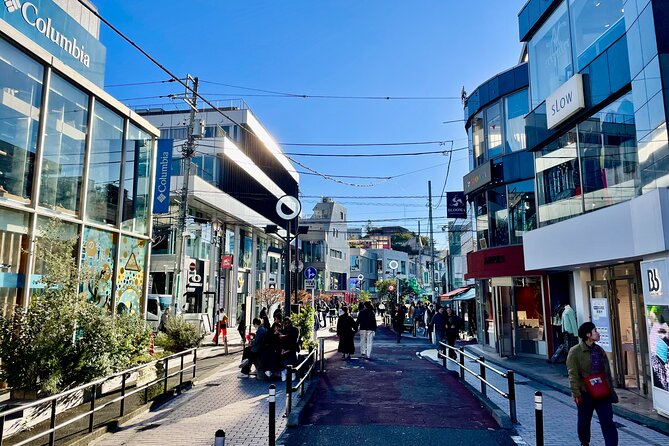
The itinerary also includes Harajuku’s street-style scene and may move through Cat Street and Omotesando. These areas give you a broader view of the district. Takeshita Street is youthful and tightly packed, while Omotesando feels more polished, and the side streets offer a different look at local shopping and design.
This contrast is one of the tour’s better features. You are not shown only the postcard version of Harajuku. You get a sense of how the district shifts from shrine grounds to youth culture, fashion, cafes, and major retail streets within a small area.
If shopping is not your interest, tell the guide. You can use this section for atmosphere, photos, and neighborhood context rather than spending time inside stores.
Shibuya Crossing Without the Confusion
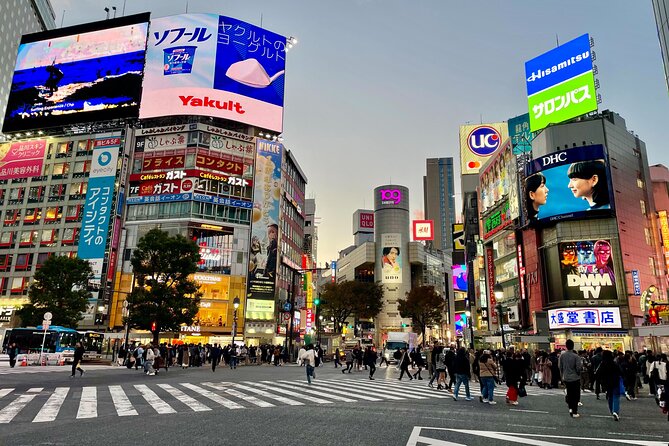
Shibuya Crossing is the tour’s big urban set piece. When the signals change, people cross from several directions at once, surrounded by giant screens, department stores, restaurants, and Tokyo’s constant movement.
Your guide can help you see the crossing from street level and may take photos with the landmark. The statue of Hachiko is another likely stop in the area, and it adds a small human story to the district’s enormous scale.
I especially value the transit lesson here. Shibuya is a place where station exits, underground passages, and crowded sidewalks can quickly become confusing. An experienced guide can show you how the area connects, which is useful when you return alone.
Do not expect the crossing itself to fill an entire tour. It is a short visual experience, not a museum visit. The real benefit comes from pairing it with local context and advice on restaurants, shopping, views, and later routes.
Shibuya can also be tiring at peak times. The private format helps because you can pause, take photos, or move on instead of keeping up with a group. If you are traveling with children or older family members, discuss the walking pace before booking.
Taking the Train to Shinjuku’s Neon Streets
Transportation between destinations is included, and the route commonly uses the train from Shibuya to Shinjuku. This is more than a way to save walking time. It gives you a brief lesson in using Tokyo’s public transit system, one of the most useful skills you can gain on your first day.
The experience finishes near Shinjuku Station, at the Giant 3D Cat on 3-chōme-23-18 Shinjuku. Before reaching the end, you may see the skyscrapers, busy streets, and entertainment areas that make Shinjuku feel so different from Meiji Shrine.
Kabukicho Tower is listed as the final stop for the neon side of Tokyo. The district is known for bright signs, restaurants, entertainment venues, and late-night energy. Your guide can help you look at the area with some context rather than simply wandering through the lights.
Again, keep the duration in mind. Shinjuku alone could occupy a whole evening. If you want time for observation decks, shopping, or a meal, ask how much of the tour will be spent here. The tour does not include meals or drinks beyond the provided Japanese snack and tea or coffee, so plan separately if you want dinner afterward.
The finish near Shinjuku Station is practical. You can continue sightseeing, find food, return to your hotel, or ask for directions to your next destination.
Other private tours in Tokyo


Optional Routes Beyond the Main Four Neighborhoods
The experience also lists Odaiba, Asakusa, Akihabara, Ueno Park, and the Imperial Palace East Gardens. These should be treated as possible destinations for a customized outing, not as stops you can reasonably expect to cover alongside every Harajuku, Shibuya, and Shinjuku highlight.
Odaiba offers a futuristic side of Tokyo. Aqua City and DECKS Tokyo Beach provide shopping and entertainment, while the nostalgic Hikara Yokocho adds an older-style visual touch. The Unicorn Gundam statue is a favorite photo stop, and the waterfront setting changes the mood from dense city streets to open views.
Asakusa presents an older side of Tokyo. Its story reaches back to the Edo period, when it served as a major entertainment district with theaters, geisha houses, and street performers. The area’s festive character remains, though the setting now sits within a modern city. Choose Asakusa if temples, traditions, and older Tokyo appeal to you more than fashion districts.
Akihabara, or Akiba, is the place for electronics, anime, manga, games, and unusual shops. Its roots in the postwar market for radio parts help explain why the district developed such a strong connection to technology. This is a good choice for fans of Japanese pop culture, but it may be less useful if your interests lean toward gardens and historic buildings.
Ueno Park gives you green space and cultural attractions in northeastern Tokyo. It was once connected with Kaneiji Temple and later became a public park. Seasonal beauty is part of its appeal, but the area works best when you have time to slow down rather than rush through it.
The Imperial Palace East Gardens offer another quieter stop in central Tokyo. They occupy part of the former Edo Castle grounds, with stone walls, gates, moats, and garden paths that hint at Japan’s feudal past. Pick this route if you want history and open space, and be prepared to give up some of the western Tokyo highlights.
Photos, Snacks, and the Small Extras That Matter
The included photos are a useful feature, especially for solo visitors or couples who do not want to rely on strangers at every landmark. Your guide can take pictures of individuals and the whole group, and the images may be sent to you afterward.
That service also changes the pace. You can ask the guide to take a few photos, then focus on the place instead of holding your phone throughout the visit. It is a simple extra, but it solves a common problem on walking tours.
Tea or coffee and a typical Japanese snack are included. The information describes this as a typical Japanese drink and snack, and individual experiences mention warm tea and matcha. Since the exact item is not fixed, do not book this as a food tour. Think of it as a small refreshment during the walk.
Additional food and drinks are not included. If you want lunch, dessert, or a proper meal, ask the guide for recommendations and budget for it separately.
What $82.90 Per Person Buys You
At $82.90 per person, this tour is not the cheapest way to see Tokyo. You could ride the train and visit several neighborhoods on your own for much less. The price makes more sense if you place value on time, personal advice, photos, and a route adjusted to your group.
For a first visit, the orientation can prevent wasted hours. Tokyo is easy to explore once you understand the rail system and neighborhood layout, but the first few trips through major stations can be stressful. A guide who takes you between districts and explains how the pieces connect can make the rest of your trip smoother.
The value improves for small private groups, since only your party participates and group discounts may be available. It also improves if you have limited time, are dealing with jet lag, or want a local to help shape your first day.
The price is harder to justify if you already know Tokyo well, prefer independent wandering, or plan to spend the whole day at one district. You are paying for access to a person and a flexible route, not for admission to major attractions. Most of the sightseeing takes place outdoors, on public streets, in shrine grounds, and around stations.
Who Should Book This Tokyo Walk
I would recommend it most strongly to first-time visitors who want a useful starting point. It is also a good fit for solo visitors, couples, families, and anyone who wants photos without constantly asking for help.
The tour suits you if you enjoy asking questions and changing plans as you go. The guides are praised for adjusting to interests, walking ability, weather, family needs, and even last-minute changes. That flexibility is the heart of the experience.
It may not suit you if you dislike walking, need a guaranteed visit to every listed district, or want a formal lecture with fixed timing. The tour is personal and conversational. You need to speak up about what matters most to you.
Morning and afternoon departures give you room to fit the outing around flights, hotel check-in, or an evening plan. Free cancellation is available if you cancel at least 24 hours before the start time. Changes or cancellations inside that window are not accepted for a refund.
Should You Book It?
Book this tour if you want to get your bearings fast, learn basic Tokyo customs, and see several very different neighborhoods with a private guide. I would choose the four-hour option for a first visit, then ask to balance Meiji Jingu, Harajuku, Shibuya, and Shinjuku rather than chasing every possible stop.
If your time is short, be clear about your top two or three priorities. If you have a full week and enjoy self-guided sightseeing, you may prefer to explore independently and spend the $82.90 on meals or special admissions.
For many first-time visitors, the strongest reason to book is not simply seeing famous places. It is finishing the walk with a better sense of how Tokyo fits together, how to move around, and what to do next. That practical confidence can be worth as much as the landmarks themselves.
FAQ
How long does the private Tokyo tour last?
The tour lasts approximately 2 to 6 hours. You can choose your preferred duration during booking, along with a morning or afternoon start time.
Where does the tour start and finish?
The tour starts at Meiji Jingu Ichino Torii, 1-chōme-18-20 Jingūmae, Shibuya, Tokyo. It finishes near Shinjuku Station at the Giant 3D Cat on 3-chōme-23-18 Shinjuku.
Is transportation included?
Yes. Transportation between tour destinations is included, and the route may use Tokyo’s train system, including travel between Shibuya and Shinjuku.
Which neighborhoods can the tour visit?
The main route includes Meiji Jingu, Harajuku, Takeshita Street, Shibuya, and Shinjuku. Depending on your chosen duration and interests, the tour can also include Odaiba, Asakusa, Akihabara, Ueno Park, or the Imperial Palace East Gardens.
Are food and drinks included?
Tea or coffee and a typical Japanese snack are included. Other food and drinks are not included.
Is this a group tour?
No. This is a private activity, so only your group participates. Group discounts may be available.
Can I cancel for a full refund?
Yes, if you cancel at least 24 hours before the experience start time. Cancellations or changes made less than 24 hours before the start time are not accepted for a refund.
More Private Tours in Tokyo
More Guided Tours in Tokyo

More tours in Tokyo we've reviewed










Guided, compared.
 ★ 5.0Tokyo 6hr Private Tour with Government-Licensed GuideFrom $155
 ★ 4.9Tokyo: Shinjuku Local Bar and Izakaya Guided Walking TourFrom $343 hours
 ★ 4.8Tokyo: Private City Highlights Tour with Local GuideFrom $1064 - 8 hours
 ★ 4.9Tokyo: Tsukiji Fish Market Guided Walking TourFrom $222 hours
 ★ 5.0Tokyo 4hr Private Tour with Government-Licensed GuideFrom $109
 ★ 5.0Tokyo Guided Small-Group Biking TourFrom $106