
Reviewed · KAMAKURA & ENOSHIMA DAY TRIPS
First time in Kamakura? Enjoy a Tour of All Must-sees!
Kamakura is easiest to understand when someone connects its temples, shrines, gardens, and food streets for you. This seven-and-a-half-hour private tour covers the major sights, from the bamboo at Hokoku-ji to the Great Buddha and the shops of Komachi Street.
I like the one-to-one guide attention, which makes it easier to ask about Japanese customs, temple design, and local food. I also like the broad mix of stops: quiet gardens, a major shrine, a famous statue, and a shopping street all fit into one day. The catch is the pace. You will walk a lot, and admissions, transport, meals, and an optional experience cost extra.
In This Review
- Key points at a glance
- Why this Kamakura tour works for first-time visitors
- Jomyo-ji and Hokoku-ji: matcha and bamboo in the morning
- Komachi Street: the best place to ask what to eat
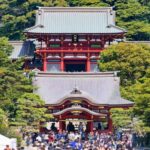
- Tsurugaoka Hachimangu: Kamakura’s major shrine
- Meigetsu-in: the round window and seasonal flowers
- Kotoku-in and the Great Buddha of Kamakura
- Hasedera: flowers, slopes, and a final temple visit
- What the $143.71 price really covers
- Walking, weather, cash, and timing
- Who should book this Kamakura day?
- Should you book it?
- FAQ
- How long does the Kamakura tour last?
- What time does the tour begin?
- Where do I meet the guide?
- Where does the tour end?
- Is this a private tour?
- Is hotel pickup or drop-off included?
- Are transportation and admission fees included?
- How much extra money should I expect to spend?
- Should I bring cash?
- Can I cancel for a full refund?
Key points at a glance
- Seven major Kamakura stops: Visit Jomyo-ji, Hokoku-ji, Komachi Street, Tsurugaoka Hachimangu, Meigetsu-in, Kotoku-in, and Hasedera.
- Private guiding: Your group has the guide’s full attention, with guides such as Yoshi, Rumi, and Akira named in guest feedback.
- A useful first-day route: The tour brings together Kamakura’s best-known temples, shrine, Great Buddha, gardens, and food street.
- Komachi Street food advice: Use the guide to sort local snacks, restaurants, and souvenirs from the many choices.
- Bring cash: About 5,300 yen per person is expected for transport, admissions, and food, and some stops do not accept credit cards.
- Expect a full walking day: Comfortable clothing matters, and this is not the right pick if you want a slow, mostly vehicle-based outing.
Why this Kamakura tour works for first-time visitors
Kamakura can look compact on a map, but its sights are spread across different areas. This tour gives you a clear route through the city instead of leaving you to work out which temple to pair with which shrine, or how to fit the Great Buddha into the day.
The private format is the biggest practical advantage. You meet at Kamakura Station at 9:00 am, then spend the day with only your own group and guide. That setup lets you ask questions as they come up, adjust parts of the day when possible, and get help with small choices such as where to eat on Komachi Street.
The named guides bring different strengths. Yoshi prepared a printed schedule, helped orient the group at the start, and was patient when a delayed train affected the arrival. Rumi helped explain the temples and shrines, while Akira handled detailed questions and made special arrangements for an unusual travel situation. You should still expect guide styles to vary. One guide was described as quiet and more responsive than talkative, so if you want a running commentary, tell your guide early.
The route also has a useful mix of atmosphere. Jomyo-ji and Hokoku-ji offer calm temple settings, Tsurugaoka Hachimangu gives you Kamakura’s grand ceremonial center, and Komachi Street adds food and everyday shopping. Meigetsu-in, Kotoku-in, and Hasedera then bring you to three very different temple experiences.
A few more Kamakura tours and experiences worth a look
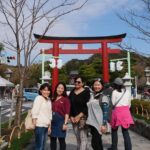
Jomyo-ji and Hokoku-ji: matcha and bamboo in the morning
The first stop is Jomyo-ji Temple, where you can sit with matcha and look toward a Japanese garden. The planned visit is about 40 minutes, although the matcha and garden experience has a separate admission cost.
I like this as an opening stop because it starts the day quietly. After meeting at a busy station, you move quickly into a setting built around stillness, garden views, and tea. It gives your guide a natural chance to explain basic temple customs and the role of tea in Japanese culture.
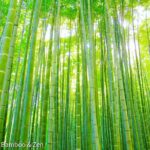
Next comes Hokoku-ji, known for its bamboo grove. The scheduled visit is about 20 minutes, and admission is not included. The grove is a strong photo stop, but the short timing tells you what to expect: this is a focused walk and viewing stop, not a long forest outing.
Bring your camera, but do not let the photo stop become the entire visit. The value here comes from the contrast between the dense bamboo and the restrained temple setting. If you want extra time at either temple, ask your guide, though the full route leaves limited room for lingering.
Komachi Street: the best place to ask what to eat
Komachi Street runs between Kamakura Station and Tsurugaoka Hachimangu Shrine. You have about an hour here, with no admission fee, and this is the tour’s most flexible part of the day.
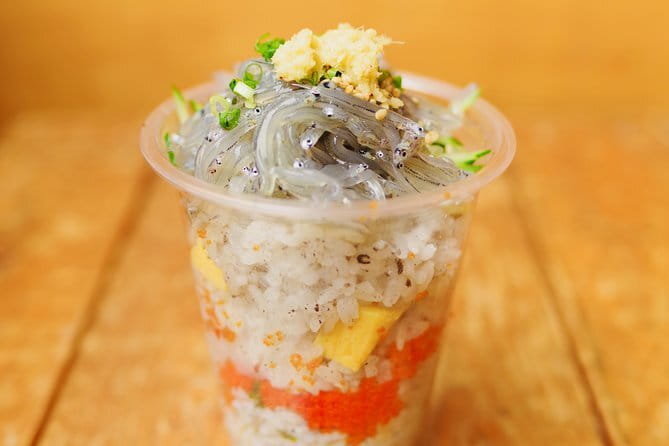
The street is lined with restaurants, souvenir shops, and local food. Some foods are associated particularly closely with Kamakura and may not be easy to find elsewhere. Rather than simply walking through the shops, use your private guide for practical advice on what suits your taste, how much time to spend, and which places fit the day’s schedule.
An hour is enough to sample the atmosphere and buy something, but it is not a leisurely food crawl. The tour’s estimated meal allowance is 1,000 yen per person, so plan on a modest meal or snacks rather than assuming a long restaurant stop is covered.
Komachi Street can also be the point where the day feels busiest. If you prefer temples to shopping, say so. A private guide can help keep the street visit focused, but the advertised route still treats it as a central part of the Kamakura experience.
Tsurugaoka Hachimangu: Kamakura’s major shrine
Tsurugaoka Hachimangu receives about 45 minutes. Admission is free, and its position near Komachi Street makes it a sensible next stop.
The shrine has more than 1,000 years of history and is closely tied to the military government that ruled Japan from Kamakura. It was worshiped by the Genji clan during the Kamakura period, giving the site a direct link to the city’s political and religious past.
This is a different experience from the smaller temple gardens. The shrine is designed for approach, ceremony, and movement through a large sacred precinct. Your guide can help explain what you are seeing and why this shrine matters, rather than leaving you with only a few photographs.
Forty-five minutes should give you time to take in the main areas without turning the stop into a full shrine study. If you are especially interested in Japanese religious history, ask questions here. The private format makes that far easier than a large group tour.
Meigetsu-in: the round window and seasonal flowers
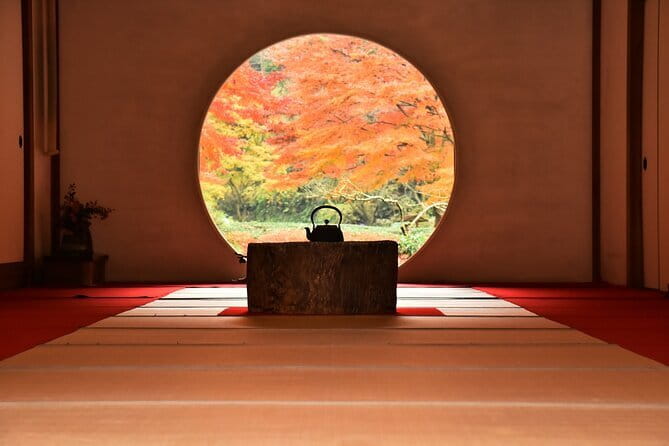
Meigetsu-in, often called the Hydrangea Temple, is scheduled for 30 minutes. Admission costs extra. Its most famous feature is a large round window that frames a garden beyond it.
The appeal is simple and powerful: a single architectural opening turns the garden into a composed picture. The temple is also known for hydrangeas and seasonal plants, so the exact look depends on when you visit. You should not assume the same flowers will be at their best all year.
This stop rewards quiet attention. It is less about covering a large site and more about noticing the relationship between the building, the garden, and the view through the window. The short visit is enough to see the signature feature, though plant lovers may wish for more time.
One guide-led day included four of the five temples because the walking became tiring. That is a useful warning for anyone with limited stamina. The full route lists several major sites, but the actual day can feel long, and temporary closures or weather may require changes.
Kotoku-in and the Great Buddha of Kamakura
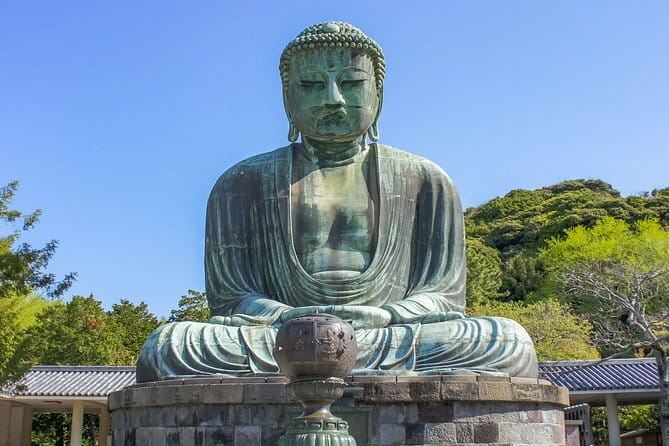
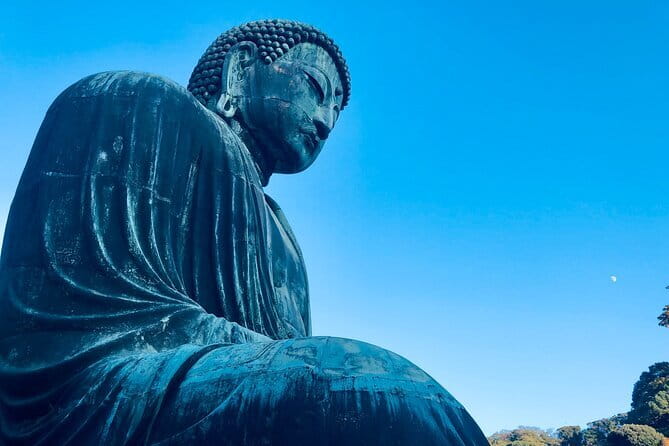
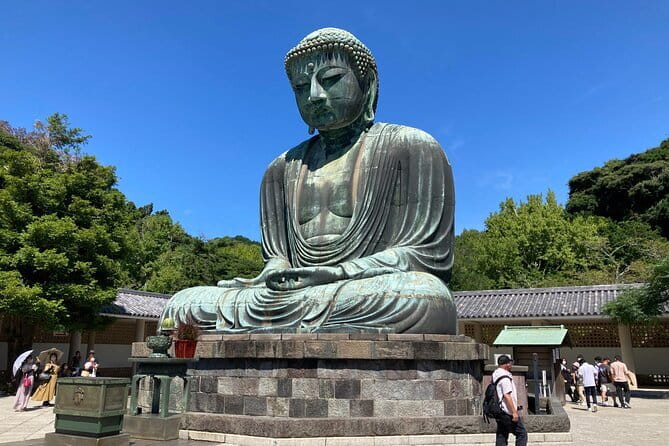
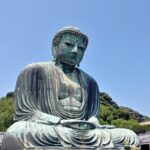
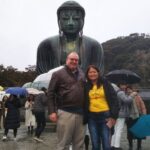
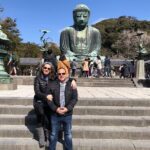
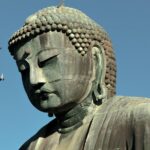
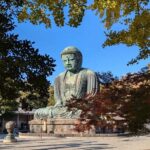
Kotoku-in is home to the Great Buddha, Kamakura’s most recognizable religious monument. The statue is more than 11 meters high, and the planned visit is about 35 minutes. Admission is extra, and you can pay an additional optional fee to go inside the statue.
The Great Buddha is impressive because the experience is direct. After the gardens, bamboo, and shrine architecture, you are facing a huge seated bronze figure in an open temple setting. It gives the day a clear visual centerpiece.
If you choose the interior visit, allow for the extra 660 yen listed for the optional experience. This is not included in the tour price, so carry cash and confirm the details with your guide.
The site can be busy, and 35 minutes is a practical amount of time for seeing the statue, taking photographs, and deciding on the optional visit. I would not count on a long contemplative stop here. The strength is the scale of the statue and the chance to see one of Kamakura’s essential sights without having to plan the route yourself.
Hasedera: flowers, slopes, and a final temple visit

Hasedera, also known as the Flower Temple, receives about 45 minutes. Admission is not included. The grounds are large, with seasonal plants and paths that climb upward through the temple site.
This is one of the more varied stops. You get temple buildings, gardens, flowers, and changing views as you walk uphill. It is a fitting final visit because it brings together many of the visual qualities that define Kamakura’s religious sites.
The climb is also why footwear and clothing matter. The tour asks you to wear comfortable clothes because you will be walking a lot, and Hasedera adds steps and slopes to a day that already includes several stops. If you are tired by this point, keep your pace steady rather than trying to see every corner.
The tour returns to Kamakura Station, its meeting point, at the end of the day. That makes the finish straightforward, with no separate drop-off service included.
What the $143.71 price really covers
The listed price is $143.71 per person. It includes the guide, the private tour, and the necessary costs for the guide, but not the main expenses you incur during the day.
The expected additional cost is about 5,300 yen per person:
- 900 yen for transportation
- 2,650 yen for admission fees
- 1,000 yen for meals
There is also an optional experience cost of 660 yen per person, connected with the Great Buddha visit. A private van is not included, and neither is hotel pickup or drop-off.
I see the price as reasonable if you value a private guide and want the city organized for you in one day. The cost is less attractive if you are comfortable using public transport, choosing temples yourself, and researching food stops in advance. You are paying for personal attention and saved planning time, not for an all-inclusive package.
Group discounts are available, which can improve the value for a larger private party. Since the tour is priced per person, compare the final total with the size of your group before booking.
Walking, weather, cash, and timing
Meet at Kamakura Station at 9:00 am. Allow extra time to reach the station, especially if you are coming by train from elsewhere. A late arrival can cut into the day because the route depends on public transport and has several timed stops.
Bring cash. Some of the temples and other places on the route do not accept credit cards, and the admissions, food, transportation, and optional cost are paid separately. A mobile ticket is available, but it does not remove the need for cash at the sights.
Bad weather can change the transport, destinations, and route. Temporary closures can also lead to replacement stops. These are normal conditions for a day built around gardens, temple grounds, and public transport, but you should keep your schedule flexible.
The tour is suitable for most people, yet it is not a low-effort outing. You will walk between and around several sites, including the sloped grounds of Hasedera. Wear comfortable shoes and avoid packing the rest of the evening too tightly.
Free cancellation is available up to 24 hours before the local start time. Changes or cancellations made inside that window are not accepted for a refund.
Who should book this Kamakura day?
I would choose this tour if it is your first time in Kamakura and you want the major sights explained in one organized day. It suits couples, families, and small private groups who prefer asking their own questions instead of following a large crowd.
It is also a good fit if food matters to you. The Komachi Street hour gives you a chance to ask for local eating suggestions rather than picking at random, and the private format makes those recommendations more personal.
I would hesitate if you want a slow temple day, dislike walking, or plan to spend a long time at one garden. The route covers seven stops, so each visit has a limit. I would also compare the value carefully if you are an experienced Japan visitor who already knows Kamakura’s transport and temples.
Should you book it?
Book it if you want a well-organized first look at Kamakura, personal guiding, and the reassurance of seeing the Great Buddha, Tsurugaoka Hachimangu, Hasedera, and the city’s smaller temple settings in one day.
Skip it if you want to control every minute or keep costs low by handling transport and admissions yourself. For most first-time visitors with a full day available, the mix of history, gardens, food, and private attention makes the added cost worthwhile, as long as you are ready for a brisk walking day and several expenses beyond the booking price.
FAQ
How long does the Kamakura tour last?
The tour lasts approximately 7 hours and 30 minutes.
What time does the tour begin?
It begins at 9:00 am.
Where do I meet the guide?
The meeting point is Kamakura Station, at 1-chōme-1-15 Onarimachi, Kamakura, Kanagawa 248-0012, Japan.
Where does the tour end?
The activity ends back at the meeting point at Kamakura Station.
Is this a private tour?
Yes. Only your group participates in the private tour.
Is hotel pickup or drop-off included?
No. Pickup and drop-off service is not included, and a private van is also not included.
Are transportation and admission fees included?
No. You pay the transportation and entrance costs separately. The estimated total for transportation and admissions is included in the expected additional cost of 5,300 yen per person, along with an estimated meal cost.
How much extra money should I expect to spend?
The estimated extra cost is 5,300 yen per person, covering transportation, admissions, and meals. An optional experience costs an additional 660 yen per person.
Should I bring cash?
Yes. Some places visited during the tour do not accept credit cards.
Can I cancel for a full refund?
You can cancel at least 24 hours before the local start time for a full refund. Cancellations or changes made less than 24 hours before the start are not accepted for a refund.
More Kamakura & Enoshima Day Trips in Kamakura
More tours in Kamakura we've reviewed

Kamakura & Enoshima Day Trips, compared.
 ★ 4.5Tokyo: Kamakura & Enoshima Day Trip including Temple TicketsFrom $589 hours - 570 minutes
 ★ 4.5Tokyo: Mt. Fuji, Kamakura, Big Buddha, & Lake Ashi Day TripFrom $4910 - 11 hours
 ★ 4.5From Tokyo: Kamakura & Enoshima 1-Day Bus TourFrom $66
 ★ 5.0Kamakura Historical Walking Tour with the Great BuddhaFrom $98
 ★ 5.0Kamakura Private Tour: Temples, Nature, and the Great BuddhaFrom $98
 ★ 5.0Kamakura Walking Tour – The City of ShogunFrom $35