
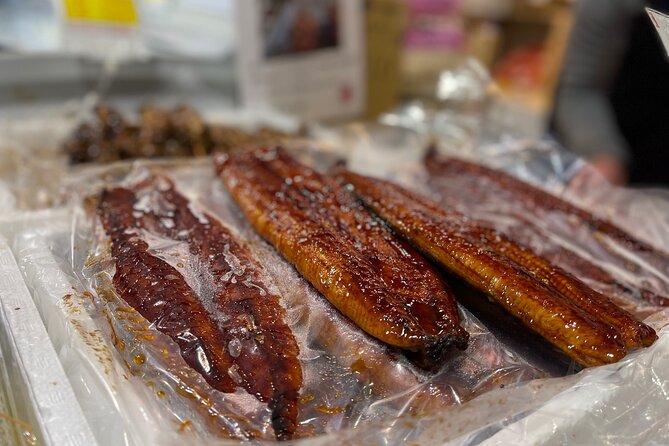
Reviewed · TOKYO FOOD TOURS
Classic Tsukiji Food Tour
Tsukiji is no longer Tokyo’s main wholesale fish market, but its outer streets still offer one of the city’s best food mornings. This three-hour walk takes you from coffee at Turret Coffee Tsukiji to seafood stalls, old market shops, a local breakfast, and a brief blessing at Namiyoke Inari Shrine. You get more than a meal. You get a useful introduction to how Japanese food reaches the table.
I like the way the tour combines small tastings with cultural context, rather than simply leading you from one snack to the next. I also like the small maximum of 10 people, which should make it easier to hear your guide and ask questions. The main consideration is the price, $231 per person, which is a serious outlay for three hours, especially if you are not keen on seafood.
In This Review
- Key points
- Why Tsukiji still matters after the wholesale move
- Starting with coffee at Turret Coffee Tsukiji
- A brief pause at Tsukiji Hongan-ji
- Walking through the Tsukiji Outer Market
- Breakfast in the market, not just scattered samples
- Namiyoke Inari Shrine and the meaning of the stop
- What the $231 price really includes
- Who will enjoy this morning most
- Practical advice before you go
- Should you book the Classic Tsukiji Food Tour?
- FAQ
- Where does the Classic Tsukiji Food Tour start?
- What time does the tour begin?
- How long does the experience last?
- What is included in the price?
- Is hotel pickup included?
- Is the tour suitable for vegetarians or people eating gluten-free?
- Is the tour suitable for vegans or people who do not eat seafood?
- How many people can join the tour?
Key points
- A morning start at 8:30 am: You meet at Turret Coffee Tsukiji and begin with a drink before the market gets too far into its day.
- Seafood and more: The food stops focus on Tsukiji specialties, but the experience also covers Japanese food customs and non-fish items.
- A full market breakfast: Your included meal is more substantial than a few samples, making this both a tour and a morning meal.
- Local guides with personality: Guides including Asami, Asha, and Jordan have led departures, with explanations that connect Japanese food to everyday culture.
- A small group of up to 10: This is a practical size for narrow market lanes and conversations with vendors.
- Cash matters: Credit cards are not generally accepted for extra food or souvenirs, so bring Japanese yen.
Why Tsukiji still matters after the wholesale move
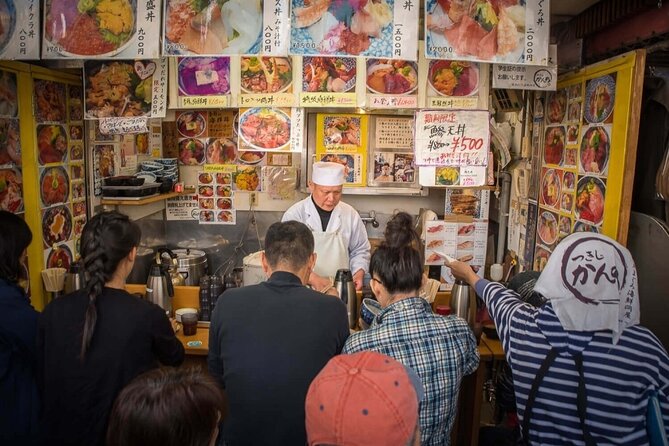
The name Tsukiji can confuse first-time visitors. The wholesale fish operation that made the district famous has moved, but the outer market remains open, with seafood specialists, food shops, restaurants, and long-running businesses still working in the area.
That distinction matters. You will not be touring the former wholesale auction floor. Instead, you will walk through the part of Tsukiji that is easiest to enjoy as a visitor: the public-facing market where you can eat, browse, and meet vendors without needing a special entry arrangement.
The tour is built around this living food district. Its value comes from having someone explain what you are seeing, what is seasonal, and how different foods fit into Japanese cooking. You may notice products that look familiar at first, then learn why they are handled, prepared, or served in a particular way.
This is a better choice than arriving alone with a short list of famous foods and simply following the crowd. Your guide can give the market some shape, then help you understand why certain stalls and shops matter.
A few more Tokyo tours and experiences worth a look

Starting with coffee at Turret Coffee Tsukiji
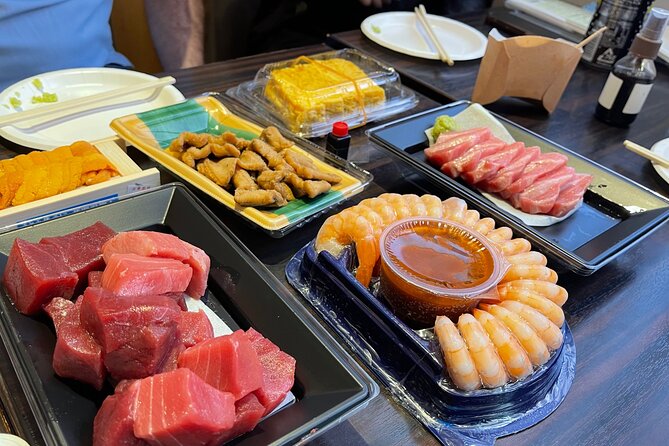
The meeting point is Turret Coffee Tsukiji, at 2-chome-12-6 Tsukiji, Chuo City. The start time is 8:30 am, so plan to arrive a little early. You begin with a coffee or another included drink, giving the group a calm way to meet before entering the market streets.
This first stop is short, listed at about five minutes, but it serves a useful purpose. You can get your bearings, meet the English-speaking guide, and start tasting before the market walk begins. A drink is included, while any additional drinks or food are your responsibility.
The meeting point and end point use the same address, which is helpful if you are making your own way by train or subway. Hotel pickup and drop-off are not included, and transportation costs are yours to cover.
You will want comfortable shoes. The tour lasts about three hours and requires a moderate level of physical fitness. The market is a walking environment, not a sit-down food class, so expect time on your feet and movement through active market lanes.
A brief pause at Tsukiji Hongan-ji
Tsukiji Hongan-ji is part of the morning route. The supplied schedule gives no detailed stop description or fixed tasting here, so think of it as a cultural pause within the food walk rather than a separate long visit.
That balance is useful. Tsukiji is not only about fish and breakfast counters. Places of worship help explain the neighborhood’s identity, and the tour gives you a chance to see that side of the district without turning the morning into a formal temple tour.
The exact order and timing can change. Restaurant schedules, public holidays, weather, and the market’s own calendar may affect the stops. The operator says suitable substitutions can be made, so you should treat the route as a planned outline rather than a guarantee that every stop will happen in precisely the listed order.
Walking through the Tsukiji Outer Market
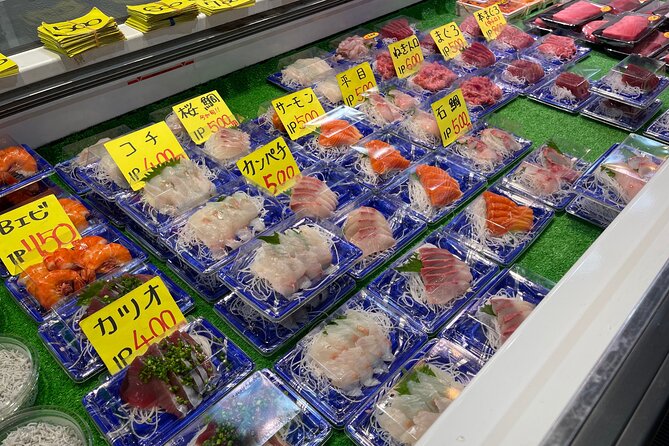
The main portion takes you through specialty seafood shops and market stalls. The focus is on the vendors who stayed in Tsukiji after the wholesale fish businesses moved elsewhere. That gives the walk a clear purpose: you are seeing how the old district continues to function as a food center.
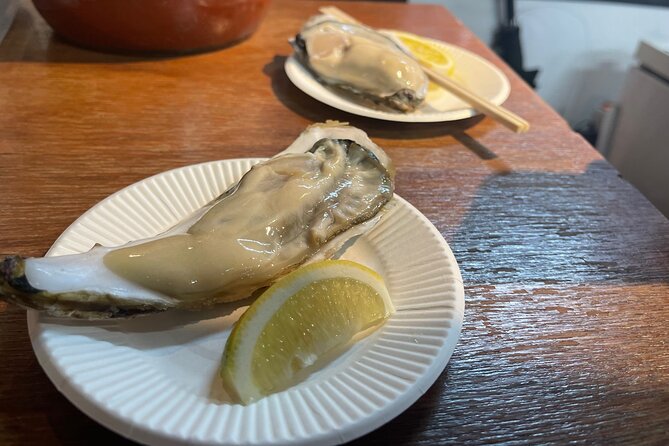
You will sample seasonal bites as you go. The exact foods are not fixed in the information provided, and that is partly the point. Market food depends on what is available, what is in season, and which shops are open that day.
The experience is not limited to fish. The food coverage can include several kinds of Japanese dishes and useful comparisons between Japanese eating habits and those familiar to you at home. One departure even included seeing a live blowfish, an unusual detail that shows how close the route can get to the working side of seafood retail.
Your guide’s role is important here. Guides including Asami, Asha, and Jordan have been associated with this experience. One departure included Jordan as an experienced guide in training alongside Asami. You may not have the same combination on your date, but the guide is an English speaker and is expected to explain both the food and the customs around it.
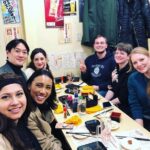
The group size is capped at 10. That will not make the market quiet, but it should help you stay connected to the guide in narrow lanes. It also gives you a better chance to ask about unfamiliar ingredients instead of trying to solve every mystery with a phone camera.
Breakfast in the market, not just scattered samples
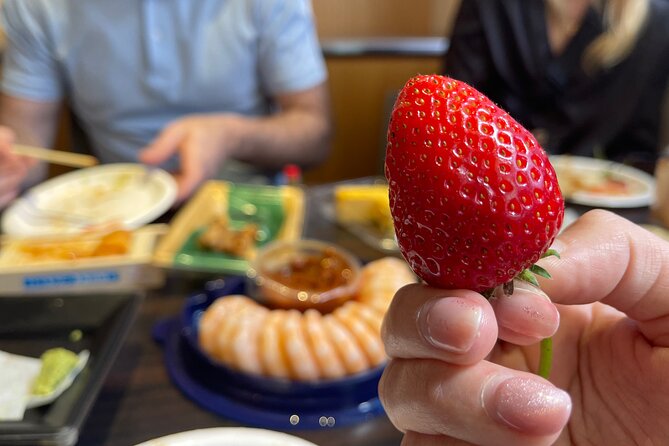
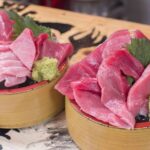
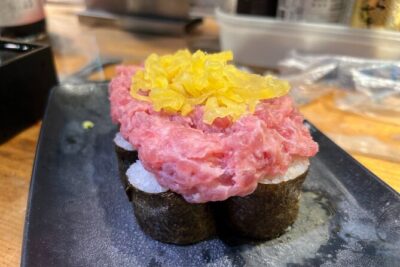
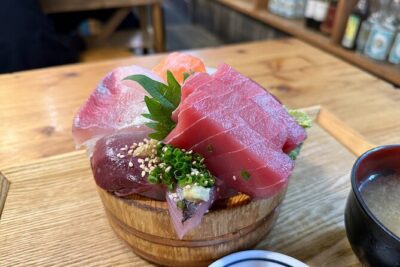
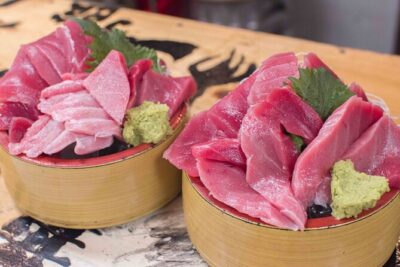
The included Tsukiji specialty seafood breakfast is one of the strongest reasons to book. Many food walks offer a series of tiny bites and leave you looking for a real meal afterward. Here, breakfast is part of the experience, so you should finish the morning properly fed.
The exact restaurant and dishes can change because the market follows its own calendar. The tour description also notes that restaurants may require changes because of schedules, holidays, weather, or other unforeseen conditions. If you have your heart set on one particular dish, this flexibility may feel frustrating. If you prefer a food morning that responds to what is available, it is a sensible arrangement.
The meal is especially useful for first-time visitors to Tokyo. You can ask how to approach foods you have not tried, what is seasonal, and how a market breakfast differs from a standard hotel meal. The experience also covers foods beyond seafood, which makes it less narrow than the name might suggest.
Still, do not book this if you strongly dislike fish or seafood. The activity is not recommended for people who eat no seafood, and it is not recommended for vegans. Vegetarian, pescatarian, and gluten-free requests are listed as possible, but you should provide those details when booking and understand that substitutions may depend on the market and restaurants.
A few more Tokyo tours and experiences worth a look


Namiyoke Inari Shrine and the meaning of the stop
The route finishes with Namiyoke Inari Shrine, also called Namiyoke Inari Jinja. The listed visit is short, about five minutes, but it gives the food-focused morning a fitting close.
A shrine connected with a market neighborhood adds context to the people and businesses you have just seen. Food work depends on timing, supply, skill, and luck, so a brief blessing makes sense in this setting. You are not spending the morning on a full religious tour, but you do get a moment to notice the spiritual side of the district.
The shrine is also a natural place to slow down after the noise and movement of the market. The tour then returns to the Tsukiji area near the starting address.
What the $231 price really includes
At $231 per person, this is not a cheap breakfast outing. You are paying for a three-hour guided experience, one included drink, a full specialty seafood breakfast, market tastings, and an English-speaking local guide in a group of no more than 10.
The value depends on how much help you want. If you are comfortable choosing food stalls alone, reading menus with translation tools, and learning as you go, you may spend less by visiting Tsukiji independently. If you want a clear route, explanations, and a meal arranged within the market, the cost becomes easier to justify.
I see the strongest value in the guide’s interpretation. Tsukiji can be fun without a guide, but it can also become a quick circuit of queues and photos. The tour aims to explain the people, products, and traditions behind the food. That is worth more to a first-time visitor than to someone who has already spent several mornings exploring the district.
The small group also matters. A private tour would cost more, while a large group could be hard to manage in market lanes. Ten people is a reasonable middle ground, though the price remains high for a short activity.
Who will enjoy this morning most
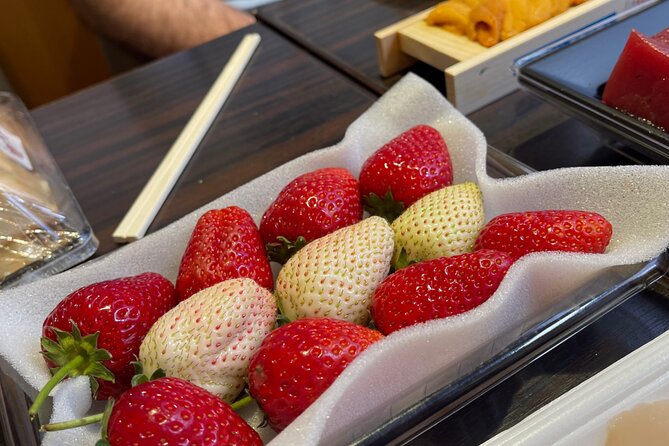
I would recommend the tour to a first-time Tokyo visitor who wants a guided introduction to Japanese food and does not want to plan every market stop alone. It also suits food-focused visitors who care about local vendors, seasonal items, and the customs surrounding meals.
Families can join, but children must be accompanied by an adult. Children aged 10 and above require a copy of passport information, according to the booking conditions. The moderate fitness requirement and three-hour duration are worth considering for younger children.
The experience also works well for solo visitors, but solo participants are asked to email the operator. That likely helps the company place you properly in a small group and confirm the arrangements before the morning begins.
I would skip it if you want the former wholesale auction or a long, quiet restaurant meal. This is an active walk through the outer market, with several short stops and a changing route. I would also skip it if seafood is not part of your diet, since the included breakfast and tastings are central to the morning.
Practical advice before you go
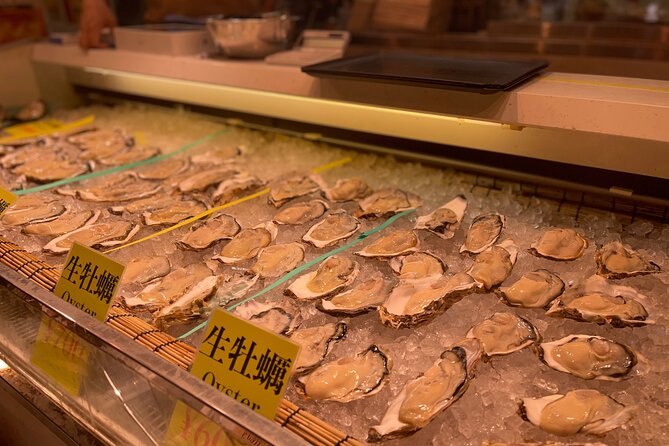
Bring cash in Japanese yen. Credit cards are not generally accepted at the market, and you may want to buy extra food or souvenirs even though those purchases are not included.
Wear comfortable shoes and arrive ready to walk. You are near public transportation, but you must arrange your own route to and from the meeting point. The meeting time is 8:30 am at Turret Coffee Tsukiji, and the tour ends near the same Tsukiji address.
Tell the operator about dietary needs when you book. Vegetarian, pescatarian, and gluten-free arrangements are listed as possible. Vegan and no-seafood diets are not recommended for this experience.
Keep your schedule flexible. Market hours, restaurant availability, public holidays, weather, and the market calendar can change the route. If poor weather cancels the tour, you will be offered another date or a full refund. The same applies if the minimum number of participants is not met.
The cancellation rule is straightforward: cancel at least 24 hours before the local start time for a full refund. Changes or cancellations inside that 24-hour window are not accepted for a refund.
Should you book the Classic Tsukiji Food Tour?
Book it if you want a guided food morning with real context, not just a list of snacks. The combination of seasonal tastings, breakfast, local vendors, shrine culture, and a small group makes this a strong introduction to Tsukiji, especially for a first visit.
The price is the sticking point. At $231, you should be confident that a guide and organized tastings will add enough value beyond an independent market visit. If you are curious about seafood, enjoy asking questions, and want breakfast handled as part of the route, the cost may be fair. If you prefer wandering freely or avoid seafood, spend your money elsewhere.
FAQ
Where does the Classic Tsukiji Food Tour start?
The tour starts at Turret Coffee Tsukiji, 2-chome-12-6 Tsukiji, Chuo City, Tokyo 104-0045, Japan.
What time does the tour begin?
The start time is 8:30 am.
How long does the experience last?
The walking tour lasts approximately three hours.
What is included in the price?
The price includes one drink, a full Tsukiji specialty seafood breakfast, market tastings, and a local English-speaking guide.
Is hotel pickup included?
No. Hotel pickup and drop-off are not included, and you must also pay your own transportation costs.
Is the tour suitable for vegetarians or people eating gluten-free?
Vegetarian, pescatarian, and gluten-free options are listed as available. You should provide your dietary details when booking.
Is the tour suitable for vegans or people who do not eat seafood?
No. The experience is not recommended for vegans or people who do not eat seafood.
How many people can join the tour?
The maximum group size is 10 people.
More Food Experiences in Tokyo
More Tokyo Food Tours in Tokyo
More Tsukiji Market Tours in Tokyo

More tours in Tokyo we've reviewed





Tokyo Food Tours, compared.
 ★ 5.0Tokyo: Shinjuku Food Tour (13 Dishes at 4 Local Eateries)From $86
 ★ 4.9Tokyo: Shinjuku Food Tour (15 Dishes and 4 Eateries)From $853 hours
 ★ 5.0Best of Shinjuku: Izakaya Food Tour (4 Stops, 14+ Tastings)From $92
 ★ 5.0Tokyo Night Foodie Tour in Shinjuku – Seasonal Sushi, Wagyu BeefFrom $111
 ★ 5.0Eat and Drink Like a Local: Tokyo Ueno Food Tour-Taverns&RamenFrom $95
 ★ 5.0Tokyo: Shibuya Food Tour (13 dishes and 4 Eateries)From $77