
Reviewed · SAKE TASTING
Casual Japanese sake tasting and snack experience, Kabukicho
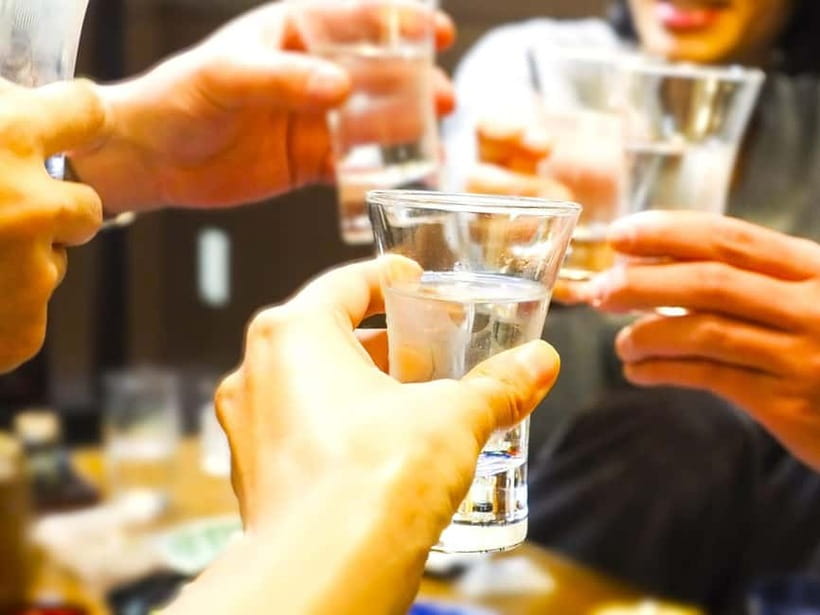
The most appealing part of this Kabukicho experience is the chance to compare eight Japanese drinks in one sitting rather than order one unfamiliar bottle and hope for the best. You begin with easier, lower-alcohol sake, try different serving styles including cold, hot, and cocktail versions, and finish with sweet amazake.
I like the small group of six and the snack pairings, which give the tasting a relaxed, social feel. I also like that beginners are welcome. The explanations move from simple alcohol basics to flavor comparisons, so you do not need a sake vocabulary before you arrive.
The main consideration is the setting. You meet on the second floor of a bar in Kabukicho, and the sign can be hard to spot. The route through the entertainment district may feel a little uncomfortable at first, and the venue has no elevator.
In This Review
- Key points at a glance
- A sake introduction in the heart of Kabukicho
- Eight pours, starting with the easiest
- Traditional snacks make the comparisons easier
- Amazake gives the tasting a sweet finish
- Friendly instruction, with English support when needed
- What the small-group format changes
- Is $38 a fair price?
- Timing, access, and the Kabukicho setting
- Who will enjoy this tasting most
- Practical tips for a smoother visit
- Should you book this Kabukicho sake experience?
- FAQ
- Where does the sake tasting meet?
- How many drinks are included?
- Is the activity suitable for first-time sake drinkers?
- Are snacks included?
- Is amazake alcoholic sake?
- What languages are available?
- Is the venue wheelchair accessible?
- Can I cancel or pay later?
Key points at a glance
- Eight drinks to compare: Taste a range of sake and related drinks instead of sampling only one style.
- Beginner-friendly format: Lower-alcohol sake comes first, with clear explanations as you go.
- Cold, hot, and cocktail options: The tasting includes more than standard chilled sake.
- Traditional snack pairings: Small Japanese bites help show how food changes the drink.
- Amazake to finish: End with a sweet, fermented rice drink served as a dessert.
- Six-person maximum: The small group leaves room for questions, though some English support may rely on a translator machine.
A sake introduction in the heart of Kabukicho
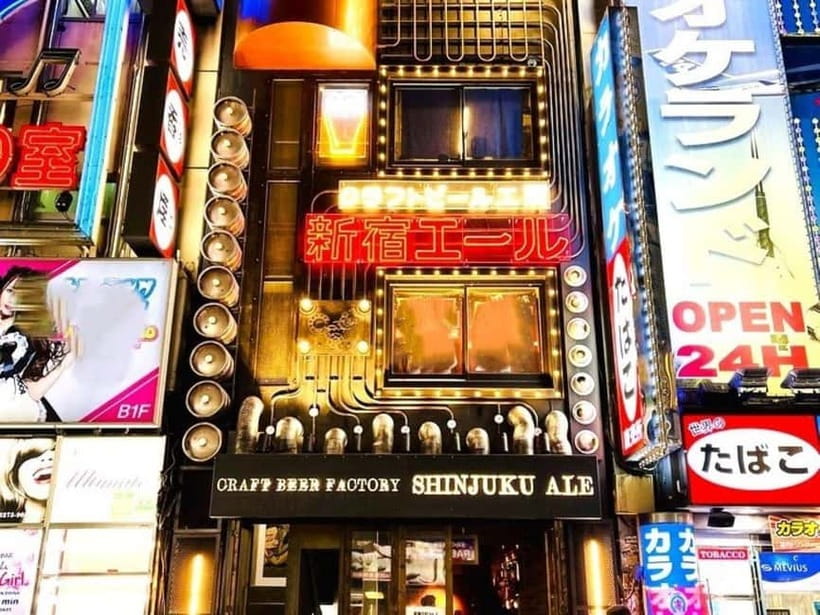
This is a practical way to get acquainted with sake while you are already in central Shinjuku. The meeting place is about five minutes from Shinjuku Station on the JR Yamanote Line, along Kabukicho Central Road toward TOHO Cinemas.
Look for Shinjuku Ale next to Karaoke 747 on the right. The tasting takes place on the second floor of the bar. The Google Plus Code is MPV2+VR Shinjuku City, Tokyo, which is useful if the sign is not obvious.
That last point matters. The venue marker could be larger, so I would arrive with the address or Plus Code ready on your phone. Kabukicho is full of lights, signs, bars, and people heading in different directions. It is easy to walk past a modest entrance while looking for something more prominent.
One French participant found the approach slightly intimidating. That does not mean you should avoid the area, but it is fair warning to stay focused on the route and follow the main road. This is a bar setting in an entertainment district, not a quiet countryside brewery.
If you're still narrowing it down, here are other tours in Tokyo we've reviewed.

Eight pours, starting with the easiest
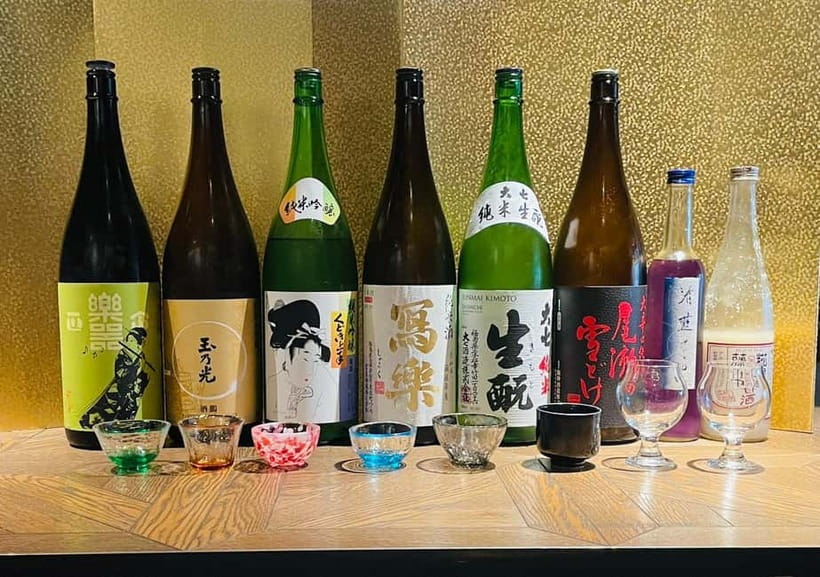
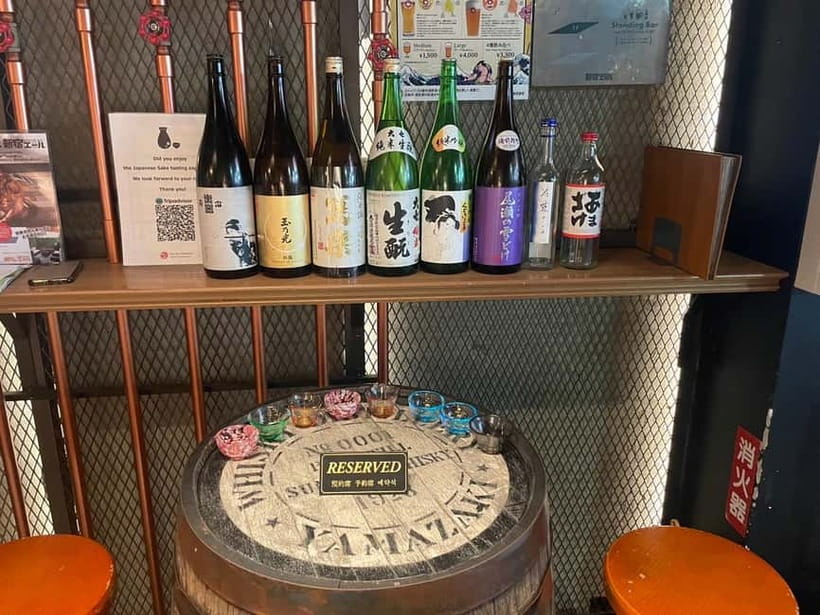
The tasting is designed as a comparison rather than a lecture. You start with simple alcoholic drinks and then move through selected sake varieties. The average sake has around 15 to 16 percent alcohol, though some pours are lower and some are higher.
Beginning with a lower-alcohol option is a smart choice. It gives you a gentle reference point before stronger or more distinctive samples appear. If sake seems confusing when you first encounter it, this order lets you notice contrasts without having to make sense of eight unrelated drinks at once.
The selection includes different styles and temperatures. You may try sake cold, warm, and in a cocktail form. That is useful because serving temperature can change how a drink feels, even when the basic ingredient is still rice-based alcohol.
The experience is not built around heavy drinking. Its value comes from tasting small portions and noticing differences. You can pay attention to sweetness, warmth, texture, and the way each sample works with food. The casual format keeps the session from feeling like a formal exam in Japanese drinks.
A participant from Belgium particularly appreciated the mix of cold, hot, cocktail, and other sake styles, along with the welcoming approach from Mai. That combination tells you what this activity does best: it keeps the subject broad and approachable.
Traditional snacks make the comparisons easier
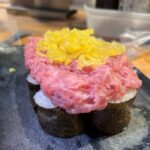
The small Japanese snacks are more than decoration. They give your palate something to work with and show why sake is often served alongside food.
A dry or stronger drink can seem different after a salty bite. A sweeter sample may feel more balanced with a savory snack. You are not simply drinking eight small samples in isolation, you are seeing how each one behaves at the table.
The food is part of the tasting, not a full meal. Additional meals and drinks are not included, so plan to eat before or after if you need dinner. That is an important distinction in Kabukicho, where it is easy to assume a bar tasting will fill you up.
The pairings also make the activity friendlier for people who are not already sake fans. You can discuss the snack, the drink, and the combination instead of feeling pressure to identify technical flavors. I would treat the food as a helpful guide, not the main reason to book.
Amazake gives the tasting a sweet finish
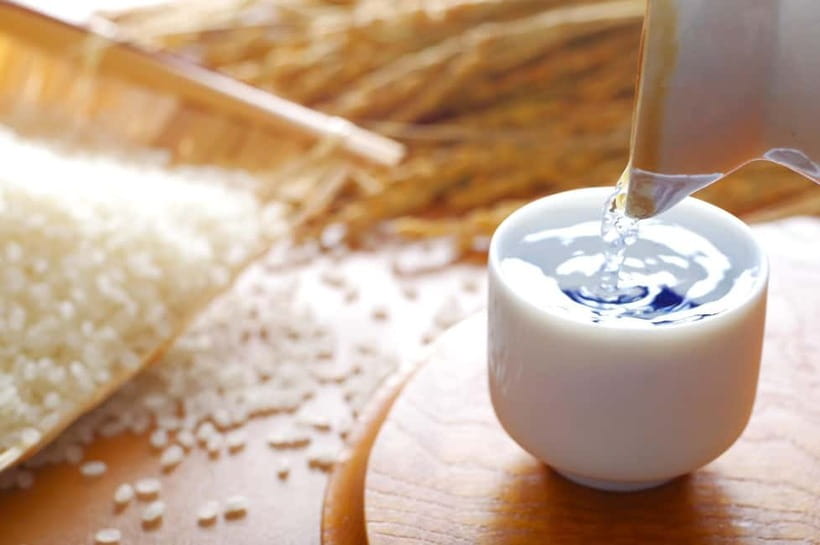
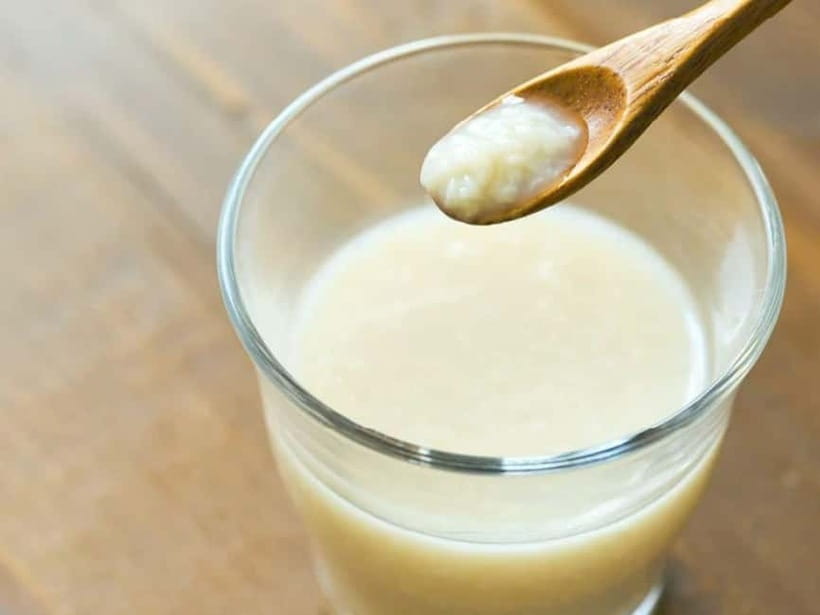
The final drink is amazake, a sweet fermented beverage made from rice malt. It is served as a dessert and provides a clear change from the alcoholic samples that come before it.
Amazake can be confusing because the name includes sake, but it is not simply another standard sake pour. Here it functions as a gentle ending, allowing you to finish with something sweet and rice-based rather than another strong drink.
This final step also broadens the experience beyond alcohol. You get a quick introduction to a traditional Japanese drink that may be new even if you have already tried sake. For anyone who prefers sweeter flavors, amazake may be the most memorable part of the tasting.
Friendly instruction, with English support when needed
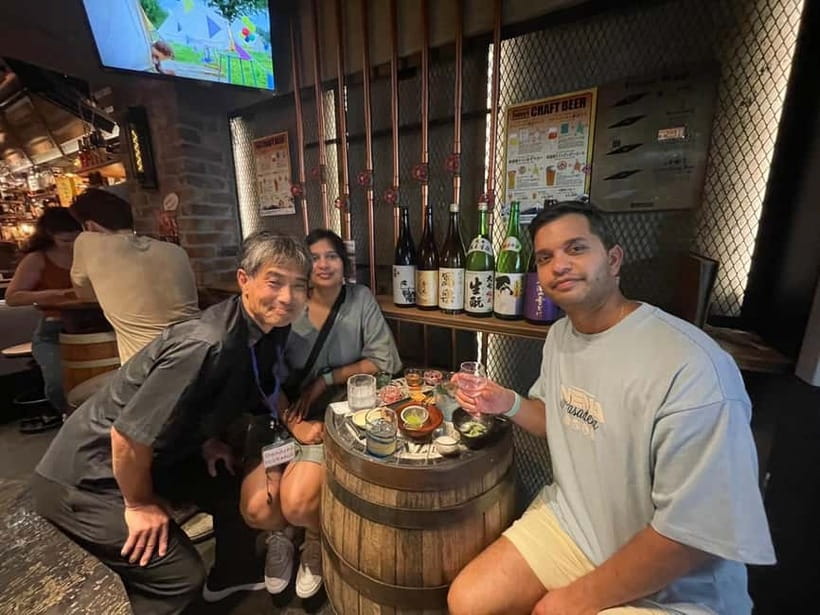
The activity is offered in English and Japanese. The guide Mai received particular praise for being friendly, answering questions, and explaining the different sake in a simple, gradual way.
That gradual pace is important. You do not need to know the difference between brewing terms, rice polishing levels, or regional styles before you arrive. The supplied information focuses on basic comparisons, alcohol strength, serving styles, snacks, and amazake.
English communication may not always be polished. Some staff members are not comfortable speaking English and may use a translation machine. For a tasting built around flavors and short explanations, that can occasionally slow the conversation.
Still, the small group helps. With a maximum of six people, you have a better chance to ask a question or request clarification than you would in a large bar session. If you want a technical sake class conducted entirely in fluent English, this may feel informal. If you want a friendly introduction with enough explanation to make sense of the samples, the format is a good fit.

What the small-group format changes
A six-person limit keeps the tasting personal. You can compare reactions with the other people at the table, ask about a particular sample, and hear the guide explain why a drink is served cold, hot, or mixed.
Small groups also make it easier for beginners. You are not expected to perform expertise in front of a room full of people. The setting is social, but the focus remains on tasting.
The tradeoff is that this is not a large, polished production. The venue is part of a bar, the directions are not perfectly visible, and translation support may be used. I see those as signs of a modest local activity rather than serious flaws, but they shape the experience.
You should also expect a sake tasting, not a tour of a brewery or a walk through Japan’s sake-making regions. The activity gives you a sample of Japanese drinking culture in Tokyo. It does not take you outside the city or explain every stage of production.
Is $38 a fair price?
At $38 per person, the price includes all fees and taxes. That makes the cost fairly easy to understand before booking, though you still need to budget for transportation and any extra food or drinks.
The value depends on how you use it. If you order eight separate drinks in a Shinjuku bar, the total could quickly become difficult to control, especially if you are also paying for snacks. Here, the tasting gives you a planned sequence, food pairings, a guide, and a chance to compare drinks without guessing from a long menu.
The price is less attractive if you are already comfortable with sake and simply want the cheapest possible drink. You could choose one bottle or glass elsewhere for less. But you would lose the guided comparison and the chance to sample warm, cold, cocktail, and sweeter rice-based drinks in one sitting.
One participant bought a souvenir glass afterward and felt it was expensive, though worthwhile as a keepsake. That purchase is optional and not part of the stated price. I would decide on it only after seeing the glass and checking the cost.
Timing, access, and the Kabukicho setting
The experience is listed with a duration of one day, while starting times depend on availability. That wording is not a useful guide to the actual length of the tasting, so check the available start time and full booking details before you reserve.
The location works well with a Shinjuku evening. You can reach the meeting point on foot from the JR Yamanote Line station, then continue to dinner, a show, or more sightseeing afterward. Transportation to the meeting point is not included, and there is no hotel pick-up or drop-off.
The venue is not wheelchair accessible because there is no elevator. You must be able to reach the second floor by stairs. This is also worth considering if you have heavy luggage or limited mobility.
The activity is only for people aged 20 and older, and pregnant women should not participate. Those restrictions are especially important in Japan, where the legal drinking age is 20.
Who will enjoy this tasting most
I would recommend it to first-time sake drinkers who want a clear, low-pressure introduction. The lower-alcohol starting point, small snacks, and gradual explanations make it easier to find a style you actually like.
It also suits couples and small groups looking for something different from the usual Shinjuku bar crawl. You get a shared activity with enough conversation to make the evening feel social, but the group is small enough that it does not become noisy or anonymous.
Food-minded visitors should appreciate the pairing element. The snacks are not a full meal, but they help explain sake in a more useful way than a list of tasting notes.
It may be less suitable for a serious sake collector looking for rare bottles, detailed brewing science, or a regional production tour. The activity is casual by design. It introduces the drinks without making you study them.
Practical tips for a smoother visit
Save the meeting-point details before leaving your hotel. Use Shinjuku Ale, Karaoke 747, TOHO Cinemas, and the Google Plus Code as landmarks rather than relying on a small sign.
Arrive ready to taste, not to eat dinner. The included snacks support the drinks, but additional meals and drinks cost extra.
Keep an open mind about temperature. If you normally drink sake cold, the warm sample may seem like a different category altogether. The point is to compare how the serving style changes your impression.
Ask questions early, especially if you need an explanation repeated in English. The guide can use a translator machine when needed, but a small group gives you the best chance to pause and clarify.
If your plans might change, cancellation is free up to 24 hours before the activity for a full refund. You can also reserve now and pay later, which is useful when you are arranging several Tokyo bookings at once.
Should you book this Kabukicho sake experience?
Book it if you want an easy first taste of sake with snacks, a friendly guide, and eight different drinks to compare. The small group, approachable pace, and mix of cold, hot, cocktail, and sweet options give you more than a single bar order without turning the evening into a formal class.
Think twice if you need wheelchair access, a full dinner, a brewery visit, or highly technical instruction in fluent English. The venue is modest, the sign may be hard to see, and the Kabukicho approach can feel edgy.
For most visitors, the $38 price is reasonable for a guided comparison in central Tokyo, especially if you are curious but unsure what to order. Bring the meeting details, allow time to find the second-floor entrance, and treat the tasting as a relaxed introduction rather than a final word on Japanese sake.
FAQ
Where does the sake tasting meet?
The meeting point is about a five-minute walk from Shinjuku Station on the JR Yamanote Line. Walk along Kabukicho Central Road toward TOHO Cinemas and look for Shinjuku Ale next to Karaoke 747 on the right.
How many drinks are included?
The experience includes eight carefully selected types of drinks, including sake served in different ways. The tasting includes cold, hot, and cocktail styles, followed by amazake as a dessert.
Is the activity suitable for first-time sake drinkers?
Yes. The tasting begins with a lower-alcohol sake and explains basic alcoholic drinks before moving into comparisons. You do not need previous sake experience.
Are snacks included?
Yes. Traditional Japanese snacks are included as pairings for the sake. Additional meals and drinks are not included.
Is amazake alcoholic sake?
Amazake is described as a sweet, fermented drink made from rice malt and is served as a dessert at the end of the experience. The provided information does not give its alcohol content.
What languages are available?
The activity is offered in English and Japanese. Some staff members may use a translator machine if English communication is difficult.
Is the venue wheelchair accessible?
No. The venue is not wheelchair accessible because there is no elevator.
Can I cancel or pay later?
You can cancel up to 24 hours in advance for a full refund. The booking option also allows you to reserve now and pay later.
More tours in Tokyo we've reviewed







Sake Tasting, compared.
 ★ 5.0Ramen and Sushi Cooking Class with Sake Pairing Set in TokyoFrom $79
 ★ 5.0Sake Tasting Masterclass in Shinjuku (8+ Varieties with a Pro)From $72
 ★ 5.0Sake Omakase in Tokyo: Guided Tasting by Certified SommeliersFrom $79
 ★ 5.0Tasting All Types of Sake with SommelierFrom $62
 ★ 5.0Wagyu & Sake Pairing in Shinjuku – Steak, Shabu-Shabu & MoreFrom $148
 ★ 5.0Tokyo Wagyu & Sake Pairing Tasting Experience with Local FlavorsFrom $151