
Reviewed · SUSHI MAKING CLASSES
AKEMI’s SUSHiKiTCHEN: A fun sushi cooking lesson in Tokyo
Sushi feels different when you learn it in Akemi Castellano’s home kitchen rather than watch it pass across a restaurant counter. You prepare the rice, handle several sushi styles, hear about Edo-style sushi, and then eat what you made. I like the small groups of up to six and the warm help from Akemi and her husband, Dan. The main catch is the fixed menu: you cannot choose which sushi types you make.
I also like the practical location between Tokyo’s Shinjuku and Shibuya hubs, plus the choice of morning lunch or afternoon dinner. Allow extra attention for the meeting point, though. Most people find the house with a map app, while Akemi can meet you at the nearest station if you arrange it ahead of time.
In This Review
- Key points to know before booking
- Why making sushi at home changes the experience
- The four sushi styles you will make
- From vinegar rice to a meal you made yourself
- Akemi and Dan create a personal welcome
- A food lesson with cultural context
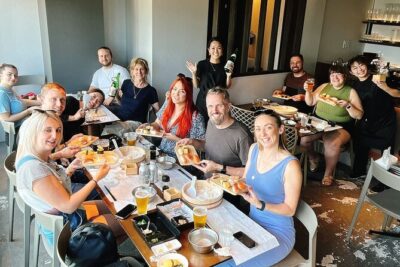
- What the small group means for you
- The limits you should consider
- Who will get the most from this class
- Should you book Akemi’s SUSHiKiTCHEN?
- FAQ
- How long does the sushi lesson last?
- How much does the experience cost?
- Which kinds of sushi will I make?
- Is lunch or dinner included?
- Are drinks and dessert included?
- Is a vegetarian option available?
- Can children join the lesson?
- What languages are spoken, and how large is the group?
Key points to know before booking
- Four sushi styles in one lesson: Make inari, gunkan, maki-sushi, and traditional nigiri.
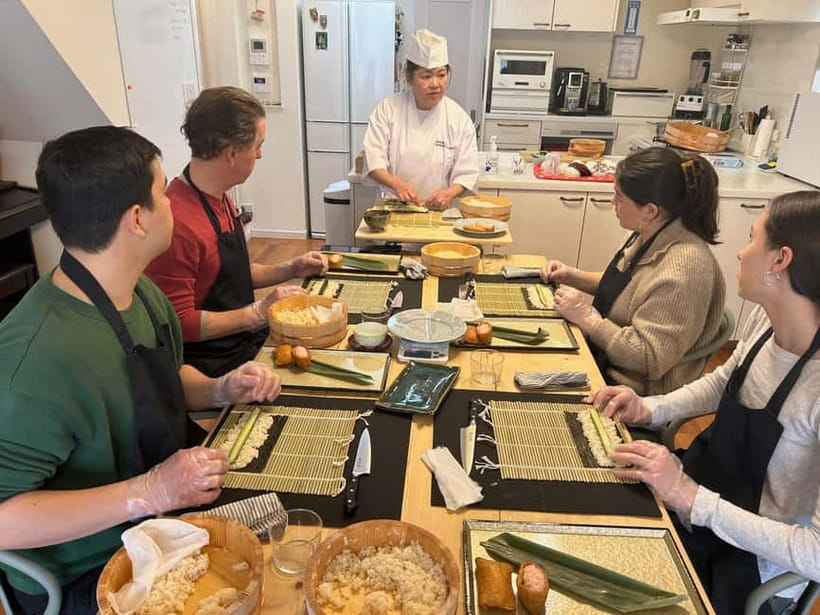
- A real home setting: The lesson takes place in Akemi’s house, creating a personal cooking experience rather than a formal school.
- Rice comes first: You learn how vinegar rice is prepared before shaping the sushi.
- Food culture is part of the lesson: Akemi explains sushi’s origins and the Edo style as she teaches.
- Small, English-speaking group: Up to six people take part, with instruction in English and Japanese.
- A full meal is included: Eat your own sushi with Japanese sake, drinks, dessert, and matcha tea.
Why making sushi at home changes the experience
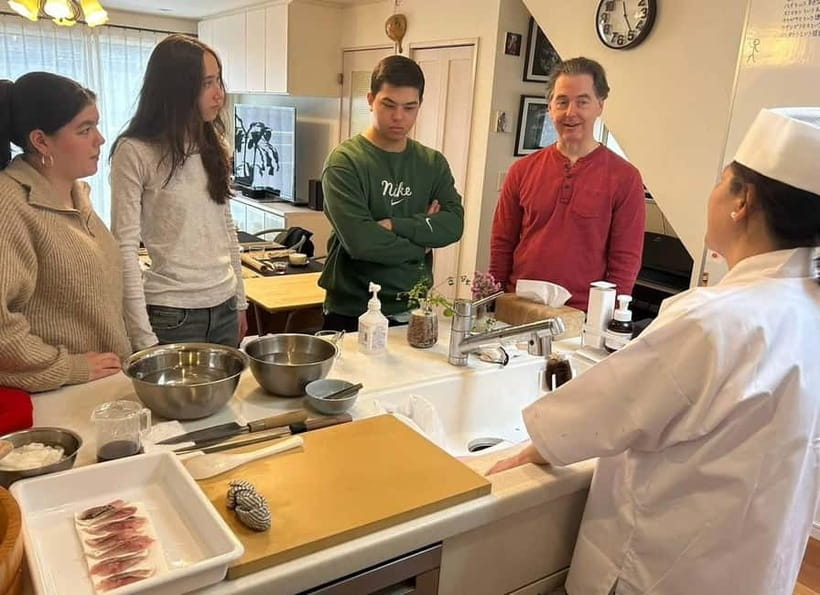
The best part of this three-hour lesson is its setting. You are not simply shown a finished plate and asked to copy it. You enter a Japanese home, work through the basic ingredients, and learn how separate pieces fit together.
That matters most with sushi rice. Many people think sushi is mainly about raw fish, but the rice carries much of the flavor and texture. Akemi begins with the preparation of vinegar rice, giving you a useful foundation before you touch the seafood or start shaping anything.
The lesson also includes a demonstration of how fish is prepared for sushi. You should not expect to select fish from a market or learn every professional knife technique, since the menu is set. Still, seeing this preparation helps explain why sushi depends so heavily on freshness, cutting, proportion, and careful handling.
Akemi teaches in English and Japanese. The class is limited to six people, so the instruction can stay personal. One review described Akemi as giving each person small, thoughtful corrections while they worked. That is exactly the kind of detail that makes a hands-on lesson useful. Sushi shapes can look simple, but rice temperature, pressure, and portion size all affect the result.
A few more Tokyo tours and experiences worth a look

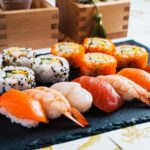
The four sushi styles you will make
The set menu gives you a broad tour of familiar sushi forms. You do not pick individual dishes, but that restriction keeps the class organized and lets Akemi build the lesson in a sensible order.
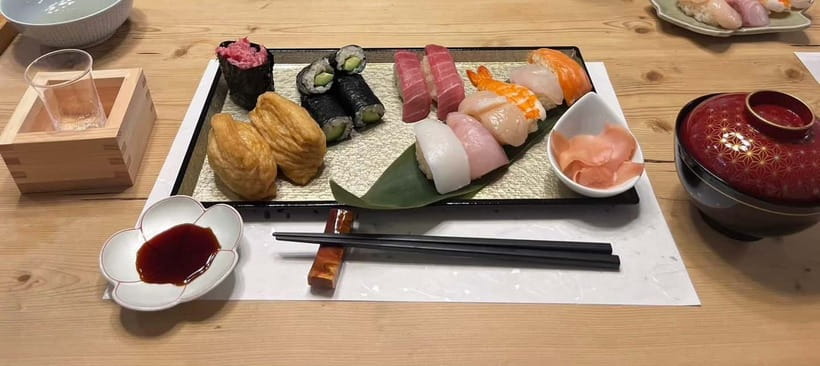
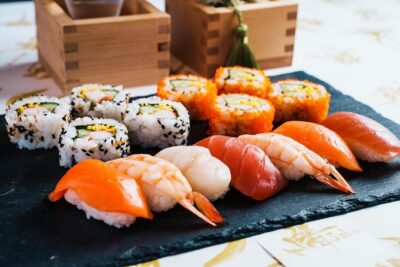
Inari sushi uses fried tofu pockets filled with sushi rice. It is a good early introduction because the pocket gives you a clear container, and it offers a sweet, savory change from raw seafood. One participant singled out the tofu sushi as an unexpected favorite, so do not treat it as a mere side dish.
Gunkan, or battleship sushi, has a strip of seaweed around a rice base. The shape creates a small open cup for toppings. This style teaches control: the rice needs to hold together, while the seaweed must sit firmly enough to support the topping.
Maki-sushi is rolled sushi. Here, you learn to spread the rice and fillings across seaweed, then roll the package into a neat cylinder. The rolling motion often looks easy until you try to keep everything even. Akemi’s close instruction is valuable at this stage.
Nigiri-zushi is hand-pressed sushi, the form most associated with a traditional sushi counter. You shape a small mound of rice, add the fish, and use your hands to bring the two together. It takes more care than its compact appearance suggests. Too much pressure makes dense rice, while too little leaves the piece unstable.
By the end, you have practiced four distinct techniques rather than repeating one recipe. That gives the class real value for anyone who wants to understand how sushi is assembled, not just eat it.
From vinegar rice to a meal you made yourself
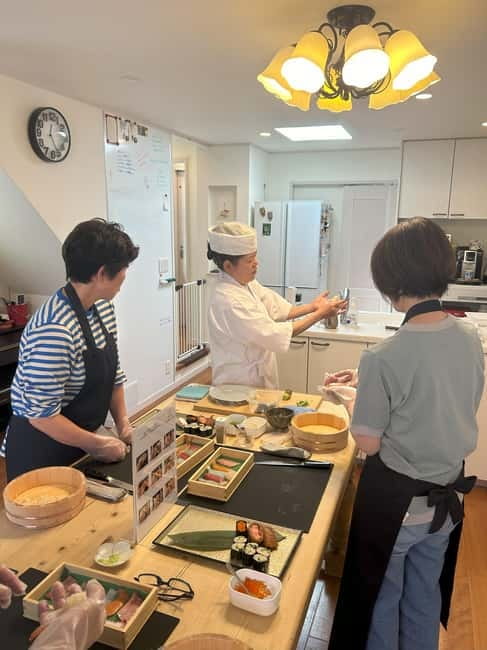
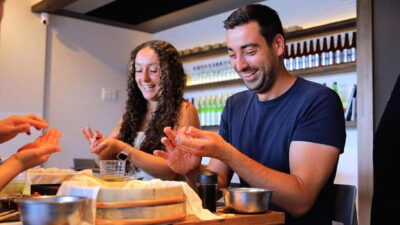
The sequence begins with explanation and preparation, then moves into hands-on work. Akemi introduces the ingredients, discusses the role of rice and vinegar, and guides you through the sushi-making process step by step.
The carefully selected ingredients include rice, vinegar, and seafood neta, the fish and other toppings used for sushi. The lesson does not provide a shopping list or a market visit, but it does show you the building blocks that matter most. For someone who wants to recreate sushi at home, the rice preparation and shaping practice may be more useful than a long lecture.
At the end, you sit down to eat the meal you prepared. The morning version includes lunch, while the afternoon version includes dinner. Japanese sake is served, along with dessert. Additional touches noted during the experience include drinks for younger participants, ice cream, and matcha tea.
This makes the activity more than a short demonstration. You spend three hours learning, making, and eating. At $103 per person, the cost is higher than a basic sushi meal, but the price includes instruction, ingredients, a substantial shared meal, drinks, and the time spent with a trained sushi chef. I see the strongest value for people who would otherwise book both a food activity and a restaurant meal.
Akemi and Dan create a personal welcome
Akemi Castellano is the trained sushi chef leading the lesson. Her husband, Dan, helps with the experience, and the pair work together as hosts. The personal tone is one of the most praised parts of the activity.
A station pickup can be arranged if you prefer not to find the house yourself. One participant was met at the nearest station and welcomed with a drink featuring sakura. Others found the house independently by taking the Metro and walking about 10 minutes through a pleasant residential neighborhood.
That choice gives you flexibility. If you are comfortable with Google Maps, you can make your own way and keep the arrival simple. If you are concerned about Tokyo’s station maze or want a smoother start, ask for station pickup before the lesson.
The location is convenient from both Shinjuku and Shibuya, two of Tokyo’s main transport hubs. The information does not identify a specific station or line, so check the exact meeting details after booking. Do not assume the house is directly beside a station. The walk can be around 10 minutes, according to one detailed account.
A food lesson with cultural context
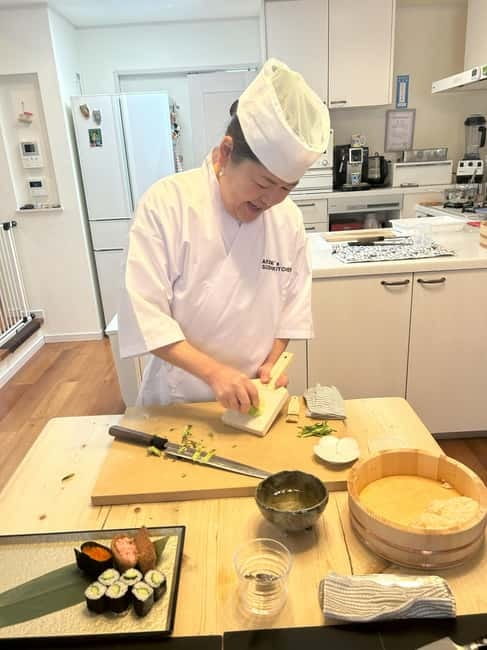
Akemi does more than show you where to place the rice. She explains the origins of sushi and the Edo style, giving context to the food you are preparing.
That background is useful because modern sushi often gets treated as a single category. Nigiri, maki, gunkan, and inari have different forms, textures, and ways of being eaten. Learning their names and basic roles helps you read a sushi menu with greater confidence later in your trip.
The setting also gives the lesson a family connection. You are cooking in a Japanese home, not in a large classroom with a rotating crowd. That does not mean you receive a full picture of everyday Japanese family life, but it does make the food feel connected to a real household and a real host.
I would choose this activity for someone who cares about Japanese food culture, not only someone looking for a quick photo opportunity. The lesson asks you to pay attention to small details, and its strongest reward is a better understanding of what you are eating.
A few more Tokyo tours and experiences worth a look


What the small group means for you
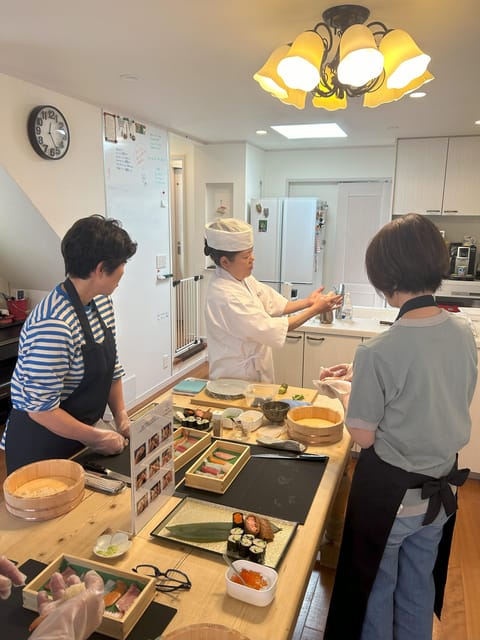
The maximum group size is six. That is small enough for the instructor to watch your technique and answer questions, while still allowing a family or a few couples to share the activity.
One booking had a family of four as the entire group. That can make the lesson feel especially relaxed, but group size can vary up to the stated limit. If you need a private class, the available information does not promise exclusive use, so check before booking.
The age limit is clear: children under 10 are not suitable for the experience. Older children may enjoy the hands-on work, especially since drinks and dessert can be included, but the lesson remains a structured cooking class rather than a child-focused activity.
The class uses English and Japanese. English-speaking instruction is available, and the experience has been described as well organized with clear communication before arrival. That is important for a lesson involving several techniques and food-safety steps.
The limits you should consider
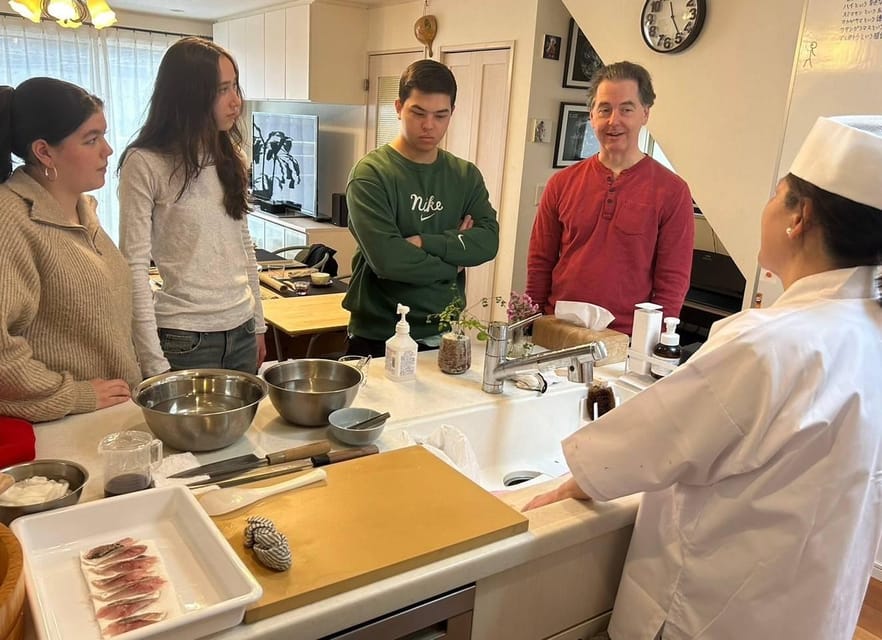
The fixed menu is the main limitation. You cannot choose the sushi styles you will make. If you dislike one of the four forms, or hoped to focus only on nigiri, this is not the right format.
Allergies require serious attention. The activity cannot accommodate customers with food or animal allergies. You should tell the provider about any allergies beforehand, but the stated policy means you should not book if you need guaranteed allergy-safe preparation.
A vegetarian option is available if you indicate it when ordering. The information does not describe every ingredient in that version, so ask specific questions if you avoid particular foods or follow a strict diet. Do not wait until you arrive.
The lesson is also not a professional chef-training course. You learn several popular styles and the fundamentals of sushi preparation, but there is no promise of advanced knife work, market selection, restaurant service, or a complete Japanese cooking curriculum.
Finally, three hours is a meaningful block of time. That is a benefit if you want a full activity, but it may not fit a tightly packed Tokyo schedule. Choose the morning session if lunch works better, or the afternoon session if you prefer dinner.
Who will get the most from this class
I would recommend Akemi’s SUSHiKiTCHEN to people who want food to be the center of a Tokyo day. It suits sushi fans, curious home cooks, couples, families with children aged 10 and over, and anyone who values direct contact with a local host.
It is particularly good for a first visit to Japan because the lesson combines food, language, etiquette, ingredients, and a residential neighborhood. You leave with more than a plate of sushi. You have practiced the names and forms you are likely to encounter at restaurants across Japan.
I would be more cautious about booking it for a person with serious allergies, someone who wants to choose every dish, or a diner who only wants to eat sushi without cooking. The fixed menu and hands-on format are central to the experience.
The $103 price is reasonable if you count the three-hour lesson, ingredients, meal, sake, dessert, and small group. It is less compelling if you are comparing it only with the cost of buying sushi. You are paying for access to Akemi’s instruction and home setting, not just for raw fish and rice.
Should you book Akemi’s SUSHiKiTCHEN?
Book it if you want a friendly, personal food experience and like the idea of learning four sushi styles in one sitting. The strongest reasons are the home setting, Akemi’s patient instruction, the small group, and the chance to eat a complete meal you prepared yourself.
Before paying, confirm your dietary needs, choose vegetarian if required, and decide if you want station pickup. If those details work for you, this is a thoughtful way to spend three hours in Tokyo, especially for anyone who wants to understand sushi instead of simply ordering it.
FAQ
How long does the sushi lesson last?
The activity lasts three hours.
How much does the experience cost?
The listed price is $103 per person.
Which kinds of sushi will I make?
You will make inari sushi, gunkan or battleship sushi, maki-sushi, and traditional nigiri-zushi.
Is lunch or dinner included?
Yes. The morning lesson includes lunch, while the afternoon lesson includes dinner. You eat the sushi you prepare yourself.
Are drinks and dessert included?
Japanese sake and dessert are included. Matcha tea and other drinks may also be provided as part of the meal experience.
Is a vegetarian option available?
Yes. You need to indicate your preference when placing your order.
Can children join the lesson?
Children under 10 are not suitable for this activity.
What languages are spoken, and how large is the group?
Instruction is available in English and Japanese. The group is limited to six participants.
More Workshops & Classes in Tokyo
More Sushi Making Classes in Tokyo
More tours in Tokyo we've reviewed




Sushi Making Classes, compared.
 ★ 5.0Sushi Making Tokyo Roll and Authentic Japanese Sushi ClassFrom $59
 ★ 4.9Tokyo: Roll and Authentic Sushi Making Class in AsakusaFrom $581h 40m
 ★ 5.0Make Sushi and Create Unforgettable Memories in TokyoFrom $79
 ★ 4.9Tokyo: Sushi Making Class in a Happi Coat near a Famous SpotFrom $421h 30m
 ★ 5.0Tokyo Sushi Making Class in Tsukiji with Professional ChefFrom $49
 ★ 5.0Tokyo Night Foodie Tour in Shinjuku – Seasonal Sushi, Wagyu BeefFrom $111