
Reviewed · CITY TOURS
【50 mins】 City lights HelicopterTour: Tokyo and Yokohama plan
Tokyo and Yokohama look entirely different from a helicopter. Tokyo Skytree, Rainbow Bridge, Tokyo Tower, Shinjuku, and Yokohama Harbour become one wide field of lights, with no traffic jam or observation-deck glass between you and the view. The flight itself lasts over 50 minutes, which gives you time to see far more than a quick city circuit.
I like the private format for a special evening, and I like that the route links two major cities instead of circling only central Tokyo. The main drawback is the price: $2,002.26 per group of up to three, before you even consider transport to Funabashi. Weather can also cancel the flight, so this needs a little planning.
In This Review
- Key points to know before booking
- What the 50-minute Tokyo and Yokohama flight is really like
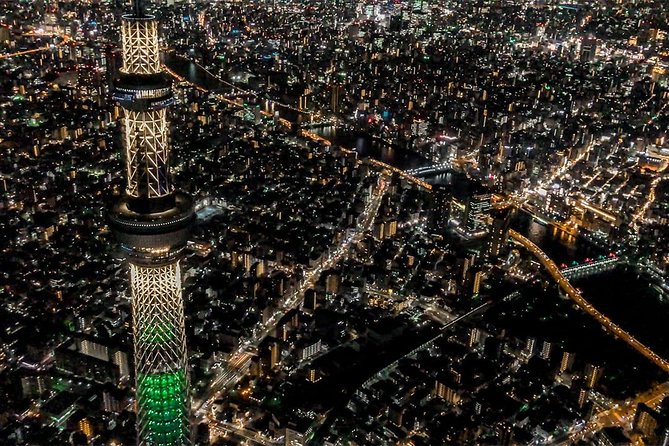
- Tokyo Skytree from above
- Rainbow Bridge and Tokyo Bay at night
- Tokyo Tower and the central-city glow
- Shinjuku and Tokyo’s bright center
- Yokohama Harbour completes the picture
- Is the $2,002.26 group price good value?
- Funabashi Heliport and the practical planning
- Weight limits and passenger rules
- Who will get the most from this flight?
- Final call: book it for the occasion, not as a basic city tour
- FAQ
- How long is the helicopter flight?
- Where does the tour depart from?
- Where does the activity finish?
- Which sights can I see from the helicopter?
- How many people can join one booking?
- What happens if bad weather cancels the flight?
- Can I cancel for a full refund?
Key points to know before booking
- More than 50 minutes in the air: This is a proper sightseeing flight, not a brief joy ride.
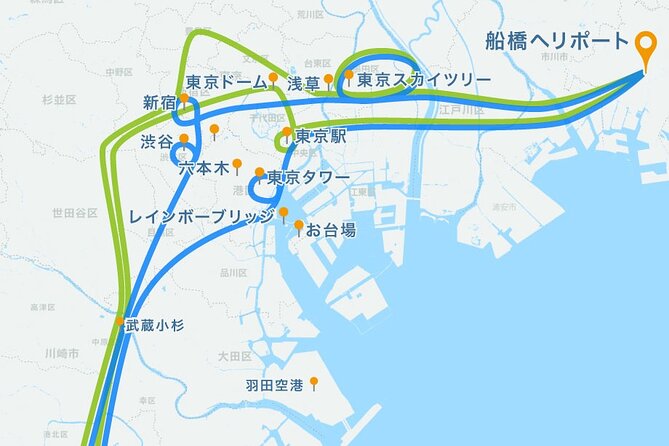
- Five major night views: The route includes Tokyo Skytree, Rainbow Bridge, Tokyo Tower, Shinjuku, and Yokohama Harbour.
- Private for up to three people: You pay by group, making the cost easier to justify when three people share it.
- Departure from Funabashi: The heliport is in Funabashi, Chiba, not central Tokyo.
- Sunset can be a smart choice: The city changes quickly from daylight to street lights and LED screens.
- Strict operating limits: Good weather is required, and passengers must meet the stated weight and recent scuba activity rules.
What the 50-minute Tokyo and Yokohama flight is really like
This experience is built around one long sightseeing flight rather than a series of stops on the ground. You arrive at Funabashi Heliport, complete the required preflight process, and return to the same point after the aircraft lands. The total activity takes about 90 minutes, while the advertised flight time is more than 50 minutes.
That difference matters. You are not paying for 90 minutes in the air. The additional time covers the practical parts of a helicopter outing, such as arrival, preparation, and boarding. Still, 50 minutes is generous for an aerial city tour. It allows the route to reach both Tokyo and Yokohama rather than showing you only one compact area.
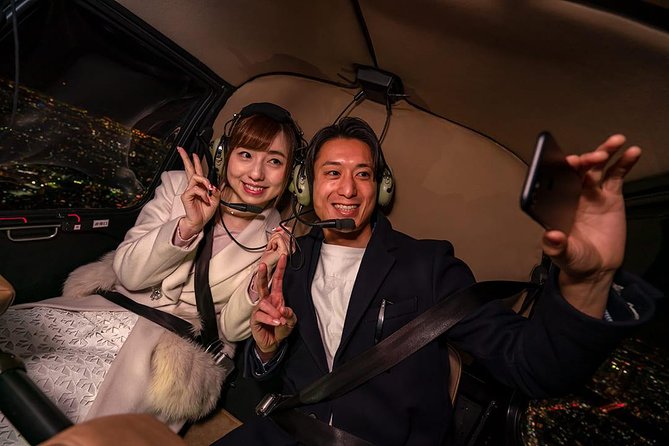
The flight is private, so only your own group takes part. That makes the experience feel more personal and useful for a proposal, birthday, anniversary, or family occasion. It also means you are not sharing the moment with a busload of strangers, although the aircraft still has its own seating and weight limits.
The pilot and staff are responsible for the flight operation. No individual pilot or guide is named in the available details, so you should not book this expecting a particular personality-led tour. The focus is the view, with the crew handling safety and the flight plan.
Other city tours we've reviewed in Tokyo
Tokyo Skytree from above
Tokyo Skytree is one of the clearest reference points on the route. From street level, the tower is something you look up at. From the helicopter, it becomes part of a much wider city pattern, surrounded by Tokyo’s lights rather than framed by nearby buildings.
At night, Skytree gives you a strong sense of scale. You can compare the tower with the spread of the city around it, an effect that an ordinary observation deck cannot quite provide. From a high platform, you look out in one direction. From the air, the view keeps changing as the helicopter moves.
This part of the flight is especially useful if you have already seen Skytree from the ground. The helicopter does not replace a visit to the tower, but it gives you a different angle and helps you understand how the landmark fits into Tokyo’s enormous urban area.
You should also keep expectations sensible. A helicopter does not hover indefinitely at every attraction. The route is a sightseeing cruise, so you see the landmarks from the air as the aircraft passes over or near them. Bring your attention quickly to each view, rather than expecting long stationary viewing time.
Rainbow Bridge and Tokyo Bay at night
Rainbow Bridge is one of the most photogenic sections of the flight. Its lights trace a clean line across the water, while the roads and buildings around Tokyo Bay add layers of moving and fixed light.
From the ground, you normally experience the bridge from a road, waterfront path, or distant viewpoint. In the helicopter, you gain a broad view of the bridge and its setting. The water creates darker spaces between the illuminated structures, helping the bridge read clearly in the night scene.
This is one reason the route feels broader than a standard Tokyo city flight. The bay gives the aircraft open space and a different visual rhythm from the dense central districts. You move from towers and skyscrapers to a long bridge and open water, then back toward the city.
The view may be strongest just after sunset rather than in full darkness. One direct account of the experience recommends the sunset option because the skyline changes from the last daylight to street lights and LED screens. That transition gives you two views in one flight, provided the scheduled departure matches sunset.
Tokyo Tower and the central-city glow
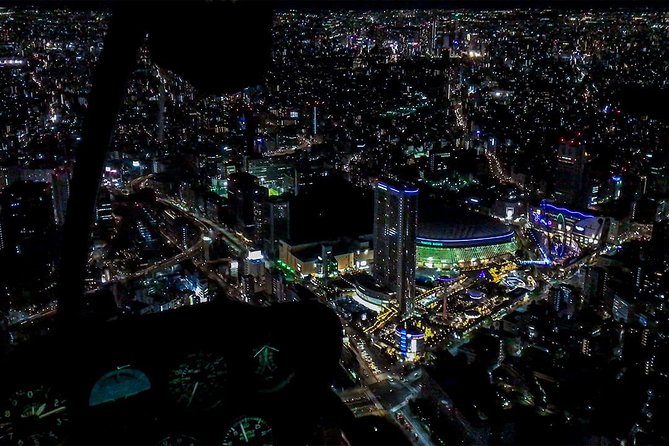
Tokyo Tower offers another instantly recognizable landmark. Its warm lighting gives the flight a classic Tokyo image, especially when seen among the surrounding buildings.
The value here is not only the tower itself. Tokyo Tower helps you locate central Tokyo from above, while the nearby city lights show how tightly packed the built-up areas are. You can contrast its traditional lattice form with the taller, more modern buildings elsewhere on the route.
If you are choosing this flight mainly for Tokyo Tower, remember that the full experience includes several major areas. The aircraft continues beyond a single landmark, so the route is best understood as a moving series of city views rather than one close-up photo opportunity.
Night photography from a helicopter can also be tricky. Reflections, motion, and low light may affect your pictures. I would treat your camera as a bonus and give yourself time to watch the view directly. A proposal or celebration can pass quickly if you spend the whole flight checking a screen.
Shinjuku and Tokyo’s bright center
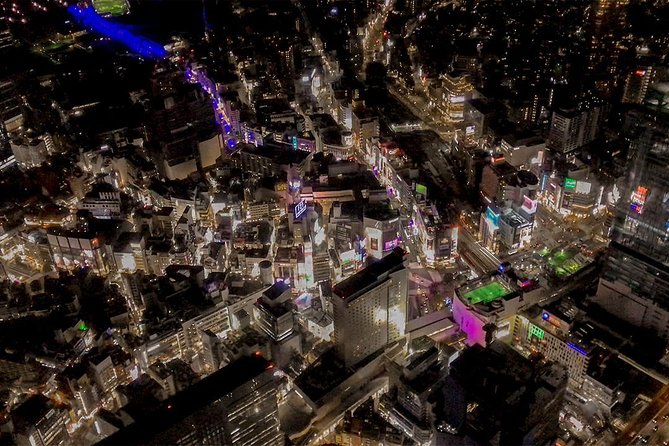
Shinjuku brings a different type of night view. Tokyo Tower and Skytree are individual landmarks, while Shinjuku is a broad concentration of buildings, signs, roads, and bright screens.
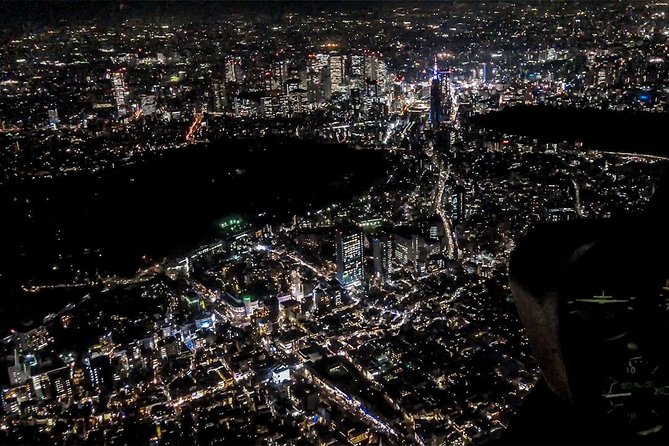
From above, the area shows the scale and density of Tokyo better than a single street walk. You may find that the most interesting sight is not one building but the way the lights spread across the district. This is where a post-sunset flight can be particularly effective, as the remaining blue in the sky can separate the buildings before full darkness takes over.
The route lists Shinjuku as a cruising view, not a landing stop. You will not get out to explore the district during this activity. That is obvious, but worth keeping in mind if you are comparing this with a walking tour or evening food experience.
I like the inclusion of Shinjuku because it adds a lively urban center to the route. Yokohama Harbour then provides a useful change of pace, giving the flight a clear sense of movement across the wider region.


Yokohama Harbour completes the picture
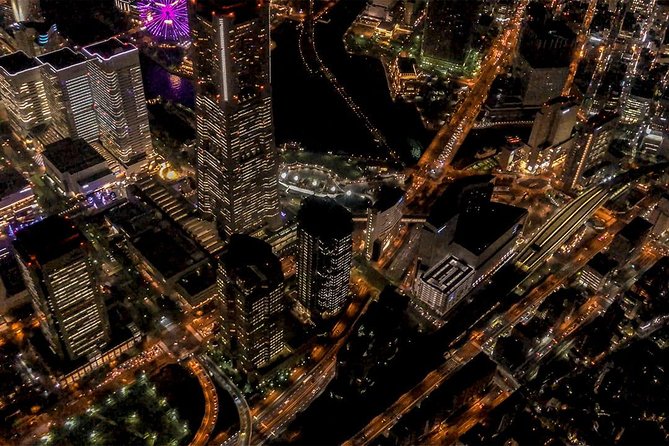
Reaching Yokohama Harbour is what turns this into a two-city flight. The harbour area gives you illuminated waterfront views and a different arrangement of roads, buildings, and open water from central Tokyo.
You will see Yokohama from the air as part of the cruise. The available details do not promise a landing in Yokohama or name specific harbour buildings, so you should not expect a stop for a ground visit. The attraction is the aerial view and the contrast with Tokyo’s inland districts.
The route is valuable for anyone who wants more than a central Tokyo skyline. Yokohama is a separate destination with its own character, and seeing both cities in one flight helps you understand the size of the urban area around Tokyo Bay.
The drawback is time. A 50-minute flight covering Tokyo and Yokohama cannot linger over every landmark. You gain range, but you give up the slower, close-up feel of a single-site flight. If you want one landmark viewed from several angles, a shorter local plan may suit you better.
Is the $2,002.26 group price good value?
The price is $2,002.26 for up to three people, not per passenger. That works out to about $667.42 each if three people share the booking. For two people, the effective price is about $1,001.13 each, and for one person the full group rate applies.
That is a lot of money for sightseeing. You should compare it with the cost of several ordinary observation decks, waterfront visits, and evening transport. Those alternatives will show you individual parts of Tokyo and Yokohama for far less.
The helicopter earns its price through privacy, flight time, and range. You are not simply paying for a view from a tall building. You are paying to connect five major sights across two cities in one private outing, with more than 50 minutes in the air.
For three people, the calculation becomes more reasonable, especially if the flight marks a major occasion. The value is also stronger for someone who has already visited Tokyo’s usual observation points and wants a new way to see the city. It is weaker for a budget-conscious first-time visitor who still has not explored Tokyo at street level.
The experience is also a poor fit if you need a fixed schedule. The operator requires good weather, and poor conditions can lead to cancellation, a new date, or a full refund. Aircraft problems and other flight-operation issues can also affect the departure.
Funabashi Heliport and the practical planning
The starting point is Funabashi Heliport at 1-chōme-44-2230 Kanasugi, Funabashi, Chiba 273-0853, Japan. The activity ends back at that same meeting point.
Funabashi is not central Tokyo, so plan the transfer carefully. The information says the location is near public transportation, but it does not specify a station, transfer route, or pickup service. You should confirm your route and allow enough time to reach the heliport without rushing.
The booking confirmation is sent within 48 hours, subject to availability. That means you should avoid treating the flight as confirmed until the operator has sent that confirmation.
You can cancel for a full refund up to 24 hours before the scheduled start time. Changes or cancellations made less than 24 hours before departure are not accepted for a refund. The cut-off follows local time.
The weather rule deserves special attention. If your flight is within five days, check the forecast. The operator specifically warns that bad weather can cancel the tour. If the operator cancels for weather, you are offered another date or a full refund.
Weight limits and passenger rules
The listed limits need careful attention. The information gives a total passenger weight of 265 pounds and also states a maximum of 120 kilograms per passenger, with a total aircraft limit of 220 kilograms per flight. Since 120 kilograms is roughly 265 pounds, the individual figures appear to describe the same upper limit.
For a group of three, the combined 220-kilogram flight limit is the key practical issue. Even if each person is below the individual limit, the group total may still matter. If your party is close to either limit, contact the operator before booking rather than assuming the aircraft can accept the group.
Passengers who have gone scuba diving in the previous 24 hours cannot take part. This is a flight-safety rule, not a minor preference, so plan your water activities around the helicopter departure.
The activity is described as suitable for most people, but it is still an aircraft experience with specific operating rules. The maximum booking size is three people. If your party is larger, you would need separate arrangements, and the provided information does not explain how multiple bookings would work.
Who will get the most from this flight?
I would recommend this for a couple planning a proposal or a major surprise, particularly if the private setting matters. One memorable booking involved a surprise proposal during the flight, and the aerial view became part of the occasion rather than just a backdrop.
It also suits three friends or family members who can share the group price. You get a private activity and a wide route, while splitting the cost among the maximum number of passengers.
The flight is a good match for photographers and skyline fans, but only if you are comfortable with the limits of night photography from a moving aircraft. The city lights are the main event. Clear weather and a sunset departure may matter more than having the latest camera.
I would be more cautious about recommending it to a solo visitor, a strict budget traveler, or anyone staying far from Funabashi with little spare time. The group price is hardest to justify alone, and the transfer to the heliport adds planning to an already expensive evening.
Final call: book it for the occasion, not as a basic city tour
Book this helicopter flight if you want a private, high-cost celebration and care about seeing Tokyo and Yokohama together. The long flight time, five landmark areas, and sunset possibility give it real substance beyond a quick aerial spin.
Skip it if you mainly want an inexpensive skyline view or a flexible activity that will run in any weather. For the right group, especially three people sharing the price or a couple planning a proposal, this can become a lasting memory. For everyone else, Tokyo’s observation decks and waterfront streets offer better value.
FAQ
How long is the helicopter flight?
The flight time is more than 50 minutes. The full activity takes about 1 hour and 30 minutes, including the time before and after the flight.
Where does the tour depart from?
It departs from Funabashi Heliport at 1-chōme-44-2230 Kanasugi, Funabashi, Chiba 273-0853, Japan.
Where does the activity finish?
The activity ends back at Funabashi Heliport, the same place where it begins.
Which sights can I see from the helicopter?
The route includes Tokyo Skytree, Rainbow Bridge, Tokyo Tower, Shinjuku, and Yokohama Harbour. These are viewed while cruising, not as ground stops.
How many people can join one booking?
A maximum of three people can join one booking. The activity is private, so only your group participates.
What happens if bad weather cancels the flight?
You can receive a full refund or change to an alternative date if the operator cancels because of poor weather. Other flight-operation problems may also result in a refund or a new date.
Can I cancel for a full refund?
Yes. You must cancel at least 24 hours before the experience start time for a full refund. Cancellations or changes made less than 24 hours before the start are not accepted for a refund.
More City Tours in Tokyo
More tours in Tokyo we've reviewed

City Tours, compared.
 ★ 4.8Tokyo: Private City Highlights Tour with Local GuideFrom $1064 - 8 hours
 ★ 4.7Tokyo: Asakusa, Skytree & Akhihabara Go-Kart City ExperienceFrom $961h 10m
 ★ 4.8Tokyo: 3-Hour Bike or E-Bike City Highlights TourFrom $453 hours
 ★ 4.8Tokyo: Sumo Morning Practice Tour at Sumida CityFrom $1162 hours
 ★ 4.5Private Haneda Airport (HND) to Central Tokyo City TransferFrom $119
 ★ 4.8Tokyo: 3-hour Guided E-Bike Tour of the City’s Hidden GemsFrom $65