
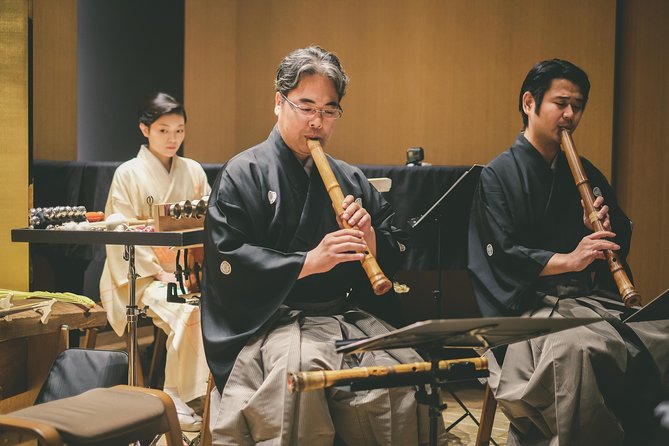
Reviewed · SHOW
Traditional Japanese Music ZAKURO SHOW in Tokyo
Traditional Japanese music can seem distant if you do not know what to listen for. The Zakuro Show fixes that. In a cozy Omotesando setting, musicians sit close to the audience and bring out the sounds of koto, shamisen, shakuhachi, and taiko. Between pieces, they explain how the instruments work and why they matter.
I like two things right away: the English commentary makes the concert easy to follow, and the one-hour length fits neatly into a busy Tokyo day. You get a real cultural introduction without giving up half an afternoon.
The one drawback is simple: an hour may leave you wanting more. This is an introduction, not a full evening concert, and the explanatory sections reduce the amount of uninterrupted music.
In This Review
- Key points to know before booking
- What the Zakuro Show gives you in one hour
- The music you will hear: koto, shamisen, flute, and taiko
- How the explanations change the concert
- The intimate Omotesando setting
- What happens during the performance
- Why the one-hour timing works in Tokyo
- Is $39.64 a fair price?
- Who will enjoy this most?
- Practical details that matter
- My recommendation for a Tokyo itinerary
- Should you book the Zakuro Show?
- FAQ
- Where does the Traditional Japanese Music ZAKURO SHOW take place?
- How long does the Zakuro Show last?
- What instruments are featured?
- Is the show performed in English?
- Does the program include explanations?
- Does the show include only ancient Japanese music?
- Is admission included in the booking?
- Is the ticket mobile?
- Is the venue near public transportation?
- Can I cancel for a full refund?
Key points to know before booking
- Hear several wagakki in one sitting: The program includes koto, shamisen, shakuhachi flute, and taiko drums.
- English interpretation is built in: Explanations and dialogue help you understand the instruments rather than simply watch them.
- The setting is intimate: Musicians and instruments are placed directly in front of the audience.
- The music spans old and new: The program combines ancient and modern Japanese traditional music with a Western pop cover.
- Omotesando location saves time: The show lasts about one hour and is near public transportation.
- The price is moderate for Tokyo: At about $39.64 per person, the value depends on how much you want context along with the performance.
What the Zakuro Show gives you in one hour
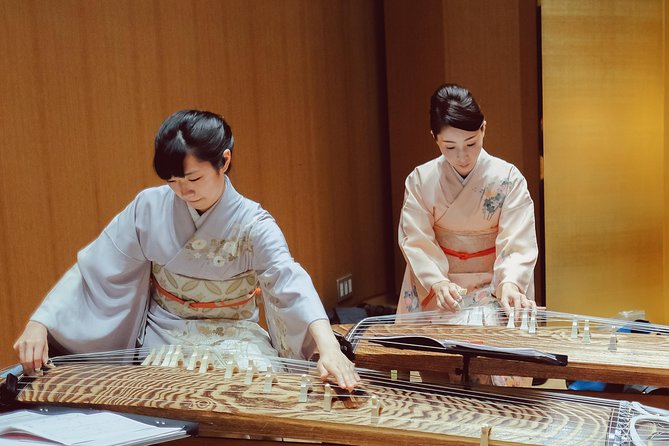
The Zakuro Show is designed as a clear introduction to Japanese music for an international audience. You are not expected to recognize the instruments or understand Japanese musical customs before you arrive.
The format mixes performance, short explanations, and conversation. That balance matters. A koto can look like a long wooden harp to the untrained eye, while a shamisen may seem like a small, three-stringed guitar. Once a musician explains the shape, technique, and sound of each instrument, the music becomes much easier to appreciate.
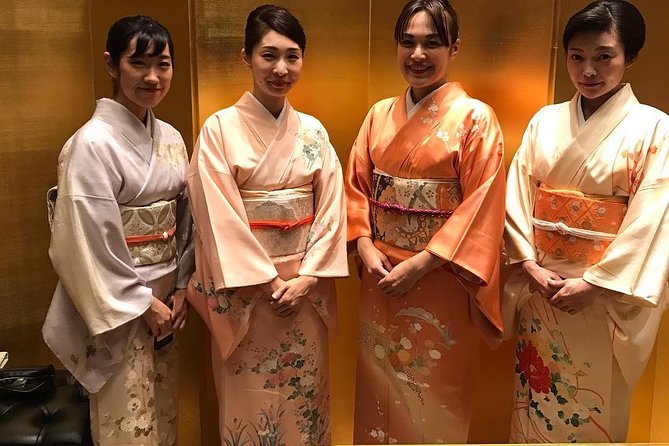
The performers wear colorful kimono, adding a visual link to the traditions being presented. The instruments remain close to the audience, so you can watch the hand movements and playing techniques rather than seeing only a distant stage.
I especially like this format for a first visit to Japan. A standard concert can be beautiful but hard to interpret. Here, the commentary gives you useful clues without turning the event into a classroom.
A few more Tokyo tours and experiences worth a look

The music you will hear: koto, shamisen, flute, and taiko
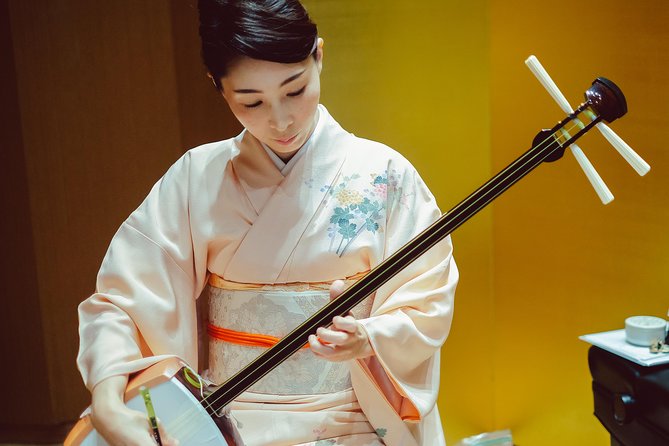
The program features a range of wagakki, the Japanese term for traditional Japanese instruments. Each brings a different sound and playing style.
The koto is a stringed instrument with a delicate, ringing tone. Its sound can be gentle and measured, but the player’s technique gives it surprising range. The show uses the instrument as more than a decorative symbol of Japan. You get a chance to hear its character in a live setting and learn how it fits into Japanese music.
The shamisen has three strings and a sharper, more percussive voice. Its sound is easy to distinguish from the koto, which helps you understand the contrast between the instruments. The explanations are useful here because they connect what you hear with how the musician produces it.
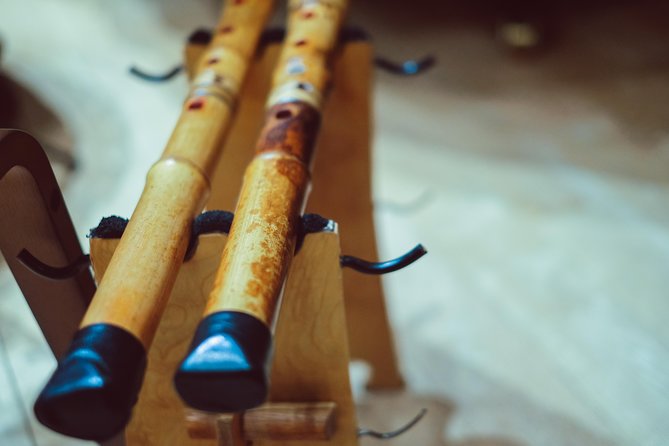
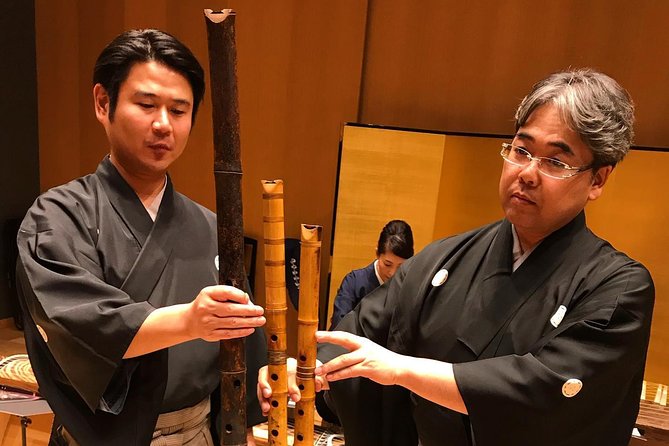
The shakuhachi is a bamboo flute. Its breathy tone can make a small performance room feel especially quiet and focused. Bamboo flutes are also included in the broader range of sounds presented during the program.
Then come the taiko drums, which give the concert its strongest physical punch. Even without knowing the musical tradition behind them, you can feel the difference between the soft strings, airy flute, and force of the drums.
The show does not stay locked in the distant past. The selection includes ancient and modern traditional music, followed by a cover of a Western hit. A version of a Nirvana song has been part of the program, offering a playful way to show what these instruments can do outside their usual setting.
That contrast is one of the program’s smartest choices. It gives you a familiar reference point while showing that Japanese instruments are not limited to museum pieces or formal ceremonies.
How the explanations change the concert
The commentary is not filler between songs. It is central to the experience.
The musicians discuss the secrets of their craft, share historical information, and explain the instruments in terms of musical technique and culture. An interpreter provides English translations, so you can follow the dialogue even if you do not speak Japanese.
That arrangement makes the show friendly to first-time visitors. You learn what to watch for, how the instruments are played, and why their sounds differ. The explanations also help children and adults stay engaged during quieter pieces.
The interpretation has received strong praise for being clear and well timed. That is important in a music show, since a poor translation can interrupt the mood or leave you guessing about what was said. Here, the English support is meant to keep the performance accessible without taking the spotlight away from the musicians.
I would choose this show over a concert with no context if your goal is cultural understanding. If you already know Japanese instruments well and only want uninterrupted music, you may find the talking sections a little long.
The intimate Omotesando setting
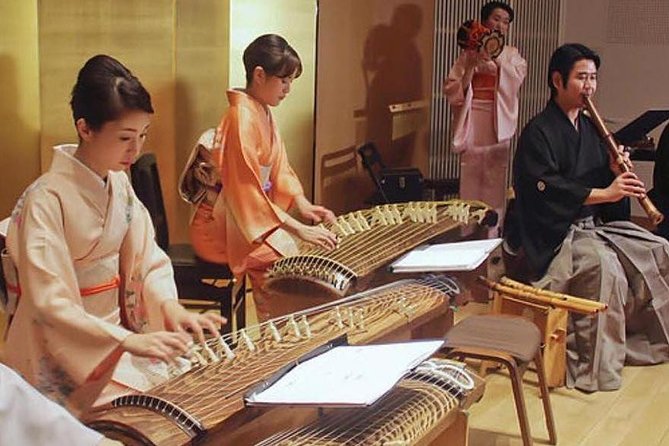
The Zakuro concert takes place in a beautiful, cozy setting in Omotesando. The available details do not give a precise seating plan or audience size, but the setup places the musicians and instruments right in front of you.
That close arrangement is valuable for traditional music. You can see the physical work behind each sound: fingers moving across strings, breath shaping a flute note, or the force needed to control a drum. In a large hall, those details can disappear.
Omotesando also makes the show easy to add to a day of sightseeing. The venue is near public transportation, and the performance lasts about one hour. You might schedule it between other Tokyo stops rather than build your whole day around it.
The short format is practical, but it sets a limit. The program has to introduce several instruments, explain their background, and still provide enough music to feel like a concert. You should expect a well-packed sampler rather than a long-form recital.
What happens during the performance
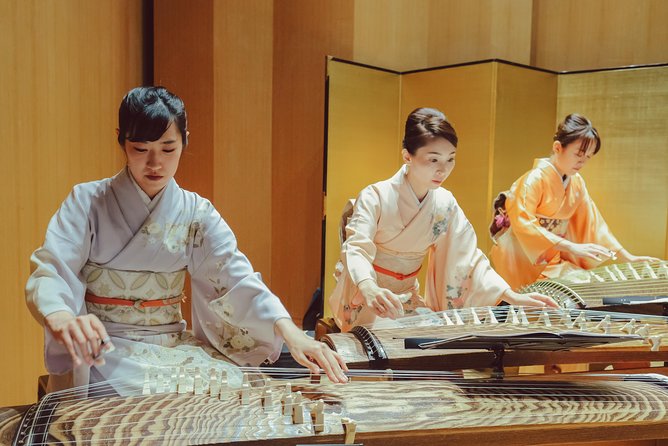
The single listed stop is the Zakuro Show itself. Admission is included, and the entire visit lasts roughly one hour.
The presentation begins with traditional Japanese music performed by a skilled ensemble. As the program moves along, the musicians introduce different instruments and explain their role. You hear the sound first, then gain a clearer understanding of the technique and cultural setting behind it.
The sequence includes:
- Live pieces on traditional Japanese instruments
- Explanations of the koto, shamisen, shakuhachi, and taiko
- Historical and cultural context
- Dialogue between the performers and audience
- A mix of older and newer Japanese music
- A Western song arranged for Japanese instruments
The audience interaction is part of the design. This is not a silent recital where you sit still and wait for the final bow. The musicians talk, respond, and make the craft easier to understand.
At the end, there may be an opportunity to buy a CD. That option is useful if you want a musical reminder of the evening, though the supplied details do not specify the title, price, or availability of the recording.
A few more Tokyo tours and experiences worth a look



Why the one-hour timing works in Tokyo
Tokyo rewards careful planning, and long transfers can eat up a surprising amount of your day. A one-hour cultural show gives you a fixed, manageable block of time.
You can fit it into an Omotesando outing, pair it with nearby shopping and sightseeing, or use it as a calmer break from the city’s busy streets. Since the venue is near public transportation, reaching the area should be straightforward, though you should still allow time to find the exact entrance.
The duration also suits families and anyone who does not want a full evening commitment. Most people can participate, and the show does not demand specialist musical knowledge.
The tradeoff is that the concert cannot cover everything. Japanese music includes many traditions, instruments, and regional styles, but this show offers a selected introduction. Think of it as a well-organized first encounter, not a complete survey of Japanese music.
Is $39.64 a fair price?
At about $39.64 per person, the Zakuro Show sits in a reasonable range for a Tokyo cultural activity. The value comes from three parts: live musicians, a central and convenient location, and interpretation that helps you understand what you are hearing.
A cheaper performance without explanations might cost less but leave you with less context. A longer concert could offer more music, but it might also require more time and a higher ticket price. Zakuro occupies the middle ground: short, focused, and designed for international audiences.
I think the price is strongest for people who want an activity with substance but have limited time. You are paying not only for seats and music, but also for the introductions, translation, and access to several traditional instruments in one sitting.
The value is less convincing if you are comparing it with a full-length concert purely on minutes of music. The show’s talking sections are part of the product, so book it for the combination of music and explanation.
Who will enjoy this most?
I would recommend the show to first-time visitors who want a manageable introduction to Japanese culture. You do not need musical training, Japanese language skills, or previous knowledge of traditional instruments.
It also suits:
- People who enjoy live music but want cultural context
- Families looking for a short indoor activity
- Visitors staying near Omotesando
- Anyone with a free hour between larger Tokyo plans
- Music fans interested in unusual arrangements
- People who prefer guided interpretation to silent observation
The show may be less suitable if you want a quiet, uninterrupted concert with no spoken sections. It may also feel brief to anyone already familiar with koto, shamisen, shakuhachi, and taiko performance.
The Western cover adds a light change of pace, but it should not be the main reason you book. The heart of the experience is hearing and understanding the traditional instruments.
Practical details that matter
Your ticket is mobile, so you can keep the booking on your phone rather than carry a printed voucher. Confirmation is received at the time of booking.
The experience is near public transportation, which makes it easier to reach than a performance in a remote area. The exact address and show time should be checked carefully when you book, since the concert has a fixed start time and late arrival details are not provided.
Free cancellation is available if you cancel at least 24 hours before the local start time. Cancellations made less than 24 hours in advance are not refunded, and late changes are not accepted.
The show is suitable for most people, but the information provided does not describe wheelchair access, specific seating arrangements, or age requirements. If you need those details, ask the provider before booking.
My recommendation for a Tokyo itinerary
I like the Zakuro Show because it does not ask you to choose between entertainment and explanation. You hear live music, see the instruments up close, and learn enough to recognize the differences among them.
The strongest feature is the teaching built into the performance. The musicians do not simply appear in costume and play a few familiar sounds. They explain their instruments, discuss technique and culture, and use both traditional selections and a modern Western cover to keep the program varied.
The main caution is the short running time. If you want a full concert, one hour will probably feel incomplete. If you want an accessible cultural activity that fits around a larger Tokyo schedule, the length is a benefit.
Should you book the Zakuro Show?
Book it if you want a friendly first look at Japanese music, especially if English explanations matter to you. The combination of koto, shamisen, shakuhachi, and taiko gives you a broad sample, while the Omotesando location and one-hour schedule make the experience easy to fit into your day.
Skip it if your priority is a long, uninterrupted recital or if you already have strong knowledge of Japanese traditional music. For everyone else, the price is fair for a focused live performance with useful cultural context, and the 97 percent recommendation rate with a 4.9 rating reflects how well the format meets its purpose.
FAQ
Where does the Traditional Japanese Music ZAKURO SHOW take place?
The concert takes place in Omotesando, Tokyo, in a beautiful and cozy setting.
How long does the Zakuro Show last?
The performance lasts approximately one hour.
What instruments are featured?
The show features traditional Japanese instruments including the koto, shamisen, shakuhachi flute, and taiko drums.
Is the show performed in English?
The musicians provide commentary during the performance, with English translations for international audiences.
Does the program include explanations?
Yes. The performers explain the instruments, discuss their craft, share historical information, and talk about the place of music in Japanese culture.
Does the show include only ancient Japanese music?
No. The program includes ancient and modern Japanese traditional music, along with a cover of a Western hit.
Is admission included in the booking?
Yes. Admission to the Zakuro Show is included.
Is the ticket mobile?
Yes. The experience provides a mobile ticket.
Is the venue near public transportation?
Yes. The show location is near public transportation.
Can I cancel for a full refund?
Yes, if you cancel at least 24 hours before the experience start time. Cancellations made less than 24 hours in advance are not refunded.
More Shows & Entertainment in Tokyo
More Shows & Performances in Tokyo
More tours in Tokyo we've reviewed







Show, compared.
 ★ 4.0Mt Fuji & Hakone Cruise, Drum Show Bullet Train 1 Day from TokyoFrom $149
 ★ 4.8Tokyo: Sumo Show Experience with Chicken Hot Pot and a PhotoFrom $1032 hours
 ★ 4.8Tokyo: Sumo Show and Dining ExperienceFrom $7990 minutes - 2 hours
 ★ 5.0the SUMO showFrom $89
 ★ 5.0Tokyo Shinjuku Sumo Show & Experience with PhotoFrom $79
 ★ 4.5Tokyo: Samurai Restaurant Show Ticket with 2 DrinksFrom $551h 30m