
Reviewed · JDM & CAR CULTURE
Fast & Furious Tokyo Drift 3 (Kaila Yu-SP) : Experience Ride JDM
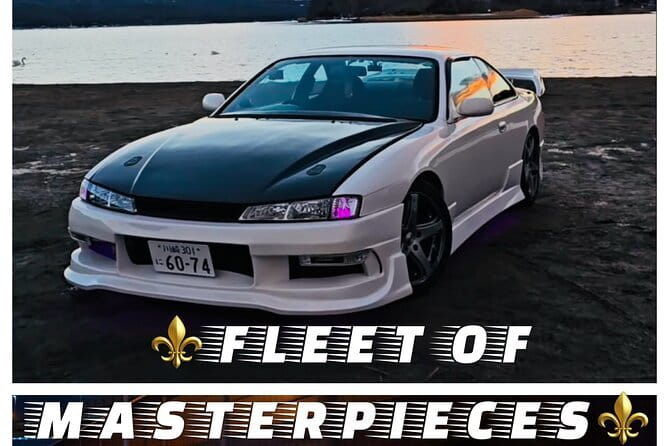
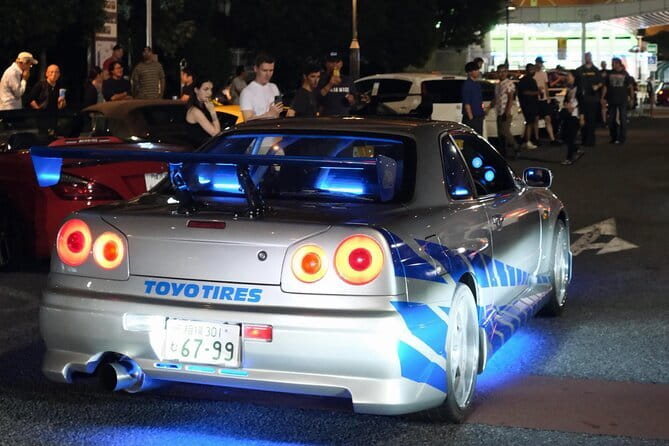
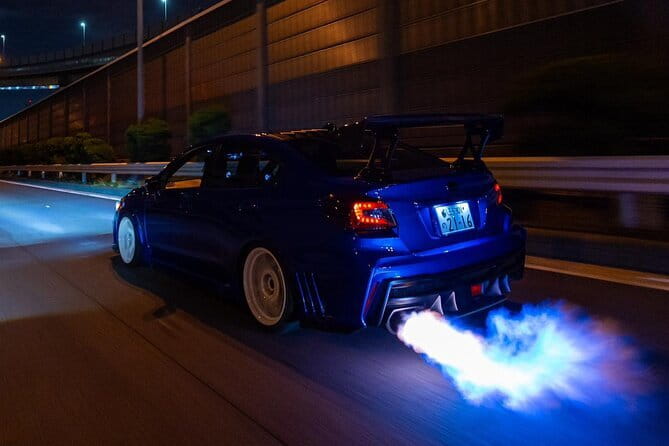
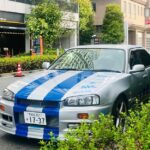
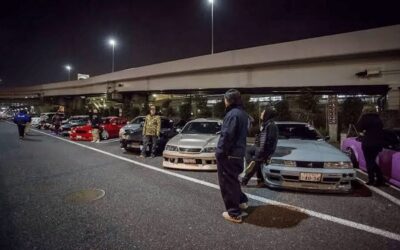
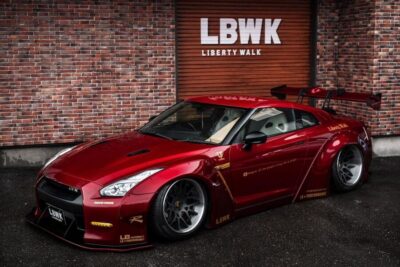
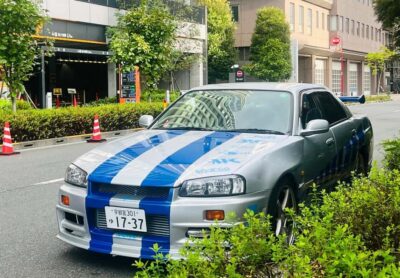
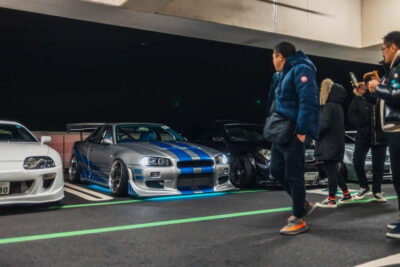
Daikoku Parking Area is the main event here. You ride from central Tokyo in a Japanese performance car, then enter one of the country’s best-known car-meet spots with a guide who knows how the scene works. Depending on the car assigned, you might be riding in a Nissan Skyline GT-R R34, Nissan GT-R R35, Mitsubishi Lancer Evolution, or Lexus IS350 F Sport.
I like two things right away. First, this is more than a fast ride: you also visit Daikoku PA and Autobacs, where you can see tuned cars, parts, models, clothing, and other pieces of Japanese car culture. Second, the route gives you Tokyo at night from the road, including Rainbow Bridge, Tokyo Bay, Tokyo Tower, and Shibuya.
The main catch is that you generally do not choose your exact car or driver. The experience can also feel disorganized at the meeting point, and police may close down a car meet before you have seen much. You should book this for the cars, city views, and atmosphere, not as a promise of illegal drifting or movie-style racing.
In This Review
- Key points before you book
- What the four-hour JDM night looks like
- Toyosu Pit and Autobacs: a practical stop for car fans
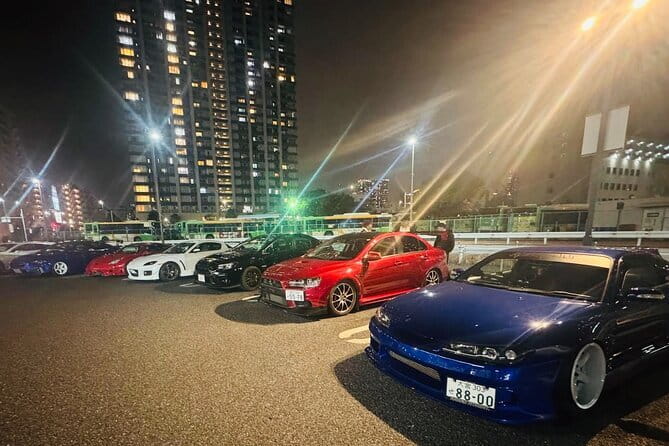
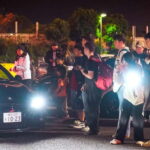
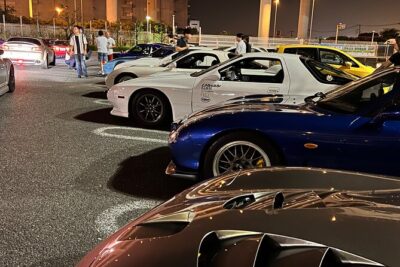
- Daikoku Parking Area, where the car culture comes alive
- Rainbow Bridge and Tokyo Bay after dark
- Tokyo Tower: the best photo opportunity
- Shibuya Crossing and the final hotel drop-off
- The drivers make or break the night
- Is $169.46 good value?
- Who should book this experience?
- Booking details worth knowing
- Should you book the Tokyo Drift JDM tour?
- FAQ
- Where does the tour start?
- How long does the experience last?
- Where does the tour finish?
- Which cars might I ride in?
- Can I choose my car or driver?
- Is Daikoku Parking Area included?
- What other places does the tour visit?
- Are the guides multilingual?
- Is drifting included?
- What happens if the weather is poor?
- Can I cancel for a full refund?
Key points before you book
- Daikoku PA is the star stop: You get time to walk around, look at modified cars, take photos, and ask questions.
- The car is assigned, not guaranteed: Possible vehicles include GT-R models, an R34, Mitsubishi Lancer Evolution, and Lexus IS350 F Sport.
- The route covers several sides of Tokyo: Expect Toyosu, Daikoku, Rainbow Bridge and Tokyo Bay, Tokyo Tower, and Shibuya.
- Guides vary by language and personality: Drivers have been listed as speaking English, Japanese, Portuguese, and Spanish. Names praised for their driving and conversation include Sato, Marcelo, Ryo, Kei, Hiroto, Akira, and Kobayashi.
- It is a road experience, not a race: The driving can feel quick and exciting, but there is no promise of drifting or extreme speed.
- Hotel drop-off adds real value: The tour ends in Shibuya or at your hotel, Airbnb, or another agreed customer location in Tokyo.
What the four-hour JDM night looks like
This experience begins at FamilyMart Japan in Akihabara, at the Fujisoft Akihabara Building. The listed meeting point is at 3 Kanda Neribeichō, Chiyoda City, near public transportation. From there, you join the convoy and head toward the waterfront.
The group can reach as many as 30 people. One detailed account described participants being grouped into small parties of three and assigned to a driver. That arrangement means you may share a car rather than have a private ride. It also means the car you see in the promotional material may not be the car you enter.
That uncertainty matters to car fans. If your heart is set on an R34, an R35, or an Evolution, ask the operator before booking about current availability. The listed experience includes high-performance JDM cars, but it does not promise a particular make or model.
The ride itself is part of the appeal. You are not simply taken to a parking lot and left there. You travel across Tokyo at night with a driver who can point out the route, answer car questions, and sometimes suggest places to eat or see later in your trip. Sato, Marcelo, Ryo, Kei, Hiroto, Akira, and Kobayashi were all singled out for friendly conversation, safe driving, or strong knowledge of the cars.
Language support is a useful feature. Drivers may speak English, Japanese, Portuguese, or Spanish, though the level of English can differ. One rider had a language gap with Ryo and used Google Translate without trouble. That is a good reminder to keep your phone handy if detailed car talk matters to you.
A few more Tokyo tours and experiences worth a look
Toyosu Pit and Autobacs: a practical stop for car fans
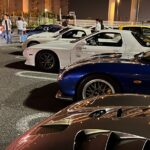
The first scheduled stop is Toyosu Pit, at Autobacs Shinonome. This is one of Tokyo’s large automotive retail locations and gives you a look at the commercial side of Japanese car culture.
The shop is not just a place to buy emergency supplies. The account of the visit describes a large lower level with car clothing, souvenirs, books, miniature models, coffee, and other merchandise. Another level carries car parts and modification equipment, including items that may be sent abroad.
You do not need to be a serious mechanic to enjoy this stop. It works well for anyone who wants a souvenir beyond the usual Tokyo gifts. A model car, piece of clothing, or small accessory may be easier to pack than a full-size performance part, and the shop provides a clear sense of how broad the Japanese tuning market can be.
Allow about an hour here. You may find prices reasonable by Tokyo standards, though the tour does not include your purchases. The stop also gives you a chance to use the restroom, buy a drink, and look around before the later parts of the night.
The drawback is that a retail stop may not excite every member of your group. If your companion has little interest in cars, an hour in an automotive megastore could feel long. For a dedicated JDM fan, though, it adds useful context and keeps the experience from being only a ride and a photo stop.
Daikoku Parking Area, where the car culture comes alive
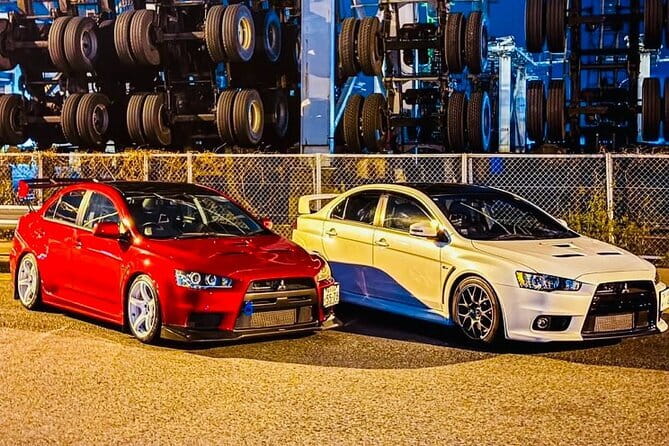
Daikoku Parking Area sits in Daikokufuto, in the port area of Yokohama. It is widely known as a major meeting place for Japanese performance and modified cars. The stop is free, and the tour includes entry.
Your guide helps you handle the parking area like an insider. That does not mean every night produces a perfect line-up of rare cars. The scene changes with the weather, the day of the week, and police activity. One account described police shutting the meet down early, which is a real possibility in a public parking area.
Plan to spend about an hour walking around. This is when you can inspect cars, look at engine bays, talk with other people around the meet, and take photos. Guides such as Hiroto and Tsukusa were praised for giving people time to explore and for helping with pictures.
The social side is important. Daikoku is not a museum with cars behind ropes. You are seeing an informal gathering, and the mood can be friendly and casual. Stay respectful, ask before touching anything, and follow your guide’s directions if the area changes.
The ride to Daikoku may be slow at first, especially during Friday evening traffic. One detailed account noted that the convoy left around the early evening and spent time in heavy traffic on the first leg. If you are hoping to feel the car’s power, the opening stretch may be more about Tokyo traffic than speed.
The return or later road section can feel more exciting. Guides know the city roads, and the convoy may move briskly when conditions allow. Still, this is legal road driving. There is no guaranteed drifting, no promise of racing, and no reason to expect the stunts shown in Tokyo Drift. That is not a flaw so much as a safety and legal reality.
Rainbow Bridge and Tokyo Bay after dark
The route includes nighttime views of Rainbow Bridge and Tokyo Bay. This is one of the best reasons to choose the experience even if you are not a committed car enthusiast.
From the road, Tokyo feels different from the subway platforms and crowded shopping streets. You see the lights of the bridge, the waterfront, and the city skyline while sitting low in a performance car. The views are not a formal sightseeing cruise, so your time at each viewpoint may be brief, but the moving perspective is part of the fun.
Clear weather makes a big difference. Rain can reduce visibility, spoil photos, and make the driving less enjoyable. The operator can cancel for poor weather and offer another date or a full refund, which is useful for a tour built around nighttime roads and outdoor car meets.
Tokyo Tower: the best photo opportunity
The itinerary includes about 30 minutes at Tokyo Tower. At 333 meters, the orange-and-white tower is one of the city’s most recognizable sights, and the stop gives you a chance to photograph it with the car.
This is where the car and city setting work together. A GT-R or R34 in front of Tokyo Tower is a much more distinctive souvenir than a standard tower photograph. Guides may help position you and take pictures, so ask if you want a shot with the vehicle.
The admission ticket is not included. The stop appears to focus on the exterior view and photo opportunity rather than a visit to the observation decks. If you want to go inside, confirm the timing and cost before counting on it. Thirty minutes is enough for pictures, but not for a long tower visit.
Shibuya Crossing and the final hotel drop-off
The night ends with a stop in Shibuya, including the famous crossing near the Hachikō exit of Shibuya Station. You do not drift through the crossing, and traffic conditions may make the drive through this part of Tokyo fairly ordinary. The value is seeing a familiar city symbol from the passenger seat and finishing near one of Tokyo’s easiest areas for food and nightlife.
The strongest practical feature comes at the end. The operator says it can drop you at your hotel, Airbnb, or another customer location in Tokyo. Shibuya is also an accepted final point. Several accounts describe drivers taking people to different hotels, including one drop-off in Shinjuku after leaving passengers in Shibuya.
That service can save you a late-night train connection after four hours on the road. Confirm your preferred drop-off location with the operator, especially if your lodging is outside the central route.
The drivers make or break the night
The car gets the booking, but the driver shapes the experience. A good driver explains what you are seeing, answers questions, drives smoothly, and helps you feel comfortable in a powerful vehicle.
Sato was praised for being welcoming from pick-up onward. Marcelo was described as a multilingual driver with a friendly personality and strong control of his car. Ryo received especially warm praise for his GT-R driving, music choices, Tokyo Tower photo stop, and willingness to communicate through Google Translate.
Kei was noted for answering questions and giving a strong JDM feel. Kobayashi was praised for safe, controlled driving and clear explanations. Hiroto helped show several car-meet locations, while Akira received praise for respectful behavior and precise car control.
You cannot assume every driver will bring the same energy. One account found the guide disengaged and felt the music was too quiet. Another reported a late departure and a less thrilling pace than expected. These comments point to the main weakness of a multi-driver operation: the experience can depend heavily on the person assigned to your car.
If a particular driver is recommended to you, you can ask whether that person is working on your date. Do not assume a request guarantees a match. The information provided does not promise driver selection.
Is $169.46 good value?
At $169.46 per person, this is not a cheap way to get around Tokyo. You are paying for a four-hour evening, a performance-car ride, access to Daikoku PA, the Autobacs visit, city views, and a hotel or Airbnb drop-off.
For a serious car fan, that package can be good value. A normal Tokyo sightseeing route will not take you to Daikoku in a tuned GT-R, and a taxi will not give you time at a Japanese car meet or a major performance-parts shop. The experience also combines transport and entertainment, which matters when you are short on nights in Tokyo.
The value is weaker if you mainly want speed. Traffic can slow the first part of the route, police may close the meet, and there is no drifting. The exact vehicle is not guaranteed, and tips and a fuel surcharge are not included.
I would compare it to the cost of a special evening activity, not to a standard sightseeing bus. If you love JDM cars, modified vehicles, or the Fast & Furious connection, the price is easier to justify. If you simply want Tokyo night views, there are less expensive options.
Who should book this experience?
I would recommend it most to:
- People who can name the difference between an R34 and an R35
- Fans of Japanese tuning and modified car culture
- Visitors who want a late-night activity outside the usual temples, towers, and shopping streets
- Couples or families who want a memorable city ride, as long as everyone is comfortable sharing a car
- Visitors who value hotel drop-off after an evening activity
- Anyone who wants photos of a performance car with Tokyo Tower or the waterfront behind it
I would think twice if you dislike cars, get motion sick, need a private vehicle, or expect controlled racing. The tour suits curious beginners too, but the strongest value goes to people who care about the machines and the culture around them.
Booking details worth knowing
Confirmation is provided at booking. The activity is near public transportation, and most people can participate. The maximum group size is 30, though the number of people in your specific car can be smaller.
The listed start point is FamilyMart Japan in Akihabara. The end point can be Shibuya or your Tokyo hotel, Airbnb, or another agreed location. Tips are not included, and the listing also notes a fuel surcharge. Daikoku PA itself has no entry fee.
You can cancel for a full refund up to 24 hours before the start time. Cancellations or changes made inside 24 hours are not refunded or accepted. Poor weather can lead to a cancellation, with another date or a full refund offered.
Should you book the Tokyo Drift JDM tour?
Book it if you want a real Tokyo night built around cars rather than a staged race. The best parts are the access to Daikoku PA, the chance to ride in a serious Japanese performance car, the Autobacs stop, and the city lights between locations.
Go in with sensible expectations. You may be assigned a car you did not choose. Traffic may slow the opening drive. Police may close the meet, and legal road driving means no drifting. Even so, the combination of car culture, waterfront roads, Tokyo Tower photos, and hotel drop-off makes this one of the more unusual evening activities in the city.
At $169.46, I would call it a strong purchase for a JDM fan and a conditional one for everyone else. If you want a memorable night and understand that the experience is a guided road tour, not a movie stunt, it is worth considering.
FAQ
Where does the tour start?
The listed meeting point is FamilyMart Japan at 3 Kanda Neribeichō, Fujisoft Akihabara Building 1F, in Chiyoda City, Tokyo.
How long does the experience last?
The experience lasts approximately four hours.
Where does the tour finish?
The listed end point is Shibuya, but the operator says it can drop customers at their hotel, Airbnb, or another agreed location in Tokyo.
Which cars might I ride in?
Possible cars listed or described include a Nissan Skyline GT-R R34, Nissan GT-R R35, Mitsubishi Lancer Evolution, and Lexus IS350 F Sport.
Can I choose my car or driver?
The provided information does not guarantee a specific car or driver. One detailed account described people being assigned to drivers in small groups.
Is Daikoku Parking Area included?
Yes. Entry to Daikoku Parking Area is included, and the area itself has no entry fee.
What other places does the tour visit?
The route includes Toyosu Pit at Autobacs Shinonome, Daikoku Parking Area, nighttime views of Rainbow Bridge and Tokyo Bay, Tokyo Tower, and Shibuya Crossing.
Are the guides multilingual?
Yes. Drivers are listed as speaking English, Japanese, Portuguese, and Spanish. Individual language ability can vary by driver.
Is drifting included?
No drifting is promised. The experience takes place on public roads, and the driving is subject to traffic, speed cameras, and legal limits.
What happens if the weather is poor?
The experience may be canceled because of poor weather. You will be offered another date or a full refund.
Can I cancel for a full refund?
Yes. You must cancel at least 24 hours before the local start time. Cancellations within 24 hours are not refunded.
More JDM & Car Culture in Tokyo
More tours in Tokyo we've reviewed
JDM & Car Culture, compared.
 ★ 4.7FAST&FURIOUS EXPERIENCE Tokyo Car Club membershipFrom $138
 ★ 4.8GT-R35 800hp Club Membership – secret underground car meetFrom $205
 ★ 4.8Tokyo: Fast & Furious Tokyo Drift 3 Experience (Kaila Yu SP)From $157
 ★ 4.8Tokyo: Daikoku JDM Car Meet & Night Car Culture TourFrom $984 hours
 ★ 4.8Secret Car Meet: R34 Skyline Car Club MembershipFrom $236
 ★ 4.7Tokyo Drift: Daikoku PA Supreme Car Experience 大黒PAFrom $583 hours