
Reviewed · WORKSHOPS
Tokyo’s Authentic and Finest Taiko Drumming Workshop
The loudest lesson in Tokyo may also be one of the most memorable. At Eva Kestner International Taiko Drum Academy, you learn to play Japanese taiko drums, not just watch a performance. In 90 minutes, Eva teaches the basics, leads you through a full piece, and gives you a personal video of your playing.
I like the small class size, which allows for patient instruction and help with technique. I also like the mix of tradition and modern music, plus Eva’s own demonstration, which gives the lesson some real artistic weight. The catch is simple: taiko is physical and loud. Wear breathable clothes, bring water, and do not expect a quiet cultural lecture.
In This Review
- Key points before you book
- What the Daikanyama taiko class is really like
- The first beats: technique before speed
- Rhythm training and the group sound
- Learning a complete traditional or contemporary piece
- Eva’s demonstration and the cultural context
- The personalized video is more useful than a souvenir photo
- Location, timing, and planning your day
- Is $120 a fair price?
- Who will enjoy this most?
- Booking and cancellation details worth knowing
- My call: book it if you want to make some noise
- FAQ
- How long does the Tokyo taiko workshop last?
- Where does the activity take place?
- Does the activity end at the same place where it begins?
- Is the workshop taught in English?
- Do I need previous taiko or musical experience?
- Are drums and sticks included?
- How many people can join the regular class?
- What happens if my group has more than 20 people?
- Can I cancel for a full refund?
Key points before you book
- Eva Kestner leads the class in English, with Japanese support available.
- You get your own drum and sticks, so you can play from the start rather than wait your turn.
- The 90-minute lesson includes technique, rhythm training, a performance, and a complete piece.
- A personalized video is included, giving you a useful souvenir beyond a few snapshots.
- The class is capped at 15 people, though smaller groups may feel more personal.
- The studio is in Daikanyama, near public transportation, making it easy to pair with time in Shibuya or nearby neighborhoods.
What the Daikanyama taiko class is really like
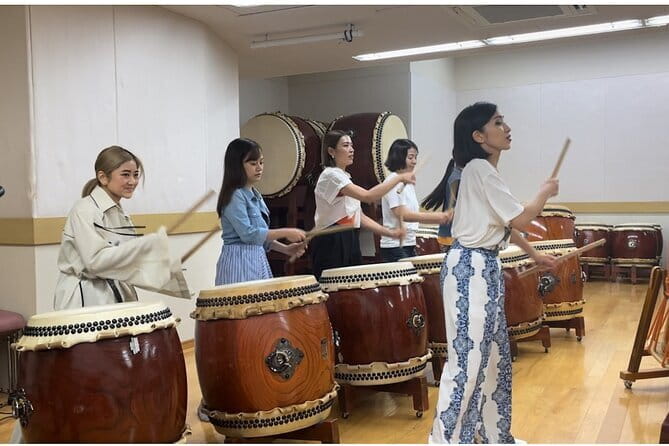
This is a hands-on music lesson, not a stage show with a short audience participation segment. You arrive at the academy, receive a taiko drum and sticks, and begin learning the physical foundations of the instrument.
Eva Kestner teaches in English. Her background is unusually strong for a short tourist workshop. She founded and served as the first musical director of Cornell University’s taiko group, received an excellence award from the Tokyo University of the Arts New Artists Competition, and has published original music through HarperCollins and the Cambridge International Curriculum.
That matters because a good taiko lesson depends on more than knowing a few beats. You need clear instruction on stance, arm movement, timing, and group coordination. Eva’s professional experience gives the class a firm musical base, while her teaching style is aimed at complete beginners.
You do not need previous drumming experience. The lesson works for people who have never held taiko sticks, as well as those with some musical or percussion experience. One useful point for left-handed players is that the instruction can be adapted rather than forcing everyone into a single approach.
A few more Tokyo tours and experiences worth a look



The first beats: technique before speed
The class begins with foundation training. You learn how to hold the sticks and how to use your body to produce a strong, controlled sound.
This is where the workshop becomes more physical than many people expect. Taiko is not simply an arm exercise. The posture and movement involve your legs and core, and the repeated motions can make the session feel like a short workout. Several comments about the class point to leg fatigue as much as tired arms.
The instructor builds the rhythm step by step. You practice basic beats before combining them into a larger pattern. That order is important. Japanese taiko can look easy when a skilled performer makes it flow, but the timing and body movements require focus.
I would not book this as a relaxed activity for the end of a long walking day if you are already exhausted. On the other hand, the physical effort is part of the appeal. It gives the class energy and helps you understand taiko as a full-body art rather than a simple percussion instrument.
Wear comfortable, breathable clothing. Bring water. Bandages are also a sensible addition, especially for younger participants or anyone not used to repeated gripping. One child developed blisters during a session, so this is worth taking seriously without making it sound alarming.
Rhythm training and the group sound
Once you have the basic motion, Eva moves into rhythm training. You practice patterns and learn how individual beats fit together.
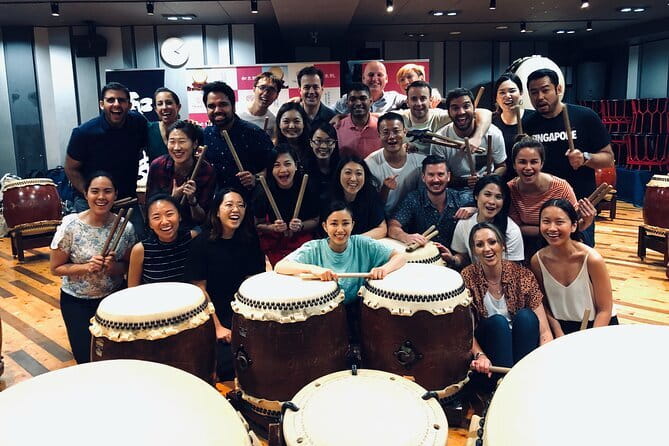
The group format is useful here. Taiko is often most exciting when several players create one shared pulse, and the class gives you a chance to experience that rather than practicing alone. You may find yourself concentrating hard to stay with the pattern, then suddenly hearing the group lock together.
That moment is one of the best reasons to choose this workshop over a short taiko demonstration. You are not only seeing an art form from the outside. You are learning how timing, posture, and listening work inside it.
The experience is also friendly to mixed-age groups. Families with teenagers and a younger child have used the class successfully, and the instructor’s patient approach suits first-time players. The maximum group size is 15, though the most personal sessions may be smaller. A group of eight, for example, allows each person to have a drum while still benefiting from the shared performance.
The class can be loud. That is unavoidable with large drums, and it is part of the fun, but people sensitive to sound should consider the provided accessibility support before booking. The academy states that it can support visual, audio, mobility, and neurodivergent needs.
Learning a complete traditional or contemporary piece
The lesson does not stop at isolated beats. You learn a traditional or contemporary taiko piece and work toward performing it as a group.
Typically, the class includes one practice run followed by a more complete take. That structure gives you a chance to make mistakes without pressure, then apply the corrections in a second performance. It also makes the 90-minute schedule feel purposeful. You are not spending the entire session repeating the same beginner exercise.
The choice between a traditional or contemporary piece adds variety. If you are interested in Japanese culture, the traditional material gives the session a stronger connection to taiko’s established forms. If you prefer a modern musical setting, a contemporary piece may feel more accessible.
Do not expect to master advanced taiko in one class. The aim is a solid introduction and a short performance, not professional-level technique. Still, the progression from basic rhythm to choreographed movement gives you a clear sense of achievement.
The physical gestures can be as important as the sound. Taiko performance often uses stance, movement, and visual timing, so you may be asked to coordinate your body with the rhythm. That is one reason the class feels more memorable than a standard music lesson.
Eva’s demonstration and the cultural context
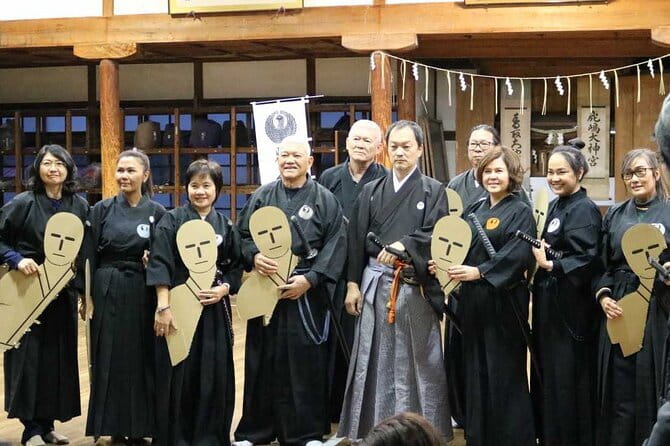
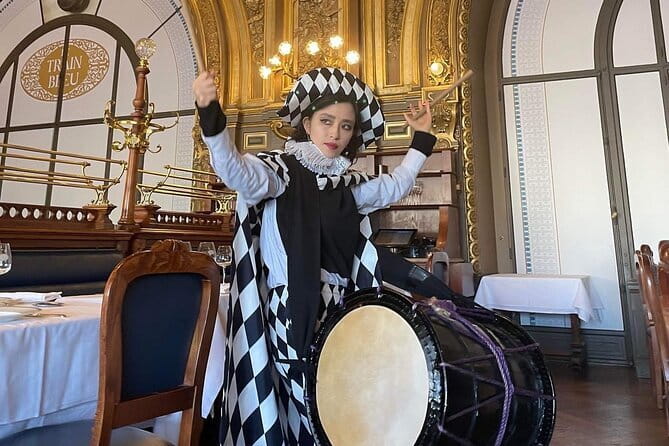
At some point during the workshop, Eva performs for the class and explains the background of taiko drumming.
The demonstration gives you a useful contrast. Before it, you are working out where to put your hands and feet. Then you see what the instrument can do in the hands of a professional. Her performance also helps explain why technique matters, since the power of taiko depends on control as much as force.
The history explanation is brief rather than academic. That is appropriate for a 90-minute session. You receive enough context to place the instrument within Japanese culture, then return to the practical work of playing.
I appreciate that balance. A long lecture would reduce your time with the drums, while no explanation at all would make the activity feel like a generic percussion class. Here, the demonstration and short cultural introduction give the music a setting without taking over the workshop.
Eva’s English is described as excellent, and English instruction is included. Japanese support is also available. That combination makes the class a good choice for visitors who want direct guidance rather than trying to learn physical movements from a translated handout.





The personalized video is more useful than a souvenir photo
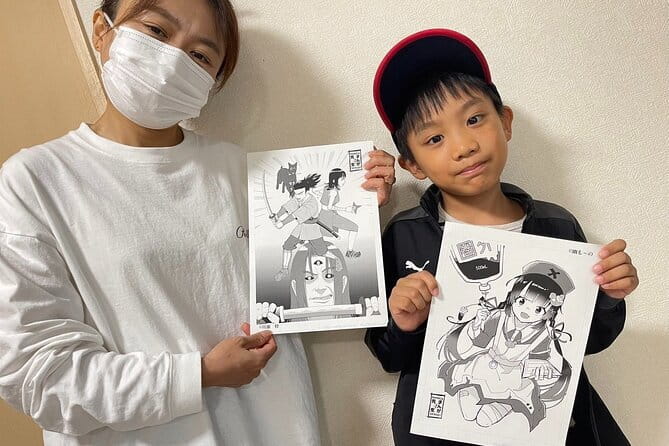
You receive a personalized video of yourself playing taiko. This is a meaningful part of the package because the performance is fast, noisy, and difficult to remember clearly once the class ends.
A photo can show you holding the sticks. A video captures the sound, movement, and group timing. It also lets you see how your technique looked from the outside, which can be helpful if you want to continue practicing.
Do not expect a professionally produced concert film unless that is specifically explained at booking. The important point is that you leave with a personal record of your performance, not simply a general clip of the instructor.
For families, this can be especially valuable. Teenagers may not want another posed cultural photo, but a video of them performing a Japanese drum piece is a more lively souvenir. It also gives you something to share with friends at home.
Location, timing, and planning your day
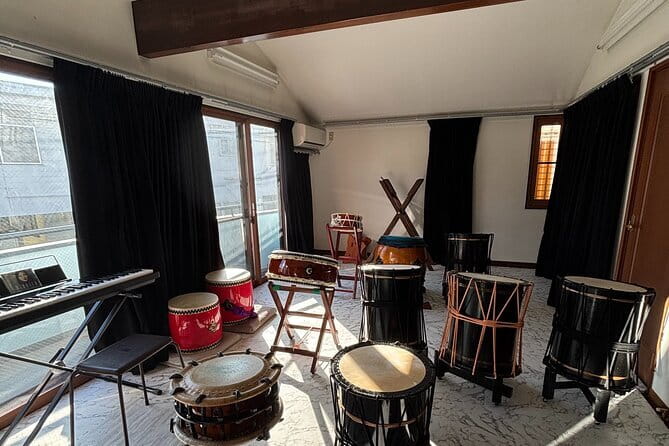
The academy is listed at 111 Taiyo Residence Daikanyama, Uguisudanicho, Shibuya, Tokyo 150-0032. The studio is near public transportation and sits in a central part of Tokyo, so you can plan additional sightseeing before or after the class.
Daikanyama is a useful base for a slower afternoon of neighborhood exploring, and Shibuya is close enough to combine with the activity. Allow extra time to find the exact building. The address can be a little difficult to spot using the booking location alone, while Google Maps may show it more clearly.
The experience lasts about 90 minutes and ends back at the meeting point. Because you start playing almost immediately, the session makes good use of its short length. There is still time for questions after the main playing, but you should arrive ready to begin rather than expecting a long check-in.
It is booked an average of 31 days ahead, so I would reserve early if your Tokyo schedule is tight. The class has a maximum of 15 people. Groups larger than 20 must use a large-group booking slot at another location about 20 minutes from Shibuya, so do not assume a large family reunion or corporate party can use the regular Daikanyama setting.
Is $120 a fair price?
At $120 per person, this is not a bargain-bin Tokyo activity. You are paying for a specialist-led lesson, equipment, a small-group format, a performance, and a personal video.
The value is strongest if you want to do something rather than watch something. You get roughly an hour and a half of instruction with drums and sticks supplied, so there is no need to rent equipment or prepare in advance. The professional background of the instructor also adds value, especially if you care about learning correct technique rather than simply making noise.
The price may feel high if you only want a quick taste of taiko or are comparing it with a free temple visit. It makes more sense for visitors who place a premium on direct cultural participation, English guidance, and a structured activity that works for a family or small group.
The personal video helps justify the cost, though I would treat it as a bonus rather than the main reason to book. The main purchase is the lesson itself, plus the chance to perform a complete piece with an instructor who can correct you.
Who will enjoy this most?
I would recommend the workshop to:
- First-time players who want clear English instruction
- Families with older children, teenagers, and adults
- Couples looking for an active cultural activity
- People with an interest in percussion or rhythm
- Visitors who want a scheduled experience in the Shibuya and Daikanyama area
- Anyone who prefers participation over passive sightseeing
It is less suitable if you have a strict dislike of loud sounds, need a very low-effort activity, or want a long historical lecture. Moderate physical fitness is advised, and the class involves concentration, repeated movement, and standing or active posture.
The academy’s stated support for visual, audio, mobility, and neurodivergent needs is helpful. If you need a particular arrangement, contact the provider before arrival so the instructor can prepare appropriately.
Booking and cancellation details worth knowing
Confirmation is received at the time of booking, and the ticket is mobile, so you do not need a printed voucher. The experience offers free cancellation if you cancel at least 24 hours before the local start time.
Cancellations or changes made inside that 24-hour window are not accepted for a refund. Keep the local Tokyo time in mind when making changes from another time zone.
My call: book it if you want to make some noise
I would book this class for a first visit to Tokyo, particularly if your group includes teenagers or anyone who enjoys music. Eva’s patience, strong performance background, English teaching, and ability to guide complete beginners are the main reasons to choose it.
The best parts are the early start with your own drum, the steady move from simple beats to a full piece, and the personalized video at the end. The main warnings are the $120 price, the loud setting, and the workout your legs may feel afterward.
Bring water, wear comfortable clothes, check the Daikanyama address carefully, and reserve ahead. If you want a cultural activity that leaves you with a skill, a performance, and a story to take home, this is a strong choice.
FAQ
How long does the Tokyo taiko workshop last?
The workshop lasts approximately 1 hour and 30 minutes.
Where does the activity take place?
The regular class takes place at Eva Kestner International Taiko Drum Academy, at 111 Taiyo Residence Daikanyama, Uguisudanicho, Shibuya, Tokyo 150-0032.
Does the activity end at the same place where it begins?
Yes. The activity ends back at the meeting point.
Is the workshop taught in English?
Yes. Eva teaches the workshop in English, and English and Japanese support are available.
Do I need previous taiko or musical experience?
No. The workshop teaches foundation skills and basic rhythms, and it is designed for beginners as well as people with novice to intermediate rhythm experience.
Are drums and sticks included?
Yes. The academy provides the taiko drums and taiko drumming sticks.
How many people can join the regular class?
The activity has a maximum of 15 participants.
What happens if my group has more than 20 people?
Groups larger than 20 need to book the large-group slot. That class takes place at a location about 20 minutes from Shibuya.
Can I cancel for a full refund?
Yes, if you cancel at least 24 hours before the experience start time. Cancellations or changes made less than 24 hours in advance are not accepted for a refund.
More Workshops & Classes in Tokyo

More tours in Tokyo we've reviewed







Workshops, compared.
 ★ 5.0Sushi Making Tokyo Roll and Authentic Japanese Sushi ClassFrom $59
 ★ 4.9Tokyo: Roll and Authentic Sushi Making Class in AsakusaFrom $581h 40m
 ★ 5.0Tokyo Shinjuku Chopsticks Making ClassFrom $20
 ★ 4.9Tokyo: Sushi Making Class in a Happi Coat near a Famous SpotFrom $421h 30m
 ★ 4.8Chopstick Making Workshop in GinzaFrom $251 hour
 ★ 5.0Tokyo Sushi Making Class in Tsukiji with Professional ChefFrom $49