
Reviewed · CITY TOURS
Tokyo Unlocked: A Private Day of Culture, Cuisine & City Secrets
Tokyo Unlocked gives you a full day in Tokyo without making you wrestle with train maps, crowded buses, or a rigid group schedule. You ride in a private vehicle and can shape the day around food, shopping, temples, history, or the city’s famous neighborhoods.
I like the hotel pickup and the chance to cover far-flung sights in one day. I also like the flexible format, which lets you spend more time at a favorite stop and less time at one that does not grab you. A named guide, Talal, has earned praise for patience, respect, and taking good pictures.
The main caution is timing. This is a lot of Tokyo for one day, and the route depends on traffic and clear communication about the start time. Confirm your pickup hour carefully, and remember that Skytree admission and meals cost extra.
In This Review
- Key points before you book
- A private car day across Tokyo
- Tokyo Skytree: start with the city from above
- Senso-ji and the old heart of Asakusa
- Tsukiji Outer Market: Tokyo through food
- Takeshita Street and Omotesando: two sides of Harajuku
- Meiji Jingu: a wooded pause in the city
- Imperial Palace: confirm the Friday schedule
- Shibuya Crossing: thirty minutes of Tokyo energy
- What the $366.48 price really buys you
- Guide quality and the importance of clear timing
- Who will get the most from this tour
- Should you book Tokyo Unlocked?
- FAQ
- How long does Tokyo Unlocked last?
- What time does the tour start?
- Is hotel pickup included?
- Is the tour private?
- Is transportation included?
- Are meals included?
- Is admission to Tokyo Skytree included?
- Is there a physical fitness requirement?
- Can I cancel for a full refund?
Key points before you book
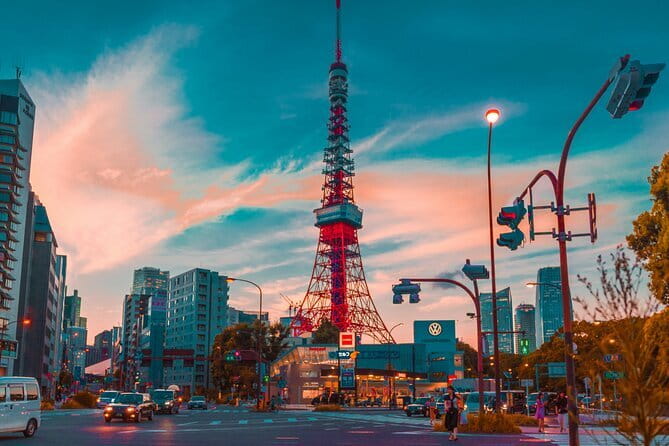
- Eight very different Tokyo stops: You can go from a 634-meter tower to a 1,400-year-old temple, a food market, a shrine, and neon-lit Shibuya in one day.
- Private transport saves time: Hotel pickup and a private car make it easier to connect areas that are spread across the city.
- Flexible by design: The day can focus on food, shopping, history, or a broad first look at Tokyo.
- Talal is a guide to request: His service is described as respectful and patient, with a talent for taking photos.
- The price works best for a group: At $366.48 for up to five people, the cost is about $73.30 per person when five people share it.
- Plan for extras: Skytree tickets and meals are not included, and the Imperial Palace may be closed on Fridays.
A private car day across Tokyo
Tokyo is easy to explore by train, but easy does not always mean simple. The city spreads across a huge area, and the best-known sights sit in different districts. A morning at Tokyo Skytree, lunch around Tsukiji, and an afternoon in Harajuku and Shibuya can involve several train changes and plenty of walking.
This tour solves that problem with private transportation from your hotel. You meet at 8:30 a.m. and spend roughly nine to ten hours with only your own group, up to five people. WiFi is provided in the vehicle, which is useful for checking maps, translating a menu, or keeping your day organized.
I see this as a city orientation day, not a specialist tour. You get a broad look at Tokyo’s major faces: old religion, imperial tradition, youth fashion, Japanese food, modern architecture, and urban spectacle. That range is the strength. The tradeoff is that each stop receives limited time.
The itinerary lists about an hour at most major sights, thirty minutes at Shibuya Crossing and Omotesando, and travel time between them. Since the format is customizable, you should discuss priorities before setting off. If food matters most, you may want more time at Tsukiji. If Tokyo’s religious sites matter more, ask for a slower visit at Senso-ji and Meiji Jingu.
Other city tours we've reviewed in Tokyo


Tokyo Skytree: start with the city from above
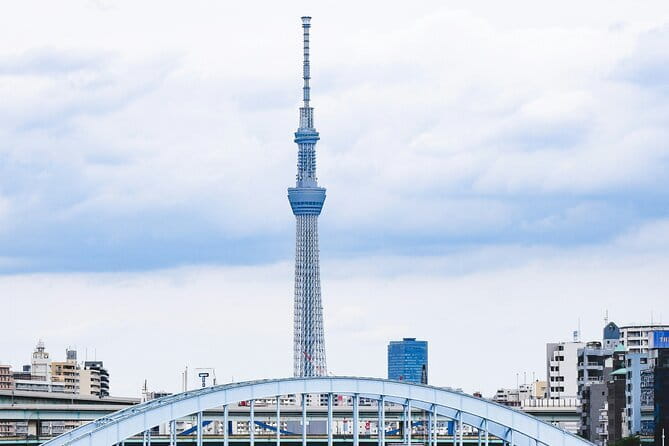
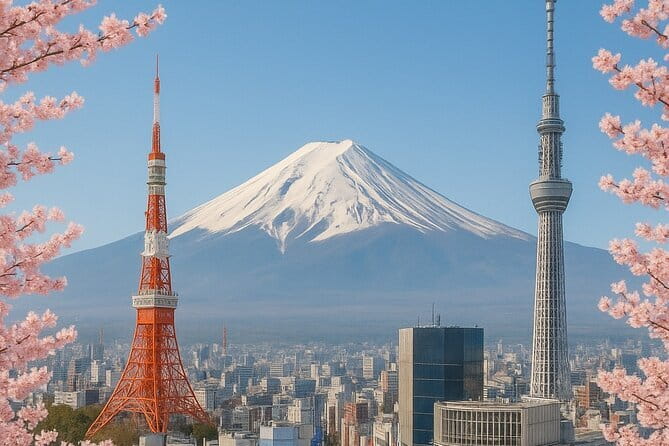
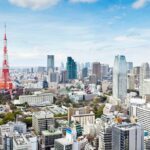
Tokyo Skytree is the natural place to get your bearings. At 634 meters, it is described as the world’s highest freestanding tower, with enclosed observation decks at 350 and 450 meters.
The view is the main event. From this height, Tokyo’s scale becomes easier to understand. You can see how dense the city is and why traveling between districts takes time. The one-hour visit is enough for a look around, photographs, and a sense of the city’s size.
Admission is not included, so budget for a separate ticket. That extra cost matters, especially for a family of five. Ask your guide how much time you have and which deck fits your schedule before paying for entry.
Skytree is also a weather-sensitive stop. On a hazy or rainy day, the view may be limited. Since the entire experience requires good weather, it is sensible to confirm the operating plan if conditions look poor.
Senso-ji and the old heart of Asakusa
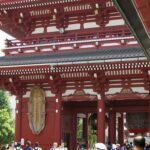
Senso-ji gives the day a sharp change of pace. This Buddhist temple is about 1,400 years old and is one of Tokyo’s most recognizable religious sites. The contrast with Skytree is part of the appeal: modern Tokyo rises nearby, while the temple offers a much older setting.
You have about an hour here. That allows time to see the temple grounds and take in the atmosphere without turning the visit into a rushed photo stop. Admission is free, which helps offset the cost of Skytree.
Senso-ji is a major destination, so do not expect solitude. The value of a private tour is not that it removes crowds from the temple. It gives you a driver-guide who can help you arrive efficiently and point out what deserves your attention before you move on.
If you prefer history and culture to shopping, tell your guide. This is one of the stops where an extra explanation can add more value than simply walking through, though the depth of interpretation may depend on the guide assigned.
Tsukiji Outer Market: Tokyo through food
Tsukiji Outer Market is called Japan’s Food Town, and it is one of the day’s best chances to experience Tokyo through its everyday eating culture. The streets contain wholesale and retail shops, restaurants, and traditional Japanese foods.
Meals are not included, so this is the logical place to spend some of your own money. You can ask your guide for help choosing what to try, but the supplied information does not promise a specific tasting menu or meal arrangement. Go with an open mind and treat the stop as a chance to browse, eat, and watch the market at work.
The one-hour slot is fairly short for a food market. If you want a proper meal, shopping, and time to look around, ask whether the schedule can expand here. The flexibility is most useful when you use it for your own interests rather than trying to give every stop equal weight.
Tsukiji also adds something the landmark stops cannot. You are not just looking at Tokyo. You are seeing the ingredients, small shops, and restaurant culture that help explain how the city eats.
Takeshita Street and Omotesando: two sides of Harajuku
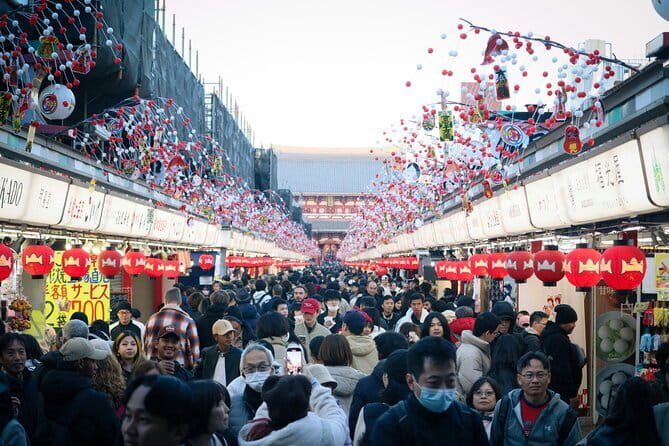
Takeshita Street is about 350 meters long and known for youth fashion, colorful accessories, unusual clothing, and sweets. It is a compact look at Japanese pop culture, especially the playful side of Harajuku.
The listed hour gives you time to walk the street and stop for a sweet or a quick look in the shops. This is not the best place for a quiet stroll. The area is famous for crowds and tight storefronts, so keep your group together and allow extra time if you plan to buy anything.
Omotesando offers a different mood. It is known for cafés and major shops, including overseas coffee chains that used the area as an early entry point into Japan. The schedule gives you about thirty minutes, making this more of a quick neighborhood look than a full shopping session.
Together, the two stops work well. Takeshita Street shows the louder, younger side of Harajuku. Omotesando gives you a more polished café and shopping district. If fashion is your main reason for booking, say so at the start, because thirty minutes in Omotesando will not satisfy a serious shopper.
Other private tours in Tokyo

Meiji Jingu: a wooded pause in the city
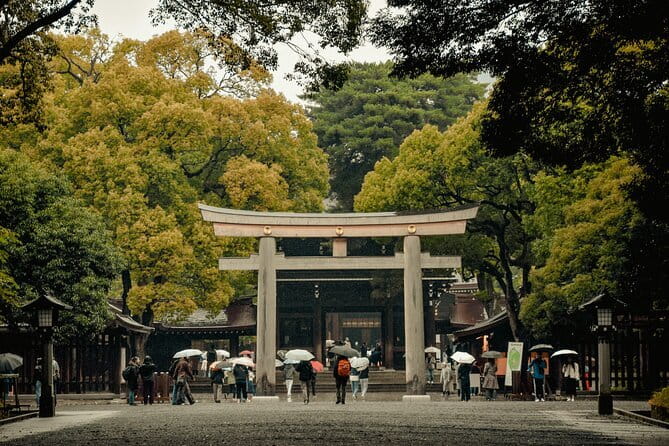
Meiji Jingu is set in a wooded area with more than 100,000 trees. The shrine is dedicated to Emperor Meiji and Empress Shoken and is one of Japan’s best-known Shinto sites.
This is likely the most calming stop on the route. After the shops of Harajuku and before the energy of Shibuya, the shrine offers space to walk and observe a different side of Tokyo. You have about an hour, which gives the visit more breathing room than a quick photo stop.
The setting matters. Tokyo is often pictured through towers, signs, and crowds, but Meiji Jingu shows how a major capital protects quiet religious spaces within the city. You do not need to be deeply interested in Japanese religion to appreciate the change in pace.
Your guide can help you understand the basic customs, but the information provided does not promise a formal religious tour. Treat the visit respectfully and use the hour to notice the grounds rather than rushing through the main approach.
Imperial Palace: confirm the Friday schedule
The Imperial Palace has been the residence of successive Japanese emperors since 1868. The complex includes the Imperial Residence and palace grounds, making it an important stop for anyone interested in Japan’s modern state and imperial tradition.
The planned visit lasts about an hour and admission is free. But the palace is not always open for the same access, and Friday is a known problem. If your tour falls on a Friday, confirm the plan in advance so you are not counting on a visit that cannot happen.
This is a good example of why a flexible private tour needs active communication. The driver can adjust the route, but you should not assume every listed stop will be available on every day. Ask what part of the palace area you will see and what alternative is planned if access is limited.
Shibuya Crossing: thirty minutes of Tokyo energy
Shibuya Crossing is famous for its packed intersection and the district of shops, restaurants, clubs, and shoppers around it. The planned visit is only thirty minutes, which is enough to see the crossing and take photographs, but not enough for a serious exploration of Shibuya.
That short stop makes sense on a highlights tour. Shibuya works best as a visual snapshot, a moment when you watch several streams of people cross at once and then step back into the surrounding city.
If you want shopping or nightlife, tell your guide. The private format gives you a chance to adjust the balance, but a longer Shibuya visit means less time elsewhere. You may find the most value in treating this as a quick landmark stop rather than expecting a full district tour.
What the $366.48 price really buys you
The advertised cost is $366.48 per group of up to five people. For five people, that works out to roughly $73.30 each. For two people, it is about $183.24 each, and for one person the price is much harder to justify.
You are paying mainly for time and convenience. Hotel pickup, private transport, onboard WiFi, and a day shaped around your group can be valuable in Tokyo, especially if you want to cover several districts without working out every train connection.
The price does not include meals or Skytree admission. Those expenses can add up, particularly with five people. On the other hand, you are not locked into a larger bus group or a fixed public transport route.
I would call the tour a reasonable value for a family or small group that wants a broad first look at Tokyo. It is less attractive for solo visitors, budget travelers, or people who prefer to explore one neighborhood slowly by train and on foot.
Guide quality and the importance of clear timing
The strongest personal service noted for this experience comes from Talal, who is described as respectful, patient, and good at taking photographs. If you can request him, it is worth doing, though availability should be confirmed rather than assumed.
There is also a clear warning about communication. One booking involved a serious dispute over an adjusted start time, a late arrival, the vehicle used, and an early finish. The provider responded that the pickup time had been changed earlier at the group’s request and that the guide arrived at the originally scheduled time.
You do not need to assume that problem will happen to you, but you should protect yourself with simple steps. Confirm the 8:30 a.m. pickup, hotel address, expected finish time, and any requested changes in writing. Make sure everyone in your group understands the final schedule.
A nine to ten hour day should feel substantial. If the day starts late or stops are shortened, the value changes quickly. Clear planning is especially important because the itinerary contains eight stops spread across Tokyo.
Who will get the most from this tour
This private day fits you best if:
- You are visiting Tokyo for the first time and want a broad introduction.
- You are traveling with up to five people and can share the group price.
- You value hotel pickup and private transport more than the lowest possible cost.
- You want to combine temples, food, shopping, and major city sights.
- You have family members who may find crowded public buses or complicated transfers tiring.
- You want the freedom to shift time toward food, history, or shopping.
It may not suit you if you want a slow, specialist visit to one area. It is also not ideal if every traveler in your group wants a different plan, since the day still has limited hours and considerable travel between districts.
The physical requirement is moderate. You should be comfortable walking around temples, markets, shopping streets, and city landmarks for much of the day.
Should you book Tokyo Unlocked?
I would book this for a small group that wants to cover Tokyo’s major sights in one long day and prefers a private vehicle over public transport. The best value comes when five people share the cost and agree on a general plan before pickup.
Request Talal if possible, confirm the start time, and decide how much you want to spend on food and Skytree tickets. If Friday is your tour day, ask about the Imperial Palace before you leave.
Book it as a practical overview, not as an in-depth cultural study. You will see a great deal of Tokyo, from Senso-ji and Meiji Jingu to Tsukiji, Harajuku, and Shibuya. You will not have unlimited time at any one stop, but you will finish with a useful sense of how the city fits together.
Free cancellation is available up to 24 hours before the start time. Changes made within 24 hours are not accepted, and poor weather may lead to another date or a full refund.
FAQ
How long does Tokyo Unlocked last?
The tour lasts approximately nine to ten hours.
What time does the tour start?
The scheduled start time is 8:30 a.m.
Is hotel pickup included?
Yes. Hotel pickup is included.
Is the tour private?
Yes. Only your own group participates, with a maximum group size of five people.
Is transportation included?
Yes. Private transportation and WiFi onboard are included.
Are meals included?
No. Meals are not included in the tour price.
Is admission to Tokyo Skytree included?
No. Admission to Tokyo Skytree is not included.
Is there a physical fitness requirement?
You should have a moderate level of physical fitness.
Can I cancel for a full refund?
Yes. You can cancel at least 24 hours before the experience start time for a full refund. If poor weather causes the tour to be canceled, you will be offered another date or a full refund.
More Private Tours in Tokyo
More City Tours in Tokyo


More tours in Tokyo we've reviewed





City Tours, compared.
 ★ 4.8Tokyo: Private City Highlights Tour with Local GuideFrom $1064 - 8 hours
 ★ 4.7Tokyo: Asakusa, Skytree & Akhihabara Go-Kart City ExperienceFrom $961h 10m
 ★ 4.8Tokyo: 3-Hour Bike or E-Bike City Highlights TourFrom $453 hours
 ★ 4.8Tokyo: Sumo Morning Practice Tour at Sumida CityFrom $1162 hours
 ★ 4.5Private Haneda Airport (HND) to Central Tokyo City TransferFrom $119
 ★ 4.8Tokyo: 3-hour Guided E-Bike Tour of the City’s Hidden GemsFrom $65