
Reviewed · TOKYO
Language Exchange : Meet Locals & Expats
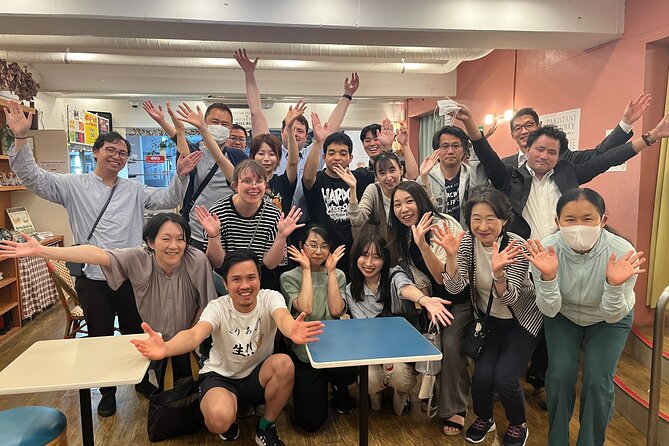
Tokyo can be a hard city for meeting people, especially if you arrive alone. This 1-hour-45-minute language exchange solves that with rotating conversations, seat changes, and small activities that keep you talking instead of waiting for a stranger to make the first move. The group includes Japanese participants, expats, and tourists, with Japanese participants making up about 40 percent of the room.
I like two things right away: you meet everyone, rather than getting stuck with one conversation partner, and the seasonal games give the evening a purpose beyond basic introductions. At $10, the event is also a low-cost way to spend an evening in Tokyo while practicing Japanese or English.
The main consideration is that the exact games and format change from event to event. If you want a structured language class, a private lesson, or a guaranteed small group, this is not that. It is a social meetup with a maximum of 20 people, so the experience depends partly on the mix in the room.
In This Review
- Key points to know before booking
- Why a rotating language exchange works in Tokyo
- Arriving at Sakura Cafe and Restaurant Nippori
- The first conversations and getting comfortable
- Switching seats and meeting the full group
- Seasonal games and cultural activities
- The Japanese, expat, and tourist mix
- What the $10 price really covers
- How this experience compares with a formal class
- A note about the available feedback
- Timing, cancellation, and practical planning
- Who should book this Tokyo language exchange?
- Should you book it?
- FAQ
- Where does the language exchange take place?
- How long does the activity last?
- How much does it cost?
- Are food and drinks included?
- Are taxes and fees included?
- How many people can attend?
- Who attends the language exchange?
- Do participants stay with one conversation partner?
- Are the games the same at every event?
- Can I cancel for a refund?
Key points to know before booking
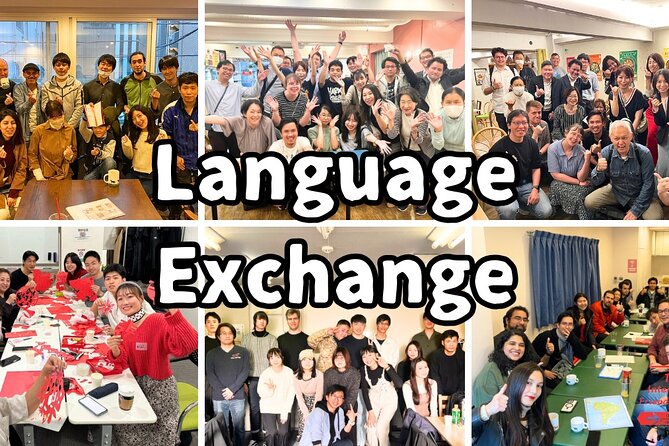
- Rotating conversations: You change seats and speak with different people instead of staying with one partner.
- Japanese participants make up about 40 percent: The rest are mainly expats and tourists, creating a useful mix of language levels and backgrounds.
- Seasonal games vary: Cultural games and casual challenges help prevent awkward pauses, but the precise activities are not announced in advance.
- More than five years of hosting: Tokto International Friends & Events has run this language exchange for over five years.
- Sakura Cafe and Restaurant Nippori: The event begins and ends at the same Sendagi meeting point, near public transportation.
- $10, about 20 people maximum: All fees and taxes are included, but coffee, tea, and dinner cost extra.
Why a rotating language exchange works in Tokyo
A normal language exchange can be hit or miss. You might spend the whole evening talking with one fluent English speaker, or you might sit quietly while everyone else already knows each other. The rotating format here tackles that problem directly.
You switch seats and meet different people throughout the session. That gives you several short chances to practice, which is useful if you are nervous about making mistakes in Japanese. A short conversation can feel manageable. If one exchange is awkward, you do not have to rescue it for the whole night.
The format also suits people who want to meet locals without treating the experience like a formal cultural lecture. You are there to talk, listen, compare daily life, and try out language in a friendly setting. The event is not built around sightseeing, so its value comes from conversation rather than views or famous landmarks.
I would expect the language balance to shift from one meeting to the next. The stated mix is about 40 percent Japanese participants and 60 percent tourists or expats. That is enough Japanese presence to make practice possible, but not so much that English speakers are left without support.
If you're still narrowing it down, here are other tours in Tokyo we've reviewed.


Arriving at Sakura Cafe and Restaurant Nippori
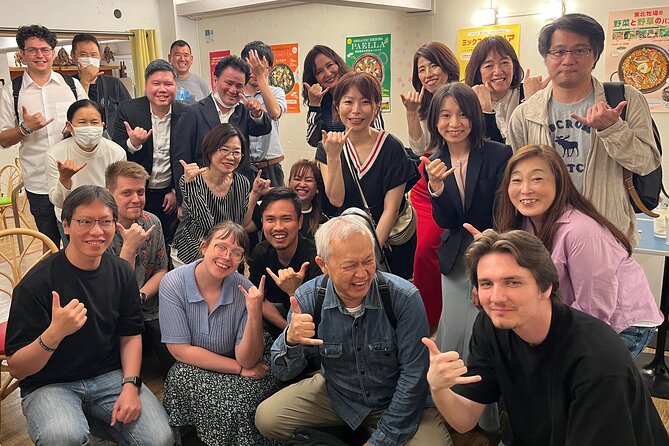
The meeting point is Sakura Cafe and Restaurant Nippori, at 3-chome 43-15 Sendagi in Bunkyo City. The area is served by public transportation, which matters in Tokyo because an easy meeting point can save you from a stressful cross-city journey.
You should allow time to find the cafe before the scheduled start. The address includes Sendagi, while the venue name includes Nippori, so check your route carefully and keep the full address available on your phone. The mobile ticket is useful for this, since your booking confirmation is received at the time of booking.
The activity ends where it begins. That is convenient if you want to continue your evening nearby, return to your accommodation, or simply avoid figuring out a second pickup point. You are not being sent across town at the end of the session.
The cafe setting is practical rather than theatrical. You are meeting in a public food and drink venue, not a special language school. That can make conversation feel more natural, though you should not assume that coffee, tea, or dinner is included. They are not.
The first conversations and getting comfortable
The opening part of the event is likely when the format matters most. You may arrive knowing no one, and the first conversation can feel forced at any social gathering. Here, the expectation is that you will talk with the people around you before moving on to someone new.
The provider describes the event as a place to practice Japanese or English in a natural, friendly setting. That wording is important. This is not presented as a grammar course, and you should not expect a teacher correcting every sentence or handing out a lesson plan.
Instead, think of it as repeated speaking practice. You can introduce yourself, ask where someone lives, compare travel plans, discuss food, or talk about ordinary life in Tokyo. The subject matter is not fixed, which lets you steer conversations toward your own interests and language goals.
If you are a beginner, keep a few simple questions ready. Asking someone where they are from, how long they have been in Tokyo, or what Japanese food they like can get a conversation moving. If you are more advanced, you can use each seat change to test a different topic or ask for help with natural phrasing.
The group size has a useful limit. The maximum is 20 people, and the event states that more than 10 participants join each time. That means you should expect a real social group, not a private session. It also means the room should be large enough for several pairings or small conversations, while still being small enough to meet a good share of the group.
Switching seats and meeting the full group
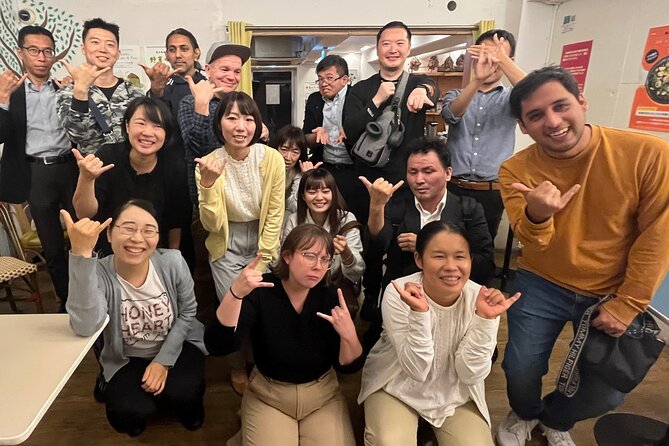
The central feature is the rotation. You do not simply arrive, find one friendly person, and spend the whole session beside them. You switch seats and meet everyone, or at least a broad selection of the people attending.
I like this design for two practical reasons. First, it gives you more chances to hear different accents and speaking styles. Second, it keeps the event moving. You are less likely to run out of things to say because each new person brings a fresh background.
It also helps balance language ability. One partner may speak more English, another more Japanese, and another may be learning at the same level as you. You can adjust your pace each time rather than spending the night in a conversation that is too difficult or too easy.
There is one tradeoff. Short conversations can prevent deeper connections from forming during the activity. If you meet someone you particularly enjoy talking with, the rotation may move you elsewhere before the conversation has properly developed. The good side is that you can reconnect at the cafe afterward if the setting and event flow allow it, but that is not guaranteed by the stated format.
You should also expect some uneven moments. A language exchange includes people with different confidence levels, and not every pairing will feel perfectly balanced. The seat changes reduce the risk of a poor match lasting all night, but they cannot remove it altogether.
Seasonal games and cultural activities
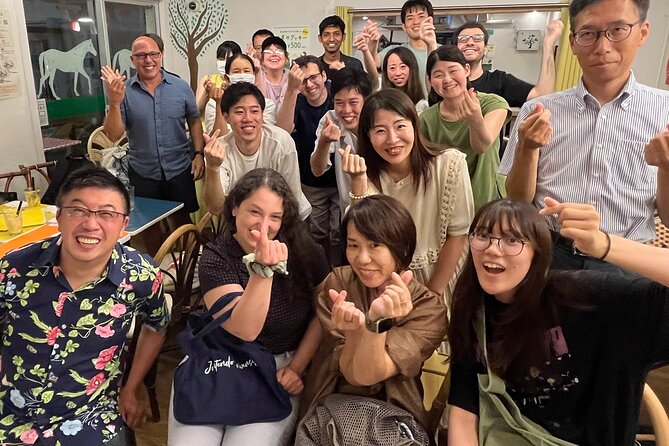
The organizers do not publish one fixed program for every session. Instead, each event may include seasonal games, cultural games, or fun challenges. The surprise element keeps the format from becoming stale, especially for people who attend more than once.
These activities have a practical purpose. A game gives you something to talk about when introductions run dry, and a shared challenge can make it easier to speak with people you have just met. You may also learn small cultural details through the activity rather than through a formal explanation.
Still, you should book with the right expectation. The event promises changing activities, not a specific game, workshop, lesson, or traditional performance. If you need to know exactly what you will do before paying, the open format may feel too uncertain.
For me, that uncertainty is part of the appeal for a short social event. You are not signing up for a rigid classroom timetable. You are paying for a guided chance to talk with a changing group, with games available to keep the room from going quiet.



The Japanese, expat, and tourist mix
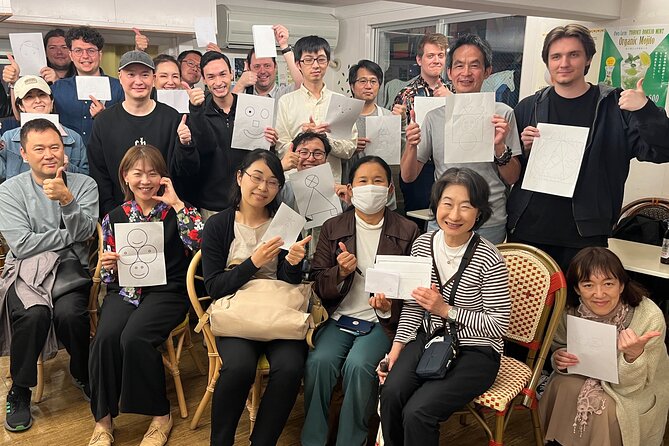
The stated participant split is about 40 percent Japanese and 60 percent tourists or expats. That mix gives the event a wider purpose than Japanese practice alone.
If you are learning Japanese, you get access to local conversation partners in a relaxed setting. You can ask how a phrase sounds in normal speech, compare formal and casual expressions, or simply build confidence speaking aloud. The exchange may be especially useful if your trip has otherwise involved ordering food, buying tickets, and using memorized phrases.
If you are a Japanese participant, expat, or English learner, the same format works in reverse. You can practice English with people from different countries and hear how the language is used outside a textbook. Tourists add short-term perspectives, while expats may offer a more settled view of daily life in Tokyo.
The mix also affects the social atmosphere. Some people will be there mainly to study. Others may want friends, local advice, or a simple evening out. You should be ready for conversations that range from serious language questions to ordinary travel chat.
This is not the best choice if you want a carefully matched partner based on age, profession, or language level. No such matching is promised. The appeal is variety, and variety means the group will not be perfectly predictable.
What the $10 price really covers
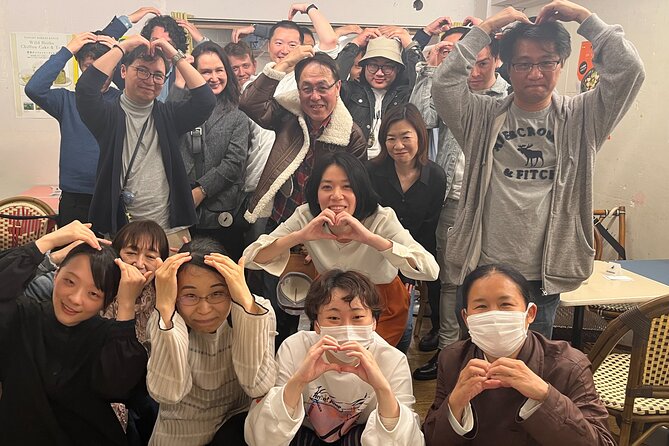
At $10 per person, this is one of the easier Tokyo activities to fit into a tight budget. All fees and taxes are included, so the advertised price is not reduced by a separate participation charge at the door.
The value comes from access to a hosted social setting. You are paying for an organized way to meet people, repeated conversation changes, and activities that help create interaction. That can be better value than sitting in a cafe hoping someone nearby wants to practice languages.
Food and drinks are not included. Coffee, tea, and dinner are extra, so budget for anything you order at the venue. This is worth noting because the meeting point is a cafe and restaurant, which might otherwise suggest that a drink or meal is part of the booking.
I would judge the price by your goal. For language practice and social contact, $10 is reasonable. For a sightseeing tour, it offers no landmarks, transport, guide commentary, or meal. You are buying conversation, not a city tour.
How this experience compares with a formal class
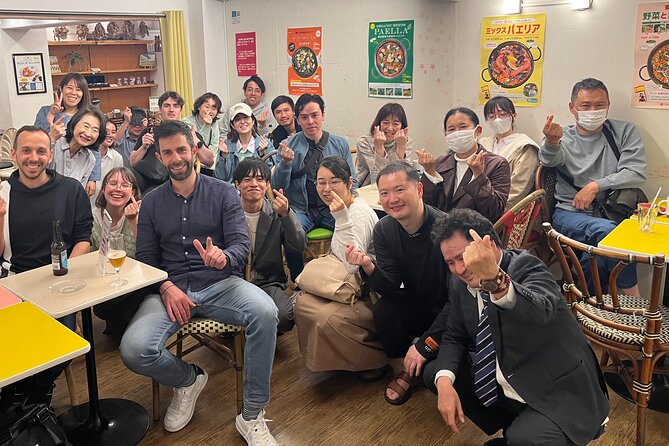
A classroom gives you a planned syllabus, clear corrections, and a predictable pace. This event gives you more variety and less academic structure.
Choose the language exchange if you want to speak often, meet people from different backgrounds, and learn through ordinary conversation. It can be a good fit if you know basic Japanese but need courage and repetition, or if you speak English and want to help Japanese participants practice.
Choose a class instead if you need systematic grammar instruction, written exercises, or a teacher focused on your individual errors. Nothing in this activity suggests that formal teaching is included.
The event may also suit solo visitors better than a standard group tour. There is no need to arrive with a companion, and the rotation gives you a reason to speak with others. Couples and friends can attend too, but you should avoid staying only with the people you already know if meeting the group is your main goal.
A note about the available feedback
The published feedback connected with the provider mainly discusses sake tasting workshops, not this language exchange. Those comments praise an English-language sake session, an eight-drink introduction, varied sake selections, and a friendly pace led by Maksim.
That information should not be treated as proof of what happens at the language exchange. It does suggest that the same provider runs several social and educational events, but the sake workshop is a separate activity with different content. If you are booking this event, focus on the language exchange details: rotating chats, games, the Japanese and international participant mix, and the 20-person maximum.
This distinction matters. You should not book expecting sake tasting, a workshop about brewing, or eight drinks. None of those are included in the language exchange description.
Timing, cancellation, and practical planning
The session lasts approximately 1 hour and 45 minutes. That is long enough for several conversation rounds without taking over your entire evening. You can pair it with dinner before or after, but dinner is not part of the activity.
The event is often booked well ahead, with an average booking time of 48 days in advance. That does not guarantee that every date sells out, but it tells me you should not assume you can always arrange it at the last minute. If the date matters to your plans, booking ahead is sensible.
You can cancel for a full refund up to 24 hours before the start time. Cancellations or changes made less than 24 hours before the start are not accepted for a refund, and the cut-off uses Tokyo local time. Keep that in mind if your schedule is still shifting.
The confirmation arrives at booking, and the activity uses a mobile ticket. Have the confirmation accessible when you head to Sakura Cafe and Restaurant Nippori.
Who should book this Tokyo language exchange?
I would recommend it most to solo visitors, Japanese learners, expats, and people who want a low-cost evening with a social purpose. It is also useful for anyone who understands Japanese or English fairly well but needs more real conversation.
It may not suit you if you dislike group activities, want a quiet dinner, or need a fixed itinerary. The rotating format asks you to participate. You will get more from it if you are willing to introduce yourself, change seats, and try again when a conversation feels awkward.
The event is also a practical choice for repeat visitors to Tokyo. You may already know the major sights, but still have trouble meeting people who live in the city. A language exchange gives you a direct social connection without requiring a full-day commitment.
Should you book it?
Book this for conversation, variety, and a friendly social setting, not for sightseeing or formal instruction. The $10 fee is fair for a hosted event with rotating partners, seasonal activities, and a group capped at 20 people.
I would book it if you want to practice Japanese or English and are comfortable with a changing group. I would skip it if you need guaranteed language levels, a private teacher, included food, or a fixed list of activities. Check the meeting address carefully, bring your mobile confirmation, and arrive ready to speak with more than one person.
FAQ
Where does the language exchange take place?
It starts and ends at Sakura Cafe and Restaurant Nippori, located at 3-chome 43-15 Sendagi, Bunkyo City, Tokyo 113-0022, Japan.
How long does the activity last?
The language exchange lasts approximately 1 hour and 45 minutes.
How much does it cost?
The price is $10 per person.
Are food and drinks included?
No. Coffee, tea, and dinner are not included.
Are taxes and fees included?
Yes. All fees and taxes are included in the activity price.
How many people can attend?
The activity has a maximum of 20 participants. More than 10 participants join each session.
Who attends the language exchange?
The group includes Japanese participants, expats, and tourists. The stated mix is about 40 percent Japanese and 60 percent tourists or expats.
Do participants stay with one conversation partner?
No. The format includes rotating conversations and seat changes so you can meet different people during the session.
Are the games the same at every event?
No fixed game schedule is provided. Seasonal games and activities change, and each event may be different.
Can I cancel for a refund?
Yes. You can cancel at least 24 hours before the start time for a full refund. Cancellations or changes made less than 24 hours before the start are not accepted for a refund.
More tours in Tokyo we've reviewed










Tokyo, compared.
 ★ 5.0Mt Fuji and Hakone 1-Day Bus Tour Return by Bullet TrainFrom $163
 ★ 5.01-Day Tokyo Bus TourFrom $129
 ★ 4.6Tokyo: teamLab Planets TOKYO Digital Art Museum Entry TicketFrom $251 day
 ★ 4.0Mt Fuji & Hakone Cruise, Drum Show Bullet Train 1 Day from TokyoFrom $149
 ★ 5.0Tokyo: Shinjuku Food Tour (13 Dishes at 4 Local Eateries)From $86
 ★ 4.4Tokyo Mt Fuji 5th St & Hakone Cruise Bus Tour w/Bullet TrainFrom $15410 hours