
Reviewed · TSUKIJI MARKET TOURS
Tokyo: Tsukiji Fish Market Seafood & Street Eats
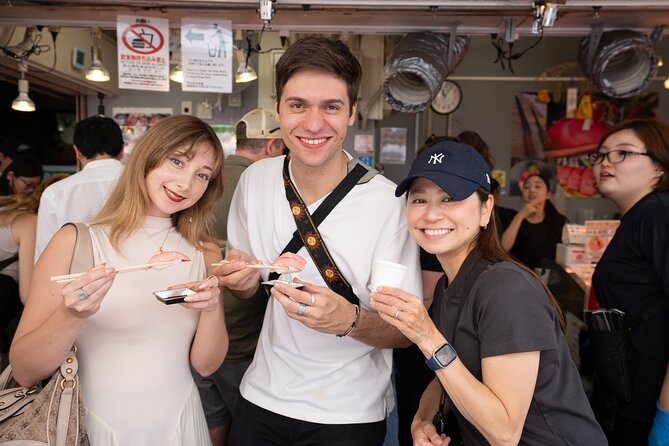
Tsukiji is best understood with your appetite switched on. This 2.5-hour morning walk takes you from Tsukiji Hongwanji Temple into the old fish-market district, where stalls sell tuna, crab, eel, scallops, seafood rice crackers, and Japanese street food. Your guide helps you make sense of the crowd and the choices.
I like the small maximum of 10 people, which gives you room to ask questions and makes it easier to stop at a busy stall. I also like that food spending stays in your hands. You can buy a little or make this a full seafood meal. The catch is that the $42 price covers the guide and market visits, not the food or drinks.
In This Review
- Key points to know
- Starting at Tsukiji Hongwanji Temple
- Tsukiji Fish Market and the tuna connection
- Tsukiji Jogai Market, one hour of stalls and snacks
- What the English-speaking guide adds
- Is $42 a fair price?
- Why the morning schedule works
- Who should book this Tsukiji walk?
- Booking, cancellation, and practical details
- My verdict: a smart first taste of Tsukiji
- FAQ
- How long does the Tsukiji Fish Market tour last?
- Is food included in the $42 price?
- What food might I be able to try?
- Who leads the tour?
- How many people can join the group?
- Where does the tour begin and end?
- Can I cancel for a full refund?
Key points to know
- The old Tsukiji market district remains the main event: You visit Tsukiji Fish Market and Tsukiji Jogai Market, the outer market area filled with food stalls and shops.
- Food is not included: Bring extra money if you want tuna sashimi, grilled seafood, rice crackers, crab, eel, or other snacks.
- Guides can shape the outing: Haru, Toko, and Ryo are among the guides connected with this experience, with Haru especially noted for helping with queues and food choices.
- The morning timing is useful: At roughly two and a half hours, it fits neatly before afternoon sightseeing.
- The tour includes Tsukiji Hongwanji Temple: This gives the market walk a cultural opening, rather than starting with food alone.
- The group is capped at 10 people: That is small enough for direct questions, though market crowds can still make movement slow.
Starting at Tsukiji Hongwanji Temple
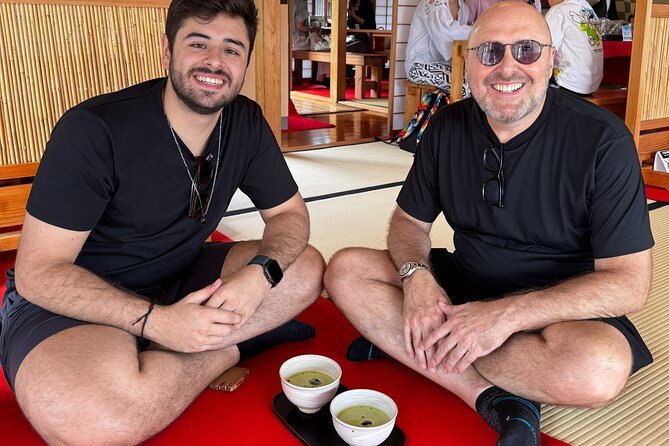
The meeting point is at 3-chōme-9-10 Tsukiji, near public transportation. The walk includes Tsukiji Hongwanji Temple, a striking temple site with distinctive architecture, before moving into the market area with a local Japanese English-speaking guide.
This opening stop matters because Tsukiji is not only a place to eat. The temple gives you a quick cultural frame for the neighborhood, then the guide can connect that setting with local food customs and daily life. You will not spend the whole morning at the temple, but its inclusion adds variety to what could otherwise be a nonstop food crawl.
The exact time at the temple is not listed separately, so think of it as part of the overall route rather than a long formal temple visit. If you want an in-depth lesson on Buddhist architecture, this is not that sort of tour. It is a short introduction before the market takes over.
A few more Tokyo tours and experiences worth a look


Tsukiji Fish Market and the tuna connection
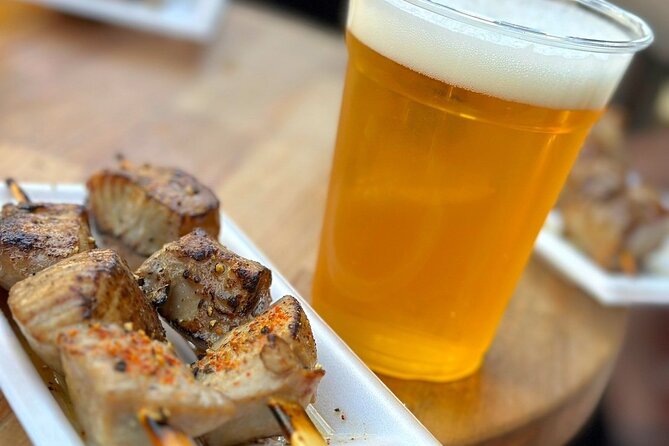
The first main market section lasts about 1 hour and 30 minutes. Tsukiji is world famous as the former site associated with Tokyo’s wholesale fish trade and tuna auctions. The auction activity itself is not listed as part of this experience, so you should book this for the market’s food stalls, stories, and atmosphere, not for a guaranteed auction viewing.
Here, your guide leads you through the food scene and explains the market’s history and culture. That guidance has real value. A first visit can feel like a maze of small counters, seafood displays, queues, and shops. With someone directing your attention, you are less likely to spend the whole visit simply trying to work out where to begin.
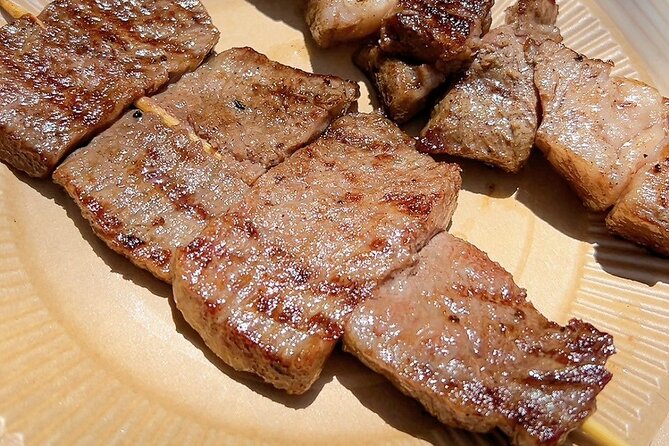
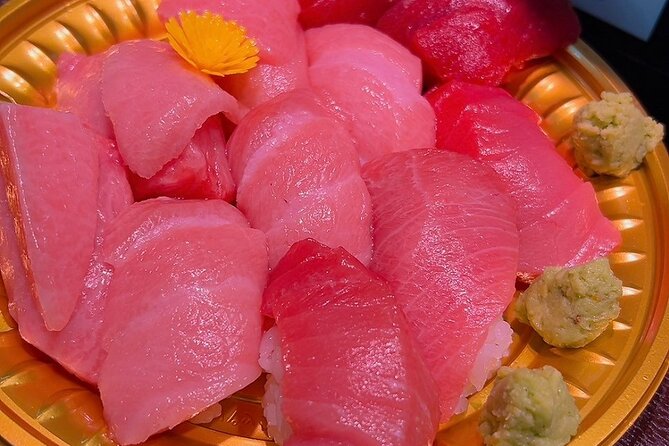
The strongest part of the tour is the chance to turn the walk into your own tasting menu. Fatty tuna is a recurring highlight, and one guide, Haru, is specifically associated with introducing it as a favorite dish. You might also find tuna sashimi in several grades, tuna skewers, seafood rice crackers, and other small portions as you go.
The food choices are bought separately, which is both a benefit and a limitation. If you have already eaten breakfast, you can keep the food bill low and sample one item. If you arrive hungry, you can build a much larger meal. The tour does not lock you into a fixed menu, and that is helpful for families, picky eaters, and anyone managing a particular budget.
On the other hand, the $42 fee is not a food tour price in the traditional sense if you expect a meal to be included. Treat the cost as payment for the guide, local context, and route through the market. Set aside extra money for anything you want to eat, since no food or drink is covered.
Tsukiji Jogai Market, one hour of stalls and snacks
The second market stop is Tsukiji Jogai Market, visited for about one hour. This outer-market district is packed with shops and stalls selling fresh seafood and Japanese street food. It is a natural place to keep tasting, compare foods, and see how the market works beyond a single famous counter.
I like the division between the two market sections. The first stretch gives you more time for orientation and food stops, while the Jogai Market hour keeps the pace moving. You are not tied to one restaurant or one set meal. You can follow the guide’s suggestions, ask for help choosing, and decide how much you want to eat.
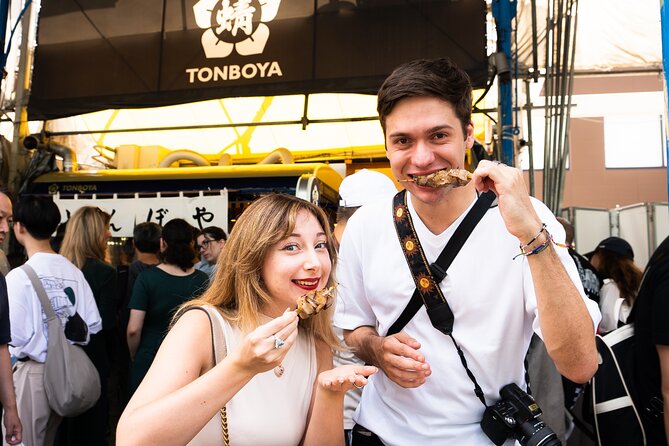
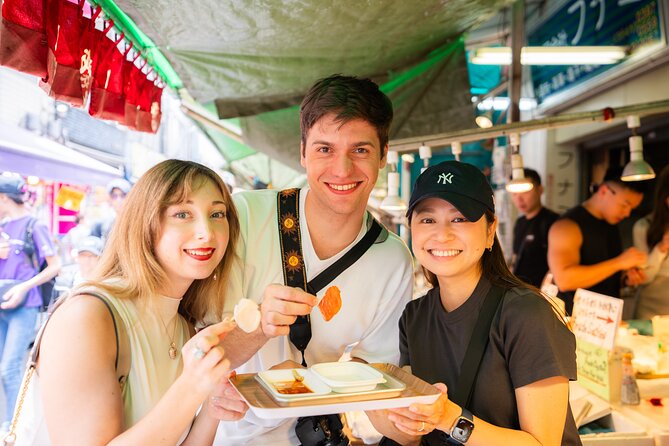
Examples from the food stops include fresh tuna sashimi, seafood rice crackers, tuna kabobs, giant crab, eel, and scallops. These are not promised as a fixed tasting list, so availability and your own choices will shape the meal. Still, the range shows why it helps to arrive hungry and keep some flexibility in your plans.
Queues can be part of the experience. Haru has helped by waiting in line at a popular tuna establishment while the group looked around. That is a practical advantage in a market where time can disappear while you wait for a sought-after dish. Do not assume every guide will handle every queue in exactly the same way, but the format allows for this kind of hands-on help.
The market is also an active working food district, not a quiet museum. You may need to stay close to your guide and watch your footing around narrow areas and other shoppers. The maximum group size of 10 keeps the party manageable, but it does not remove the normal market crowds.
What the English-speaking guide adds
The guide is the main reason to choose this experience instead of simply arriving at Tsukiji on your own. You receive explanations about local food customs, the market’s past, and the purpose of the stalls. You can also ask direct questions as you decide what to try.
The guides named in the supplied material include Haru, Toko, and Ryo. Haru is especially associated with food recommendations, queue help, and friendly background information. Toko has been praised for patience with children, while Ryo is described as a good fit for people who want to focus on eating rather than receive a long formal history lesson.
That difference in guiding style matters. Some people want market context and cultural detail. Others want a direct route to the best tuna and a little explanation along the way. The experience appears able to serve both needs, but your actual guide will shape the balance.
For families, the format has several useful features. The walk is relatively short, food choices are flexible, and the guide can adjust to children’s pace. One family with two children found Toko patient and welcoming, while another multigenerational group received help after getting turned around in the subway and needing accessible exits.
Accessibility details are not formally guaranteed in the tour information, so contact the provider if your group needs a specific route or level of assistance. The market itself can be crowded, and subway access may involve finding the right exit.
Is $42 a fair price?
At $42 per person, this is not the cheapest way to enter Tsukiji. You can walk around the market without a guide, and you will still see food stalls. The price makes more sense if you value clear direction, English explanations, and help choosing what to eat.
A private guide would usually offer more control, but this small-group format gives you some of the same benefits without requiring a fully private booking. A maximum of 10 people is a useful middle ground. You can ask questions without the slower feel of a large bus group, yet the cost remains predictable.
The separate food bill cuts both ways. I see it as a strength if you want control. You can choose one snack, several seafood dishes, or no food at all. I see it as a weakness if you want a fully prepaid food tour and do not want to make decisions as you go.
The value is strongest for a first visit to Tsukiji, especially if you want to eat seafood but are unsure which stalls deserve your time. It is weaker for repeat visitors who already know the market and feel comfortable ordering on their own.
Other shopping tours in Tokyo

Why the morning schedule works
The experience lasts about two hours and 30 minutes and is scheduled in the morning. That timing fits well into a Tokyo day. You can begin with the market, eat along the route, and still have much of the afternoon for Ginza, Asakusa, museums, or another part of the city.
The short length also helps families and people who do not want a full-day food outing. You receive a focused introduction rather than an exhausting tour that tries to cover every corner of Tokyo’s food culture.
There is one planning point to remember: arrive ready to eat. The tour is built around sampling, and the best way to use the time is to decide in advance that the market will serve as breakfast or an early lunch. Since food is extra, you can control the pace and amount.
The activity returns to the meeting point at the end. That makes it easier to plan the next stop without arranging a separate pickup.
Who should book this Tsukiji walk?
I would recommend it to first-time visitors who want a guided introduction to Tsukiji without spending half a day on a formal food tour. It is also a good choice for solo visitors, couples, and families who want to try several items but do not know how the market works.
It suits people who enjoy making food choices as they go. You can try fatty tuna, sashimi, grilled seafood, rice crackers, or other dishes that catch your eye. Since nothing is fixed, the experience can work for a light breakfast or a larger meal.
Families may appreciate the small group and the guides’ reported patience with children. The compact route also helps if you are traveling with several generations, though crowded market lanes may still require care.
I would think twice if you want a quiet cultural tour, a guaranteed list of tastings, or a visit to the tuna auction. None of those is the central promise here. This is a guided walk through the public market area, with food suggestions and cultural background.
Booking, cancellation, and practical details
The experience uses a mobile ticket, and confirmation is received at booking. It is near public transportation, and most people can participate. The group maximum is 10.
Free cancellation is available up to 24 hours before the start time for a full refund. Changes or cancellations inside that 24-hour window are not accepted for a refund. The tour also depends on a minimum number of participants and suitable weather. If the operator cancels for either reason, you are offered another date or experience, or a full refund.
Because the meeting point and ending point are the same, keep your plans flexible after the tour in case you want extra time at the market. If you have mobility needs, ask about the route before booking rather than relying on the general statement that most people can participate.
My verdict: a smart first taste of Tsukiji
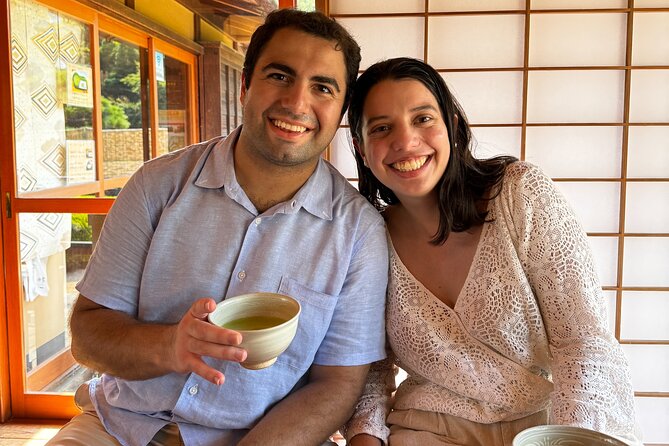
Book this tour if you want help navigating Tsukiji, English explanations, and the freedom to choose your own food. The guide is especially useful for finding worthwhile seafood and handling the market’s queues, while the two-and-a-half-hour format fits neatly into a busy Tokyo schedule.
Skip it if you already know Tsukiji well or expect food to be included in the price. For everyone else, $42 is a reasonable fee for a small-group introduction, provided you budget separately for what you eat. Arrive hungry, keep your morning open, and let the market decide which bite comes next.
FAQ
How long does the Tsukiji Fish Market tour last?
The experience lasts approximately 2 hours and 30 minutes. The Tsukiji Fish Market portion takes about 1 hour and 30 minutes, followed by about 1 hour at Tsukiji Jogai Market.
Is food included in the $42 price?
No. Food and drinks are not included. You purchase any seafood or street food directly at your own expense.
What food might I be able to try?
Food mentioned for the experience includes fatty tuna, tuna sashimi, seafood rice crackers, tuna kabobs, crab, eel, and scallops. The exact dishes depend on your choices and what is available at the stalls.
Who leads the tour?
A local Japanese English-speaking guide leads the walk. Guides connected with the experience include Haru, Toko, and Ryo.
How many people can join the group?
The activity has a maximum of 10 participants.
Where does the tour begin and end?
The tour begins at 3-chōme-9-10 Tsukiji, Chuo City, Tokyo 104-0045, Japan. It ends back at the meeting point.
Can I cancel for a full refund?
Yes. You can cancel at least 24 hours before the experience start time for a full refund. Cancellations or changes made less than 24 hours before the start time are not refunded.
More Markets in Tokyo
More Shopping Tours in Tokyo
More Tsukiji Market Tours in Tokyo

More tours in Tokyo we've reviewed





Tsukiji Market Tours, compared.
 ★ 5.0Tokyo Tsukiji Fish Market Food and Culture Walking TourFrom $99
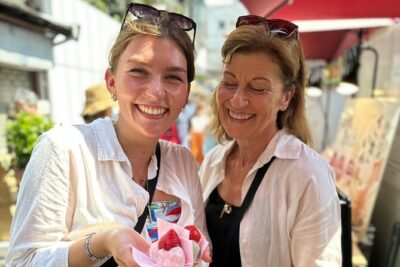 ★ 5.0Tokyo: Tsukiji Fish Market Food and Walking tourFrom $30
 ★ 4.9Tokyo: Tsukiji Fish Market Guided Walking TourFrom $222 hours
 ★ 5.0Tokyo Sushi Making Class in Tsukiji with Professional ChefFrom $49
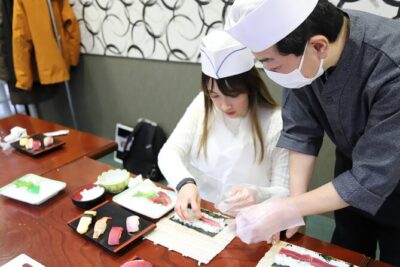 ★ 5.0Tsukiji Fish Market Guided Tour and Sushi Making with Pro ChefFrom $104
★ 4.7Tokyo: Tsukiji Fish Market Food and Culture Walking TourFrom $963 hours
★ 5.0Tsukiji Fish Market Guided Tour and Sushi Making with Pro ChefFrom $104
★ 4.7Tokyo: Tsukiji Fish Market Food and Culture Walking TourFrom $963 hours