
Reviewed · TOKYO FOOD TOURS
Tokyo: Tsukiji Fish Market Foodie and Educational Tour
Tsukiji is at its best when you look beyond the seafood counters. This two-hour walk takes you from Namiyoke Shrine to a local wholesaler’s tuna tasting, then through the market’s food stalls, shops, and narrow culinary lanes. You finish at Lawson, where everyday Japanese snacks become part of the lesson.
I like the small group, capped at six, and the fact that a tuna bento, fresh wasabi, sake, water, and photos are included. I also like the guide’s practical angle: Chinami, when leading the tour, has been praised for clear English, local advice, and steering people away from tourist traps. The main catch is simple: extra market food costs more, and vegetarians should choose another tour.
In This Review
- Key points at a glance
- Why this Tsukiji tour works better than a simple food crawl
- Meeting outside Lawson at Tsukiji 4 chome
- Namiyoke Shrine: a useful pause before the food
- The tuna bento and sake tasting
- Tsukiji Uogashi Mall and the working market side
- Tsukiji Outer Market in 45 minutes
- The Lawson finale and Japanese snack advice
- What the $70 price really covers
- Who should book, and who should skip it
- Practical details before you go
- Should you book this Tsukiji walk?
- FAQ
- Where does the Tsukiji tour meet?
- How long does the tour last?
- What language is the tour offered in?
- What food and drink are included?
- Are extra market snacks and drinks included?
- Is the tour suitable for vegetarians?
- Can children join the tour?
- What is the cancellation policy?
Key points at a glance
- A four-stop Tsukiji lesson: The route links a shrine, wholesale seafood shop, outer market, and Lawson convenience store.
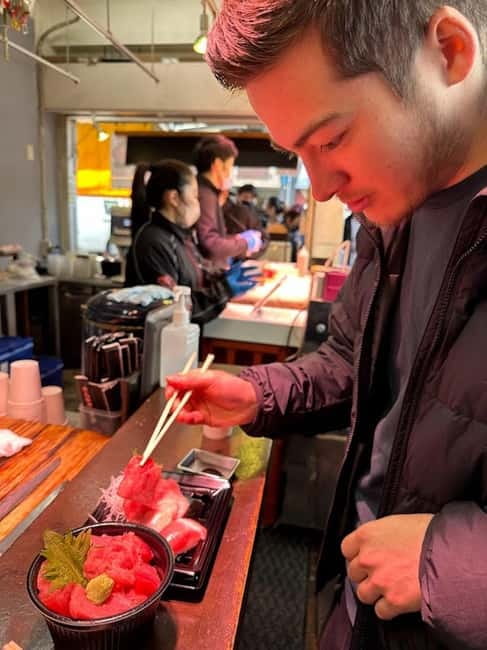
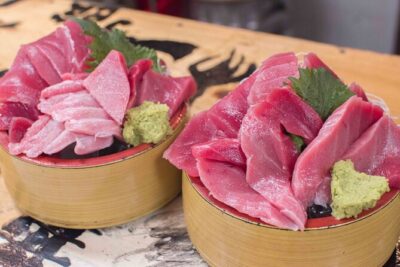
- Fresh tuna is included: You receive a small bento with freshly cut tuna and fresh wasabi, plus a small amount of Japanese sake.
- Namiyoke Shrine adds local context: You learn why people pray there for protection from misfortune and turmoil.
- Six people maximum: The small group makes it easier to ask questions and move through busy market lanes.
- Street food is optional and extra: You can buy additional snacks and drinks, but those purchases are not part of the $70 price.
- It suits curious eaters: This is not only a seafood tasting. You also see produce, cooking tools, souvenirs, restaurants, and Japanese convenience-store food.
Why this Tsukiji tour works better than a simple food crawl
A quick visit to Tsukiji can turn into a hunt for whatever smells good. That can be fun, but you may miss why the market matters, how the neighborhood works, and which foods are worth your yen. This tour gives you a guide to connect the pieces.
The format is part walking tour, part food lesson, and part practical Tokyo orientation. You learn about local worship at Namiyoke Shrine, taste tuna in a setting linked to the wholesale trade, then get time to browse the outer market. The final Lawson stop may sound ordinary, but it is useful. Japanese convenience stores are famous for snacks, drinks, prepared foods, and small gifts, and the guide can tell you what to buy instead of leaving you to guess.
The route is compact. You walk from the Lawson at the Tsukiji 4 chome intersection to the shrine, continue to the tasting stop, explore Tsukiji Outer Market, and return to the same Lawson. The listed walking time totals about 25 minutes, leaving the rest of the two hours for explanations, eating, shopping, and tasting.
A few more Tokyo tours and experiences worth a look



Meeting outside Lawson at Tsukiji 4 chome
The meeting point is outside Lawson Tsukiji 4 chome, near the intersection. Look for the staff member holding a notice board, and do not gather directly in front of the entrance. That small courtesy matters in a neighborhood where people are constantly entering and leaving the store.
Starting and ending at the same place keeps the tour easy to manage. You do not need to figure out a one-way route through unfamiliar streets, and you can return to Lawson afterward if you want to buy something you learned about during the final stop.
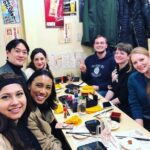
The tour is offered in English with a live guide. Since the group is limited to six participants, you should have a fair chance to ask about ingredients, market customs, Japanese food, or places to eat later in your trip.
Namiyoke Shrine: a useful pause before the food
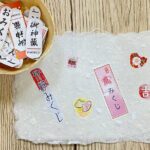
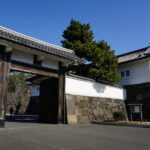
The first walk takes about 10 minutes, followed by roughly 15 minutes at Namiyoke Inari Jinja. This is not a quick photo stop. The guide explains why the shrine is highly worshipped locally and how to pray for protection from bad luck, misfortune, and turmoil.
That introduction gives the food market a better setting. Tsukiji is not only a place to buy fish. It is also a working neighborhood shaped by beliefs, trade, and daily routines. Learning how to approach a shrine helps you behave respectfully, especially if this is your first visit to Japan.
You should expect guidance on the basic act of praying, but the supplied details do not promise a formal ceremony or an extended religious lesson. Think of this as a short cultural stop that adds meaning to the walk.
The timing is smart. You visit the shrine before eating, so the tour does not become a nonstop series of samples. For many people, this will be the part that makes the outing feel like a Tokyo neighborhood tour rather than a market snack run.
The tuna bento and sake tasting
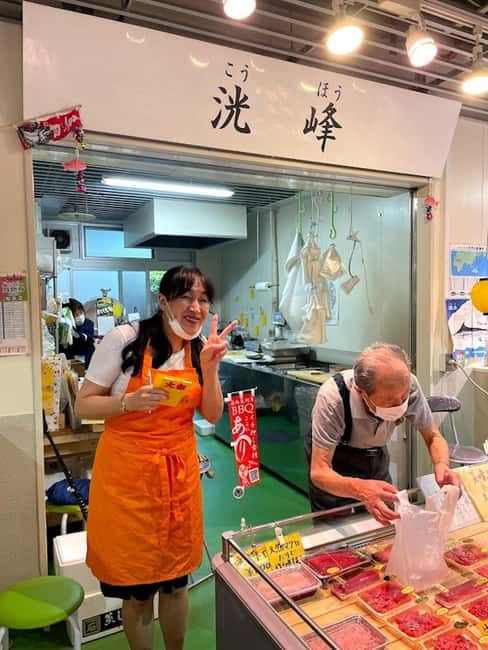
After a five-minute walk, you reach a food stop connected with Tsukiji KohHoh, a local wholesaler associated with Toyosu Market. The company’s staff are described as specialists in blue marlin, and this is where the included tasting takes place.
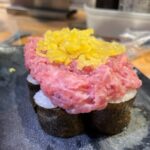
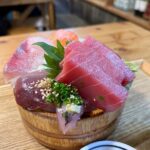
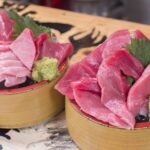
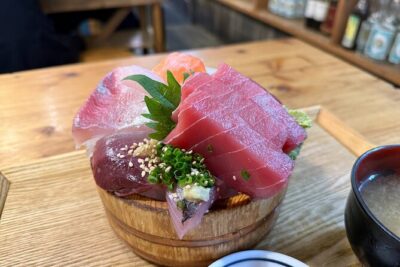
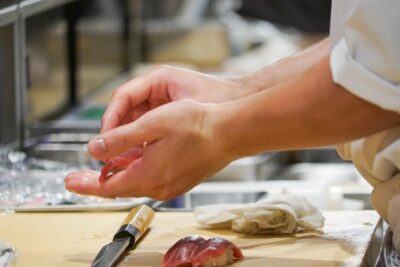
You receive a small bento with freshly cut tuna and fresh wasabi, along with a small amount of Japanese sake. The point is not simply to fill you up. The guide explains Japanese cuisine and the care involved in presenting ingredients, while the tuna gives you a direct way to notice differences in texture and taste.
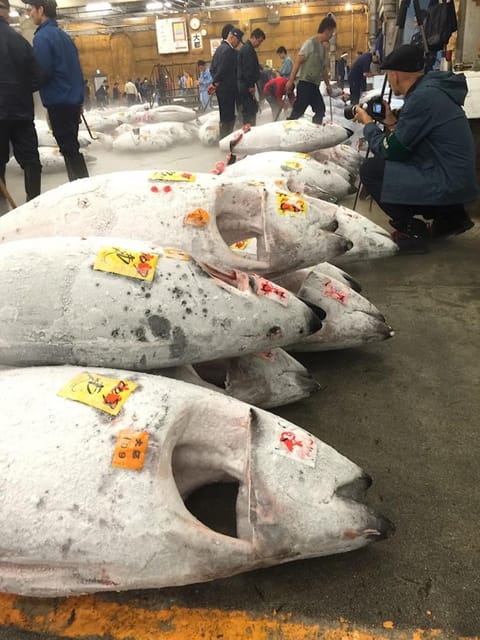
The strongest food praise for this tour centers on the sashimi. The tasting has been described as some of the best Japanese sashimi people had eaten, and that makes sense as a selling point: the food is tied to a wholesaler rather than being a random market sample.
Still, keep the portion in perspective. It is a small bento, not a full lunch. If you arrive hungry, you may want to budget for something else at the market. The tour includes the bento and sake, but any additional food or drink is yours to pay for.
Fresh wasabi is another useful detail. It gives you a chance to compare the real ingredient with the familiar green paste served in many restaurants. Your guide can explain the food, but the supplied information does not promise a technical sushi-making class or a full lesson on every species of fish.
Tsukiji Uogashi Mall and the working market side
The food stop also introduces you to Tsukiji Uogashi Mall. You can browse products, vegetables, fruit, restaurants, and a food court. This part helps you see that Tsukiji offers more than raw fish.
The mall is a good place to observe the market as a source of ingredients for local kitchens. You might find produce, seafood, prepared foods, and other items that are less familiar than the standard sushi counters. Your guide can point out what is worth attention, which is especially helpful when displays are labeled in Japanese.
Because the tour moves through a food market, space and pace may vary. You should be ready to walk, pause, and move aside for other shoppers. The guide’s job here is as much about showing you how to read the area as it is about taking you to a single famous stall.
A few more Tokyo tours and experiences worth a look


Tsukiji Outer Market in 45 minutes
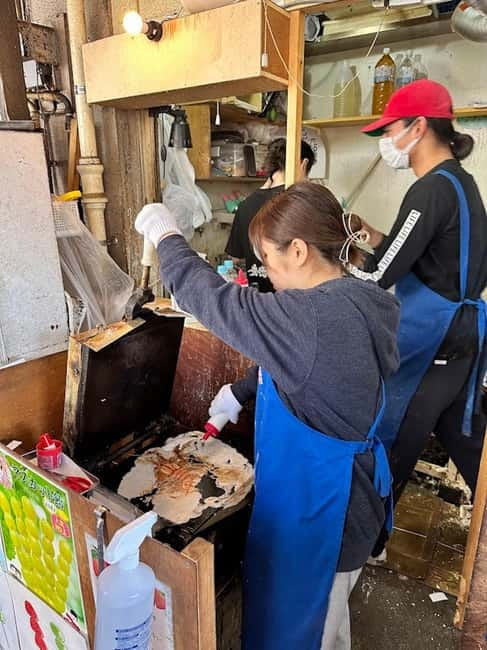
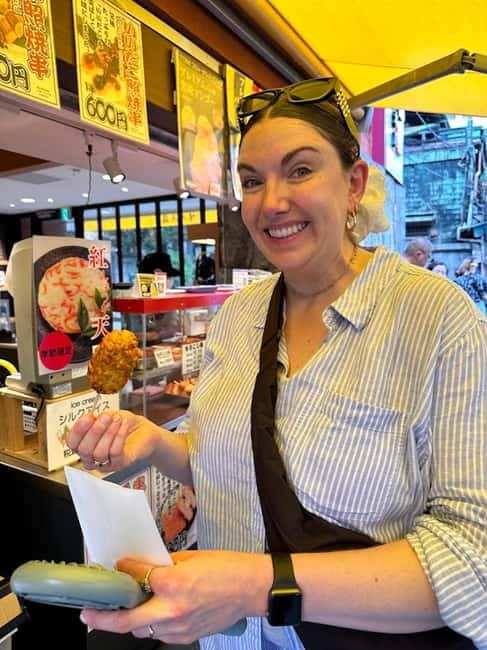
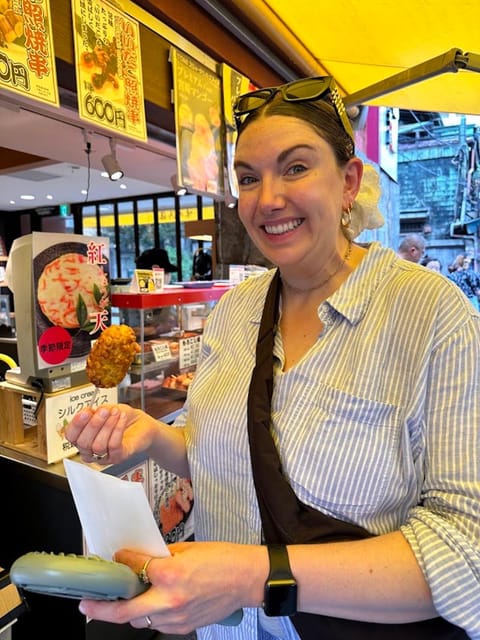
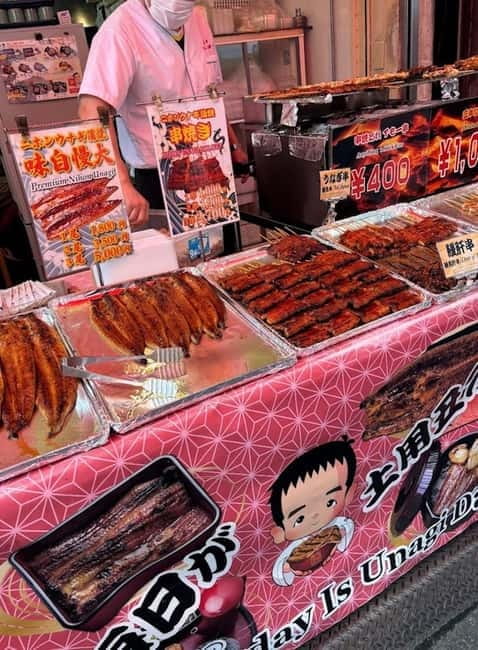
The longest stop is a 45-minute visit to Tsukiji Outer Market. You can expect guided sightseeing, local snacks, food tasting, desserts, shopping, and an explanation of the market’s past and present.
This is where you can spend extra money if something catches your eye. Street food and drinks are optional and not included. The tour description leaves room for you to choose, which is useful because appetite and food interests vary. You may prefer a sweet snack, a savory bite, or a drink rather than another seafood sample.
The guide also shows you alternatives to fish. Look for Japanese ingredients, cooking knives, utensils, souvenirs, fruit, vegetables, restaurants, and other culinary goods tucked into the market lanes. That wider view is one of the tour’s best features. You do not have to be a sushi obsessive to enjoy Tsukiji.
The market can be a hard place to explore alone. Famous stalls attract attention, but a popular sign does not always tell you what fits your taste or budget. A local guide can help you make a quicker decision and explain what you are looking at.
You should not expect every purchase to be covered by the tour fee. The $70 price includes the planned tasting, but it does not include market snacks, drinks, or shopping. If you want to sample freely, carry extra yen and set a spending limit before you arrive.
The Lawson finale and Japanese snack advice
The final 10-minute walk returns you to the starting Lawson. Here, the guide helps you hunt for snacks and drinks and offers recommendations about what to buy and enjoy.
This may be the most surprising part of the route. A convenience store is easy to ignore when you are focused on temples, towers, and major restaurants. Yet Lawson food can be an affordable way to try everyday Japanese flavors. The tour turns a familiar store into a small food lesson.
The guide can also help you choose items for later. That matters if you want a low-cost breakfast, a snack for the train, or a few packaged foods to take back to your hotel. The exact products available may change, so you should treat the advice as guidance rather than a fixed tasting menu.
Because the tour ends where it began, you can make a purchase after the guide finishes without having to carry it through the rest of a long sightseeing day.
What the $70 price really covers
At $70 per person, this is not the cheapest way to wander around Tsukiji. You could visit the market independently and pay only for what you eat. The price makes more sense if you value explanation, a planned tasting, and help choosing what to notice.
Your fee covers:
- An English-speaking guided walk around the Tsukiji area
- Historical and cultural explanations
- A small bento with freshly cut tuna
- Fresh wasabi
- A small amount of sake
- A bottle of water
- Photos taken during the tour
It does not cover market snacks, extra drinks, shopping, or Lawson purchases. That division is clear, but it means your final cost depends on how much you buy.
I see the value in the combination. The included tuna and sake give you a food experience you may not arrange easily on your own, while the shrine and market explanations add context. If you only want to eat as much as possible, a self-guided visit may be better value. If you want someone to explain the area and help you avoid poor choices, the fee is easier to justify.
Who should book, and who should skip it
This tour suits first-time visitors to Tsukiji, food-focused visitors who want context, and people who prefer a short structured activity. It also fits a Tokyo itinerary that leaves only a morning or afternoon free. Two hours is long enough to get a clear introduction without taking over your day.
You should especially consider it if you want advice for the rest of your Japan trip. Chinami has been praised for offering useful tips not only for Tokyo but also for Kyoto. Her English and local knowledge are major advantages when she is your guide.
Families can ask for help in advance. If children will not eat the bento, provide their ages and food preferences before the tour, and the team will try to accommodate them. That is helpful, but it is not a promise of a fully separate children’s menu.
Vegetarians should skip this activity. The included tasting is centered on tuna, and the tour is explicitly not suitable for vegetarians. No separate vegetarian plan is provided in the information available.
The tour is also less suitable if you dislike markets, walking, seafood, or informal food sampling. The route is short, but you will be on foot and moving through commercial food areas.
Practical details before you go
Wear comfortable shoes. The walking itself is not extreme, but the route includes streets, market areas, and shopping lanes. You will get more from the tour if you can focus on the guide instead of your feet.
Arrive at the Lawson intersection and wait outside the entrance area. The staff member will have a notice board. Do not block customers going into the store.
The tour lasts two hours and has limited starting times, so check the available schedule before booking. Free cancellation is available up to 24 hours before the start for a full refund, and you can reserve now and pay later if that option is offered at booking.
The group size is limited to six. That is a strong fit for anyone who wants to ask questions, but it also means spaces can be limited. If you want this on a particular morning or afternoon, reserve ahead.
Bring room in your appetite for the tuna tasting, but do not expect the bento to replace a full meal. Also budget for anything that looks good at the outer market or Lawson.
Should you book this Tsukiji walk?
Book it if you want a guided introduction to Tsukiji rather than an unplanned snack hunt. The shrine visit, tuna bento, sake, market tour, and Lawson advice create a useful mix of culture and food. The small group and English guidance make the $70 easier to defend.
Skip it if you are vegetarian, want a large meal, or prefer to explore entirely on your own. For everyone else, this is a focused way to understand Tsukiji, taste a high point of Japanese seafood, and leave with practical ideas for eating well during the rest of your Japan trip.
FAQ
Where does the Tsukiji tour meet?
You meet outside Lawson Tsukiji 4 chome near the Tsukiji 4 chome intersection. Do not gather directly around the store entrance, and look for staff holding a notice board.
How long does the tour last?
The tour lasts two hours.
What language is the tour offered in?
The live tour guide speaks English.
What food and drink are included?
The price includes a small bento with freshly cut tuna and fresh wasabi, a small amount of Japanese sake, and a bottle of water.
Are extra market snacks and drinks included?
No. Street food, drinks, snacks, other food, shopping, and Lawson purchases are paid for separately by each participant.
Is the tour suitable for vegetarians?
No. The activity is listed as not suitable for vegetarians.
Can children join the tour?
Children may be accommodated if you provide their ages and food preferences in advance, especially if they will not eat the included bento.
What is the cancellation policy?
You can cancel up to 24 hours in advance for a full refund. Reserve now and pay later is also available to keep your plans flexible.
More Food Experiences in Tokyo
More Tokyo Food Tours in Tokyo
More Tsukiji Market Tours in Tokyo
More tours in Tokyo we've reviewed





Tokyo Food Tours, compared.
 ★ 5.0Tokyo: Shinjuku Food Tour (13 Dishes at 4 Local Eateries)From $86
 ★ 4.9Tokyo: Shinjuku Food Tour (15 Dishes and 4 Eateries)From $853 hours
 ★ 5.0Best of Shinjuku: Izakaya Food Tour (4 Stops, 14+ Tastings)From $92
 ★ 5.0Tokyo Night Foodie Tour in Shinjuku – Seasonal Sushi, Wagyu BeefFrom $111
 ★ 5.0Eat and Drink Like a Local: Tokyo Ueno Food Tour-Taverns&RamenFrom $95
 ★ 5.0Tokyo: Shibuya Food Tour (13 dishes and 4 Eateries)From $77