
Reviewed · SAMURAI & NINJA EXPERIENCES
Tokyo: Samurai Adventure! Authentic Sword Experience
A samurai lesson in central Tokyo is a fine way to trade passive sightseeing for something you actually do. Here, action actors such as Dai and Kume teach the stylized sword movements used in Tate, a form of choreographed samurai fighting made for performance rather than real combat. You will handle a wooden practice sword, not a sharp blade, and work through the basics at a controlled pace.
I like two things right away: the hands-on practice gives the $24 price real value, and the live demonstrations let you see the footwork and timing close up. I also like the choice between a public class with Japanese acting students and a private lesson shaped around your level. The main consideration is that one workshop only introduces the art. If you want serious sword training or a long cultural lecture, this is not the right format.
In This Review
- Key points at a glance
- What kind of samurai experience is this?
- Arriving at Samurai Experience Photo Studio ICHI
- Warm-up, stance, and the first sword movements
- Practicing with Dai, Kume, and the class
- The demonstration is the best lesson in timing
- Costumes and the closing photo session
- Is $24 a good value?
- Who should book this workshop?
- Public class or private lesson?
- How to prepare for the best session
- Should you book it?
- FAQ
- Where does the samurai workshop meet?
- How early should I arrive?
- Is the sword practice safe for beginners?
- What will I learn during the class?
- Can I choose a private lesson?
- Is a samurai costume included?
- Who should not take this activity?
Key points at a glance
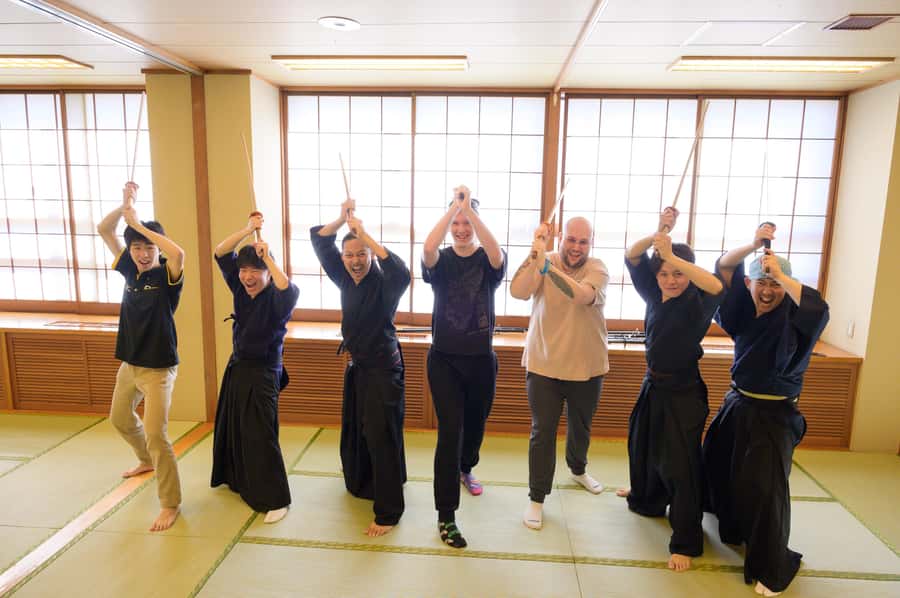
- Tate, not real sword fighting: Learn choreographed samurai action safely with wooden practice swords.
- Dai and Kume lead the lesson: Expect demonstrations, corrections, encouragement, and paired practice.
- Public or private format: Join Japanese students in a public class or choose more individual attention.
- A useful Tokyo location: The studio is easy to reach from Tokyo Station, Ginza, and Tsukiji.
- Photos complete the visit: You can pose with the samurai afterward, with costume hire available as an option.
- Beginner-friendly but physical: Wear comfortable clothes and closed-toe shoes, and arrive 15 minutes early.
What kind of samurai experience is this?
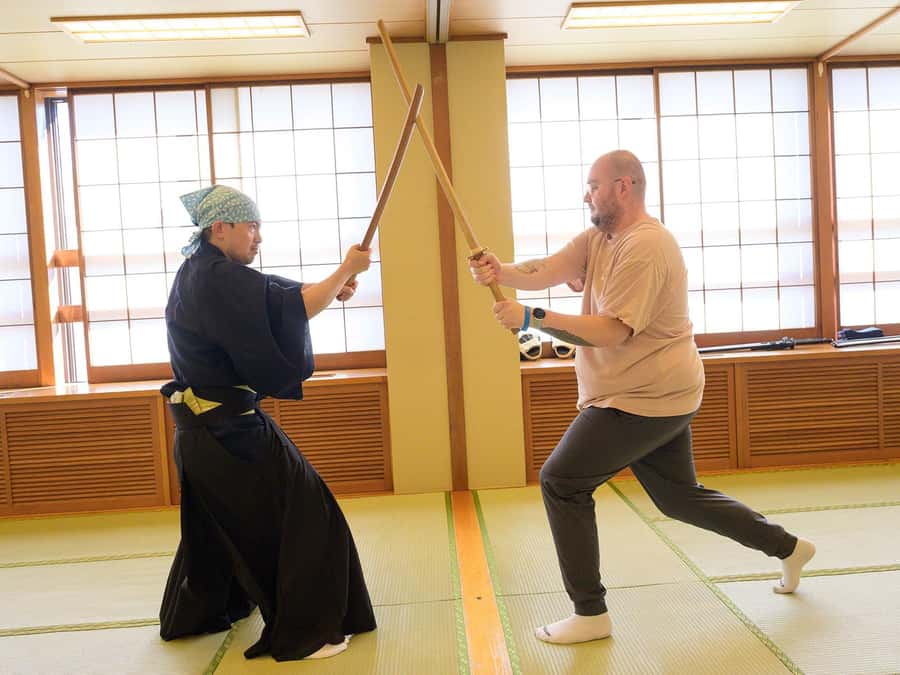
This is a small action workshop, not a museum visit and not a martial arts course. The instructors are professional action actors who teach the body positions, grips, swings, and defensive motions used to make a samurai fight look convincing on stage or screen.
That distinction matters. You are not learning to fight with a real katana, and you will not trade unscripted blows with another person. Instead, you learn a set of safe movements with a wooden sword, then use them in paired practice with an instructor. The aim is control, posture, rhythm, and presentation.
The word Tate refers to Japanese stage and screen combat. It is built around planned movement, so the lesson gives you a taste of how samurai action is performed rather than a full course in traditional swordsmanship. For most visitors, that makes the activity approachable. You can enjoy the drama without needing previous training.
Beginners are welcome. You do not need martial arts experience or detailed knowledge of Japanese culture. The workshop is also suitable for people who simply want to watch. If you are unsure about taking part, observing the training and demonstration can still make a worthwhile short activity.
A few more Tokyo tours and experiences worth a look
Arriving at Samurai Experience Photo Studio ICHI
The meeting point is registered on Google Maps as Samurai Experience Photo Studio ICHI. Search that exact name before leaving your hotel, and plan to arrive 15 minutes early. The activity ends back at the meeting point.
The location is convenient for a day that includes central Tokyo. It is described as easy to reach from Tokyo Station, Ginza, and Tsukiji, so you can fit the lesson around shopping, food, markets, or sightseeing in those areas. Transportation is not included, so you will need to make your own way there.
Some practical reports describe changing at the studio before walking to a nearby building where the dojo is located. Since arrangements can vary, allow enough time to find the studio, check in, and prepare. Do not cut this close. A late arrival is especially awkward for a physical lesson that begins with a warm-up.
Wear clothes that let you move freely. Closed-toe shoes are required, and high heels are not allowed. You should also avoid alcohol before the session and leave drones, smoking materials, and other prohibited items at home.
Warm-up, stance, and the first sword movements
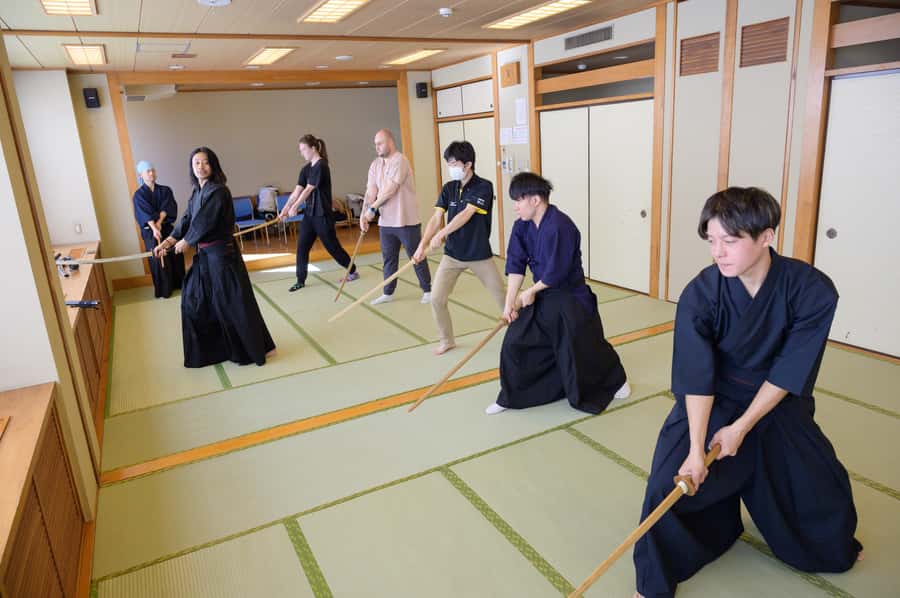
The class begins with warm-up exercises. This is more than a formality. Sword movement uses your feet, hips, shoulders, and arms together, so starting slowly helps you find your balance before holding the practice sword.
Next comes the foundation: how to stand, how to grip the sword, how to hold it, and how to swing. You will also learn basic defensive movements. The instructor guides you through the positions step by step, then helps adjust your form as you practice.
I like this structure because it keeps the lesson understandable. You are not thrown straight into a staged fight. First you learn where your hands go and how your body should move. Then you add the action. That gradual build is especially useful for families, first-time participants, and anyone worried about looking clumsy.
The wooden swords are provided. They keep the exercise safer and make the activity practical for a range of beginners, though you still need to treat the movements seriously. Follow the instructor’s directions, keep your attention on the space around you, and do not turn the lesson into casual sword swinging.
Practicing with Dai, Kume, and the class
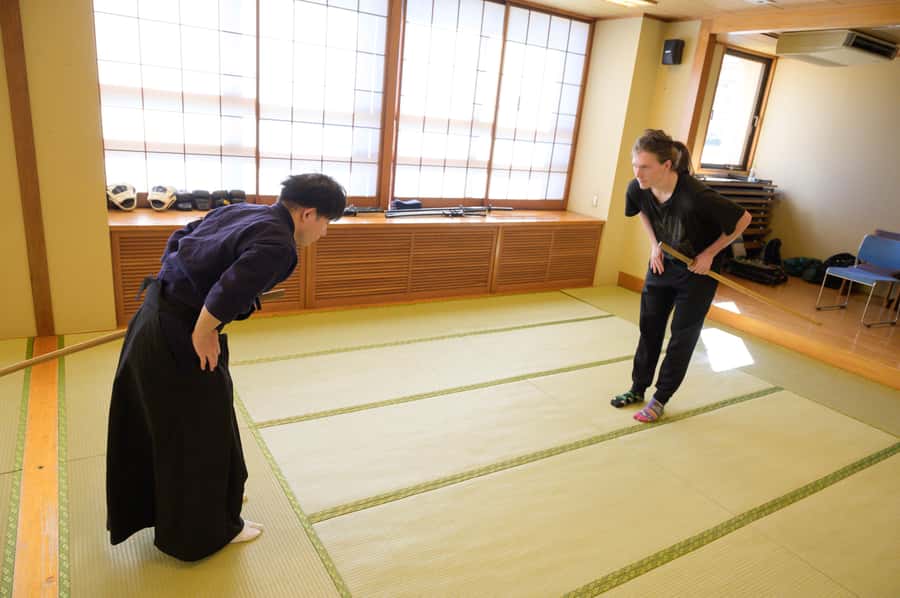
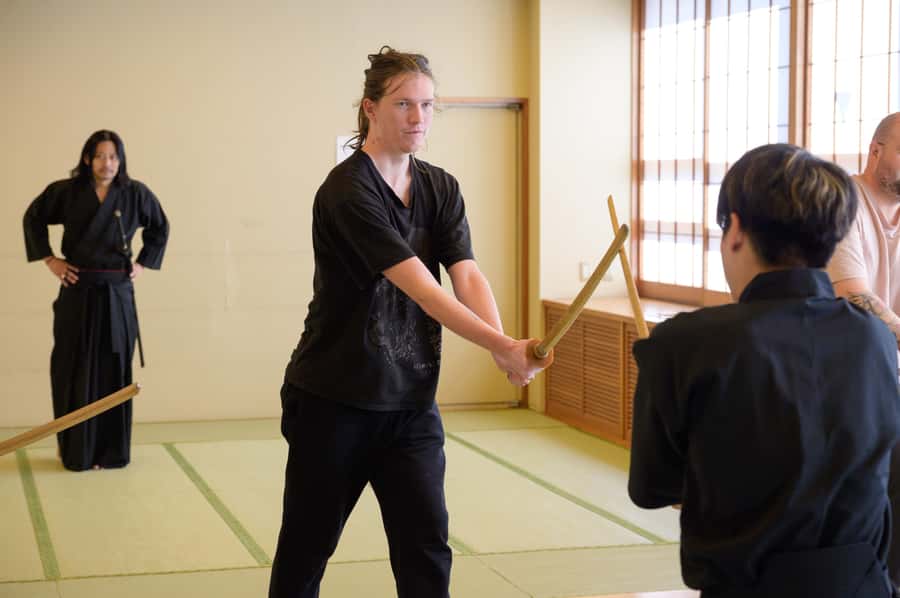
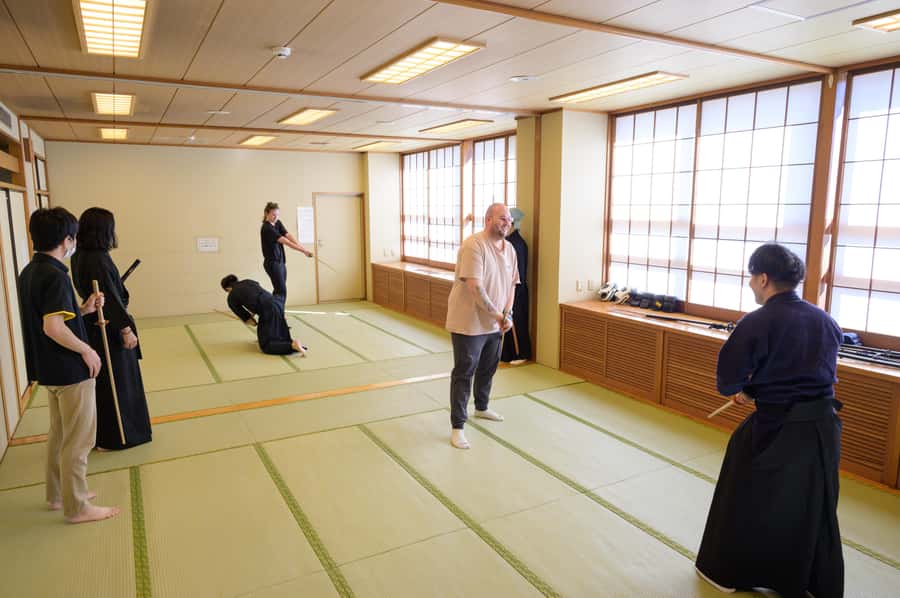
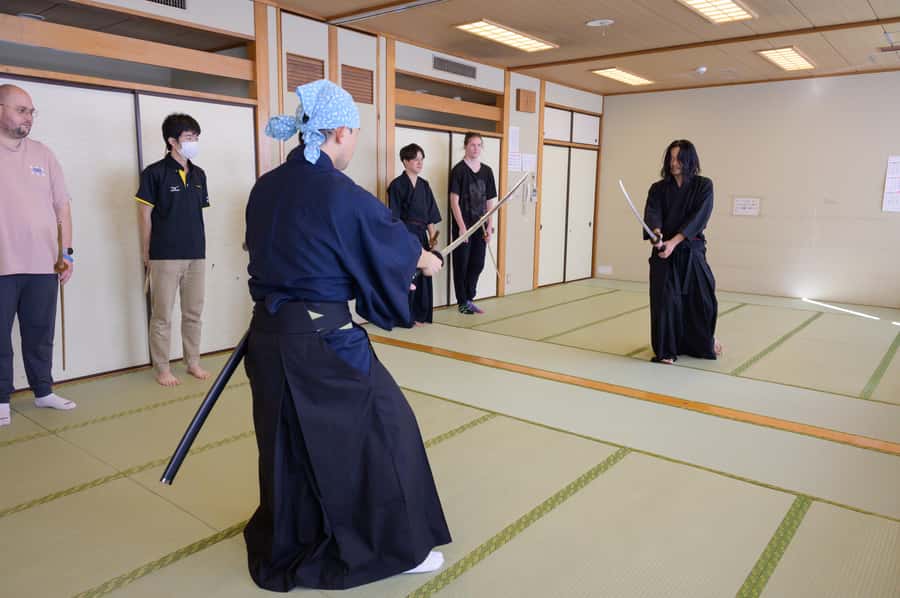
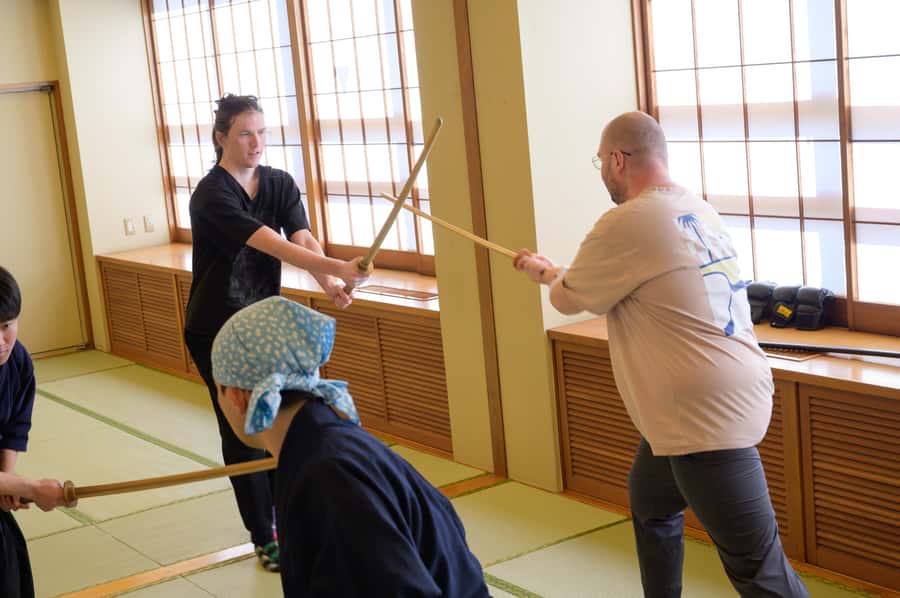
Once you have covered the basic actions, you move into paired practice with a professional samurai action actor. This is the point where the lesson begins to feel like a film scene. You follow a set sequence, respond to the instructor’s movement, and work on timing rather than trying to overpower anyone.
Dai is identified as the main instructor in several participant accounts, with Kume assisting. Their teaching style is described as friendly, patient, and detailed. That matters in an activity where a small correction to your grip or stance can change the whole movement.
In the public course, you join a class that includes Japanese students learning samurai action. You first watch them train, then practice alongside them. This adds a social and cultural element that a standard tourist demonstration would not provide. You are not just watching actors perform for an audience. You are taking part in a working-style practice session with people learning the same performance skills.
The public format may be the better choice if you enjoy meeting people and want to see how Japanese aspiring actors approach the material. It can also feel less predictable than a private class, since the group dynamic affects the pace and amount of individual attention.
The private course begins with a short introduction to samurai history and culture. The professional action actor then adapts the lesson to your level and aims. This option makes more sense for martial arts practitioners, people with a strong interest in Japanese culture, or anyone who wants time to ask questions and repeat movements.
A private booking costs more than the advertised $24 public price, according to the supplied information, but no private price is given. Check the current amount before booking. If you happen to join a quiet public session, you might receive plenty of attention anyway, but that cannot be guaranteed.
The demonstration is the best lesson in timing
After you practice, the instructor performs a powerful demonstration. This is where you see the difference between knowing the steps and making them look natural.
A samurai action sequence depends on clean lines, pauses, controlled speed, and awareness of the other performer. From close range, you can see how much precision goes into a movement that may look simple on screen. The demonstration also gives you a useful reference for the techniques you have just tried.
The format is well judged. You get instruction first, then a chance to watch a professional apply it. That order helps you appreciate the skill instead of treating the performance as a disconnected show.
Do not expect a long theatrical production. The supplied details describe a training demonstration within a workshop. Its value comes from being near the instructor and understanding the movement from the inside.





Costumes and the closing photo session
Photos with the samurai are included as part of the experience. They give you a simple keepsake and bring the workshop to a natural close.
Samurai costume is available as an option, but it is not included in the base price. Some participants have dressed in samurai clothing or a kimono during the session, so ask about the current costume arrangement when you reserve. Do not assume the $24 rate covers clothing hire.
The photo session is not the main reason to book, but it helps families and groups. Three generations can take part in the same activity, and the final pictures give everyone a record of the occasion. It also makes this a good choice if you want something more active than a standard photo studio visit.
If you prefer not to dress up, the sword lesson and demonstration remain the core experience. The costume adds visual flair, but it does not replace the instruction.
Is $24 a good value?
At $24 per person, this is reasonably priced for a guided activity that includes instruction, equipment, a live demonstration, paired practice, and photos. You are paying for access to a specialist performance skill, not just a quick picture with a prop sword.
The value is strongest if you take part fully. The warm-up, grip work, stance practice, defensive movements, and paired sequence give you several layers of activity. You leave with a better sense of the control behind samurai action, even though one lesson cannot make you proficient.
It is less compelling if you only want a historical talk. The introduction to samurai history is specifically described for the private course, while the public class focuses more on training and practice. Likewise, anyone expecting real sword combat should choose another type of activity.
The price also does not cover transportation, food, drinks, or costume hire. These are easy costs to plan for, but they affect the final amount. The workshop itself is short enough to fit into a day of central Tokyo sightseeing, though the exact duration is not provided, so check your booking details before planning a tight schedule.
Who should book this workshop?
I would recommend it most strongly to:
- First-time visitors who want a practical cultural activity
- Families with older children and adults who can follow physical instructions
- Couples looking for a shared activity with photos
- Martial arts fans who want to compare real practice with staged sword action
- Movie and theater fans curious about Japanese action performance
- People staying near Tokyo Station, Ginza, or Tsukiji
- Visitors who prefer participating to simply looking at displays
It can also suit a group spanning several ages. One account describes three generations enjoying the activity together. The instructors’ warm approach helps make the class less intimidating, and beginners are explicitly welcome.
I would think twice if you are pregnant, have back problems, vertigo, or another pre-existing medical condition. The activity is not suitable for wheelchair users or people who use electric wheelchairs. It involves standing and physical movement, so you should take those restrictions seriously rather than treating them as minor booking notes.
Public class or private lesson?
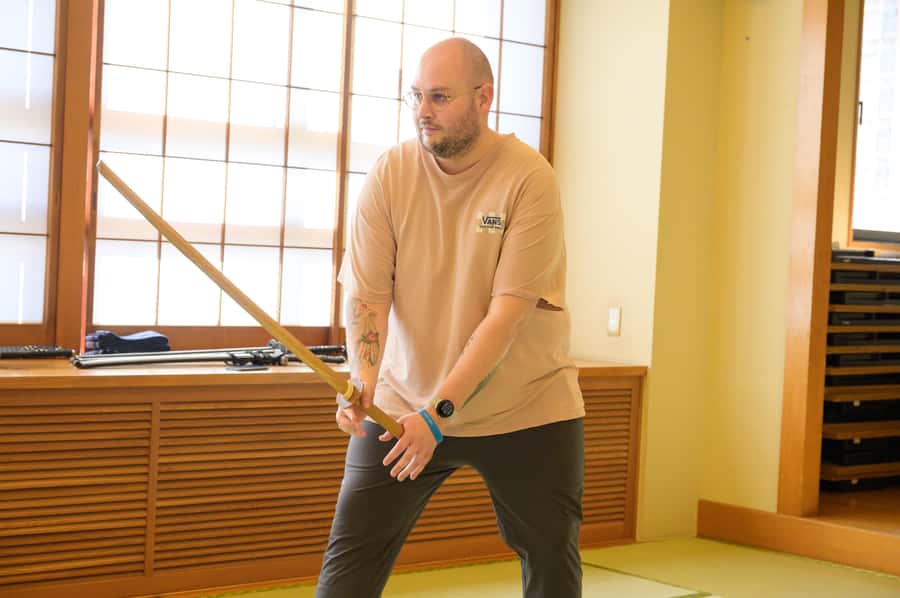
Choose the public course if you want to practice with Japanese students and enjoy a shared class. Watching aspiring actors train before joining them gives you a glimpse into the working process. It is also the sensible pick for keeping costs down.
Choose the private course if you want a lesson shaped around your interests or have previous martial arts experience. The private format includes a short cultural introduction and allows the instructor to adjust the session to your level and goals.
Neither option turns a single visit into formal sword training. The private course simply gives you more focused teaching. For a casual Tokyo activity, the public class should be enough. For a serious enthusiast, the additional attention may justify the higher price.
How to prepare for the best session
Arrive early, wear comfortable clothing, and use closed-toe shoes with a secure fit. Loose movement is more important than dressing for photographs at the start.
Keep your expectations clear. You are learning choreographed action with a practice sword, not handling a live weapon. Listen carefully during paired work, and let the instructor set the speed.
If photos matter to you, ask about the costume option before the day of the activity. The base price does not include samurai clothing. Also confirm the precise meeting instructions and timing, since the studio and dojo may be in nearby locations.
Finally, leave room in your schedule. The activity returns to the meeting point, but transportation to and from the workshop is your responsibility. A relaxed plan is better than rushing from the dojo straight to a train platform.
Should you book it?
Book this samurai workshop if you want a lively, affordable introduction to Tate action and would rather learn by doing. The wooden swords, close demonstrations, paired practice, and guidance from Dai and Kume give the experience more substance than a costume photo alone.
Skip it if you want formal martial arts instruction, real swordsmanship, or a long historical lecture. For everyone else, especially families, couples, and curious beginners, $24 buys a personal look at the discipline behind samurai action. The public class adds contact with Japanese students, while the private option gives serious enthusiasts a more tailored lesson.
FAQ
Where does the samurai workshop meet?
Meet at Samurai Experience Photo Studio ICHI, which is the name used on Google Maps. The activity ends back at the meeting point.
How early should I arrive?
Arrive 15 minutes before the scheduled start so you have time to find the studio and prepare.
Is the sword practice safe for beginners?
Beginners are welcome, and the lesson uses wooden practice swords. You will learn choreographed movements rather than engage in actual sword fighting.
What will I learn during the class?
You will learn basic samurai stance, grip, sword handling, swings, and defensive movements. The session also includes warm-ups, paired practice, and a demonstration.
Can I choose a private lesson?
Yes. You can choose between a public course and a private course. The private course includes a short introduction to samurai history and culture, followed by instruction adjusted to your level and goals.
Is a samurai costume included?
No. Costume hire is not included in the listed price, but a samurai costume is available as an option.
Who should not take this activity?
The workshop is not suitable for pregnant women, people with back problems, wheelchair users, people with vertigo, or people with pre-existing medical conditions. High heels are not allowed, and you should wear comfortable clothing with closed-toe shoes.
More Samurai & Ninja Experiences in Tokyo
More tours in Tokyo we've reviewed




Samurai & Ninja Experiences, compared.
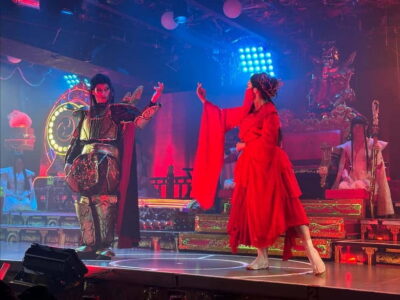 ★ 4.5Tokyo: Samurai Restaurant Show Ticket with 2 DrinksFrom $551h 30m
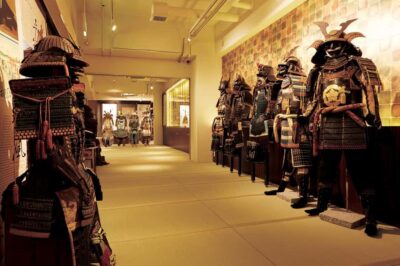 ★ 4.6Tokyo: Samurai Ninja Museum Guided tour and ExperienceFrom $27
 ★ 5.0Tokyo: Samurai Sword & Archery Class from Samurai DescendantFrom $1933 hours
 ★ 5.0Best Samurai Experience in TokyoFrom $65
 ★ 5.0Ninja Experience (Family Friendly) at Samurai Ninja Museum TOKYOFrom $47
 ★ 4.6Tokyo: Samurai Entertainment Night Show in Kanda ShrineFrom $412 - 3 hours