
Reviewed · WALKING TOURS
Tokyo Private Walking Tour With Fresh Eyes, Local Hearts
Tokyo can wear you out before you understand it. This private walk solves that problem by putting a Tokyo-born guide in charge of the route while leaving the final choices to you. You might focus on food at Tsukiji, old Tokyo around Asakusa, pop culture in Akihabara, or a first look at icons such as Shibuya Crossing and Meiji Jingu.
I like the one-to-one format, since your guide can adjust the day to your pace and interests. I also like the chance to request a short route or a full eight-hour introduction, with public transport and walking used together rather than forcing you into a bus.
The main caution is that the $26.36 price does not include transport, meals, personal costs, or admission to paid gardens. The long list of possible stops is a menu, not a promise that you will see everything in one outing.
In This Review
- Key points to know before booking
- A private Tokyo introduction shaped around you
- Imperial Palace and Tokyo’s former seat of power
- Tsukiji for food, stalls, and a changing market story
- Shibuya, Harajuku, and the city’s young side
- Senso-ji and traditional Asakusa
- Kabukiza and the basics of kabuki
- Gardens for a quieter side of Tokyo
- Akihabara, Kanda, and Gotokuji
- Tokyo Tower, Zojo-ji, and Ueno
- Timing, pace, and what you will actually see
- Who gets the most value from this tour
- Should you book this private Tokyo walk?
- FAQ
- How long does the private Tokyo walking tour last?
- Is the tour private?
- Are the guides local to Tokyo?
- Can I customize the itinerary?
- Is hotel pickup offered?
- Are public transportation costs included?
- Are meals and attraction admission included?
- What is the cancellation policy?
Key points to know before booking
- Tokyo-born guides: Guides are born and raised in Tokyo, and Toko is specifically named in one booking experience.
- A truly private route: Only your group takes part, so you can ask for changes before and during the day.
- A wide choice of themes: Pick markets, temples, gardens, pop culture, shopping, traditional neighborhoods, or major city sights.
- Flexible length: The outing can last about 1 to 8 hours, which makes it useful for a quick introduction or a full day.
- Walking plus public transport: You get around as a Tokyo resident does, but transportation fares are extra.
- Strong current record: The experience has a five-star rating from 41 reviews and is recommended by 100 percent of bookers.
A private Tokyo introduction shaped around you
The best feature here is not the number of places on the list. It is the ability to choose what kind of Tokyo you want to meet.
A first-time visitor who feels overwhelmed can ask the guide to plan the day. A repeat visitor can skip the standard sights and request a neighborhood, shrine, market, or garden. A family might want food and easy walks. A pop-culture fan could spend time in Akihabara and Harajuku. You are not tied to a fixed group route or the interests of strangers.
Before the meeting, the guide contacts you to learn what you want from the day. That early exchange matters. One family worked with Toko on a first-visit plan and visited three places, combining history, culture, and local treats. Another booking specifically praised Toko for shaping the outing around one person’s preferences.
That is the sort of personal planning that gives this tour its value. Tokyo has an enormous number of choices, and a local can save you from spending half the day deciding where to go next.
The route uses walking and public transportation. Hotel pickup is offered, which can make the first meeting easier, but private transportation is not included. You will need to pay your own train, subway, or other public transport fares. The tour also does not cover meals, snacks, or personal purchases.
At $26.36 per person, the cost is low for a private activity. The value is strongest if you are traveling with family or friends, since the guide’s time is devoted only to your group. If you are alone, the same price still buys personal planning and attention, but you should remember that transport and entrance fees add to the final cost.
Other walking tours we've reviewed in Tokyo

Imperial Palace and Tokyo’s former seat of power
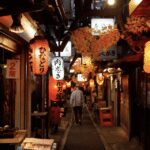
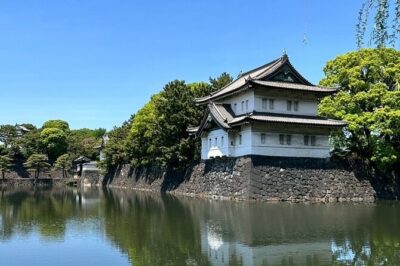
The Imperial Palace is a sensible starting point for a first visit. It occupies the former site of Edo Castle, with a broad park and moats that hint at the scale of old Tokyo.
This is an exterior visit rather than a palace tour. Access to the inside of the Imperial Palace is not included, and public entry is limited to certain areas. Your guide can explain the setting and its connection to Tokyo’s development, but you should not book this outing expecting palace rooms or a long indoor visit.
The listed stop is only about 15 minutes, so treat it as a short orientation point. It works well when paired with another central Tokyo stop rather than as the main purpose of the day.
Tsukiji for food, stalls, and a changing market story
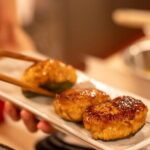
Tsukiji Outer Market offers a very different introduction to Tokyo. More than 400 shops and stalls line the streets, selling fresh foods and other market goods. It is suggested as a breakfast stop, though meals are not included.
This is a good choice if you want to start with food rather than monuments. Ask your guide to help you understand what you are seeing and to shape the visit around your appetite and schedule. Since the planned stop is about 15 minutes, a serious food crawl would need more time.
The description also refers to the inner Tsukiji Market as a lesser-known area, including a part that many people in Japan do not know well. The important practical point is that Tsukiji is not one simple attraction. The outer market is the place for streets, stalls, and food, while the inner market offers a different look at the area. Ask the guide exactly which section is planned so your expectations are clear.
Shibuya, Harajuku, and the city’s young side
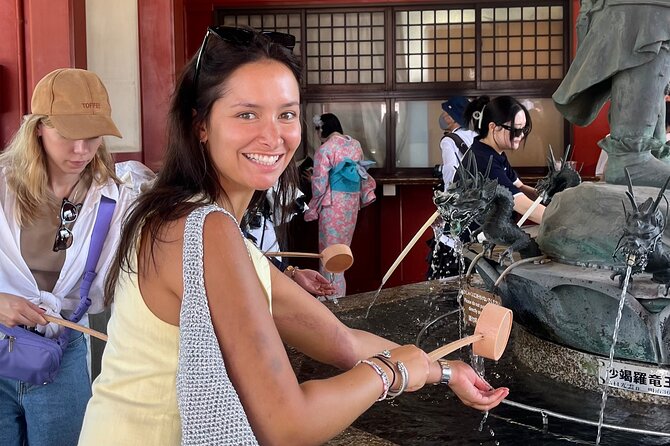
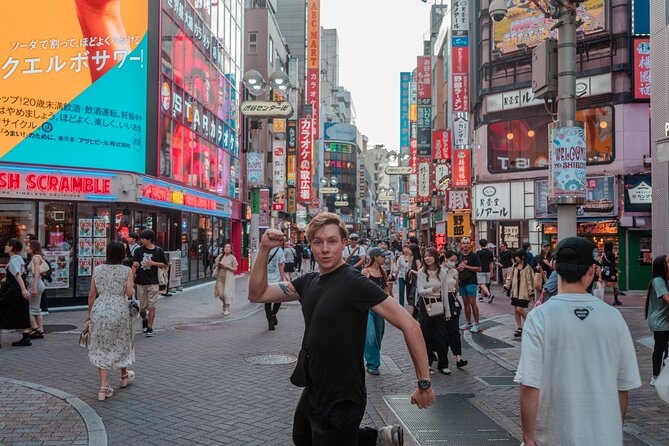
Shibuya Crossing is one of the obvious choices for a first Tokyo outing. The area is tied to youth culture, fashion, and entertainment, and the crossing gives you a quick sense of the city’s scale and energy.
The suggested stop lasts about 15 minutes. That is enough for a look and an explanation, but not enough for extended shopping or a long neighborhood walk. If Shibuya matters to you, request additional time when arranging the route.
Nearby Harajuku offers a different mood. Takeshita Street, just outside Harajuku Station, is lined with fashion shops, accessories, sweets, and character goods. It is linked with kawaii culture, so it makes a natural pairing with Meiji Jingu Shrine or Yoyogi Park.
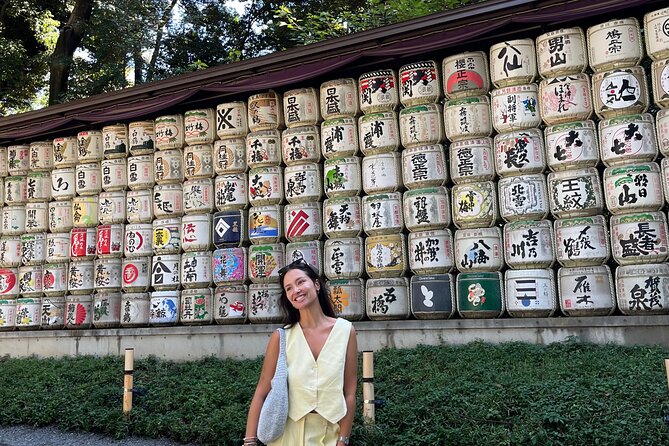
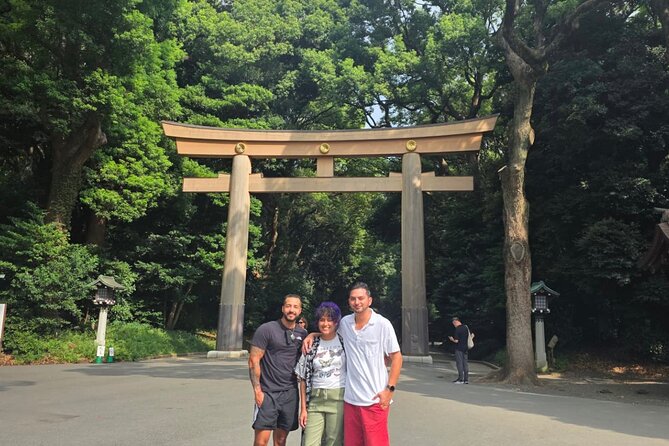
Meiji Jingu provides a calmer counterpoint. Built in 1920 in honor of Emperor Meiji and Empress Shoken, it is not an ancient shrine, but it has an important place in modern Japanese history and public life. Yoyogi Park adds open space and is used for jogging, picnics, and events.
I like this combination because it shows several sides of one part of Tokyo: fashion and sweets on Takeshita Street, a major shrine, and a large city park. The drawback is time. Four short stops can feel rushed, especially if you want to shop or pause for food.
Senso-ji and traditional Asakusa
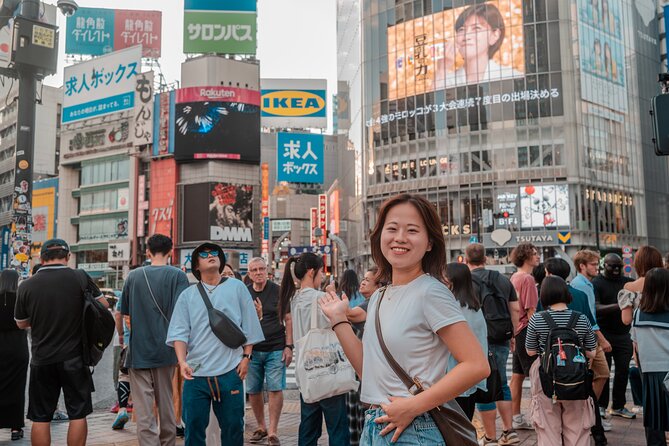
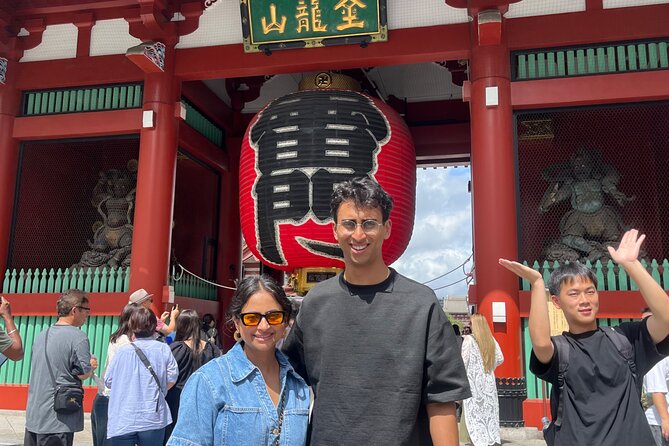
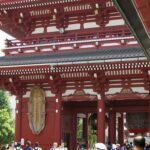
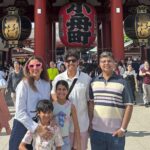
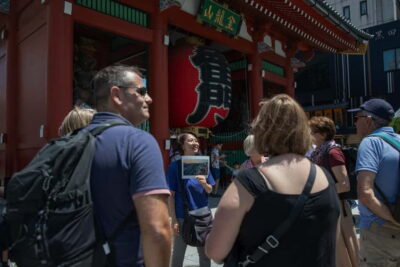
Senso-ji Temple is the strongest choice if you want a clear connection with old Tokyo. Located in Asakusa, it is the city’s oldest temple and one of its best-known religious sites. Its story begins with two fishermen who discovered a statue, according to the temple’s founding legend.
The listed visit lasts about 30 minutes, longer than most other stops. That gives you enough time to take in the temple area without treating it as a quick photo stop. Asakusa itself deserves attention too, with traditional streets and local character surrounding Senso-ji.
The two stops work together. Senso-ji gives you the landmark, while Asakusa gives you the neighborhood around it. If you have only a few hours in Tokyo, this is one of the most useful combinations, especially when paired with a food request or a walk through nearby streets.
Keep in mind that a private guide can explain the site, but the tour is not presented as a specialist temple lecture. Its strength is helping you connect the temple with the wider area and your own interests.
Other private tours in Tokyo



Kabukiza and the basics of kabuki
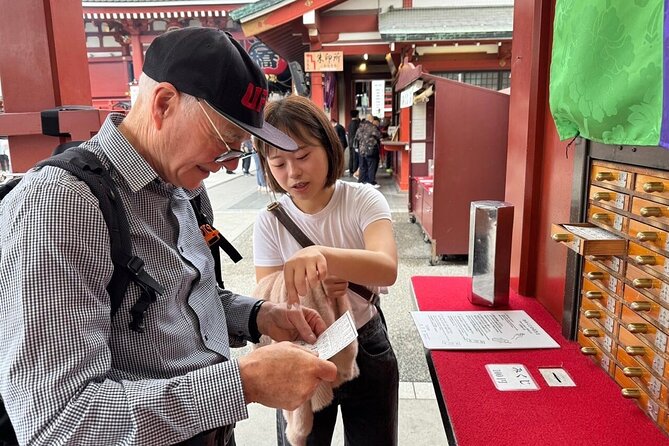
Kabukiza Theater offers a look at one of Japan’s best-known traditional art forms. The tour visits the gallery in the Kabukiza building, not the inside of the main theater itself.
That distinction matters. You should not expect a full performance or a theater tour. The gallery provides an introduction to kabuki, making this a useful short stop for anyone curious about Japanese theater but unsure about buying a performance ticket.
The planned time is about 15 minutes. It is best used as part of a Ginza or central Tokyo route, not as a stand-alone reason to book the outing.
Gardens for a quieter side of Tokyo
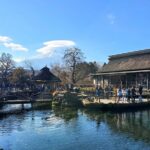
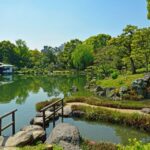
Tokyo’s gardens make good requests when the city’s crowds and signs begin to wear you down. The available choices include Shinjuku Gyoen, Hamarikyu Gardens, Koishikawa Korakuen, Rikugien, and Kiyosumi Teien.
Shinjuku Gyoen is an oasis of greenery in central Tokyo. It began as an imperial garden and is now open to the public. The setting gives you a break from Shinjuku’s dense streets, though admission is not included.
Hamarikyu Gardens sits along Tokyo Bay and dates to the Edo period. Its ponds, tidal gardens, and seasonal flowers create a sharp contrast with the surrounding city. Admission is extra, so budget for it before choosing this stop.
Koishikawa Korakuen is an early Edo-period garden with ponds, bridges, and hills. Rikugien is another famous feudal-era garden, especially appealing during cherry blossom season and autumn foliage. Kiyosumi Teien is centered on a pond and offers a calm stroll in the city, with admission also excluded.
The itinerary assigns about 15 minutes to each garden, which is not enough for a full visit. If a garden is your main interest, ask for a longer stay. These sites reward slow walking, and a rushed garden stop loses much of its appeal.
Akihabara, Kanda, and Gotokuji
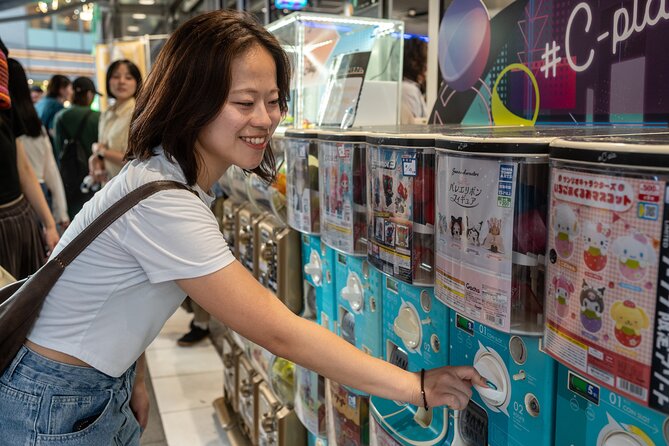
Akihabara is the clear choice for electronics, anime, manga, gaming, and other parts of Tokyo’s pop-culture world. The area offers plenty to look at, but the list of shops and arcades can be confusing without a plan. Tell the guide what interests you, since a short 15-minute visit will only provide a quick introduction.
Kanda Shrine gives you a traditional stop with more than 1,300 years of history. It is known as one of Tokyo’s guardian shrines and is connected with central districts including Kanda and Nihonbashi. Admission is not included.
Gotokuji Temple is associated with the origin of the maneki-neko, the beckoning cat figurine. Its traditional buildings and gardens provide a quieter cultural stop than Akihabara. The two locations could appeal to you if you want to compare modern Tokyo’s merchandise culture with an older religious setting.
Tokyo Tower, Zojo-ji, and Ueno
Tokyo Tower is included in the range of possible suggestions, with city views and nighttime illumination highlighted. The information does not specify an included observation-deck ticket, so ask about admission if you want to go up. It can also work as a photo stop alongside Zojo-ji Temple.
Zojo-ji was founded during the Edo period and served as the Tokugawa family temple. Several Tokugawa shoguns are enshrined there. The temple’s historical connection gives the Tokyo Tower area more meaning than a simple skyline visit.
Ueno Park combines open space with museums, art galleries, and a zoo. It is especially well known for cherry blossoms in spring, when crowds can be heavy. Since the park covers a large area, a 15-minute stop can only offer a taste. Request more time if you want museums or a proper park walk.
Timing, pace, and what you will actually see
The activity lasts roughly 1 to 8 hours. That range is unusually useful, but it also requires realistic planning.
A one-hour booking is best for a focused introduction, such as Senso-ji and Asakusa, or a short Shibuya walk. A longer booking lets you combine districts, but Tokyo’s public transport and distances still take time. You will not see all 22 listed suggestions in one day, and you should be suspicious of any plan that promises it.
The 15-minute timings appear to be short sample visits. They are useful for deciding what interests you, not for building a full sightseeing day without adjustment. I would choose two or three main areas and let the guide add nearby stops if time allows.
Walking shoes are a practical choice. You will combine streets, temple grounds, markets, parks, and stations, even though the exact route depends on your requests. Hotel pickup can make the start easier, but public transport fees remain your responsibility.
Most people can participate, and service animals are allowed. The tour operates near public transportation, which supports the flexible route, but the supplied details do not promise a fully step-free itinerary.
Who gets the most value from this tour
This outing suits first-time Tokyo visitors who want help making choices. It is also a good fit for families, since the guide can adjust the day around children’s interests and energy. Toko’s planning with one family shows how useful that personal contact can be before the meeting.
I would also consider it for a short Tokyo stay. A one-to-three-hour route can give you an introduction without using an entire day. Repeat visitors may appreciate it even more if they ask for a specific garden, shrine, market, or neighborhood.
It is less suitable if you want a fixed sightseeing package with every admission included. You also need to be comfortable paying transport fares and personal costs separately. The tour provides a private guide and planning help, not a bundled ticket to Tokyo’s attractions.
Free cancellation is available when you cancel at least 24 hours before the start time. Changes or cancellations made later are not refunded or accepted.
Should you book this private Tokyo walk?
Book it if you want a local-born guide, a private pace, and help turning Tokyo’s huge menu of sights into a sensible day. The strongest choices are a short Asakusa and Senso-ji introduction, a food-focused Tsukiji visit, or a custom mix of Shibuya, Meiji Jingu, and Harajuku.
At $26.36 per person, it offers good value for a private activity, especially for a small group. Just add transport fares, food, and any garden or other entrance fees to your budget.
Skip it if you prefer to plan every station and attraction yourself, or if you want a full-day tour with all tickets included. For everyone else, the freedom to ask for exactly the Tokyo you want is the real reason to book.
FAQ
How long does the private Tokyo walking tour last?
The tour lasts approximately 1 to 8 hours. You can choose a shorter introduction or request a longer outing.
Is the tour private?
Yes. Only your group takes part in the activity, with a private guide.
Are the guides local to Tokyo?
The guides are born and raised in Tokyo. Toko is one guide named in the available booking information.
Can I customize the itinerary?
Yes. Tour customization is included, and you can make requests about the places or themes you want to visit.
Is hotel pickup offered?
Yes. Hotel pickup is offered.
Are public transportation costs included?
No. Walking and public transportation are included as part of the tour format, but transportation fees are not included in the price.
Are meals and attraction admission included?
No. Meals, food, personal expenses, and private transportation are not included. Admission is also extra for places such as Shinjuku Gyoen, Hamarikyu Gardens, Koishikawa Korakuen, Rikugien, Kiyosumi Teien, and Kanda Shrine.
What is the cancellation policy?
You can cancel for a full refund at least 24 hours before the experience start time. Cancellations or changes made less than 24 hours before the start time are not accepted for a refund.
More Private Tours in Tokyo
More Walking Tours in Tokyo


More tours in Tokyo we've reviewed




Walking Tours, compared.
 ★ 5.0Tokyo Tsukiji Fish Market Food and Culture Walking TourFrom $99
 ★ 5.0Tokyo: Imperial Palace and Shogun Historical Walking TourFrom $22
 ★ 4.9Tokyo: Shinjuku Local Bar and Izakaya Guided Walking TourFrom $343 hours
 ★ 5.0Tokyo: Tsukiji Fish Market Food and Walking tourFrom $30
 ★ 4.8Tokyo: Asakusa Walking Tour with Sensoji Temple VisitFrom $222 hours
 ★ 4.9Tokyo: Tsukiji Fish Market Guided Walking TourFrom $222 hours