
Reviewed · MT FUJI DAY TRIPS
Tokyo Mt. Fuji Hakone Shrine, Owakudani, Lake Yamanakai Day Tour
Mount Fuji country is the star here, but the best part of this tour is the variety. In one long day, you see a lakeside shrine, a steaming volcanic valley, a ropeway route, friendly swans, and the clear springs of Oshino Hakkai. I especially like the four distinct types of scenery and the fact that fuel, tolls, transport, and the ropeway fee are covered.
I also like the chance to try Owakudani’s famous black eggs and to photograph Mount Fuji beside Lake Yamanaka. The trade-off is a tight schedule. Bad weather can erase the Fuji views and stop the ropeway, while rain, wind, or traffic may leave you moving quickly from one stop to the next.
In This Review
- Key points at a glance
- Four Hakone and Fuji sights in one long day
- Hakone Shrine and the red torii on Lake Ashi
- The Hakone Ropeway from Togendai to Owakudani
- Owakudani, Hakone’s smoking volcanic valley
- Lake Yamanaka and the Shiratorihama swans
- Oshino Hakkai and the clear spring ponds
- What the $76.96 price really covers
- Weather, timing, and the limits of a packed route
- Who will enjoy this day trip most
- Should you book the Tokyo to Fuji and Hakone tour?
- FAQ
- How long does the tour last?
- What places does the tour visit?
- Is the Hakone Ropeway included?
- What happens if strong wind stops the ropeway?
- Are meals included?
- Can I bring luggage?
- What is the cancellation policy?
Key points at a glance
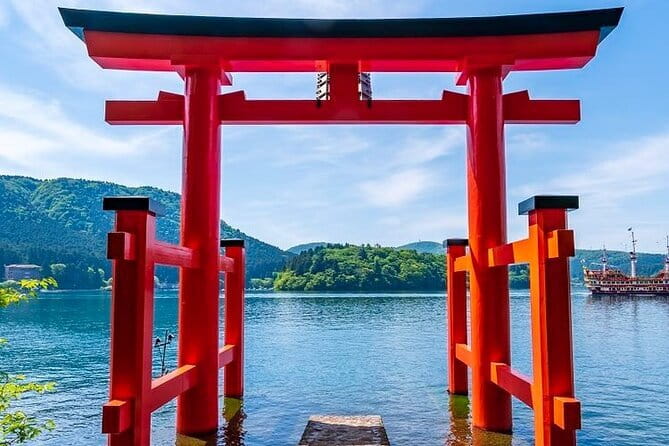
- Hakone Shrine: Walk beneath the famous red torii beside Lake Ashi, then explore a sacred mountain setting.
- Owakudani: See volcanic steam and try the local black eggs at your own expense.
- Ropeway access: A roughly 30-minute ride between Togendai and Owakudani is included when conditions allow.
- Fuji photo stops: Lake Yamanaka’s Shiratorihama and Oshino Hakkai offer two very different views.
- Small shared group: The vehicle carries no more than 15 people, though the tour needs at least four to operate.
- All-day value: At $76.96 per person, transport costs are bundled, but lunch and optional activities are extra.
Four Hakone and Fuji sights in one long day
This is a sightseeing sweep rather than a slow, deeply guided visit. You spend about 80 minutes at Hakone Shrine, 30 minutes on the ropeway route, 50 minutes at Owakudani, 20 minutes at Lake Yamanaka, and 40 minutes at Oshino Hakkai. The rest of the roughly 8-hour-20-minute day goes to driving and lunch.
That rhythm suits you if you want to cover a lot without arranging several trains, buses, and tickets yourself. It is less suitable if you prefer long walks, quiet meals, or time to study each site at an easy pace.
The vehicle service, fuel, road tolls, and highway charges are included. That matters on a route with several separate destinations, since transport costs and the effort of connecting Hakone with the Fuji Five Lakes can quickly add up. A mobile ticket keeps the booking simple, but you still need to watch for the departure message sent the night before.
The group size is capped at 15 people. That is more personal than a large coach trip, though the minimum of four means the departure depends on enough bookings. The tour operates daily when that minimum is met.
A few more Tokyo tours and experiences worth a look


Hakone Shrine and the red torii on Lake Ashi
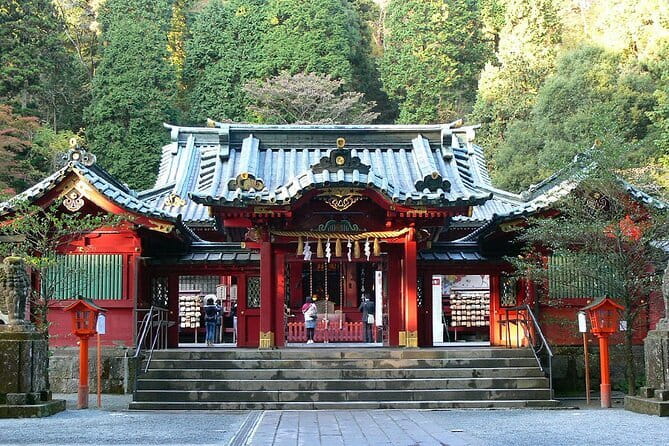
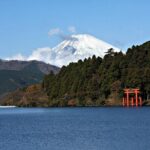
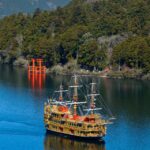
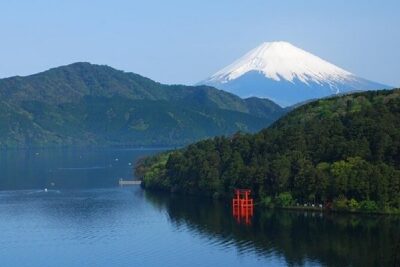
Your first major stop is Hakone Shrine, beside Lake Ashi, also called Lake Ashinoko. The lake fills an old volcanic basin on Mount Hakone and is the largest lake in Kanagawa Prefecture. Its most recognizable sight is the red maritime torii standing at the water’s edge.
You have about 80 minutes here, with admission included. That gives you time to see the torii, walk around the shrine area, and take photographs, but it is not a long pilgrimage through every corner of the grounds. Wear shoes that are comfortable for uneven paths and steps.
Hakone Shrine dates to 757. It grew from older mountain worship and became important to military leaders including Minamoto Yoritomo and Tokugawa Ieyasu. Today, people visit for blessings linked with safe travel, fulfilled wishes, love, success, and protection from misfortune.
I like this opening because it gives the day a strong sense of place before the tour shifts to volcanic scenery. The shrine is not simply a photo stop. Its location beside the lake and below the wooded slopes connects the religious site with the geology that shaped Hakone.
Mount Fuji can sometimes be seen from the Lake Ashi area, but do not treat the view as guaranteed. Clouds can cover the mountain, and one departure had rain so heavy that the main sights were difficult to see. The torii remains worthwhile in poor weather, but the photographs will be far better on a clear morning.
The Hakone Ropeway from Togendai to Owakudani
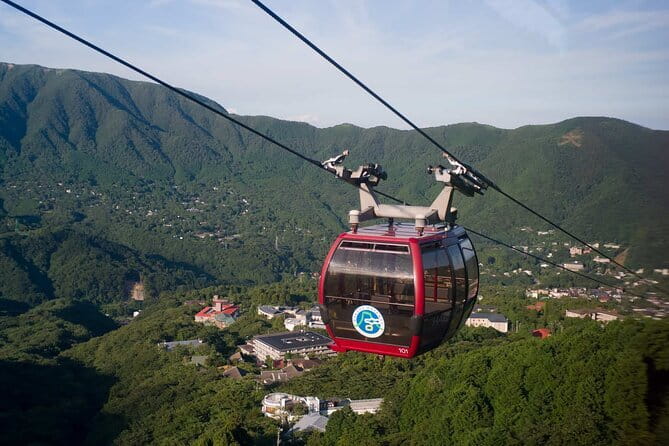
The included ropeway route takes about 30 minutes between Togendai Station and Owakudani. The ride is one of the day’s best chances to see Hakone from above, with the volcanic crater area providing the most dramatic section. On a clear day, the route may also give you a view of Mount Fuji.
This part of the schedule needs flexibility. Strong wind can prevent the cabins from running. During one departure, the ropeway was closed because of wind, so the group completed the route by bus instead. That is an important practical point: the ropeway is included, but it is not promised in every weather condition.
The bus alternative still gets you between the stops, but it changes the character of the outing. Aerial views are replaced by road travel, and you may lose the open panorama that makes the cable car special. If the ropeway is operating, keep your camera ready around Owakudani and the crater area.
Owakudani, Hakone’s smoking volcanic valley
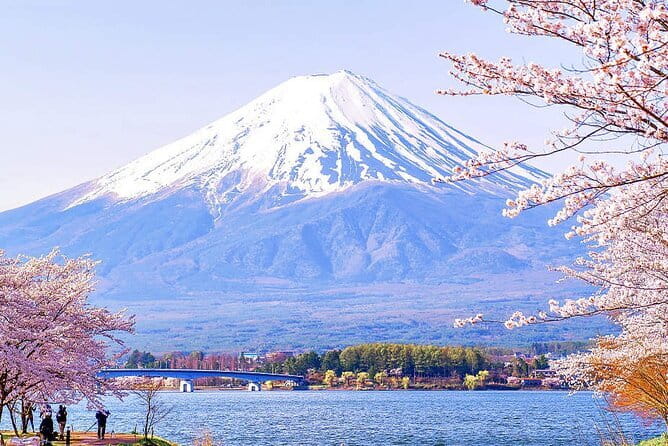
Owakudani gives you the clearest look at the forces beneath Hakone. The valley formed from volcanic activity on the northern side of Mount Kamiyama. Steam rises from the ground, and the area has long carried an ominous reputation because some springs contain poisonous gases. It was once known as Big Hell.
The area was renamed Owakudani after Emperor Meiji’s visit in 1868, and it is now one of Hakone’s main sightseeing areas. The tour allows about 50 minutes of free time, enough to see the main volcanic features, browse the shops, and sample the local specialty.
That specialty is the black egg. These eggs are sold at your own expense and are a fun, low-cost way to mark the visit. Bring cash, since one departure specifically advised carrying plenty of it. Food, drinks, and other personal purchases are not included in the tour price.
A walk from the Nature Research Trail entrance to the egg shop takes about 15 minutes. The small Tamago Tea House is associated with the rising volcanic steam and the eggs. With only 50 minutes here, you should decide early if you want the walk, the shop, photographs, or a quick snack. Trying to do everything may leave you rushing back to the vehicle.
Owakudani is also the stop most affected by volcanic conditions. Access can change, and the sight of steam depends on the area’s current conditions. You should follow the guide’s instructions and any local restrictions rather than wandering beyond open paths.
Lake Yamanaka and the Shiratorihama swans
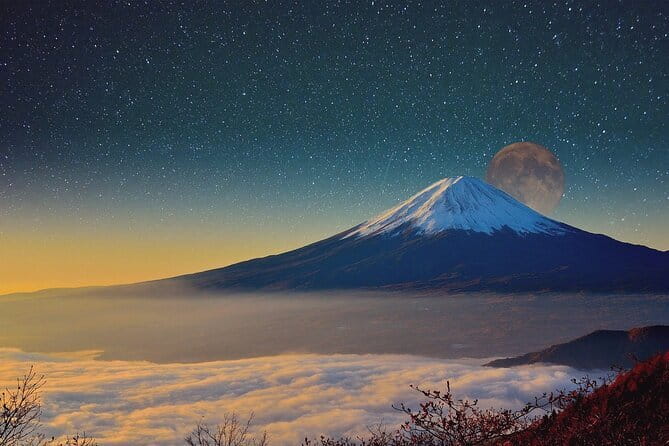
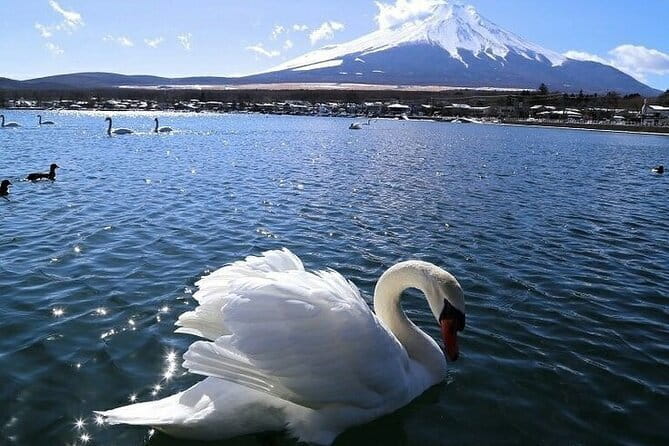
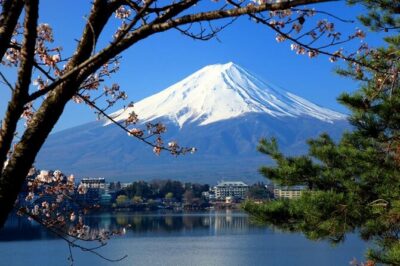
Lake Yamanaka is one of the Fuji Five Lakes and the only lake on this tour outside the Hakone area. At Shiratorihama, you have about 20 minutes to photograph swans with Mount Fuji behind them.
The swans are accustomed to being fed, so they may come close to the shore. That makes this a playful photo stop, especially for families and anyone who enjoys wildlife pictures. The short visit is enough for a few photographs, but not for a full walk around the lake.
This stop also gives the tour a useful backup for Fuji viewing. If the mountain is hidden from Lake Ashi, it may appear from Lake Yamanaka, or the reverse. Of course, clouds can cover it at both locations, but seeing two lakes improves your chances compared with visiting only one viewpoint.
The stop is simple and brief. Do not expect a long nature outing or a quiet bird-watching session. Think of it as a quick lakeside pause with a strong photo goal.
A few more Tokyo tours and experiences worth a look

Oshino Hakkai and the clear spring ponds
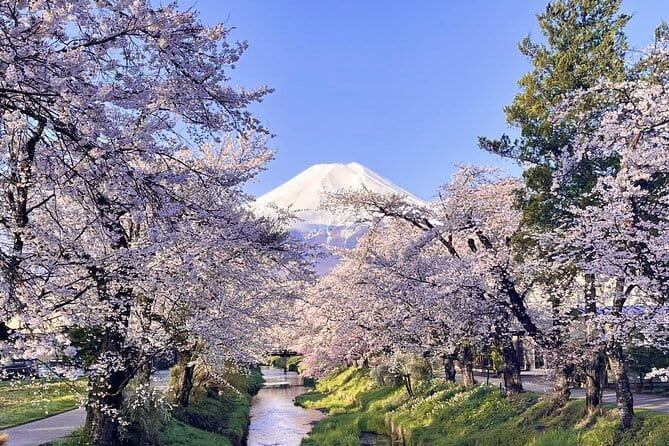
Oshino Hakkai is the final listed sightseeing stop. Its eight ponds are fed by snowmelt from Mount Fuji, filtered through underground layers before reaching the surface. The water and mountain setting have made the area a national natural monument and a favorite place for photographers.
You have about 40 minutes here. That is enough to see several ponds, take pictures, and get a feel for the village setting. The clear water is the main draw, especially when Fuji is visible in the background.
I like the contrast with Owakudani. There, you see heat, steam, and volcanic gases. At Oshino Hakkai, the same volcanic region appears through cold, clear spring water. The two stops explain more about Fuji’s natural setting than either one would alone.
Again, the time is limited. If you stop for food or shopping, you will have less time for the ponds. The schedule favors a first look rather than a full visit.
What the $76.96 price really covers
At $76.96 per person, the price is reasonable if you value convenience. You are paying for a full day of road transport from Tokyo, fuel, highway tolls, the driver’s service, and the included ropeway fee when it operates. Organizing this same circuit independently would require careful connections and separate transport payments.
The value is strongest for first-time visitors who want Hakone and the Fuji Five Lakes in one day. You also avoid the stress of deciding which bus or train to take next. A shared vehicle makes the route possible in a compact schedule.
Still, the price does not cover lunch, admission to anything not listed, black eggs, or other personal spending. Lunch may be offered as part of the day’s arrangements, but it is not included in the stated fare. One important caution is that you may have limited freedom about where and when you eat because the schedule is built around the vehicle.
A guide can add a great deal to the day. Jack has been described as friendly, fun, and informative, while Tom and Kousei have also led well-received departures. Do not assume every guide will provide the same level of commentary, though. One poor-weather departure included little useful explanation at the stops, which made the rushed schedule feel harder.
Weather, timing, and the limits of a packed route
Fuji tours live or die by visibility. The mountain may be hidden by cloud, rain, or haze, and bad weather can also close the ropeway. The tour does not appear to offer a weather-based cancellation choice on the day, so you should book this as a regional sightseeing trip with Fuji views as a bonus, not as a guaranteed Mount Fuji photograph.
The order of stops may also change. Traffic between Tokyo, Hakone, and the Fuji Five Lakes can affect how long you have at each place. The remaining hours are set aside for driving and lunch, and the vehicle service is limited to 10 hours under Japanese law.
You should be ready at the stated meeting place before the pickup time. The night before departure, you receive an email with the vehicle registration number, guide contact details, and pickup time. Guides do not normally initiate contact, and many Japanese hotels cannot keep a vehicle parked for long, so wait in front of the hotel if that is your pickup point.
Do not bring a large suitcase unless you arrange it in advance. One piece of luggage per person is allowed, and an extra 100 yuan per piece may be charged if you did not note it at booking or bring more than one item.
Who will enjoy this day trip most
I would choose this tour if you have only one free day outside Tokyo and want a broad introduction to Hakone and the Fuji area. It works well for couples, families, and small groups who value a planned route over independent travel.
It is also a good fit if you want several photo settings: shrine and torii, volcanic steam, swans, spring ponds, and possible Fuji views. Children may enjoy the black eggs and swans, though the day’s length and quick changes of scene can be tiring.
I would hesitate if your main goal is a long visit to Hakone Shrine, a relaxed meal, or a guaranteed ropeway ride. Independent travel may suit you better if you want to wait for clearer skies, spend more time at one lake, or change plans when weather turns poor.
The tour is limited to 15 people, but it still follows a group timetable. You need to return to the vehicle promptly at every stop. That discipline is the price of fitting so much into one day.
Should you book the Tokyo to Fuji and Hakone tour?
Book it if you want maximum variety with transport handled for you. The combination of Hakone Shrine, Lake Ashi, Owakudani, Lake Yamanaka, and Oshino Hakkai offers a satisfying look at both the sacred and volcanic sides of the region.
Go in with realistic expectations. You may get Mount Fuji, a working ropeway, and sunny lakeside views, or you may get clouds and a bus replacement. Bring cash, wear solid shoes, keep your luggage light, and treat the schedule as a brisk introduction rather than a leisurely exploration.
The cancellation policy allows a full refund if you cancel at least 24 hours before the start time. After that, late cancellations, date changes, and no-shows are not refunded, so check the forecast and your plans before the cutoff.
FAQ
How long does the tour last?
The advertised duration is approximately 8 hours and 20 minutes. The remaining time is used for driving and lunch, and vehicle service must remain within 10 hours under Japanese law.
What places does the tour visit?
The stops are Hakone Shrine and the Lake Ashi torii, the Hakone Ropeway route, Owakudani Valley, Lake Yamanaka’s Shiratorihama, and Oshino Hakkai.
Is the Hakone Ropeway included?
Yes. The roughly 30-minute Hakone Ropeway route between Togendai Station and Owakudani is included when the ropeway is operating.
What happens if strong wind stops the ropeway?
The route may be completed by bus instead. Strong wind prevented the ropeway from operating on one departure, so the aerial ride cannot be guaranteed.
Are meals included?
No. Meals are not included in the tour price. Black eggs at Owakudani and other personal purchases are also paid separately.
Can I bring luggage?
One piece of luggage per person is allowed. You should note it when booking, since an extra 100 yuan per piece may be charged if you bring unregistered or additional luggage.
What is the cancellation policy?
You can receive a full refund if you cancel at least 24 hours before the experience begins. Cancellations, changes, and no-shows within 24 hours are not refunded.
More Temples & Meditation in Tokyo

More Hakone Day Trips in Tokyo
More Mt Fuji Day Trips in Tokyo
More tours in Tokyo we've reviewed









Mt Fuji Day Trips, compared.
 ★ 5.0Mt Fuji and Hakone 1-Day Bus Tour Return by Bullet TrainFrom $163
 ★ 4.0Mt Fuji & Hakone Cruise, Drum Show Bullet Train 1 Day from TokyoFrom $149
 ★ 4.4Tokyo Mt Fuji 5th St & Hakone Cruise Bus Tour w/Bullet TrainFrom $15410 hours
 ★ 4.5From Tokyo: Mount Fuji Full-Day Sightseeing TripFrom $6810 hours
 ★ 4.7Tokyo: Mt. Fuji Tour, Hakone Ropeway, Owakudani, Lake AshiFrom $5410 hours
 ★ 4.4Tokyo:Mt.Fuji,Kawaguchiko Oishi Park,Arakurayama Sengen ParkFrom $5410 hours