

Reviewed · GINZA TOURS
Tokyo: Know about Kabuki performing – Ginza Walking
Kabuki’s grand home, Kabukiza, is the star of this two-hour walk through Ginza. You will not attend a performance, but you will see exhibits, learn how this traditional theater works, and visit places tied to its culture. I like the small group of up to nine and the chance to browse Kabukiza-only souvenirs, from theater goods to Japanese sweets.
I also like the easy central meeting point in front of Nissan Crossing and the friendly English guidance, including Fumei, who received especially warm praise. The main limitation is clear: this is an introduction, not a full Kabuki lesson or show, and one guest wanted more explanation of Kabuki itself.
In This Review
- Key points at a glance
- Why this short Ginza walk makes sense
- Meeting at Nissan Crossing
- Seeing Kabukiza from the outside and inside
- What the Kabuki exhibits add
- A shrine connected with Kabuki
- Ginza’s famous clock tower
- Kabukiza souvenirs and Ginza shopping
- The guide makes the difference
- Group size, timing, and pace
- Who should book this experience
- Is the $56 price fair?
- Should you book this Kabuki walk?
- FAQ
- Where does the tour meet?
- How long does the experience last?
- What language is the tour conducted in?
- Is this a private tour?
- Does the tour include a Kabuki performance?
- What can I see at Kabukiza?
- Are shopping costs included?
- Can I cancel for a refund?
Key points at a glance
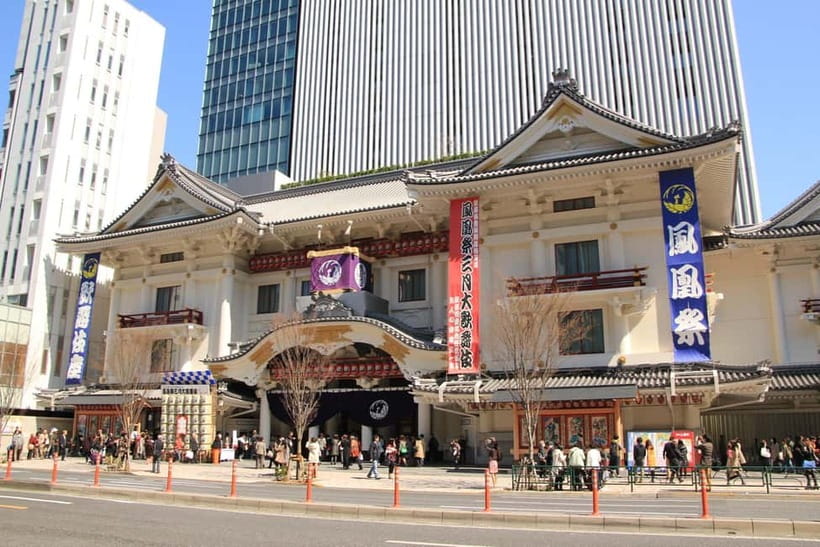
- Kabukiza without a performance: Learn about Kabuki through exhibits and a guided visit around the theater.
- Exclusive shopping: Browse goods and sweets sold in the Kabukiza area, with purchases paid separately.
- A Kabuki-linked shrine: Add a small religious and cultural stop to the theater visit.
- Ginza landmarks: See a famous clock tower and other sights near Kabukiza.
- Short, focused format: The walk lasts two hours and suits a tight Tokyo schedule.
- Personal English guidance: Groups are limited to nine, with Fumei among the named guides.
Why this short Ginza walk makes sense
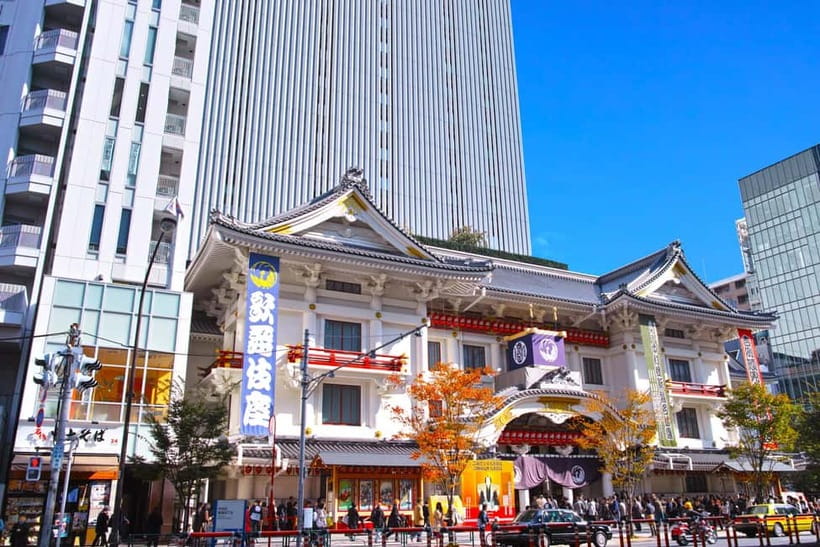
Tokyo offers far more cultural choices than you can fit into one trip. Kabuki is a good example. A full performance takes time, uses unfamiliar conventions, and may feel like a large commitment if you simply want to understand what you are seeing.
This walk gives you a smaller first step. You explore the Kabukiza building and its exhibits, then connect the theater to nearby Ginza sights. I like that the experience treats Kabuki as part of a living neighborhood, not as an isolated museum subject.
The tour costs $56 per person for two hours. That is not cheap for a short walking activity, so the value depends on your goal. If you want a full Kabuki performance, this does not replace a ticket. If you want a guide to explain the setting, point out related places, and help you shop for items you might otherwise miss, the price can make sense.
A small group helps here. With no more than nine people, you should have a better chance to hear the guide and ask questions than on a large city tour. The format also keeps the outing manageable for anyone fitting it between other Ginza plans.
A few more Tokyo tours and experiences worth a look

Meeting at Nissan Crossing
The walk begins in front of Nissan Crossing, a well-known Ginza meeting point. This gives you a practical place to start in the center of the district, rather than sending you to a distant neighborhood or an unclear side street.
You should allow enough time to find the meeting point before the start. The activity information gives the meeting location but does not list a hotel pickup or transportation service, so you need to make your own way there.
From this point, the tour focuses on nearby cultural and shopping sights. That compact plan is one of its strengths. You spend your limited time on Kabuki and Ginza rather than sitting in a vehicle.
Seeing Kabukiza from the outside and inside
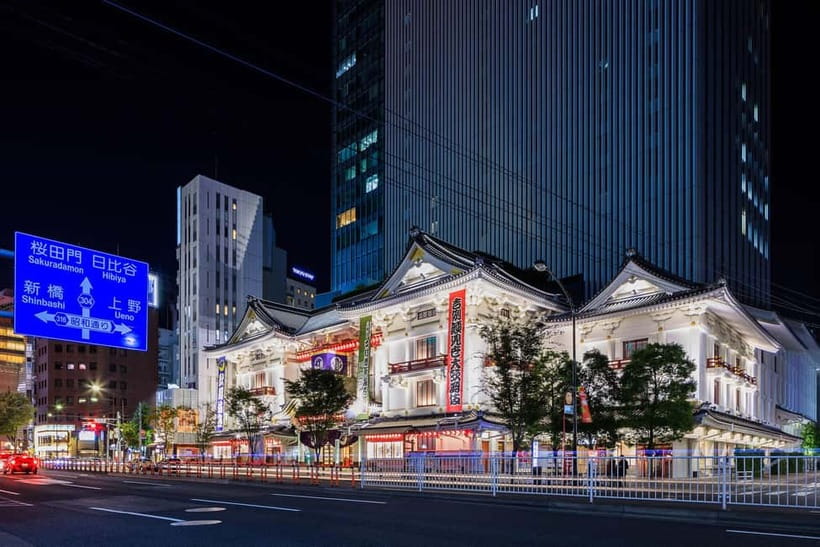
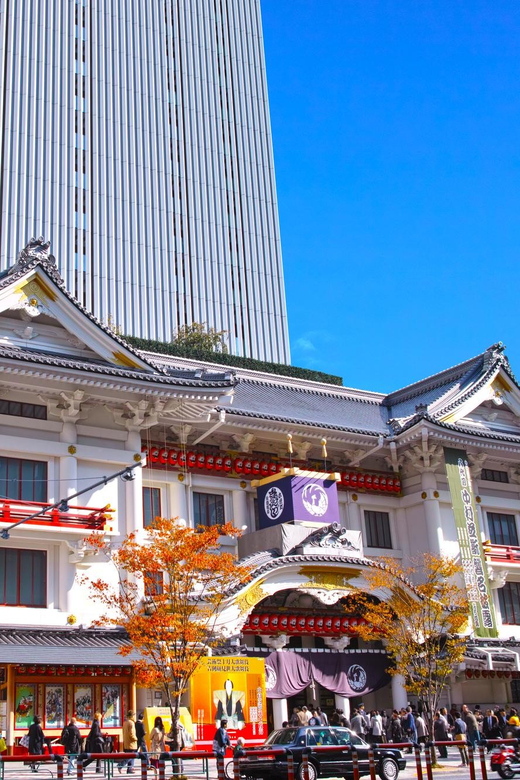
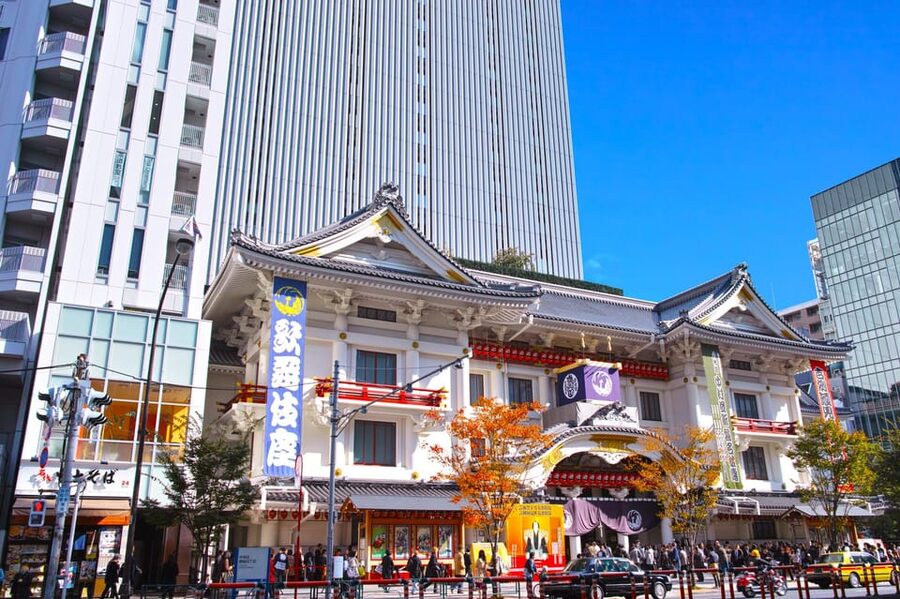
Kabukiza is the visual anchor of the experience. Even before the exhibits, the building helps set the mood. This is the place most closely associated with Kabuki in Ginza, so seeing it in person gives the theater a physical context that a book or online video cannot provide.
The guide introduces the building and explains the role of Kabuki in Japanese performing arts. The supplied information does not promise a full architectural tour or access to every theater area, so you should think of this as a guided cultural visit around Kabukiza, not a backstage pass.
That distinction matters. The activity is designed for people who do not have time to attend a performance but still want a taste of Kabuki culture. You get orientation and interpretation rather than a long formal lecture.
What the Kabuki exhibits add
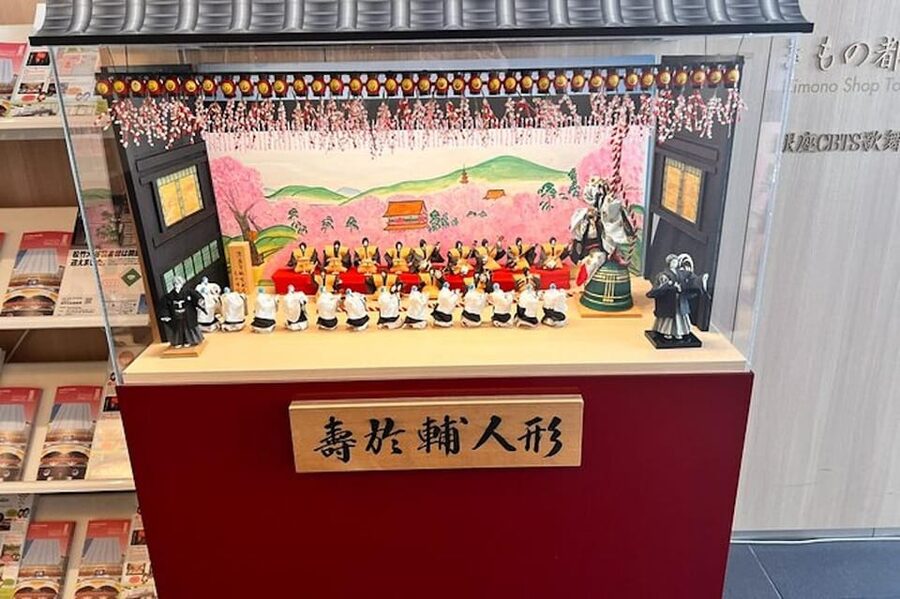
The gallery and exhibits are the educational center of the walk. Here, you can look at displays connected with Kabuki while the guide explains what you are seeing. This turns the visit from a simple photo stop into a chance to understand the art form.
For a first introduction, guided context is useful. Kabuki has its own costumes, stage traditions, performance style, and theatrical vocabulary. The tour description promises an explanation of traditional Japanese performing arts, though it does not list every exhibit or guarantee a particular display on the day of your visit.
You should also set your expectations correctly. One guest found the tour interesting as a first look but wanted more insight into the ways of Kabuki. That is a fair warning. The guide can give you a useful starting point, but the two-hour schedule leaves limited room for detailed discussion of every aspect of the art.
I would choose this experience if you want to know enough to decide if a future Kabuki performance belongs on your Japan itinerary. I would not choose it as your only source of serious Kabuki study.
A shrine connected with Kabuki
The route also includes a shrine associated with Kabuki. This stop broadens the experience beyond the theater building and gives you a glimpse of the religious and cultural setting connected with performers and their traditions.
A shrine visit can be easy to rush through, especially in a district known for department stores and designer shops. Having a guide explain its connection to Kabuki gives the stop a clearer purpose. You are not simply adding another photo to your Ginza walk. You are seeing how theater culture links with other Japanese customs.
The available details do not identify the shrine by name or describe a long visit there. Expect it to be one part of the walking route, not a separate shrine tour. Its value lies in the connection to Kabuki.
Other walking tours we've reviewed in Tokyo



Ginza’s famous clock tower
The itinerary includes a famous clock tower in Ginza. This is a useful change of pace after the theater exhibits and shrine. It places Kabuki within the wider identity of Ginza, a district known for major shops, landmarks, and Japanese entertainment.
The clock tower also gives you a recognizable point of reference for exploring the area later. Since the tour lasts two hours, the stop is likely a short sightseeing pause rather than a detailed clock-history presentation. The activity information does not specify the tower’s name, so you should not book this expecting a dedicated architectural tour.
Still, I like the balance. You get a focused cultural theme, but the walk does not stay inside one building for the entire outing.
Kabukiza souvenirs and Ginza shopping
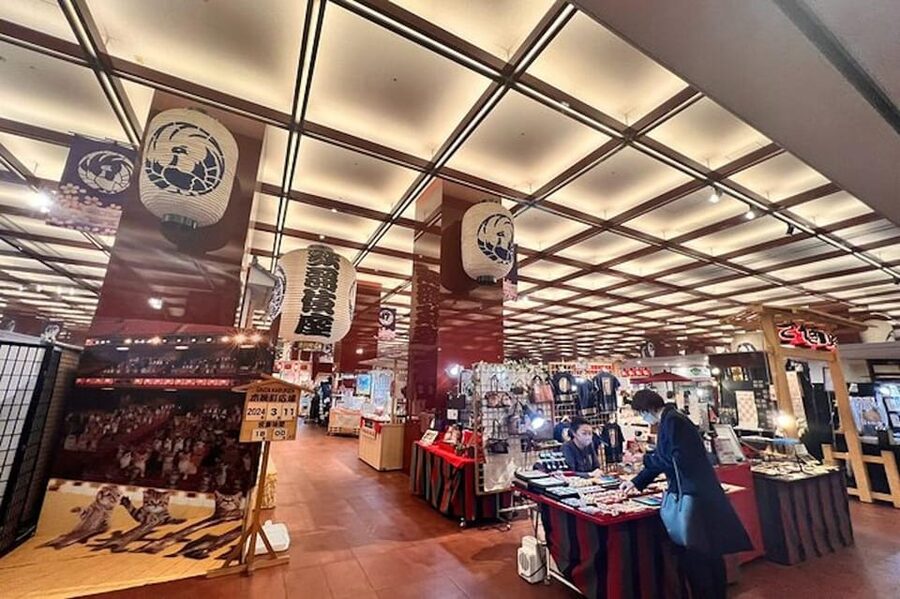
The shopping portion may be the most immediately useful part for many people. The guide takes you to stores found only in the Kabukiza area, where you can look for Kabuki goods, Japanese accessories, Japanese sweets, and other gifts.
This is different from being released into a large shopping district with no direction. A guide can help you understand what is connected with Kabuki and point you toward items you might otherwise overlook. The range also suits different budgets, although the activity does not provide prices for individual goods.
Shopping costs are not included in the $56 fee. Keep that separate in your budget, especially if you enjoy Japanese sweets or small cultural gifts. The tour does not require you to buy anything, so you can treat the stores as part of the cultural visit rather than a sales stop.
I would plan to buy only after seeing the full route. Since the outing includes several cultural sights, you can decide at the end how much space and money you want to give to souvenirs.
The guide makes the difference
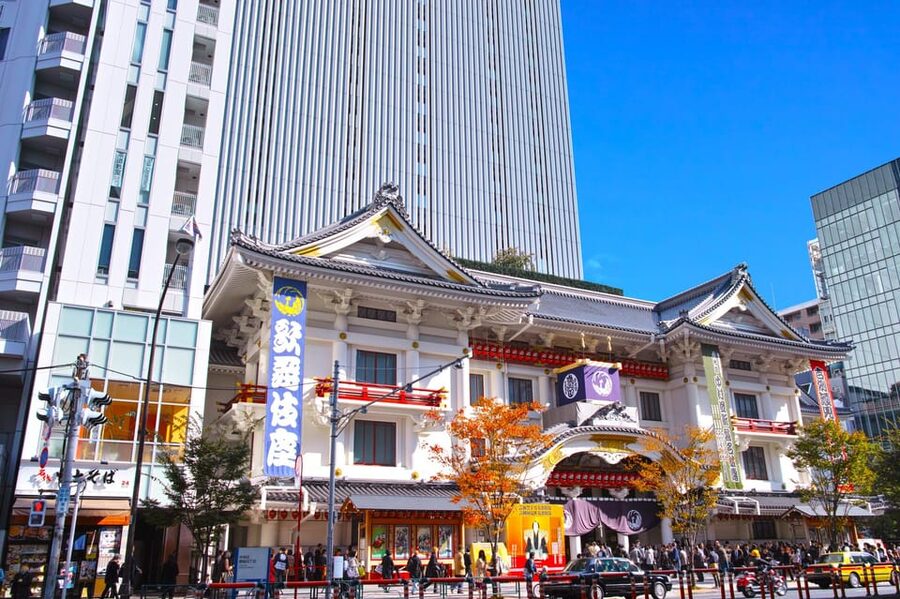
This experience depends heavily on the guide. Kabuki exhibits can be fascinating, but without explanation they may remain a collection of unfamiliar objects and images. A good guide gives you a basic framework and helps connect the theater, shrine, shops, and Ginza landmarks.
The tour is conducted in English, and Fumei is one named guide. One guest specifically described Fumei as wonderful. Another found the guides very friendly and appreciated the extra explanation about Japanese theater beyond Kabuki itself.
That last point is worth noting. The guide may add useful context about theater in Japan more broadly, not just the listed exhibits. At the same time, the experience can vary with the guide and the questions your group asks. If you want more detail, speak up. The small group gives you a better setting for that than a large coach outing.
The feedback also gives a balanced picture: the walk works well as a short introduction, but someone looking for a fuller explanation of Kabuki may want more. I would arrive with a few questions ready, such as how Kabuki differs from other Japanese theater forms or what to watch for in a performance.
Group size, timing, and pace
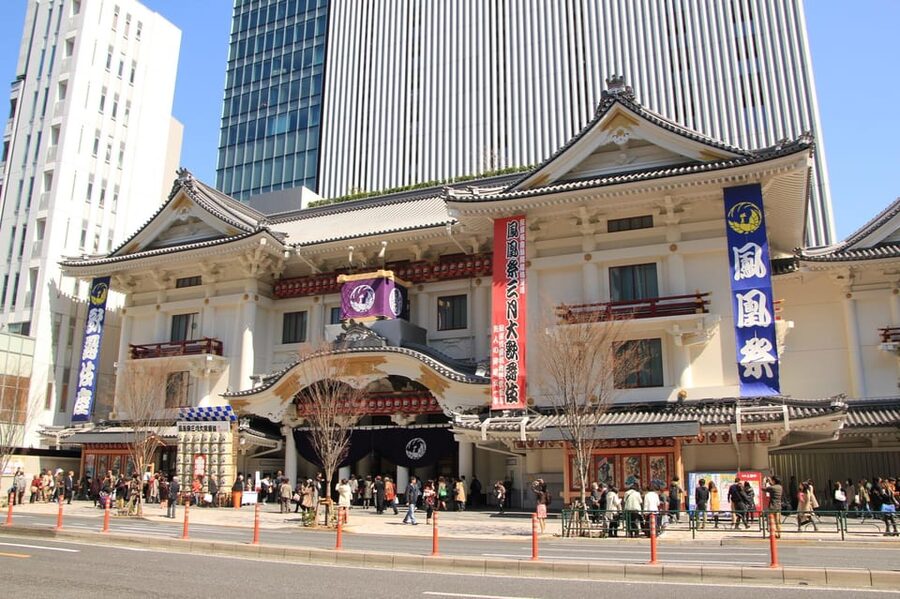
Two hours is enough time for a useful orientation, but not enough for an exhaustive tour. The compact schedule makes this a good fit for a free morning or afternoon in Ginza. You can combine it with other nearby plans without giving up an entire day.
The group is limited to nine people. That is small enough to keep the walk personal while still offering the energy of a shared outing. It should also make it easier to stay together around shops and exhibits.
Starting times vary, so you need to check availability for your chosen date. The activity does not list a performance time because Kabuki viewing is not included. This makes the schedule more flexible, but you are responsible for arranging any separate Kabuki show.
You can cancel up to 24 hours in advance for a full refund. You can also reserve now and pay later, which helps if your Tokyo plans are still shifting.
Who should book this experience
I see this as a good choice for first-time visitors who want an introduction to Kabuki without committing to a performance. It also suits anyone who enjoys traditional arts, Japanese theater, small cultural landmarks, and local shopping.
Families and mixed-interest groups may find the format useful because it combines exhibits, a shrine, a landmark, and stores. Someone who does not want two hours of theater discussion still gets a varied Ginza walk.
The tour is less suitable if you already know Kabuki well or want a detailed academic explanation. It is also not the right booking for anyone expecting to watch a Kabuki performance. That is specifically excluded.
If you are deciding between this and a general Ginza sightseeing walk, choose this one when Kabuki is the reason you are curious about the district. Choose a broader walk if you mainly want food, department stores, architecture, or nightlife.
Is the $56 price fair?
At $56, the tour asks you to pay for interpretation and focus rather than admission to a major performance. The guide, small group, and organized route are the main parts of the value.
The cost feels reasonable if you would otherwise spend your time around Kabukiza without understanding the exhibits or knowing which shops and cultural stops matter. It feels less attractive if you are comfortable exploring on your own and only want to see the building from outside.
Remember the important extra cost: Kabuki viewing is not included, and shopping is paid separately. The tour can help you decide if you want to attend a performance later, but it is not a performance ticket disguised as a walking tour.
Should you book this Kabuki walk?
Book it if you have about two hours in Ginza and want a friendly, guided introduction to Kabuki culture. The Kabukiza exhibits, related shrine, clock tower, and special shopping stops give the route more variety than a simple theater visit.
I would especially recommend it to first-time Kabuki learners, short-stay visitors, and anyone who wants practical cultural context before deciding on a full performance. Keep your expectations modest: this is a first look, not an in-depth course. If you accept that, the small group and personal English guidance make this a useful way to get oriented.
FAQ
Where does the tour meet?
The meeting point is in front of Nissan Crossing in Ginza.
How long does the experience last?
The tour lasts two hours.
What language is the tour conducted in?
The live tour guide speaks English.
Is this a private tour?
No. It is a small-group tour limited to nine participants.
Does the tour include a Kabuki performance?
No. Kabuki viewing is not included.
What can I see at Kabukiza?
You can see the Kabukiza building and visit its gallery or exhibits while learning about Kabuki with the guide.
Are shopping costs included?
No. Anything you buy at the shops, including Kabuki goods, accessories, and Japanese sweets, is paid for separately.
Can I cancel for a refund?
Yes. You can cancel up to 24 hours in advance for a full refund. You can also reserve now and pay later.
More Walking Tours in Tokyo
More Ginza Tours in Tokyo


More tours in Tokyo we've reviewed










Ginza Tours, compared.
 ★ 4.8Chopstick Making Workshop in GinzaFrom $251 hour
 ★ 4.5Tokyo: Art Aquarium Museum GINZA Entry TicketFrom $171 day
 ★ 4.5Official Japan Go-Kart Through Tokyo Bay / Ginza (IDP Required)From $85
 ★ 5.0Private Ginza Architecture Walking TourFrom $132
 ★ 4.5【SUMO FESTIVAL】Tokyo Ginza: Sumo Show & Photo ExperienceFrom $63
 ★ 4.8Tokyo GINZA: KONPARU Japanese Cabaret Show with DrinkFrom $502 hours